Author Archive

The Zunoquad: Kayaking in the Broughton Archipelago (1)

Saturday, September 1st, 2007

Note: click the small images for larger version. For locations on map, see this Flickr photoset

Prelude

Steven, Steve and Peter ferried from Powell River to Courtenay in Steve’s van. Steven was instructed in shopping for required drybags, thermal underwear and croakies. They proceeded to Murray’s house and decided to buy food while waiting for the car from Vancouver carrying Ian, Rob, John and Lionel. There was some disagreement in the Thrifty market about what provisions to purchase. Tradition won out.

All members of the party met back at Murray’s for lunch of fresh tomatoes and cantelope, some last minute internet map research and jettisoning of excess baggage. Steve assured Heather that Murray was in good hands and would be safe. The pledge was affirmed by a group cheer and departure photograph.
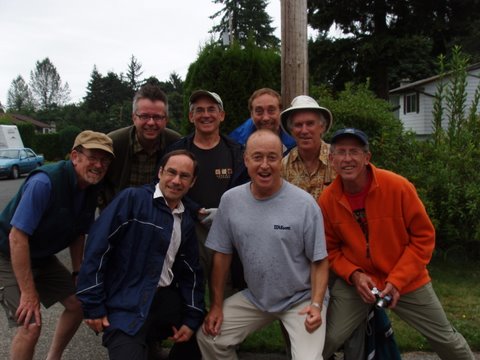
The two packed vehicles headed north for the three hour trip in pouring rain. A challenging and uncomfortable week ahead was envisioned. Steve’s fellow-passengers were intoxicated by the fumes from his shoe-gooing project.

A restrained visit to the liquor store in Port McNeil was followed by dinner at the McNeil cafe served by a “Renoiresque” young waitress. After extensive deliberation, the majority of the group voted to spend the night in a local motel rather than use the reservations Murray had made in a campground at next morning’s departure point, Telegraph Cove. The need to repack gear and food was offered as a reason, but more compelling was the wish to put off getting wet for one more day.

A brief search led to the “Haida-Way Inn,” whose Balkan proprietors were unwilling to let all eight of us stay in one room. A deal was struck by our broker John which had us paying $280 for two.

Day 1

Dawn broke on a sunny day, rare in these parts. John was elected nominal captain for the day. He gave no orders. Breakfast was granola and dried milk in the hotel room. Ian extracted the bladder of wine from the box he’d bought and most of it spilled in Steve’s van. We arrived at Telegraph Cove and noticed with regret how much booze other kayakers were carrying compared to our paltry portions.
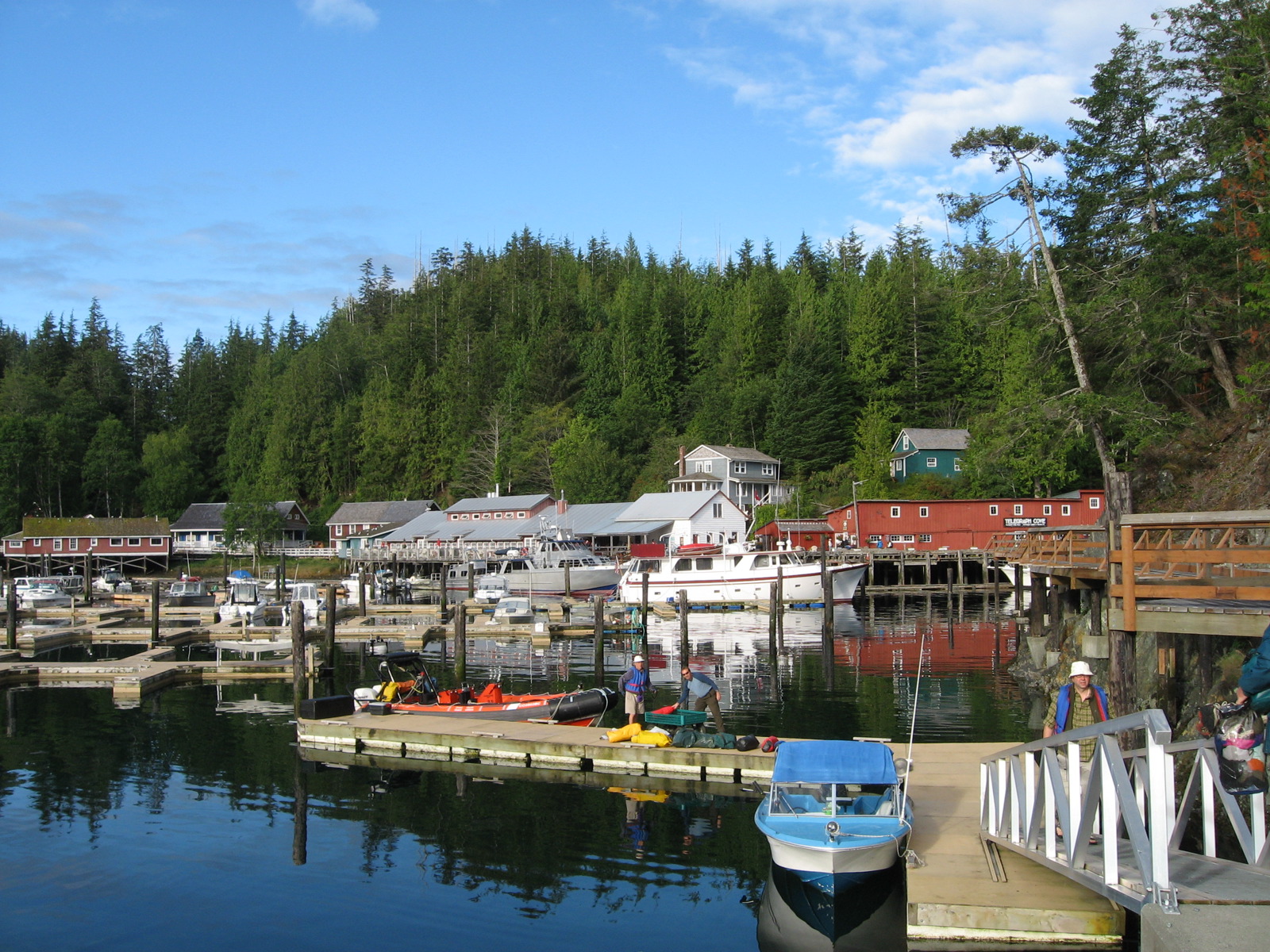
We rushed to get boats rented and gear ready since we were warned that Dennis, the water taxi driver would charge heavily for any delay. But he was late. Ian gave an illuminating account of a National Geographic article he had recently read about “swarming””the way leaderless groups of creatures manage to function, each member doing its own thing, but all working together. It seemed applicable to the way our expedition had been organized thus far.

After forty minutes of waiting for Dennis, a dispute between two unnamed members of our group about future kayak seating arrangements led to angry words, pushing, slapping and lenses being knocked out of both of their glasses. The volume and adrenaline level was impressive, and it was later reported that the altercation between “those two old guys” was the talk of the port. Peace was restored and the long awaited water taxi arrived. Dennis was stocky, cocky and remarkably efficient in loading the four kayaks and gear.
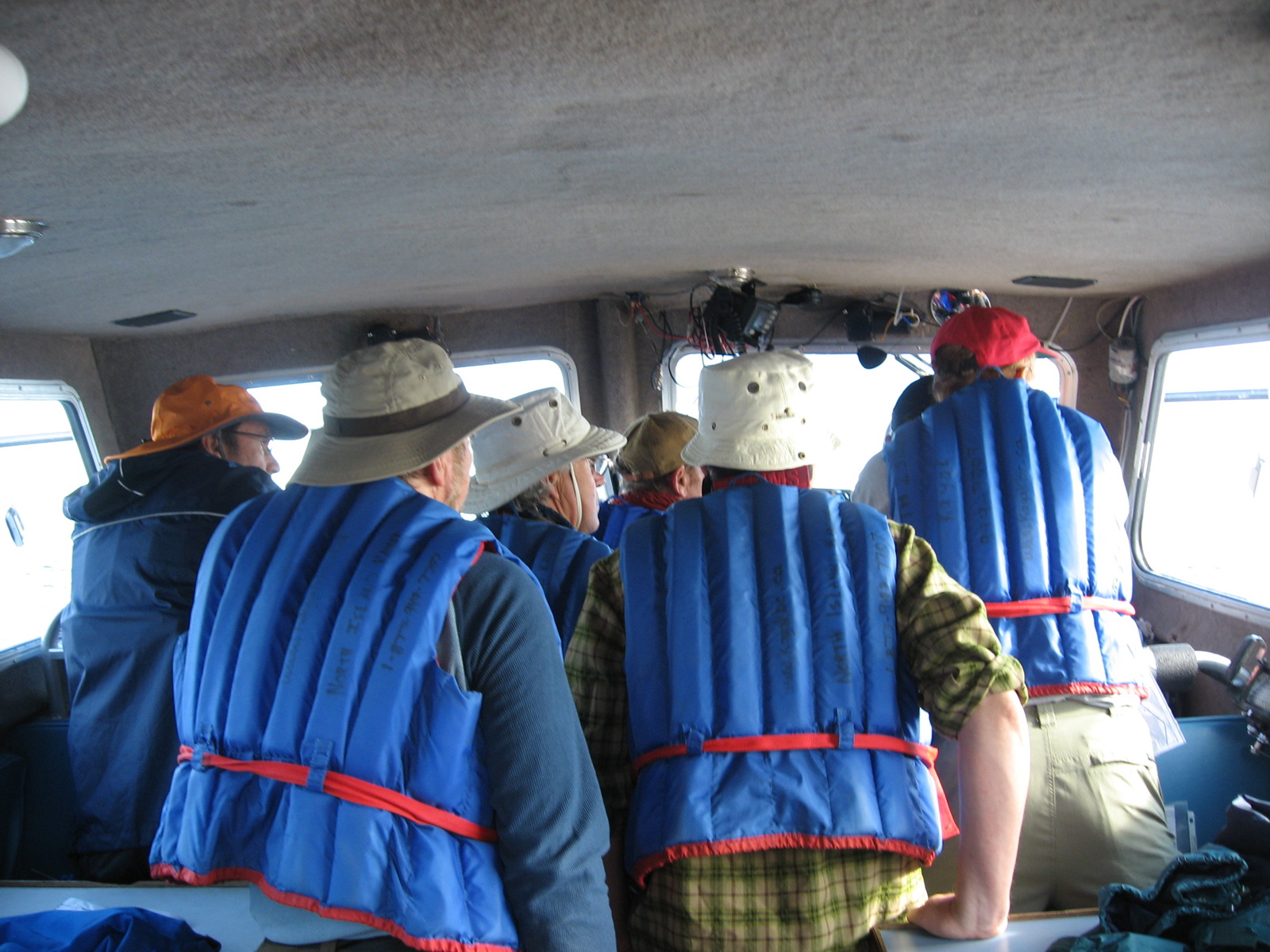
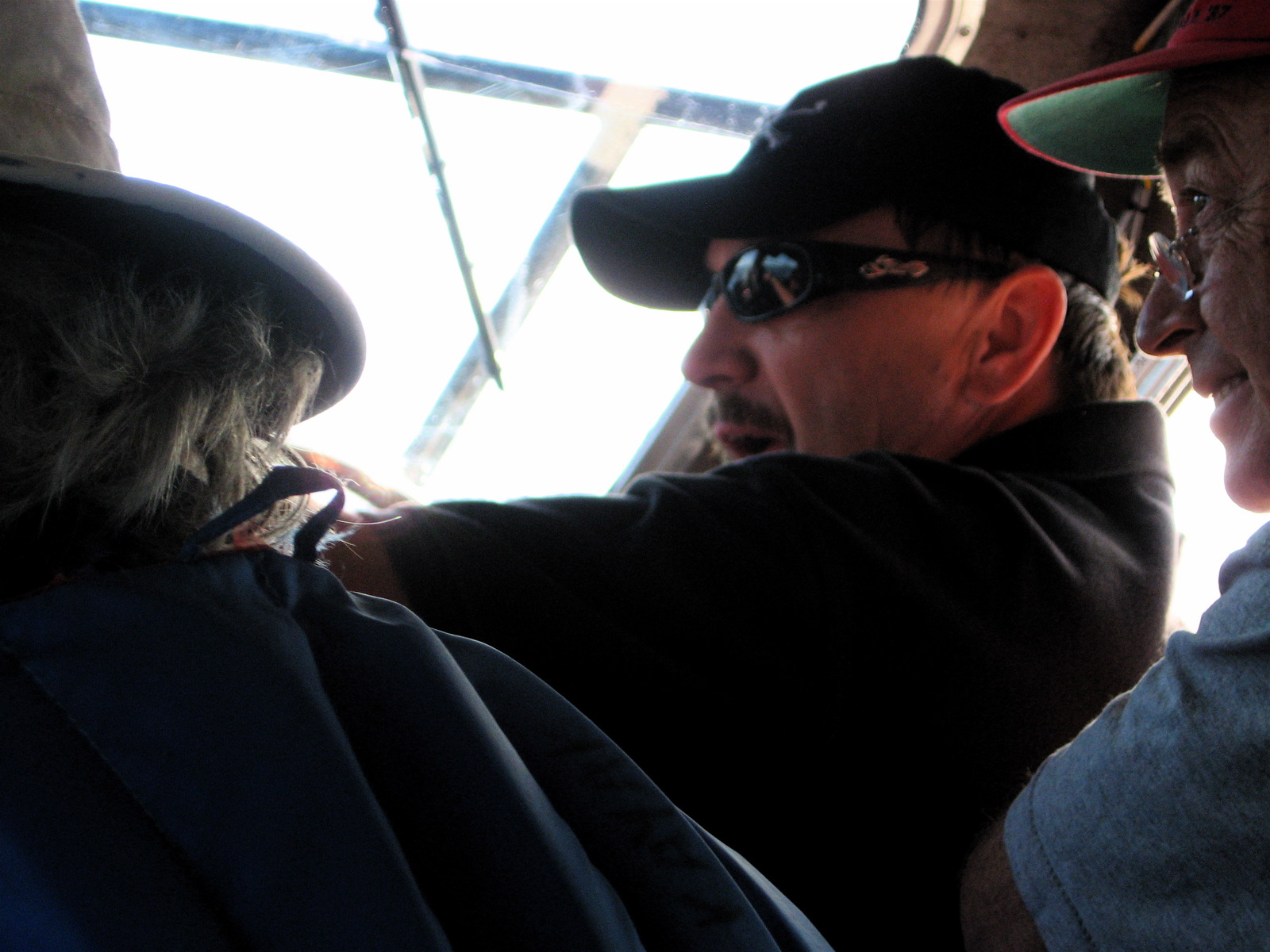
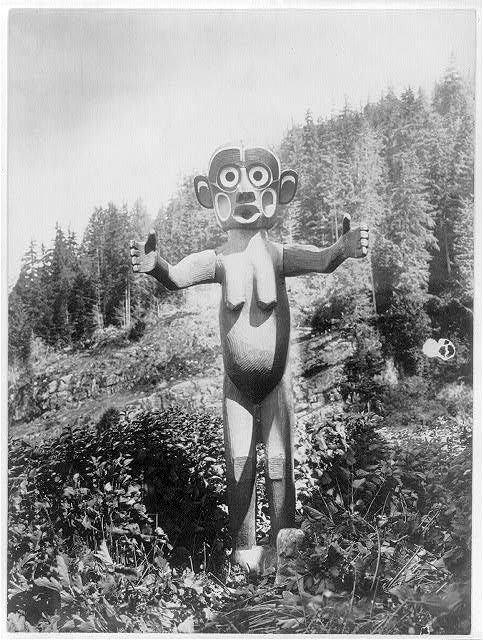
On the hour-long crossing to Echo Bay, he pointed out rare campsites and water sources on the map and regaled us with stories about local characters and warnings about the two native Bigfoot types, Zunoqua, a three foot child-eating, man-raping woman, and Bukhoose, a fearful male Giant. Both can be identified at a distance by their terrible smell.
Dennis unloaded us at the government dock at Echo Bay. We paid him a discounted $500 cash miraculously collected and arranged a rendezvous for pick up at Mamalilacula six days later. It was surprising to find, in this remote archipelago, a floating resort, some beautifully gardened and painted floathouses, an elementary school, in use though not in session, and Billy Procter’s museum of local lore and artifacts.

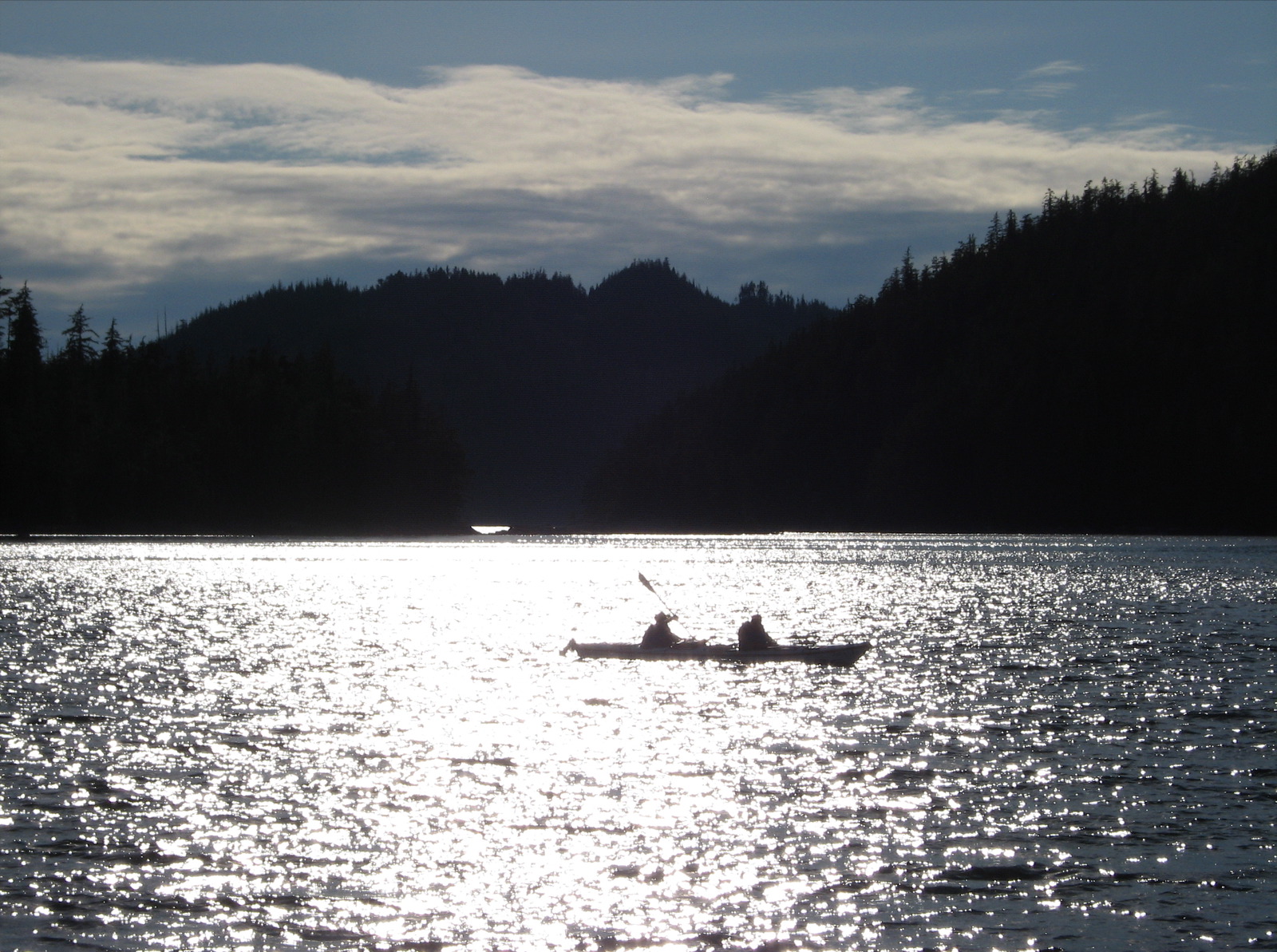
After lunch of salami and cheese on what we later learned was the big daddy of all clamshell middens, we loaded the kayaks and dipped paddles into the spectacular waters of Hornet passage, directed by John the Navigator.
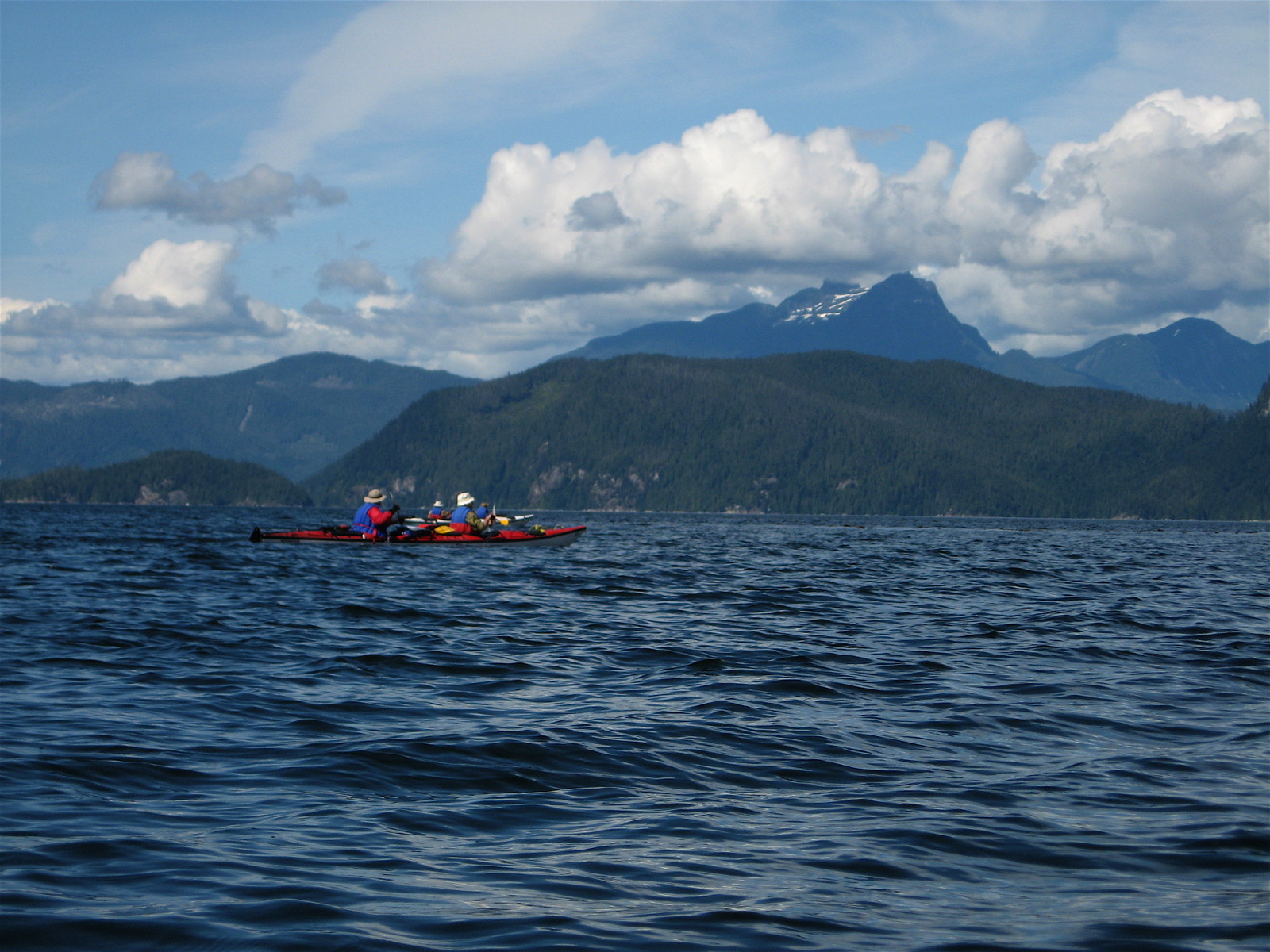
Two and a half hours later we landed at a protected clamshell beach and campsite in the Burwood Islets. The place was crowded with families enjoying the swimming in the sheltered coves, some from a nearby anchored yacht, others from a beached boat.

The campsite was free and we were happy to claim it. Led by Murray, who took to the water like a black lab, several of us swam in the bay, others napped, collected firewood, pitched tents, and started preparing dinner on the Coleman stove. Swarm behavior.

As it got dark the other visitors to the island departed, but not before the group from the yacht shot off a small cannon they had brought all the way from the USA to ravish the peace and quiet of this remote preserve.
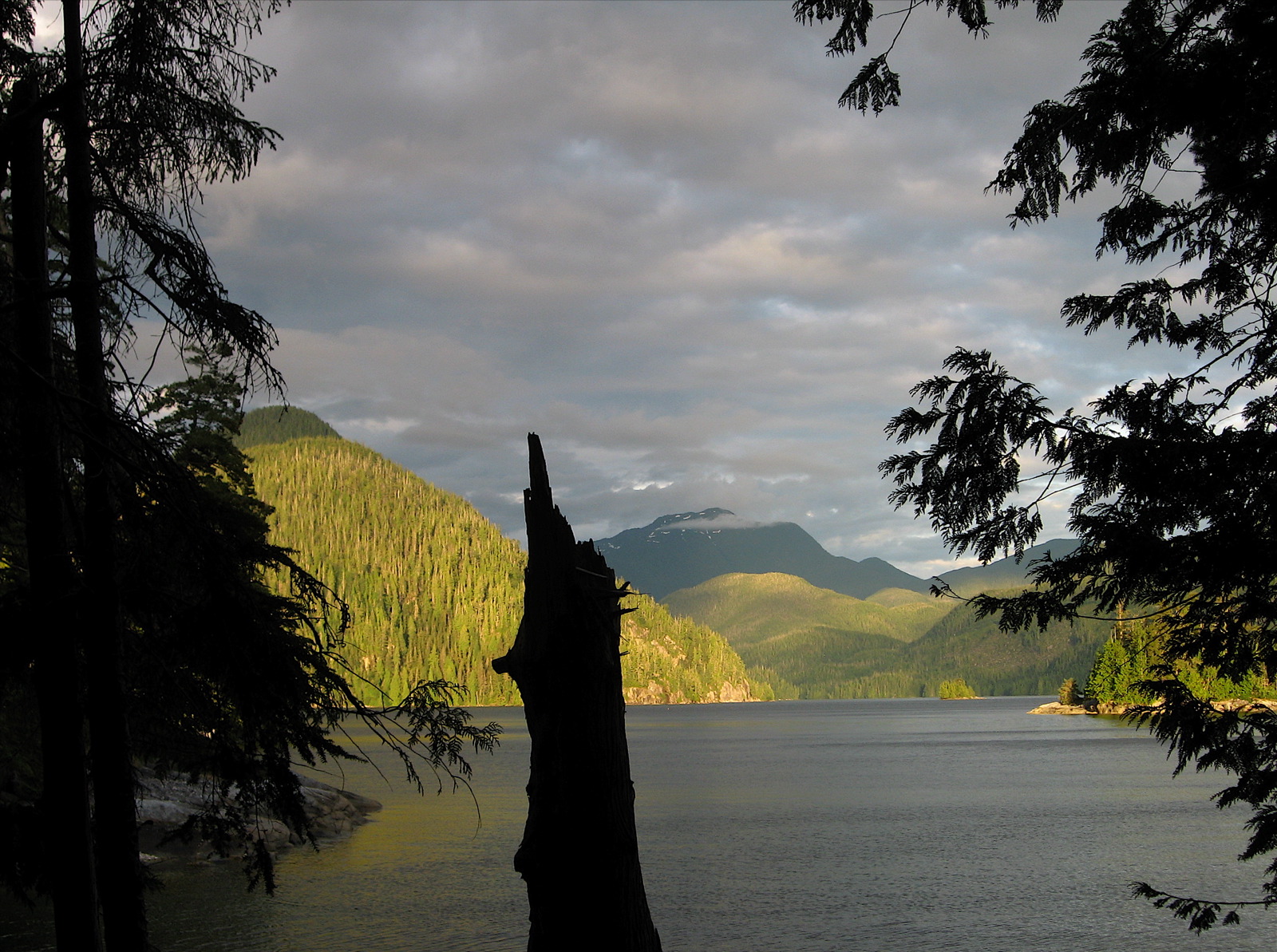
We shared the campsite with one solo kayaker named Ron, a very serious mathematician from Northern Ireland. As the evening went on and we consumed what was left of Ian’s wine and some fine Canadian herb, the noise from our campfire was probably as obnoxious to the yachtsfolk at anchor as was their cannon fire to us. We talked dirty like boy scouts and traded stories of being chased by cops and going to jail.

For a full set (67) of my Zunoquad pictures click here.

For a pool (184) of pictures by several people on this trip, click here.

For a wiki including these journal entries and writings by other participants, click here

The Wild Braid

Saturday, May 5th, 2007

At the Sierra Club ExCom meeting in March, Cal began with a reading, as is our custom. It was from a new book by and about Stanley Kunitz, The Wild Braid, A Poet Reflects on a Century in the Garden.

The garden is a domestication of the wild, taking what can be random, and, to a degree, ordering it so that it is not merely a transference from thewild, but still retains the elements that make each plant shine in its natural habitat.

In the beginning, a garden holds infinite possibilities. What sense of its nature, or its kingdom, is it going to convey? It represents a selection, not only of whatever individual plants we consider to be beautiful, but also a synthesis that creates a new kind of beauty, that of a complex and multiple world. What you plant in your garden reflects your own sensibility, your concept of beauty, your sense of form. Every true garden is an imaginative construct, after all.

I’m not sure if this is the actual passage he read, I was so struck both by the cover image of a bent-over hundred year old man gazing like a lover at his plants and by the recollection that Jan and I first set eyes on each other at a poetry seminar about Stanley Kunitz in 1966. Also distracted back then, I hadn’t paid attention to his writings since. But that book cover brought it together: the passage of time that we were planning to mark in our upcoming 40th anniversary celebration, not yet bent over, but transformed from children into grandparents. I mentioned the coincidence, there were appreciative murmurs, then on we went to discuss the budget.

While Jan made the guest list, mailed invitations, shopped for food, and spruced up the house, I prepared for the party by working in the garden, carving a new path in the adobe clay, trimming lower limbs of the pygmy oaks, transplanting bunch grasses. We were wedded in a garden in our backyard. Now this garden had turned into a setting I wanted to share for a while, just as I wanted to share the private space of marriage. When we arrived here nineteen years ago I knew this was a place I would transform and be transformed in. The change had come to pass.


The invitation to our celebration said “No gifts, but donations welcome to Santa Lucia Chapter of the Sierra Club or Environmental Center of San Luis Obispo (ECOSLO).” In the midst of the crowd at the drinks table, Cal handed me a package and said he was sorry to be violating the rule, but please would I open it. It was The Wild Braid.

Three days after the party I was missing classes, in bed with a sinus infection. Between naps, I wandered around in the book, finding poems about gardening and other outdoor experiences, memoirs about circumstances of their composition, prose reflections on their themes“bucolic retreat, cultivation, composting, decay, renewal, and the connections between horticulture and writing. They recalled my first scholarly article, “˜Fortunate Senex’: The Pastoral of Old Age.” Arranged like beds and terraces, I came upon photographs of the ancient sage among the trees and flowers and conversations that took place between him and Genine Lentine, his friend and caretaker during the time between partial recovery from a massive stroke and his death in 2004.
This morning I woke up at 5:15, still not healthy but eager to walk my trails at daybreak. Greeting the yucca, the hummingbird sage, the blue oak, seeing new blooms on the Columbine, I thought again of The Wild Braid. I’d only taken the first stroll through its garden. I’ll return to find paths I’ve missed and revisit familiar spots in changing seasons. Looking ahead, I knew I’d found a guide.

Post script–June 5

Last weekend, Jan made her pilgrimage to Tassajara, the Zen mountain retreat she’s visited every spring for the last 27 years. She was enrolled in a seminar which required her to bring along some poems. With my permission she took The Wild Braid. Upon her return she gave the book back and told me to look at the title page. On it was inscribed “For Jan and Steven–friends in the garden. With bright wishes, Genine.”

Native Plants in the Garden

Saturday, May 5th, 2007

  1. Bracken Fern, Pteridium aquilinum pubescens
  2. Toyon, Heteromeles arbutifolia
  3. Golden Current, Ribes aureum aureum
  4. Clustered Field Sedge, Carex praegracilis
  5. Lemonade berry, Rhus integrifolia
  6. Pink flowered currant, Ribes sanguineum glutinosum
  7. Fremontia, Flannel Bush, Fremontodendron California Glory
  8. Manzanita, Arctostophylus morroensis
  9. Bay Laurel, Umbellularia californica
  10. Fremontia, Flannel Bush, Fremontodendron California Glory
  11. Fuchsia flowered gooseberry, Ribes speciosum
  12. Holly Leaf Cherry, Prunus ilicifolia
  13. Western Redbud, Cercis occidentalis
  14. Point Reyes Bearberry, Arctostaphylos uva-ursi ‘Point Reyes’
  15. Fremontia, Flannel Bush, Fremontodendron California Glory
  16. Deergrass, Muhlenbergia rigens
  17. Manzanita, Arctostophylus morroensis
  18. Foothill Penstemon, Penstemon heterophyllus
  19. Calfiornia Fuchsia, Zeuschneria

22. Creeping Mountain Lilac, Ceanothus Joyce Coulter

  1. Holly Leaf Cherry, Prunus ilicifolia
  2. Coffeeberry, Rhamnus californica
  3. Shagbark Manzanita, Arctostophuylus rutis,
  4. Fremontia, Flannel Bush, Fremontodendron California Glory
  5. California Sagebrush, Artemesia californica
  6. Scarlet Bugler, Penstemon centranifolius
  7. Hoary leaf ceanothus, Ceanothus crassifolius
  8. Manzanita, Arctostaphylos densiflora ‘Howard McMinn’
  9. Black Sage, Salvia mellifera
  10. Black Sage, Salvia mellifera
  11. Holly leaved California Mountain Lilac, Ceanothus Mills Glory
  12. Calfornia Goldenrod, Solidago californica
  13. Leather Oak, Quercus durata
  14. Toyon, Heteromeles arbutifolia
  15. Manzanita, Arctostaphylos densiflora ‘Howard McMinn’
  16. California Buckwheat, Eriogonum fasciculatum foliolosum
  17. Coyote Mint, Monardella villosa obispoenis
  18. Clustered Field Sedge, Carex praegracilis
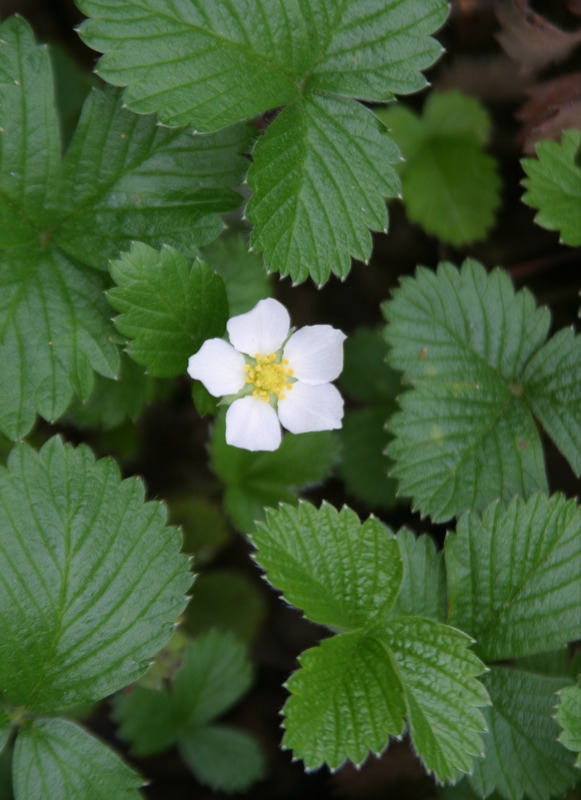
  19. Western Alpine Strawberry, Fragaria virginiana platypetala
  20. Douglas Iris, Iris douglasiana
  21. Western Columbine, Aquilegia formosa
  22. Holly Leaf Cherry, Prunus il15icifolia
  23. Deergrass, Muhlenbergia rigens
  24. Clustered Field Sedge, Carex praegracilis
  25. Purple Sage, Salvia leucophylla
  26. Coffeeberry, Rhamnus californica
  27. Foothill Penstemon, Penstemon heterophyllus
  28. Santa Susana Monkey flower, Diplacus rutilus
  29. Mountain Mahogony, Cercocarpus betuloides
  30. Big Leaf Maple, Acer macrophyllum
  31. Holly Leaf Cherry, Prunus ilicifolia
  32. Toyon, Heteromeles arbutifolia
  33. California Grape, Vitus californica
  34. Toyon, Heteromeles arbutifolia
  35. Holly Leaf Cherry, Prunus ilicifolia
  36. Bay Laurel, Umbellularia californica
  37. Coast Live Oak, Quercus agrifolia
  38. Oregon Grape, Mahonia aquifolium
  39. California Mountain Lilac Ceanothus Concha
  40. Toyon, Heteromeles arbutifolia
  41. California Strawberry, Fragaria californica
  42. Douglas Iris, Iris Douglasiana
  43. Snowberry, Symphoricarpos albus laevigatus
  44. Coast Redwood, Sequoia sempervirens
  45. Coast Live Oak, Quercus agrifolia
  46. Blueblossom Ceanothus, Ceanothus thyrsiflorus
  47. Black Sage, Salvia mellifera
  48. California Pitcher Plant, Lepechinia calycina
  49. Creeping Black Sage, Salvia mellifera ripens
  50. Hummingbird Sage, Salvia spathacea
  51. Coral Bells or Alum Root, Heuchera rubescens
  52. Western Columbine, Aquilegia formosa
  53. Purple Sage, Salvia leucophylla
  54. Purple Nightshade, Solanum xanti
  55. Yerba Buena, Satureja douglasii
  56. Yarrow, Achillea millefolium californica
  57. Coyote Brush, Baccharis pilularis
  58. Small leaf mountain Lilac, Ceanothus Julia Phelps
  59. Valley Oak, Quercus lobata
  60. Blue Oak, Quercus Douglasii
  61. Purple Needlegrass, Stipa pulchra
  62. California Mountain Lilac Ceanothus Concha
  63. Shagbark Manzanita, Arctostophuylus rutis
  64. Woolly Bluecurls, Trichostema lanatum
  65. Mugwort—Artemisia douglassiana
  66. Blue Elderberry, Sambucus Caerulea
  67. Catalina Ironwood, Leonusthamnus floribundus
  68. Small leaf mountain Lilac, Ceanothus Julia Phelps
  69. Spanish dagger/Our Lord’s Candle, Yucca whipplei
  70. Calfornia Buckeye, Aesculus californica


Fortieth Wedding Anniversary Celebration

Sunday, April 29th, 2007

p1010043.jpgmarriage.jpg

PROGRAM

Excerpt from “Mein Freund ist Mein,”
from Bach’s Cantata #140

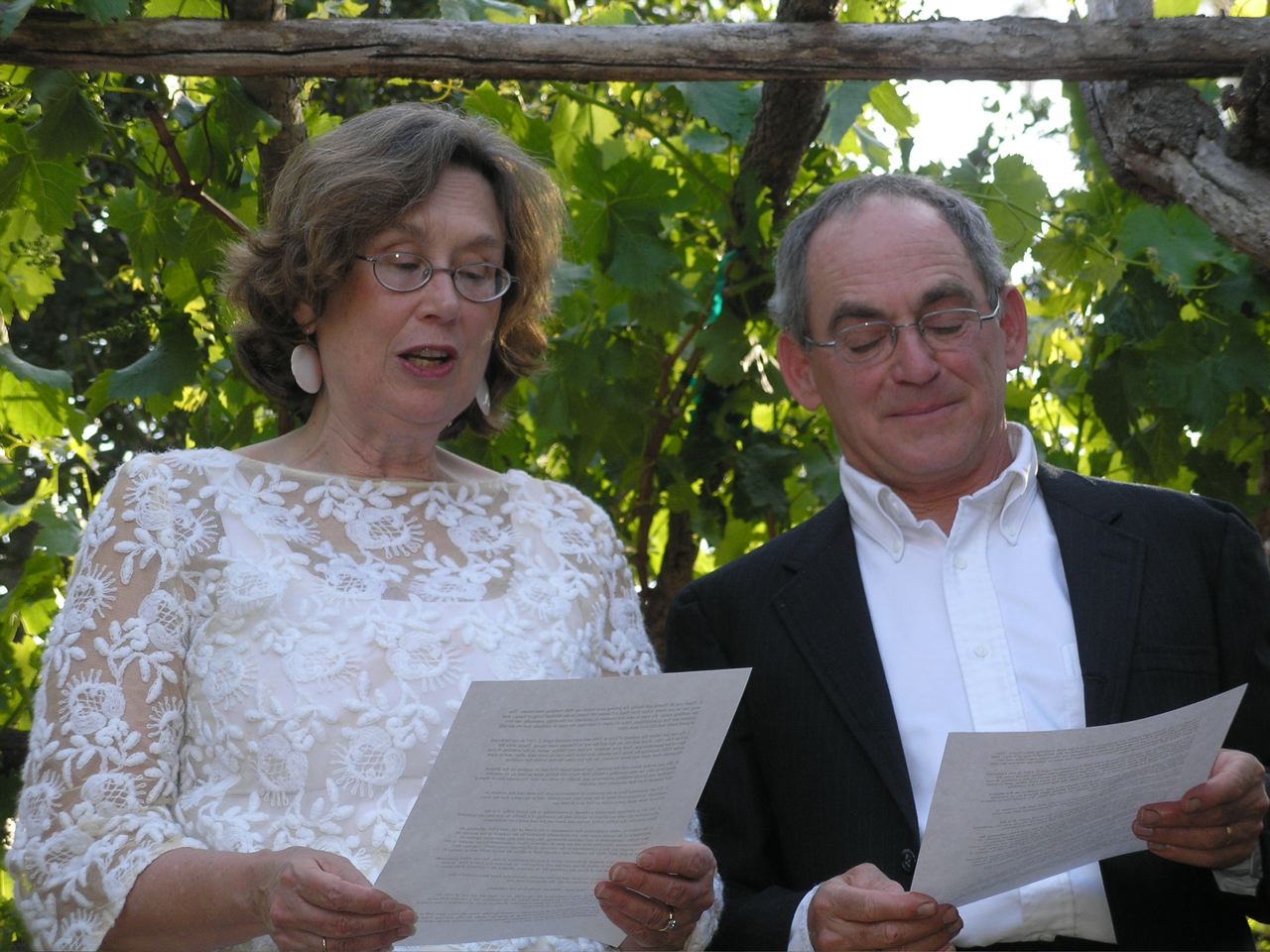
Anniversary Pictures from 2007

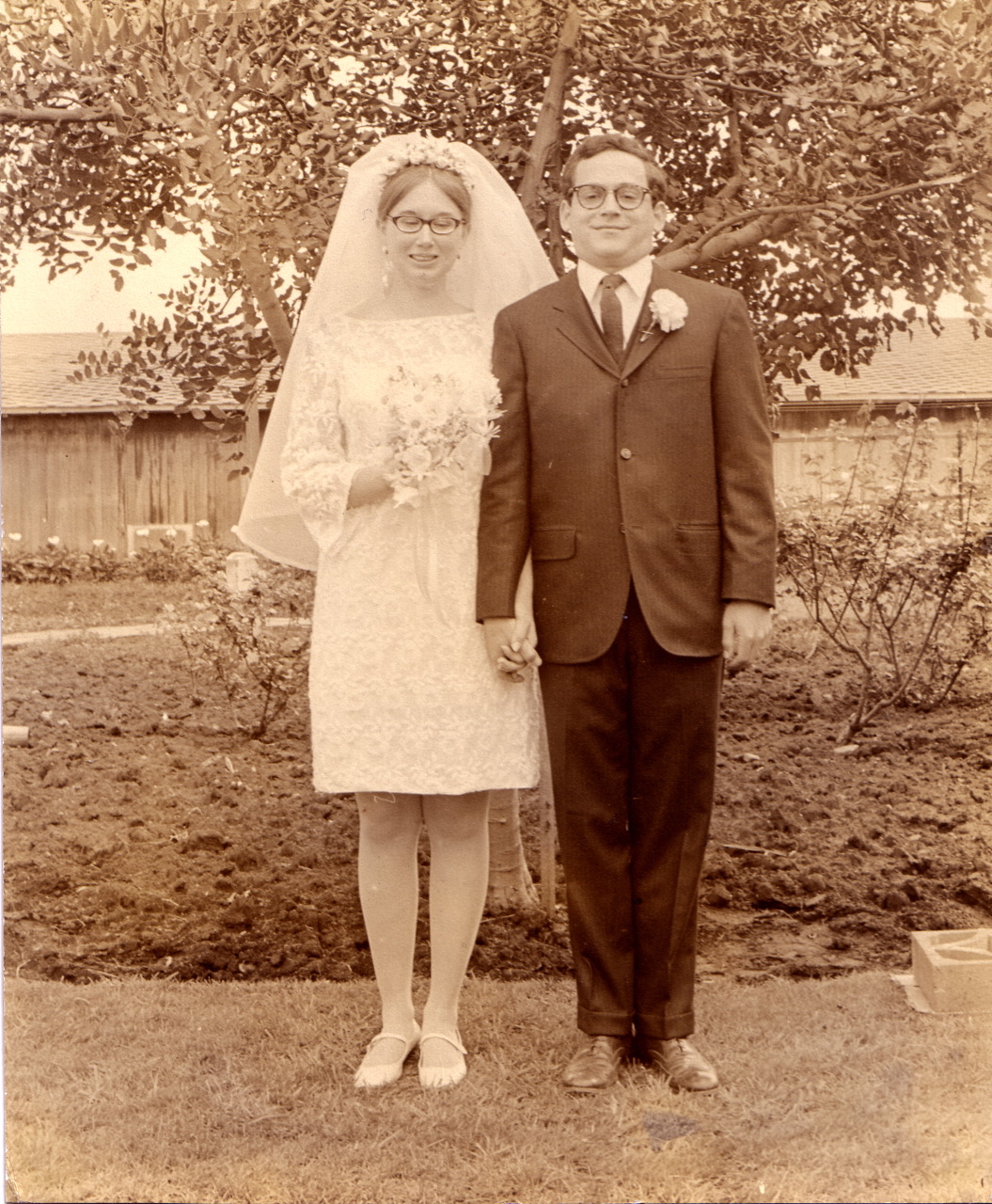
Wedding pictures from 1967

S: Thank you all, friends and family, for joining us to honor our 40th wedding anniversary. The song you’ve just heard, a duet from Bach’s Cantata 140 based on the Biblical Song of Songs, was our wedding music. We want to take this moment to celebrate our blessings, especially our two children and four grandchildren. After 40 years of marriage, we want to celebrate that we are still in good health and still love each other.

J: We met just before the summer of love in 1966 and were married April 2, 1967 in our backyard in East Palo Alto . Rock and roll, tie dye and the war in Vietnam were raging. Those were the days of the generation gap. Both poor students, we had very little to spend on the wedding. It cost under $250, including the dress. Our parents arrived in Palo Alto to meet each other, and to meet the person their child was about to marry, for the first time, the day before the wedding.

S: We met several times with the minister, our friend Stuart McLean, to explore on the deepest inner level why we were founding a family with the world falling apart around us, to consider Christian and Jewish wedding ceremonies and, finally, to craft our own. We would like to share a few excerpts from that ceremony with you now:

S: We are assembled here in the presence of witnesses to join this man and this woman in marriage; to rejoice with them in the unity they have found; and to recognize that the vows between them made are a social as well as a private act. ¦

J: The act of marriage represents a change in relationship to the social order. It is the presentation of a new social unit to society and the founding of a family. As you who are gathered here symbolize this public world, Steven and Janet ask for and need your acceptance.

S: Nevertheless, while recognizing that community is the womb of life, and while affirming the importance of the social order, they are profoundly disturbed by the sickness of our society. In their higher commitment to our common humanity, they find that they must rebel against its dehumanization. Here they also, ask for your acceptance. Their commitment to one another is not just a private act, but a commitment to the concerns of all persons everywhere. Together they hope to give each other the comfort and courage both to affirm the social order and to change it…

J: The vision of our common humanity meets our past and embraces this present event of marriage. It is a public event, but more profoundly an act of two who hae decided in faith to become one. It is an act involving suffering as well as delight”conflict as well as love”despair as well as hope. Its form reveals the essence of true covenant. Within it two become one, but because of it, Steven’s and Janet’s unique individuality may grow.

S: Marriage is a moment of decision which is not just a moment in time, bujt one which transcends time, a moment in which Steven and Jan will always live. Its decision is a leap of faith. Its love takes the threat out of dying and growing old. Its promise changes the conditions of the future.

J: In the decision to live with and for one another, Steven and Janet have created a new relationship which involves all life. We all rejoice with you. ¦.

Wine ceremony”raise cups”these are words from our ceremony

S&J: This cup of wine is symbolic of the cup of life. As we share the one cup of wine, we undertake to share all that the future may bring. All the sweetness life’s cup may hold for you should be the sweeter because we drink it together. Whatever drops of bitterness it may contain should be less bitter because we share them.

S: And now in gratitude to all of you who’ve joined us today, some who were there with us 40 years ago, some who have traveled from as far away as Canada, we offer this toast. “May the close, loving bonds of each of us–to partners, family, friends, community and the earth itself–be strengthened and renewed today and every day.

___________

Some anniversary poems:

1979

1991

1992

April Sunrise

Tuesday, April 24th, 2007

When I opened the curtain at 5:45 there was already a blue-gray glow in the western sky. We’re a third of the way to the solstice. I wont wake up in the dark anymore till August.

I sit in the green plastic Adirondack chair with the big camera beside me waiting for the sunrise over Cuesta Ridge. I’ve come back to it after noticing that the older plant photos on my screensaver have much more depth and brilliance than the ones I’ve taken recently with the point-and-shoot, even though it has higher resolution. It’s the lens stupid.

My perch is a new seat in the garden, three quarters of the way up the bank above the grape arbor at a switchback in the south trail. I decided to carve it out of the adobe clay on Saturday while sprucing up the yard to prepare for our big party this weekend.

Two rock doves clean up spilled seeds under the bird feeder, a hummingbird visits the hummingbird sage, a bee sips at the holly-leaf cherry flowers.

Week 4 of classes, Spring mind bursting with things to say and write and plan and execute.

I’ll be returning to this spot nestled between a Channel Island Ironwood and a Sugarbush.

A temperate dawn soothed by a wisp of breeze, disturbed by the barking dog next door and the hubbub of traffic.

Now the sun paints the east face of Caballo Peak, and now touches the grapevine and the belly of the goldfinch in the pine branch overhead. Now it casts shadows on the path. Now it’s 7:00 o’clock and time to get to work.

But first just a few more pictures.

Two Boys at Spooner’s Cove

Monday, April 16th, 2007

Ian’s last day of Spring Break from Junior Kindergarten was the end of a taxing two weeks for me. April 1 was Flora!, the Sierra Club Fundraiser I’d been planning and worrying about since January. The day after, I returned to teaching after a nine-months’ recess. The day after that I launched a challenging new course on Argumentation about Sustainability focussing on Gore’s film, An Inconvenient Truth. Last weekend was the Focus the Nation organizing conference in Las Vegas and the day after a press to write up my report on it followed by nine more hours of lecturing on Tuesday, Wednesday and Thursday. The tough slog of grading the first set of English papers was on my schedule Friday. But the sky was bright blue and the hills were still green. Besides, I had required my Ecolit class to listen the poets’ invitation to “Rise Up and Come Away,” so I too was obliged to obey.

We drove along Foothill Blvd. through the threatened ranchland between Bishops Peak and San Luis Mountain thick with cows and calves trimming the pastures into glittering lawn. The open, black-soiled fields along Los Osos Valley Road seemed hungry for seed or ready to sprout. I asked Ian to repeat the name of the road. At first he struggled and then it rolled off his tongue. The mountains on both sides–Morros and Irish Hills–make this a Valley where the dirt rolls down and turns to soil that grows the crops, I explained. He recognized the rows of Snow Peas with their white polka dots that will turn into the sweet morsels we pick from the planter beside our deck. Los Osos means the bears in Spanish I told him, the name of the town at the end of the road. Watch for bears on either side. By the time we reached the turnoff to Montana De Oro, he’d counted 14–on signs, a mural, woodcarvings and the cast bronze sculpture by the bridge.

“Gwampa, wet’s wace to the mountain,” he called back to me from the beach. “I cant run with this backpack,” I answered. I boosted him on to the ledge sloping up the outcrop, where he passed the time making sand waterfalls, while I struggled to find handholds in the strata to pull myself over the first hump.

After several clumsy efforts I realized I wouldnt make it, and he’d have to come down. I wondered if the cause was the soft rock’s weathering since I’d been here last, or other sorts of weathering closer to home.

But there was no shortage of alternatives, and I remembered that last year several Cal Poly students had been swept into the water from this promontory by rogue waves, one to his death.

We noticed an alluring cave carved in the vegetation-covered cliff bordering the north side of the beach. Ian said, “that’s a dinosaur cave.” The creek that flowed to the sea at the foot of the cliff was low enough to hop with dry shoes. Ian led the way up another sloping ledge into what turned out to be a tunnel rather than a cave, with a perfectly formed arched opening to the sky. We passed through slowly and came around the back to perch on a ledge that looked straight down into the surf, which pounded with a force that carved these rocks like cheese. I kept a tight grip on the rolled-up waistband of his sweatshirt. In the wind-pruned scrub above the cove behind the tunnel, a flourescent red-throated finch burbled above the waters’ roar.

On the way back through the tunnel, we found another tunnel at the base of its lower, landward, wall, this one squat and deep. Through it one could see foamy water flowing in and out of the shadowed cove below the finch’s perch. One could easily slide down there, but with no way of return.

Back outside, we saw a possible route upward: vertical footholds in the rock leading to an oval opening in the brush that looked like the start of a trail into the dunes. This might be the dinosaur’s exit. Ian led the ascent and I followed him through the green tube.

It daylighted at a wooden railing marking a sand trail bordered by blooming bush poppies and silver lupine. A fork of the trail covered with delicate lizard tracks led toward the water and traversed the dune.

Up steep switchbacks and down muddy seeps, we made our way to tidepools and blowholes. Across the expanse of Spooner’s Cove, we saw groups of walkers on the popular cliff trail, but here there was no one.


I looked at my watch: 11:30. I had an appointment at the Social Security Office to apply for Medicare. Ian was getting hungry. Off the rocks and up the sand we rambled. On the warm trail that circled back to Reddy in the parking lot, over and over we sang “Dinah wontcha blow.”

Easter in Las Vegas

Monday, April 9th, 2007

img_0783.jpg

A Personal Report on the Focus the Nation Organizing Conference April 6-8 2007

Introduction

I took the bait for Focus the Nation while attending the first national conference of AASHE, the Association for the Advancement of Sustainability in Higher Education in October 2006. That conference attracted 800 faculty and administration activists and featured a panoply of environmentalist superstars. In welcoming remarks, the President of Arizona State University declared that ASU henceforth would stand for Arizona Sustainable University and announced the formation of a Sustainability Institute endowed with a five million dollar grant from the Wrigley family.

The conference’s show of strength raised the confidence of every beleaguered soul who attended, but the only action item I came away with was to set up a chapter of Focus the Nation at my home campus. Dreamed up by Eban Goodstein, an economics professor at Lewis and Clark College, Focus the Nation’s objective suited the immense scope of the climate crisis, yet was defined, immediate and feasible: a nationwide teach-in on Global Warming solutions at a thousand colleges and universities on January 31 2008, just before the primary elections.

Professor of Business, Kate Lancaster, with whom I had worked on several campus sustainability projects, agreed. We tried to recruit Tylor Middlestadt, Cal Poly’s legendary student leader, but he would be graduating before the event, so he put us in touch with two fellow engineering students, Chad Worth and Matt Hutton, who joined our core organizing committee. We met regularly during Fall and Winter quarters, discovered lots of support for the idea on campus, expanded the committee to include three more faculty members, and set to work getting endorsements from the Associated Students, the Faculty Senate and the University Administration. After Eban scheduled an organizing conference for the national group in Las Vegas over Easter weekend and we found a one hundred dollar round trip flight from San Luis Obispo, we all decided to go, whether or not we got funding.

In the sleepy Santa Maria airport, we boarded a huge Alliant Airline jet for the one-hour flight. It was packed with a jolly crowd of multigenerational families, golfers, gang bangers, farmworkers, and a bachelorette party all eager to spend their wealth in America’s fastest growing city. (more…)

Ecolit Class

Thursday, April 5th, 2007

Peterson Ranch, above the pole house, looking east. Breathing hard after a brisk walk. French horns and snare drum of the freight train laboring up the grade in the background, twittering of sparrows and finches in a dense grove of sycamore, bay and oak down below, the scream of a young redtail circling overhead, two rooks shouting and sparring in a tree top. Twenty five people spread out out on the hillside silently listening and recording.

A wisp of breeze stirs the stagnant air, cools the sweat on the back of my neck. Flat light, not the Vergillian golden radiance and lengthening shadows of former years. But the overcast makes the new growth flouresce with a dozen versions of green.

The usual April torrent of the creek is down to an October trickle. Not thirty but eight inches of rain this year. Yet around us on the serpentine bloom lupine and tidy tips, blue dicks and blue-eyed grass, monkey flower and johnny jump-ups.The dell explodes with a rude ecstatic trill. Wings wildly flapping, a small bird darts our way, then glides and swoops into the willows up the hill.

It’s a shame to disrupt this performance and its rapt audience, but I’ve assigned homework and prepared a discussion, and ink and paper has been consumed to print the readings. On the first day of class we read Ovid’s description of the Golden Age, when innocent humanity was sustained by honey and acorns, and also the biblical account of Nature’s creation as a harmonious artwork designed to provide for all the needs of his naked children by a generous parent-God. Today the ancient texts are Vergil’s Georgics”a praise of the farmer’s life acknowledging the immense difficulty of mere survival”and God’s speech from the whirlwind in the Book of Job, where He mocks the good man’s futile search for intelligibility and proclaims the cruel and awesome wildness of His universe.

Is it by your wisdom that the hawk soars,
and spreads its wings toward the south?
Is it at your command that the eagle mounts up
and makes its nest on high?
It lives on the rock and makes its home
in the fastness of the rocky crag.
From there it spies the prey;
its eyes see it from far away.
Its young ones suck up blood;
and where the slain are, there it is.

I read the fierce verses and they echo the screams, the croaks and the trills we’ve just heard. They answer Thoreau’s question, the motto of this course:

Where is the literature which gives expression to Nature? He would be a poet who could impress the winds and streams into his service, to speak for him ¦whose words were so true, and fresh, and natural that they would appear to expand like the buds at the approach of spring, though they lay half smothered between two musty leaves in a library¦ .

Maxine and Tom

Saturday, February 17th, 2007

Maxine Hong Kingston is a mythic personage for me. I read The Woman Warrior soon after it first came out in the 1970’s while living in Canada. It was so difficult I decided to teach it in my introduction to literature class at Malaspina College. That was the only way I’d devote the effort needed to understand it. Each chapter was a world of its own, with a different style that required many rereadings to decode the mercurial connections between sentences and incidents.

I was gripped by the horror of No Name Woman, having to piece together in my own imagination the chaotic details of its isolated heroine’s torment. I was thrilled by the pent-up fury of the young girl in revolt against the grip of her Chinese heritage and the hateful prejudices of her native Stockton. I laughed at the cross-cultural comedy of Auntie in Los Angeles.

But what got to me most as I sat reading on the old chesterfield in the log cabin was Maxine’s pre-Disney retelling of the story of Fa Mu Lan, “White Tigers.” Its mixture of psychedelic voyaging, epic battle, erotic romance, frontier child-rearing, pacifist militancy, gender-bending feminism and poetic lyricism distilled the whole range of my aspirations over the preceding ten years. It also reminded me of my wife, another woman warrior who, shortly after we met, had entered personal battle with the President of Stanford University and won, gaining the right for undergraduate girls to live off campus and who had ripped a phone booth out of the wall to stop a mob of angry cops from coming up the stairs during the 1968 sit-ins at Columbia. (more…)

Loverspeak

Wednesday, February 14th, 2007

loverspeak.jpg