Miscellaneous

Utopia

Saturday, October 22nd, 2005

picture gallery

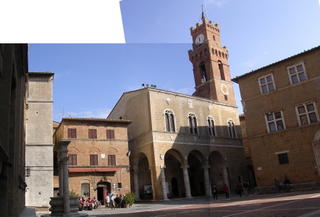
This is the word associated by our Elderhostel hosts, the Green Guide, travel websites, and real estate agents with the town of Pienza, which was on the itinerary for Tuesday October 11. In 1516, the English Humanist Sir Thomas More coined the term”stemming from eu-topia, “the good place” in Greek but also from ou-topia, or “no place””to name an ideal city state, but also to lightly mock the notion of such an ideal. Pienza was created by our local hero with the funny name, Pope Pius Piccollomini, an Italian Humanist crowned poet-laureate and later head of the Catholic Church. Like More, he tried unsuccessfully to bring peace and justice into a world more amenable to agression and greed. PPP dedicated some of his considerable resources to turning his sleepy home town into a showpiece of social engineering and architectural perfection with the help of a great Renaissance builder known as Rossellino.

Like the other hilltowns we had visited, Pienza today is vehicle-free and immaculate. We left the bus in the car-park outside the wall and walked through floral window-box lined streets and discreetly signed shops offering specialties of the countryside into a small but indeed perfectly designed town square. It was all elegant and discreet high Renaissance style, which by now I was clearly differentiating from the cruder medieval and crasser Baroque forms. The city hall to the left, housing a tourist information center, was an airy miniature of Siena’s. Before us was the Duomo’s chaste but lucious travertine facade, backlit by the sun shining on the valley below. To the right stood an unostentatious but imposing structure recalling the Villa Antenori that had lured me in Florence. This was the Piccollomini Palace, through which we were conducted by a local guide whose Italian-accented English was even thicker and more savory than that of our native Elderhostel facilitators.

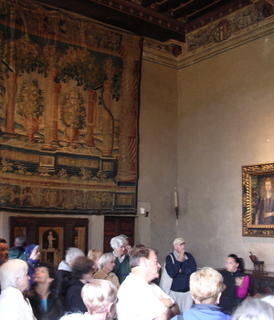
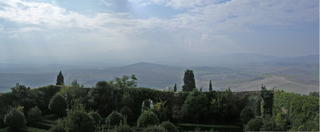
The place was inhabited by PPP’s descendants until 1968 and then maintained in the condition they left it”sparely furnished with centuries-old portraits and tapestries accentuating 20 foot ceilings, wall frescoes, and the light pouring in through large stained glass windows ornamented with the family coat of arms signifying either accommodation between the cross and the crescent or the triumph of the latter over the former. Also in evidence were 20th century photographs showcasing the blood connections between this family and the royal Italian house of Bourbon along with the heroic expoits of pilots in Mussolini’s air force. Out on the three story loggia we learned that the lovely though too misty view of the formal gardens and Val D’Orcia below was itself a UNESCO world heritage site.

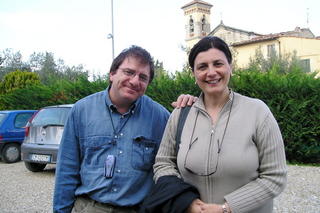
Jan and I roamed slowly through the village, trading photo-ops with another couple under the street sign placed here to promote tourism in the nineteenth century, joining those window shopping for real estate, and buying Pinocchio puppets for our grandsons and some typical Tuscan ceramics I have faith were not produced in China.

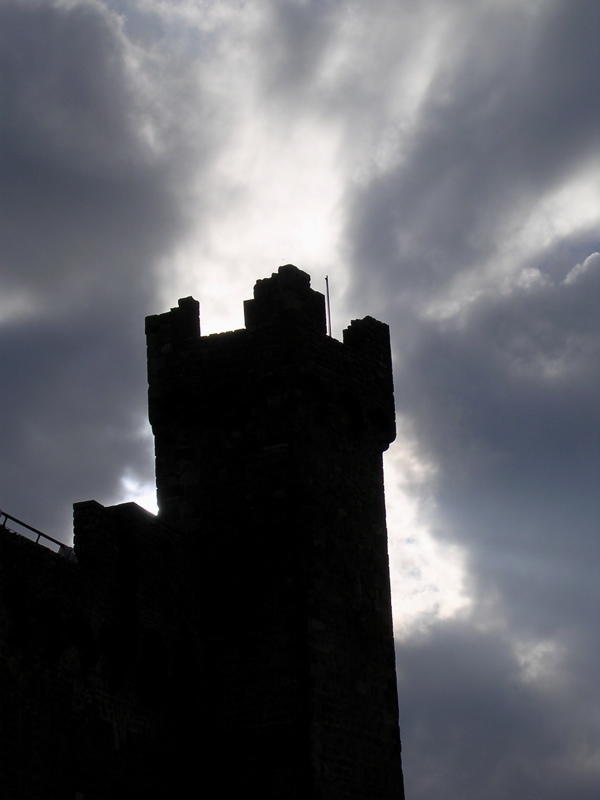
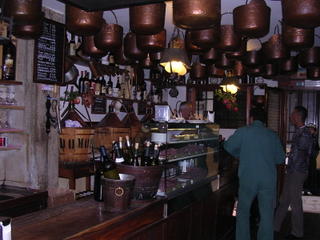
After lunch the bus wound through the painterly countryside of La Crete and left us off in nearby Montalcino, home of the legendary Brunello, allegedly the crème de la crème of Italian wines. Seeking some exercise and adventure trekking through the steep streets of this larger town, we found ourselves suddenly marooned at the bottom of the hill, far from any restroom. The relief provided by facilities in the Enoteca we finally came upon eclipsed the pleasure of drinking a seven dollar glass of the house specialty.

Ospedale

Thursday, October 20th, 2005

photo gallery

Monday morning reunited us for the last time with Donatella, again in the piazza in front of the Duomo. There was no preparatory lecture for this excursion, and the façade of the building we entered “the Ospedale or Museum of the former Hospital of Santa Maria della Scala–was unimpressive, so the significance of the place took a while to dawn on me and has continued to grow until today, when I discovered a wonderful new website about it still under construction. Like Santa Maria Novella in Florence, this is a place I’d like to revisit equipped with more knowledge.

Donatella told us that the unimposing building we had entered was actually much larger than the Duomo, and at a volume of 350 million cubic meters, I suspect it’s larger even than the abandoned Superduomo project. Some of its size became apparent after we descended from the large chapel and entry chambers on the ground floor to the levels below, each of which seemed to extend deeper and wider through labyrinthine vaults and arched chambers. Nowhere was there daylight, but vertical and horizontal shafts opened at every turn to what looked like an infinite regress of excavation and renovation. Only when I discovered this image of the rear view of the complex on the website did I have any sense of how such a building could ever have been constructed.

Until a few years ago when its functions were moved to a new location, Ospedale was in continous operation for ten centuries as a City Hospital and Welfare center–according to the Sienese the first such institution in Europe. Today it houses a cultural complex including restored chapels and antique medical facilities, a display of the original sculptures decorating the fountain in the Campo (including Jacopo Della Quercia’s exquisite statue of the Virgin Mary), an archeological museum and ongoing archaelogical dig, a film museum, and a conference center, which during our visit was hosting an international convocation on Fair Trade.

Donatella ended the tour back up on the ground floor in the Sala del Pellegrinaio, or Hall of Pilgrimage, the intake wing of the ancient hospital where both residents of Siena and millions of pilgrims who fell ill on their journeys were tended by medical staff supported by the city and an independent foundation funded by The Bank and private bequests from those who had been helped. The walls of this great hall had originally been covered by frescoes on religious subjects, but in the fifteenth century they were replaced by an amazing sequence by Vecchietta and Domenico di Bartolo depicting the suffering of patients and the healing efforts of hospital staff and administration. The connections between the intrepid and the frail, between Hostel and Hospital, travel and pilgrimage, life and journey kept growing in my mind. Frequent signage around Tuscany linked our route with Canterbury England where Chaucer’s fourteenth century company of pilgrims ended their voyage to the shrine of Thomas a Becket, “the holy blissful martyr for to seek/ That them had helped when that they were sick.” For this aging vulnerable traveller and client of present-day “health care delivery systems,” it was not hard to imagine the solace that the frescoes would offer both poor and wealthy entrants to this building.

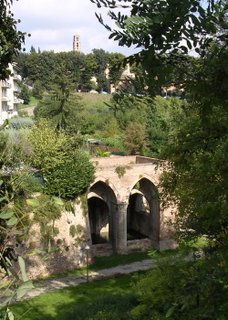
Discharged from the Ospedale, we planned to test Jan’s sore knee and my irritated lungs with another attempt at hiking out of the city and up the neighboring hill of L’osservatoria. We bought procsciutto and pecorino at a deli and followed a winding street through the wall below the towering cathedral of St. Francis. At a traffic intersection I noticed a pool of crystal clear water covered by vaulted arches in a green gully below us. We descended to this unnamed fountain–which we later we learned was a medieval laundromat– and ate lunch at its edge before continuing across railroad tracks and freeway to a footpath heading up the forested ridge opposite the city. After encountering chickens in an olive grove and a girl chasing butterflies, we found the old monastery and school for children adjoining a church that had been destroyed by bombs during WWII and later reconstructed. An acolyte told us where we could catch a bus back to the city, and at the stop we met the butterfly girl again, who turned out to be a grad student in lepidopterology. The bus made a circle tour of the suburbs, stopping en route at a huge hospital complex that I realized was the one monstrosity that marred the perfect landscape I had admired from the City Hall Tower. Jan pointed out that this must be where the Ospedale had been relocated and mentioned she had read that Siena is known today for its excellent healthcare and medical research facillities. At 5:00 a.m. on the morning of our departure a few days later, she got into a conversation with two jetlagged young men who had just arrived to work at that hospital on a vaccine against the avian flu currently threatening a world-wide pandemic.

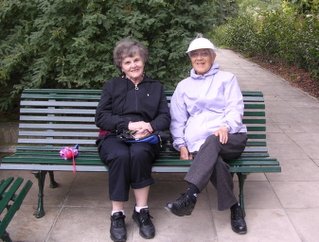
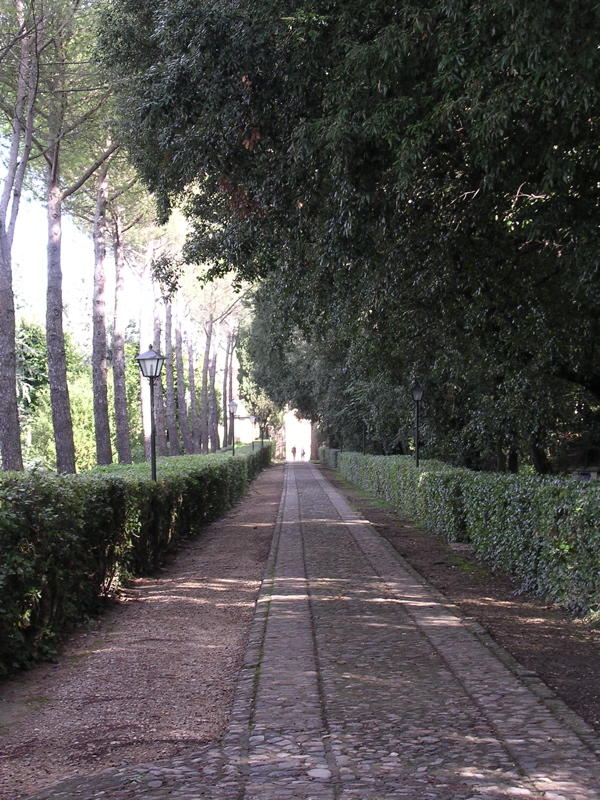
Our day’s pere- grinations concluded at the top of the grand allee in the Hotel Garden where we found our amiable table companions, Sydell and Aeko, sitting contentedly on a bench waiting for dinner. Sydell is from New York City and once taught math at the same school where Jan taught English. Aeko is from Berkeley. Twenty years our seniors, they met long ago at an Elderhostel and since then often travel together in exotic places.

Sunday Saunters

Wednesday, October 19th, 2005

picture gallery

The Elderhostel program dedicated both morning and afternoon of Sunday to instruction about The Palio, a traditional horserace among contestants from Siena’s 17 ancient neighborhoods. The weather had cleared, the topic itself didn’t interest us as much as others and after four heavily programmed days, Jan and I conspired to cut the morning classes and wander the city with the Michelin Green Guide as our instructor, hungry for exercise and some unpredictable adventures.

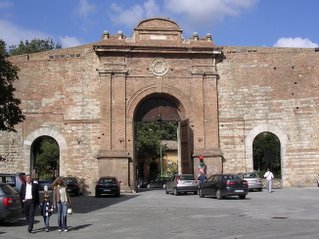
Fortified by an extra café”a shot of espresso costing 80 cents that not only wakes you up but works as a mood elevator gulped at one of the ubiquitous bars–our plan was to circle the city on top of its wall. When that proved impossible, we followed its base to the fortress built by the conquering Florentines to control Siena in the middle sixteenth century. Its presence explained the hated Medici coat of arms mounted on the City Hall that we had puzzled about earlier. Why that symbol of enemy domination hadnt later been removed, given the bitter rivalry between the two cities continuing to this day, remained a mystery.

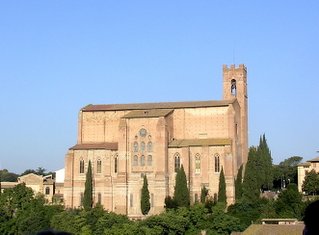
We came upon swans and geese in a grotto in La Lizza park–deserted this early in the morning”some impressive old oaks, a charming merry-go-round that made us miss our grandchildren, and lovely prospects from the ramparts of the fort. As the city slowly filled with people in the late morning we entered the Cathedral of San Domenico. This is another huge temple of several stories built into a hillside only minutes away from the Duomo. There we joined large crowds of Italians who had come to see a reliquary containing the head of St. Catharine, the popular patron of Siena, and gory frescoes depicting various tortures and martyrdoms painted by an artist with the intriguing name of Sodoma. Our exchange of sardonic remarks was interrupted by an extraordinary harmony emerging from the far end of the nave. We followed it to a group of ordinary-looking working men standing in a semicircle, their eyes intent on the hands of their conductor, their faces transported by the sound of their own perfectly blended voices ranging from countertenor to bass. They sang two short hymns and then faded into the crowd of tourists and pilgrims.

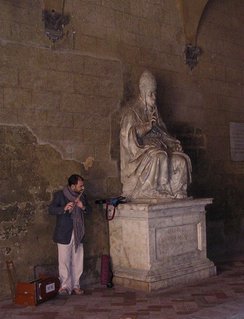
We continued our saunter, looking for a bookstore to get a map of local footpaths to plan our day-off country excursion and got sidetracked into the vestibule of the Papal palace by more unusual music that came from a man taking advantage of the cavernous acoustics playing Persian sounding melodies on the flute and accompanying himself with a foot-pedalled harmonium.

After lunch we rejoined our group and were led to the Goose district–one of the neighborhoods or Contrada–by a professor who specializes in studying the institutions of the Palio. The last race took place back in August, but this was the night that the victors of the Tower district would be celebrating with a banquet hosting 4000 people, most of the planned festivities centering on ridiculing their opponents, especially the Goose. Our lecturer pointed out that the neighborhood was deserted. On this weekend the losers got out of town. Nevertheless he had secured permission for us to enter their chapel and museum, filled with frescoes and inlays and paintings juxtaposing the Goose totem with the Virgin Mary and with St. Catharine, who had been born in that district, and displaying all the “Palio” or flags of victory that the district had won over several centuries. Rival neighborhoods hated each other almost as much as Sienese hated Florentines, and intermarriage between them was still considered a serious transgression. Our lecturer told us that this neighborhood solidarity accounted for the fact that there was practically no crime in Siena”an embodiment of the maxim that “it takes a village.”

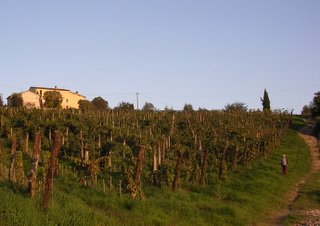
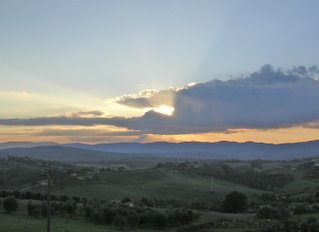
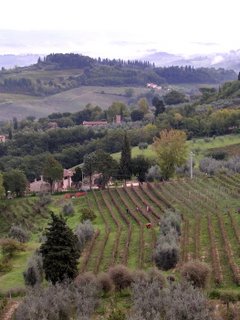
His enthusiasm, expressed in a two hour harangue that followed the two hour lecture we missed in the morning, was less than infectious. We were eager to resume our independent exploration of the city by following our map to the Osservatore”a church in a rural setting on top of a neighboring hill, but as we descended a steep cobbled street Jan’s knee suddenly gave out and we taxied back to the Hotel. She felt better with ice and a few Advils, but it looked as if our ambitious hiking plans might not materialize. I decided to keep exploring in the hour and a half still remaining before our late Italian dinner, and let the map mislead me through two beautiful ridges and valleys filled with vineyards, olive groves, old rural villas, and a palace within a mile of where we were staying. At one point the only way I could get off private property was by pushing through a thick hedge ten feet down to a dirt road. As I tumbled out there was a ten year old boy on his bicycle looking at me in disbelief. We tried to communicate, I by pointing to the map, he by chattering at full speed in Italian, but finally, he remained behind watching me trip off into the sunset.

Traces of Etruria

Tuesday, October 18th, 2005

photo gallery


After returning from San Gimignano and lunch at the Hotel Garden, we heard two lectures to prepare us for the next day’s excursions”one on Etruscan civilization, the other on a fresco cycle by Piero Della Francesca. Next morning our bus met the lecturer, Louise, at an impressive archaeological dig: a tomb complex dating back to the sixth century B.C. revealing steps to an altar, an underground entryway, and under a large roofed canopy, pieces of the tomb’s wall, some partially buried and others in various stages of reconstruction. Etruscan culture predated the Roman and was strongly influenced by the Greeks. On top of the large mound grew a grove of grand old oaks, which I believe were of the species Quercus pubescens or Downy oaks. Views of Cortona, the old Etruscan city on the mountain, were blocked by the weather, but our guide’s engagement, erudition and grace made the visit satisfying nevertheless. A native of Cambridge, daughter of a professional musician, she lives right outside Cortona in a 600-tree olive orchard and works as a restorer of paintings.

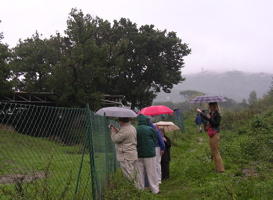
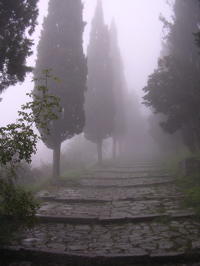
The next stop was the archaeological museum inside the walls of Cortona, which had just opened a new beautifully-designed exhibit of local Etruscan artifacts housed in a venerable medieval building. Most memorable to me were terra cotta funerary urns topped by reclining figures that seemed to have been molded very quickly and expressively. After the museum tour we had an hour and a half to wander in the pouring rain which didn’t deter the Saturday morning market from proceeding full swing. I hiked up steep deserted streets lined with terraced vineyards and olive groves and found a stone footpath for pilgrims climbing toward the Cathedral of St. Margaret. Though grand prospects of the Val di Chiama below were hidden, I was enthralled with the moody twisting path lined by dark cypresses. I reached the top just in time to pay for a coffee in order to use the bathroom at the café adjoining the Cathedral, which was just closing its doors after mass. Perhaps it’s age or perhaps it’s Italy, but never before in my travels do I remember the quest for the toilet being as frequent or dramatic as it was here almost every day.

I rejoined our soggy group for a sumptuous lunch and lots of wine in the brightly lit cellar at Pizzeria Fufluns, after which we piled back into the bus for a snoozy ride to Arezzo, a good sized city about an hour distant.
There we viewed a fresco cycle illustrating a preposterous but lively Tale of the True Cross by Piero Della Francesca. We had more free time to wander in the rain, and Jan and I tried unsuccessfully to follow the signs to the house where Petrarch was born. Instead we found another huge Duomo at the top of the town where a wedding was about to begin, and an elegant city park located in the old fortress.

City of Towers

Tuesday, October 18th, 2005

photo gallery

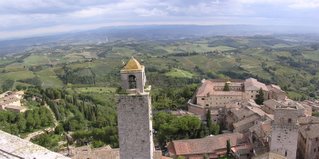
In addition to taking care of all lodging, eating and travel arrangements, Elderhostel contracts with Trinity College to provide an intensive and thoughtfully designed educational program. The second of Rocky’s Thursday lectures was an introduction to the fresco cycle in the Collegiate Church of St. Mary of the Assumption in San Gimignano displaying some remarkably expressive portraits of Judas and the other tormentors of Jesus painted by a shady figure named Barna. Friday morning we took a forty minute busride through the misty Tuscan countryside to this fully preserved walled medieval hilltop town, marked by the presence of fourteen stone towers that served as defensive retreats in feudal feuds between rival families and also as competitive displays of wealth”mine is taller than yours. The crowds of tourists, which I overheard one person say reminded them of Mont San Michel in Normandy, hardly distracted from the familiar beauty of the countryside. I had seen it before in the background of many Renaissance paintings. The church was opened especially for our tour, but we were given time only to view the Barna cycle and a small chapel dedicated to Santa Serafina vividly painted by Ghirlandaio. Picture taking was prohibited here as in most churches, and the web images I’ve linked to usually dont do justice to color and detail. Before we left I got to ascend the city hall tower and enjoy panoramic views of the town and countryside.

The Allegory of Good Government

Sunday, October 16th, 2005

photo gallery

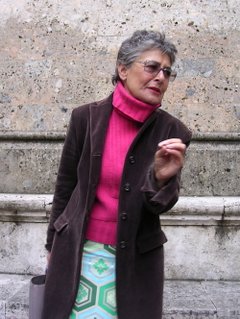
The group met our guide Donatella in the courtyard of the Bank of Siena. A vibrant, stylish and witty woman, she’s an art historian who works as a freelance tour guide and lives in the middle of the city in a tiny apartment.

My first impression of Siena was of another living museum, not like the impossible and decomposing artifact of Venice, overwhelmed by tourism and outside investment, but a treasured relic framed and preserved by wealthy benefactors. This was confirmed by Donatella’s canny introduction to the aesthetics of the city in the setting of its economic underpinnings. The Bank of Siena’s corporate headquarters in Salimbeni square embody examples of the city’s three perfectly preserved styles of architecture: gothic, Renaissance and Baroque, thirteenth through seventeenth centuries. The bank was instrumental in the rise of the city in the early Renaissance, and then as now a substantial proportion of its yearly profits are invested in city infrastructure and social services. The Bank’s logo is the same black and white shield as Siena’s, with the added motif of three cylinders signifying the three steep ridges upon which the city is built.

Clear weather accentuated dramatic effects of light and shadow in the narrow, turning and sloping streets. As in Florence and Venice, I felt intoxicated by the first exposure to this walk-through masterpiece of architecture, city planning, and sculpture, drinking in the changing sights and sounds like the first sips of a glass of Brunello wine for which this region is known. The climax arrived as we descended through a high arched opening in the walled street into the huge enclosure of the Campo, the famed square we had read about in our travel guides and in the book Natural Light in the Italian Piazza, by Sandra Lakeman, a colleague at Cal Poly.

This ancient space creates a remarkable sense of both freedom and enclosure intensified by what Donatella told us of its setting in time and space. It was one of the first secular public spaces in Europe, both complementing and competing with the square in front of the cathedral. In a time when rulers fear that such plazas would expose them to riots by the crowds it attracted, the design of the Campo expressed confidence in the support of the populace of a republican city-state. This civic spirit was further elaborated in frescoes we viewed in one of the many splendid rooms inside the Palazzo Publico known as the Allegory of Good and Bad Government. They portrayed abstract Aristotelian virtues and vices and concrete views of life inside and outside of the walls of well-governed and poorly governed city-states. Later in the day, we attended a lecture about the frescoes and the civic humanism they represent delivered by Rocky Ruggiero, a dynamic young Italian-American scholar. When Siena became a republic ruled by a council of nine rich merchants in the late thirteenth century, it billed itself as the model of the new secular state. The utopian and dystopian frescoes were meant to inspire the self-selected oligarchy of “the nine” who met in that chamber to do their jobs conscientiously. They reminded me of the contrasting images on the shield of Achilles in Book 22 of the Iliad.

The Palazzo Pubblico also contains a famous Maesta by Simone Martini, one of Siena’s notable artists. The Maesta subject–the virgin Mary sitting crowned as a royal ruler surrounded by saints and heroes of the church with the baby Jesus on her lap–is common on altarpieces in Italy. Jesus is usually represented as crucified rather than as ruling, and God the Father is often absent. The great cathedrals we saw were all dedicated to her: Santa Maria Novella and Santa Maria di Fiori in Venice, Salute in Florence and Santa Maria della Scala in Siena.

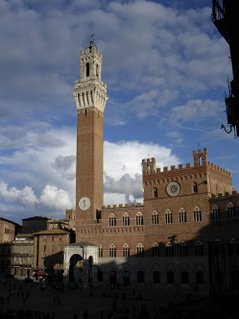
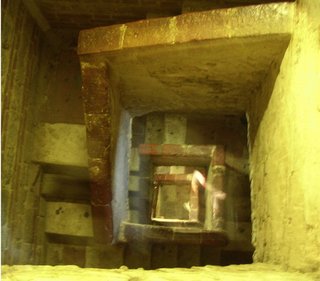
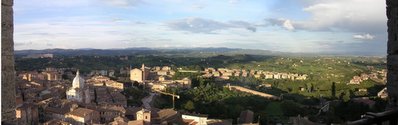
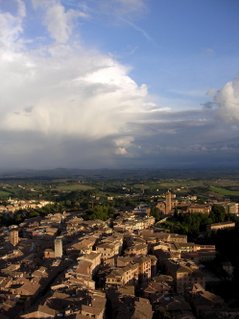
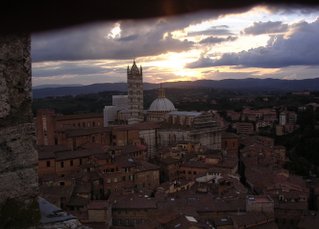
After the morning tour and Rocky’s afternoon lecture, the group went back to town by bus to visit an Enoteca–a wine bar–for an instructional tasting session. I’d been longing to get into the City Hall Tower, the Torre del Mangia, and the late afternoon light was getting more dramatic by the minute. The line to get in magically disappeared and I raced to the top and watched an indescribable pageant of changing light and shadow on a transcendant landscape.

Taking pictures helped me absorb and hang on to what seemed like a moment akin to Dante’s ascent to Paradise. The time I was spending in churches or looking at sacred monuments was getting to me. All this art and architecture–this talent and effort that had gone into creating and preserving these monuments could almost bring me religion.

But only if I ignored that Florence and Venice and Siena were often at war with one another and each praying to the Virgin for defeat of their enemies, and that gratitude for her mercy was offered by the survivors of the plague, who, as Jan pointed out, must have been left with huge amounts of money after one third of the population died.

When the sun set I came down from the tower and found her and the rest of the group of elders also jubilant after finishing up their third glasses of homework in the Enoteca. I caught up quickly and rode home in the bus doubly intoxicated.

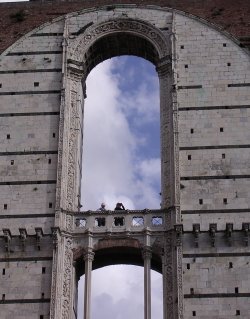
Next morning Rocky lectured on the Duomo in preparation for our afternoon tour. His combination of erudition, insight and wit enhanced our experience of the art. Duomo, he informed us, has nothing to do with Dome, but comes from Domus, the throne or seat of an archbishop. The churches’ political and economic roles complemented their religious functions. Siena was a way station for most pilgrimages to Rome and Jerusalem and experienced a constant influx of medieval tourists. The Cathedral they stopped at was on the highest point of the city. The rivalry between Florence and Siena dominated the period of Siena’s prosperity from the thirteenth to the sixteenth century, though Florence won most military battles. After an upset victory in 1280 the Sienese decided to expand their cathedral to make it the largest in the world–larger than the immense Duomo being built in Florence–but the Black Plague of 1348 as well as construction problems forced them to abandon that ambition. They reverted to completing the Cathedral’s original design, and the partial façade of their Tower of Babel comemorates their hybris.

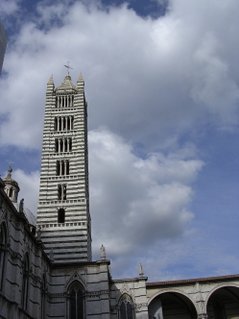
The existing building, not as large as either the Florence Duomo or St. Peters in Rome is still gargantuan. Constructed in the popular Tuscan style of alternating green and white stripes of marble, the Cathedral houses an amazing collection of art treasures accessible to long lines of tourists for the entrance fee of 5 Euros–about 6 dollars. Rocky pointed out that Catholic religious art and architecture is rarely about restraint and balance, the formula being the more the holier. In the afternoon Donatella led us through it. The floor of the vast transept is covered with marble inlay scenes by every artist that counted over a period of 250 years, including Michaelangelo and Donatello, a chapel designed by Bernini containing two of his plastic and twisted marble figures, a stone pulpit with a frieze by Giovanni Pisano that reminded me of the Ara Pacis celebrating Augustus’ reign in Rome, and the Piccolomini Library, a late fifteenth century chapel covered wall to ceiling with immense, colorful and detailed frescoes by Pinturicchio and his assistant Raphael celebrating the life of one of Siena’s own, a humanist scholar, poet and diplomat, who became Pope Pius II.

Not an inch of this vast and complex space was left undecorated over the period of eight centuries it has collected tribute, including one wall bedecked with motorcycle helmets of those who escaped death in accidents. But an hour and a half of overstimulation and dense crowding was all Jan and I could take. As a chaser we went shopping at Upim, the local department store, and found, on sale, a sportjacket, pants, two shirts and a hat for me, a teaching wardrobe for the coming year.

Venice to Siena

Sunday, October 16th, 2005

photo gallery

Sunday night in Venice the rain picked up and the water level on the steps to the Rivo outside our room kept rising. I was tired after working on pictures and words from 2 to 5:30 A.M. After breakfast in the Poste Vecchi we put on as much raingear as we could muster and negotiated the by now familiar maze to the Vaporetto stop. We got off at the Academia, Venice’s premier Art Museum, shoes, stockings and pants soaked. It was built by Napoleon after his conquest of the city also known as Serenessima in the early nineteenth century. Napoleon loved the place, had one of its Church’s demolished to improve his view of the Grand Canal, voided the laws which restricted Jews to living in the ghetto, and built this museum to house many masterworks that he removed from cathedrals and churches. Among the ones we most enjoyed were some medieval altarpieces, portraits and landscapes by Bellini and Gorgione, and immense architectural canvasses by Veronese and Titian. I was disappointed by the dim lighting on this dark day outside, and also by the lack of any vibrant colors in works that clearly were intended to dazzle, but appeared dimmer than many of the restored frescoes we had seen in Florence.

After two tiring hours we left the museum in a downpour braved by a long line of people wating to get in. We got out of the rain for lunch at the familiar Antica Trattoria and dried out and had a siesta back in our room. It was great to be warm, dry, sleepy, and to take a small break from our steady diet of overstimulation. In the late afternoon we started out to take a vaporetto to a place we hadnt been before, but it got dark earlier than expected and we headed back to our home neighborhood, stopping on the way to pick up some peccorino–sheep’s milk cheese–and prosciutto from our favorite deli. We also stopped at Cantina DaMori, one of the many wine bars that locals congregate in to escape Venice’s rain, the claustrophobia, the sewer smell and the crowds of tourists, and drank a glass each of the housewine drawn from barrels by the barman who told us that this was his private stock from a small vineyard that had been in the family for many generations. It did the trick.

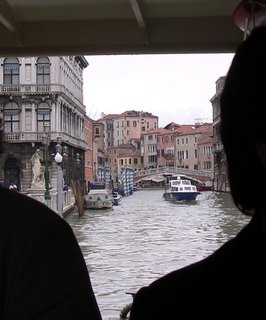
Tuesday was departure date. Had the weather been clear, it would have been difficult to leave, since we had not yet penetrated most of the city, nor any of its outlying islands. But passing the now familiar palazzos on the crowded vaporetto, I was glad to be heading for the railroad station and not sure that I’d want to return.

On the Eurostar train to Florence we chatted with three couples travelling together from Curritiba Brazil. We had read about this city as a successful utopian experiment in Amory Lovins’ Natural Capitalism and seen a film about its remarkable successes in city planning, social services and especially transportation. These natives of the place had little positive to say about it. They complained that there was no subway.

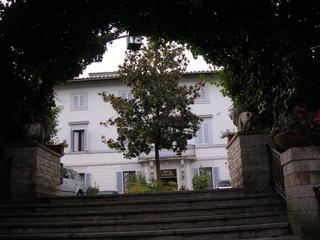
We switched trains to Siena in the familiar hub of Florence’s Santa Maria Novella station, known to locals as S.M.N. and arrived at our new destination in time to shower and meet the Elder Hostel group we had signed up for more than a year ago. The “Hotel Garden” was more luxurious than I had expected, a not unwelcome surprise. An old manor house, built in the seventeenth century, it was located on a large property twenty minutes walk from the old city on a hilltop with views in several directions, and surrounded by well kept formal gardens. There were frescoes on the ceiling and smiling concierges saying buona sera at every turn–the kind of place I remember wanting to stay at when we drove through Brittany eight years ago, but couldn’t dream of affording. Now it was all part of the prepaid package deal.

An opening reception introduced us to our conscientious shepherds for the days ahead, Agnese and Giuseppi. Their welcoming remarks and disarming self-introductions were delivered in excellent but heavily accented English requiring such close listening that it almost seemed we were understanding a foreign language.

Our fellow hostellers hailed from all over the U.S., many of them ex-teachers, all animated, excited to be here and talk about themselves, seasoned travellers, and with a few exceptions, ten to twenty years older than us. I felt a little intimidated to be in this group, both because they seemed like a foreign breed and because it reinforced my sense that I was being transformed into one of them. The talk was all about hometowns–Anchorage, Lincoln, Asheville, New York–and former professions–architect, accountant, nursery school teacher. Nobody talked politics, but there was an air of hesitant curiousity. How many of these folks were Bush and War supporters? The ice was broken several days later, when it turned out that many loathed him, including quite a few life-long Republicans. We surmised that despite their red-state backgrounds, people who travelled and were interested in art were likely to be on our side.

Having arrived in a world of comfort and security, I went to sleep on time and didn’t wake up until morning. My disease and insomnia disappeared, and I stopped writing in this journal. I remembered Thomas Mann’s insistence that creativity was a byproduct of illness.

The Church and the Synagogue

Sunday, October 16th, 2005

picture gallery

Sunday morning the glorious weather gave way to a familiar Italian drizzle. We packed and moved our bags to our new lodgings al Poste Vecchio and Jan picked our destination as San Giacomo dell Orio, a thirteenth century Church our map indicated contained a mixture of styles from thirteenth to seventeenth century. It was like a treasure hunt to find this new neighborhood, probably less than a quarter of a mile away, but a half hour of map reading and staring. The whole city is only 3 by 5 kilometres in extent but it contains 354 bridges, 177 small canals, 153 churches (each an architectural beauty), and 127 small squares.

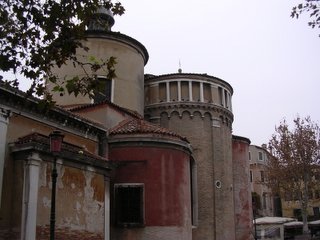
We arrived at San Giacomo just as mass was starting at 11:00 and had little choice but to sit down and join the local congregation of many ages, including young children, which filled all the seats. The service started with a folksong “Hallelujah” hymn accompanied by guitar, the same rendition they use in Jan’s mom’s Presbyterian church. After a few short readings from the Bible by members of the congregation, the priest took the pulpit. He was dressed in full regalia, green robe, white stole and more, and he looked the traditional part, with a bald crown and long, thick wavy white hair on the sides. His voice was fluent and cultivated but he read his sermon, and though I couldn’t understand any of it, I got the impression it was provided by a higher authority. It was a good time to meditate and to admire the inside of the church, which included a 14th century wooden ceiling, a sixth century column, a stone lombard pulpit, and many paintings that we couldn’t get close to. At the end of the sermon when the congregation rose, we made a discreet getaway out the door of the nave and admired the tower and some bits of celtic looking frieze embedded in the wall in another little square out back where restaurant waiters were setting up chairs and tables under tents.

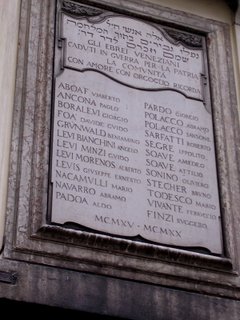
After another rest and picnic back in our room–we try to limit restaurant meals to one per day–we headed for the railroad station to reserve our seats to Siena. The same district of Canareggio contains the ghetto, home of Shylock and Jessica in The Merchant of Venice. To get there we needed to thread through crowds in a tourist district, but once we crossed the Cannareggio canal, the neighborhood was quiet. The buildings on either side of the narrow streets were taller than we’d seen elsewhere, one of them eight stories. On one wall was a stone plaque with names of people who had between 1915 and 1920 “fallen in the war, for the fatherland and the community recorded with love and pride.” It included my mother’s maiden name, Gruenwald. We crossed a bridge and came out on a large walled square with several shops selling Judaica. On one side was a holocaust memorial and a Jewish nursing home.

At the Ghetto museum we paid for a tour of the old synagogues. Our guide was a tall elegant woman with huge eyes and a mane of wild kinky hair. She wore a diamond studded star of David around her neck. She led us upstairs and unlocked a door to the German synagogue, a windowless room, tiny by comparison to any of the churches we’ve seen, with an elaborate gilt ark at one end and bima or pulpit at the other. She went through her spiel in highly accented but good English, with a strange mixture of boredom, suppressed anger and imploring eyes. She told the history of the ghetto. Jews had lived all over the city in its early days, performing essential functions of money lending, today known as finance, that were forbidden to Christians. In the late fourteenth century, an edict was issued requiring the Jews to live in this small section of the city, which was gated and locked at night. Whenever they left this section they had to wear yellow armbands. Rather than one community, there were four, distinguished by their countries of origin–two northern European Ashkenazi and two Spanish and African Sephardic–each with its own synagogue. The synagogues themselves all have upper gallieries, where women could watch but not participate in the services, separated from the men below by latticework screens. The communities thrived and the population increased to over 8000 people packed into a tiny space, requiring the construction of more and more stories on the buildings.

In the next synagogue, the Polish Ashkenazi, she continued the narrative. The ghetto was opened by Napoleon and the Jews were allowed to move out, but then closed again after his defeat, and then opened again with the establishment of the Republic in the later 19th century. The fascists under Mussolini required all Jews to register and move back to the ghetto. As the war proceeded, they turned the lists over to the Nazis, who came in and deported all the inhabitants to concentration camps. Only a few families returned, but now about 400 Jews are left in Venice.

The third Synagogue, a Sephardic one, was elaborate Baroque, designed by Longhi, the architect of Salute Cathedral. Jews were forbidden from practising trades or owning land, so the construction of the synagogues was performed by hired craftsmen. Our guide attends this synagogue but doesn’t live in the ghetto. She told us she would prefer to since it is now one of the more desireable neighborhoods in Venice because of its lack of crowds and proximity to the railroad station and parking garage. In response to our questions, she went on to describe the difficulty of being a resident of this dream city. The desire for preservation means that you cannot do any renovations or repairs on the ancient buildings without official permission. When a pipe broke under her living room floor, she wasn’t allowed to tear up the antique terrazo, but had to put in a whole new plumbing system. People have to carry their groceries through the narrow streets and over bridges. There is nowhere for children to play. And the taxes, rents and property values keep going up as rich Americans and Japanese buy residences in the city which they usually leave uninhabited. So the indigenous population of Venice has decreased by 25% in the last five years.

A Shakespearean experience of Venice–what appears as good is not so good. Jews are victims of Christians, loyal to one another but also their own worst enemies. The city of love and glamor has an underside of greed and disfunction.

The rain got heavier. The canal smelled stronger. We came back to our hotel and dressed for dinner at the classy restaurant affiliated with our hotel, the Poste Vecchi. We took the tourist menu. The pasta with funghi (mushrooms), the sea bass and the crème caramel were all extraordinary. Next to us sat two parents and a college age daughter from Australia. He was a lawyer and she was a professor. Our conversation lasted late.

At 2:00 A.M. I woke up and couldn’t get back to sleep. I worked on the journal until 5:30 A.M.

Salute

Sunday, October 16th, 2005

picture gallery

After another sleepless night, my cough subsided enough for us to perform the long postponed rites for which Venice is named and famed. Euphoric to begin with, we walked out the door of the hotel and found a different city.
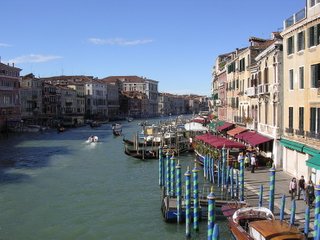
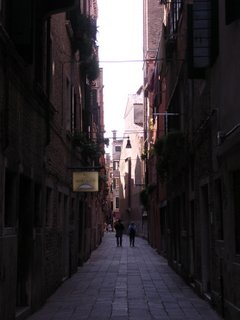
The sunshine dazzled, the sky shone lapis blue, the buildings sparkled. We strolled down the shadowed “Calle” back toward the Rialto and found the gothic arched open-air fishmarket that had been an empty stone platform the previous afternoon packed with excited fishmongers and customers and with trays of squid, octopus, shrimp, and prawns. We made our way through the adjoining open air vegetable market and climbed the Rialto bridge and looked down the Grand Canal at a scene of unreal richness and beauty. This was what we came for–we and the millions of pilgrims who arrived here for the last thousand years: an ancient work of art that you can walk and ride around in.

We boarded Vaporetto 1 and found seats near the bow. Each second of the trip presented a new spectacular view: a gorgeous palace, a hanging garden, a luxurious gondola, the opening of a side canal down which one could see a world of bridges and towers, a church with a façade in classical, baroque or uniquely Venetian style. And within minutes, the whole overwhelming prospect transformed as the boat moved from one bank to the other and followed the waterway’s serpentine curves.
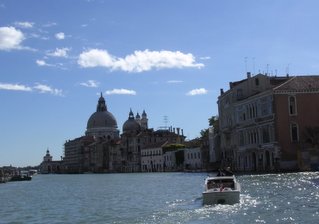
Around one, the banks widened and the road ahead changed from a narrow river to a wide expanse of sea scattered with distant islands of towers and domes outlined against a vast sky. The right bank ended in a peninsula on which stood the cathedral of Salute–health. The left bank revealed the climbing tower of the familiar St. Mark’s Square, the anticipated climax of the voyage. I was grateful to be looking at much of this display through the tiny frame of the camera’s viewfinder, both to preserve the memory of it, and to contain my present impressions.

The vaporetto emptied at the San Marco quay, and the wonderland sensation gave way to claustrophobia that reminded me of the crowding we had seen in the many frescoes of both heaven and hell. Jostelled along by a mob of fellow gawkers, past stand after stand of souvenir hawkers, I noticed a monstrous apparition growing on the horizon, blocking my view of the sea and the islands:
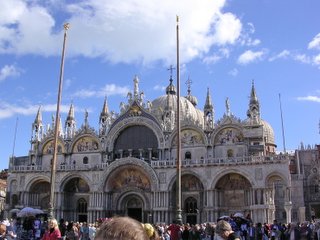
it was a cruise ship taller than any of the towers of Venice and as long as St. Marks plaza itself, heading straight for us, with mobs of tiny people crowding its decks–a barbaric invasion of the grossest modernity laying claim to this ancient sanctuary. I stood on line to use the public bathroom, and the dour woman at the turnstile told me the three day pass I flashed her would not work here and it would cost a euro to urinate. As we approached the famous square, along with endless lines of people waiting to enter tower, cathedral and palace, we saw the two huge facades under renovation covered with billboards advertising corporate sponsorship by Mazda and a hotel chain. My fatigue returned, so we wound our way back to the hotel through the shadowed labyrinth of tiny streets, tunnels and bridges between St. Marks and Rialto.

It was a relief to be back in our neighborhood, where the bright sunshine made every square meter of brickwork or pavement or façade or alley prospect into a visual and intellectual feast. After lunch in a quiet nearby square, our table at the edge of a tiny canal wharf, we penned a route that would end on the quay facing the island of Iudecca through the maze on our map. The souk-like layout of the city makes this a challenge, since almost no streets are longer than 100 yards, and many are dead ended at cul-de-sacs, wharves, and gates. Each of the twists and turns presents new delights–fountains, entryways, rooftop gardens and clotheslines, contrasts of texture, color, form that have evolved and ripened over the ages, walls and tunnels darkly framing the sundrenched images ahead.
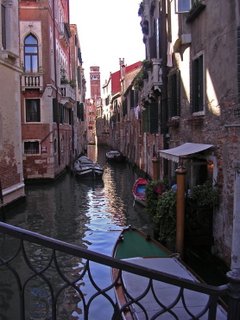
Every few minutes, the slot canyons of streets and canals open to a small piazza–a space by a church or civic building graced with cafes and occasionally a few trees. A third of the way through our itinerary, we stopped at one and I sat in the sun on the steps of a little bridge and nodded off into a luscious slumber. Jan awakened me after a few minutes and urged we go back to the hotel, where I tried to continue my nap as she started trying to locate a doctor. The Blue Cross contact phone numbers she had brought yielded only discussions with people in India and no medical referral, while I regained strength, encouraged by an ability to sleep without coughing. We went out again, for a short sortie, and found ourselves at a flea market in the piazza of San Silvestre. This was a strictly local event, where kids played and residents sold stuff they collected. Jan needed a hat to replace the crummy one she had purchased from a stall in San Marco. On one of the tables we found a finely crafted Tyrolean chapeau and managed in pidgin Italian to bargain the seller to an acceptable price. The first full night sleep in over a week came early.
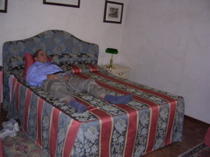
Saturday morning is again brilliant weather. We decide to spend two more nights in Venice and abandon the idea of going to Padua or Verona before meeting our Elderhostel group in Siena. There’s no room at the Mercanti but after a short search we find another place nearby, The Vecie Poste: the room a little less money, a lot less plush, bordering a small canal and graced with the occasional fragrance of sewage. In contrast to the robotic filipino gentlemen who ran the Mercanti, this place has a manager who’s a real concierge–the brother of the owner of a fine restaurant with the same name next door.

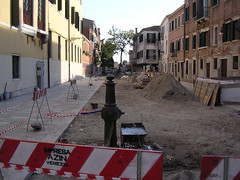
Roaming the immediate neighborhood we find an internet access place, located at the back of a blue jeans store, reached through a pigeon-shit caked alley strongly smelling of sewage to catch up on email. I tire and we return to our room with picnic lunch for a rest. Jan has found announcement of free concert at 4:00 in the Church of Salute. We leave early and now expertly find San Silvestre Vaporetto stop. We sit on the steps of this cathedral, looking out at the islands in the lagoon and San Marco in the afternoon sun and then walk around it through back streets which reveal some of the infrastructure repairs that appear all over the city. Part of a small canal has been sealed off to replace ancient leaking lead sew49er pipes and stone and wood foundations of houses and to raise the pathway a foot to protect it from flood tides and provide space underneath for the electrical lines and other infrastructure that are now attached to the outside of buildings. The old stones of the original walkway are stored in piles to be put back in place and create the illusion of antiquity. This reminds me of the restoration of Walden Pond I saw a couple of years ago in Massachusetts. Human impacts had created so much erosion that the banks were all bulldozed and new rock and sand and vegetation were installed and stabilized with heavy steel netting that was only visible if pointed out. Restoration like this is observable everywhere in the city. The effort, skill and cost required must be astronomical, and as it proceeds, the old decaying Venice will indeed turn into a new theme-park version.
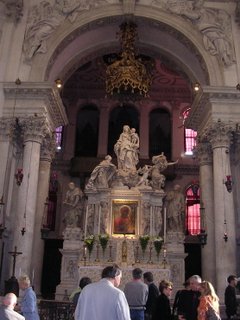
We returned to Salute in time to get good seats for the concert of Bach solo cello suites played by a passionate young artist sitting by himself in a chair in front of the altar. For the last section of the program–a concerto duet with organ–he disappeared into the loft and then appeared again up high to take bows with the young woman accompanying him. The cavernous cathedral made the music reverberate, but watching the performers hands and facial expressions helped to articulate the sound. The longer I sat the more I could appreciate the wealth of detail in the baroque interior, the hanging lamps of varied and coordinated design, the huge torsioned sculptures of the four evangelists leaning on the high pediments, the dozens of additional figures nestled in alcoves, and the light coming through the windows reflected off the water outside getting more brilliant as the afternoon deepened. The full baroque experience converged on the sculptural complex atop the high altar: a triumphant woman holding an infant in her arms, an old man to the right kneeling at her feet with arms outstretched in gratitude and to the left an ugly figure in flight covering his face. The guidebook explanation hit home–this church was a tribute to the Virgin Mary erected by the Venetians in gratitude for the cessation of the plague in the late seventeenth century. Its name, Salute, means health.
After the concert we took a walk along the great promenade facing the island of Giudecca across the lagoon. The wide walkway and the broad expanse of water was a welcome contrast to the exquisite but confining vistas of the calles and rivos where we’d spent the earlier part of the day and most of yesterday. Before taking the Vaporetto back home, we had a drink in a café on pilings over the water. The setting sun painted Jan gold in her new Venetian hat.

Voyage a Cythere

Sunday, October 16th, 2005

picture gallery

Jan awakened Thursday morning around 8, just as I finished writing, and we packed our suitcases, paid the bill and shmoozed with Sandro, who it turns out is not the concierge but since last week the new owner of the Fiorentino. Looking like a sad, ethereal and beautiful figure in a Botticelli painting, he told us he’d been an accountant in Venice, but during a two-week vacation had discovered that his life was boring and decided to buy this hotel from the former fisherman and his family who had owned it. Nevertheless he was lonely, he said, and he was looking for someone to share his life.

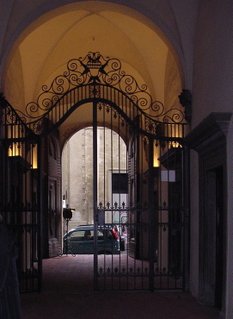
In a light intermittent rain we found our way back to Villa Antenori, an unusually fine looking example of an urban palazzo we’d passed several times in our wanderings. I wanted to see what they looked like inside, behind their forbidding facades. It seemed to be open to the public and housed a wine merchant of the family that built it in the fifteenth century. I found its interior more harmonious than any I had seen, including the Michaelangelo tomb, especially in its combination of traditional furnishings and modern amenities. We roamed in the courtyard, sneaked upstairs to the first floor and higher to see what a top floor loggia was, and walked away with some wine brochures.
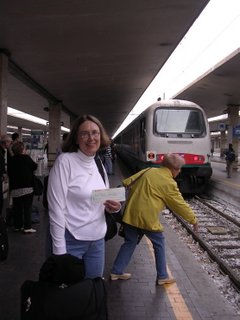
After another trip to the central market for groceries to eat on the train, we hauled our bags to the station to catch the 1:30 to Venice. We both got upset upon discovering that Jan had read the tickets wrong and our train had just left, but it turned out another one left 40 minutes later.

The approach to Venice is a fantasy voyage. The train traverses a long causeway in the Adriatic before reaching terminus at the island commonwealth. Exiting the station you face the Grand Canal lined by oriental filigree and heavy baroque palaces and are engulfed by a furious hubbub of tourists. At a row of ticket windows you buy three day passes for the Vaporetti, the boats providing public transportation, and as you advance to the dock it feels like entering Disneyland. Only this Disneyland is mildewed and rotting and covered with advertising banners and graffiti, and its air is thick with humidity, pollution and sewage.

Debarking from the Vaporetto at Rialto bridge, the sense of crowding, commercialism and delapidation intensified, We bought gelati to fortify us in climbing the steps and penetrating the crowds with our awkward baggage, and followed the smell of the fishmarket to guide us to our hotel. We found the discreet bronze sign of Al Mercanti on a quiet and uncommercial alley. The inside of the building reminded me of Villa Antenori–ancient ceiling beams, brick walls and stone stairs integrated with new plaster, and rich carpets, fabrics, furniture and fixtures. Our first floor room up four flights of stairs was designed by a professional decorator with a large budget. Marble floors, silk brocade pillows, curtains and spreads and collector prints on the walls. Jan led me to the balcony in the vestibule from which one could look down the alley and see a marble statue of a naked pagan god standing in a lit alcove of a wall, its broken white reflection shimmering in the black water of the Grand Canal.

I was again feeling shaky at this late dinner hour, so we found a quiet restaurant around the corner -Antica Trattoria ai Tosi–and were fortified by a fine modest dinner of spaghetti, lasagna and salad.

Friday 5 AM

Yet another night without sleep. I spent it working on this journal or sitting in the steam bath I made of our bathroom to loosen the thickening mucous in my lungs. How can body and mind can take all this punishment and keep coming back for more? Good news: the laxative I bought yesterday worked and the exercises from chiropracter and physical therapist have just about eliminated back pain.