Miscellaneous

Stockholm 2

Monday, August 11th, 2025

Next morning, after loading up on the Scandinavian staple of pickled herring and lox, our small group assembled to meet the local guide, Gaby, a former high school history teacher, who spoke with knowledge and enthusiasm.

IMG_7716

After passing a synagogue built in 1870 and apparantly not destroyed by the Nazis, she stopped at at a memorial honoring slain Jews and the gentile Swedish diplomat Raoul Wallenberg, who risked his life to provide safe passage to people fleeing the murderers throughout Europe. After the Allied victory in Europe, he was imprisoned by the Soviets and never heard from again.

IMG_7719

The prostrated figures reminded me of the memorial in Vienna I saw last year.

Next, with no waiting necessary, we boarded a comfortable electric bus headed toward the Vasa Museum.  It houses a huge sailing ship that sank in Stockholm harbor in 1628 and was salvaged almost fully intact 333 years later.

IMG_7732

It was commissioned by King Gustavus Adolfus, who at the time was fighting wars with Denmark, Russia, and Poland-Lithuania,  a nation  ruled by his cousin and Sweden’s former king who’d been exiled during wars of religion because he was Catholic. “Richly decorated as a symbol of the king’s ambitions for Sweden and himself, upon completion she was one of the most powerfully armed vessels in the world. However, Vasa was dangerously unstable, with too much weight in the upper structure of the hull. Despite this lack of stability, she was ordered to sea and sank only a few minutes after encountering a wind stronger than a breeze.”*

IMG_7752

Just as memorable as that story was the one of the sunken ship’s discovery in Stockholm harbor and its recovery and restoration between 1961 and 1990 presented in the museum’s film theatre.
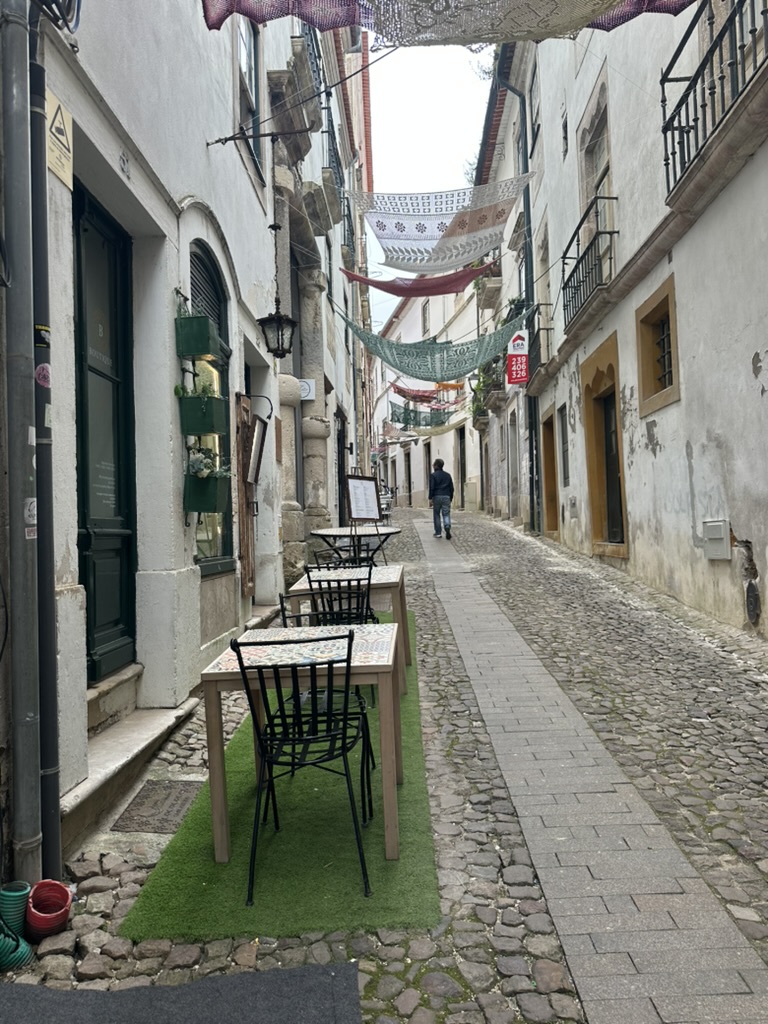
A tiring walk through the crowded streets of Gamla Stan, the well preserved old section of the City

IMG_7772

ended with a short ferry ride back to the harbor

IMG_7766

and dinner in a cafe served by cheerful young waitstaff,

IMG_7778

and return to our opulent hotel room.

Stockholm 1

Monday, August 11th, 2025

Arriving in sunny Stockholm, I was energized by the luxury of the room we were assigned at the Hotel Kungstradgarden, complete with a large chandelier reflecting moving lights on the walls and 12 foot ceiling.  Originally an adjunct to a royal palace, it was renovated recently to retain its 18th century decor.

IMG_7698

Its location on a little sloped plaza allowed us to reach the King’s park in minutes and stroll  down  a treed alley to the harbor.

IMG_7783

IMG_7847

We scanned the waterfront in search of an optimally situated restaurant to take in the spectacular views. Across a graceful stone bridge and surrounded by palatial buildings we saw a treed terrace with tables and umbrellas jutting into the water. Wary of long flights of steps, we found a cylindrical outdoor elevator accommodating those with knee issues.

IMG_7673

At a table by swiftly flowing tidal currents we realized that this City, like Venice, was an archipelago equally composed of land and water.

A panorama of majestic buildings adjoining the King’s Park spread across the opposite bank, the  most imposing being the Royal Opera House, perhaps, I surmised, in competition with those of Copenhagen and Oslo.

IMG_7661

Behind us and beyond the bridge stood the austere but elegant royal palace.
IMG_7690

And across the road from the elevator rose the less fortress-like parliament building.
IMG_7667

On the way back to the King’s Park, we noticed a young man fishing.  As in Oslo, we were told, all the waters here were clean enough for angling and swimming.

IMG_7679

Fabled Scandinavian design was evident everywhere, from a brightly colored local church

IMG_7683

to the sculpture of lamposts and lions

IMG_7689

IMG_7709


Bergen

Saturday, August 9th, 2025

From Jan: 

Sick in bed, poor Steven completely missed seeing Bergen.

So, I set off bravely on my own. First I went to the Bryggens Museum.  I was blown away by the unique tapestry series “Åsmund Frægdagjeva” by Ragna Breivik.

These ten magnificent tapestries created by Norwegian textile artist Ragna Breivik were woven over a period of more than 25 years. She dyed the wool with natural dyes, spun it and wove the tapestries on a loom of her own design, on display at the museum.

IMG_4796 - Copy

The tapestries are based on the medieval ballad of Åsmund Frægdagjeva, who rescues Princess Ermelin from trolls in Trollebotn where the sun never shines.

These visually stunning woven images reawakened my long ago love of  Viking and Icelandic sagas–as retold in medieval poetry and storytelling traditions–when I studied them in my Comparative Medieval Literature MA program at Columbia.

The story begins as many fairytales do: the fair princess has been captured and imprisoned in a faraway castle, and the King commissions a hero, in this case Åsmund, to rescue her.

He and his brothers take the King’s flagship vessel to the castle of the ogre, where the princess is imprisoned.

IMG_4788

He finds the princess walking through the castle, and immediately falls in love with her. But she, under a spell of the ogre to believe that he is her mother, will not leave with Åsmund.

IMG_4791

He then takes her by force. On his way out, the ogre appears. They fight a long battle both physically and with curses and spells, but Åsmund eventually kills him.

IMG_4792

The princess being free from the spell, they plunder the castle and return home with all the ogre’s treasure.
IMG_4793


Next I headed to the Hanseatic Museum.  I was excited to see the well preserved historic Bergen headquarters of the Hanseatic League. A whole block of wooden buildings dating back to the Hanseatic era, comprising no less than 62 buildings, has been preserved.

IMG_4802

IMG_4811

IMG_4816

This was a thrill for me because as a student I had studied and explored several of the ports dominated and operated by these 13th Century merchants from Northern Germany. They sailed into Bergen to exchange grain for stockfish from Northern Norway. Their trading activities made Bryggen and Bergen one of Northern Europe’s most important trading hubs for the next 400 years.
IMG_4808

The Hanseatic League, using the power of the purse, supplanted the kingdoms and governments of Germany and Norway. The Bergen seal symbolizes this shared governance, half German heraldic eagle and half “King Codfish.”

IMG_4813

The Hanseatic trade routes went as far West as Greenland and as far East as the Holy Land.

IMG_4799

Flam

Friday, August 8th, 2025

The tour’s itinerary included a railway trip to Flam, an outpost at the head of a fjord on the super-rugged west side of Norway.

Screenshot 2025-08-08 at 12.11.10

IMG_7568

The route followed a steady ascent from sea level through farmland up to 2800 feet at Myrdal, a mountaineering, hiking and cross country skiing area where glaciers are visible nearby in midaugust.

IMG_7439

There one changes trains to the Flamsbana, a railroad enthusiast’s classic operation that descends along a hair-raising right of way down to the fjord

IMG_7467

At one point the train stops briefly at a tiny curved bridge crossing  over a wild cascade

IMG_7471

IMG_7481

Through the windows one sees the rushing river and numerous waterfalls

IMG_7516

interspersed with isolated farms and homesteads, many inhabited for centuries

IMG_7509

At the terminus, after walking through a riot of tourist shops, we arrived at a rustic-styled hotel fronting on a cruise ship wharf thankfully unoccupied during our overnight stay

IMG_7592

IMG_7599

I felt a cold coming on and stayed in through through dinner, but next morning took a walk on one of many trails surrounding the village.

IMG_7590

I had to cut it short to board another ferry that  carried us for the rest of the day through inland waterways

IMG_7626

IMG_7636

and for a short while in the open ocean to the historic port of Bergen. Again under the weather — now gray skies and intermittent rain–I went back to bed and slept until the next afternoon’s flight to Stockholm, while Jan explored the City’s preserved heritage of the Hanseatic League, established there by Germans in 1350.

Copenhagen to Oslo

Thursday, August 7th, 2025

A morning boatride around the harbor along with the tourist hordes we joined


IMG_7250

preceded departure on the overnight ferry, including sleeping cabin, for Oslo.

IMG_7283

Another literary association brought the significance of this passage in view. It was the location of The Surgeon’s Mate, the seventh in the Aubrey-Maturin series of 21 novels by Patrick O’Brian I’ve become addicted to.  Set during the Age of Sail and the  Napoleonic Wars of the early 1800’s, these blockbuster books have been called “the greatest historical novels of all time.”

The often narrow passage between Denmark, Sweden and Norway, control of which has been contested since the Viking age, provides the only sea access from the Atlantic and beyond to Germany, Eastern Europe and Russia.

IMG_7281

At at a table in the congenial bar on the rear deck I noticed a man writing notes on a pad next to a thick book stuffed with multicolored stickies.  Aha,  I thought, an academic! Despite fifteen years since retirement from the profession, I felt no reluctance in striking up a conversation.  It turned out he was a professor of African-American studies, working on his third book.  His wife was heading a Social Work program, and they were riding up to Oslo and returning to Copenhagen the day after arrival.

IMG_4735

Jan joined us for a heated happy conversation, and next morning we exchanged hugs and contacts. But I’ve lost the information.  It was another of those travellers’ meetings, sufficient in itself, reminding me of the phrase I had learned from our tea ceremony host in Japan in 2010: “One life, one encounter.”

Upon arrival in Oslo, we were greeted by the local guide, a moonlighting building contractor who hailed from a village north of the Arctic Circle, hired to lead a City tour. Regaling us with sordid gossip about the Royal Family, he drove us in a van to the out of town hilltop location of an Olympic ski-jump training facility–not a place of pressing interest for me–and then to  a reputedly world reknowned sculpture park exclusively featuring the work of Gustav Vigeland. It was impressive to be sure, but left both of us cold. The last stop was the Fram Museum, containing the preserved ship built and led for the first successful expedition to the South Pole in 1911 by Roald Admundsen. Wandering upon and below decks vaguely recalled the account of that trip and the brilliant heroics of its leader that enthralled me in the 1952 Landmark book and affirmed that positive aspects of the Viking spirit have remained.

IMG_7335

IMG_7337

After checking in at the portside Radisson Hotel reserved by the tour, we searched for a place to eat in another jam packed and very expensive tourist district. We ate  falafel pita at a dirty sidewalk table and ended up crashing early.

Again the selected luxury hotel offered a lavish breakfast leaving behind mountains of food waste. However, it did offer advice on how to behave sustainably.
IMG_7339

Before departure to the train station, I explored some of the new monumental buildings at the waterfront, including another Opera House, financed by Norway’s vast North Sea oil production.

IMG_7358

IMG_7383

IMG_7390

Copenhagen 5

Tuesday, August 5th, 2025

After a lavish breakfast included in the tour’s hotel accommodation, our group of nine assembled in the lobby under the leadership of a local guide.  Its membership fluctuated throughout the ten days allotted, probably as a result of low enrollment. This was reflected in the decision to use public transportation rather a van to take us to appointed attractions. At first I liked that option, but it turned out that the initial destination–the statue of The Little Mermaid in a remote section of the harbor– demanded a long, fast paced and uninteresting trudge from the subway that was onerous for the heavy-set limping Australian housepainter and us two octogenarians. That little landmark, widely forewarned on the web as a disappointing trap, was packed with tour buses and crowds of people elbowing their way to a railing to snap selfies with it.  The rest of the three hour directed excursion offered little improvement, and we were relieved to be released to our own recognisance to return to the hotel, rest and explore further.

Sharing our early interests in Viking age culture–reinforced for me by the recent audiobook, Embers of the Hands by Eleanor Barraclough I’d heard on the flight from San Luis Obispo–we returned to the National Museum to an exhibit emphasizing the neglected female perspectives of the fearsome Nordic conquerors.

IMG_7210

One entered through an “immersive” multimedia show dramatizing occult roles and rituals of Scandinavian wise women.

IMG_7191

That led to galleries displaying real artifacts and captions detailing new discoveries and research. One was a gold pin similar to a replica that Jan often wore

IMG_7197

It depicted a favorite Scandinavian theme of furious sea monsters like the ones Beowulf battled in his long sea-swim.

IMG_7206

This item is supposed to represent either a Valkyrie or the Goddess Freya.

A sidewalk cafe nearby provided a welcome glass of wine and early dinner

IMG_7209

Afterwards Jan went back to the hotel and I walked to the Arts Academy where we’d been the day before and roamed through its courtyard featuring posters promoting avant-garde political/cultural themes that recalled our own visions during the 1960’s

IMG_7220

at the age of its present day students.

IMG_7159

This was probably the same age as the Israeli pianist who again thrilled the small audience

IMG_7225

IMG_7235

Back at the Royal SAS, I grudgingly enjoyed the 12th floor panoramic view looking down into Tivoli Gardens and the Central Railroad station.

IMG_7230

Copenhagen 4

Monday, August 4th, 2025

It was raining the third morning of our stay, and we agreed to go off the beaten path negotiating our way by two buses  to the six million brick cathedral.  Located in a district of affordable housing and from the outside less pleasing looking  than the photo of the interior in BLOX, we found it was locked up, nobody around.

IMG_7113

Knocking on the door produced no response, so I crept around to a back cellar door and kept banging.  The person who opened it explained that the Church was reserved for a later morning baptism ceremony but yielded to my badgering and led me through a side aisle  to the front door where she let Jan in.

As we entered the nave together,  our senses were engulfed by sound and sight:

IMG_7116

After the sound ceased, the front doors opened pouring in a crowd of dressed-up families many with small children.  Jan lit a candle and then we departed.

IMG_7148

Looking for the bus stop in the rain,  a sign in Danish and English stated  that the line in that direction had been cancelled to accommodate street construction. A young man passing by led us a couple of blocks to a stop on a different route that could take us back to Hotel Savoy to retrieve our baggage and relocate to the  hotel booked by the tour.

IMG_7244

This was the SAS Royal Hotel, featured in the BLOX museum, built in 1960 and famously designed by architect Arne Jacobsen. As have many others, I found the exterior blocky and ungraceful, especially compared to the variety of Copenhagen buildings I’d already seen or the Lever House on New York’s Park Ave. I’d admired growing up during the 1950’s.

It was the sole subject of a large book found in the building’s museum to itself in the lobby

IMG_7187

and the of the memorial room containing all its original furnishings, including Jacobsen’s ubiquitous swan and cloud chairs.

IMG_7239

After the requisite nap, we took a tram to the Art Academy housed in another palace to attend a late afternoon concert we’d preordered tickets for presented by two young Ukranian virtuousi.  It featured pieces by Beethoven, Ravel and two Ukranian composers.  That made it one of many political/cultural events staged throughout Europe

IMG_7155

Another gratifying architectural experience was offered by the escalator to the subway back to the hotel

IMG_7162

Tired and hungry in search of dinner, Jan led us to the  appealing Bodega cafe around the corner

IMG_7180

across the street from the Tivoli Gardens, the 19th century progenitor of Disneyland, which we never entered.

IMG_7179

At the end of a long day, we preferred to enjoy the local food, music, and company of this great discovery.

Copenhagen 3

Sunday, August 3rd, 2025

I was eager to ride a bike around this City, even more bicycle oriented than Amsterdam, where two wheelers take precedence over cars and pedestrians.  I rented a clunker from the hotel, its weight and size making me regret I hadnt looked for a smoother ride, and took off along a dedicated path by the lagoon/canal toward a large section of greenspace, museums and historical monuments to the north. Parking at the stone gate of an immense formal garden surrounding the Rosenborg Castle I wandered in and felt enfolded by the beauty of the building and landscape architecture, completed 1633.

IMG_7041

IMG_7037

Spurred on by a cappucino in the outdoor cafe, I pedalled east toward the harbor, and across the water saw Copenhill,  the incinerator/power plant and snowless skislope, the highest point in Denmark which I’d been told about by my contact at the San Luis Obispo Waste Management Authority.

IMG_7058

Nearby stood the  Copenhagen Opera House, financed by the founder of Maersk shipping corporation, whose conflicts over design with the architect, Henning Larsen, were chronicled in his book.  Both from this vantage and a couple of days later from a boatride, the building looked good to me.

A couple of minutes away I came upon the Christianborg Palace, home of the Danish Government, an equally symmetrical and pleasing design in contrasting neo-Baroque style last rebuilt in 1928.
IMG_7062

Further along the quai, perched BLOX, a museum devoted to the Danish architecture which I’d become a fan of.

IMG_7269

I paid the entry fee and found numerous engaging displays, glad I selected this among the embarrassment of riches where to spend some time.  One was a picture of a cathedral in a remoter part of the City built between 1920 and 1940 called Grundvig’s Church or “six million bricks.” I’d never seen anything like its combination of medieval vault and modernist austerity.

IMG_7077

An extensive display featured the work of Arne Jacobsen, in particular the hotel in which our tour had reserved rooms for the last two nights of our Copenhagen stay

IMG_7080

A large area was devoted to what we used to call Green Building, in particular a fancy kitchen built entirely out of construction waste

IMG_7092

which would have fit nicely into the high-end second homes our son builds in Ketchum Idaho.

On the way back to meet Jan at the Hotel Savoy I took pleasure in the variety of less grandiose urban beauty:

IMG_7098

IMG_7096

IMG_7101

Copenhagen 2

Saturday, August 2nd, 2025

The morning light illuminated a building on the corner with a tower also designed by Rosen

IMG_6950

the whole streetscape an assemblage of distinctive masterpieces

IMG_6957

After a light breakfast, a short tram ride took us to the downtown central square encircled by towered Victorian period buildings,

IMG_6971

before one of which Jan posed to add to our collection of City Hall portraits.

IMG_6972

The Radhuspladsen was still  free of the crowds, noise and litter that packed it later in the day, adding impact to its central fountain depicting the ferocious  and beautiful battle between a bull and a dragon.

IMG_6980

Entering City Hall we were dwarfed by a grand rectangular space

IMG_6994

adjoining a more modest chamber available at low cost for private weddings. In a corner near the entry, we noticed a cluster people preparing balloons, bags filled with food and bottles of champagne.

IMG_6999

A couple of blocks away we found the National Museum and started in on the medieval collection, both of us having studied Anglo Saxon what seemed as far in the past as the material itself.  (Jan earned an M.A. in medieval comparative literature at Columbia in 1969).

IMG_7004

Next to another fierce battle with a dragon, this one carved in wood, we were intrigued by the display of one of the earliest printed artifacts, an actual indulgence signed by the Pope’s representative in 1517 guaranteeing that the purchase by the living would shorten the term of torture in Purgatory of their dead friend or relative.

IMG_7005

The massive promotion and sale of these early Crypto items was a major source of funds for the Catholic Church, and objection to the scam was a major energizer of the Protestant Reformation in Northern Europe. As we chortled knowingly over the case, we heard a loud voice from behind call out “Janet and Steven,” which I recognized immediately as belonging to Diana W., a fellow medieval literature student with Jan with whom we’ve had widely spaced connections since then in Canada and California.

IMG_4697

Turns out she was in Copenhagen with her daughter who was attending an international conference. That brought the excursion in medieval history to an end with a lengthy catch-up session in the coffee shop.

After a late siesta in the hotel we took the tram to Krogers Familiehave a garden restaurant recommended by the driver from the airport the day before as a genuine Copenhagen hangout. The service was slow and the food forgettable, but the setting was lovely and we sat next to a large multigenerational multiracial family with whom we shared excited conversation.

IMG_7013


Copenhagen 1

Friday, August 1st, 2025

Our decision to schedule travel during the summer rush was necessitated by Jan’s City Council meeting schedule. We made the conservative choice of Europe again because of our ages and shared youthful  reverence for its high culture: literature, philosophy, music, art, architecture. We picked  Scandinavia to avoid the heatwaves and fires feared for the south and because I’d never been there, though Jan had visited briefly during her sophomore year abroad. Our one personal connection was a long lost college roommate of hers whom she managed to arrange meeting for coffee one afternoon in Stockholm. We selected a tour format at the late date we reserved that would choose destinations, handle transport arrangements, book accommodations, and provide only a single half-day local tour in each country. And we arranged for two days before and after the tour to make our own way.

The trip began on a disastrous note.  The day before departure, when I tried to check-in to our flight purchased in May on Expedia for Copenhagen on United from SLO via San Francisco to Munich and then via United’s “partner” Lufthansa,  I was informed by a United agent that Lufthansa rejected the reservation because my first and last names had been reversed and could not be corrected at this late date. In order to carry through, we would have to lose our seats on the second leg and purchase new tickets from Munich from Baltic Air at last minute prices plus a bunch of penalties–for the additional cost of $7,000.  Knowing that delay would mean missing the tour and assuming this could be eventually resolved (it never was), we accepted the extortionate deal.

The approach to Copenhagen on a calm sunny day highlighted the flatness of Denmark’s topography and  vulnerability to sea-level rise.

IMG_6928

We’d booked a room in the boutique Hotel Savoy for two nights preceding the Firebird Company Tour and upon arrival delighted in the art-nouveau style of its facade designed by Anton Rosen (1859-1928),

IMG_6947

whose eminent status among Danish architects was confirmed by a big book in the lobby.

IMG_6945

Excited by the new destination, I went exploring the neighborhood and found a park that surrounded a large lagoon full of people enjoying the sunset

IMG_6937

Google Maps led me back to the hotel via a street passing right through a fanciful theatre building

IMG_6941

On the other end of the passage a restaurant window sported the image of an exuberant waiter

IMG_6942

Its adjoining window opened to living chefs gesturing with equal exuberance

IMG_6944