Topics

Parental Pride

Friday, October 17th, 2008

Hi Guys

The race in Nevada was great.  Desert.

here’s a link to the sustainability conference coming up in SV: http://www.sunvalleysustainability.org/sus_tour.php (scroll down to fifth item)
Our spec is on the tour.

If you get a chance to go to Barnes and Noble see if they have a copy of Sun Valley Home.  Our house and family is in the latest issue.  Check the last page. http://www.sunvalleymag.com/Sun-Valley-Home-and-Design/Fall-2008/Urban-Urbane/index.php?cp=2&si=1#artanc

I hope the campaign will be followed by champagne.

Love,  JOE

One email, two links.  Our son, age 37, has earned professional fame and recognition.  He’s become an architect without architecture school. The author of the article in Sun Valley Home and Design Magazine calls the staircase he created “an almost transparent work of art.”

Though still an off-road motorcyclist, he’s become a green builder. His blurb at the Sun Valley Sustainabiity Conference tour says, “We are treating LEED as a necessary component of responsible development, not an expensive additional feature.” He builds “relatively modest” homes in one of the world’s most exclusive locations.

Though still one of the boys, he’s a family man.  The magazine article brings honor to his wife and children.  And through a June article in the Idaho Statesman featuring him as outdoorsman on a backpacking trip, he brought honor to his son, his nephew and his dad.

God and Nature: The Poet’s Vision

Thursday, October 16th, 2008

An Address to the Estero Bay United Methodist Church
October 19 2008

Introduction

Thank you for inviting me here to speak today. I’m honored to be part of your series on Religion and the Environment.

I’ve taught courses at Cal Poly on Environmental Literature and on the Bible as Literature and in Literature. This is a place where those topics converge.

Two Books: Scripture and Nature

There’s a powerful idea set forth in the writings of St. Augustine and earlier, that God created the universe as two books: the book of Scripture and the book of Nature. Scripture and Nature are both expressions of God’s word; both are intelligible codes that decipher and reinforce one another. This idea of the two books has been propounded by thinkers who attempt to reconcile theology and science, from St. Thomas Aquinas in the twelfth century and Galileo in the seventeenth, to present day exponents of creationism and intelligent design.

But rather than as philosophy or theology, I’d like to explore the idea of the two books as a poetic metaphor”a figure of speech that stimulates the imagination. Here it is elaborated in Psalm 19:

The heavens declare the glory of God;
the skies proclaim the work of his hands.
Day after day they pour forth speech;
night after night they display knowledge.
There is no speech or language
where their voice is not heard.
Their voice goes out into all the earth,
their words to the ends of the world.
In the heavens he has pitched a tent for the sun,
which is like a bridegroom coming forth from his pavilion,
like a champion rejoicing to run his course.

The statement that the heavens express the greatness of God includes an enthusiastic outpouring of figurative descriptions of the sun: it’s a bridegroom before or after consummating his love, it’s a race horse in action. These go beyond just elaborating the point about God. With sound effects and imagery they awaken the experience of the sun’s brilliance and energy in the reader’s mind. Both nature and the author of scripture are exuberant poets. Both the world and the word are books of poetry.

A close look at its language as poetry illuminates the first chapter of the Bible, Genesis 1. It chronicles the process of the creation as an orderly, intelligible, symmetric, and progressively more complex sequence of steps, each building upon the previous one.

And it characterizes the process as the creative effort of a poet:

the earth was formless and empty, darkness was over the surface of the deep, and the Spirit of God was hovering over the waters. And God said, “Let there be light,” and there was light. God saw that the light was good, and He separated the light from the darkness. God called the light “day,” and the darkness he called “night.”

The creator starts with a dark confusion over which he hovers tentatively, gathering his wits, perhaps waiting for inspiration. Then he finds words, then he utters words, then he materializes the words, then he evaluates the outcome, then he names his first creation like the title, or a section of a larger structure.

Genesis dramatizes the work of the creator in carrying out this process: it is deeply satisfying. He regards each of his accomplishments separately as “good,” and at the conclusion of the whole process, “God saw all that he had made, and it was very good.” The effort is also depicted as tiring. “By the seventh day God had finished the work he had been doing; so on the seventh day he rested from all his work.”

The language of the narrative draws attention to itself, becoming more expansive and lyrical as the story proceeds from the 48 sparse words of the first day, which differentiate light and darkness, to the sixth day’s 260-word description of the ecological web of relationships among all living creatures. Yet it also retains a uniform pattern of meter and parallelism to emphasize the coherence between the parts and the whole.

(more…)

Yom Kippur 2008

Saturday, October 11th, 2008

The holiday began with Ian cutting chard leaves and eating them cooked, then playing the letter game with me on the floor after supper.  A return to the rapport we used to share when he spent more time here, not just intervals between school and home.

I’ve anticipated this holiday for weeks, though  I wasnt sure I’d be able to get away.  I didnt pack my gear until just before leaving last night. I’ve been longing for a respite from the campaigns–Jan’s and Obama’s–and from my own compulsive clicking on  the news of world economic collapse.  I’ve found surcease only while working in the garden and on my upcoming talk on “God and Nature” for the Methodist Church in Morro Bay.

After Dennis took Ian home last night, I pedaled across campus toward Poly Canyon.  Car, bike and pedestrian traffic bustled on the approaches to the new residential complex at its mouth.  The parking structure, swimming pool and athletic field lights cast a garish glow on the huge eucalypti and the mountainsides, but halfway up the canyon it was replaced by moonlight and the hooting of owls. Beyond the Peterson Ranch buildings, I crossed paths with two other bicyclists wearing headlamps as bright as an automobile’s.

I parked the bike by the dirt road near the junction of the south and middle forks of the creek at the base of Cuesta Ridge, a spot insulated from noise and open to a broad sky.  The cricket sounds were overtaken by the rising and falling roar of a crowd way back on campus, probably a soccer game.  By the time I’d finished unpacking and fiddling with my camera, the roar disappeared, and the chorus of crickets returned, now with its own throbbing pulse, like the sound of the stars. Through my binoculars I saw black shadows of mountains on the bright side of the half moon’s dividing line and white summits peeking through the dark side.  As I settled into my sleeping bag, a family of coyotes yodeled to one another across the valley.  Overhead, a shooting star stitched in and out of existence.

I awoke at 2:30. The moon had set and Orion stared down at me. I rested my camera on my shoe and took a fifteen second exposure with manual focus at 1600 ISO.

(more…)

Planting and Harvest

Friday, September 26th, 2008

After reading email and news, at dawn, I check the new vegetable bed.

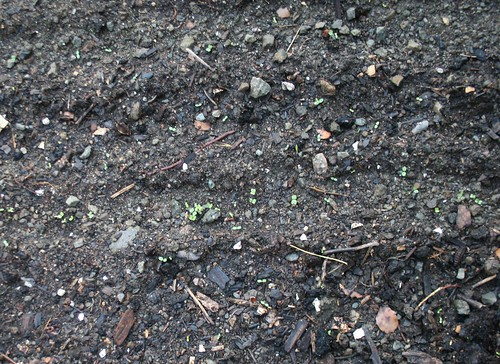
The lettuce is arisen!

Five days after planting.  The seed packet says 7-10 days to germinate.  Perfect late September weather  has speeded the process–midday in the nineties and cool nights.  I’ve kept the beds damp.

I also greet last year’s food surfacing from the compost in the soil—-peach pits, bits of egg shell.

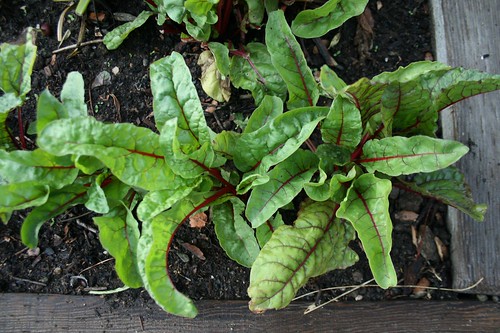
And the chard thrives–another  meal soon.

Peter emailed this from Canada under the subjectline “Harvest Time”:

Email exchange

Friday, September 26th, 2008

On Sep 25, 2008, at 10:58 PM, Scott wrote:

SHOCK (Bush) doctrine all over again — good lord, no shame?

I replied:

Yes, but does this perspective now put us in bed with the right wingers that McCain is playing to?

Naomi Klein says:

“What Gingrich’s wish list tells us is that the dumping of private debt into the public coffers is only stage one of the current shock. The second comes when the debt crisis currently being created by this bailout becomes the excuse to privatize social security, lower corporate taxes and cut spending on the poor. A President McCain would embrace these policies willingly.”

But the right wingers now are blocking that dump.  Do they want to force the markets to drop further to increase Shock enough to not only cancel debate but cancel the election?

Is any of this going according to plan, or are the plans off?  Are Cheny and Bush and Paulson being outflanked by their own buddies?

What unthinkables are now being thought?

Dear Senator Boxer and Senator Feinstein

Tuesday, September 23rd, 2008

Please do not vote for a blank check to be provided to Paulson and company.  He and his cohorts are the problem not the solution.  Their insistence on the present emergency and the need for a gift of  700 billion dollars of taxpayer money is the latest and most outrageous example of  “Disaster Capitalism.”  The U.S. Congress has fallen for this before: the Patriot Act, Iraq, the Surge, to our growing regret.

It is your job to check and balance the Executive Branch, especially in cases like this when that branch is attempting an economic coup d’etat.  This amount of taxpayer money could do more good for the economy by being distributed to pay off people’s mortgages and providing them with health insurance rather than being handed over to those carrying out an immense extortion scheme.

Autumn New Year

Monday, September 22nd, 2008

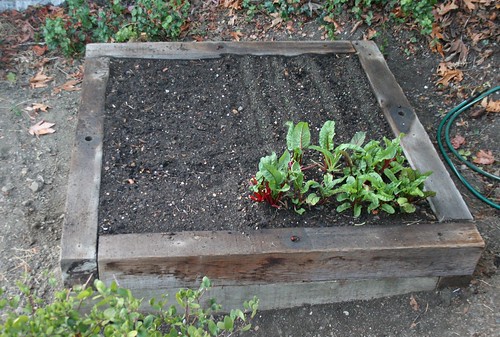
Yesterday was the equinox.  I planted lettuce mix in the shadiest corner of the new vegetable bed I built next to the deck, with Chris’ help.  We dismantled the ziggurat on the top of the hill I constructed out of railroad ties to get additional materials for this and the two additional beds I’ll put in just below it.  Doing this physical work is an antidote for my growing sense of personal futility stemming from:

  • the less than erratic progress of the Cal Poly sustainability projects I’m involved with
  • my inability to get adequate mastery of SC accounting and fundraising
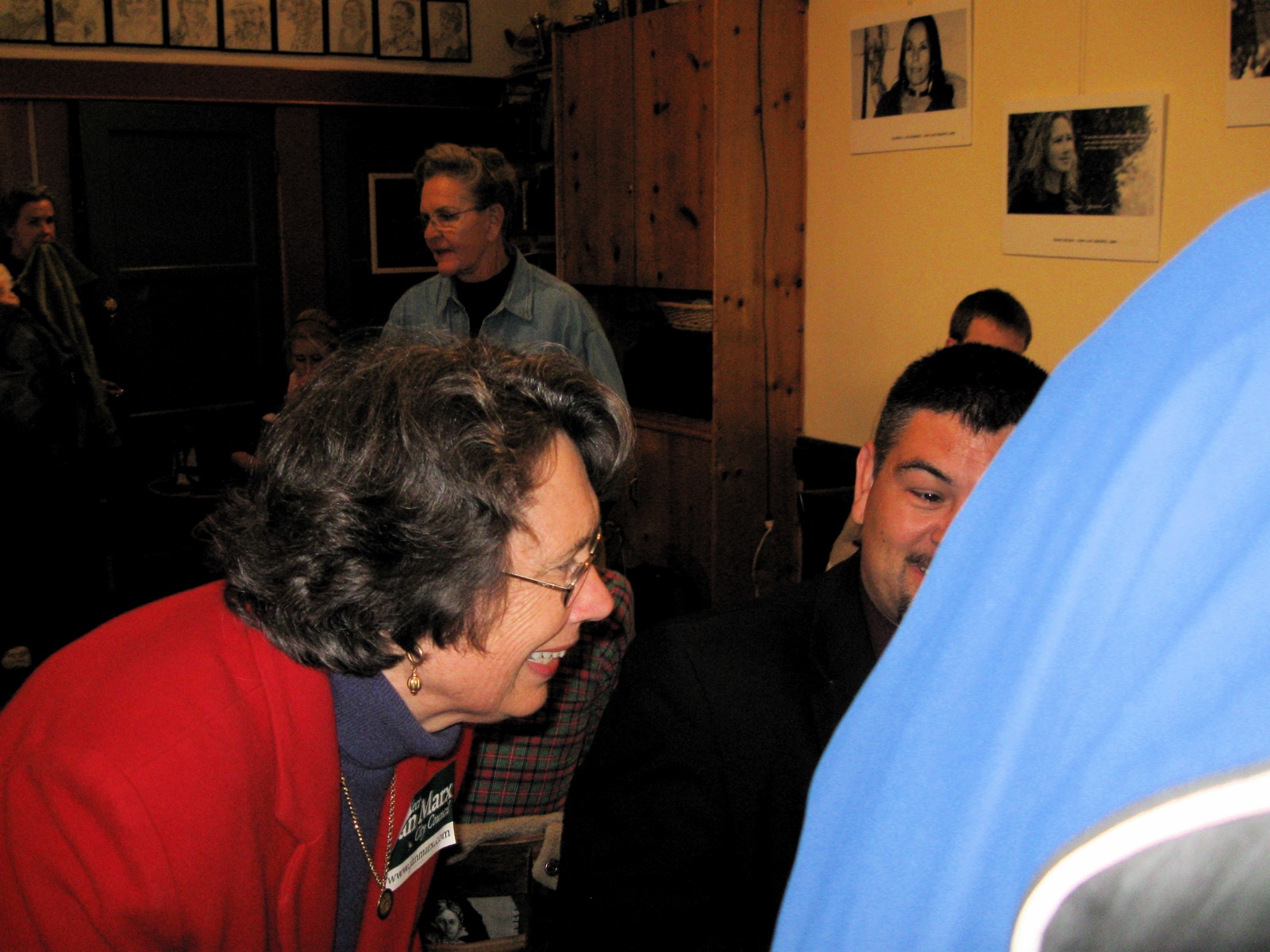
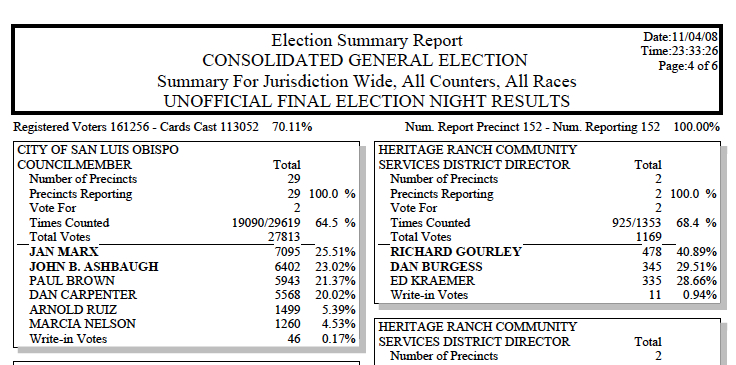
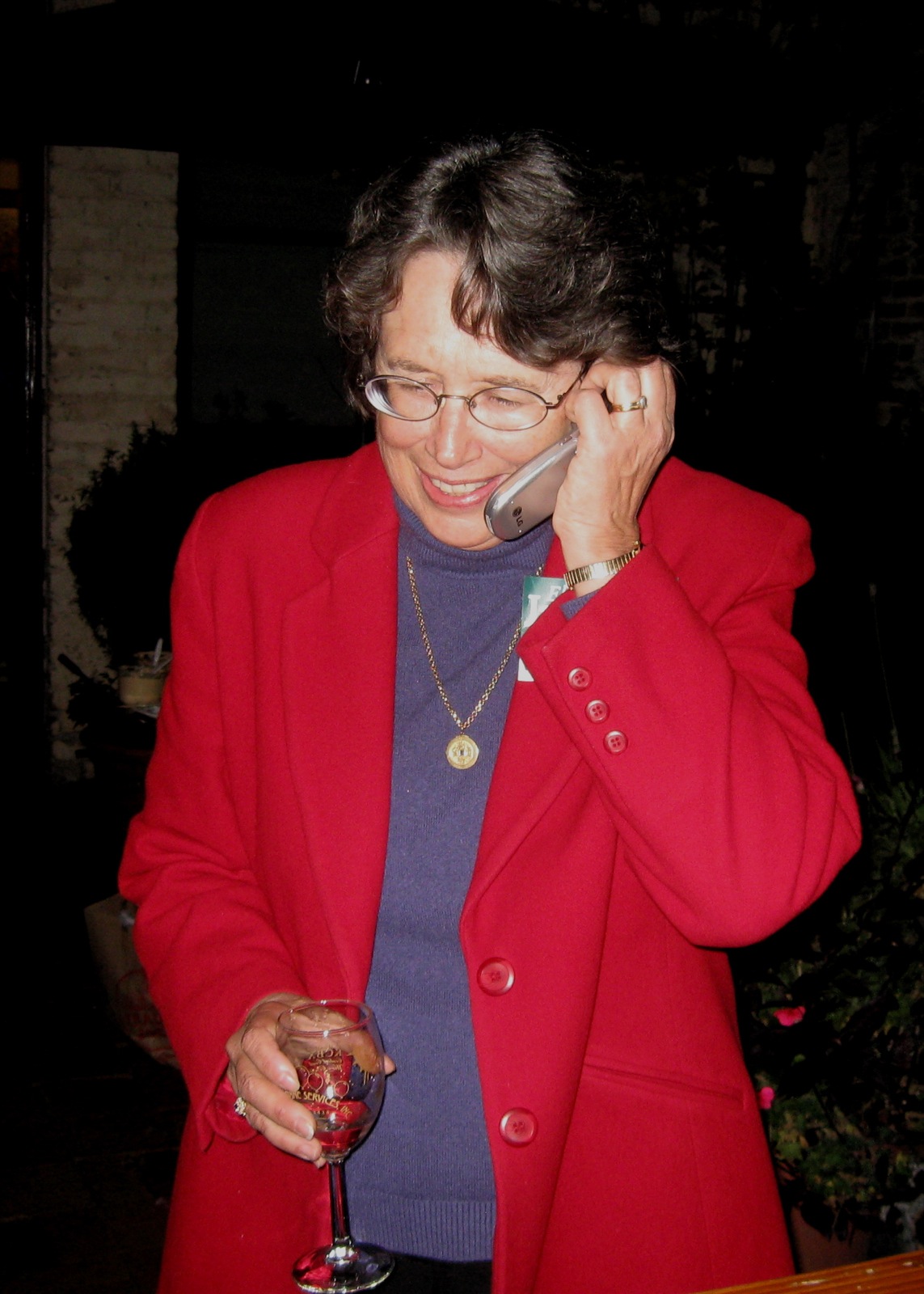
  • the demands of Jan’s electoral campaign, even though I’m not taking any real responsibility and just doing support work
  • several weeks of computer foulups
  • the impending doom of one more stage of takeover of the country by a syndicate of mafiosi–this time the Wall Street crooks commanded by Paulson and Bernanke. What’s been going on this week is a sequel to the hair-raising horror story by Naomi Klein I’ve been reading for the last month: The Shock Doctrine: The Rise of Disaster Capitalism

Days to germination: 7-10

Days to Harvest: 40-60

This planting is about hope and the illusion that I can do something to provide for our needs outside the collapsing system.

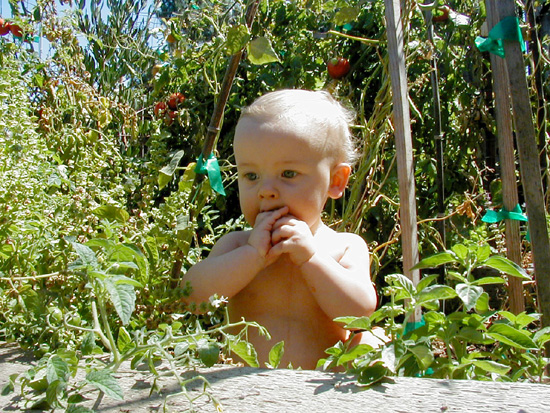
The terrace for the beds next to the front deck is the only place on this north-facing lot that gets enough sun to grow any vegetables.  I put in the first bed to grow cherry tomatoes when I took out the ivy and first built the ziggurat. Here’s Ian getting into them six years ago:

Basil and lettuce and snow peas and chard have done fine.  Pole beans and squash and peppers not very well because of the lack of sun.  I put in another bed after extending the terrace with fill from the excavation of Jan’s office extension two years ago. But I never properly leveled or fastened the railroad ties, and lately they started separating as a result of the ground settling and soil expansion with watering. I pounded in fence posts to stabilize them temporarily, but that fix didnt work and looked terrible.  I got sloppy about planting and watering and harvesting, so for the last few months, all that remained was a patch of chard that I wouldnt even bother to harvest.  I also refused to water the gardens all summer to see how far they could be stressed.  The front didnt look that bad, a range of dry colors and textures offset by the brilliance of the California Fuschia.  But the back hill looks wasted, in the side yard the fifteen foot redwood died, and cobwebs covered plants and every nook and cranny of the house, many of them around the front door. While precinct walking I’ve noticed how sad those cobwebs look on other people’s places.

So cleaning them up and reviving the garden and planting vegetables is serving as my bailout. Today I put in spinach and trimmed the carex in the side yard and started watering it and the strawberries and the remaining redwood and the dried up Fremont Iris and the Yerba Buena.  Tomorrow I’ll complete the planting with Arugula.  I’m heartened by the survival of the chard.  I’d transplanted it to the lower bed while demolishing the top one and then two weeks later retransplanted it back.  With regular watering during the interval, it produced enough fresh leaves to supply the main dish for supper last night.

I wanted to stay focussed on the pure pleasure of placing those seeds in the soil–this activity being the goal of much preparation–but it wasnt easy to stay in the present.  I tried to revere those little bundles of promise and and ask for their blessing.

Dear Representative Capps

Monday, September 22nd, 2008

Dear Lois,

As my beloved representative in Congress, I beg you not to be stampeded into accepting the swindle proposed by Paulson, Bush and their cronies.  This is pure crisis manipulation, just like 9/11 and the rush to bomb Iraq.

The accompanying article from The Nation is the first sensible proposal I’ve seen on this crisis.  Please join others in Congress to slow down this insane rush to reward the villains and create even more profound and lasting damage.

Sincerely,

Steven

Paulson Bailout Plan a Historic Swindle
by William Greider

Financial-market wise guys, who had been seized with fear, are suddenly drunk with hope. They are rallying explosively because they think they have successfully stampeded Washington into accepting the Wall StreetJournal solution to the crisis: dump it all on the taxpayers. That is the meaning of the massive bailout Treasury Secretary Henry Paulson has shopped around Congress. It would relieve the major banks and investment firms of their mountainous rotten assets and make the public swallow their losses–many hundreds of billions, maybe much more. What’s not to like if you are a financial titan threatened with extinction?

If Wall Street gets away with this, it will represent an historicswindle of the American public–all sugar for the villains, lasting pain and damage for the victims. My advice to Washington politicians: Stop, take a deep breath and examine what you are being told to do by so-called “responsible opinion.” If this deal succeeds, I predict it will become a transforming event in American politics–exposing the deep deformities in our democracy and launching a tidal wave of righteous anger and popular rebellion. As I have been saying for several months, this crisis has the potential to bring down one or both political parties, take your choice. (more…)

Think Global, Write Local: Sustainability and English Composition

Thursday, July 24th, 2008

A Presentation to the UC/CSU/CCC Sustainability Conference
July 31-August 3 2008

Introduction

Ecocomposition is a new subfield in teaching English.*

I’m motivated to practise Ecocomposition by two principles, the first enunciated by David Orr in 1994: “All education is environmental education,” the second by George Orwell in 1946: “When I sit down to write ¦, I do not say to myself, ˜I am going to produce a work of art’. I write ¦ because there is some lie that I want to expose, some fact to which I want to draw attention, and my initial concern is to get a hearing.”

An essential element of Ecocomposition is local knowledge–engagement with one’s own particular place and time. Preparation for Ecocomposition requires teachers to be interested in their surroundings”the academic institution as not an ivory tower, but rather a physical, economic and political entity in history, situated on the land and in the community.

In keeping with these principles I’ll talk about Ecocomposition locally rather than abstractly: my experience of teaching it during the last three years here at Cal Poly.

In 2005, as the environmental crisis deepened and the Sustainability movement grew, I thought I could make an impact by reaching first year students and by framing the subject matter in the context of rhetoric”that is, the power of persuasion. So I designed a section of our first quarter required English composition course and called it Writing About Place

(more…)

Wedding Ceremony for Emma and Travis

Saturday, July 19th, 2008

Processional”Guitar music by Elijah

  • Groomsmen and Groom
  • Bridesmaids
  • Bride and father

Chant

Wedding is great Ischel’s crown:
O blessed bond of board and bed!
‘Tis marriage peoples every town;
High wedlock then be honoured!

(Shakespeare, As You Like It, Act 5 with slight modifications)

Greeting

Welcome to you all and thank you for attending this marriage ceremony. I’m Emma’s Uncle Steven, and I’ve been honored to be invited by her and Travis to conduct it.

The act we are about to perform together is universal. The words we repeat”some from the Bible, some from Shakespeare”have been uttered over and over for thousands of years. They lift us out of the flow of past, present and future into an interval of sacred time.

The space where we’ve assembled is sacred as well. Thousands of miles from home, we’ve all flown here through the air and endured an arduous jungle voyage to the edge of a foreign land and an unfamiliar sea, where ancient people erected fantastic cities devoted to ceremony and ritual.

It is this presence that the bride and groom will revisit whenever they remember their wedding in later life.

(more…)