Author Archive

Zunoquad Squad Cycles the Kettle Valley Railroad Trail (3)

Friday, June 6th, 2008

May 23

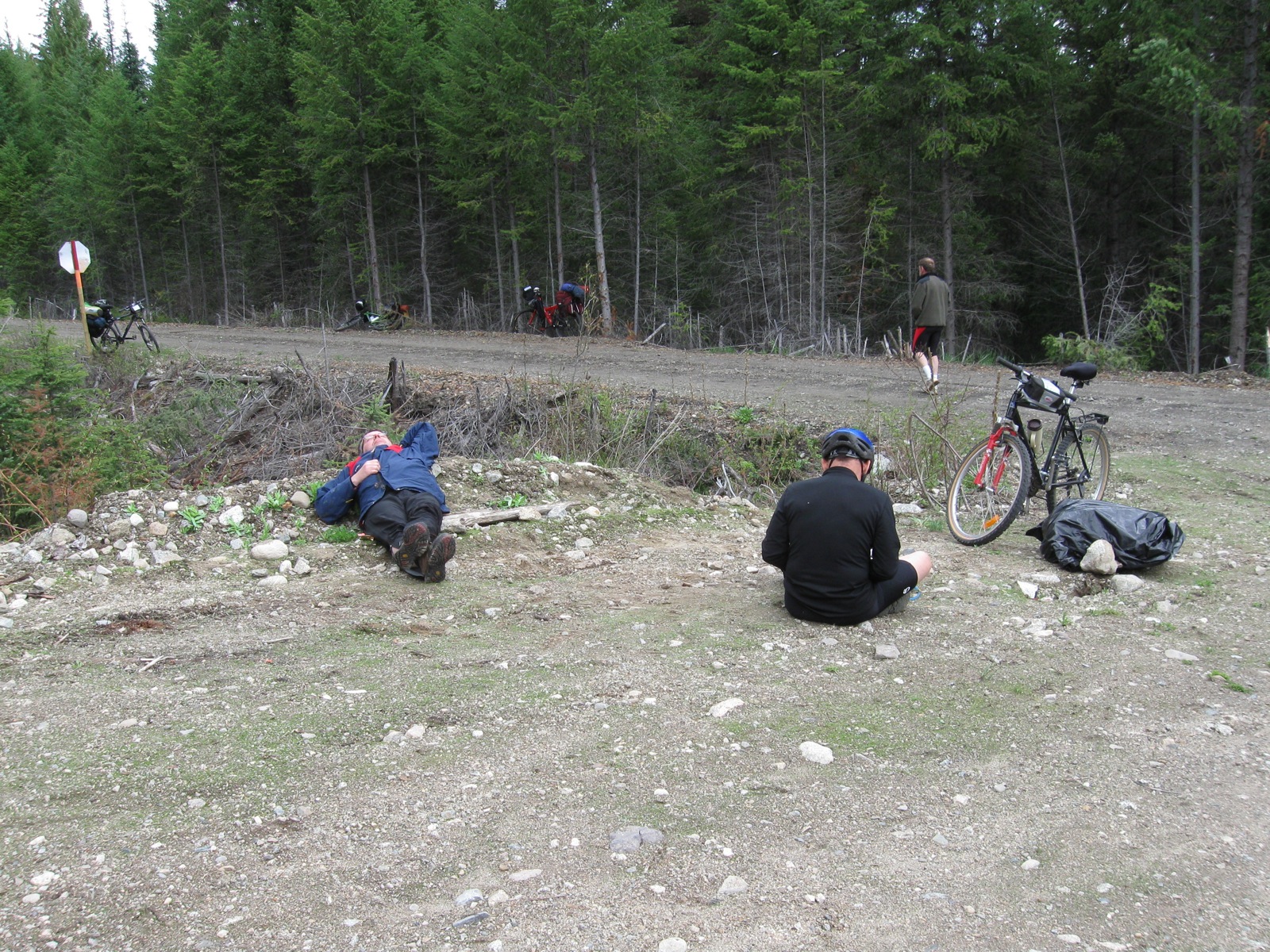
Coffee, oatmeal, gorp and dried fruit again launched us forward, but for Robert cycling was becoming a terrible ordeal. He needed to lie down and rest along the trail every kilometer or so, and it was clear that he was too sick to proceed despite his valiant efforts. At the Wilkenson Creek Bridge, we again split into subgroups, Andy remaining behind with Rob. A few kilometers further, the rest of us waited at a junction with a road in the middle of a logging slash. With time on our hands there was extended deliberation about how to rescue Rob and allow us to proceed. A flatbed truck on the road was flagged down and the long haired driver and two young passengers were told of our dilemma. They said they were looking for cedar higher up the mountain and would be passing back down in an hour and a half.

Robert finally arrived, ashen and exhausted. John reached Ty in Beaverdell by cell phone and managed to persuade him to drive up and take Rob to the Hotel. He located us at the Wilkenson Creek Road. Another hour passed and Ty didn’t show up but the truck fully loaded with cedar came back down the hill. More conversation revealed that we weren’t at Wilkenson Creek Road but at Rupert Road and that Ty was out on a wild goose chase. The guys in the truck agreed to take Rob and his bike down to the Beaverdell Hotel, and he welcomed the prospect of lying in a bed rather than alongside the road.

(more…)

Zunoquad Squad Cycles the Kettle Valley Railroad Trail (2)

Friday, June 6th, 2008

May 22

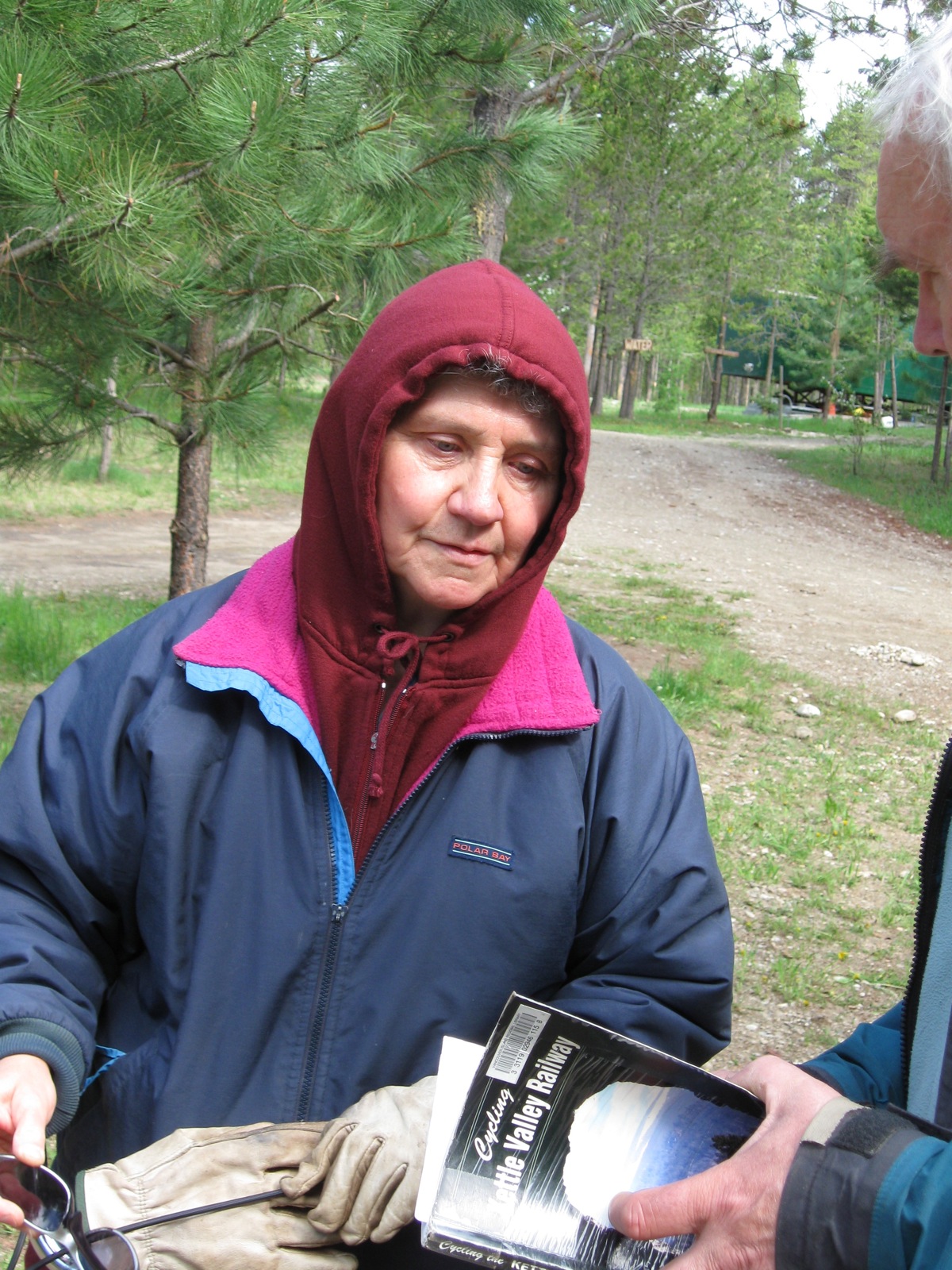
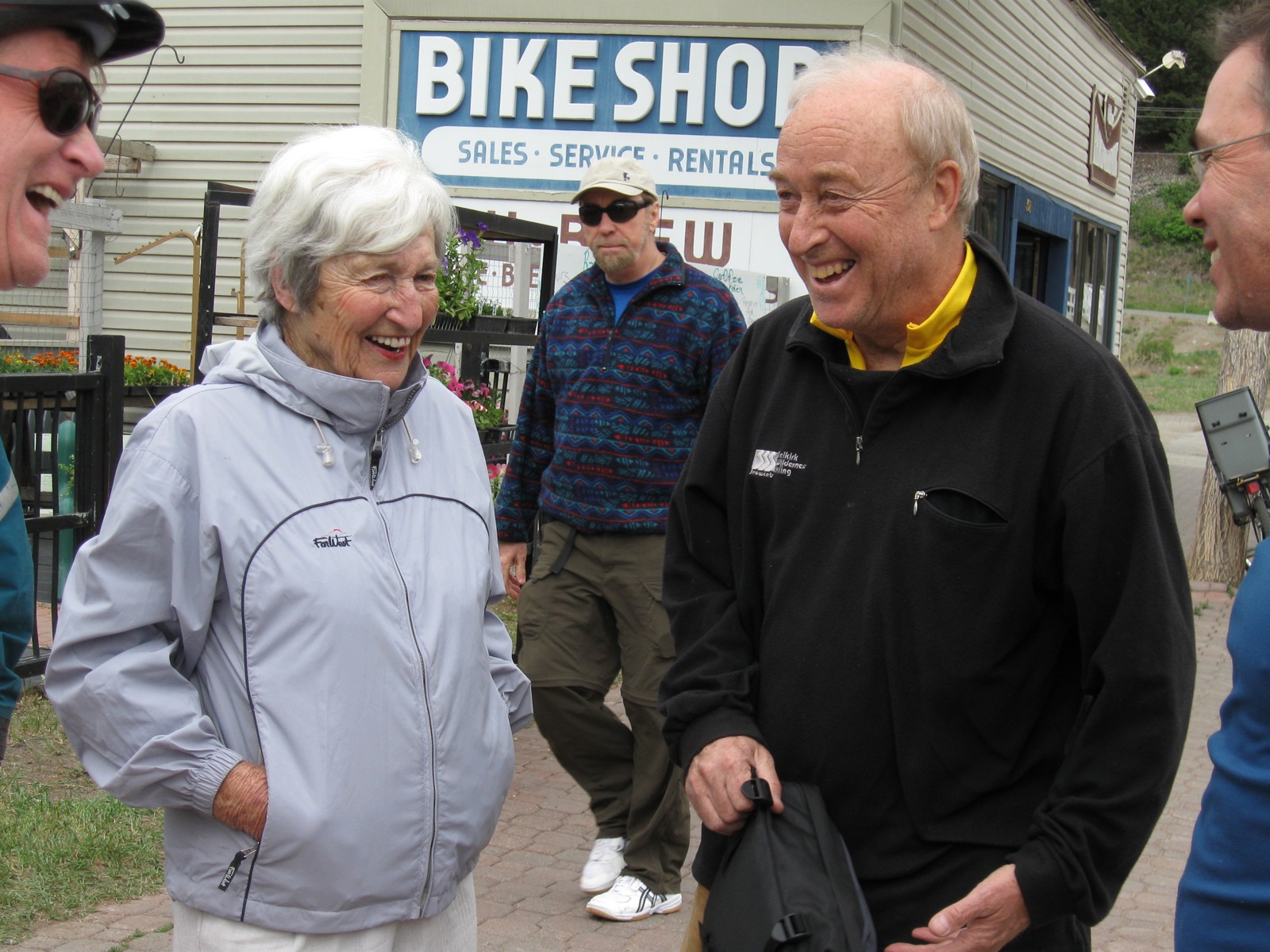
Breakfast was Murray’s gourmet coffee and instant oatmeal from packets enriched with a compote of white peaches and bing cherries made up from dried fruit Steven brought along from San Luis Obispo. Murray discovered that his wallet was missing from his fanny pack and a search of the campground yielded nothing. While we listened to Murray reading his Pome about yesterday’s events, readied for departure, a small hooded figure on a smaller bike drove up and and asked, “Did anybody lose a wallet?” We all cheered. She introduced herself as Gloria, Paul’s wife, at our service. The wallet had been found at the caboose and identified by George who had heard about its loss. She told us not to miss the beautiful cascade along the railroad a few kilometers north.

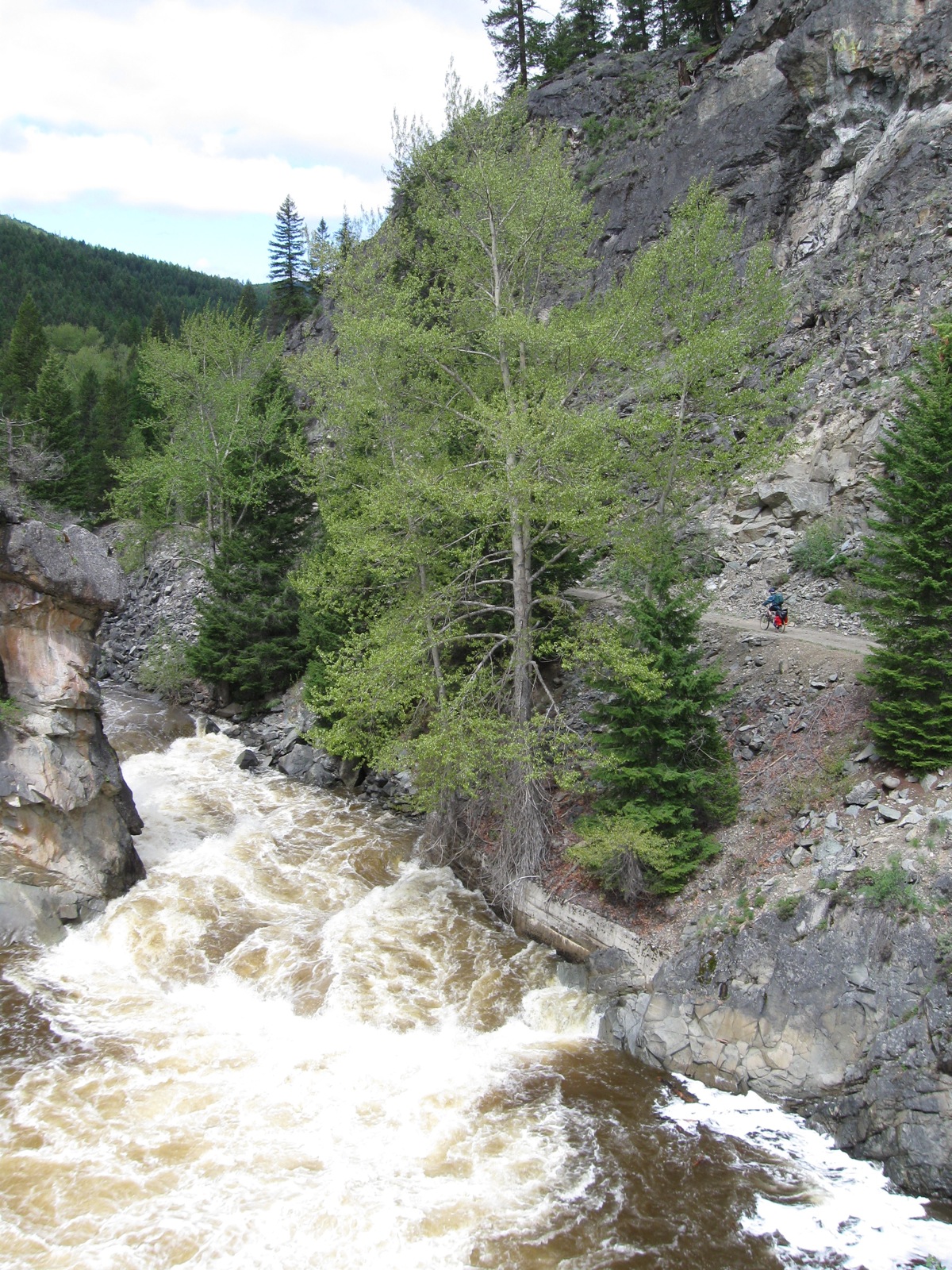
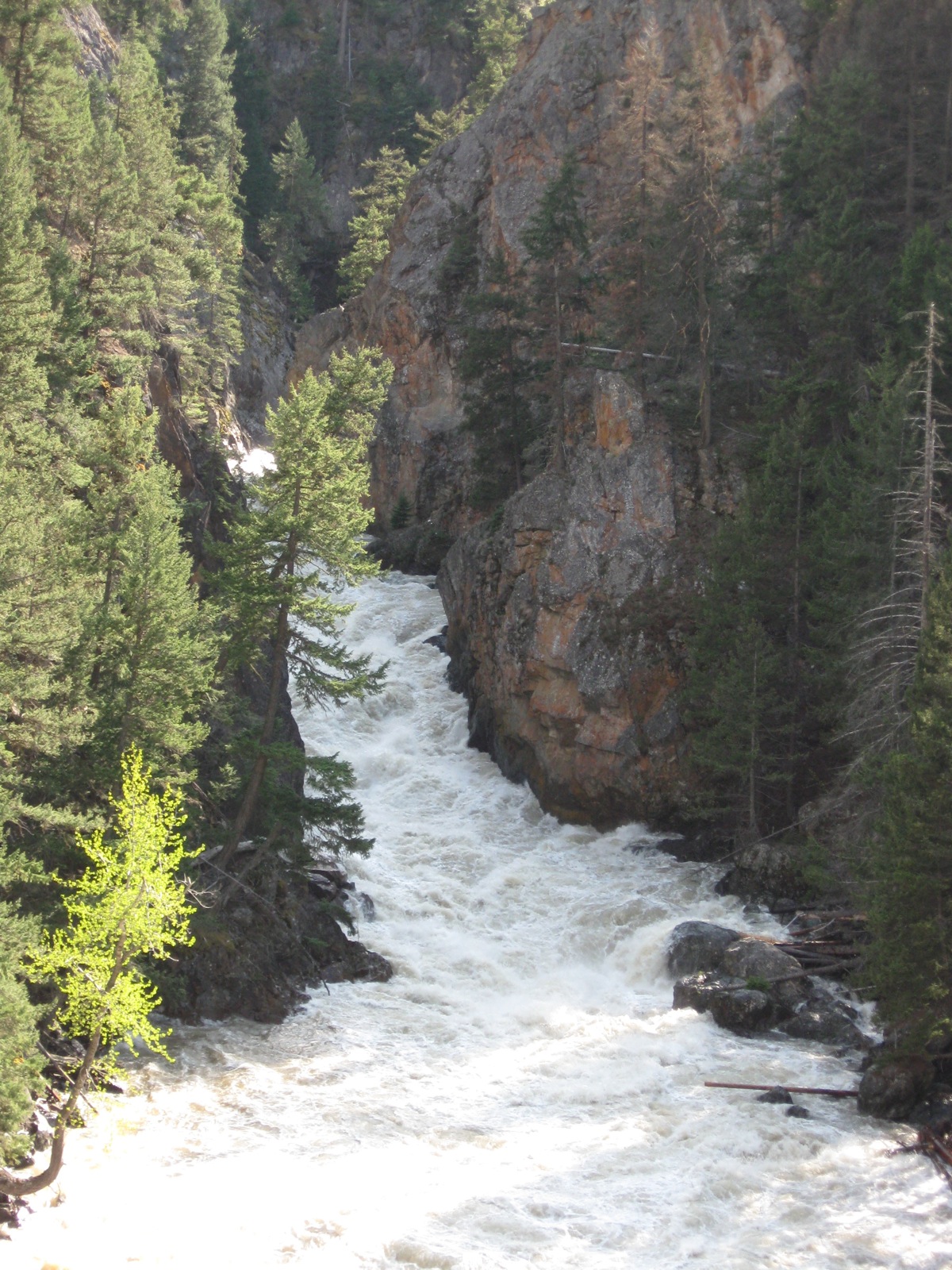
We set out on a side road, crossing another bridge, passing sheep in a pasture, and then rejoined the railroad trail, which followed the serpentine curves of the river into a canyon where it rushed wildly through two hairpin turns. The trail hugged the cliffs on a right of way blasted into the rock and supported by concrete buttresses at water level. John and Steven scrambled up an outcrop for views and pictures of the blended spectacle of natural splendor and human artifice.

(more…)

Zunoquad Squad Cycles the Kettle Valley Railroad Trail (1)

Friday, June 6th, 2008

May 20

Lionel’s condo on 8th St. in Vancouver was the first assembly point. Steven was picked up by Ian at the Airport’s South Terminal after his one day visit to Lund, Peter arrived from Sequim where he’d just moved his mother from New York City to a nursing home, Murray arrived by Ferry from Nanaimo and Rob drove in from Burnaby. Gear was packed into Rob’s Honda and Peters Tracker. The rainy Spring made the Fraser Valley vibrant green, swelled the muddy river and produced dozens of spectacular waterfalls. Along the Hope-Princeton highway through Manning Park trees were just coming into light green leaf. Steven and Peter stopped at an unnamed serpentine canyon to admire the cascade.

Two carloads reunited at the Cedars Motel in Princeton, where gear and food were distributed. A Greek Taverna in this unprepossessing town served up dinners and beer excellent by any standard. We were joined at the table by Gregory Archambault who was biking solo all the way across Canada during a five month leave from his transportation company in Quebec. After dinner our group agreed to start out at the eastern end of the preplanned route and head back toward Princeton.

May 21

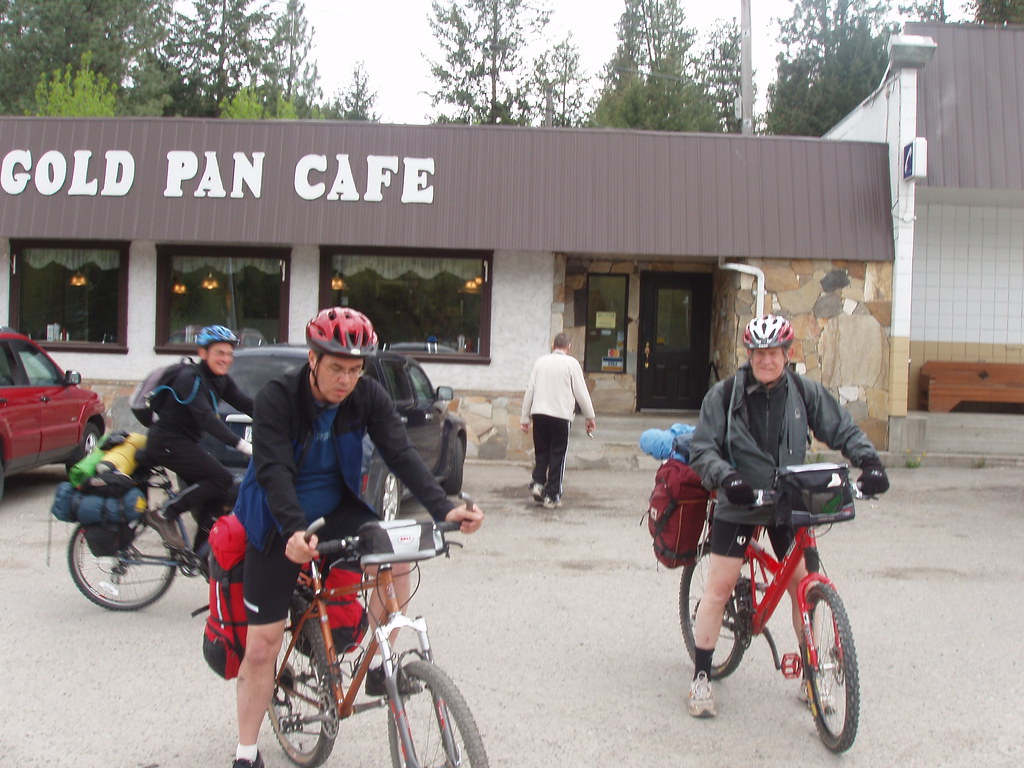
At Backroads Bikeshop we rented bikes and panniers from Jim Harrison, as prearranged by Lionel, and met up with Andy, who’d driven from Edmonton in his red sportster, and with John, whose Mom drove him down from Kelowna. She brought us fresh grapes, wide smiles and grandmotherly blessings, and took our picture in front of the trailer being loaded by Neil Allison, our driver. On the way to our starting point through the beautiful Similkameen Valley, Neil was a bottomless source of local information. Steven recognized his name as that of the founder of Princeton, from whom he was directly descended by way of one native wife. We passed through exploding Osoyoos and its vast outlying subdivisions, a sign of the real estate boom in this border region, over a pass to the quiet Kettle Valley. Eager to get on the bikes, we decided to start at Rock Creek and Neil unloaded us at the Gold Pan café, where we paid him $50 each and ate borscht for lunch.

(more…)

Columbia 68 and the World (5)

Tuesday, May 13th, 2008

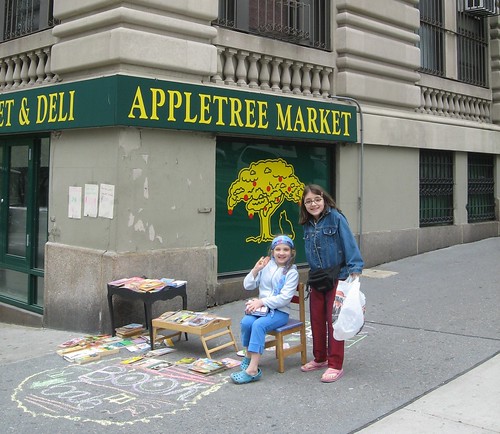
Sunday morning, Jan and I bade farewell to Middle Village and drove with Peter back to Morningside Heights. He found a parking space near our former apartment at 423 W. 120 St. in front of which sat two little girls selling some of their old books–a nice selection of Berenstain’s Bears to bring home for the grandchildren.

We passed huge construction cranes filling the airspace at the corner of Broadway and on to Earl Hall, the venue for the morning’s programs. Entering the upstairs rotunda we heard the last part of an extraordinary soprano saxophone rendition of “Amazing Grace” closing the memorial celebration for those of the strikers who had died in the last 40 years.

As I stepped inside I remembered this space 38 years ago, filled with paintings, sculptures, photographs, a great inflatable transparent tepee and 180 or so students participating in the three day final-exam festival of performance and ritual that concluded my Pastoral and Utopia class and my University teaching career before we headed for the end of the road in Canada. The poster for that event had been framed by a large Omega, suggesting its apocalyptic overtones but also signifying Ohm, the logo of “The Resistance,” an organization for civil disobedience opposing the draft. In the open-mike session that followed the memorial, Peter spoke earnestly about that group, which preceded and outlasted the Columbia strike–of its assistance to those fleeing the country or going underground, of its sit-ins at draft boards, of its members who went to jail for long periods, of its commitment to non-violence, of the predicament of young males at the time personally oppressed not by sexism but by militarism. (more…)

Columbia 68 and the World (4)

Monday, May 12th, 2008

Saturday morning back in Queens I drove with Peter past immense cemeteries to the center of Middle Village where, since his birth, his mother had bought groceries. The clerks in the small supermarket went out of their way to provide us with empty boxes. These were neighborhood folks, sounding like characters in Mafia movies, and so were the residents of the small tidy row houses sporting American flags we passed on the way back. “Police and firemen mostly,” said Peter, “90% white. I grew up with these people. That’s why I never believed in the working class revolution.”

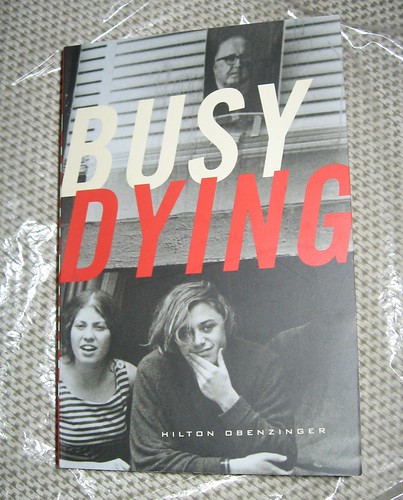
Jan was still sorting documents upstairs, and there was nothing for me to do till decisions were made about how to dispose of the furnishings. I sat on one of the plastic covered sofas and started reading my signed copy of Busy Dying, Hilton Obenzinger’s delicious new memoir centered on Columbia 68, while Peter conferred with the real estate agent in the dining room.

Meticulously dressed and coiffed, the young man, who also worked as a marriage counselor, had lived down the street all his life and cherished the place. He told Peter that the house could be made beautiful for the virtual tour he’d put online, but suggested gently that some items be cleared. After he left, Peter asked me to help move a bookcase to the basement, and I suggested we put it in the Goodwill room so that no further decision about that item would be required. When he agreed, I knew we were getting somewhere. Within the next two hours the ugly lamps, coffee tables, nylon curtains, artificial ferns, plastic slipcovers were removed, and the original, quaint design of the place emerged, ready for its internet debut. (more…)

Columbia 68 and the World (3)

Friday, May 9th, 2008

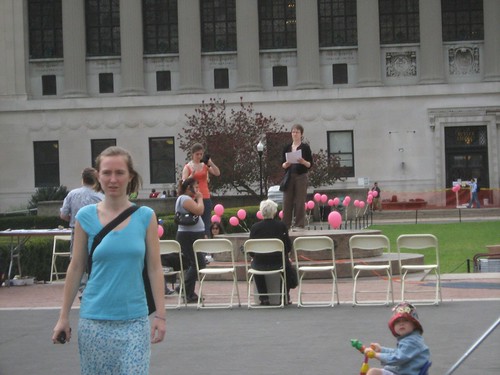
Early Friday morning Jan selected clothes for Peter to take to his mother in the nursing home, and I divided the basement into areas for stuff going to the trash, to Goodwill and possibly to keep. On the subway trip back to Columbia, we attracted many people eager to direct us. Passing the gates at College Walk, we heard loud noise coming from Low Plaza and noticed hundreds of pink balloons attached to posts and railings all over the central quad.

Wow! I thought, there must be a huge group of Code Pink students marking the fifth anniversary of the Iraq war today. But instead it turned out to be a festival sponsored by a Korean-American sorority.

We arrived a few minutes early at the Journalism building for the morning session and met up with Taigen Dan Leighton, Zen priest, translator and scholar, just arriving from a stay in Richmond Virginia where he led members of the Buddhist Peace Fellowship in a walk along the Slave Trail and a meditation vigil at the Statue of Reconciliation in downtown Richmond, Virginia, the site of the slave auction houses.

(more…)

Columbia 68 and the World (2)

Tuesday, May 6th, 2008

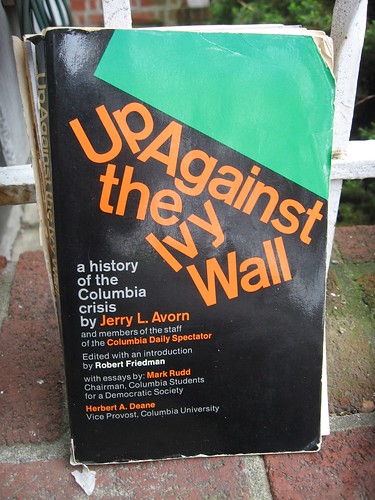
Ten days after it ended, I’m still processing the conference and slowly going through my notes trying to sift out memories and lessons to keep. So much of significance was happening at every moment that weekend–the recreation of past occurrences forgotten or newly understood, the simultaneous evocation of forty years of experience in hundreds of exceptionally conscious minds, the unfolding of present day history in encounters with young people and emergent political disputes, plus the emotional impact of connecting with old friends–it could generate a different book by every one of the participants. I look forward to see what comes of the many films, sound recordings and pictures documenting the activities while they were happening. This picture was taken on the front steps of Peter Behr’s family home in Middle Village Queens, where we stayed for four nights during the conference. I had spent the whole ten hours of our flight engrossed in the story of the strike narrated in the 300 page book, Up Against the Ivy Wall, written immediately after it concluded over the summer of 1968 by the student reporters of the Columbia Spectator. I hadn’t looked at the book since the year it was published, and clumps of its pages came apart as I read. I was astounded by the precision of its research, the astuteness of its political analysis”even with the distance of hindsight–and the liveliness of the narration. As I finished with each clump of pages I passed it to Jan who was equally enthralled. The book was edited by Robert Friedman, Spectator‘s editor at the time and now one of the organizers of the conference and moderator at many of the sessions.

(more…)

Columbia 68 and the World

Saturday, April 19th, 2008

Next Wednesday we leave for this event in New York. Participants are being asked to submit stories of their lives since the 1968 strike to a collection stored here (at “Stories 68-08.pdf”). This is what I sent.

In January, when we first received word of next week’s reunion, my wife Jan and I agreed to go. The topics and speakers promised a pooling of wisdom about how to relate to a world which had become worse than the one we confronted head on in 1968. It would also be a chance see old friends and enjoy April in New York.

A few weeks later I changed my mind. Lets look at our obligations and finances and see if this trip will really fit into our schedule of grandparenting, visits with far flung children, our niece’s wedding, a long planned bicycle tour, I argued. Having just declared her candidacy in an upcoming city council election, Jan conceded it might be too much. But what really had made me back out was reading the bios accumulating on the website. Among the participants in this conference, my credentials were severely lacking in moral clarity, consistent commitment and creative innovation. I didn’t want to have to apologize or to brag.

At a party celebrating the success of “Focus the Nation: Global Warming Solutions,” an all day teach-in drawing 4000 attendees at the traditionally conservative University where I teach, one of the student organizers said to me, “I hope some time in the future, this group will get together to celebrate what we did today, like you are doing at that Columbia reunion.” How to tell her I wasn’t going? When a friend wrote from Chicago of his plans to attend, even the disheartening sniping on the website couldn’t keep me from ordering tickets on Travelocity with Jan’s immediate approval.

This shilly-shally recalls foggy memories. In or out of the building? In, then out, then in again, until the bust.

In 1968, I was a first year Acting Assistant Professor of English, closer to students in age and outlook than to most faculty colleagues. I’d entered the Stanford PhD program in 1963 after graduating from Columbia as an undergraduate, joining the Peace Corps and getting kicked out after ten weeks of training for being “too intellectual” and having the “wrong attitude toward authority.” (more…)

Hannelore Reichmann 1922-2008

Sunday, April 13th, 2008

My aunt Hannelore died on January 21, almost three months ago. I keep telling myself that I will write about her or to her, to reach some kind of closure. Doing this with my father and mother upon their deaths in 1995 and 2005 allowed me to say goodbye and close the door. But Hanu has been weighing on my mind, and so has Gabi, her surviving sister, to whose living presence I feel I owe it. The delay has been largely due to lack of time”the pressures of teaching, visit to the family in Idaho, etc.”but now there’s no more excuse.

Other reasons made me start and stop, go frantic or lethargic, change plans. I felt a special connection with Hannelore because she was such a prolific writer, such a perspicuous observer, such an elegant stylist. Her love for books, expressed in her devotion to the family bookstores, could well have issued in her becoming a novelist or non-fiction writer, vocations I’ve always admired but never felt confident enough to pursue. She focused those talents on eliciting information about me and my family and then formulating her own stories about what was going on, often with great insight, sometimes comically off the mark. This connection led to extensive correspondance going back twenty years. Unearthing the file folders of thick letters she wrote and the word-processor and email files of my answers is an imposing task that I started last week, disappointed at first by the many holes in the record and then thankful that not more has survived for me to process.

Our connection was also influenced by circumstances of kinship. I had no brothers or sisters. Neither did my father. Hannelore was one of my mother’s step-sisters. She along with Gabi and brother Hans-Peter were my only aunts and uncles. With my maternal grandparents they emigrated to Brazil to escape the Holocaust while my parents went to New York. I had heard about them and seen pictures since earliest childhood, but had met only Gabi in person, during her visits to the States. Their many offspring are my only cousins. After my father’s death Jan and I took a trip to Sao Paulo in 1998. We felt deeply welcomed and at home in family gatherings. But that trip also revealed oceans of distance: cultural, linguistic and experiential.
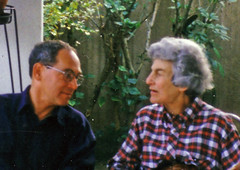
In-person contact magnified Hannelore’s admirable eccentricities. We stayed in her house, squeezed between highrises in downtown Sao Paulo, filled with relics of Germany in the 1930’s. We witnessed her midnight rambles with neighborhood derelicts and her relationships with her live-in maid and son. She guided us through the business enterprises of her children and around the city-center.

Death at 86 is no cause for sorrow, and Hannelore had been in the hospital twice during the last few years. Recent business reverses may have been the coup de grace. Cousin Marcelo’s brief email described a good ending, at midnight, on the way upstairs:

Unfortunately, our dear and lovely ant Hannelore died yersterday, at 0:00. Renato called us and immediatly me and Rony runned to her house to give them a little confort cause de sadly situation.
Lastely, she was bad because her hart was weak.
Suddenly, in her home, when she was going to upstairs, her hart stooped and she died quietely. Dario and Renato were together. Hannelore died near her son’s

But I cried when Gabi told me the news on the phone in Jan’s office. And now I want her to keep talking.

5 April 2002

I am not at the office, stayed home for a fortnight because I fell and broke”once again”my even previously not too classical nose, ¦ I also broke all my front teeth, but nowadays you can glue them, which I had done¦Monday I will go back to the bookstore!

¦we are having big trouble with the house. You remember it is a double-house, now my neighbor has Alzheimers and cant practice medicine any more, his wife has Alzheimers too, they share a nurse, and the son, a building engineer, has sold the half to be torn down and incorporated with two more lots for a big building. We share one roof and separation wall. They want us to sell too and are trying to force us because we are afraid for the structure of our house. As a matter of fact legally they cant do it, but nobody cares much about the laws here¦that was the reason I fell, because I was so worried. They are already tearing down the other two houses they bought, with a crew of unqualifiedmen, with axes, without the necessary license.

July 5 2002

Yesterday the Bookfair ended. I am getting a bit too old for these events, but love them. Ruy got an honorable mention for a book on Physics he publishes at an Oscarlike ceremony. We had a beautiful stand, a monument to Ernesto. I am very grateful that the children continue his life’s work¦

Ruy managed to get a court order to postpone the demolition of our town house. Mario is a friend of the owner of the foremost civil engineering firm, who declared it unsafe for our house if the other half is torn down. A nice young lady judge had the demolition stopped by a summons served¦eventually they are going to succeed¦Of course, his is a crook and of course he waited for Ruy to leave for a US Bookfair on Tuesday to try on Friday to tear down the house court order and all, and of course Ruy had foreseen that intention and sent his bodyguards to stand in the path.

March 16 2005 (Upon the death of her older stepsister”my mother)

She was so happy and so proud of her family and I wish I could visualize her when she was her own self because her last years were very sad, since she was present only physically and not with her admirable mind. Very often that is the tribute people have to pay for still being around. I hope this wont happen to me, even more so because I would be financially a heavy burden on the family¦She had a very special marriage, a lasting love-affair with adorable Henry. I don’t know whether you ever knew how the marriage happened: Henry was a promising executive in her best friend’s father’s department store, Tiefenthal and Halle. Lotte Tiefenthal set out on a trip to visit family and entrusted her so-to-say fiancée Henry to Lise’s care and guard so no no one would conquer him for herself. Of course he succumbed to Lise’s charm and beauty and¦she kept him for herself. Lotte Tiefenthal would have liked to murder her when she returned, but emigrated also to the States, got married¦and stayed friends. As opposed to Gaby and me, Lise had a new boyfriend and marriage candidate every month and kept our father busy chasing them away, but he was very happy with her final choice, Henry. Even during that restricted and morally hypocritical period , he helped her in finding a job there so they could be together. They did have an exceptionally happy marriage, though she was moody and he quite a tyrant in his charming way. I am really happy you followed their example, even though in the beginning, in those troubled years, you partially had a hard time. Janet went with you through thick and thin until you finally were “allowed” to resume your disrupted career. And like they did, you enjoy each other’s company.

August 8 2006 (accompanying a newspaper clipping)

Yes that’s poor old little me at the meeting in one more attempt to get the “camelos” (Peddlers) out of the once beautiful new town center. Nobody goes to town any more. One of our past mayors, Erundine, brought thousands of them downtown, where they destroyed the asphalt, ruined shops, including ours, bankrupted all our department stores, cook and sell Yakisoba, produce in plain view, thousands of pirate CDs and DVDs, use the streets as public toilets, steal, assault. Cheating at cards, now and then one kills another, generally by knife. They are dirty, illiterate, uncultured and nobody manages to get them out because they are really a front. Everybody at the meeting had one minute to speak. I told them that I had observed them for years. They never sold anything, had no wrapping paper, no small change. I never saw anybody choose, buy, pay, and most of all, they are not worried about it. That means what? I made my point, the are there to peddle DRUGS! Of course I didn’t say that or I would be dead.

August 15 2006

Here is something to amuse you, photos of the celebration of 70 years of Ernesto’s beloved bookstore. Considering the situation we were not going to do anything. But at the last minute Ruy changed his mind, improvising. We decided to have a very modest celebration at one of Ernesto’s favorite Italian restaurants. Knowing Ruy, you wont believe it: due to the “special circumstances, everybody paid for himself, we all shared a few dishes, nobody even mentioned desert, except of course for Yago. And would you believe it, we had a wonderful time. I had taken Ernestos picture along. In front of it I placed an orchid all the employees together had given to me¦It was really a mark in my life and I want to share it with you. On August 1 I completed 66 years in the firm. Sylvia is eligible for pension next year. If I live until then, I will have a sixty year old daughter.
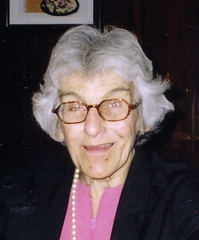
When to stop? Hanu, Hannelore, Hannylorie. These are short excerpts of but a few of the letters I saved, and the dozens that disappeared. These are paltry samples of pictures you sent, I and Jan took, and my parents preserved in boxes of albums sitting in the garage. And I met you only once. How much of you is left to the sister, children, grandchildren, extended family, co-workers and neighbors with whom you spent your days? How much less than we long for, how much more than we can relinquish?

Protected: Easter in Ketchum

Tuesday, March 25th, 2008

This content is password-protected. To view it, please enter the password below.