Miscellaneous

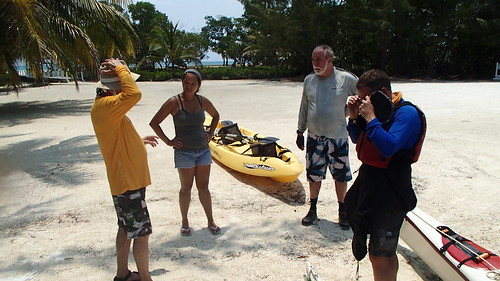
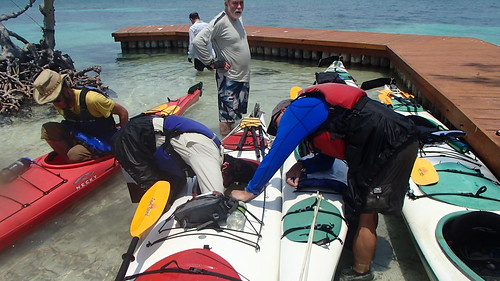
Belize Expedition–Preface

Sunday, April 27th, 2014

On Fri, Aug 23, 2013 at 5:32 AM, Andrew Greenshaw ª<[email protected]> wrote:

what happened to sunny Belize?

On Fri, Aug 23, 2013 at 11:40 AM, John Lunam ª<[email protected]> wrote:

I have connection to one of the Kayak tour operators down there, daughter of a friend, if there is interest I will pursue.

On Fri, Aug 23, 2013 at 11:58 AM, Steven Marx ª<[email protected]> wrote:

This sounds worth alot of trouble to me:
http://away.com/ideas/central_america/belize_sea_kayak.html

On 27 August 2013 14:55, John Lunam ª<[email protected]> wrote:

Hello men,

Steven, the guy to call is my friend Rob’s son in law. He’s a Viking, just back from a visit to Norway. His name is Leif Sverre (Pronounced layff). His tel is 604-789-6092. His home here is in Pemberton, BC. Call him up guys and see what you can organize. I’m headed to Europe on a 3 week expedition. Here’s the link again to the website: http://www.islandexpeditions.com/leading-the-way/leading-the-way-to-adventure

On Aug 27, 2013, at 2:01 PM, Andrew Greenshaw wrote:

I like this option with this outfit…A VERY POPULAR TRIPPING OPTION,  FOR EXPERIENCED KAYAKERS ONLY , IS TO START WITH A 3 DAY / 2 NIGHT GUIDED AND CATERED STAY AT OUR LUXURY BASECAMP AT GLOVER’S REEF FOLLOWED BY A 6 NIGHT  SELF-GUIDED  KAYAK TRIP ON THE MAIN REEF! – See more at: http://www.islandexpeditions.com/our-trips/belize-vacations/glovers-getaway-and-kayak-rental-combo/trip-summary#sthash.HZtsjCX3.dpuf

http://www.islandexpeditions.com/our-trips/belize-vacations/glovers-getaway-and-kayak-rental-combo/trip-summary

What do you think,

On Tue, Aug 27, 2013 at 3:23 PM, Steven Marx ª<[email protected]> wrote:

Hello men

I like Andy’s choice.  Here’s a map allowing for some initial orientation, showing Glover’s Atoll (or Reef, I assume) and Lighthouse Atoll, among others.

http://www.islandexpeditions.com/sites/default/files/belize_map_detailed4.gif

At this point it would be good to learn 1) which of you are seriously interested 2) if you have preferences for an alternate option, and 3) what dates you’d consider going, the more of them the better.   I’ll collect the information on a spreadsheet.

(more…)

The Sunset Limited (5)

Sunday, January 5th, 2014

Saturday December 28

The sound of rain pouring on the tarp covering the hotel courtyard awakens us in time for an early departure.  We ask the cab driver to wait while I go shopping for provisions at a huge supermarket near the Amtrak station. Jan learns that she’s an immigrant from Ethiopia, has come here from L.A., has a degree in Social Work from USC and has another job working with neglected kids.

We line up in the terminal under an interesting mural starkly portraying the violent history of the city as rain continues to dump.

NOLAmural1.jpg

NOLAmural2.jpg

IMG_7890.JPG

All the roomettes between New Orleans and Tucson were sold out when we bought tickets, so we’re spending the first 36 hours of the trip in coach and providing our own food. The seats are no less comfortable than those in the roomette. We read and doze and eat rare Humboldt Fog cheese and Kavli crackers.  Approaching  Houston at sunset we have drinks in the observation car before proceeding to the diner, where we share a table with a couple from Lafayette Louisiana on the way to the Rose Bowl parade in California.  He’s a crawfish farmer and broker and she’s a hospice nurse for children.  It’s hard to understand the explanations of his trade through his Cajun accent but not his affection for guns and fantasies of shooting intruders. She shows pictures of abandoned children with whom she’s bonded before they died.

After dinner, the coach is dark and quiet, the passengers sedated by the rocking movement. Jan struggles to find a position allowing her to straighten out. The leg rest is broken and needs to be supported by the suitcase I bring upstairs. It turns out our seats are closer to the ones in front of us than those on either side. I search the train looking for alternate empty seats without success.  The conductor appears and lets us know the passengers directly behind us are getting off in five minutes and we can take theirs. The rest of the night is easy.

December 29 2013

After another full day and night traversing Texas we cross back into New Mexico at El Paso.  I chat with a retired geologist returning to California. Another day of reading–Jan’s on her third Donna Tartt novel on the Kindle and I’m studying the New Orleans atlas and The Bible in Shakespeare–writing, looking out the window and watching the little blue dot cross the desert in satellite view on the iphone. At nightfall we reach the Tucson station in the center of downtown and cross the street to the Congress Hotel, another railroad district historic building now decorated with lights and mylar fringe and posters advertising an upcoming public New Year’s Eve party with an “I love New York” theme.  The staff are young, urbane and jolly, the food–albacore salade nicoise and “Queer Burger”–excellent and reasonable.

A short cab ride takes us to our accommodation, La Posada del Valle, a Bed and Breakfast across the street from the University of Arizona Medical Center.  This is the review I submitted to Trip Advisor:

I chose this place for a two night stay enroute between New Orleans and Los Angeles by train. At the suggestion on the website I phoned and spoke to Janos the manager who was personable and helpful and promised to help my wife and me with transportation while here. He told us he wouldnt be available for our late night arrival but gave us the door combination. The view through the window when we pulled up looked most welcoming, and coming inside nearly floored us. The historic old adobe was decorated with unique flair and exuberance, filled with beautiful and beautifully arranged furnishings, informative books and maps and magazines about Tucson and surroundings, and homey atmosphere. Our room with private bath was spacious and filled with treasures. The bed and bathtub were unusually comfortable. Breakfast the next two mornings was custom prepared by an amiable housekeeper/cook with fresh fruit, vegetables, meat, eggs, and baked goods. There was no room for lunch later in the day. Our host showed up during the first breakfast, welcomed us, shared stories and then drove us across town to a car rental place. After we left this morning he emailed us the bill, which seemed astoundingly reasonable. When can we come back?

IMG_8011.JPG

IMG_8008.JPG

IMG_8009.JPG

IMG_8007.JPG

December 30 2013

We share the breakfast room with a couple our age who live in Seattle.  They’ve been here for four days to hike in the desert.  Not surprisingly we have some experiences in common.  Both were in the Berkeley FSM 1965 sit-in that Jan joined as a freshman at Stanford.  He got a PhD in English, taught for several years at Whitman College in Washington and then decided voluntarily to give up his tenure-track job and partner with a friend to start a social work consulting firm, from which he has now retired. He still conducts workshops in organizational development.  She got a degree in social work at Berkeley but after several years in the field switched to a career as paralegal.  Their daughter got a PhD from Yale, but was so outraged by the treatment of graduate student TA’s trying to organize that she’s become a full time union organizer of clerical and maintenance staff.

Janos shows up to welcome us and take us in his new Mercedes to the car rental place.  We learn that he and has wife run another B and B, that she is a retired Wall Street banker and Harvard MBA who loves to decorate, that he was manager of a high end restaurant in New York, that they have travelled to fifty countries, and came to Tucson to slow down and enjoy the atmosphere. But at age 70, he’s more than ready to retire from the hospitality business.

We drive west in the radiant winter light to the outskirts of the city and up a tightly winding road to a pass in Tucson Mountain Park amidst a forest of familiar yet still bizarre-looking Saguaro cacti.

IMG_7911.JPG

IMG_7912.jpg

On the other side of the pass, an immense valley spreads before us harboring “Old Tucson,” a theme park built on the site of the movie studio location for hundreds of Western films.

IMG_7914.JPG

We drive onward toward a less obtrusive attraction in the valley, The Desert Museum, which appeals both to theme park visitors and nature lovers.  The parking lot is almost full on this holiday occasion, but the crowds of multi-generational families add to my enjoyment of  exhibits of desert ecology, many of them hard to distinguish from the surrounding wilderness.

IMG_7999.JPG

There are animal enclosures allowing close-up views of mountain lion, bear, wolf, and javelina, none of which have the downcast look of many captive animals.

IMG_7931.JPG

IMG_7946.JPG

as well as artfully designed shade structures and benches necessary for less temperate times of the year.

IMG_7942.JPG

IMG_7939.jpg

Cold symptoms are creeping up on Jan, so  I leave her resting in the hummingbird enclosure, head for the Desert Loop trail, and find myself surrounded by a dense crowd waiting for the “Raptor Free Flight” performance to begin. An amplified voice from nowhere warns us not to place children on shoulders because the birds will be flying fast and close to our heads. Suddenly two gorgeous hawks dive from aloft and alight on nearby snags.

IMG_7949.JPG

These we are told are gray hawks.  As trainers hiding in the vegetation make chirping sounds and hold out gobbets of meat, the hawks criss-cross the crowd inches overhead and then disappear.  Next come two barn owls, soft and cuddly looking until one whizzes straight for me with its sharp beak agape.

IMG_7959.JPG

IMG_7958.JPG

Then we see two peregrine falcons, according to the speaker, the fastest animals alive, which have been clocked at 242 miles an hour, and finally a whole group of Harris Hawks that hunt as a family, working together to corral and trap their prey.

IMG_7980.JPG

We meet as planned by the hummingbirds and drive back to our beautiful lodgings, rest,  then go for dinner to Downtown Kitchen, the restaurant recommended by our breakfast-mates.  Its publicity about celebrity chef and fresh local organic ingredients is not overblown.

20131230_195558.jpg

December 31 2013

The festive meal served on the the last morning of our stay at La Posada del Valle is shadowed by the story of the other guest who is here from Scottsdale, not for vacation but because his wife has had to return to the medical center for treatment of ongoing complications attendant on the removal of her pancreas.  She’s a nurse who’s lost her job because of her affliction, their young kids have been cared for by friends at home, and he’s here on time off from his math teaching job at the Community College. I think of my friend Peter in Canada who has just passed through life-threatening complications after the removal of cancerous tumors from his kidney. I think of Steve, the old friend in his quadriplegic’s wheelchair with whom I roamed this neighborhood and the medical center across the street five years ago and who died soon thereafter. The young teacher tries to smile as he affirms hope that eventually his wife will recover.

We head for the train station to leave our baggage before returning the rental car, and it becomes clear that Jan’s cold is turning into something worse.  She agrees to go to a nearby urgent care clinic where she is diagnosed with a serious sinus infection and prescribed antibiotics by a doctor who recognizes her Rotary button and agrees to meet her next June in Australia at the convention they both plan to attend.  Another CVS around the corner dispenses the medications, the car is returned, and we have the rest of the day, slowly, to explore downtown Tucson, before reboarding our train.

The district has undergone major redevelopment, with hip new multi-use businesses and residences sprouting in the shells of renovated old buildings, with a multi-modal transportation center, with signage about the impending opening of SunLink, a four-mile  trolley system on newly laid track.

IMG_8015.JPG

IMG_8016.jpg

We pass through the elegant courtyard of the County Court and Administrative Office, fortunately preserved when the rest of this government center must have been demolished to make way for the surrounding ugly skyscrapers.

IMG_8022.jpg

IMG_8025.jpg

With heroic resilience braced by the new medication, Jan makes it to the museum, where we enjoy exhibits of early Latin-American and ancient Chinese artworks donated by local collectors and feel less positive about acquisitions of contemporary “Cowboy Art” and modern conceptual works centered on themes: “The Hand,” and “Scissors, Paper, Rock.” We are entranced by a work of borderland latino folk art called “Nacimiento” housed in an old adobe.

IMG_8032.JPG

As the sharp shadows lengthen and the year draws towards its end we walk slowly back to the railroad station. Still nourished by breakfast,  instead of dinner we share a small thin-crusted pizza at the gourmet market and delicatessen on the platform. We talk to Joe and Ethan and Abel in Idaho and Claire and Lucas in California.

IMG_8035.jpg

Across the street at the Congress Hotel a crane lifts a great ball of mirrors and the searchlights rehearse for the midnight extravaganza.

I run over there to buy a pint bottle and some mixer for our New Year’s Eve on the train. At 7:00 p.m. it arrives and we climb aboard the sleeping car and find our cozy compartment. Reminded of her name on the downtown bus station, I play some Linda Ronstadt songs on the little stereo and then the Beach Boys’ Pet Sounds: “Let’s Go Away for Awhile,” “Dont Talk, Put Your Head on my Shoulder.” A beautiful young woman approaching the adjoining compartment grins at us and says, “Nice ambience.”

The train’s staff has organized a New Year’s Eve party, including champagne and games in the observation car starting at 10:30.  I’d like to take part, but, predictably, late night activities are beyond our capacity. We drop off to sleep in our berths and wake up refreshed in time for the 5:30 A.M. arrival in L.A., transfer to the Pacific Surfliner, and the final leg of our trip home.

For full-size and more pictures, click here


The Sunset Limited (4)

Sunday, January 5th, 2014

Friday December 27, 2013

Though optimally located in the center of the French quarter, Jan and I are uncertain of what we should do for the day. Roaming its tourist-crammed streets yet another time is getting old.  We think of taking one of the carriage tours recommended by friends but are put off by the drivers and prices. Instead we sign up for a two-hour full city bus tour beginning at 2:00 p.m.

To make use of the time before then without extensive walking, we take the streetcar along the levee to the river ferry terminal. Probably due to its major diversion by dams upriver, the Mississippi isn’t as impressive here as we’d expected.

IMG_7794.JPG

But on the ride across, the sight of a tug maneuvering a huge barge through the current at the crescent curve which accounts for the City’s original location gives a sense of being at the drain point of a whole continent.

IMG_7872.jpg

IMG_7876.jpg

Following a suggestion in The Unfathomable City, we pick historic Mandina’s Restaurant as a destination for lunch. It’s another gratifying streetcar ride to an outlying district, partly through a vast construction site of new medical facilities. The restaurant is located in a charming old frame house and packed with animated locals, but the supposedly distinctive Italian-Creole food is not worth the cost or the long wait.

The streetcar back is delayed by traffic jams and we are concerned that we will miss our tour.  I run ahead to reach the meeting point just in the nick of time, and the dispatcher tells me the bus is late but will wait for Jan.  I’m relieved to see her shouldering her way through the crowd before it arrives, but then it turns out to be an hour late.

IMG_7883.jpg

Sipping Vodka daiquiris from the adjoining dispensary relieves our impatience, but most of the other waiting passengers ask for their money back and leave. The apologetic young man who finally shows up explains that the delay was caused by unexpected traffic congestion and the dispatcher’s mistakes.  He offers little information about the city sights we pass, but stirring stories about his family’s escape from the flooding and his sister’s permanent mental derangement resulting from it. Only when he stops behind another tour bus outside a cemetery in the Ninth Ward do we learn that he’s just a driver delivering us to the guide and the rest of the group.

By this time the confusion of the delays combined with the effects of the daiquiri have rendered us receptive to whatever happens next.  The real guide, whose name I regret not learning,  is a round, white-haired gentleman with a sonorous voice and a preacherly eloquence.

IMG_7884.jpg

He regales us with the some of the peculiarities of NOLA’s necropolis culture, among them that bodies cannot be buried but are housed in weighted above-ground tombs to accommodate flooding  and that crypts are continually recycled because the summer heat quickly decomposes earlier remains.

Sinking into the driver’s seat as if it were a bathtub, he drives us through the adjoining neighborhood, pointing out the modest homes of legendary musicians like Fats Domino and the Marsalis brothers, all of whom he knows personally, and tells us that the government was interested in reconstructing this district after the failure of the ship canal dykes because its artists form an important part of the economy. He assures us that contrary to earlier occasions when dykes around low-income areas were deliberately breached to protect the precincts of the wealthy, the worst destruction of Katrina was caused merely by the negligence of the Army Corps of Engineers.

The onset of dark and the heavily tinted windows of the bus make it impossible to see or photograph the features of the city through which he drives us for the next two hours.  But he’s a good enough story teller to keep the tour group engaged and laughing.

Many of the district’s modest houses have been refurbished by Habitat for Humanity and lifted three feet off the ground on cinder block piers.  Some remain dilapidated and some lots are cleared while owners wait for property values to rise. Many are only about ten feet wide.  At first I think they were former slave quarters, but then see that they extend far toward the back of the lot.  Called Creole Cottages or Shotgun houses, we learn they were designed like this before the advent of fans or air conditioning to promote cross ventilation in the unbearable summer heat.

We hear of the  development of the different faubourgs or neighborhoods by ingenious and often scandalous land developers over two centuries, the division of the city into downriver Creole and upriver “American” districts, the unceasing corruption of city politicians, many of whom go directly from office to jail, about universities and private schools and mardi-gras parade routes and the demolition of sections of the French Quarter replaced by disastrous city housing projects, of the outrageous number of annual murders, of the benefits and losses of gentrification since Katrina, and about the architectural styles  and residents’ private lives of countless houses.

We’re dropped off in another traffic jam a block from our hotel, the city now packed with  New Year’s eve visitors arriving as we prepare to leave.  Thrashed by our colds, we retreat to our hotel, again forgoing the chance to taste the nightlife and the music, but inspired enough by the surroundings to seek more alcoholic relief. A big bouncer at a strip joint on Bourbon Street informs me that the best place to buy a bottle is the CVS around the corner. Hurrying back to our room with my paper bag through the earsplitting noise of revelers, I feel as excited as any of them.

The Sunset Limited (5)

For more and full-size pictures, click here


The Sunset Limited (3)

Sunday, January 5th, 2014

Thursday December 26

Drawn by the promise of beautiful buildings and streets uncrowded with tourists, this morning we head for the Garden District, a section of the City in the opposite direction from the French Quarter, upriver and “Uptown.”  The St. Charles St. streetcar takes us there along the wide tree-lined median traditionally known as “neutral ground.” Its varnished wooden seats and thick painted steering handle bring me back to the noisy trolleys I loved to ride on Broadway and Dyckman Street in New York before we got a car and moved to the suburbs in 1950.

IMG_7812.JPG

IMG_7804.JPG

IMG_7805.JPG

Relying on the information available on our phones instead of getting an adequate guidebook to the City was a mistake, but we know enough to find the cross street leading to a breakfast place kitty-corner from the the centrally located Lafitte Cemetery.

IMG_7813.JPG

The trees along the boulevard are festooned with beads and we realize that this must be a  main  parade route of the Mardi Gras whose influence remains here all year long.

IMG_7814.jpg

Though Gustave had referred to it contemptuously as a mini-mall, the coffee shop here is warm, welcoming and full of cosmopolitan looking residents.

IMG_7817.JPG

Fortified by a bagel and cup of the local café au lait, whose flavor is strengthened by the addition of chicory, we explore the cemetery, which features multigenerational crypts and stacked stone graves.

IMG_7820.jpg

The puddles in the walkways demonstrate why bodies are not buried in this city and the need for a specialized technology to keep them where they’ve been placed.  The remnants of a shredded blue tarp and a dilapidated entry building show that even in this ritzy part of town, Katrina still leaves traces.

IMG_7821.jpg

IMG_7825.jpg

Now we walk along streets tunneling through the oak canopy of this real urban forest admiring the elegant and varied architecture and marvelling at the challenge of upkeep of both plants and structures in this corrosive tropical climate.

IMG_7829.jpg

IMG_7828.jpg


IMG_7832.jpg

IMG_7840.jpg

IMG_7839.jpg

At a corner of more modest houses, an amiable man sweeping the steps talks to us  about the joys of living here, the regeneration of many sections of the City after Katrina, the satisfaction of gutting and refurbishing his young family’s home.

IMG_7833.jpg

Needing a rest we head back to the minimall, where we find a bookstore next to the coffee shop offering a selection of works about New Orleans.  Rather than a conventional guide, I find a recent volume called The Unfathomable City, by Rebecca Solnit, whose name I recognize as a powerful writer for Orion magazine. Billed as an atlas, the book consists of 22 beautifully designed and annotated maps accompanied by essays categorizable as cultural geography or place studies.  Each has its own stylistic flair and dissident political slant. This book could provide an initiation to many of the City’s mysteries hidden from us three-day visitors. Exploring it during our rest periods and on the train ride back home feels like extending our stay.

Back on St. Charles Street, while waiting for the trolley, I snatch a little Mardi Gras by climbing  a tree and grabbing some beads. We check out of La Pavillon and move into Le Mazarin hotel, located in the middle of the French Quarter. It’s comfortable but expensive and disappointing by comparison.  We walk a new route to Jackson Square and find a table for late lunch at Muriel’s, whose setting, décor, service and distinctive Creole cuisine live up to its reputation.

IMG_7862.jpg

IMG_7861.jpg

IMG_7855.jpg

After a late siesta, Jan remains in the hotel and reads while I take another trolley up and down Canal Street, too late for the ferry but not for encountering some loud and scary characters in the terminal. More wandering fails to discover any of the music venues I’d been hoping to come across.

IMG_7866.jpg

Instead I’m repulsed by the huge complex of Harrah’s Casino at the foot of Canal street, its valet-parking drop-off crowded with Cadillacs and fancy pickup trucks, evidence, I assume,  of Las Vegas colonization.

For more and full-size pictures, click here

The Monkey’s Paw

Sunday, October 20th, 2013

Adapted from the story by W.W. Jacobs in preparation for telling around the campfire at the Cub Scout overnight on October 19-20 2013 at Camp French

This campfire reminds of my first campout with Cub Scouts across the river from where I lived in New York City 61 years ago.

It was a dark, windy night out in the woods, far away from any lights, a little before Halloween. We were sitting around the fire as we are tonight and someone said, “Does anyone know any scary stories?”  There was no answer. After a couple of minutes, one person spoke up. It was a new kid who’d just joined the Den named  Georgie Roberts.  He was quiet and pale and had dark circles under his eyes. “I can tell you a very scary story about what happened to me and my family down in the tropics.” I didn’t really want to hear it, but a most of the guys couldn’t resist and begged him to go on.

Georgie spoke in a shy voice:

“My Mom and Dad and I were living in Brazil for a year because my Dad was running a business there exporting tropical hardwood. At first, the three of us were having lots of good times, going to the carnival, exploring the old city of Manaos, taking boat rides up the Amazon River, where we’d eat lunch, see the birds and monkeys in the jungle and watch the crocodiles grabbing animals that came out of the forest to drink along the bank and pulling them into the water and mangling them.

On one of those rides we met an anthropologist/explorer from Germany named Anton who had spent a lot of time with some of the last few native tribes that still survived in the jungle and who’d participated in some of their religious rituals.  He always struck me as kind of strange, maybe because of that.

Anyway six months after we got there, my Dad’s business was not going well and we were going to have to leave Brazil. But my father had borrowed money and had a debt of $5000 he needed  to pay back on a bank loan. If he didnt, we’d lose our home in New York that we’d planned to return to.

A few days before we were supposed to leave, my parents invited Anton over for a good-bye dinner.  After we ate, we sat around the fire ring in the back yard remembering some of our trips together.  At one point Anton got up and pulled something weird and ugly-looking out of his pocket. It was a clawlike hand, with small nails, ragged fur and dried skin hanging off the end. ‘There’s something I want to share with you before you go,’ he said. ‘This is the Monky’s Paw.'”

Georgie stood up and his voice got lower and stronger.  It seemed to come from the huge figure of his flickering shadow cast by the firelight against the surrounding trees.

“Anton, said it was left to him by a friend who got it from an native medicine man who’d put a spell on it.  It had the mysterious power to grant three wishes to the family who possessed it. Anton shuddered and said his friend’s last wish was for death.  He was about to throw it into the fire, but my father grabbed his wrist and said, ˜Stop, I know this is ridiculous, but I’m in a situation where some magic wishes are all I have to save our family home.’

My Mom said,  ˜No, don’t mess with magic,’ but my Dad grabbed the paw from Anton, held it by the forearm bone, and made a wish: ˜Bring us $5000.’  The claw seemed to vibrate in his hand and glow slightly for a few seconds.  Anton cried, ‘O my Gosh,’ and ran from the backyard into the house, and we heard a slam of the front door. Nothing more happened and my Dad said, ˜He must be continuing the joke.’

Next day was Sunday and my Mom left the house to go on a last boat trip up the river with her friends. Dad and I stayed behind and packed our suitcases for the flight to New York.  When Mom didn’t return by evening we both got worried.  At 7:00 o’clock the doorbell rang and Dad answered it to find two people standing there, a policeman in uniform and a man in black derby hat.

The policeman said, ˜May we come in please.’  My Dad let them in and the policeman said, ˜There’s been a terrible accident Mr. Roberts. There was an explosion in the riverboat Mrs. Roberts was on today, and all the passengers were thrown into the water, where they were killed by crocodiles before they could be rescued.’

My Dad and I were both frozen with shock.  Before he could say anything, the man in the derby hat identified himself as representative of the company that ran the boat.  He said, ˜I’m so sorry to be bringing you this tragic news.  Even though it was not our fault, our company wants to provide you with some monetary compensation to express our regret.’ And he handed my Dad a check for $5000. Then the policeman asked my Dad if he could come with him down to the morgue to identify the remains of Mrs. Roberts”my Mom.

My Dad called next door and asked the neighbor to look after me for a little while and  left with the two men.  An hour or so later he returned looking pale and shaken, thanked the neighbor and sent her away.  To me, he said, ˜I know that this is an awful thing that happened, but at least we’ll be able to have a place to go home to.’ I wasn’t yet able to absorb what was going on, but I asked him if there was a connection between his wish with the Monkey’s paw and the accident. He replied,   ˜No way, son, that’s just a crazy coincidence.’

After we were back in our old house in New York for a few days, his business started improving.  But I began to really feel the loss of my Mom, and I got sadder and sadder.  There was only one thing I could think of doing: ask my Dad to make another wish with the Monkey’s Paw to bring her back.  But he refused, saying ˜No, that’s ridiculous, that couldn’t possibly work, and anyway, I got rid of it.’

But I didn’t believe him, and when he was at work, I searched through his stuff and found it stashed at the back of his underwear drawer.  I pulled out the yucky thing and stuck it under my pillow.  That night, as my Dad was tucking me in to sleep, I sat up and pulled it out from its hiding place and held it up.  Before he could do anything, I said, ˜Bring back my Mom!’ It vibrated a little in my hand and gave off a slight glow.  My Dad’s jaw dropped and his eyes widened.

At that moment the front door bell rang. I sprang up thrilled and yelled ˜Momma, Momma’ and ran toward the door.  My Dad called ˜No, No, No.’ I turned on the porchlight, and through the window by the door saw something unspeakably horrible.  Then with a flash, it disappeared.  I turned around and there was my Dad, holding the Monkey’s Paw, vibrating and aglow.'”

IMG_7309.JPG

IMG_7287.JPG

More campout pictures

Beatnik Buddhism in Jack Kerouac’s The Dharma Bums

Monday, October 7th, 2013

A talk to the White Heron Sangha, October 6, 2013

I was introduced to the writings of Jack Kerouac by a trumpet-player friend in high school who gave me a copy of On the Road just after it came out in 1957.  But though I’d already done some hitchhiking around New England and hung out in Greenwich Village on Friday nights, I was put off by the book’s frenetic style and its praise of aimless, restless travel.  Twelve years later, in 1969, I encountered The Dharma Bums, Kerouac’s second most popular book, while selecting works to place on the syllabus of a class at Columbia University I called “Pastoral and Utopia, Visionary Conceptions of the Good Life.” This book’s triumphant celebration of free love, wilderness adventures, bohemian companionship, and Buddhist meditation made a perfect fit.  Forty four years later, while looking for a topic for a Sangha talk to follow up on the one about Thoreau’s Buddhism I offered last Spring, I picked The Dharma Bums in order to consider how my perspective on the novel and its Buddhist themes might have changed in the meantime. (more…)

Reminders of the “Good Old Days”

Tuesday, April 9th, 2013

[Updated June 30 2013]

gute alte zeit_2.jpg

Soon after their move to San Luis Obispo in 1989, my parents, Lise and Henry Marx, presented Jan and me with a gift they’d been working on for several years: a collection of German proverbs they had learned from their parents and grandparents.

I remember continually hearing these sayings from my earliest childhood until their final days. Each time one was uttered there was a moment of satisfaction”the speaker pleased to have found a way to make familiar sense out of some new experience and the hearer gratified to grasp the connection.  Growing up as a first generation American, I reacted to these old-world pieties with boredom and embarrassment.

(more…)

Genes in Genesis: Evolutionary Psychology and the Bible as Literature

Monday, April 8th, 2013

Introductory Note:  This essay was completed in March 2011.  The interpretation of Genesis it proposes first occurred to me in 1996 in the course of writing a book commissioned by Oxford University Press,  Shakespeare and the Bible.  I first learned about Evolutionary Psychology and the field of Darwinian Literary Criticism in 2006.

Introduction

“The Old and New Testaments are the Great Code of Art,” proclaimed William Blake in one of the captions of his etching, “Laocoon” (755). In The Great Code: The Bible and Literature, Northrop Frye replicated part of that proclamation and elaborated some of its implied claims. If indeed the Bible can be said to encode a substantial portion of Western culture’s imaginative, historical and legal heritage, then its first book, Genesis, can be regarded as the Code for the Great Code, since so much of what appears in the subsequent 65 books seems to grow out of it. Genesis’ title is amplified in the names of some of its recurrent themes and images: generation, generations, genealogy, gender, genitalia. The common root of all these words suggests yet another code: that which is carried by genes.[1]

Frye observed that Genesis’ “primary concern is expressed in the Biblical phrase “life more abundant,” and J.P. Fokkelman showed coherence in the book’s motley mosaic of stories with the discovery that its “overriding concern [is] life-survival-offspring-fertility-continuity,” (41) but neither critic associated these concerns with the evolutionary perspective they suggest. Until recently it’s been left to contemporary novelists versed in biology and literature to explore some of the rich meanings that flow from the convergence of Genesis and evolutionary principles, for instance Ruth Ozeki in All Over Creation and Barbara Kingsolver in Prodigal Summer.[2]

Genesis rewards literary analysis because of its complex structure and plot, its concentrated characterization, its vibrant language and its rich but submerged themes, accompanied by what Robert Alter calls “the high fun of the act of literary communication¦ the lively inventiveness …[which] repeatedly exceeds the needs of the message, though it often also deepens and complicates the message”(40-45).  Such analysis can be enriched by combining the relatively rigorous scientific methods of evolutionary psychology with some of the inventive and fanciful tactics of traditional Midrashic interpretation to make sense of the book.[3] That combination seems appropriate to a work which is itself a product of literary evolution–the outcome of a thousand-year history of competition among oral traditions, written documents, individual and group authors and editors assembled in the palimpsest of the received text (Friedman).

Genesis prompts Darwinian analysis because it traces human history back to its beginnings, where it locates the origin of what came later. It chronicles a period of prehistory that figuratively parallels the one and a half million year Pleistocene period that Darwinists refer to as the Environment of Evolutionary Adaptation (EEA), the span of time long enough to allow most human traits to evolve (Cosmides 1997).

Darwinian interpretation explores the operation of the principle of evolution in literary works, depicting what Jonathan Gottschall calls

the fascinating multiplicity of ways characters react to and manipulate their environment (the setting and the other characters) to accomplish the prime directive of all life: to live long enough to reproduce and, in species where parental care is necessary (like ours), rear young to reproduce again.¦” (260)

Genesis personifies that principle in its characterization of the Creator. Its God designs both animal and human life during their common emergence on days five and six by pronouncing the two parts of evolution’s “prime directive”: “I have given you every seed bearing plant ¦for food¦and to all which has the breath of life within it.” (1.29) “¦be fruitful and multiply and fill the earth¦”(1.28)[4]

Genesis’ God repeatedly affirms evolution’s positive outcome of reproductive success as the reward of those whom He has chosen and trained–from Adam at the beginning of the book to the sons of Israel at the end: “I will greatly bless you and will greatly multiply your seed, as the stars in the heavens and as the sand on the shore of the sea, and your seed shall take hold of its enemies’gate.”(22:17)

Genesis’ word for “seed” –zera in the original Hebrew”has several meanings that converge with those of “gene” (Alter 1996 xiii-xiv). It signifies the originating kernels as well as the foodstuff of fruit and grain–the source of sustenance for animals and humans. It signifies semen, half of the material agency of reproduction. It signifies individual progenitors and progeny connected by inheritance–the generations of genetic relatives who extend personal existence beyond the bounds of individual mortality. It signifies lineage, the mark of kinship drawing individuals together into a survival unit, a community, and eventually, a nation.[5]

Joseph, the culminating hero of Genesis, epitomizes all of these meanings of “seed.”  He distributes seed during famine; he preserves enough grain to feed the world; he procreates two sons, one of whom is named Ephraim, meaning “he has made me fruitful”; at his death, he joins his father and mother in their tomb; and he paves the way for his wise descendant Solomon “whose people, Judah and Israel, were as many as the sands of the sea.”[6]

Genesis establishes literary coherence among narrative units with genealogies that catalogue the succession of seed through numerous generations, binding its many discrete stories into the history of a single genetic strain. Later uses of the text call attention to the importance of this genetic continuity. The first edition of the King James Bible begins with thirty-four folio pages of genealogical charts tracing lineage from Adam to Christ, while the succession of deaths and births of relatives is still recorded on pages inserted in family Bibles.

The operation of the principle of evolution is determined by the “algorithm” of Natural Selection formulated by Darwin in Origin of Species:

Through the preservation of favoured individuals and races, during the constantly-recurrent Struggle for Existence, we see the most powerful and ever-acting means of selection. The struggle for existence inevitably follows from the high geometrical ratio of increase which is common to all organic beings. ¦

These laws, taken in the largest sense, being Growth with Reproduction; inheritance which is almost implied by reproduction; Variability from the indirect and direct action of the external conditions of life, and from use and disuse; a Ratio of Increase so high as to lead to a Struggle for Life, and as a consequence to Natural Selection, entailing Divergence of Character and the Extinction of less-improved forms (406).

Genesis begins at “Growth with Reproduction; inheritance” and proceeds to the more complex and turbulent aspects of natural selection: “the struggle for Life,” “Variability,”  “Extinction of less improved forms,” and consequent adaptation.

Natural selection arises from three conditions: 1) individuals compete for the resources to stay alive and procreate, 2) they compete for reproductive success through sexual selection–finding mates and raising offspring that preserve and proliferate their genes, and 3) over long periods of time, species adapt, that is, they change in ways that increase their likelihood of survival and reproduction. Such adaptive changes are carried out through improved design of the physical organism and through the adoption of adaptive behaviors.

Adaptive behaviors are patterns of response to recurrent environmental challenges. The brain circuits, or programs that enable adaptive behaviors, become “incorporated into a species’ neural design.”[7] Assemblages of such software circuits evolved as “cognitive domains,” just as the eye and ear, for example, evolved as hardware. Their blueprints were replicated and transmitted by genes in “the seed,” just as were the blueprints for organs.[8]

Adaptive behaviors produced by natural selection include tool use, kinship selection, status competition, territoriality, coalition building, reciprocity, indirect reciprocity and in-group/outgroup discrimination. These adaptations are observed in primates as well as in remnants of hunter-gatherer societies. This essay argues that evolutionary psychology’s account of the development of cognitive and behavioral adaptations offers a key to decode many of Genesis’ particular incidents as well as its overall design.

(more…)

Backpacking with Ian

Tuesday, February 19th, 2013

President’s Day Weekend was the date chosen for the big demonstration in Washington D.C. planned by the Sierra Club and 350.org. to urge Obama to block the construction of the XL Pipeline. It was the first massive public action on Climate Change, and I wanted to join it, but no group transportation arrangements were available from California and I didn’t have enough miles on my frequent flyer account to make it feasible to go.

Nevertheless, after the satisfactions of the Peru trip and the recent hike to Sykes Hotsprings, the urge to travel again outweighed both inertia and the motivation to work on other projects. “Seize the Day” was accumulating authority as a watchword for my seventies and full retirement.

Reading Robert Macfarlane’s The Old Ways: A Journey on Foot strengthened my desire to return to the trail.  Ian’s five-day Winter recess from Grade 4 was coming up and he was excited by the slideshow about backpacking presented at his last Cub Scout meeting, so I decided to return to Big Sur with him on an overnight camping trip.  I’d been up the Salmon Creek Trail a few years ago with a former student and remembered a remote campsite by the creek only two miles in but requiring a thousand foot ascent.

salmoncreekmap.jpg

We sat at the computer together and ordered a packsack for him, a butane stove, and a water purification bottle from Amazon, which were delivered within two days. The weather forecast was mild and the Ranger said no fee or fire permit was required till May.

We departed at 10 AM and stopped at Spencer’s Market in Morro Bay for baguettes and Hershey Bars to complete the food selection plucked from the cupboards at home.

IMG_4380.JPG

As we drove north on Highway 1 along the open Pacific, the radio reported that a 300 foot wide asteroid was about to pass within 17,000 miles of the earth”only two diameters away”and that a large meteorite just landed with the blast of 25 Hiroshima atom bombs somewhere in Russia.  This was the first I heard about either of these apocalyptic cosmic invasions, and the news only confirmed my motto.  I couldn’t think of a better place to meet the end.

We shared a Hearst Ranch hamburger at Sebastian’s in San Simeon and parked near the trailhead at noon.  Ian’s pack weighed about 20 pounds, mine about 35.  The first section of the well-traveled path was a trudge, relieved by dramatic views of the ocean below and the steep canyon above.

IMG_4387.JPG

IMG_4394.JPG

The ecology of this valley was  similar to that of the Big Sur River I’d I’d traveled through two weeks earlier, but also different.  A hundred miles to the south, here there were no Redwoods, but occasional large Douglas Firs and a full canopy of California Bay Laurel, whose new winter leaves glowed fluorescent light green.  Lush Fremont Iris bloomed in the shade,

IMG_4381.JPG

IMG_4382.JPG

and the sunny patches of exposed Serpentine soil where no trees grew sported rich displays of Poppies, Paintbrush and Shooting Stars. Ian distracted both of us from muscle pain and fatigue by recounting the plot of Shadowmage, the novel he’d recently  finished reading on his Kindle for a book report.

It took us an hour and a half to reach the high point almost directly above the road and our tiny Prius, Reddy. There the trail headed inland on a level contour cut into the mountainside, zigzagging toward and away from tributary creeks grooving the main canyon. After the shakedown climb, the last mile and a half of the hike went fast and smooth.  At the first trail junction we descended toward the main creek, whose rush and roar we’d heard the whole way, down to the dark and somewhat dismal campsite I remembered.  But further exploration led to a crossing of  Spruce Creek just above its convergence with Salmon Creek and a promontory bathed in Winter afternoon sun.

IMG_4402.JPG

We pitched the old tent, gathered firewood and relaxed a little while.

IMG_4408.JPG

IMG_4412.JPG

Then it was time to enjoy the pleasure garden: the play of light and water over rocks,

IMG_4417.jpg

the bloom of  pollen-spilling alder catkins,

IMG_4435.JPG

the extremes of color and shadow on leaf, moss, stone, and liquid,

IMG_4441.jpg

the thrill of hopping, climbing and jumping,

IMG_4423.JPG

the satisfaction of building dams and taking pictures.

IMG_4454.JPG After the sun passed below the canyon’s wall and our little island of light was engulfed in shadow, Ian built a layered pyramid around a sheet of crumpled newspaper–tinder first, then pencil sized twigs, then thicker sticks”and lit the fire with a single match.  He nursed it with bellows breath and fed it with fuel wood until the sparks crackled and the bed of coals was hot enough to ignite the thick wet logs we’d dragged from a distance out of the forest.

IMG_4458.JPG

IMG_4460.jpg

He cooked a box of mac and cheese in the coffeepot on the camp stove, drained it and gobbled it down as I munched bread, cheese and salami.

IMG_4461.jpg

IMG_4463.jpg

Afterwards we toasted marshmallows and made s’mores, stashed all the food in a bag, and hung it with a cord from a thin branch above the stream to keep it away from the bear.

Snug in sleeping bags by 7:00, we saw the moon rise above the canyon walls through the branches overhanging the tent. By 7:30 we’d stopped talking.  Though I woke up every hour or so, feeling my leaky thermarest mattress gradually deflating and listening to the rich music of the creek, I slept eleven hours and awakened refreshed.  Ian slept another hour while I cooked cowboy coffee and restarted the fire.  He got up and made another pot of mac and cheese for his breakfast.

IMG_4468.jpg

We set off through the creek in search of a large waterfall about a mile upstream, him leading the way over big rocks, across logs, and up steep banks, as the going got rougher and more spectacular.

IMG_4479.JPG

IMG_4482.JPG

We turned back before finding the waterfall, hoping to avoid exposure to poison oak stems that hadn’t yet leafed out and therefore remained hard to recognize

IMG_4483.jpg

We sighted budding triliums and boulders of jasper

IMG_4485.JPG

IMG_4489.JPG

and posed together for a self-timed photo before drenching our feet and boots in an awkward stream crossing.

IMG_4487.JPG

Back in camp we packed our gear, doused the fire, and at noon, as planned, hit the trail back.  The return hike was less arduous than the way in.

IMG_4496.JPG Just before reaching the car, we followed a spur leading to an impressive waterfall  that compensated for the failure to reach the one upstream. It was topped by a loose boulder that looked like a teetering meteorite.

IMG_4504.jpg

It was no great challenge for us seasoned backpackers to clamber over the rockfall that hid the pool  and cavern at its base.

IMG_4503.JPG

The way back down required crossing the creek along a twisted steel pipe while hanging on to a stretchy  mountaineering rope”a nice adrenaline rush to conclude our short, satisfying adventure.

IMG_4513.JPG

IMG_4512.jpg

Slideshow of full-sized pictures


Peru Day 7

Wednesday, January 16th, 2013

Next morning Alvaro leads us in brilliant sunshine on a walking tour of the downtown. First, directly across the street from our hotel, the Koricancha or Temple of the Sun, the religious center of the Inca temple, on top of and around which the Spanish built the Convent of San Lorenzo.

IMG_3682.JPG

Then, the city’s central market, which all this week in celebration of New Year’s is festooned with yellow balloons, streamers, confetti and underwear.

IMG_3684.JPG

IMG_3710.jpg

Inside is a riot of colors, sounds and smells and of merchandise, costumes and activity.

IMG_3694.jpg

IMG_3696.JPG

IMG_3700.JPG

IMG_3707.jpg

MVI_3699

[Click image for movie]

We pass through packed streets to the bus and drive by another new community on the hillside to a 17th century church overlooking the city

IMG_3713.JPG

IMG_3718.JPG

and then a little higher to Sacsaywaman, an immense Inka temple fortress laid out in the shape of a bolt of lightning. It was the scene of a famous battle between Pizarro and the rebel Emperor Manco Inka, and still competes for prominence with the large statue of Christ on an adjoining hilltop.

IMG_3720.jpg

IMG_3739.JPG

Much of the temple was dismantled by the Spanish to build the cathedrals that were intended to replace it, but the megalithic foundation stones, perfectly fitted and exquisitely shaped–here like a puma’s paw–have withstood Qosqo’s earthquakes and provide a site for locals to enjoy holiday picnics.

IMG_3737.JPG

IMG_3725.JPG

Another stop brings us to Q’engo, an underground labyrinth carved out of a natural rock formation where Inkan royalty were mummified.

IMG_3745.jpg

IMG_3749.JPG

Two minutes down the road we get off the bus at the edge of a field overlooking the city. A shadowy figure appears in the distance sitting under a thatched pavilion.

IMG_3750.JPG

As we take seats, Alvaro introduces him as a curandero or shaman, a healer who has traveled here a long way from the highlands to conduct a ceremony for us. We agree to refrain from picture taking while the ritual proceeds. The curandero unfolds a blanket and covers it with a large white sheet of paper. He pours libations of beer on the ground and unfolds small packets containing corn, rice, sugar, candies, flowers, potatoes, alpaca jerky and other substances and arranges them in a mandala-like pattern surrounded by cotton for clouds and multicolored strings for Inka roads. He rocks and chants to himself like a davener in synagogue. All of this is meant as an expression of gratitude to the earth goddess, Pachamama.

IMG_3751.jpg

He folds the loaded paper into a compact bundle, tucks coca leaves into the top and blows on them,  laying hands on each person in the group. To dispose of any illness or ill-feeling, Alvaro says we should exhale it onto the packet. When everyone has done so, the curandero places the bundle on a wood fire Alvaro has kindled outside. As it burns, he poses for more photos and accepts gratuities.

IMG_3756.JPG

IMG_3757.JPG

Though logically contradictory, it doesn’t seem inappropriate that we offer up both our goods and our evils to the goddess. And given the prevalence of coughs and swollen eyes at this stage in the trip, the promise of a purge of poisons adds immediacy to the exotic ritual.

We cross the road to an unobtrusive storefront and inside find a large showroom full of alpaca woolens of varying grades. Alvaro encourages us to buy here rather than on the street or in the markets for the best prices and quality. Jan and I comply, purchasing gifts for friends and relatives back home and for ourselves.

IMG_3759.JPG

The day’s planned activities conclude at a hillside restaurant with panoramic views of the city where  luncheon is served by a woman in spectacular traditional garb.

IMG_3761.jpg

On the way back to the bus after the meal, we’re serenaded by passing holiday celebrants.

MVI_3768

[Click image for movie]

While Jan stays at the hotel, adding rest, antihistamine and more ibuprofen to the curandero’s cure, I explore the walled streets of the central downtown for an hour or so, but then join her, satiated with stimulation and grateful for the chance to read more in Mann’s 1491 about the historical background of what we’ve seen .

Slideshow of these and more full-sized photos

Linnk to Day 8