Travel

Lund Retreat Autumn 2007 (6)

Saturday, November 3rd, 2007

Woke up at 5:30 this morning, eager to start the day probably from anticipation: dinner party tonight, Lucien coming to cut firewood”company. But also solitude: the sensation of the warm bath, reading, meditating, and returning to this journal. Researching granite and moss, liverworts and lichen. Photoshopping pictures of the rocks with the sequence I came upon yesterday: filter>artistic>cutout>4.4.1 and 4.10.1.

And searching for Knoll House journals in the computer.

Back to the day of the dead: excerpts from Court Evidence transcribed in the blog of two years ago: Glimpses of Kenneth.

A 1998 poem and reflection about Ellen’s coming death.

June 21 1998

Amazingly you’re back
And still “with no deficits.”
Each message feels like my last,
And yet there comes an answer.
This is what war was like:
Someone at home writing
To a soldier on the front.

Why is it that death interests me so? The only thing worth writing about. The only relationship really worth pursuing–with a woman who’s got one foot in the grave. “This is it,” she wrote in an email a year ago. This is it.

And a sonnet to her dated May 10 1964, my first year in grad school.

Indifference has only one cure that I know
The solution is obvious but hard to apply
Cold shoulders and hearts must be warmed up with snow
Not answering in kind will produce a reply.

The icier my silence, the sooner you thaw
But you freeze when my temperature rises.
“Nothing from nothing,” declares the old saw
Yet here nothing claims all of the prizes.

Passionate pleadings and drunk declarations,
Whatever displays my feelings, my fire
The overwrought products of late lucubrations
Won’t further but frustrate my ardent desire.

Though I realize restraint would be much more effective
Still I’ll send you these lines and forsake my objective.

The song playing in the morning darkness: Eric Clapton’s “Drowning in a River of Tears.”

A poem to Jan written a month after we met, preserved in a 1992 Journal:

May 10, 1966

Reveille

This morning I awoke from sleep
And smiled although you weren’ there.
Exuberant with gratitude
That I’d returned from solitude
Back to a world we share.

The bed I lay in still was warm
With the languid memory of your breast
And sense with fancy subtly blent
The sweet trace of our mingled scent
The room itself was blessed.

A dumb indifferent world transformed
Into a friendly welcome place
Reminding me of last night’s kiss
And promising the next night’s bliss
Denying time and space.

The taking of the vitamin
Acquired a sacramental drift
My imitative ritual
That answers to the purple pill
Which served to pledge your gift.

And later in the day I found
The promise of the early hour
Fulfilled again when sight unseen
My ugly, lonely brown machine
Was changed into a flower.

Morning meditation: noisy but with a buzz. Sounds of rain hitting roof, hard to distinguish from sounds of fire and stovepipe. The inside temperature always changing. The outside world without color.

Shore pine, Pinus contorta. Bundles of two needles. There’s lots around. Someone once told me it was worthless for firewood. I cut a stick out of a windfall with the handsaw and put it in the stove to find out. Seems to burn nicely. Check with Dick. He says, “Jack Pine, its great firewood.”

“Short to 20 m. bark moderately thick, scaly or deeply furrowed into plates, dark brown to blackish¦ Restricted to dry rocky areas with shallow soil, not because this habitat represents optimum growing conditions for it, but because it is intolerant of shade and connote compete with other conifer species in the more favorable habitats.”

The sun is lighting up half the sky and droplets in the wire mesh on the deck railing.

After two hours of cutting, splitting and loading wood into the shed with Lucien, it’s close to half full. We took down two trees. The top of one came within two feet of the house. The other bent his chain bar, but he was able to unbend most of the curve. Both mishaps resulted from following my advice.

Michael comes over at four and completes the dinner preparation he’s been working on since yesterday afternoon.
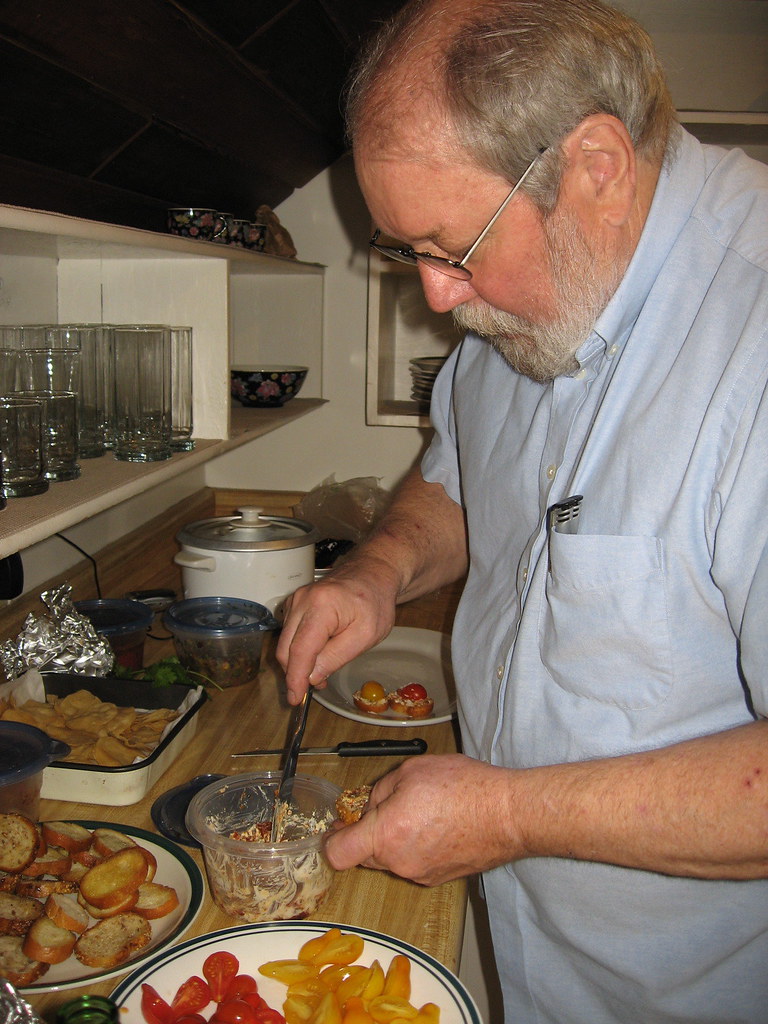
Company arrives soon after 5. Lucien brings a huge bag of Chanterelles he picked in a favorite spot after this afternoon’s woodcutting. Sophia loves Ethan’s toys and the slideshow on the computer. Don comes with Paula, the one person here who wasn’t yet family. Peter B. brings a packet from Margaret who’s on Savary with her woman’s group: a new signed copy of Sheila Munro’s biography of her mother”cost $19.50, not the $450 asked for by Amazon. Mara’s birthday adds festivity. She looks little changed from the Mushy who lived on the Funny Farm in 1971. While everyone delights in his dinner, Michael recites Robert W. Service poems with a professional actor’s presence and range.

Lund Retreat Autumn 2007 (5)

Friday, November 2nd, 2007

7:20 A.M.

Forgot to meditate last night, an opportunity missed. I remembered as I dropped off to sleep. Instead I read Prodigal Summer till 10:30, the book absorbing, enjoyable but too long. Kingsolver’s characters are stagnating, but factual material about small homesteading and predation and insects is informative. I’ll have to space out this winter’s Ecolit class’s reading assignments over two weeks, while we do the short poems.

The theme of predation in Thoreau, Oliver, Austen. Other themes to pursue from the start of the class: evolution, meditation and Solitude, observation, primitivism, ecological harmony, ecological disaster, rural life, progress, natural patterns, the seasons, fertility, stages of the life cycle, the erotic.

10:58 My worry: the excitement I feel at returning here after absence, the delight in the house and the view, the thrill of seeing people like Lucien and Peter U. and Michael and Don, all are transitory and contingent. A few more hours or days and all will get stale and then the memory of the excitement will summon disgust.

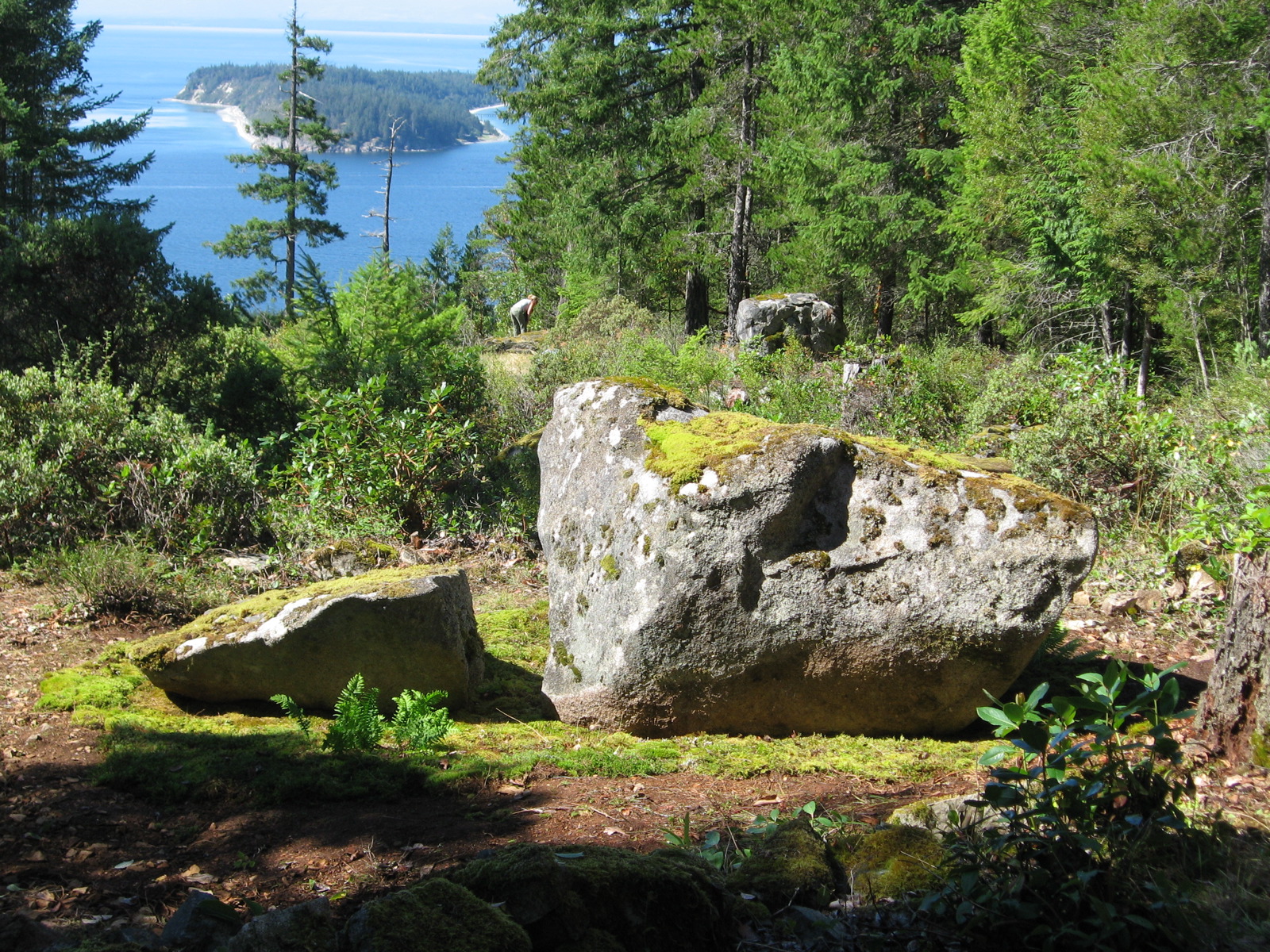
I go out to the two rocks whose pictures I collected from the archive last night and take more photographs”of the moss and the lichens and the granite, of the spaces between them and the lines of their convergence, of the juxtaposition of large and small, parent and offspring. “Land Art.” But the shapes don’t please me as much as they did this summer while I cleared them.

The downloaded pictures don’t help. I try cropping. Name them them Adam and Eve? Play with the spaces between them, and their adjoining borders, remembering couples by Brancusi and Henry Moore. The only images that aren’t terrible are several of the large rock alone, massive and weighty, but with a readiness to pounce: rhinoceros.

Should I get rid of the smaller rock? I could sledge it to pieces. “Two paradises twere in one/ to live in paradise alone.” If the small rock broke off the big one, the one became two. Is two more or less? Can the two again become one? Questions for couples.

Moving the pictures around into a sequence: from the two discreet weighty masses to the negative spaces between them to their direct juxtaposition, like a yin-yang, to their combining as a single image. I’ll need a better camera with manual focus and tripod to carry it out.

Moss show”mosses on the rock. Story of the rocks. A legend of the rocks. Father and Daughter, mother and daughter, father and son, married couple.

4:30 p.m.

Back from shopping trip for tomorrow’s dinner with Michael. We looked at the dying salmon making their way up Sliammon creek, went to the Hatch-a-Bird and bought a chicken and veggies, shopped at Overwaitea. He’ll do all the work. I paid. Downloaded email at River City Coffee Shop to read at home.

Notice sent to everybody in the department with links for student newspaper profiles of Larry and Todd but not mine. I’m relieved, but saddened by that. My colleagues’ cordiality covers disdain. Also a note from JW whom I’ve had no contact with since he went right wing in 1967. He found my website and sent me a link to something of his, which I cant check out till I’m back online. Also a note about Columbia 1968 strike 40th reunion coming up. Not sure I want to celebrate that failed revolution.

After reading the email, I feel like I’m standing at the edge of a large hole, about to fall in. Novemberness. Wet, cold and dark now, wetter, colder, darker ahead. Even in the sunshine yesterday, when Lund was almost empty of people, I sensed the quiet like a cloud of nothingness surrounding whatever was there.

I talk to Jan. She’s at an art opening and tipsy on wine, people and politics. We share news of the last 24 hours. My mood lightens.

I walk over to the neighbor’s place. D. pours rum-cokes and talks about hunting. B. cooks and watches TV and says nothing. I return, defrost Renee’s soup and eat it with toasted bread and broccoli salad. I load and run the dishwasher and come back to the computer to play with images of the rocks in Photoshop. My work is desultory.

It’s close to nine. I meditate fifteen minutes. More quiet than this morning. I continue for another fifteen minutes, more quiet than before.

The story of digging out the rocks last August? Clearing the fir stump and red dirt and arbutus tree and salal around the base, the roots tearing at them, exfoliated pieces broken off by the concerted action of vegetation. Moss and lichen exude acid which breaks granite down to soil which they can grow in. The shrubs and trees thicken their roots to wedge in the cracks for stability, but the rocks split and no longer provide it so the roots spread further to regain it. The cabled fibrous texture of root is harder for me to break with pick and shovel than the rock, but yields to saw and axe. When the vegetation, soil and broken rock created by the vegetation is cleared away, the boulder’s real shape is revealed, seated not on bedrock but floating on its own detritus.

I read Michael’s crumpled menu and shopping list with affection. I ask myself to enjoy the piece of dark chocolate I break off and not just let it go by. I ask myself to look at this room and enjoy it now, as well as when arriving and leaving and away. It’s not only a room but a living space, a globe. Let me love what and whom I love while present. All moments have value, those of sadness, loss and self-hate are as fine as those of triumph and pride.

Or am I looking too hard? And cloying again? The trees intruding on the view of Savary were bothering me. Was the view of Savary bothering me too? Is being here now both enjoyment and loathing? Is all this oscillation the product of too much time on my hands? Or is time on my hands what I need to find what I seek? And what would prove it found? Written work worth publishing? I peruse my archives and come up with a downloaded pdf of last year’s Presidential Address to the American Studies Association that cites my 1989 essay on Diablo Canyon. I reread the essay with pleasure.

Lund Retreat Autumn 2007 (4)

Thursday, November 1st, 2007

7:45 am

The light comes up slowly to reveal a clear sky. The wind has shifted to northerly, blowing the smoke from the bark burning in the stove down across the clearing. Carbon: burning cellulose, cutting down trees to make a view. No freedom from sin.

I slept better on the hard mattress in the small bedroom last night, except for the old teaching anxiety dreams just before wakeup: classes start today and I’m unprepared. It’s a relief to open eyes and remember I still have two months.

I switched beds also to close off the lower bedroom, which was draining heat from the rest of the house. The fuel was consumed, but there was no chill this morning. “Sticks in box, no more cold,” Ray Mungo’s mantra at Total Loss Farm in Vermont, Winter 1969. The basics of survival and satisfaction.

It took five minutes to start a fire, get the coffee going and draw a hot bath. All systems work. The enjoyments of simple and civilized. No car, internet, tv, radio, but yes, hot water, tight house, computer, and camera. I’m settling in.

The silence is like the blanket of warmth that envelops me when I go near the stove. I stop what I’m doing and snuggle in it. It’s heightened indoors by the discreet sounds of the house, flames in the stove, stove pipe pinging with temperature changes, the electric water heater or the pump switching on and off. Outdoors it’s the distant lap of waves, a raven’s croak, a car on the highway.

The extra dark coffee with goats milk has the thickness and taste of mocha. Sip slow.

The dawn is late and slow, lighting snow on the island peaks.

Frost, shoes sliding on the icy deck. The sky starts to overcast. Alterations of light and temperature mirror mood and desire.

Today what I want is to be inspired by this place to create.  Knoll House to be my muse, as it was in August when I was led to dig out the paired rocks, when the earth and the vegetation directed me to undress them and their glory was revealed, when they asked to be embellished with ferns and moss and they stood forth in splendor.

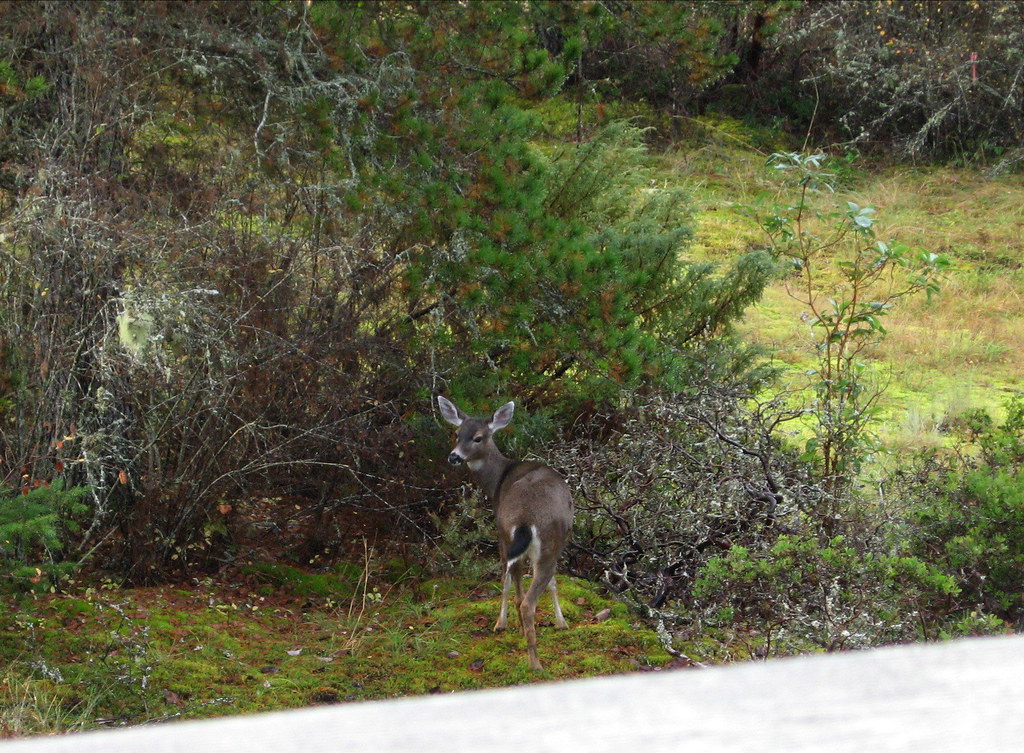
I step outside and am captured by the wide-eyed gaze of a doe. I return the stare, lock on her eyes, huge cupped ears, white-margined black tail.

I back up slowly to get the camera. Does this effort to appropriate the moment corrupt it or pay it tribute? The deer waits for me. Unfazed by the meretricious flash, she keeps grazing and then wanders off. “Coast Deer or Columbia Blacktail”Odocoileus hemionus. ¦a twigeater, browsing on Douglas fir, western red cedar, yew, blackberries, huckleberries and salal.” Nature West Coast p. 211

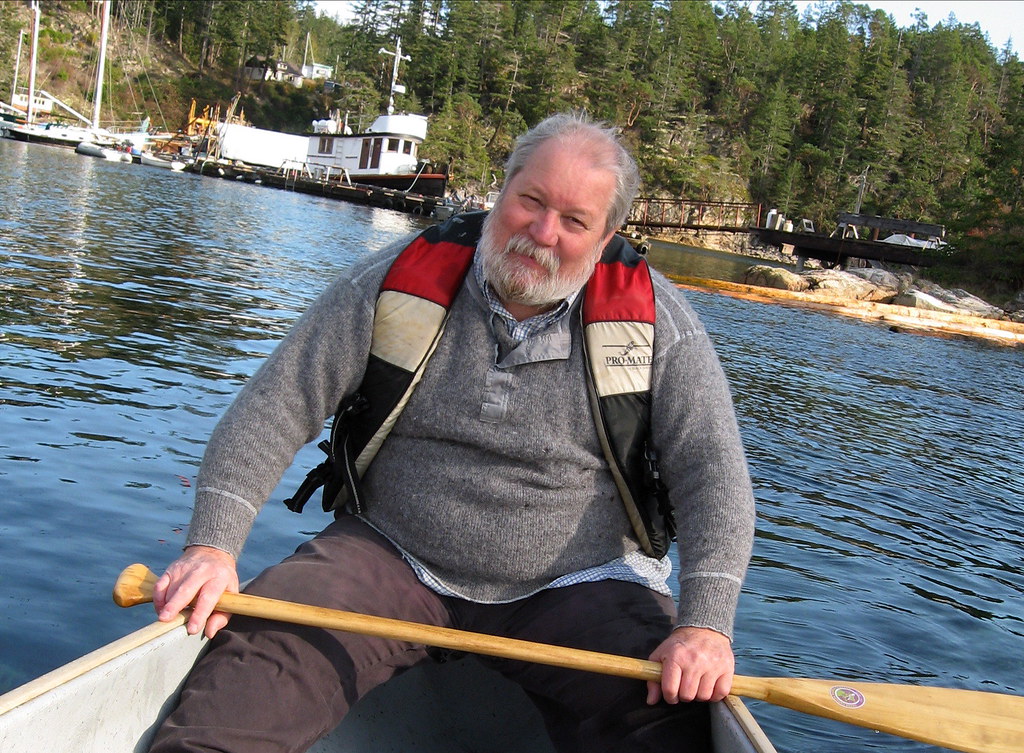
M comes up with his pickup and we load the canoe for a trip to the Ragged Islands. He hasn’t been in this boat, which he paid half for in 1974, for thirty years. It’s battered but still seaworthy. He paddles stern, weight too far back for the boat to balance stably and rusty on steering skills.

We piddle around the Lund Harbor and then head for Finn Bay against a stiff westerly breeze. We go through the little channel at Sevilla Island, and try to round the point into Thulin Passage but both agree it’s too dicey. Wind behind us, we coast back to Lund, the weather now again clear and brilliant.

We load the canoe into his truck and out onto the ramp in the sunshine come Carol P, and her daughter Cindy. Carol and I hug”she worked at the store during the seventies”and Cindy and I look at each other trying to place faces. Michael introduces me as Steven Marx of the Marx farm. She says I babysat for you. She’s nine years older than Joe. Most likely while we were doing the camp. Carol reminisces with Michael about the best of times, when he was chef in Lund and the restaurant was always full, even in the winter.

Michael parks the truck while I wait on the ramp, and comes walking down the hill with a tall man, whom I recognize as Don. We all retire to the pub. Don taught English in Powell River for 12 years, worked in a sawmill in Tahsis, then ran a school for troubled teenagers in Victoria. We schmooze for three beers. On the way home I propose to Michael that he be the cook for a dinner party on Saturday night at Knoll House, and that we go shopping on Friday. He agrees.

I come home and make myself supper”again Renee’s frozen lasagna and there’s still a portion left, along with local broccoli from the Lund store. Sounds like something living in the wall behind the couch where I sit. I doze off and am awakened by Peter U. delivering the bottle of whiskey I’d left in his car yesterday.

Speak to Joe on the phone. Tomorrow he goes to Hawaii for two weeks to build a barn with five members of his crew. He’s been working ten hour days the last three weeks. Amy’s business is dormant. They are under pressure. Appreciates our gift of Y membership. Voice is deep and sober.

Lund Retreat Autumn 2007 (3)

Wednesday, October 31st, 2007

This morning I wake up at a more decent time, drink coffee, meditate in a world of chaotic voices and impressions.  I microwave a bowl of the oatmeal left here by guests, and after fussing with the phone for a while manage to reach Jan. She tells me the doctor she saw in Santa Maria confirmed that the lump wasn’t a problem. Ian was just arriving in Halloween costume with Dennis. He said he missed me.

I find the red handled axe I bought at Canadian Tire this summer, gather some rounds of firewood scattered near the house and set up a chopping block. The first big round shows traces of previous efforts, is twisted in its grain, and has spongy outermost rings. Go slow, I tell myself, find the fine cracks, focus eyes where the blade should hit, angle the axe head with the grain. The first few blows are off and the blade buries itself in the soft tenacious outer rings. After about ten my aim improves, but the wood remains intact. After another ten, shoulders sore, I’m about to quit. Then with a loud crack a half inch gap opens across its diameter. My “yeah!” echoes through the woods. The next three rounds go quickly. Instead of asking to borrow a chainsaw or buying one or trying to get the old Homelite going, I roam past the perimeter of the clearing and find twenty or so rounds strewn in brushpiles. I throw them up on the road, carry them to the block and split enough to last for my stay. In the woodshed I separate three categories; kindling, starter wood and fuel.

I bike down the driveway. I have to dismount a few times to move the derailleur manually. It’s a thrill to speed down the curve toward Malaspina Farm. I find Peter working alongside Lucien, yarding out huge rounds of freshly cut alder that a faller had just taken down along his hydro line.

He tells me to borrow his bike which is smaller and better. We take his dog on a walk down a steep road to the edge of Okeover Arm, stopping at a lovely house, lawn and orchard with a landscaped stream winding through it to the shore. It reminds me of the stream on the Marx farm in winter rushing under the bridge and alongside the house.

We talk of children and grandchildren and my hopes to spend more time here with and without them and his hopes that S and W and their children will locate here at the completion of medical school. We come back to the house where Lucien is making lunch and Ronnie is coring and peeling apples for drying and adding to their homemade granola.

She’s recovering from the flu, but as animated as ever. She says, “Steven will know this,” and asks me a question about the proper ritual for unveiling a gravestone a year after her mother’s death. I have no idea, and I fail to link the question to the fact that today is Halloween, the day of the dead and of my father’s death. I do know that on such an anniversary it’s customary to light a Jahrzeit candle and say the Kaddish.

After lunch of two slices of bread and mustard”I turn down cheese and salami much to Peter’s disapproval”he drives to Lund to pick up the Globe and Mail for the word puzzle to which he’s addicted. At Nancy’s over coffee he tells me the story of Sacha and Wendy’s trick announcement of pregnancy by giving them an elaborately packaged giftbox with a positive pregnancy test stick inside.

Back at Knoll House I make a fire with my new wood. Jan calls and mentions mourning for Henry. I remember with shock.

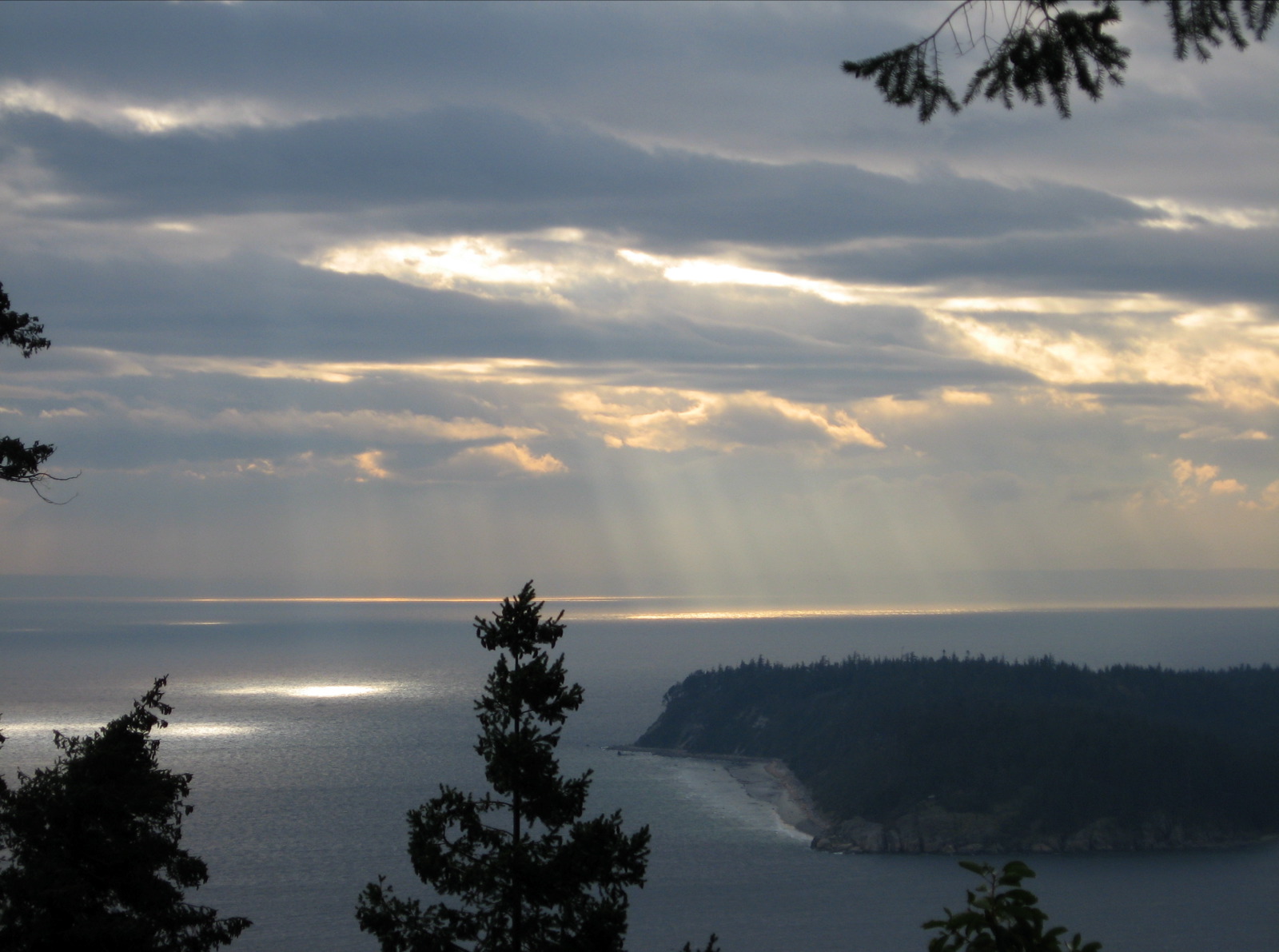
The sun starts doing amazing things with the clouds behind Savary.

I go out on the deck and down to the bluff to take pictures.

I light the kerosene lamp for Henry, gather his pictures on my computer and read my account of his death on October 31 1995, my eulogy and my obituary.

I collect the pictures in my computer of other dead people I cared for and put them into an album. There are 11. Actually 10, since I find out a few days later that Terry K. is still alive.

Lund Retreat Autumn 2007 (2)

Tuesday, October 30th, 2007

The morning is dark and overcast, the house cold. I get up three hours later than usual. The bad smell in the bathroom is back. This time I look high rather than low and see a swatch of fur protruding through the insulation panels in the ceiling. After coffee and a new fire in the stove I return with pliers, lift the panel, clasp the dead mouse by the tail and cremate it.

Since I’m offline, no new input here today. Writing about yesterday, when nothing really happened, has already taken up six hours. If I were online, I’d be interrupted every few minutes.

I eat soup and empanada at Nancy’s bakery and bike back up the hill to M’s place. Since returning here a year ago after 21 years away, he lives alone in his trailer, works on his subdivision plans and his art. He seems healthy and happy, but how does he handle the solitude and lack of stimulation? The TV is on, next to his internet computer. We talk about old times.

Peddling up the steep driveway in the dark I meet neighbor Dick in his diesel pickup on the way to dump his compost for the bears down below the rock bluff. He tells me that our tenant last year showed him a photograph of a cougar sunning himself on the moss near the deck.

I meditate from 7:30 to 8:00, the silence of this place amplifying the static in my head. Usually it “settles down” for the last few minutes, but not now that I’m doing it twice a day in this perfect spiritual retreat. Nevertheless afterwards, I feel clearer and more optimistic than before. I read till ten, finishing My Year of Meats, carrying on a conversation with the author, as if she were the protagonist, Jane Takagi–a Japanese-American documentarian filmmaker. Though a DES child, Jane wants a baby and gets pregnant. Then loses it with a “missed abortion,” a form of miscarriage involving carrying a dead fetus for several weeks. That rare term awakened long-dormant dark personal memories.

The truest material for me in the book’s somewhat contrived denouement is expression of grief for this loss. All the happy endings”Jane’s career success, the defeat of the feedlot hormone conspiracy, Akiko’s pregnancy, her escape and welcome in America, the rekindling of Jane’s romance with Sloan”don’t mitigate its pain.

Lund Retreat Autumn 2007 (1)

Monday, October 29th, 2007

Jan drops me off at the San Luis Obispo airport at 5:00 A.M. She says, “have a good time, that’s what you’re going for.” Nothing to see in the dark, I meditate. Waiting for connection to Vancouver in San Francisco airport I browse the bookstore. So many new titles. “Books have a short shelf life,” said rueful Ruth in her lecture a couple of weeks ago, consoling me, since it’s less true of hers than of mine. I’m immersed in her first novel, My Year of Meats, which is still selling all over the world, in many languages.

The cheapest low cholesterol breakfast I can find near the gate is vegetable sushi”freshly made behind the counter by a Japanese chef. On the two-hour Vancouver flight the buildup toward the novel’s ending alternates hilarity and horror.

Outside the Main Terminal in Vancouver Airport, I see Peter and Margaret back from a trip to New York, dashing toward the shuttle to the South Terminal I’m about to get on. We’ll fly up the coast together. No need to rent a car or take a cab or hitchhike the twenty miles from the Powell River airport to Lund.

As we ascend from grey rainy Vancouver above the middle of the Georgia Strait, the weather turns bright, the slant light of October golden even at midday. Looking out the window Peter and I identify archipelagos we’ve kayaked and mountains we’ve climbed. We eat lunch at Renee’s, the expatriate French chef who runs a little dive on Marine Ave. I have carrot ginger soup and fresh baguette, a lunch you’d love in Paris, and buy two more frozen soups and a chicken asparagus lasagna for provisions.

On the way north Peter stops at an organic farm in Wildwood, run by a sparkle-eyed grey haired woman in gum boots who grew up in Lund and says she took art lessons from one of the owners of the Marx farm before it got that name in the seventies. I buy goats milk in a square glass bottle”creamy but cholesterol-free”and little pear shaped tomatoes, still on the vine this late. We talk about the government crackdown on small farmers who no longer are allowed to slaughter meat without installing million dollar facilities. Pat, who’s supplied us with organic beef, pork, lamb and poultry from her farm across the road for decades, has been harassed by helicopters over her place counting the number of turkeys she raises and by men in suits presenting her with ever more onerous regulations. L. says she’d be better off growing pot or brewing up meth.

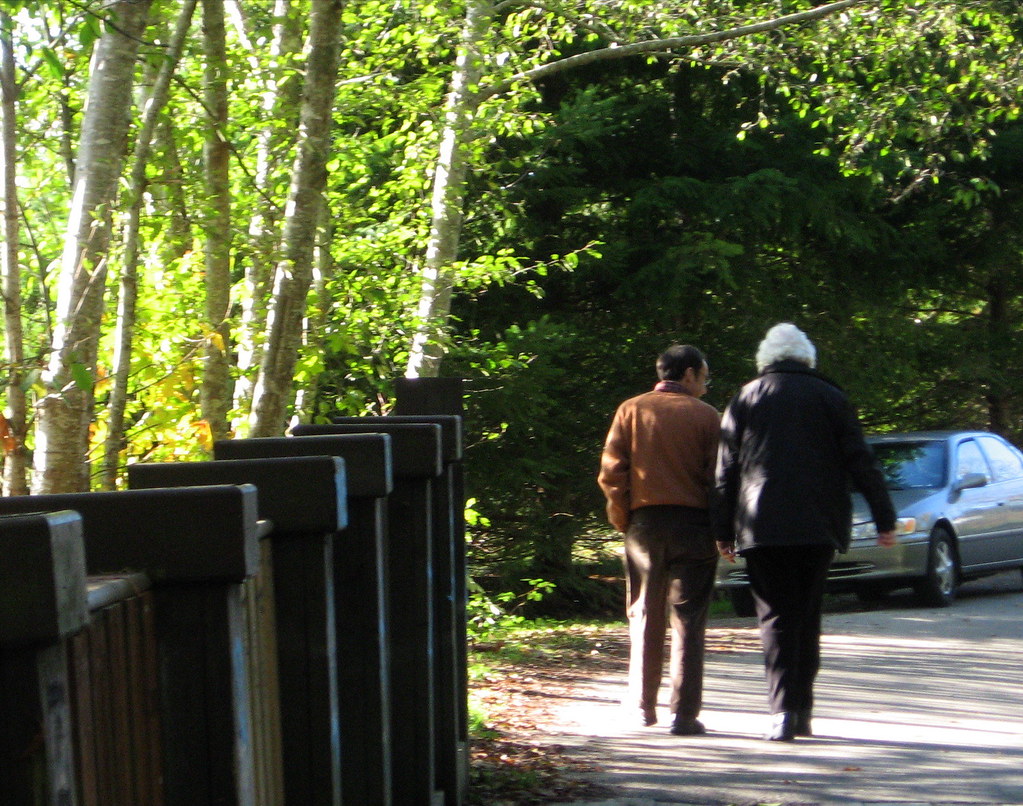
Slowing down to the posted fifteen miles per hour on the Reserve, Peter says you can hear the birds rioting over the salmon run. Despite jetlag from their trip, he turns off into the village, where he has taught Medical Terminology and now massages the elders. In thirty seven years I’d never gone down that road. He stops on a small bridge close to the mouth of the creek, shadowed by glowing golden leaved alders.

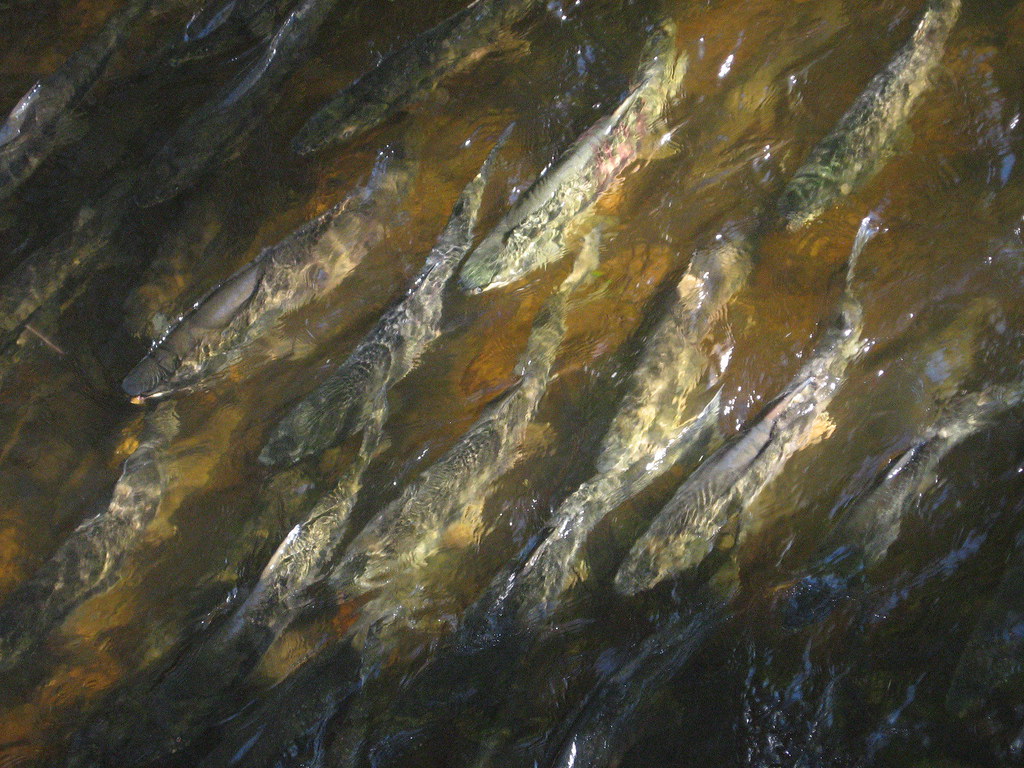
I see the large fish with ragged fins and peeling skins straining upstream to complete the final stage of their destined pilgrimage, finding the spawning grounds of their birth to lay and fertilize eggs and die.

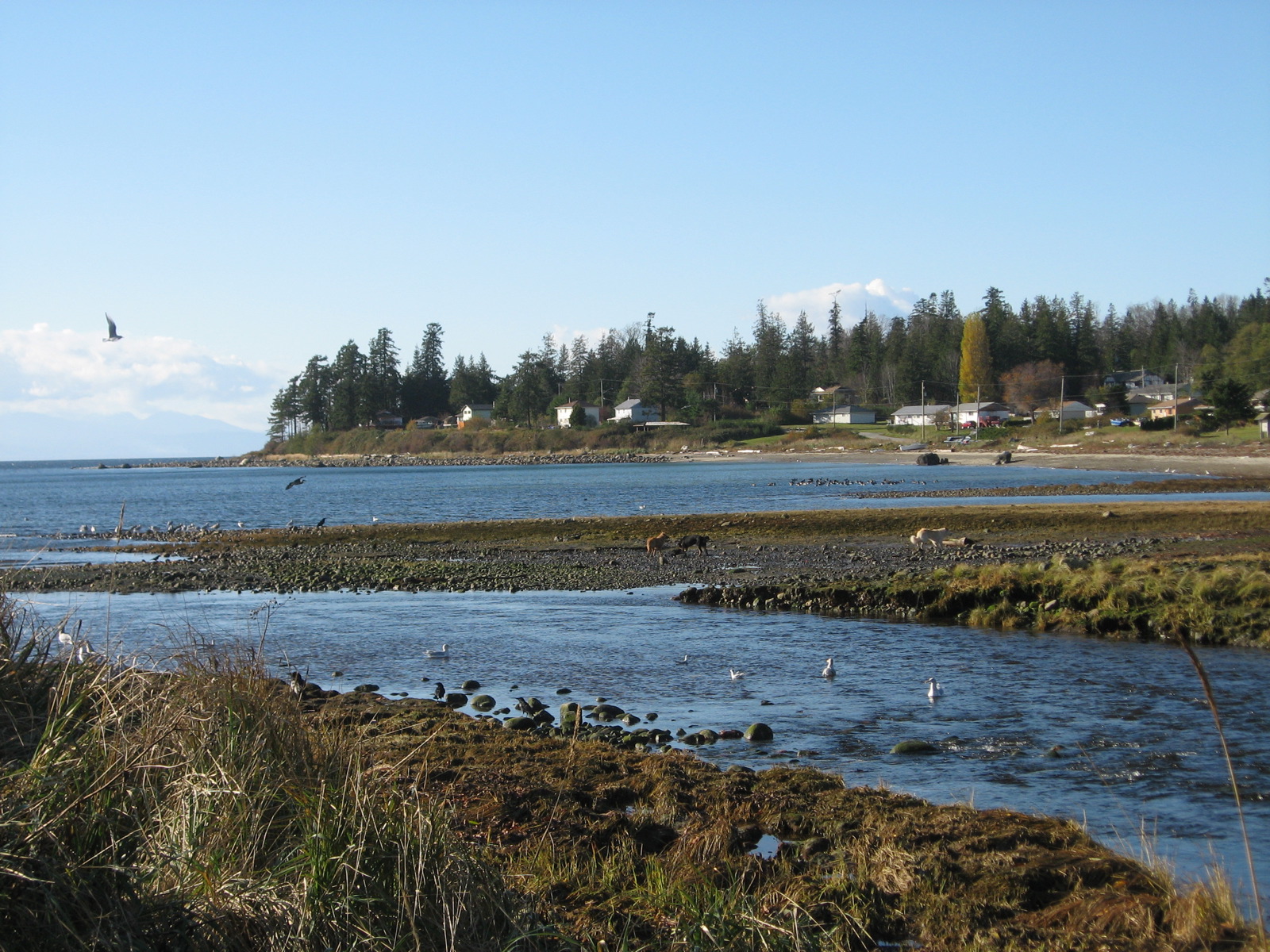
Down at the mouth of the creek, ducks and gulls, three eagles and two dogs are feasting on white ones lying in eddies on their sides and backs, still gasping. The shore is littered with garbage and vomit.

At Peter and Margaret’s house, we unload their baggage and switch mine to Peter’s Tracker for the trip out to Lund. We take a mountain bike he lends me which should fulfill my transportation needs. He invites me to pick chard in his bluff top garden. I mention the irony of the government’s program to wipe out small meat producing farms while promoting the horrors of industrial feedlots and slaughterhouses I’m reading about in Ruth’s book. Peter says that his daughter, whom he just visited, works for one of those hog processing plants near Brandon Manitoba, where her husband is stationed in the Canadian Army. Her job is in the office importing and housing foreign laborers. She once took a partial tour of the facility, but said she didn’t like it.

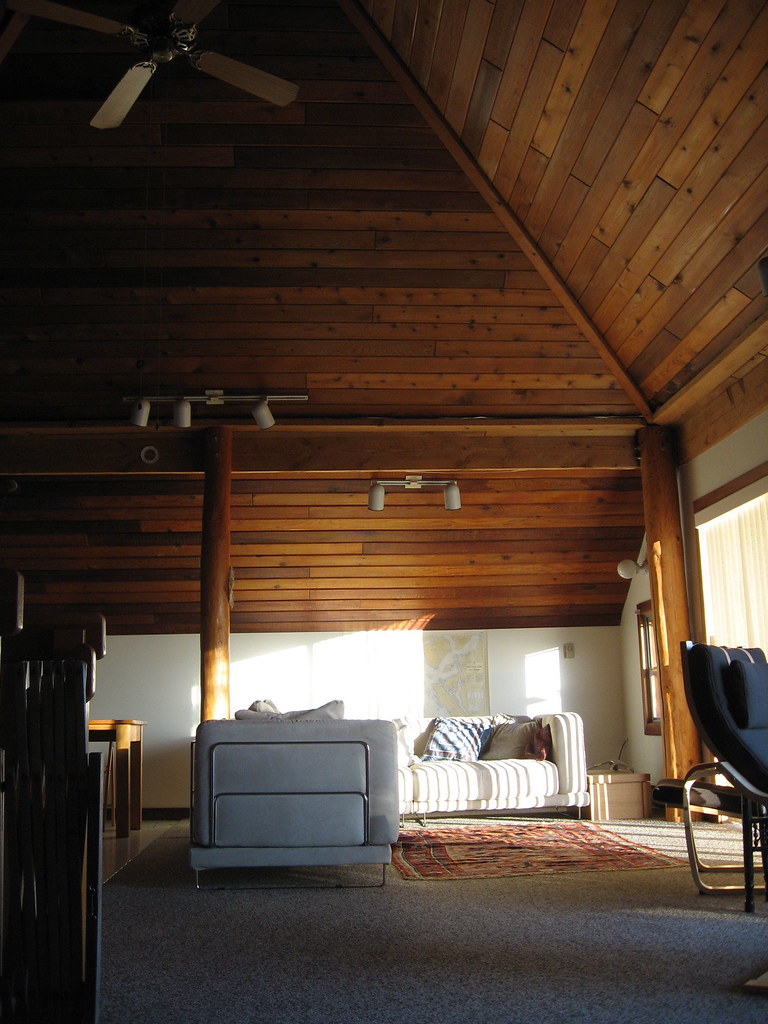
Though carrying only a pack, I feel like a bridegroom crossing the threshold of Knoll House. Twelve years we’ve had this place and I’ve been here thirteen times, but each time the entry feels sacramental. The southern face is warm from the sun, which shines with a brilliance on the water only bearable to look at for seconds. The high peaked ceiling makes the upstairs like a mosque or a teepee.

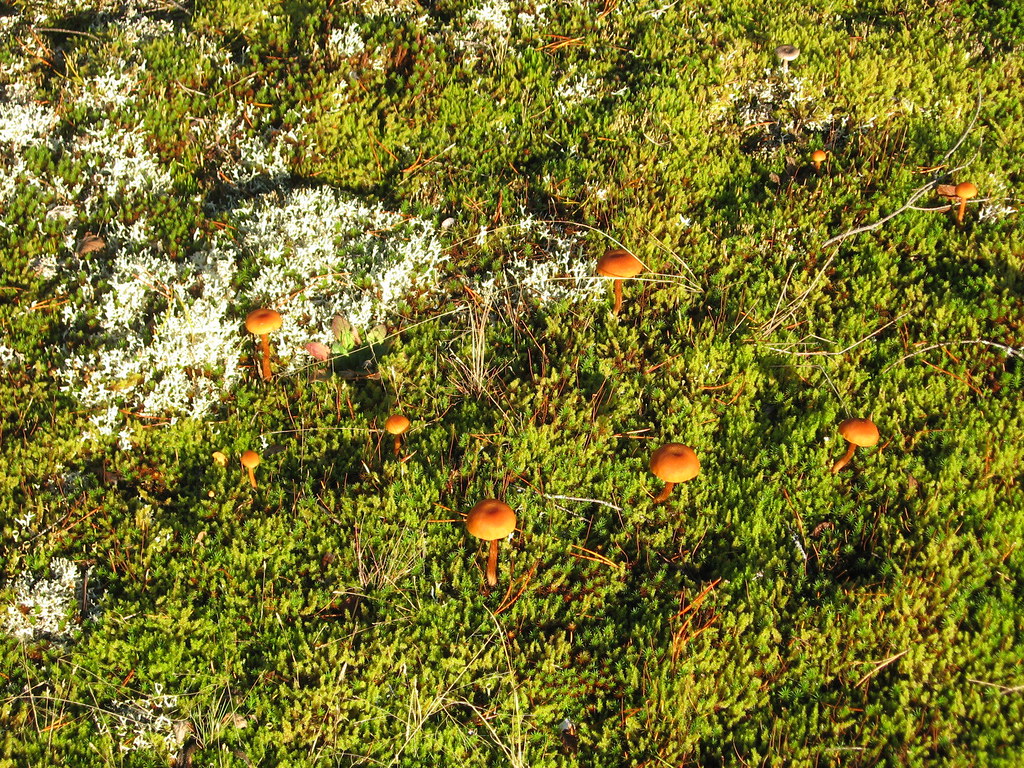
I walk the bluff trail to visit the rocks I’ve thought about since summer. Mushrooms and moss are radiant.

Back in the house, I notice a bad smell in the bathroom”sweet and rotten. Sniffing around the toilet and sink yields no culprit. The baits that Jan placed in August are still around only lightly nibbled. No mouse or rat turds but dead carpenter ants strewn on the kitchen floor.

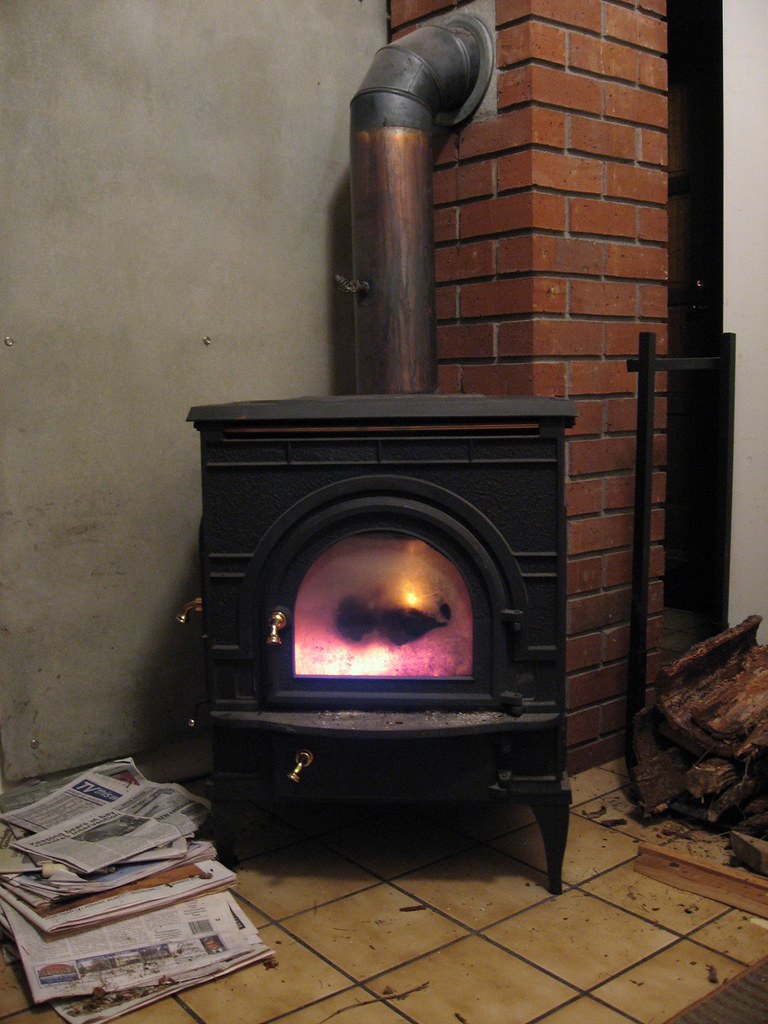
The house chills fast after sunset, temperature in the forties. I light the cast iron wood heater we bought from one of the renters years ago and try to learn its wishes. Open ash door and upper baffle to start up; once fully ignited close door, lower baffle and open lower draft; when the house warms up, shut lower draft and leave screw draft open. It needs only one log every few hours to keep going.

The ceiling fan upstairs on low reverse pushes down the heat. Thanks again, John, the uncommunicative philosopher-carpenter who built this house.

During evening meditation a vibration like someone walking up the stairs or tiny earthquakes.

The food I bought at Renee’s is forgotten in Margaret’s car. I feast on the gorp and fruitnut bread Jan packed for me, and feel her presence in the newly furnished interior. Margaret calls to say the lost groceries will be delivered by Peter U. on his way home from town where he’s at dog-training class. Here alone, I’m still provided for.

I unpack and download the day’s photos. Peter U. drives up with the food. He announces joyfully that S and W are pregnant with his first grandchild. Since September’s arrival of theirs, Peter and Margaret exude confidence in the value of their lives, the goodness of creation. It’s what I feel when Joe and Amy and Ethan and Abel are present, especially here, or when I’m with Claire and Ian and Luke. Passing through the First Nations display in the Vancouver airport I read a caption for the Thunderbird sculpture: “my grandmother, the creator of the universe.” This sentiment of the grandchild mirrors ours: my grandchildren, the creation. In both directions, we’re one generation away from eternity.

I make the bed downstairs and get under the covers to read. This late, I cant finish the description of the slaughterhouse in My Year of Meats.

Jack Sparrow and the Devil’s Canyon

Tuesday, October 9th, 2007


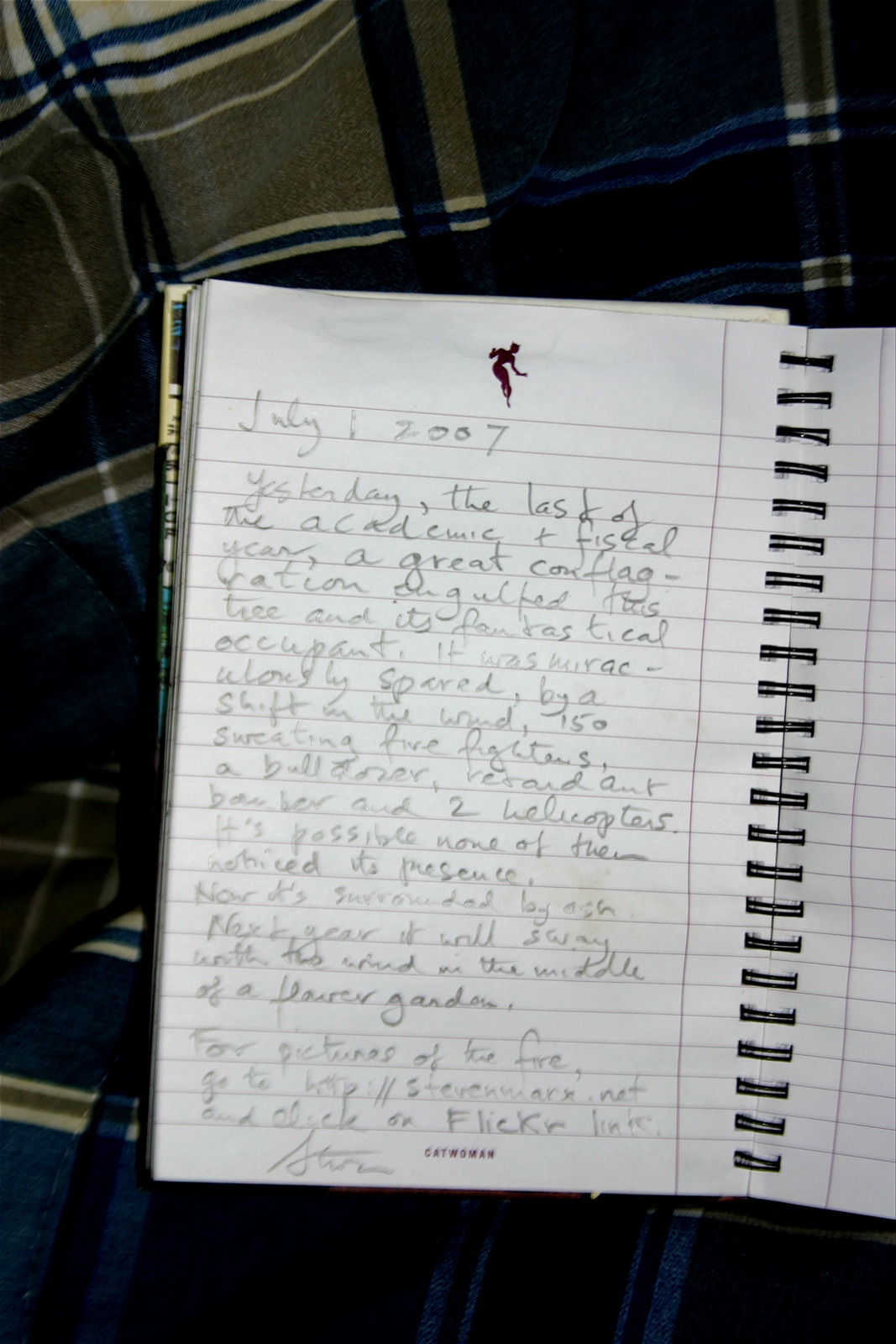
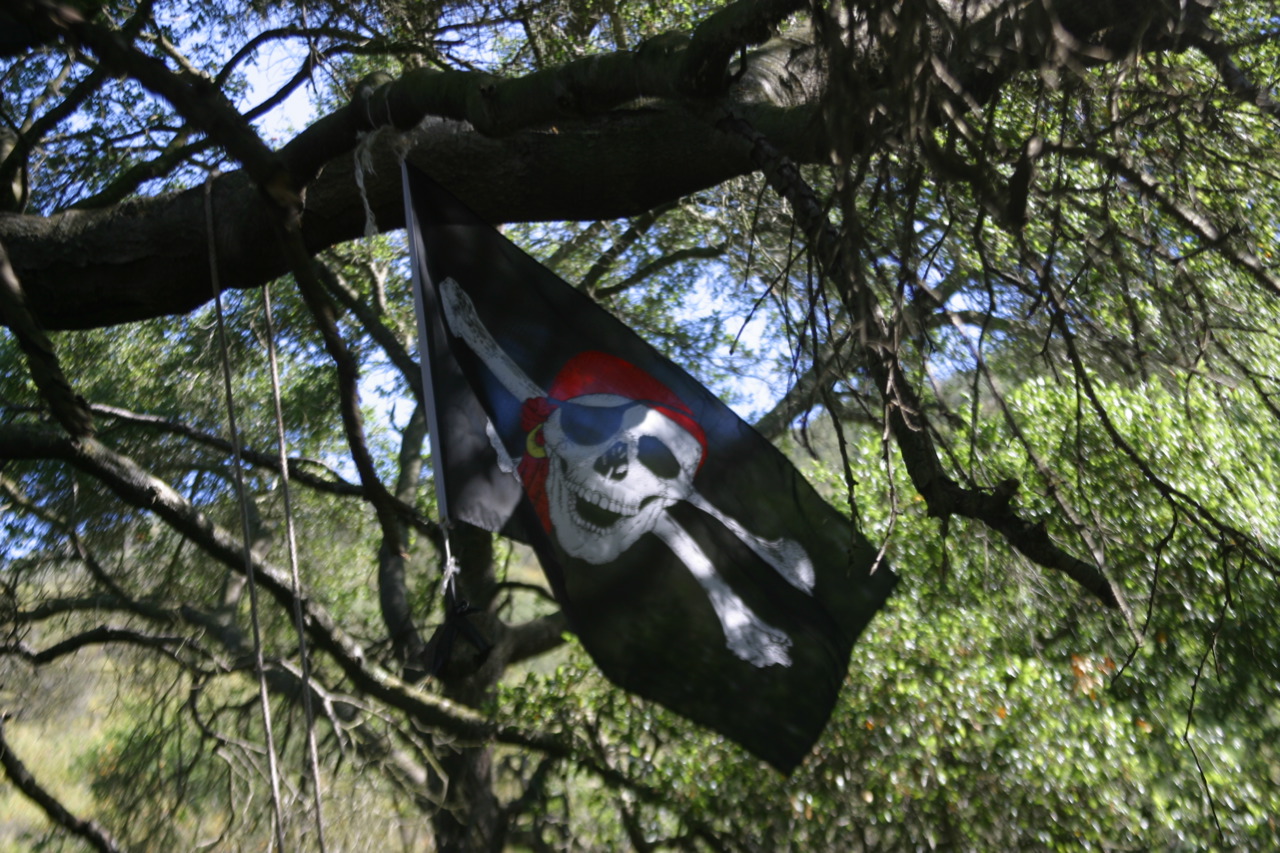
I’d been planning for several weeks to lead Ian’s school–24 kids from kindergarten to grade 6–on a hike up nearby Poly Mountain. I could begin in the classroom with a slide show of pictures I’d taken from my roof of last June’s fire on the mountain, and then we could make our way into the burn area to see the damage and the beginnings of regeneration. On the way it would be fun to check out the secret tree house on the hillside that was miraculously saved from the flames.


I’d noticed that the design on the large pirate flag hanging from a high branch next to the treehouse kept cropping up everywhere from pickup trucks to clothing.

Exploiting this new fad with a long story might distract the kids from the difficulty of negotiating the steep game trails leading up the slope. Maybe something about Captain Hook.

Then I remembered Ian’s talk of the Pirates of the Carribean movies and their hero, Jack Sparrow. That name was appealing enough to overcome my aversion to anything associated with Disneyland. I rented the movie of Part 1 and found myself enjoying its preposterous plot devices and prolific film and literary allusions. My pirate tale could bring Jack Sparrow to this improbable place.

Making up stories is as hard for me as remembering them, so I knew I had to do some preparation. A few days before the scheduled hike, I wrote it out in outline, and while swimming and doing housework worked on memorizing it. (more…)

Yom Kippur 2007

Monday, September 24th, 2007

(see Yom Kippur 2006, 2005, 2003)

My commitment to fasting and spiritual retreat shrank this year. I slept in my bed instead of camping out, drank coffee and practised connubial rites in the morning, and planned to go to Ian’s soccer game and then kayaking with a friend in the afternoon.

At 8:30 a.m. the delayed impulse struck and I decided not to eat or drink any more till dinner and to go on a hike by myself. There was also a pragmatic motive–to check out the route for the excursion I’d planned to take the Manzanita School kids up Poly Mountain to see the effects of last June’s wildfire.

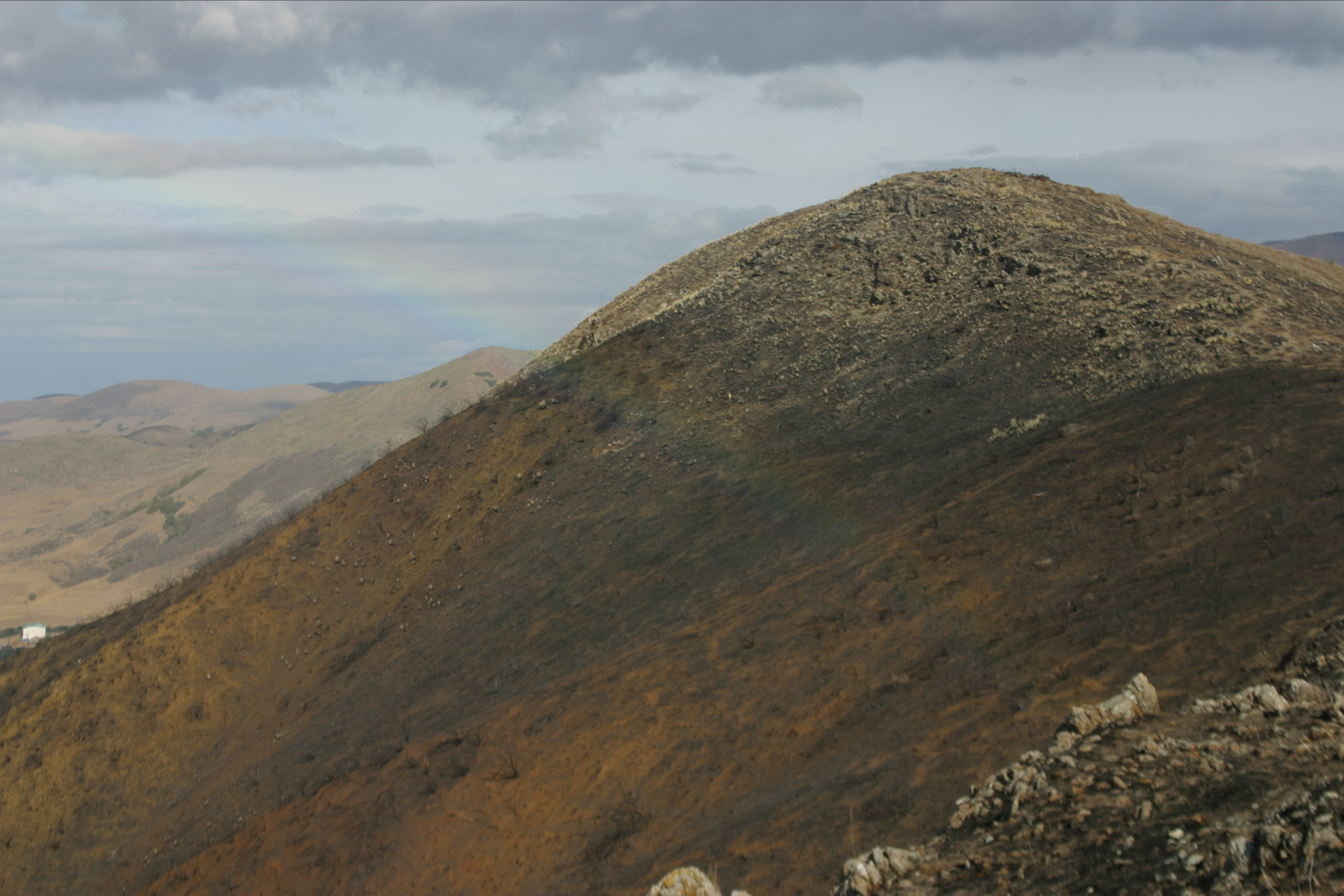
The walk began with fanfare: a long predicted rainstorm arrived as a few morning sprinkles and grand skyscapes. There was enough moisture to make the rock hard clay soil congeal on my boots and to revive the strong smell of burnt vegetation.

When I reached the top of the mountain, the sky was full of variety and motion.

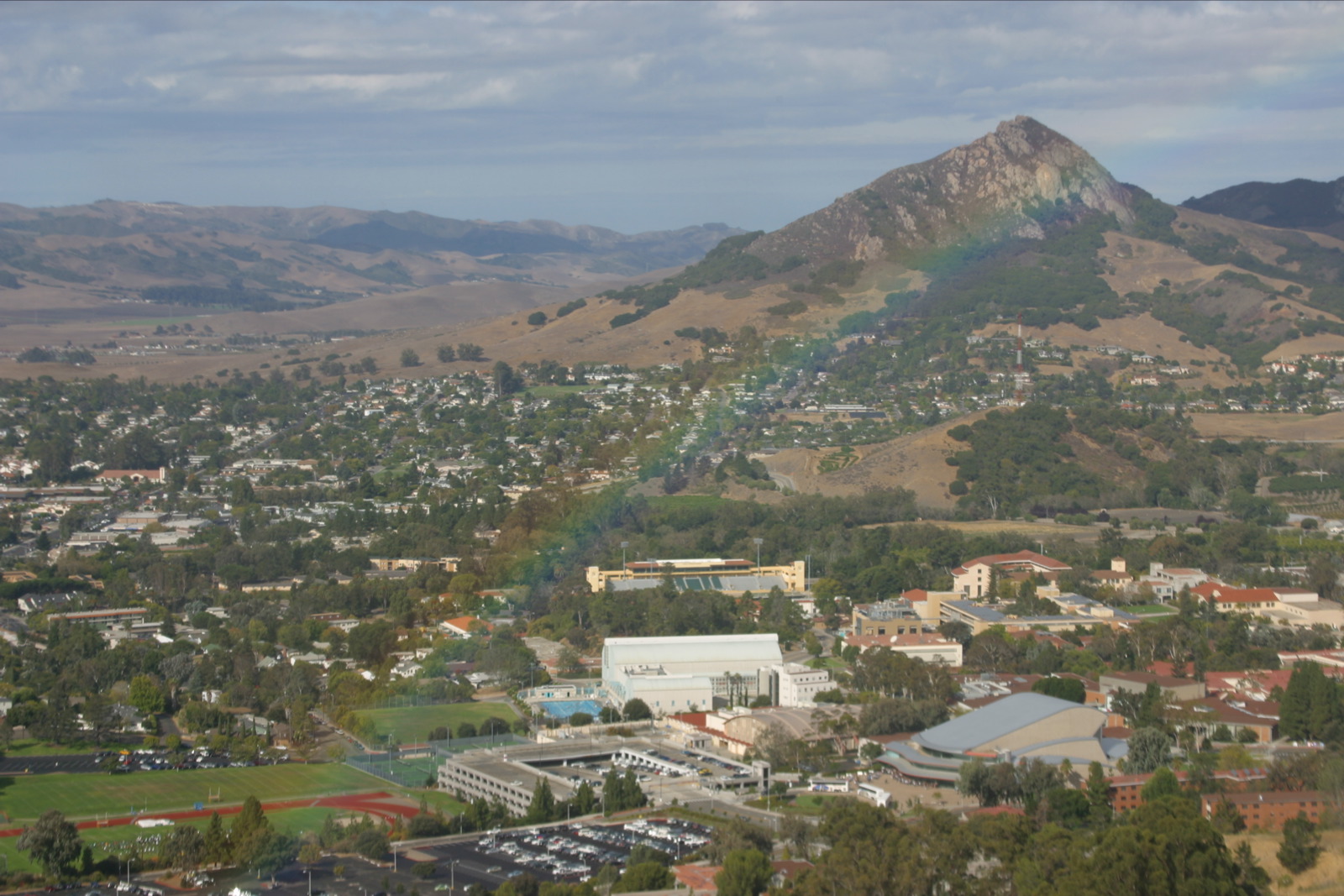
A subtle rainbow precipitated across the face of Bishop’s Peak below me, one end on the playing field where the marching band was striking up, the other on the bare soil exposed by the fire right beside me.

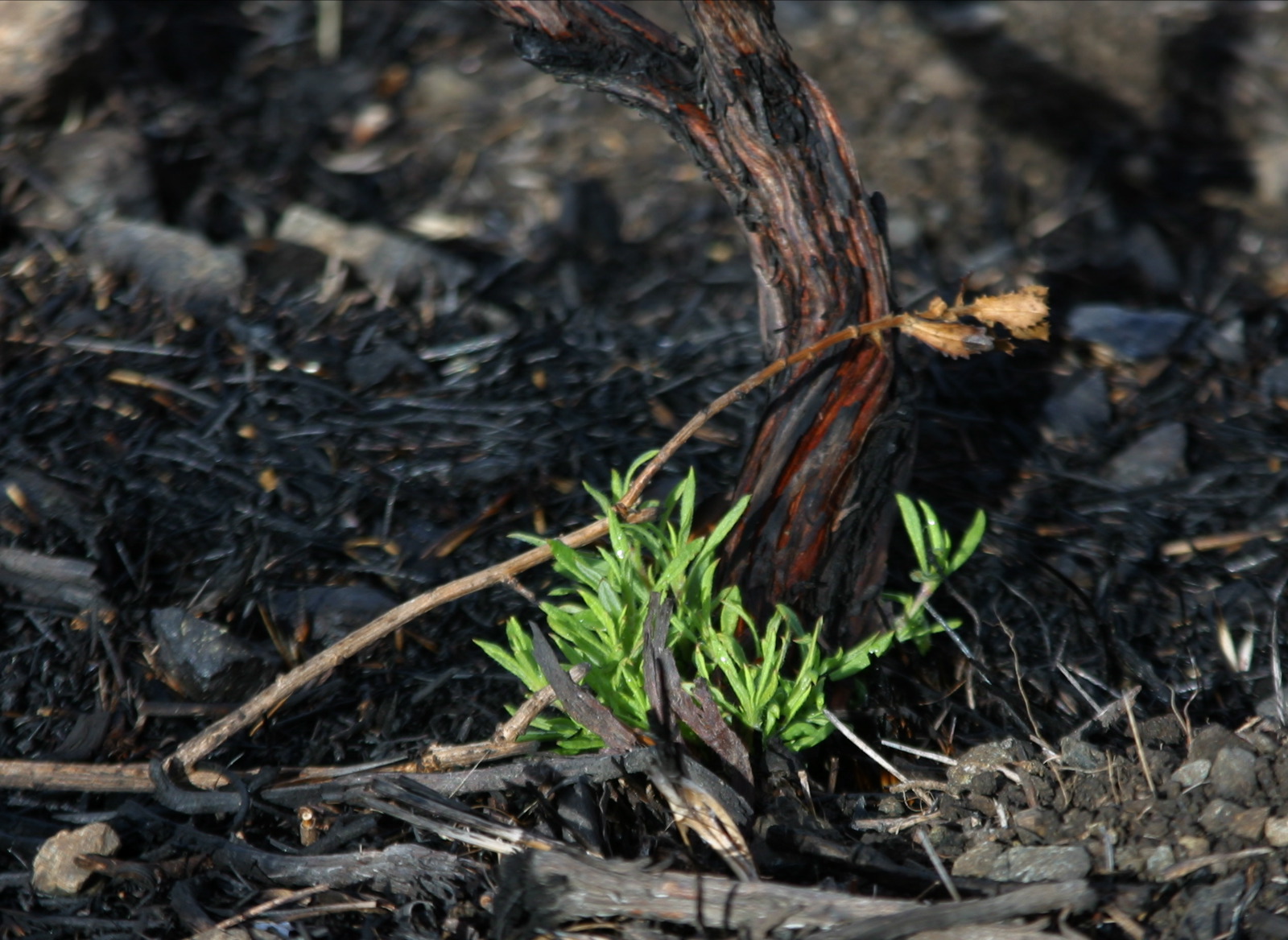
A few drops sparkled on the leaflets that sprouted from the base of a burnt manzanita stem hungry for moisture to maintain its precarious new growth.


The previous night, after the Coastal Cleanup party at Ecoslo organized by Jan, I watched Bill Moyers’ Journal. It was about Rachel Carson, devoted mostly to the performance of a play written and acted by Kaiulani Lee. She created the sense of glory and tragedy that Carson felt during her last years, when Silent Spring was published, villified by the chemical industry and generating the first environmental legislation in America. Carson hated to leave the peaceful Maine cottage where she spent the summers with her adopted son exploring forests and beaches. Now she had to return to the fray in Washington. And yet there she was drawn, by the excitement and by her sense of destiny. The moment of departure was framed by tragic knowledge: that even if her crusade against indiscriminate use of poisons succeeded, Earth’s natural systems remained imperiled. And she was dying of cancer.

The dramatization caught my mood. After four weeks in B.C., it was wrenching to leave Knoll House and the Zunoquad Kayak trip to the Broughton Archipelago and come back to the struggles here. All that time with no phone or email, a respite from continual reminders of global climate change and human persistence in suicidal folly. But return has drawn me into the heat of battle. I gave a talk on Thursday to the Student Services Conference urging them to demand that Cal Poly sign the Presidents’ Climate Agreement and get serious about its commitment to Sustainabiity. I picketed the Fall Conference of faculty and administrators with homemade signs:

Vice President, Provost and Dean
It’s time to make this campus Green

Students, staff and faculty
Want more Sustainability

Without more changes at the top
Sustainability will flop

President Baker,
Take the lead,
Green Cal Poly
With word and deed

President Baker
You’re the one
Green Cal Poly
Get it done

To be out front
The time has passed
We wont be first
Let’s not be last

Your Presidential legacy?
Green Poly University.

I distributed this leaflet:

From the funder of a major grant for a sustainability program at Cal Poly recently not renewed:

“However, the university’s decision to provide no university funding for the continued development of the program causes us to question the commitment of the university to sustainability ¦ .

In considering requests for financial support, ¦. Foundation (as well as most of our foundation partners) requires evidence that the university is willing to re-program its financial resources and commit its intellectual resources to sustainability. Thus the foundation is most interested in, and responsive to, inspired leadership and expertise when it is combined with the political will to dedicate the university to the development of sustainable systems.

¦ We make this decision to decline the current application with great regret.”

Yom Kippur is for reflection and atonement. This year I didnt even perform my morning meditation. I’ve ceased saying “I’m sorry for not doing enough” since rejoining the good fight. I can feel some guilt for neglecting my deceased parents, an obligation revived by having to explain the cremation remains we found last week on the Felsman Loop trail to Ian, and by the sermon of the Chumash elder, Mr. Cantu, that preceded my talk to Student Services. He said care for the future must stem from reverence for the past.

The sky cleared and the sun warmed my back.

I felt gnawing in my stomach and fast-fatigue. I lay back on the bed of dirt, and chanted and dozed. An hour later, I descended the mountain in time for the soccer game: sharks vs. sharks.

Dusty cancelled on the kayaking but Jan decided to come. We watched the sky together.

The Zunoquad: Kayaking in the Broughton Archipelago (7)

Friday, September 7th, 2007

Day 7 (Again thanks to John for much of this material)

Late awakening with mixed feelings: reluctance to end this interlude of pure living in the present and eagerness to get back to a less simple existence. Slow breakfast of oatmeal and granola. Murray collected clams in the low-tide mud flats, enough for two each. Sunshine.

With assistants, Steve completed Zunoqua and mounted her on a log facing into the bay. Rob created an artful arrangement of grass, rock and roots.

Careful cleanup of the campsite and deliberate packing of kayaks, gear and personal effects to be ready for Dennis’ appointed arrival at 1:30, the moment of high tide.

He got to us at two p.m. along with Leonardo, his quiet stepson, when the tide was already falling. He knew just what to do, as he slid the boat in parallel to the shore and holding it at the bow with a snag protruding out over the water, and at the stern by having Leonardo push a pike pole into the shallow rocky bottom, keeping the boat in water deep enough to float and shallow enough to allow us to to load first our baggage and then ourselves in a race against time and tide.


Dennis two-stepped along the wobbly snag ashore and back, and then at his urging and our cheering, Leonardo followed. Up went the heavy kayaks, whose bows were lifted to him for levering into place on his racks. Dozens of parcels of gear were passed on board by a human chain””a chain means that nobody moves.” And we squeaked out with the help of pike poles pushing us off into the deeper water.

Perhaps in return for the offering of Zunoqua, Dennis went well out of his way on the trip back to Telegraph Cove to a bay in Johnston Strait where he found Dahl’s porpoises to race and cavort with the boat for our entertainment.

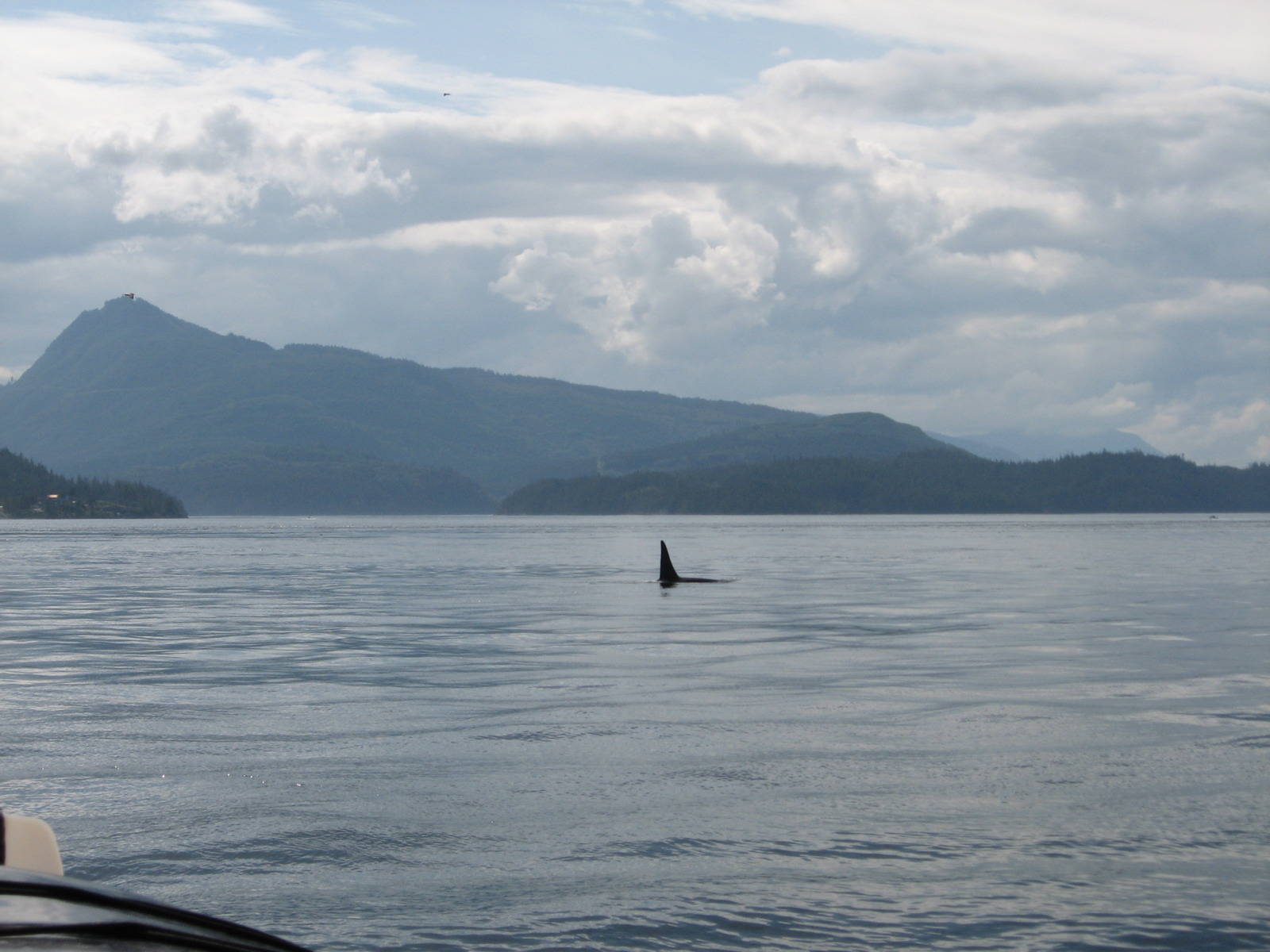
Then he proceeded to the middle of the Strait for a close encounter with an Orca which spouted and surfaced.

Back in the Cove, the unpacking went smoothly, we paid our last bills, and Rob the provider came up with beer for everyone. Dennis told us of an even more remote kayaking spot on the mainland near the mouth of Seymour Inlet and Burnet Beach we could go to next year.

The long car trip back down Vancouver Island was relieved by dinner at the Cable Cookhouse Café in Sayward, a unique landmark constructed out of 26 tons of steel logging cable. The complex accounting of payment and reimbursement was completed over hamburgers and more beer and homemade blackberry pie. Peter Behr waited 1.5 hours for his dinner to come and it was the wrong one after all that. The blackberry pie and ice cream was divine. We cleaned them out.

For a full set (67) of my Zunoquad pictures click here.

For a pool (184) of pictures by several people on this trip, click here.

For a wiki including these journal entries and writings by other participants, click here

The Zunoquad: Kayaking in the Broughton Archipelago (6)

Thursday, September 6th, 2007

Day 6 (thanks to John for much of this entry)

The overnight high tide (14.8′) turned just short of reaching the tent of Steve and John, and was quite low in the morning. We had a breakfast of porridge and coffee, hiked the food up into the trees and left our camp (the south corner of Owl Island) about 9:30AM heading out with a rising tide that would sweep us up Knight Islet in the direction of Village Island.

A 20 min buzzbombing sweep of some kelp beds produced nothing, another harbinger that the ecosystem is under duress. This area once supported a large population of mammals and humans that lived on clams, mussells and salmon, and you can’t even pull up a decent sized rock cod today.

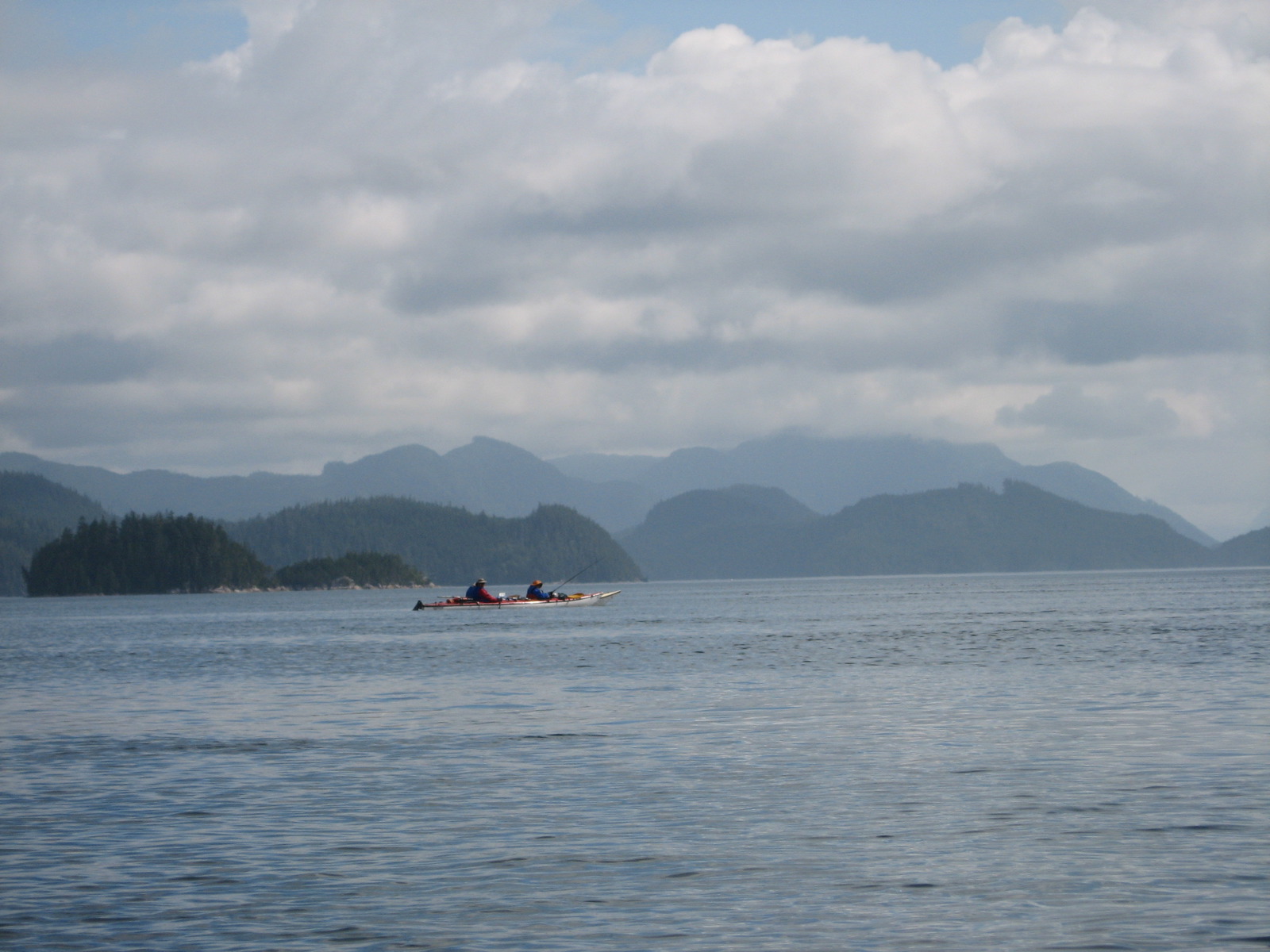
Despite its broad expanse, the tidal flow through Knight Inlet was strong enough to allow us to play in the current, getting pulled upstream in the rippled patches and then finding the smooth surface of the back eddy to slide back down.

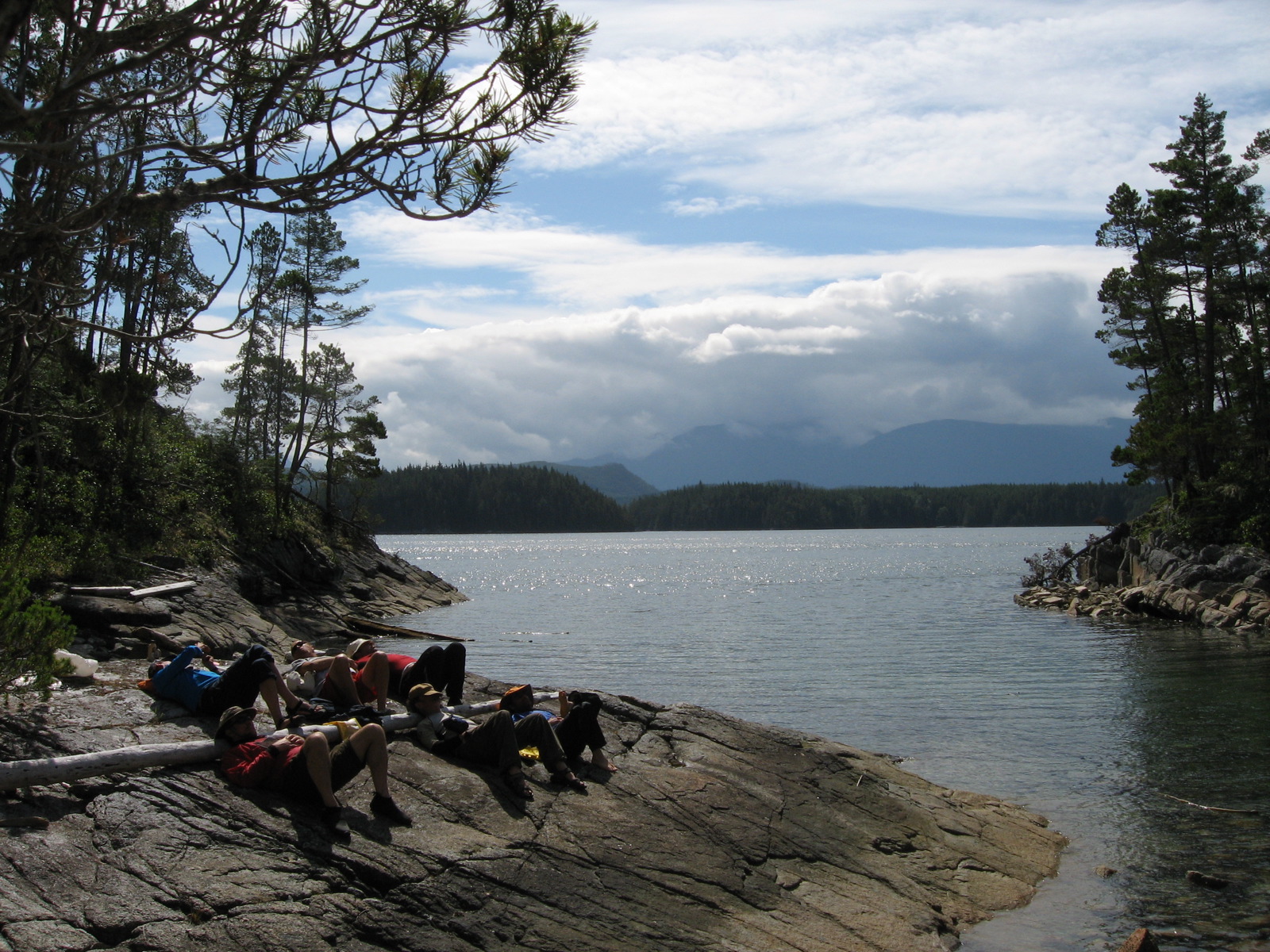
We pulled into the beach and flats of Maud Island, which once supported 14 longhouses. We found another great hot rock to set out lunch: Fistfuls of gorp, heavy unleavened pumpernickel bread and cheese, and sips of boiled water.

Carrying a newly carved staff that completed his picture as biblical prophet, Murray again swam solo in the freezing water.

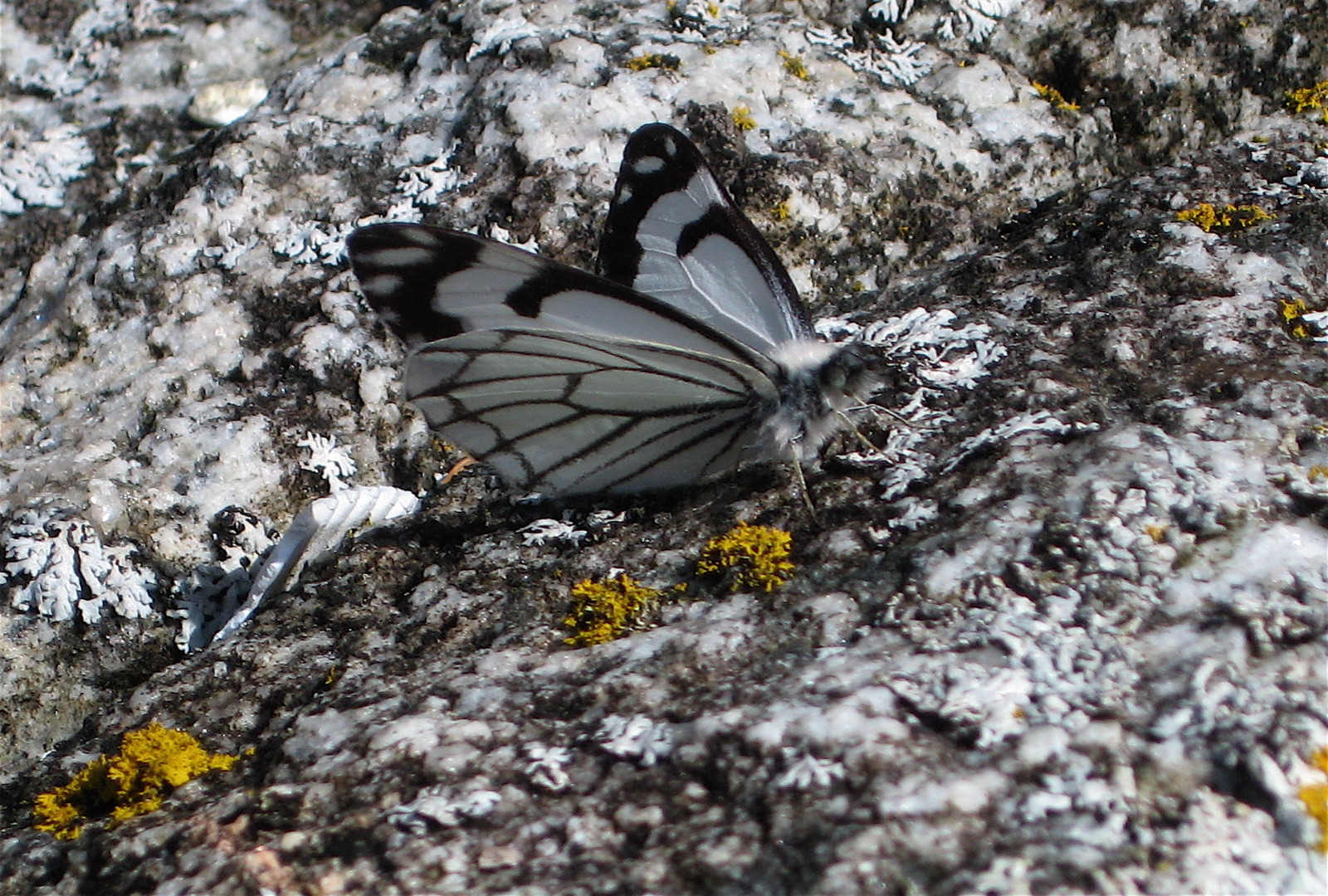
He found a beautiful zebra patterned butterfly trapped by the surface tension of the still water in the bay, gently lifted and shook it off, and set it free. The creature circled around him and then flew over to the cheering onshore audience, approaching within six inches of several faces, settled on the rock to have its picture taken and then fluttered off into the sunshine.

After this break, we swung to the south around the islands in front of Mamalilacula. From a distance we saw a long glittering white clamshell beach below a bank overgrown with greenery which turned out to be blackberries. Poking out from the bush were the gaunt remains of a few euro style structures in various states of dereliction and a post and beam structure which was clearly native built.

We found our way up onto the embankment where the settlement was built. Welcomed by a huge pile of bearshit, we walked around the village site along trails hollowed out through the blackberries which now claim the site. Down one trail, near a forlorn looking fallen totem pole, Peter stepped into human excrement. A house still standing was littered with beer bottles and other trash. Apparently one of the buildings was a hospital. Back in the woods overlooking the village was a domineering sinister-looking residential school.

We picked up water from the creek. We thought beer colored water was bad. This water was coffee colored!

Down on the beach near our kayaks a group of people who had apparently arrived by motorboat and docked on the other side of the island was sitting and talking: a young couple, their one year old child, and one younger and one older man. Murray overheard some of the conversation. The old man was telling stories of his growing up here to his son and daughter, her husband and grandson. We exchanged greetings, but missed the opportunity to hear what he had to say.

At 4Pm we started the the paddle back to Owl. By that time the afternoon breeze was up and we stayed south, trying our best to remain in the lee of the winds. The tide was now falling to our benefit. We avoided the headwind, passing through a narrow passage between a small island and Creese near Rocky Point. Then it was into the teeth of the breeze diagonally over to the cover of the Jumble Islands and then across to Owl. We were back to camp by 6PM to see what we had left in the food bags for dinner.

It turned out to be Knorr/Lipton glorified macaroni and cheese, and grilled Hormel reconstituted ham steaks. We boiled our Mama water and made hot chocolate, laced it with brandies and quaffed it to no ill effect. “Real men drink black water.” Nutella stores held up so no one went hungry!

We contacted Dennis and he agreed to pick us up at Owl about 1:30 the next day. We were relieved that we didn’t have to move camp again. Steve and Lionel improvised a No play at the campfire, music supplied by spoon and tin cup.

For a full set (67) of my Zunoquad pictures click here.

For a pool (184) of pictures by several people on this trip, click here.

For a wiki including these journal entries and writings by other participants, click here