Travel

The Zunoquad: Kayaking in the Broughton Archipelago (5)

Wednesday, September 5th, 2007

Day 5

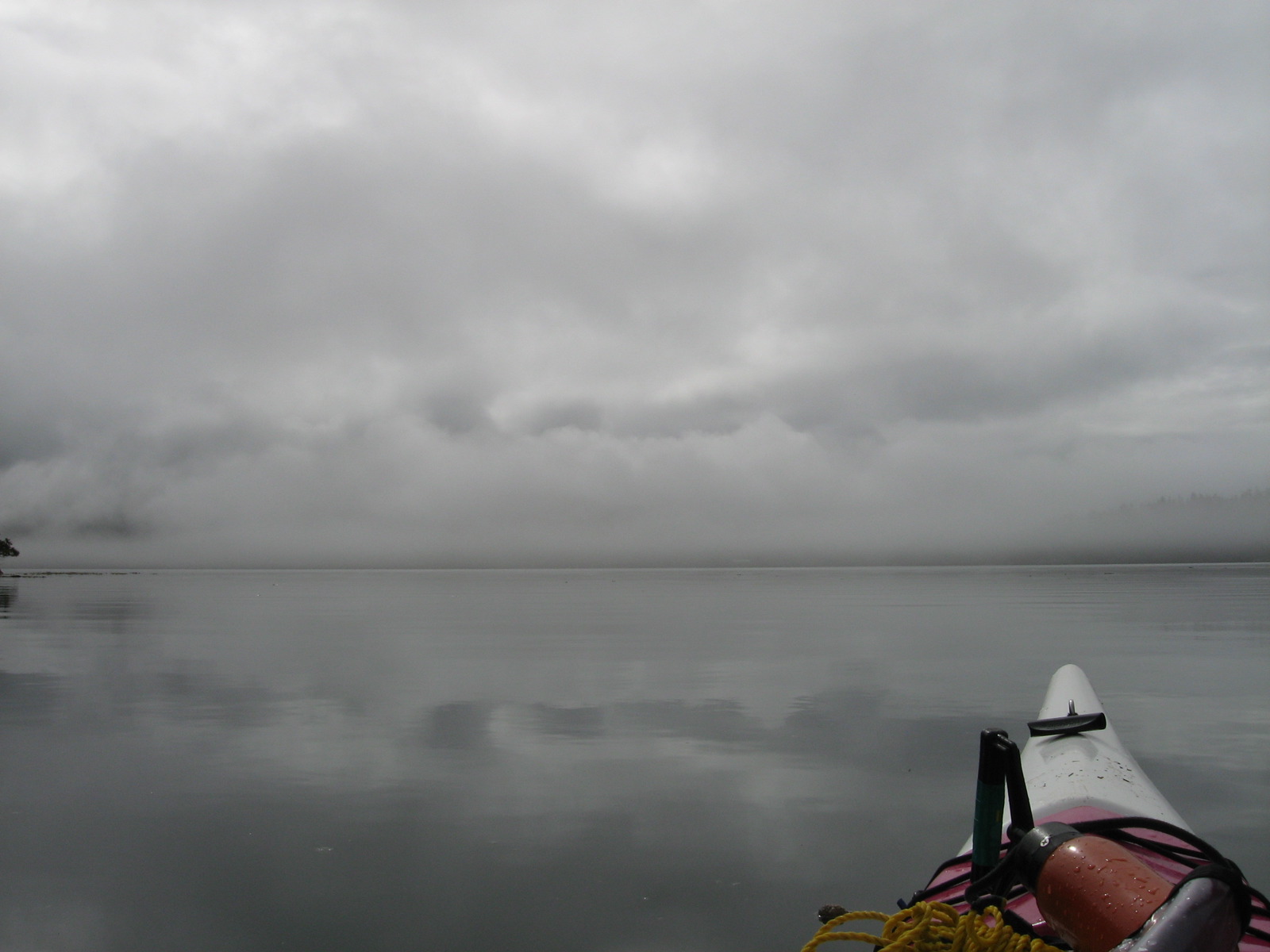
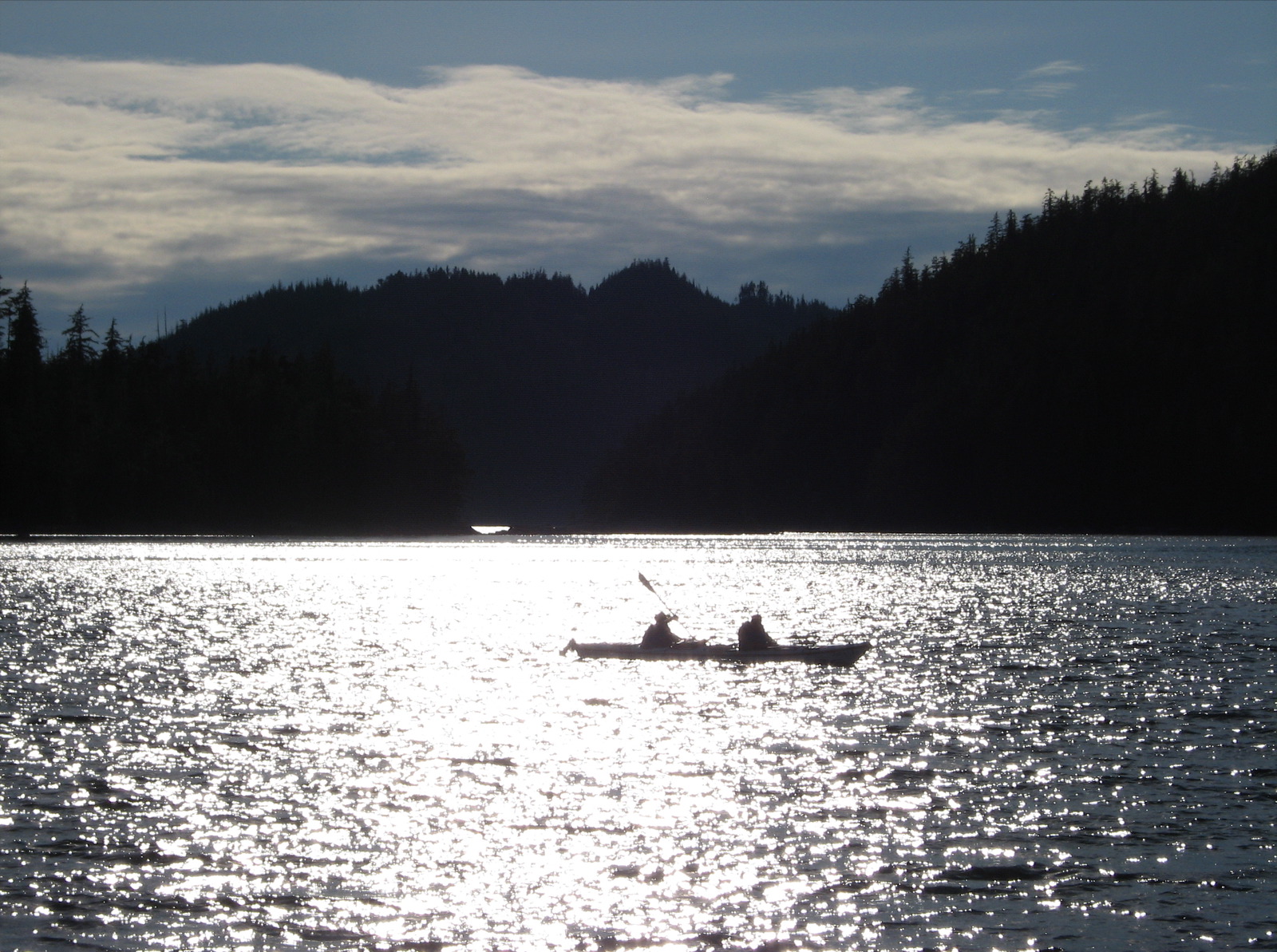
The morning of departure from Insect Island was rainy, making it easier to pull up stakes. Again led by Navigator John we wended our way down Misty Passage, past Tracy, Mars, and Hudson islands, through Spiller Passage, across Arrow Passage, past Betty Cove, through the Fog Islets by Cedar Island to Owl Island, situated at the mouth of Knight Inlet.

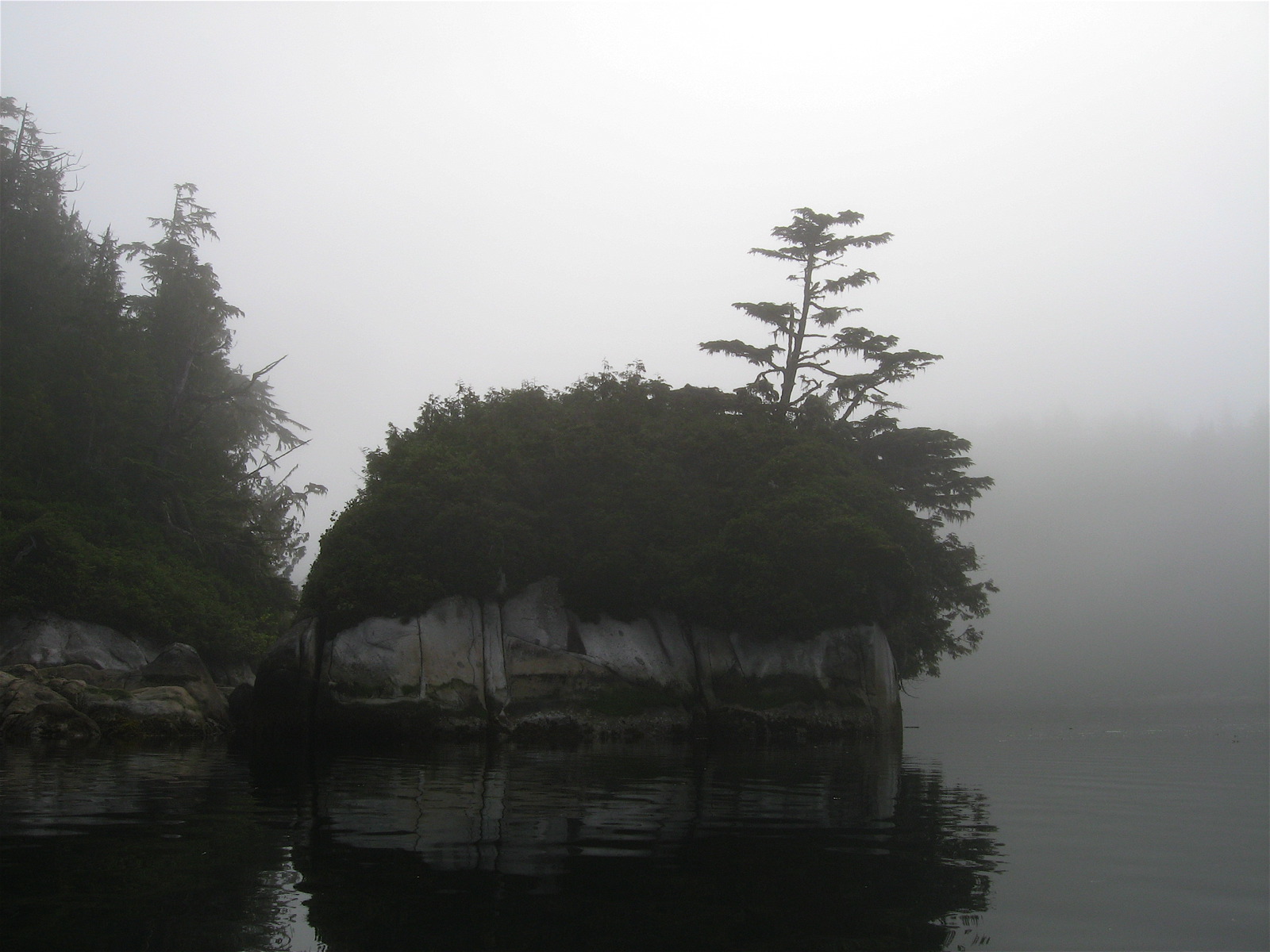
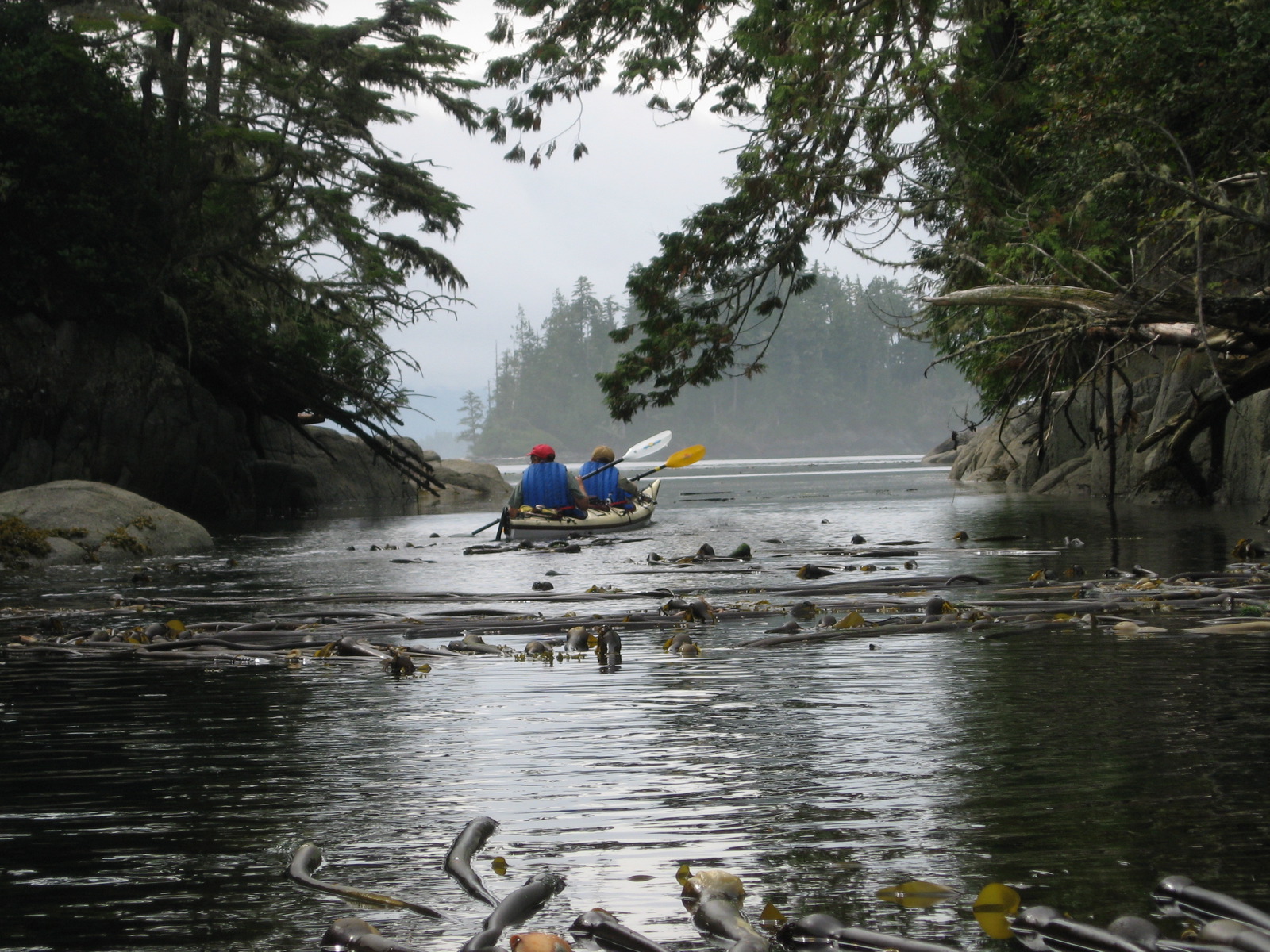
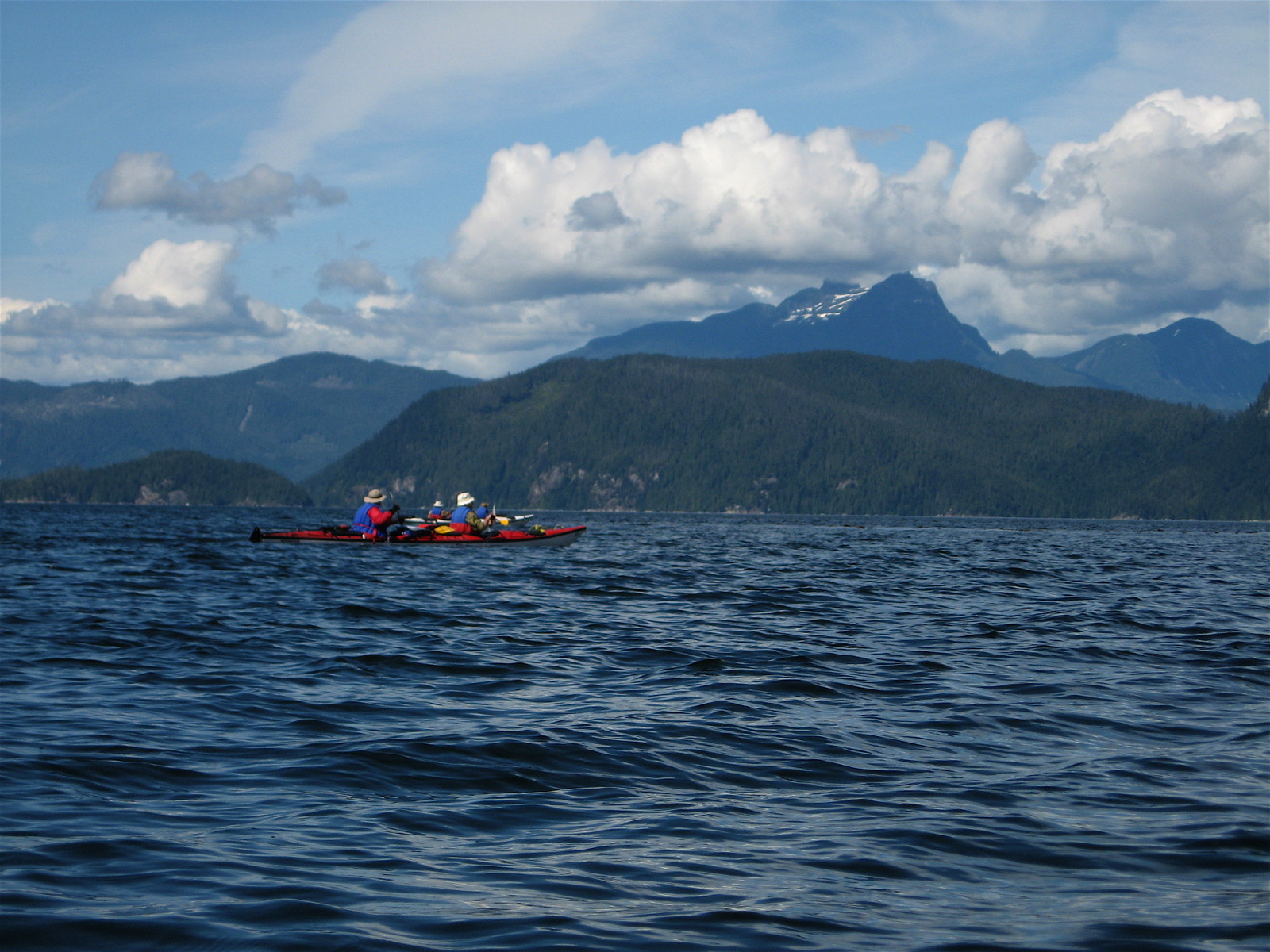
The trip was punctuated by a pee and gorp stop on an unvegetated rock islet. We glided through several liquid slits between islands, challenging to find in the fog and thrilling to negotiate.

Here at the edge of the open sea, vegetation was sculpted by prevailing winds into thick rounded hedges. Unperturbed, a bald eagle in a snag observed our progress.

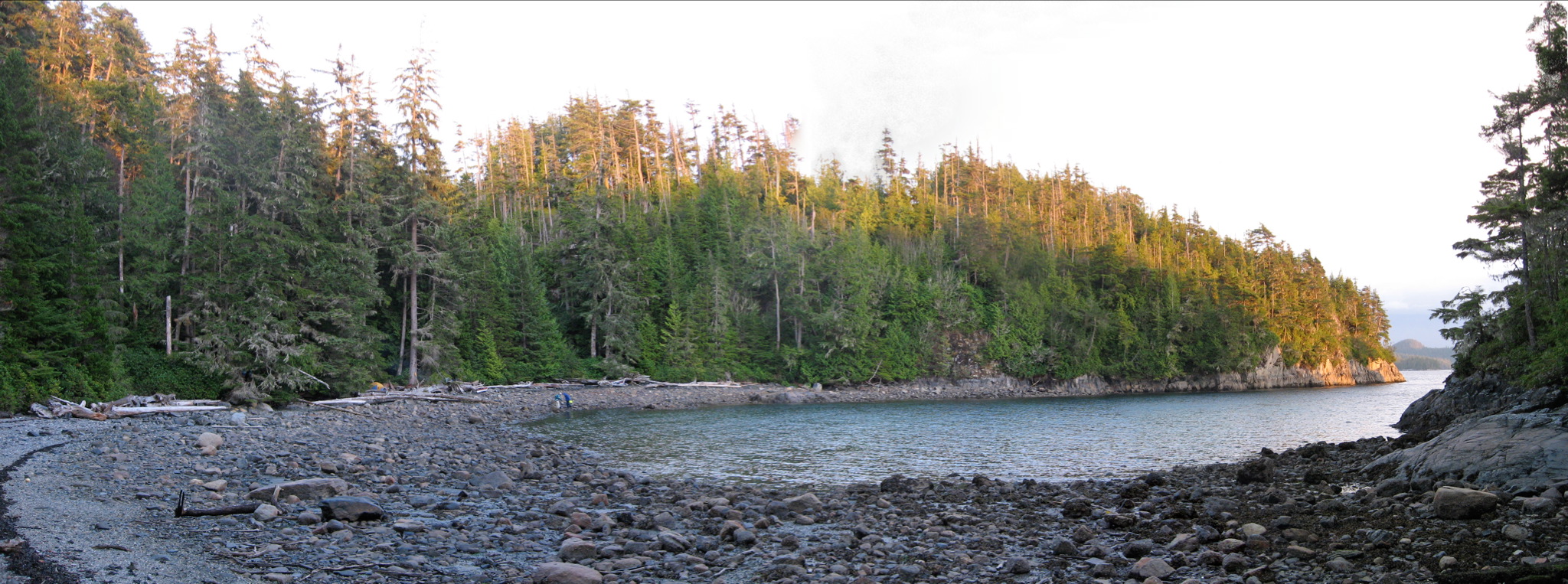
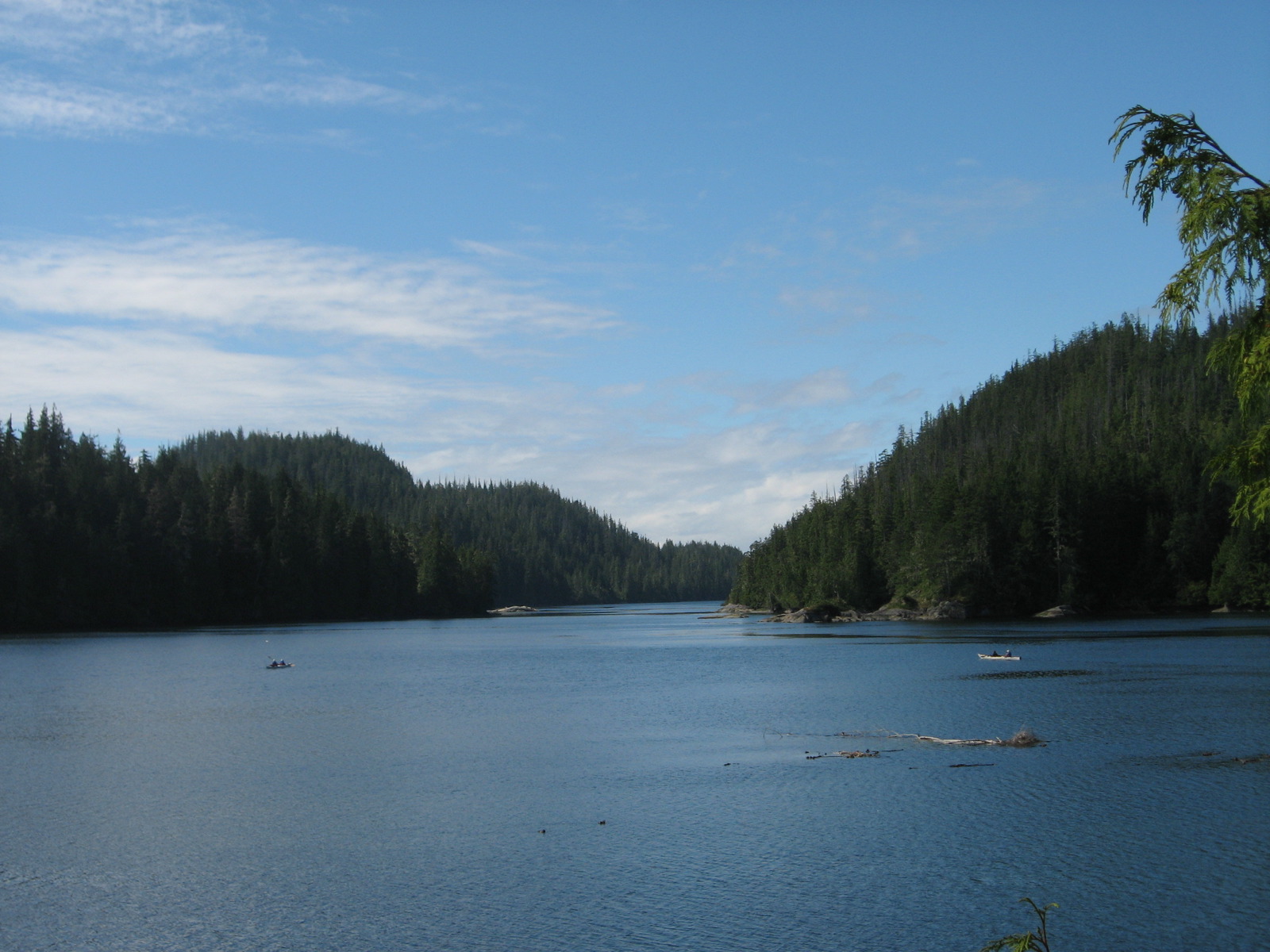
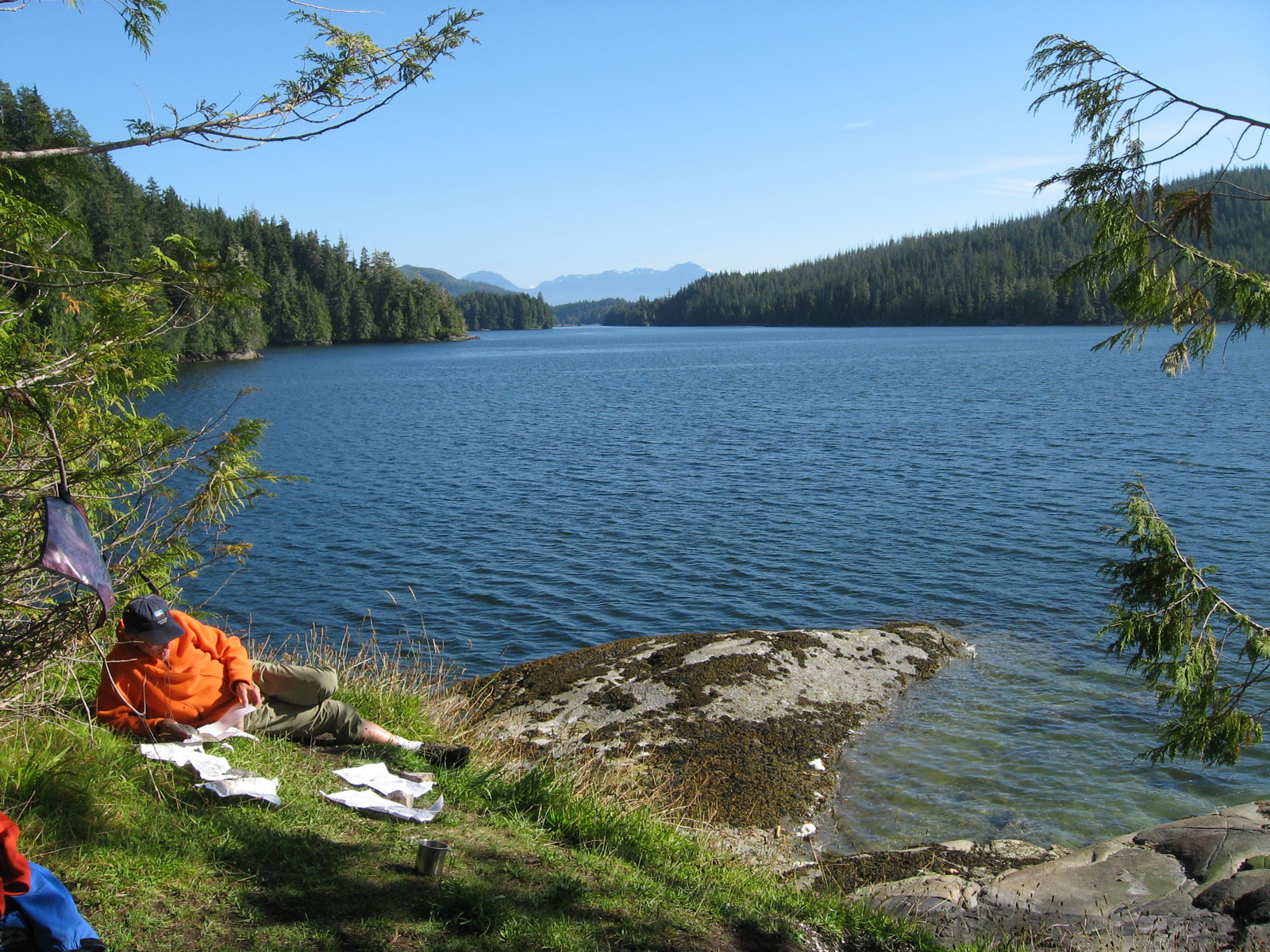
We found the campsite at Owl Island squeezed into a narrow terrace between vertical rock walls and the high tide line, protected from exposure at the head of a long bay. Tall spruces, second growth but 200 feet high, fronted the water, and a fire ring was placed in the shelter of large vegetation-covered driftwood logs.

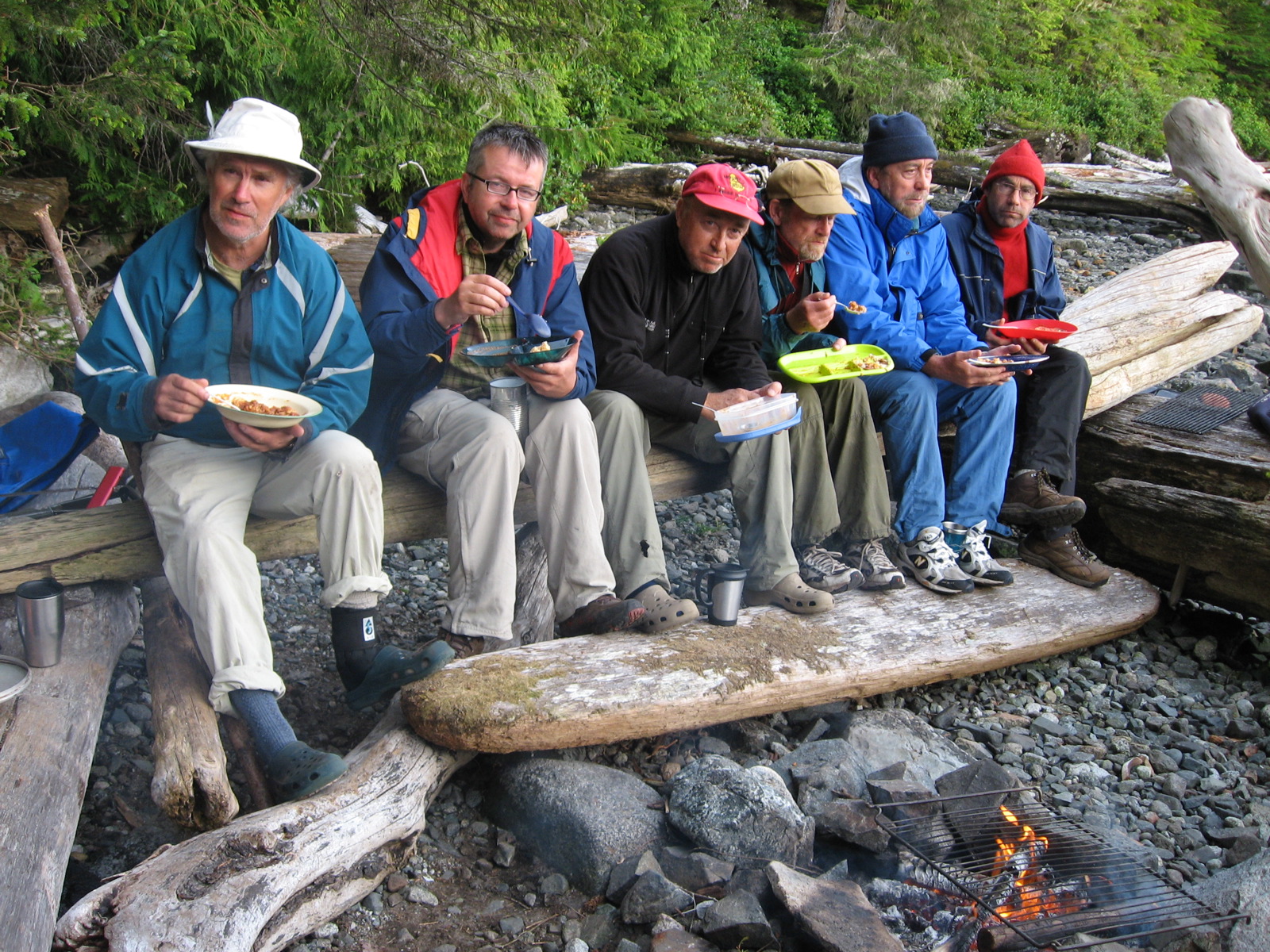
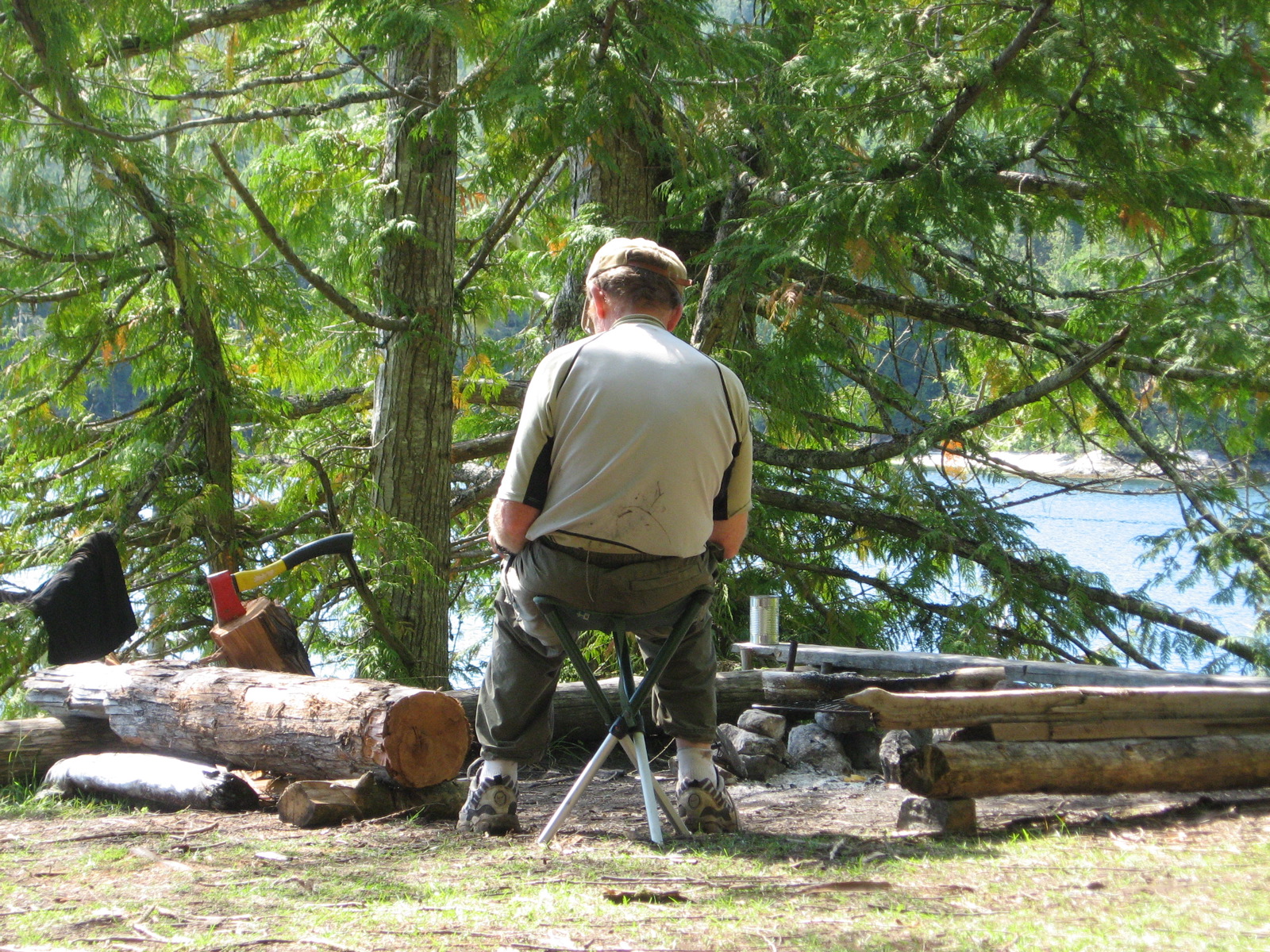
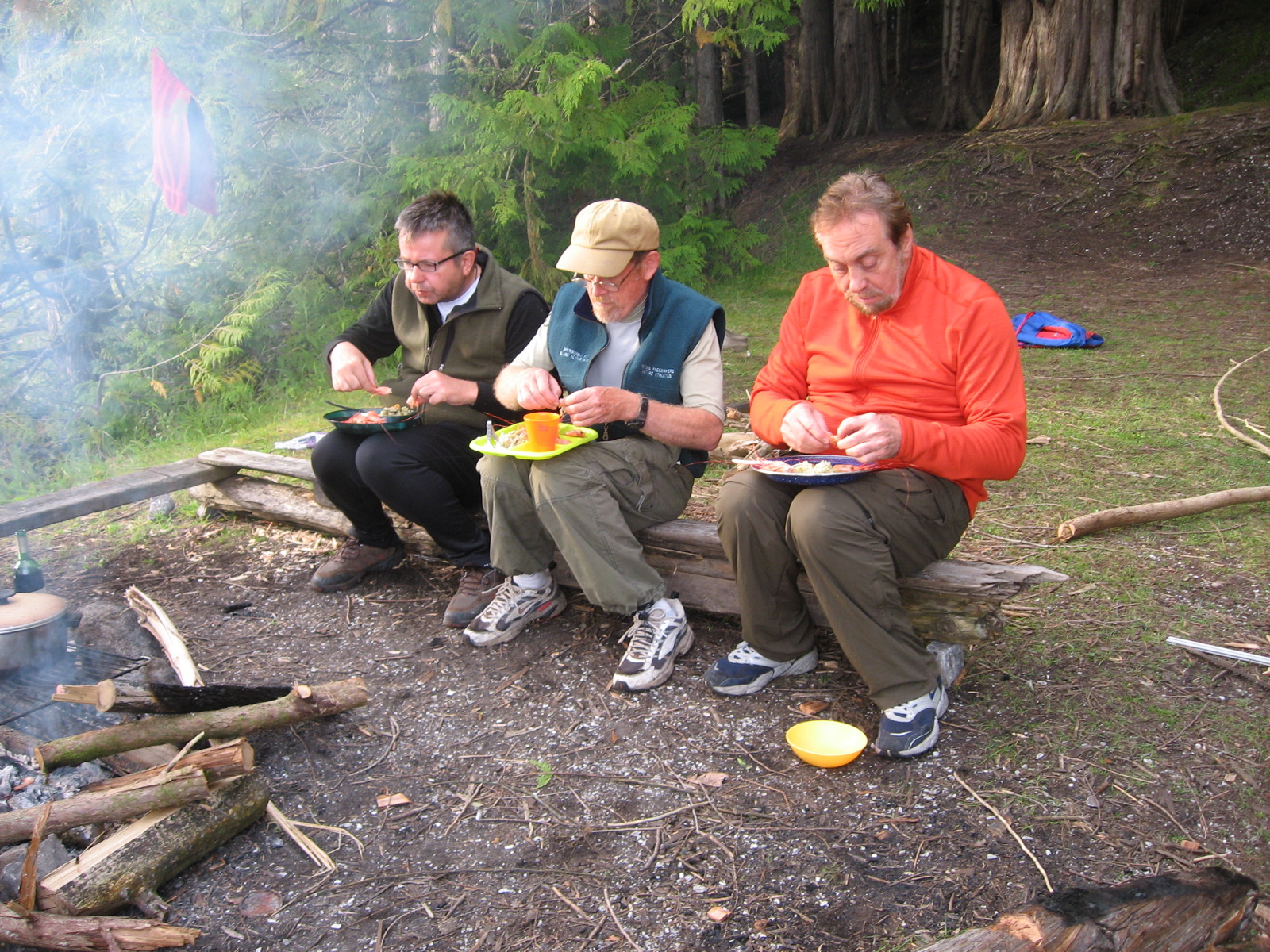
After carrying the kayaks safely onshore, we pitched tents, found appropriate toilet locations, and built a bench and footrest with the capacity to seat the whole crew comfortably near the fire drying out clothing wet from the voyage and last night’s rain. Once again the weather cleared and insects stayed away.

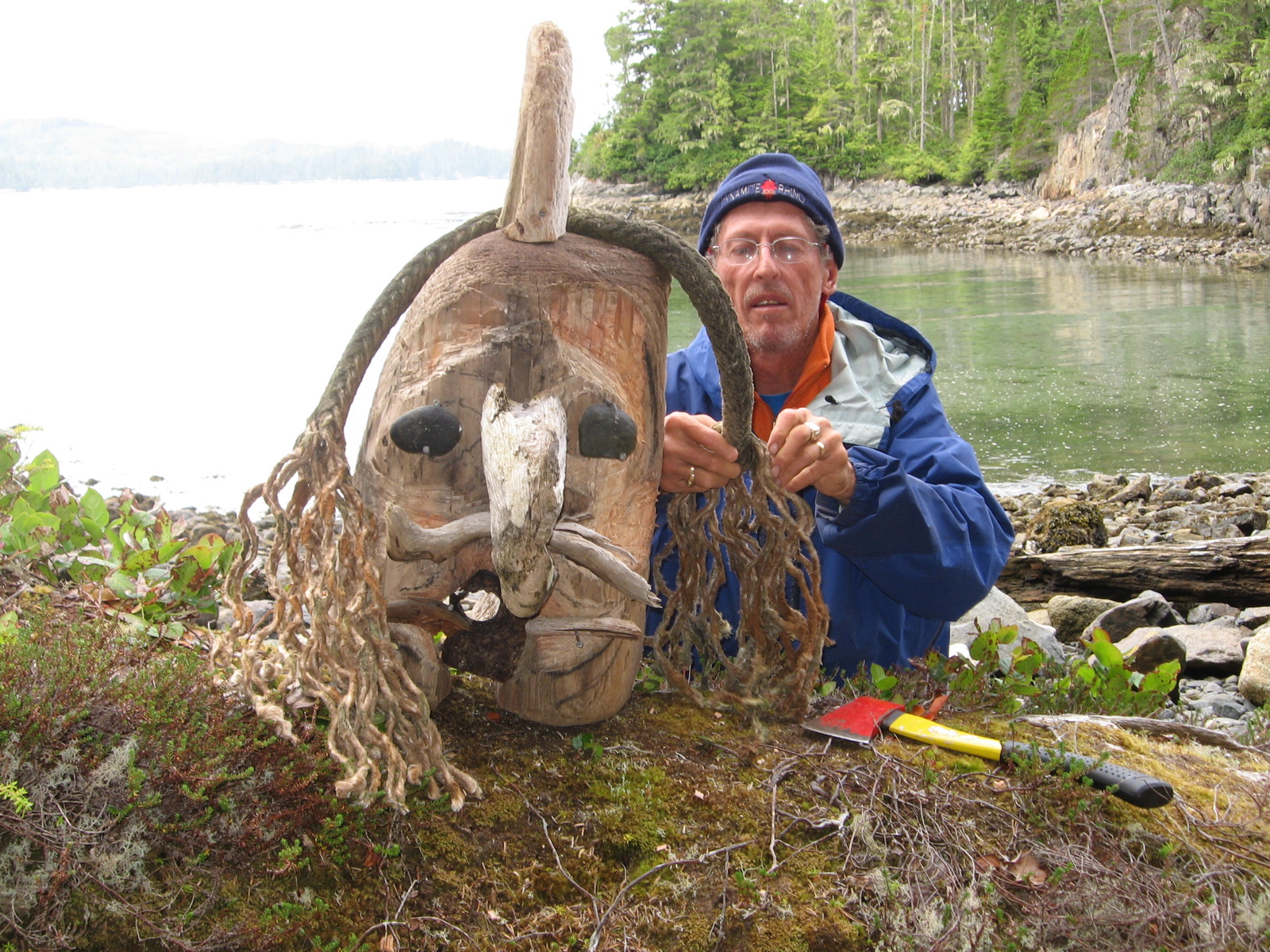
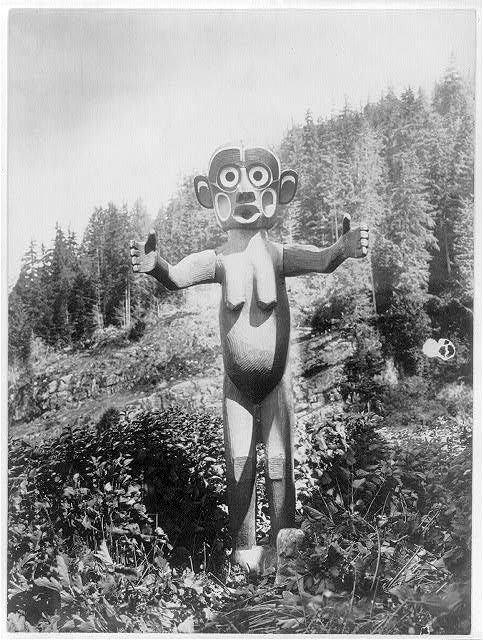
Steve, the resident sculptor, started work on a Zunoqua totem, using flotsam he found on the beach and nails ingeniously pried out of the wide driftwood board that served as our kitchen table. We searched for water but found no source nearby. This was the first location we stayed at that did not include a shell midden.

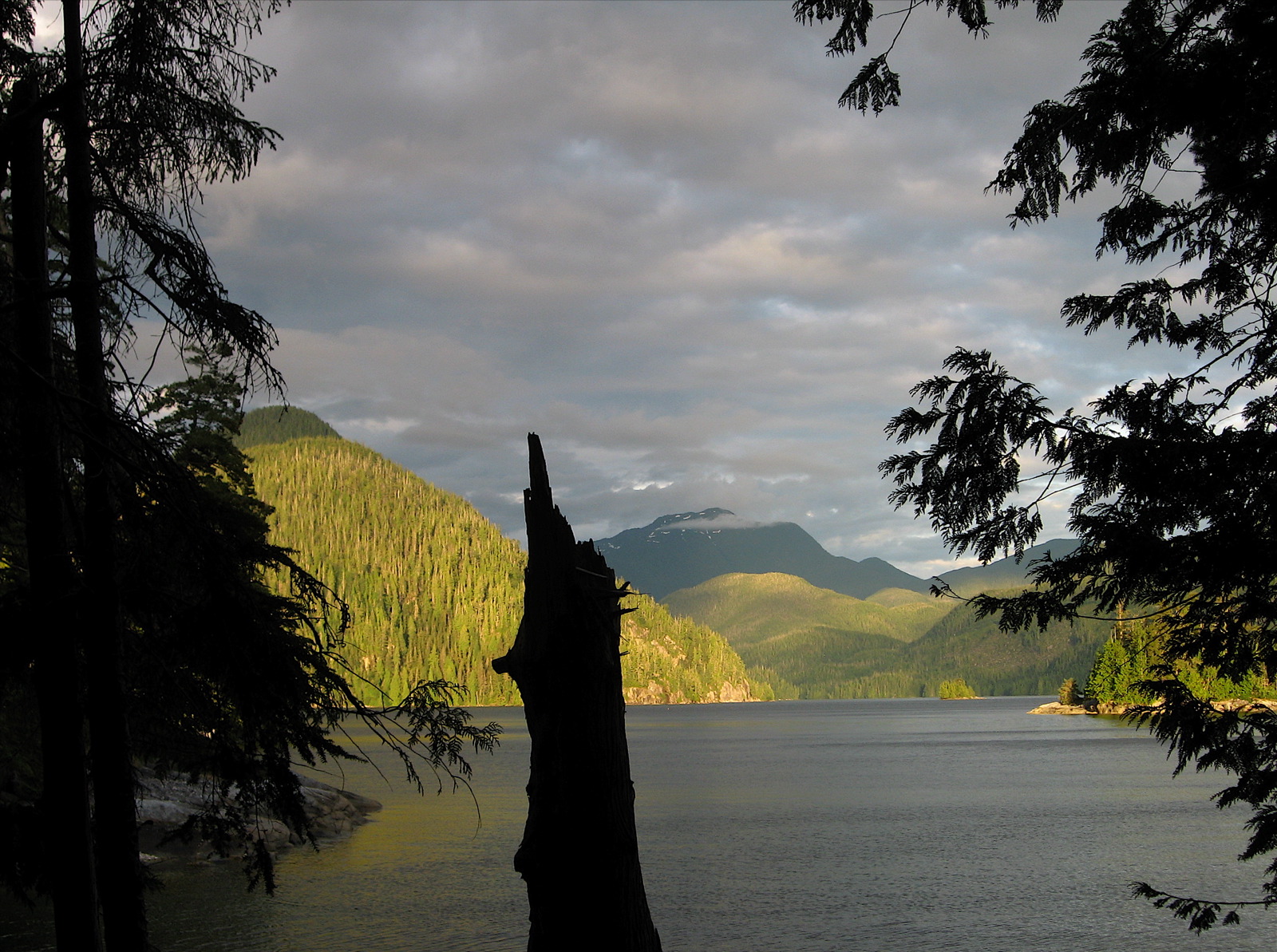
Murray and Steven prepared the dinner of canned Chili, couscous and bacon bits. The sunset gave the treetops and rocks at the mouth of the bay a golden glow. From different directions two wolves howled.

For a full set (67) of my Zunoquad pictures click here.

For a pool (184) of pictures by several people on this trip, click here.

For a wiki including these journal entries and writings by other participants, click here

The Zunoquad: Kayaking in the Broughton Archipelago (4)

Tuesday, September 4th, 2007

Day 4

The continuing sunshine and the comfort of our campsite persuaded Murray our leader of the day to allow a slow start and optional activities.

John, Rob, Murray and Steve elected to paddle to some of the outer islands at the edge of the Archipelago facing Queen Charlotte Strait. Steven, Peter, Ian and Lionel decided to explore the interior of Insect Island. Before splitting up someone came up with the idea pooling the collective wisdom about reducing aches and pains by taking turns teaching and leading our favorite stretches.

There was agreement afterwards that this was a profitable exercise. It would have been a good idea to make this a daily ritual, but that would have been too virtuous.

The kayakers traveled to Blackfish Sound via Misty Passage and touched on Arrow Passage (see map).

After a long arduous paddle, they landed on an unvegetated island of smooth rock where one could sit and stare out into the open ocean”a good place to fish, but where no fish were caught.

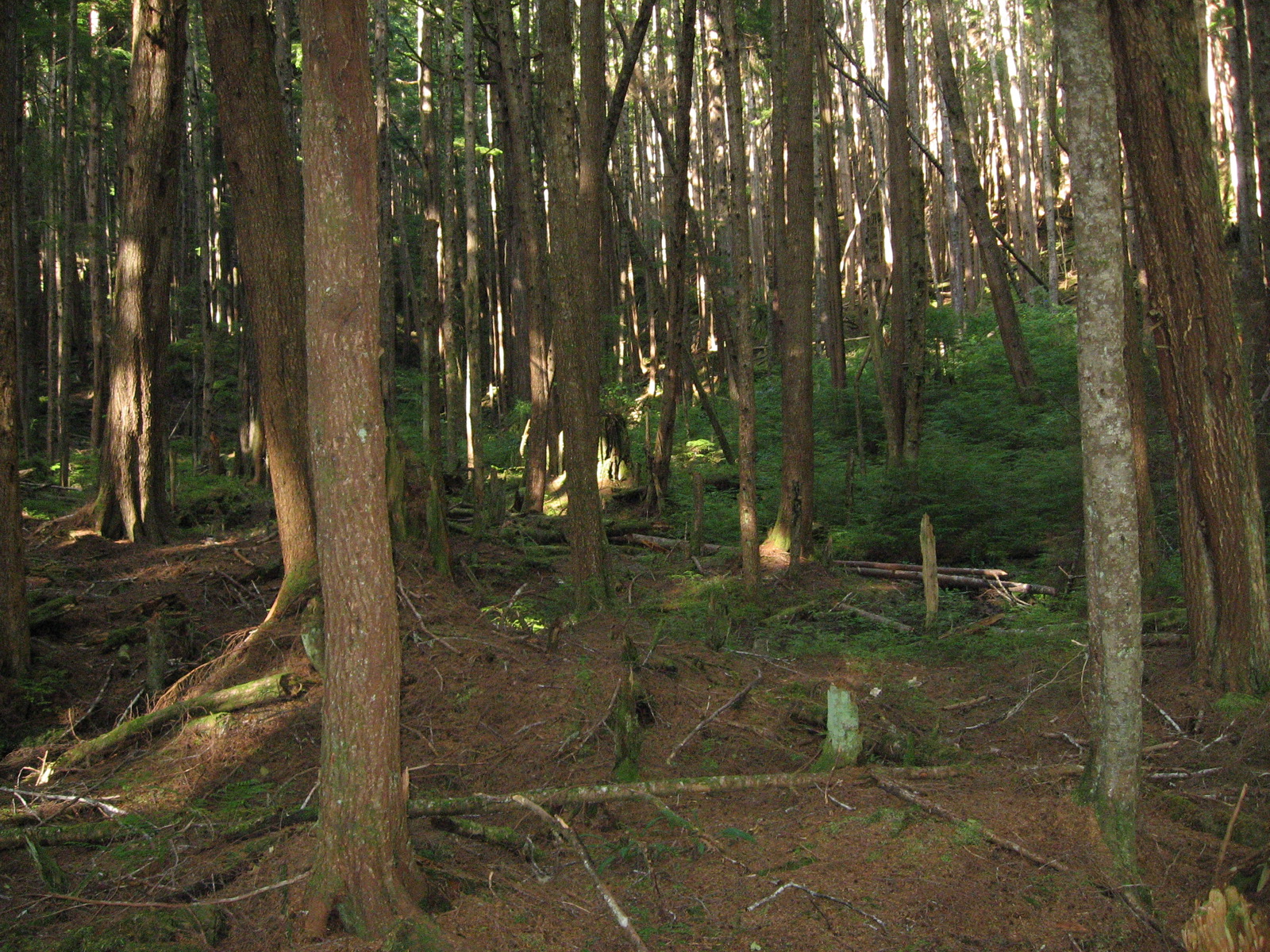
The landlubbers went in search of the southern tip of Insect Island, hoping for a view of the convergence of Misty Passage, Old Passage and Blunden Passage. They hiked through the second growth hemlock forest, finding familiar immense old growth stumps with spring board grooves, a number of which looked liked recently created cedar bark “cultural modifications,” and a delicious huckleberries.

Though crisscrossed by steep ravines, the bush was relatively easy to crash through because of the absence of salal and the soft springiness of the soil. The destination was something of a disappointment since the water on all sides could only be glimpsed through the tree cover.

After a return to the campsite for lunch, the land explorers napped, read and wrote in journals.

Steven and Ian took a brief kayak jaunt around the island at the center of Misty Passage. Peter and Lionel prepared Tuna surprise for the voyagers who were grateful for the hotmeal immediately upon their return. A weather report came in over Steve’s radio predicting lowering pressure. It rained for about two hours during the night. Peter and Lionel got wet because their tent fly didn’t work.

For a full set (67) of my Zunoquad pictures click here.

For a pool (184) of pictures by several people on this trip, click here.

For a wiki including these journal entries and writings by other participants, click here

The Zunoquad: Kayaking in the Broughton Archipelago (3)

Monday, September 3rd, 2007

Day 3

Ian was today’s elected leader. He commanded us to switch paddling partners. The new combinations seemed to work well and remained in effect for the rest of the trip.

Murray picked mussels at 6 AM and packed them along for the night’s dinner.

We decided on an early departure for destination Insect Island.

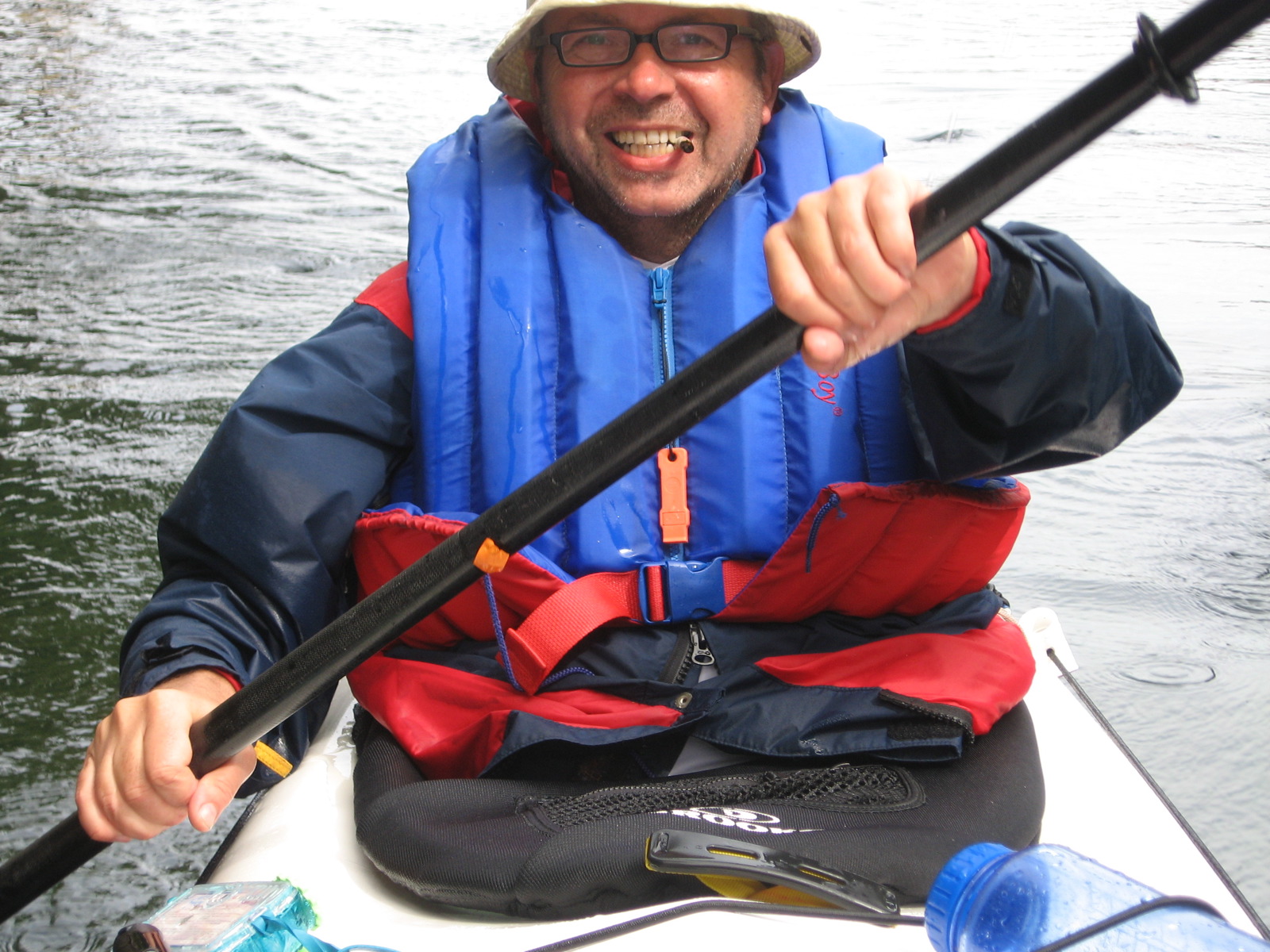
Under lowering skies and patchy fog, across wide channels and amidst narrow passages that left me utterly lost, Rob my taciturn co-kayaker, coached me on proper technique he learned as a member of a Vancouver outrigger canoe club.

He told me to keep both arms rigid, making a triangle with the paddle shaft and to move only from the waist, using abdominal and lateral lower back muscles”the “core” that I had been urged to rely on by a physiotherapist last year. Move slowly and with less effort, feel the boat pulled through the water with each stroke, dig deep and quick with the tip of the paddle, he’d repeat quietly at long intervals. I concentrated on the motion, fearful of injuring muscles that chronically ached, constrained by the life jacket I had left inside the spray skirt to cushion my sore back. After a while I would feel the rhythm, a kind of figure-eight movement that reminded me of the synchronized paddlers I had seen many years ago at the Lund-Sliammon dedication ceremony. But most of the time I felt awkward and scared.

An hour or so into Fife Channel, we pulled up to the lead kayak and shared some smoke. Afterwards my movements became more fluid, but the pain in my left hip joint resulting from immobility worsened. I fished two soggy Ibuprofens out of my shirt pocket, swallowed them with saliva and continued paddling with eyes closed, coordinating my stroke with drawing and expelling breath. I was getting soaked by the water trickling down the paddle falling into the grooves of the life jacket. If a headwind should come up or it started to rain I would face a serious challenge.

Once when I opened my eyes, a vision of exactly the kind of movement I was striving for came out of the fog. On a big aluminum boat with his back to us appeared a blond crew-cutted man with huge shoulders and upper arms wearing an orange parka. Hand over hand, rocking from side to side in a figure-eight motion, he was pulling something heavy and deep out of the ocean”a net–with movements as sleek and flowing as a seal’s. My hip ache went from a moan to a scream as we approached him. John was negotiating to buy prawns. The boy’s face was a little puffed, smiling and open. He said he worked for the salmon farm up the arm and was out fishing for the crew on his off time. He offered to give us his last net full of prawns for nothing, but agreed to take a twenty-dollar beer allowance. After dumping five pounds into one of Ian’s dry bags, he thanked us profusely and disappeared into the fog.

Unable to share in the general rejoicing over the new dinner prospect because of a shellfish allergy, I lapsed back into my rhythmic stupor, which combined pleasure in the flow of my paddling, amazement that I felt no fatigue or pain in my arms or back and panic at the damage to my hip. Passing round a corner through a tight channel we came upon a narrow clamshell beach at the base of a banked midden at least twenty feet high, surmountable by a steep slippery trail. We pulled up and exploded into activity”building a fire ring, sawing wood, unpacking the kayaks, cutting steps into the bank, hanging wet clothing out to dry as the sun started to come out, and preparing lunch. Not a great campsite, but a place to stop.

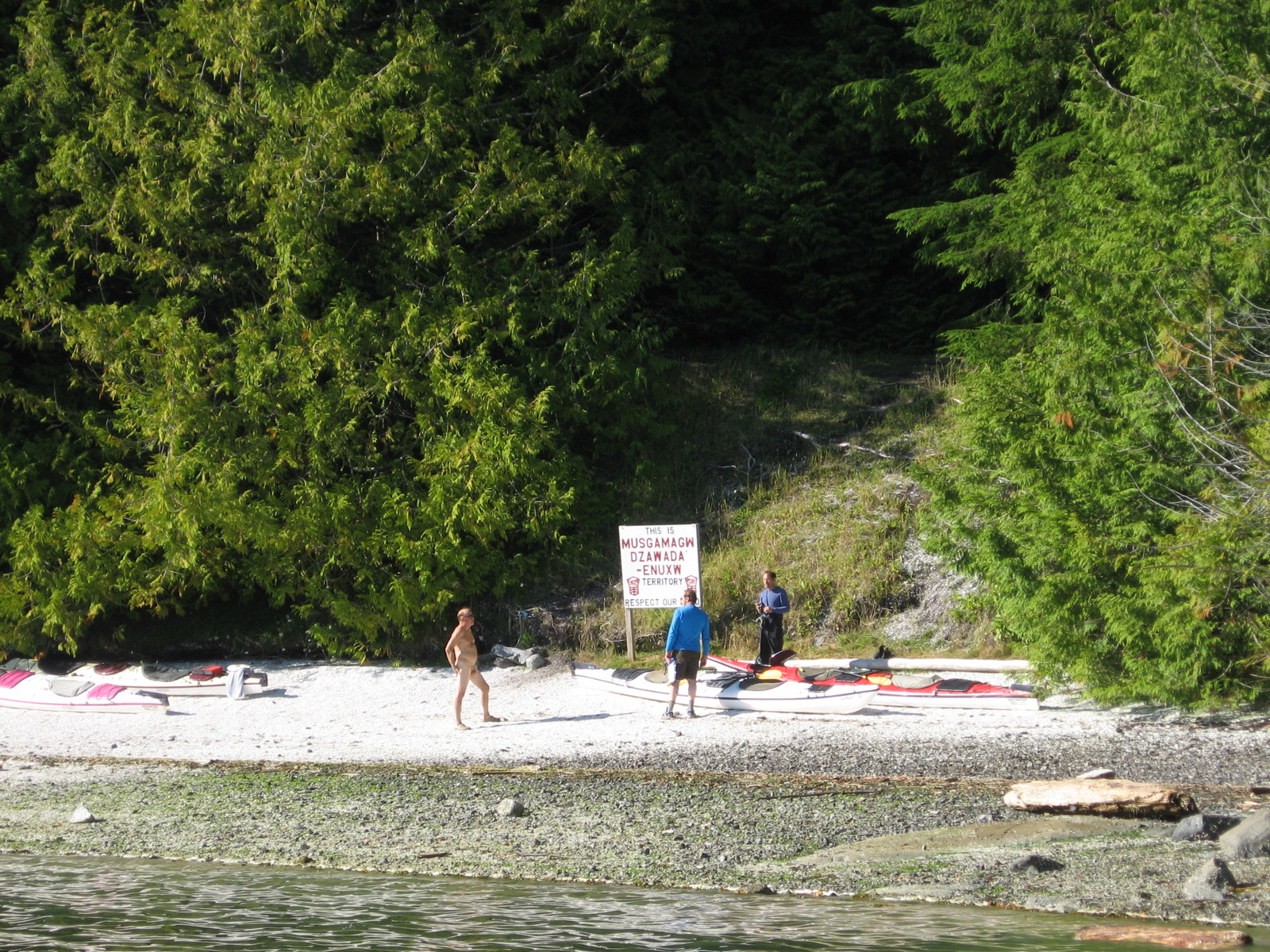
As soon as I was able to move around, the hip pain disappeared and I climbed to the top of the bank, where others had already deposited gear and pitched tents. I wandered down a well-traveled trail above which rose two more flat terraces carved from the mountain of shells. A hundred yards down and around two corners, the bank protruded into the water on three sides, creating a spacious platform with a fire ring in the middle, at the convergence point of three channels heading north, east and south and a view down one to the snow covered mountains of Vancouver Island. This must have been the seat of the monarch, where he’d preside in state surrounded by wives, reviewing the parade of canoes approaching from all directions with tribute of mussels, prawns, and clams. I ran back to the landing spot shouting, “home’s around the corner.” On the beach where we finally parked the canoes was this sign: “This is MUSBAMAGW DZAWAD-ENUXW territory. Respect our land.”


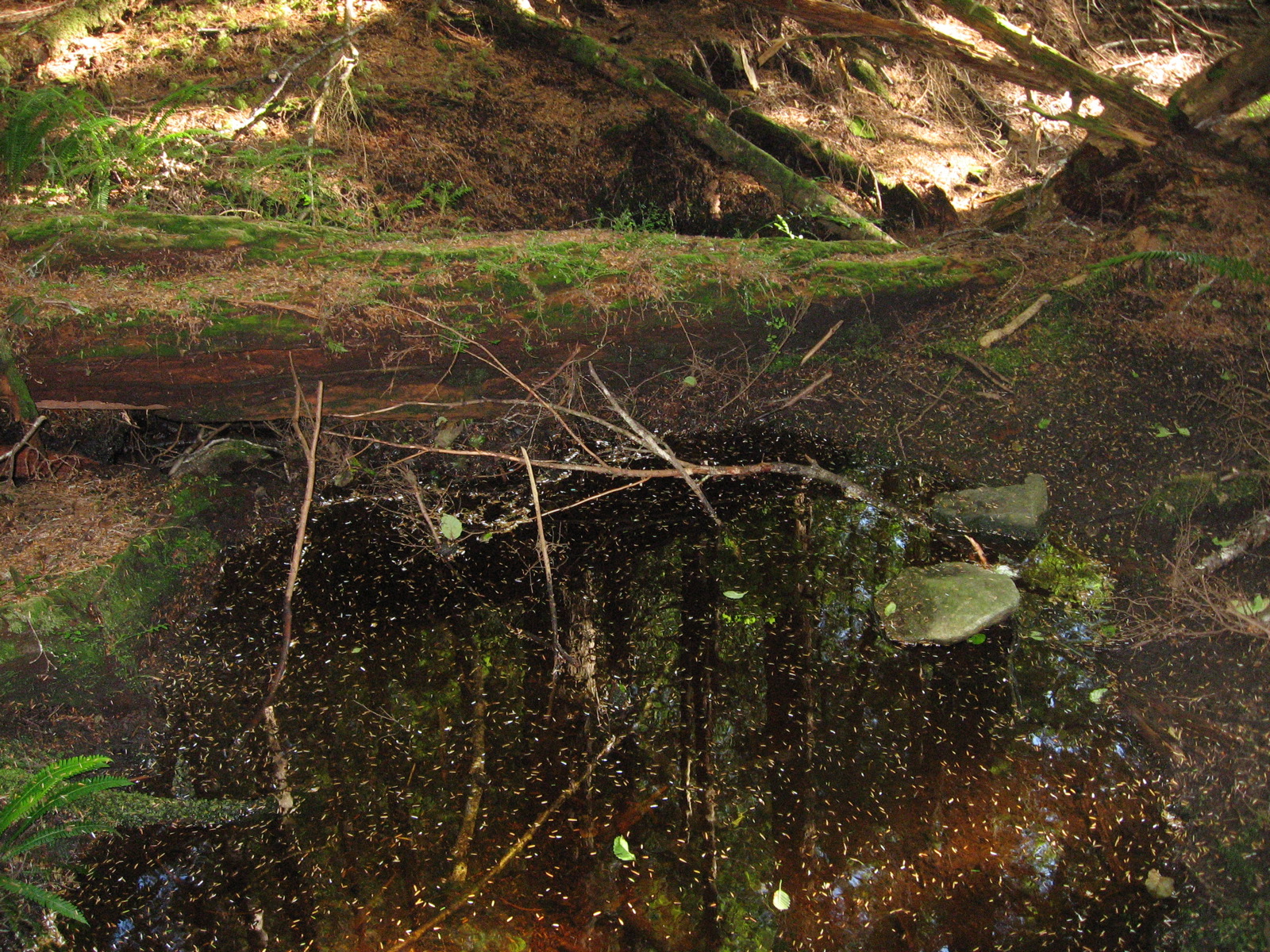
Down a well travelled trail from the spectacular campsite we found water in a creek running through an enchanted glade, a perfect example of “one of the most under-represented terrestrial ecosystems in the province – the Outer Fiordland Ecosection Coastal Western Hemlock very wet maritime submontane variant.”

To celebrate our arrival, Ian led us in the paddle cheer. Murray swam across the channel, but the water was too cold to tempt any of the rest to join him. Our travel south had brought us into the glacier-fed waters of Knight Inlet.

Despite the name, there were no bugs on Insect Island

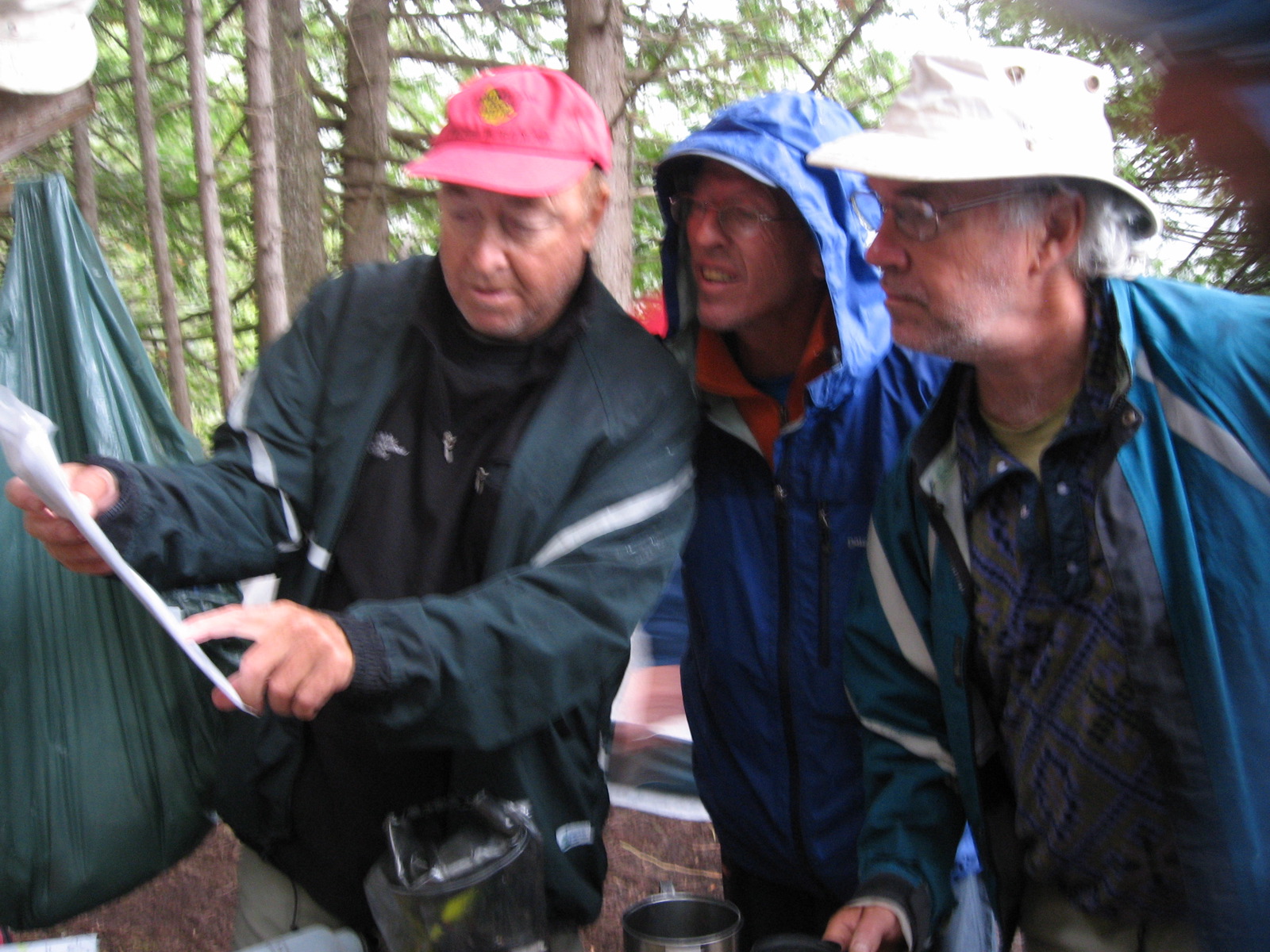
Steve figured out how to use the GPS unit he’d bought almost a year ago to initiate his retirement. It took over an hour to hook up to the right satellites overhead.

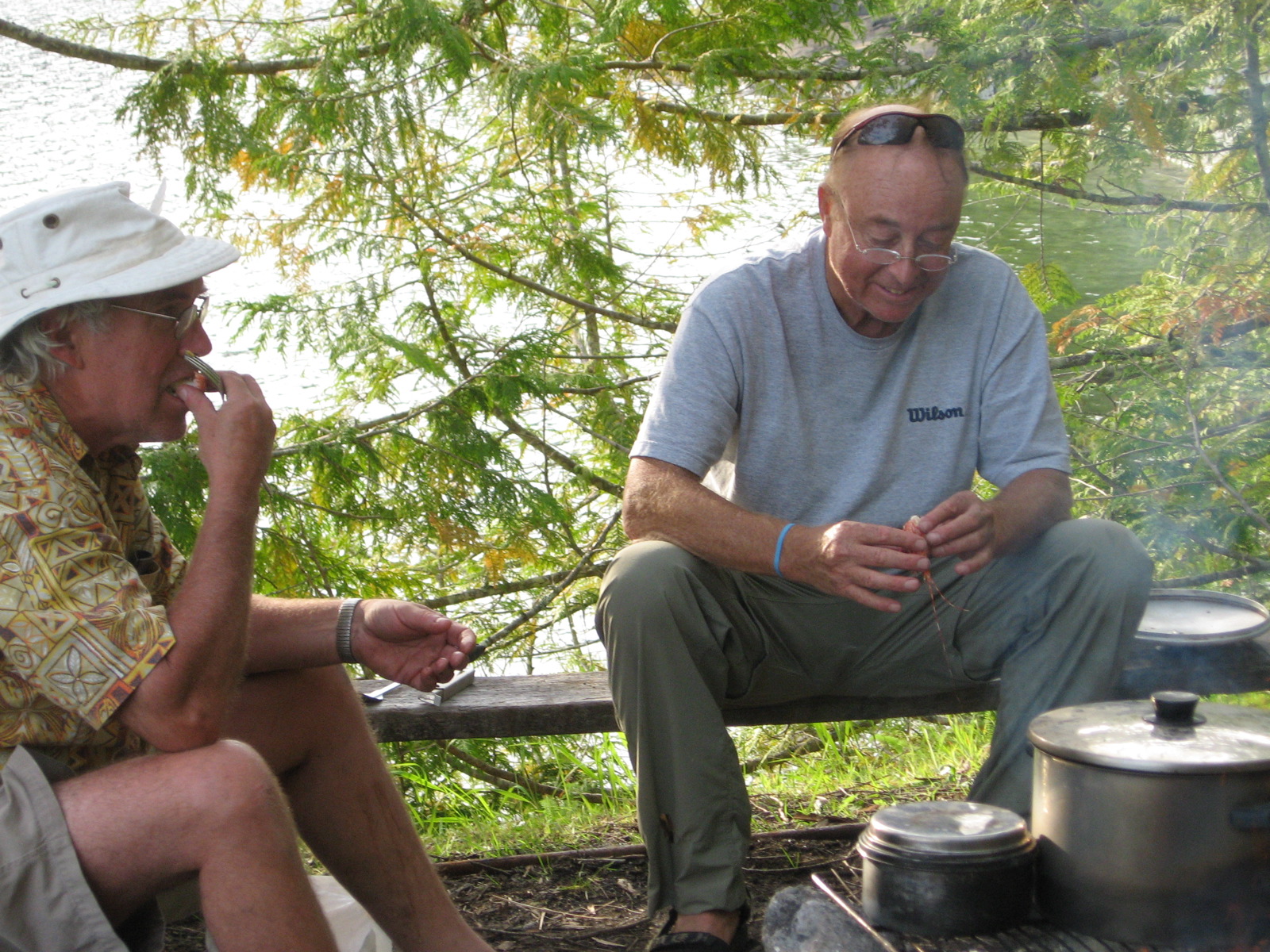
John tried to keep the prawns alive by changing the water every hour. Murray cleaned his mussels.

John and Murray cooked dinner with the fresh seafood. Steven enjoyed the pasta pesto made with a jar of the real thing.

Cocoa with Nutella and rum concluded the meal of the trip.

For a full set (67) of my Zunoquad pictures click here.

For a pool (184) of pictures by several people on this trip, click here.

For a wiki including these journal entries and writings by other participants, click here

The Zunoquad: Kayaking in the Broughton Archipelago (2)

Sunday, September 2nd, 2007

Day 2

The morning was bright. The tradition, for many years, has been the election of a leader for the day. The appointed leader must choose a title. Lionel, our elected leader going right to the top for his title “Your Holiness,” bowed to the general desire to hang around the campfire and drink yet another pot of high quality coffee.

On average, it turned out, six hours a day were devoted to serious discussions of topics like what we would tell wives and partners we did on the trip and a business plan for our restaurant with a “roughing it” theme called “Ecoccino.” Around 11 am we finished cleanup, hoisted our food bags into trees to keep them away from mice and raccoons and departed on an expedition to replenish our dwindling water supply.

Heading for Simoom Sound where it was rumored one could find creeks emptying into the sea, we encountered a pod of dolphins on the north side of the islets and then crossed the broad expanse of Tribune Channel.

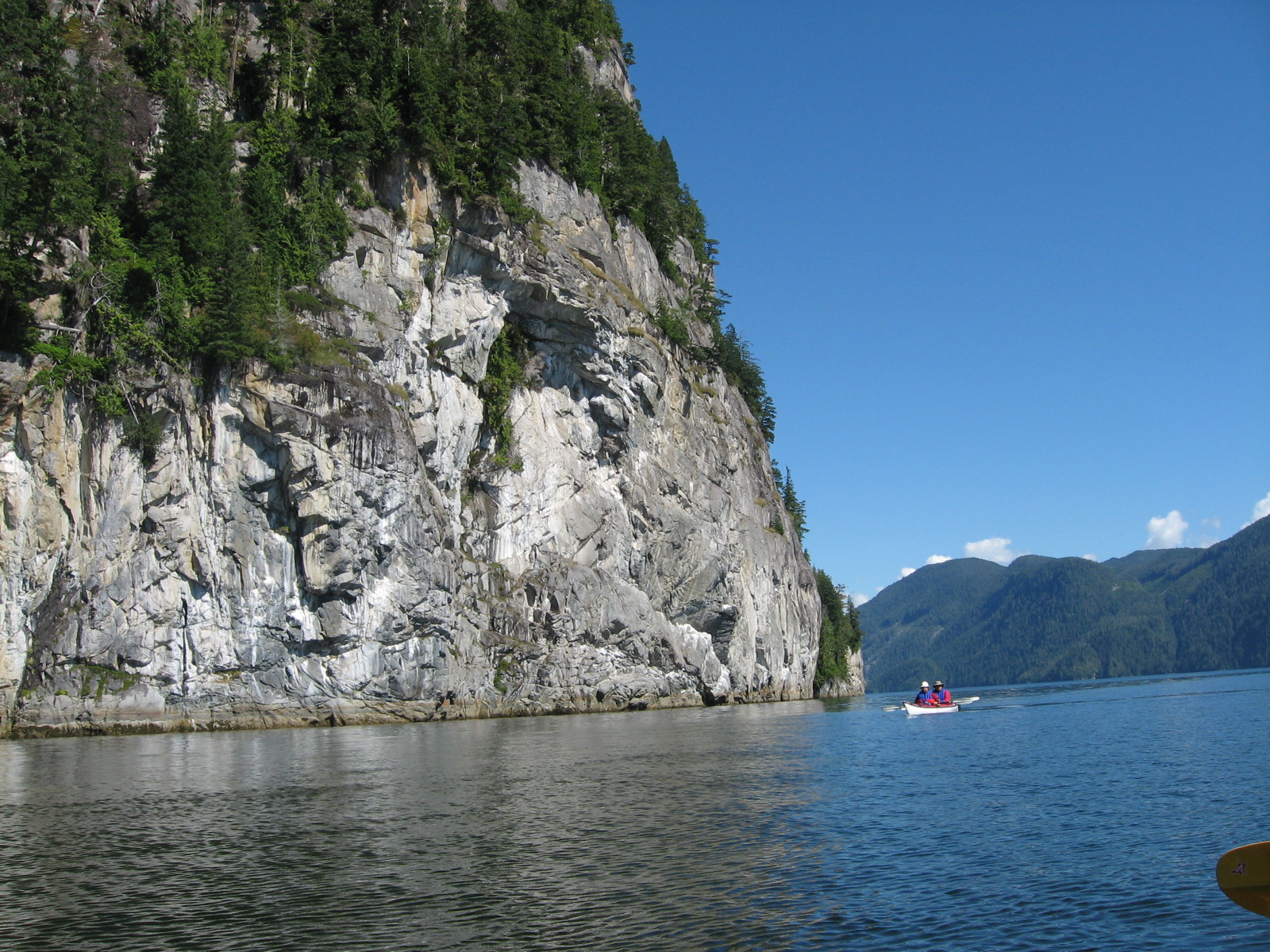
The vertical granite cliffs glistening in the sunlight on the opposite shore grew to 300 feet tall as we approached. The echo effect from the sheer wall dropping into the ocean prompted a chorus of sound effects.

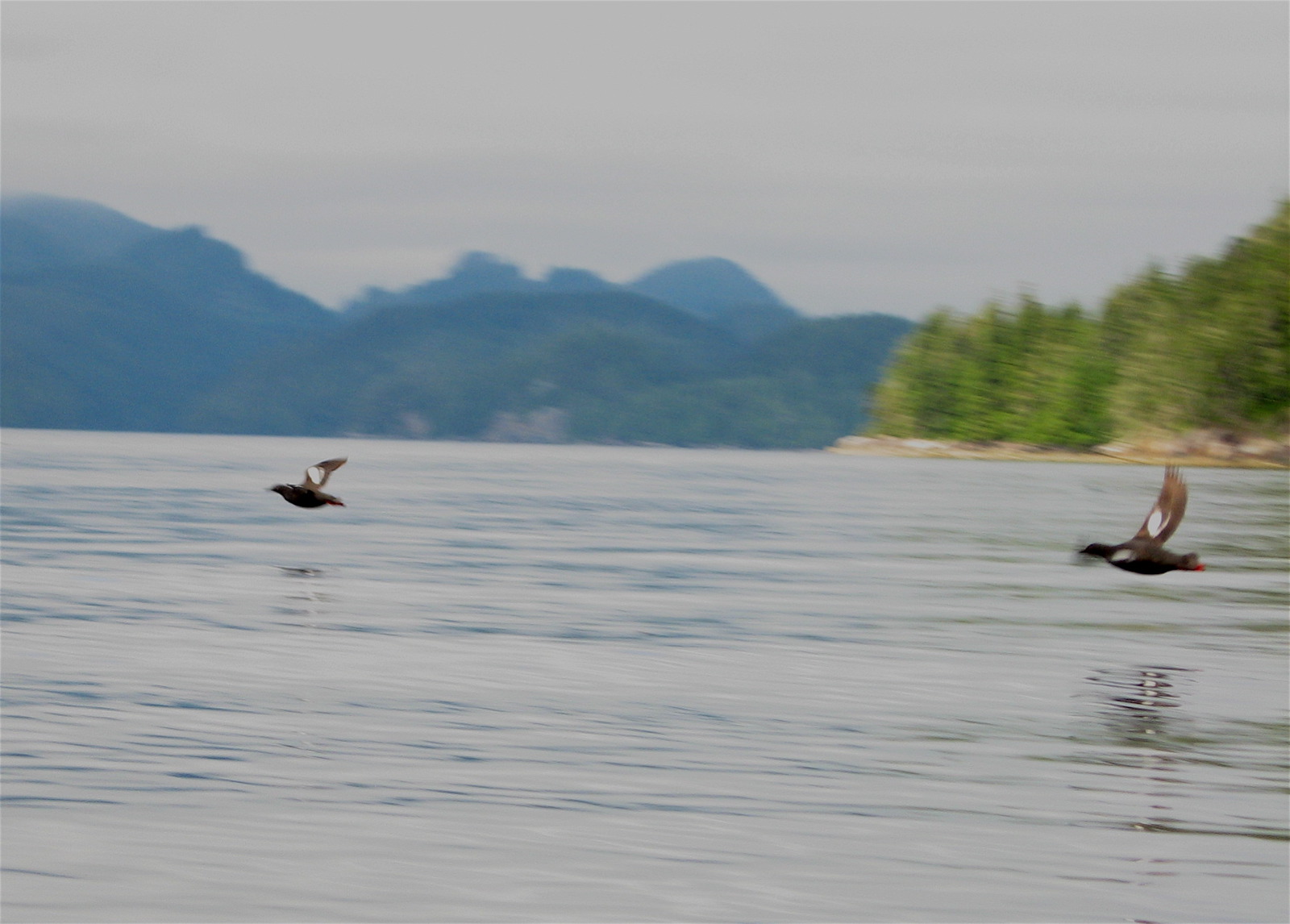
Close to the base we came close to some unusual sea birds with white spotted wings and red feet.

Rounding the point, one kayak came upon a bald eagle feasting on a salmon. They closed in and chased off the raptor, but not enough of the fish was left to be worth stealing for our lunch. John continued fishing. Down the Sound we saw one of many fish farms scattered through these waters. These nests of ecological evil in the midst of the pristine landscape are hated by most coastal residents but loved by foreign investors and politicians. (see this article by the Raincoast Research Society of Simoom Sound entitled, “What has gone wrong with salmon farming in the Broughton Archipelago” for a hair-raising scientific account of this disaster) They stimulated rich fantasies of ecotage.

Fortunately we found a creek in a cove out of their sight, where we pulled up on the warm rocks, filled our containers, ate lunch, napped, swam, and mooned a large passing yacht.

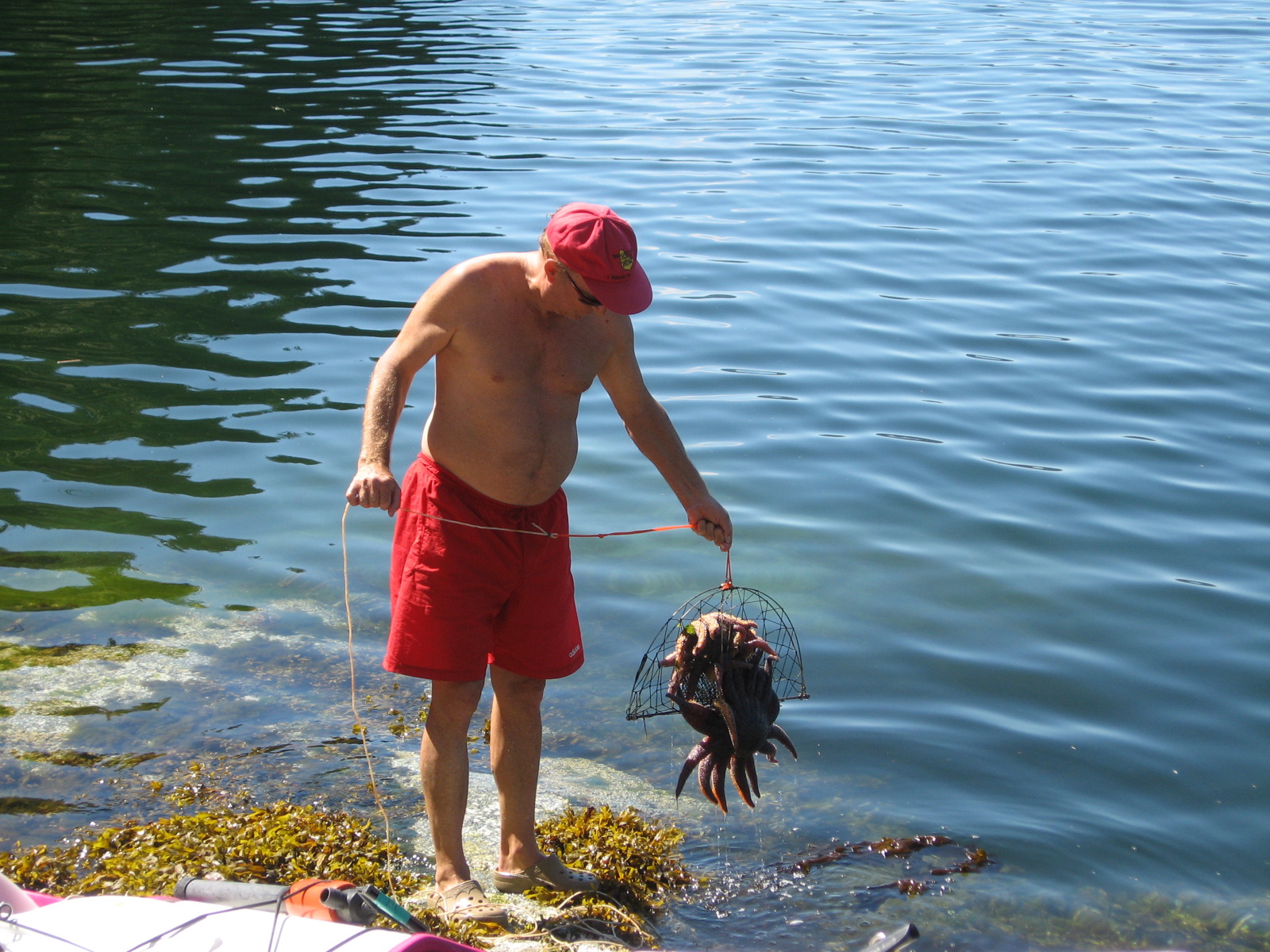
John’s crab trap landed a couple of formidable sun stars.

Exploring the south side of the Burwood Islets on the way back to camp, Ian used his professional fisherman expertise to disentangle a rope from the propellers of another yacht–a service performed without thanks. Another swim in the relatively warm waters of the clamshell cove was followed by a golden sunset illuminating the summit of Bumcrack Mountain to the east”named by Dennis for the cross-shaped snow formations visible near its summit.

Dinner was fish free: chicken-with-rice and butterscotch pudding, which received mixed reviews. The wind came up strong enough to require a windbreak engineered using a large tarp, trees and rocks. Tonight’s co-occupant was as fit and serious a kayaker as Ron. Mark from Portland was cruising the islands in a rare Necki boat, a kayak with a scull rowing mechanism that allowed him to travel at twice the normal pace. Evening entertainment included a lengthy and heated game of cards.

For a full set (67) of my Zunoquad pictures click here.

For a pool (184) of pictures by several people on this trip, click here.

For a wiki including these journal entries and writings by other participants, click here

The Zunoquad: Kayaking in the Broughton Archipelago (1)

Saturday, September 1st, 2007

Note: click the small images for larger version. For locations on map, see this Flickr photoset

Prelude

Steven, Steve and Peter ferried from Powell River to Courtenay in Steve’s van. Steven was instructed in shopping for required drybags, thermal underwear and croakies. They proceeded to Murray’s house and decided to buy food while waiting for the car from Vancouver carrying Ian, Rob, John and Lionel. There was some disagreement in the Thrifty market about what provisions to purchase. Tradition won out.

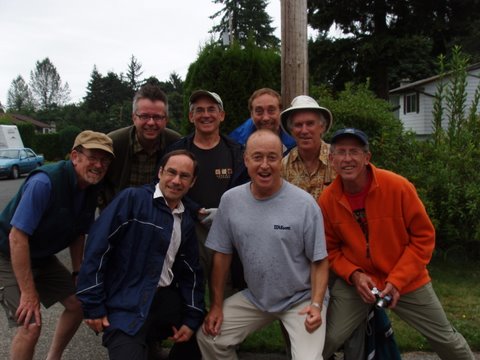
All members of the party met back at Murray’s for lunch of fresh tomatoes and cantelope, some last minute internet map research and jettisoning of excess baggage. Steve assured Heather that Murray was in good hands and would be safe. The pledge was affirmed by a group cheer and departure photograph.
The two packed vehicles headed north for the three hour trip in pouring rain. A challenging and uncomfortable week ahead was envisioned. Steve’s fellow-passengers were intoxicated by the fumes from his shoe-gooing project.

A restrained visit to the liquor store in Port McNeil was followed by dinner at the McNeil cafe served by a “Renoiresque” young waitress. After extensive deliberation, the majority of the group voted to spend the night in a local motel rather than use the reservations Murray had made in a campground at next morning’s departure point, Telegraph Cove. The need to repack gear and food was offered as a reason, but more compelling was the wish to put off getting wet for one more day.

A brief search led to the “Haida-Way Inn,” whose Balkan proprietors were unwilling to let all eight of us stay in one room. A deal was struck by our broker John which had us paying $280 for two.

Day 1

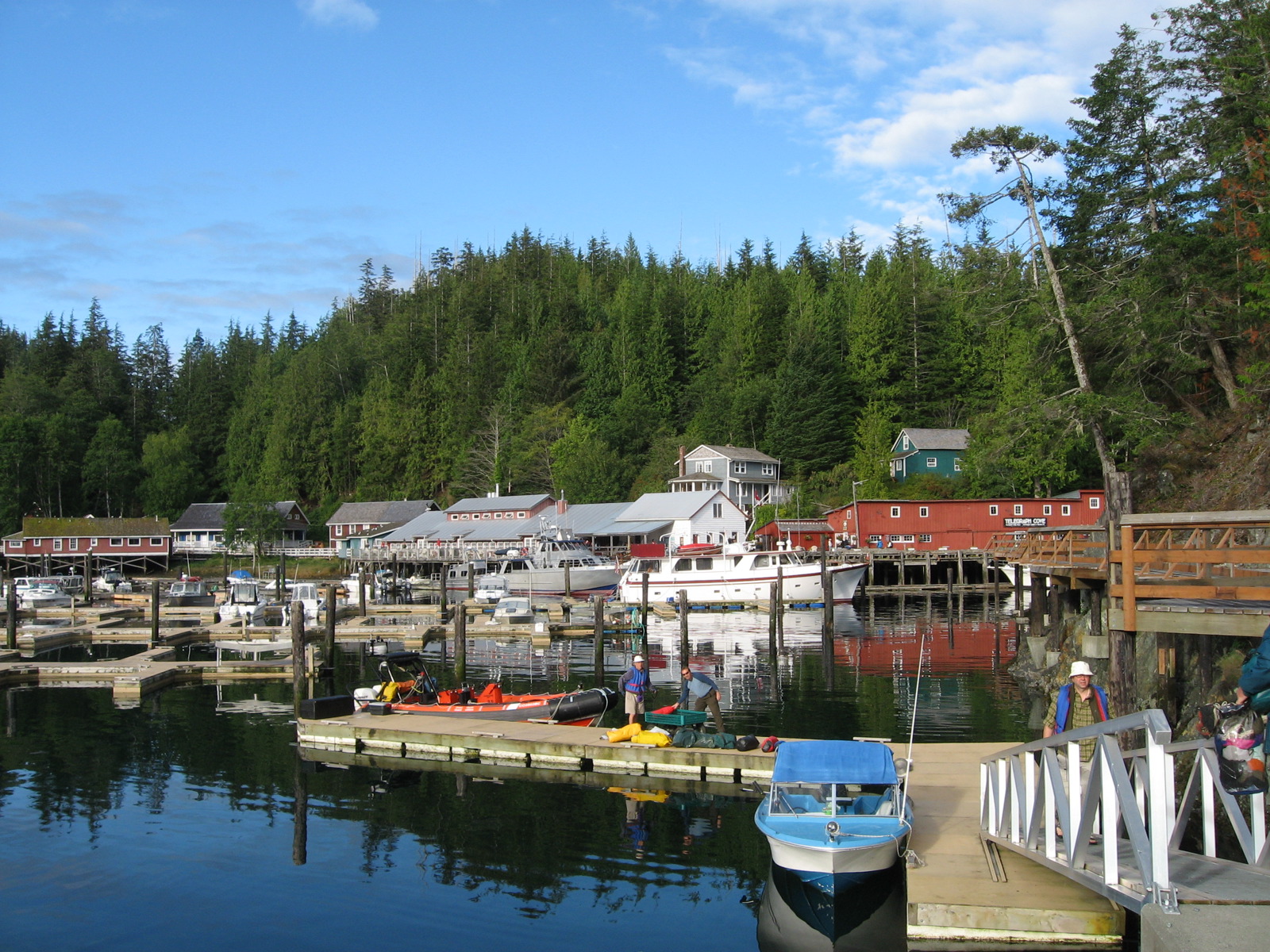
Dawn broke on a sunny day, rare in these parts. John was elected nominal captain for the day. He gave no orders. Breakfast was granola and dried milk in the hotel room. Ian extracted the bladder of wine from the box he’d bought and most of it spilled in Steve’s van. We arrived at Telegraph Cove and noticed with regret how much booze other kayakers were carrying compared to our paltry portions.
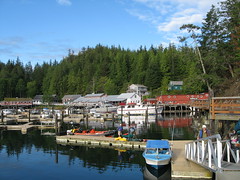
We rushed to get boats rented and gear ready since we were warned that Dennis, the water taxi driver would charge heavily for any delay. But he was late. Ian gave an illuminating account of a National Geographic article he had recently read about “swarming””the way leaderless groups of creatures manage to function, each member doing its own thing, but all working together. It seemed applicable to the way our expedition had been organized thus far.

After forty minutes of waiting for Dennis, a dispute between two unnamed members of our group about future kayak seating arrangements led to angry words, pushing, slapping and lenses being knocked out of both of their glasses. The volume and adrenaline level was impressive, and it was later reported that the altercation between “those two old guys” was the talk of the port. Peace was restored and the long awaited water taxi arrived. Dennis was stocky, cocky and remarkably efficient in loading the four kayaks and gear.
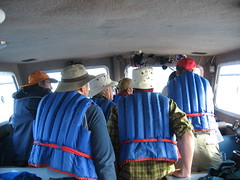
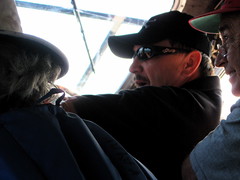
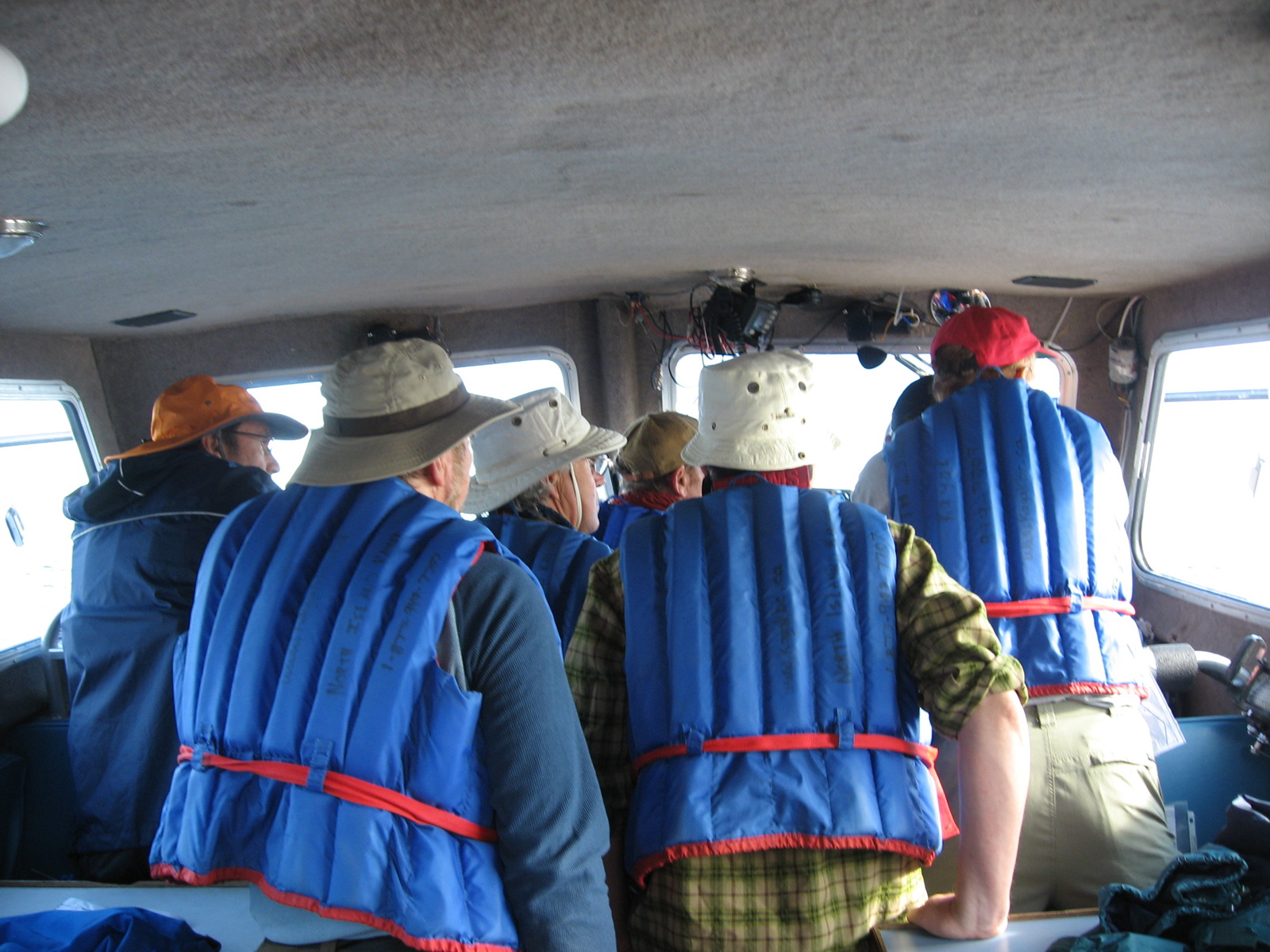
On the hour-long crossing to Echo Bay, he pointed out rare campsites and water sources on the map and regaled us with stories about local characters and warnings about the two native Bigfoot types, Zunoqua, a three foot child-eating, man-raping woman, and Bukhoose, a fearful male Giant. Both can be identified at a distance by their terrible smell.
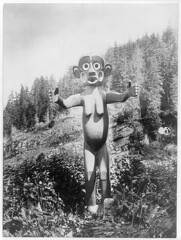
Dennis unloaded us at the government dock at Echo Bay. We paid him a discounted $500 cash miraculously collected and arranged a rendezvous for pick up at Mamalilacula six days later. It was surprising to find, in this remote archipelago, a floating resort, some beautifully gardened and painted floathouses, an elementary school, in use though not in session, and Billy Procter’s museum of local lore and artifacts.

After lunch of salami and cheese on what we later learned was the big daddy of all clamshell middens, we loaded the kayaks and dipped paddles into the spectacular waters of Hornet passage, directed by John the Navigator.
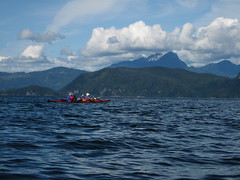
Two and a half hours later we landed at a protected clamshell beach and campsite in the Burwood Islets. The place was crowded with families enjoying the swimming in the sheltered coves, some from a nearby anchored yacht, others from a beached boat.

The campsite was free and we were happy to claim it. Led by Murray, who took to the water like a black lab, several of us swam in the bay, others napped, collected firewood, pitched tents, and started preparing dinner on the Coleman stove. Swarm behavior.

As it got dark the other visitors to the island departed, but not before the group from the yacht shot off a small cannon they had brought all the way from the USA to ravish the peace and quiet of this remote preserve.
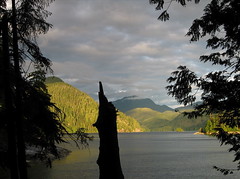
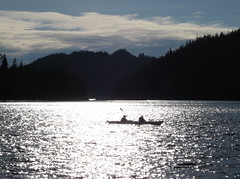
We shared the campsite with one solo kayaker named Ron, a very serious mathematician from Northern Ireland. As the evening went on and we consumed what was left of Ian’s wine and some fine Canadian herb, the noise from our campfire was probably as obnoxious to the yachtsfolk at anchor as was their cannon fire to us. We talked dirty like boy scouts and traded stories of being chased by cops and going to jail.

For a full set (67) of my Zunoquad pictures click here.

For a pool (184) of pictures by several people on this trip, click here.

For a wiki including these journal entries and writings by other participants, click here

Two Boys at Spooner’s Cove

Monday, April 16th, 2007

Ian’s last day of Spring Break from Junior Kindergarten was the end of a taxing two weeks for me. April 1 was Flora!, the Sierra Club Fundraiser I’d been planning and worrying about since January. The day after, I returned to teaching after a nine-months’ recess. The day after that I launched a challenging new course on Argumentation about Sustainability focussing on Gore’s film, An Inconvenient Truth. Last weekend was the Focus the Nation organizing conference in Las Vegas and the day after a press to write up my report on it followed by nine more hours of lecturing on Tuesday, Wednesday and Thursday. The tough slog of grading the first set of English papers was on my schedule Friday. But the sky was bright blue and the hills were still green. Besides, I had required my Ecolit class to listen the poets’ invitation to “Rise Up and Come Away,” so I too was obliged to obey.

We drove along Foothill Blvd. through the threatened ranchland between Bishops Peak and San Luis Mountain thick with cows and calves trimming the pastures into glittering lawn. The open, black-soiled fields along Los Osos Valley Road seemed hungry for seed or ready to sprout. I asked Ian to repeat the name of the road. At first he struggled and then it rolled off his tongue. The mountains on both sides–Morros and Irish Hills–make this a Valley where the dirt rolls down and turns to soil that grows the crops, I explained. He recognized the rows of Snow Peas with their white polka dots that will turn into the sweet morsels we pick from the planter beside our deck. Los Osos means the bears in Spanish I told him, the name of the town at the end of the road. Watch for bears on either side. By the time we reached the turnoff to Montana De Oro, he’d counted 14–on signs, a mural, woodcarvings and the cast bronze sculpture by the bridge.

“Gwampa, wet’s wace to the mountain,” he called back to me from the beach. “I cant run with this backpack,” I answered. I boosted him on to the ledge sloping up the outcrop, where he passed the time making sand waterfalls, while I struggled to find handholds in the strata to pull myself over the first hump.

After several clumsy efforts I realized I wouldnt make it, and he’d have to come down. I wondered if the cause was the soft rock’s weathering since I’d been here last, or other sorts of weathering closer to home.
But there was no shortage of alternatives, and I remembered that last year several Cal Poly students had been swept into the water from this promontory by rogue waves, one to his death.
We noticed an alluring cave carved in the vegetation-covered cliff bordering the north side of the beach. Ian said, “that’s a dinosaur cave.” The creek that flowed to the sea at the foot of the cliff was low enough to hop with dry shoes. Ian led the way up another sloping ledge into what turned out to be a tunnel rather than a cave, with a perfectly formed arched opening to the sky. We passed through slowly and came around the back to perch on a ledge that looked straight down into the surf, which pounded with a force that carved these rocks like cheese. I kept a tight grip on the rolled-up waistband of his sweatshirt. In the wind-pruned scrub above the cove behind the tunnel, a flourescent red-throated finch burbled above the waters’ roar.

On the way back through the tunnel, we found another tunnel at the base of its lower, landward, wall, this one squat and deep. Through it one could see foamy water flowing in and out of the shadowed cove below the finch’s perch. One could easily slide down there, but with no way of return.

Back outside, we saw a possible route upward: vertical footholds in the rock leading to an oval opening in the brush that looked like the start of a trail into the dunes. This might be the dinosaur’s exit. Ian led the ascent and I followed him through the green tube.

It daylighted at a wooden railing marking a sand trail bordered by blooming bush poppies and silver lupine. A fork of the trail covered with delicate lizard tracks led toward the water and traversed the dune.

Up steep switchbacks and down muddy seeps, we made our way to tidepools and blowholes. Across the expanse of Spooner’s Cove, we saw groups of walkers on the popular cliff trail, but here there was no one.


I looked at my watch: 11:30. I had an appointment at the Social Security Office to apply for Medicare. Ian was getting hungry. Off the rocks and up the sand we rambled. On the warm trail that circled back to Reddy in the parking lot, over and over we sang “Dinah wontcha blow.”
Easter in Las Vegas

Monday, April 9th, 2007

img_0783.jpg

A Personal Report on the Focus the Nation Organizing Conference April 6-8 2007

Introduction

I took the bait for Focus the Nation while attending the first national conference of AASHE, the Association for the Advancement of Sustainability in Higher Education in October 2006. That conference attracted 800 faculty and administration activists and featured a panoply of environmentalist superstars. In welcoming remarks, the President of Arizona State University declared that ASU henceforth would stand for Arizona Sustainable University and announced the formation of a Sustainability Institute endowed with a five million dollar grant from the Wrigley family.

The conference’s show of strength raised the confidence of every beleaguered soul who attended, but the only action item I came away with was to set up a chapter of Focus the Nation at my home campus. Dreamed up by Eban Goodstein, an economics professor at Lewis and Clark College, Focus the Nation’s objective suited the immense scope of the climate crisis, yet was defined, immediate and feasible: a nationwide teach-in on Global Warming solutions at a thousand colleges and universities on January 31 2008, just before the primary elections.

Professor of Business, Kate Lancaster, with whom I had worked on several campus sustainability projects, agreed. We tried to recruit Tylor Middlestadt, Cal Poly’s legendary student leader, but he would be graduating before the event, so he put us in touch with two fellow engineering students, Chad Worth and Matt Hutton, who joined our core organizing committee. We met regularly during Fall and Winter quarters, discovered lots of support for the idea on campus, expanded the committee to include three more faculty members, and set to work getting endorsements from the Associated Students, the Faculty Senate and the University Administration. After Eban scheduled an organizing conference for the national group in Las Vegas over Easter weekend and we found a one hundred dollar round trip flight from San Luis Obispo, we all decided to go, whether or not we got funding.

In the sleepy Santa Maria airport, we boarded a huge Alliant Airline jet for the one-hour flight. It was packed with a jolly crowd of multigenerational families, golfers, gang bangers, farmworkers, and a bachelorette party all eager to spend their wealth in America’s fastest growing city. (more…)

Ecolit Class

Thursday, April 5th, 2007

Peterson Ranch, above the pole house, looking east. Breathing hard after a brisk walk. French horns and snare drum of the freight train laboring up the grade in the background, twittering of sparrows and finches in a dense grove of sycamore, bay and oak down below, the scream of a young redtail circling overhead, two rooks shouting and sparring in a tree top. Twenty five people spread out out on the hillside silently listening and recording.

A wisp of breeze stirs the stagnant air, cools the sweat on the back of my neck. Flat light, not the Vergillian golden radiance and lengthening shadows of former years. But the overcast makes the new growth flouresce with a dozen versions of green.

The usual April torrent of the creek is down to an October trickle. Not thirty but eight inches of rain this year. Yet around us on the serpentine bloom lupine and tidy tips, blue dicks and blue-eyed grass, monkey flower and johnny jump-ups.The dell explodes with a rude ecstatic trill. Wings wildly flapping, a small bird darts our way, then glides and swoops into the willows up the hill.

It’s a shame to disrupt this performance and its rapt audience, but I’ve assigned homework and prepared a discussion, and ink and paper has been consumed to print the readings. On the first day of class we read Ovid’s description of the Golden Age, when innocent humanity was sustained by honey and acorns, and also the biblical account of Nature’s creation as a harmonious artwork designed to provide for all the needs of his naked children by a generous parent-God. Today the ancient texts are Vergil’s Georgics”a praise of the farmer’s life acknowledging the immense difficulty of mere survival”and God’s speech from the whirlwind in the Book of Job, where He mocks the good man’s futile search for intelligibility and proclaims the cruel and awesome wildness of His universe.

Is it by your wisdom that the hawk soars,
and spreads its wings toward the south?
Is it at your command that the eagle mounts up
and makes its nest on high?
It lives on the rock and makes its home
in the fastness of the rocky crag.
From there it spies the prey;
its eyes see it from far away.
Its young ones suck up blood;
and where the slain are, there it is.

I read the fierce verses and they echo the screams, the croaks and the trills we’ve just heard. They answer Thoreau’s question, the motto of this course:

Where is the literature which gives expression to Nature? He would be a poet who could impress the winds and streams into his service, to speak for him ¦whose words were so true, and fresh, and natural that they would appear to expand like the buds at the approach of spring, though they lay half smothered between two musty leaves in a library¦ .

This is What Democracy Looks Like: Washington Protest January 27, 2007 (2)

Wednesday, January 31st, 2007

[For photo album and slideshow for this entry, go here]

Sunday 2:35 P.M. United flight 0871 Dulles to SFO

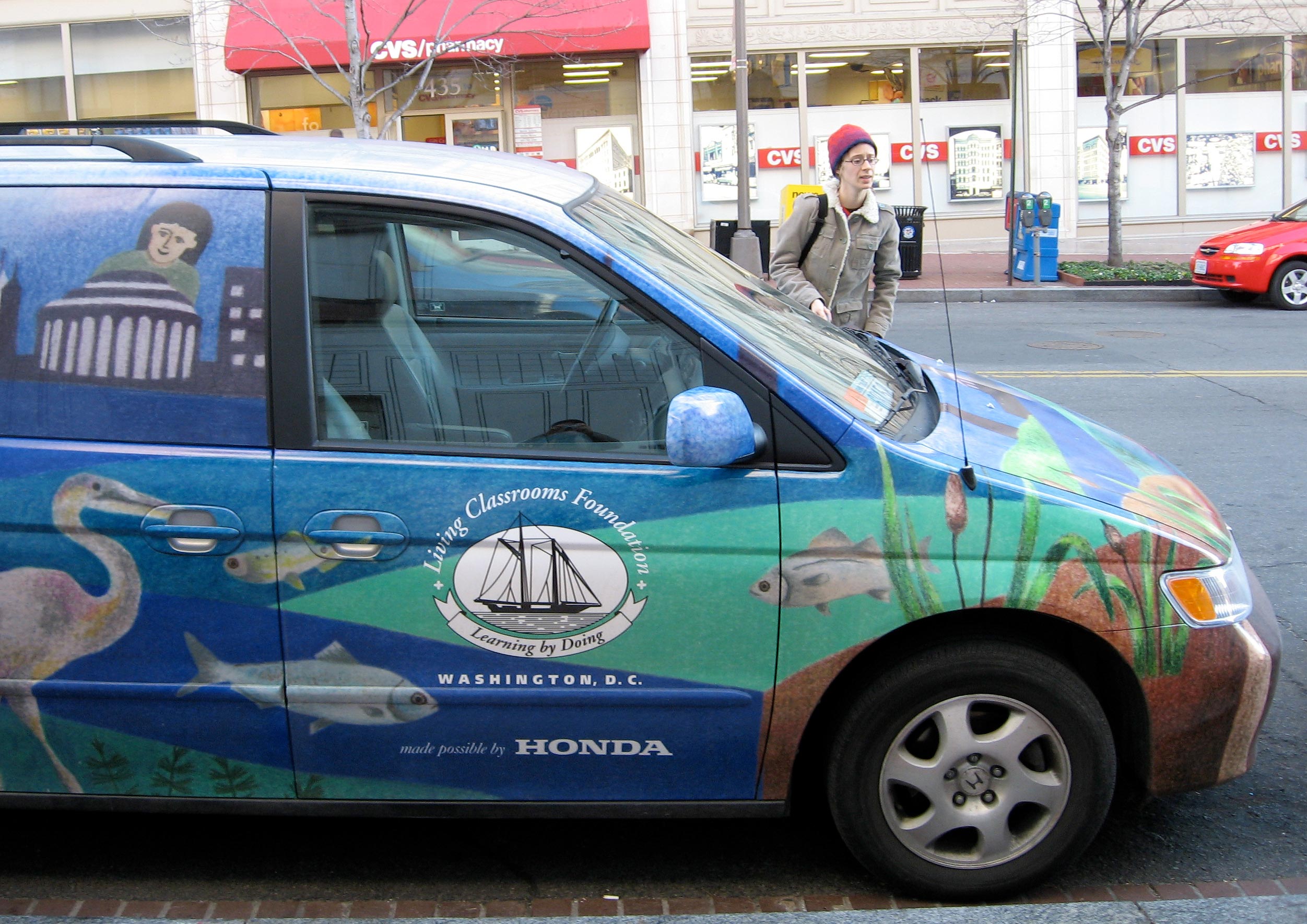
img_0214.jpg The sun is shining when A. and E. arrive Saturday morning. Their Honda van is covered with a mural depicting kids in the city and fish, birds, and plants of the Chesapeake watershed along with a logo of a sailboat surrounded by the words “Living Classrooms Foundation¦Learning by Doing.”

While E. chats with S. about work, A. tells me about her program taking inner city kids on hikes and boat excursions to study their bioregion and get involved in restoration projects. I tell her that my University, Cal Poly’s motto, is “Learn by Doing,” and that I teach courses in Bioregional Place Study.img_0215.jpg

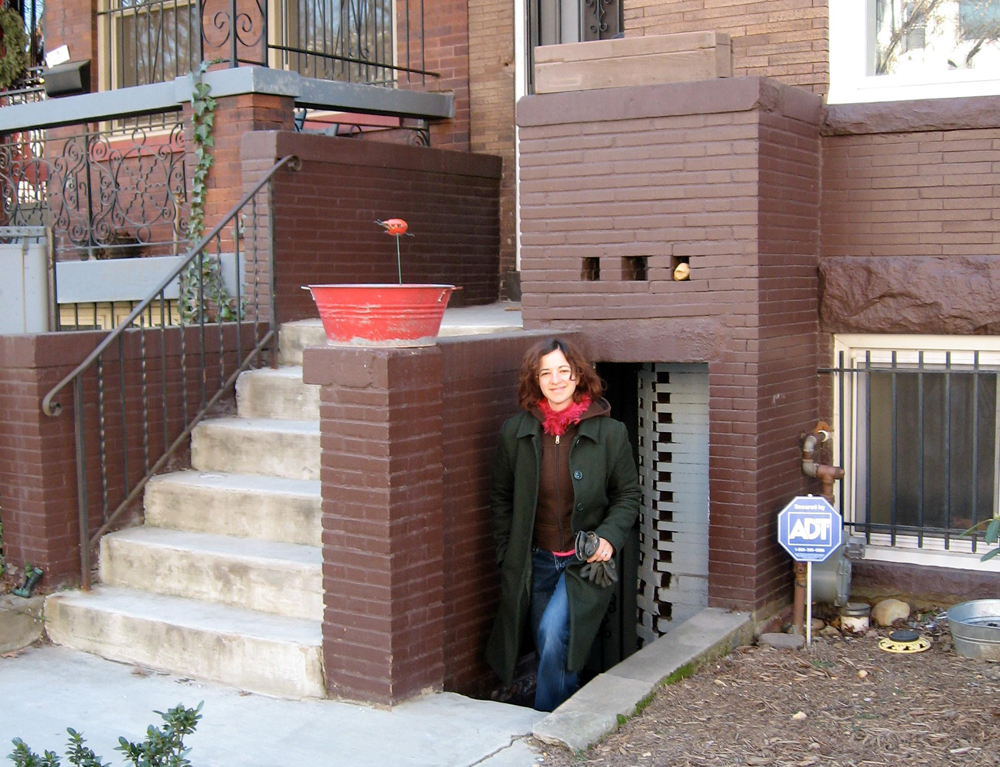
We park near Teism and hear a roar coming from a crowd with pink banners in front of the National archives across Pennsylvania Ave. On the sidewalk outside the teahouse, a circle of Grannies for Peace stand singing. The people I’m with seem to know everybody outside and in. Two young men at our table say they work for Campus Climate Challenge. I say I’m working on Focus the Nation at Cal Poly San Luis Obispo. They say do you know Tyler Middlestadt, our charismatic student sustainability activist. I say let me take your picture for him.img_0219.jpg A. says that Washington is filled with young activists working for NGO’s. They last about five years before burn out.

When I mention the man on the cell phone yesterday, S. says yes there are a lot of those too. They stay longer. She went to a party recently where she talked to four girls working in the State Department. Their assignment was to figure out ways to influence the elections in Nicaragua. When S. asked how can you do that in good conscience, they replied that it was a benefit to the region to promote stability. (more…)

This is What Democracy Looks Like: Washington Protest January 27, 2007 (1)

Wednesday, January 31st, 2007

United flight 0936 San Francisco to Dulles
8:00 AM, Friday January 26

The sun shines from the direction we’re heading. The coast range pokes through cloud cover thickly wrinkled like the top of a souffle blanketing the valleys below.

The 5:30 AM flight from SLO to SFO: Venus cast her pristine beams above an eastern horizon striped pink and orange as we descended in the dark, only mountain peaks and a couple of beacons protruding through the marine layer. A few thin spots glowed pale, traces of the sea of lights hidden below. This is what the Bay Area might look like after the deluge. Morning coffee served by a pretty stewardess.

I love flying. Planes and airports let me admire rather than scorn our human achievement: thought, organization, community. Even the corporations.

Flying also sends my mind inward, propels me to the edge. At any moment the plane could start falling. I’d grab my cell phone, call Jan, say it’s been great”buddhatrip, eclipse, wabikon, barrel stove, venice, thank you, have fun, travel. What do I leave behind? The initials of my password: wife, children, grandchildren. Three books. Three places: New York, Lund B.C., San Luis Obispo.

Over the Sierras now. Low light on snow and rock, sharp line between brightness and shadow on the ridge crests. The mountains wont suffer from global warming or nuclear winter.

9:00 AM

Still over mountains, snow covers the country, normal for January. Not the weather weirdness of two weeks ago, with sunbathing in New York and wild blizzards in Denver. For the last week I’ve been immersed in the apocalyptic prophecies of An Inconvenient Truth to prepare for my new English course: “The Rhetoric of Sustainability,” and working on plans for “Focus the Nation: Global Warming Solutions for America” coming up in 2008. But this trip is about the War. The ads for 2 million dollar vacation condos in the airline magazine deny both threats. What has my generation bequeathed to our grandchildren?

9:40 AM

I delight in reading Julian Barnes’ Arthur and George. The language gives pleasure one sentence at a time. The author’s sly slow release of information about the characters makes you engage with them before learning their identities. After 80 pages it turns out that this is a real-life Sherlock Holmes mystery about Sir Arthur Conan Doyle. It takes place in the world of Bleak House that Jan and I were immersed in last night in the final episodes of the BBC serial. Anglophilia is my guilty pleasure, even as an English professor.

11:00 AM Pacific Time above North Dakota

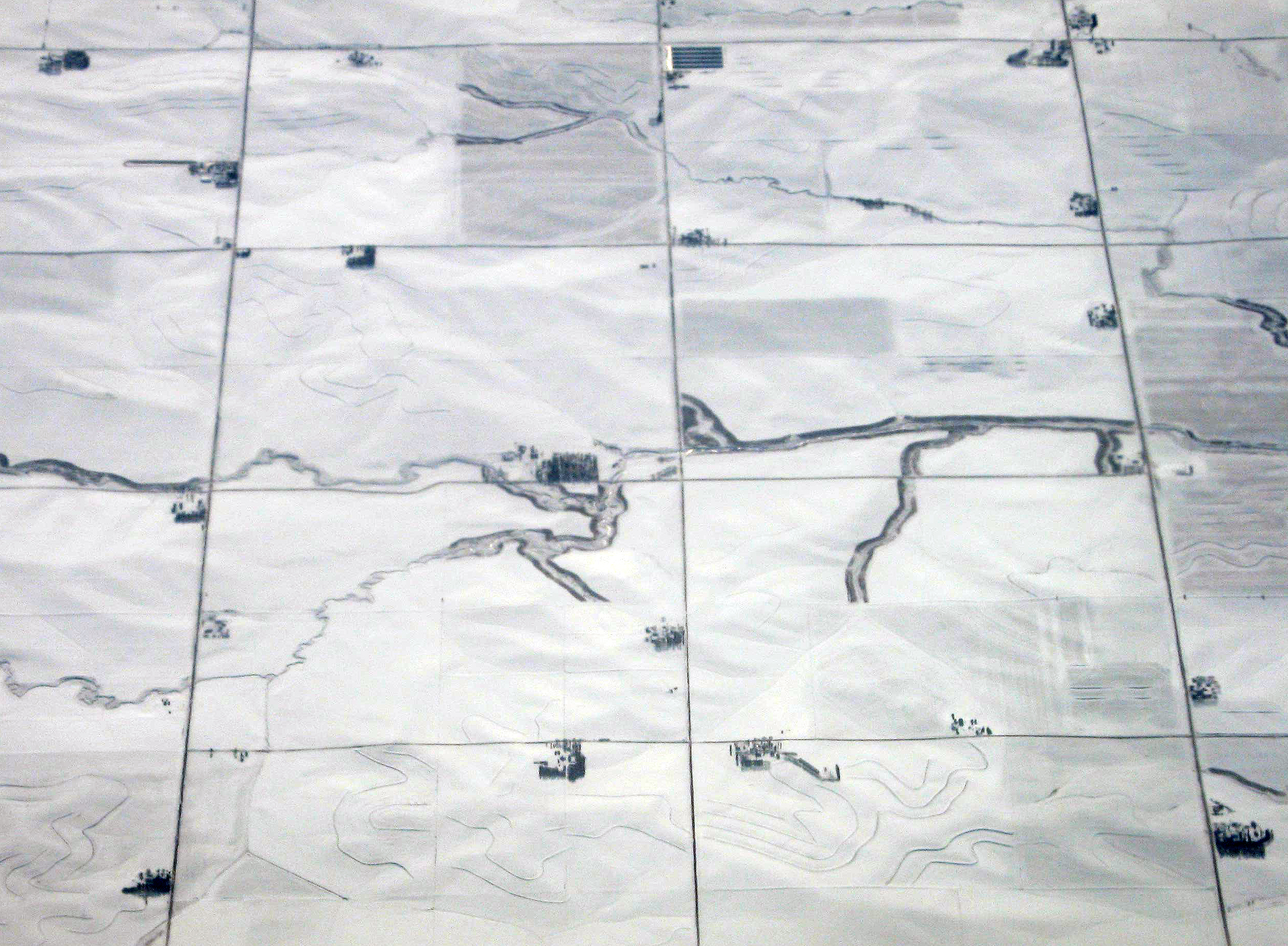
Graph paper road grid, a right angled overlay on squirming fractal landforms.

img_0199.jpg

7:00 PM”Il Rumbero

I wanted the airplane to be filled with people converging on Washington to protest. My old college friend, P., who was supposed to be sitting next to me never showed up. I felt a duty to tell the stranger in his seat that I was going to march against the war, but I kept chickening out. On the shuttle bus from Dulles to the Metro I looked for allies and spotted a man with a gray beard carrying a sign. He was from Mountain View California, a retired Cambridge eye research scientist.

I’ve arranged to arrive around 8:30 to crash at the apartment of young people I was introduced to last summer. A. is the son of friends who lived in the barn loft on the farm in Lund for two years in the seventies. We visited his mom on Saltspring Island and met him for the first time since he was one year old, shortly after his marriage to S, whose picture I saw in their wedding collection on Flickr. (more…)