Miscellaneous

Snow

Friday, January 6th, 2006

I promised not to indulge the journaler’s vice, writing about writing. But I’ve lagged for two weeks now, and the longer delay the harder to start, so I drag myself to this window with a scolding. How can I expect students to fulfill this assignment if I can’t? How can I fail my own admired teachers, Thoreau, Wordsworth, Austin, Oliver?

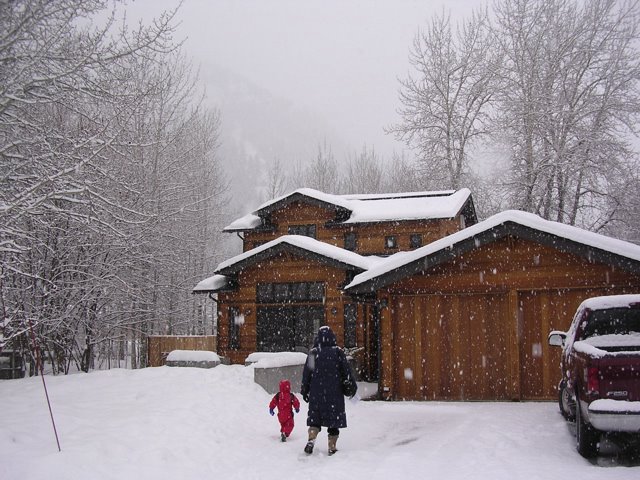
My first seven months of retirement concluded with our Christmas trip to see grandson, Ethan, daughter-in-law Amy and son Joe, in the gorgeous new home he built in Sun Valley Idaho. Jan observed that his lifestyle blends his hippie childhood in British Columbia with his adolescence in Palo Alto, where we lived while I finished my doctorate and she attended law school.

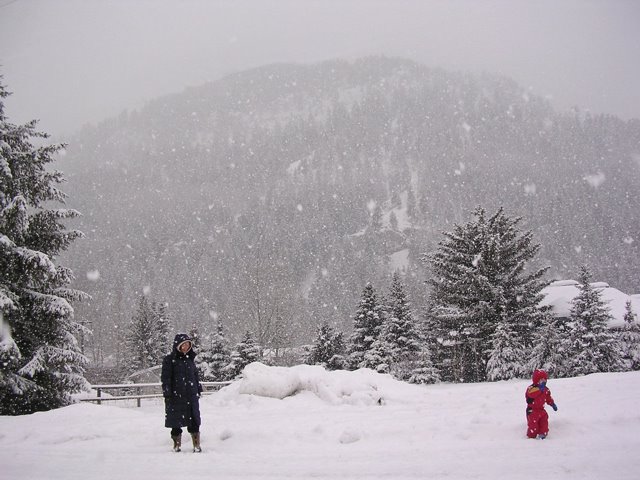
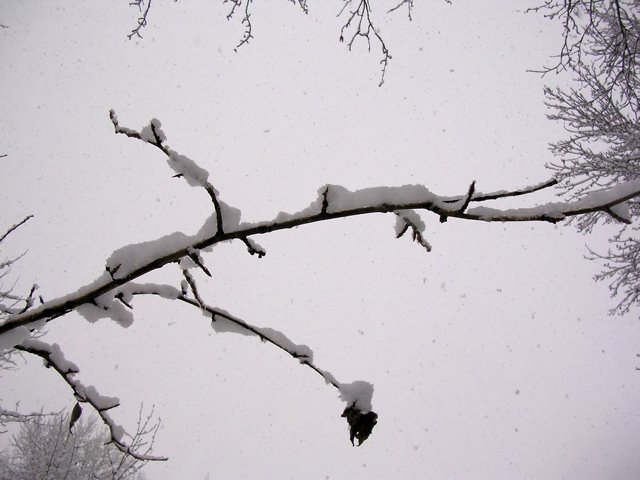
The first couple of days there the temperature hovered around freezing. Cold rain alternated with falls of the largest thickest snowflakes I’d ever seen.


One late afternoon Ethan and I trudged through the foot-thick fresh cover to the creek and stared up as the grey flakes fell like cotton candy into our open mouths. They were so sticky they held to the surfaces they touched and to one another without compacting, sometimes leaving spaces that light passed through.

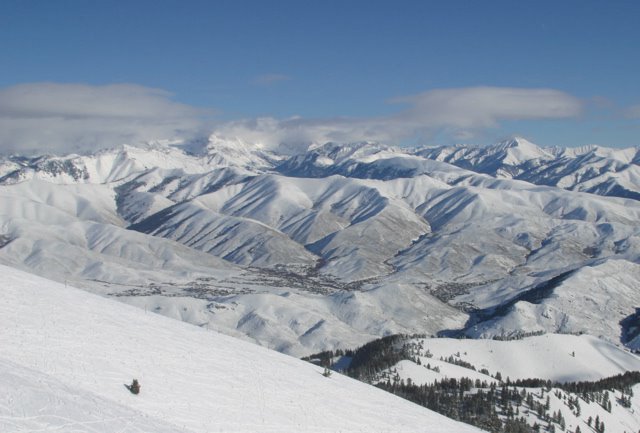
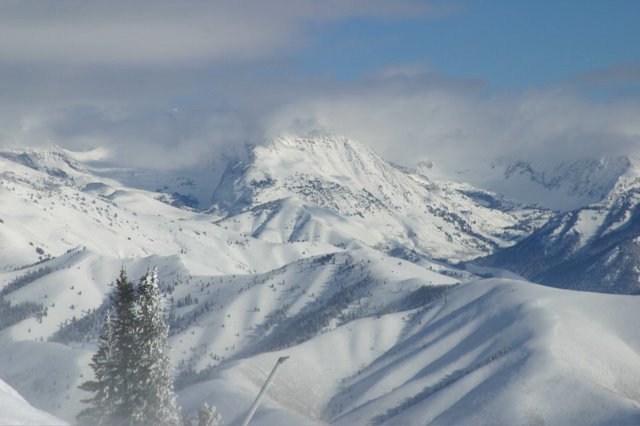
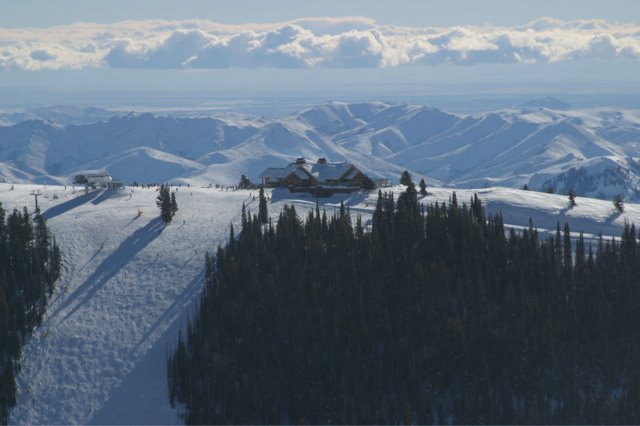
Next morning the temperature dropped and the sun came out. Joe was eager to ski the fresh powder at the top of the mountain. I stayed on the groomed slopes and watched the less adhesive crystals at high altitude blowing in the wind on the ridge top and the surrounding summits. They reminded me of the “snow banners” described lovingly by John Muir in chapter 3 of The Mountains of California.


Muir surmises that the powdery consistency that allows the snow crystals to be driven by the wind results from their crystalline hooks being ground off in the turbulence at high altitude. However, according to Snowcrystals.com, the reason why

…is still not known, believe it or not. The different ice facets grow at different rates in different temperatures, and to date we don’t really know why the growth rates depend so strongly on temperature. The growth depends on exactly how water vapor molecules are incorporated into the growing ice crystal, and the physics behind this is quite complex and not well understood. It is the subject of current research in my lab and elsewhere.

The celebrity resort of Sun Valley, with its $70 per day ski lifts and chandelier-bedecked mountaintop lodges is not where I’d have expected to spend holiday time. But the magnet of family and also the splendor of its outdoor recreation opportunities overcome my scruples about the conspicuous consumption of resources and the inequity of wealth distribution that the place represents.

The same weather system that was making life beautiful for skiers and resort owners in the Rockies lengthened our return trip home on the last day of 2005 to fourteen hours. We got back just in time for the ECOSLO bash in the Vets Hall that Jan had helped to organize, to celebrate a New Year’s Eve more hopeful than the last one.

Hazzardous Waste

Friday, January 6th, 2006

Yesterday morning I went to the Hazardous Waste Disposal Site in Cold Canyon Landfill that’s only open 11-3 on Fridays and Saturdays. The cardboard box of half-filled bottles and cans stashed in the garage–Diazanon, Malathion, ant-killer, Miracle-Grow–got soggy from the rain that seeped between the concrete wall and floor during last week’s storms. I had felt good about not using all these poisons since converting to native plants several years ago, but I never finished cleaning house because I didnt want to get near the toxic stuff any more.

I put on my gloves, transferred the frightening mess to a plastic carton and drove out Broad Street under a fresh sky brightened with puffy clouds. At Buckley Road a big pickup turned onto the highway in front of me stuffed with trash and sporting a huge confederate flag fluttering on a pole fastened to the tailgate. Concentrating the winter sunlight, its scintillating red field dominated the beautiful Edna Valley landscape and steadily increased my irritation. My head filled with challenges: “So you’re a big fan of slavery?” “You’re celebrating traffic in human beings.” “How about if you were the property rather than the owner?” When the driver moved into the left lane as if to turn on Corbett Canyon Road, I fantasized giving him the finger as I drove by but thought better of it as he moved back in front of me, clearly sharing the destination of the dump. I imagined the hostility and pain that might have been felt by an African-American staffing the landfill gate.

I followed the signs leading toward the shed where the poisons were to be left and watched the attendant dressed in white coveralls lifting a 48 inch television set on his forklift and dropping it with a crash onto a mountain of electronic detritus filling up an enormous dumpster. Five years ago somebody must have paid thousands of dollars for that half-ton item, giving it pride of place in the family home. Now it was just another piece of junk that needed to be processed at government expense. I remembered my earlier visit here with the old monitors and printers accumulated in my garage that no recycler could handle. The day before, at the Sierra Club office I discovered that installing the Quickbooks software necessary to handle our complicated non-profit financial statements required an upgrade to the operating system, which in turn required replacing the computer we had purchased only three years ago.

Ron Yamauchi’s Eulogy for Kenn Law

Thursday, December 22nd, 2005

I thought to do something different: bury Kenn not praise him. I think he would have liked that “ he liked things that annoyed most people, like that trancey music and spelling his name with 2 Ns. Being the world’s biggest expert. Forgetting things “ like 10 bucks. Being the vegetarian that can’t eat tofu.

But you could not stay angry at Kenn. I mean look at us – Here we are.

So I am just going to stick to my role.

Judy has spoken about Kenn’s professional life, Steve about Kenn as a friend and lover.

I’m here to talk about the Kenn that I knew, which was in some ways his most shockingly unexpected persona, that of the wholesome family man.

We three are not the complete experts on Kenn, but we’re giving briefing notes in the phases of his life. At the reception there will be more stories and hopefully lots of interaction. There’s so much I don’t know about Kenn as an artist, or art collector, just as some of you may want his recipe for broiled eggplant.

Kenn Law met Sharon Goddu (as she then was) in 1975. He’d have been about 21 years old. He’d returned to the Lower Mainland after some years as a hippie camp director and schoolteacher in Lund, BC, and was applying for a job as a child care worker. Sharon, one of the CCWs, objected to his hiring “ she said that there was something kind of intimidating about his charisma and energy “ she knew that he could change her life.

Well, he did get hired, so Kenn and Sharon became coworkers, then friends, best friends, roommates, and ultimately co-parents to her two young daughters, Rachel and Willow.

Ultimately, Sharon moved her family up to Desolation Sound, north of Powell River. Kenn told me he blamed himself for making the Sunshine Coast seem so alluring that he’s sent his precious daughters into a pre-technological world of cold water, oyster digging, and bear evasion.

Later, the girls came of age and started to attend Simon Fraser University. This is where I came into the picture.

Rachel and I worked on the student newspaper together, starting around 1987. She was very friendly and nice, and invited a bunch of us to a party at her place, an old house in Burnaby they called the Pender Palace. And Rachel introduced me to Kenn.

He made a striking impression: tall, broad shoulders, with the shaved head and a menacing expression. I also remember that he was incredibly curt with me. It could be that he was angry about the music “ there was this sloppy jam band playing, I believe they were called the Gonch Messiahs “ we know that he was particular about music.

But I also think he really didn’t like me. He was still reserved years later when I was dating Willow. Now that I am a dad, I really respect his frostiness towards whippersnappers who were hanging around his daughters. I don’t believe he really trusted my intentions until 1995, when we got married. And of course he did all these super-elaborate flower arrangements for the reception.

After that, he was a wonderful father in law and grandpa. He’d come over and cook us big meals, accompany us to shows, coo over the babies when they came, bring us coffee in the morning when we were up all night with a newborn, buy them clothes, volunteer at their school. I’m glad that Sophie and Flynn are almost 6 and 9. They will keep real memories of their Poppa Kenn.

As for Willow and myself, Kenn’s still a real presence in our lives.

This morning, I woke up, looked in the mirror upon which he’d written Go Beyond and Choose Happy in phosphorescent paint, see the tattoos he’d cajoled me into getting together, walk past the kids’ room he decorated, went to the kitchen he painted, ate bacon from the frying pan he left here, drank coffee from one of his mugs, put on the shirt and shoes he gave me, and walked to our car through the garden he planted, from the house he helped me paint.

I know what I’m supposed to feel about that. I ought to be taking consolation from the gifts he’d given us, to feel grateful that we got to know him for a considerable portion of his life. To acknowledge that his life was lived more intensely, passionately, dangerously, creatively than the theoretical average person for whom one day is much like another.

But that math doesn’t make sense to me. Heightened ability to give and to feel should have earned a reward. Those who don’t waste life, should get more years, not less.

I guess I am starting to come out of my shellshock over his quite horrible and protracted death, and into realizing that I am without my friend. He loved gossip, furor, huge emotional scenes. If anyone should be here, with us, it would be Kenn.

And if you’re a religious person, maybe you think he is here. If so, I envy your consolation. For myself, I say, Kenn “ forget the ten bucks. I’ll always owe you. Goodbye.

Spring in December

Saturday, December 17th, 2005

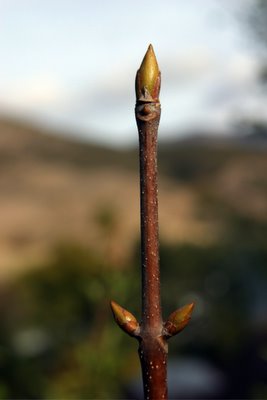
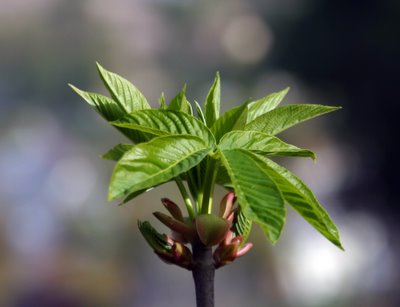
The rains have been slow this year, only two since June. But the native garden I’ve been cultivating since 2001 has matured. Last spring I removed the drip irrigation system I’d used to get it established, and except for one ground soak, I refrained from watering during summer and fall. All 68 varieties survived and most have remained green, proving their adaptation to arid conditions, subsisting on fog, dew, and bits of moisture their roots capture deep in the parched clay soil. Buds were fattening on a buckeye I’d planted a couple of years ago and another had started to leaf.


But this made me nervous. With so little water in the ground, would they deplete their energy with premature growth? I checked my authority on California Natives, the website of Bert Wilson, proprietor of Las Pilitas nursery, and found that Aesculus californica is “tolerant to drought but needs regular water for the first few years.” Remembering Bert’s general abhorrence of watering, this warning seemed urgent. I hooked up the hose and gave the two little saplings a normal season’s worth of precipitation.

The next morning, Sunday, I was gently awakened by the gurgle of rain in the downspout on the wall by my bed. I put on a wool sweater and hat and went out to enjoy it. I climbed the ladder to the roof and cleared the gutters of curled Eugenia leaves and spikey liquidambar seedpods. I rooted up dandelions that had sprouted in the front yard. I transplanted ten bunches of Idaho fescue stored in pots after I’d cleared them off the hillside I’ve been excavating with pick and shovel to make room for an extension of Jan’s office. I cut huge clumps of deergrass straw and spread the leaves and seed stalks on the muddy paths. I filled the wheelbarrow with raked leaves and sprinkled the crackling residue on the spoil I’d been dumping alongside the house to raise the ground level. The porous mixture absorbed the water puddled on the dense clay, protected my shoes, and made a deep-textured carpet of autumnal tweed.

I knew that the thirsty plants would respond quickly to the rain, and next morning I went out to look at the new growth.

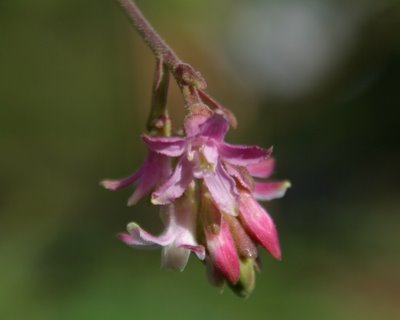
This is ribes sanguineum glutinosum, or pink flowered currant. The specimen between the neighbors’ towering second story and our roof has grown 10 feet, as fast and as tall as the Redwood next to it. Another in total shade under the fence, which I planted to replace a vigorous non-native tree I cut down, has only reached two feet, but is also showing new leaves. The two in back, on the steep north facing slope where there’s very little soil, have reached about four feet. Bert says “This Ribes is more drought tolerant than most of the drought resistant plants of the trade, but in a native garden plant towards the wettest section… .”

Plants for a Future, a British permaculture site reminds me that sanguineum and glutinosum stem from the latin words for “bloody,” and “sticky,” and informs me that its fruits are edible though not tasty. From Native Plants of Montara Mountain I learn that this Ribes belongs to the Grossulariceae family, which contains currants and gooseberries. The vivid language invites a bit of rearrangement

Leaves: alternate, palmately-lobed, hand-like, soft, veined, with edges curving under.
Flowers: pink, five-petaled and stamened, funnel and star shaped, racemes in hanging cascades at ends of branches. Calyx fused to the pistil.
Fruit: Fleshy, red berries ripening to dark blue; developing below the calyx lobes in clusters, with tan seeds inside.

It includes two beautiful words I pursue in the Dictionary

Raceme: An inflorescence having stalked flowers arranged singly along an elongated unbranched axis, as in the lily of the valley…from Latin racemus, a bunch of grapes.

Calyx: the whorl of sepals…collectively forming the outer floral envelope…enclosing…the developing bud

Compared to these technical descriptions, how little of this plant have I described or perceived, even with the assistance of the camera. I need another look.

The Family

Wednesday, December 7th, 2005

[click pictures for full size images]

Early Tuesday I got a ride with Keith, Sharon’s husband and Pat to attend the memorial in Vancouver. Kenneth’s first visit to Lund in many years came last summer to attend a memorial for the death of Mike, one of Pat’s sons, who had also worked at our camp. Soon thereafter Pat had lost another son. She bore the weight of these tragedies with great strength.

We arrived at the spare but stately old Vancouver frame house, the home of Willow, Ron and their children, with some time to spare. Ron had corresponded with me about the old pictures and journal excerpts they had read on this weblog, so I felt immediately drawn into the family. Ron and Willow disappeared, and I met Ron’s father Henry, his sister-in-law Rachel, her 15 month old son Dash, and her husband Cameron. She has a Ph.D. in English and he’s finishing one. For two and a half minutes we discussed her dissertation topic, the Semiotics of Multicultural Rhetoric.

In the midst of the hubbub, Sharon, whom I’d first met two days earlier, prepared me a grilled cheese sandwich with pickled green beans and a cup of coffee, and poured me a shot of her 25 year old prized Canadian Whiskey.

The Unitarian Church at 49th and Oak was packed with 250 people attending the memorial. We were greeted by a shrine outside and four kids handing out programs, two of them Kenneth’s adopted grandchildren, Sophia and Flynn.

The service began with a quotation from Mary Oliver:

you must be able
to do three things:
to love what is mortal;
to hold it
against your bones knowing
your own life depends on it;
and, when the time comes to let it go,
to let it go.

The lay minister didn’t know Kenneth but was awed by the intensity and range of his legacy. The program included a harp introduction, recorded music, an operatic rendition of “Ave Maria,” and a beautiful piano and voice performance of Leonard Cohen’s “Hallelujah,” by Ron.

There were three speeches, one by his professional mentor, one by a former lover, and one by his son-in-law. From these I learned that he worked with child protective services and in an alternative school for severely disturbed kids; that he founded and managed “After Hours,” a drop in center and hotline which became a Province-wide institution; that he organized teams and competed as a runner, a hurdler and a softball player in the Gay Olympics; that he was a textile designer; that he earned an M.A. from Pratt Institute of Art in New York; that he was a famous D.J.–“Poppalizard”– in young people’s clubs. Ron spoke of the way he remained as part of the family after Willow married: Poppa to the grandchildren, cook, party organizer, gardener and house painter. It struck me how many of these life accomplishments were there in germ during the time we knew him in his early twenties.

Following the three speeches and a candlelighting and quenching ceremony, Ron presented a DVD with musical accompaniment including a dozens of pictures and film clips of Kenneth from infancy to grandfatherhood.

At the huge reception afterward, I ran into Mara, Janet and Rhea, Lund people who now live elsewhere. I would have loved to stay for the roasts and tributes, but I had a plane to catch.

Winter Journey

Wednesday, December 7th, 2005

The impulse that started this weblog gained strength over the past week and propelled me back to British Columbia for a rare Winter visit–only one other since leaving in 1979. Encouraged by welcomes from Rosemary who was organizing the Lund memorial and by Lou Stevenson, whom I hadnt met, but who told me that Kenneth had spoken fondly of his time with us to his later family, I flew from San Luis Obispo to Powell River on Friday. Peter and Margaret took me home to their beautiful cabin on the beach, and we stayed up late laughing at CBC political comedy on TV.

Next morning, Peter and I roamed the trails of our summer home at Knoll House, breakfasted at Nancy’s Bakery and explored the old Marx farm with permission of Ed and Maggie, who’ve owned and lived on the place for many years. During the time we lived there it was called the Bleiler farm, for the residents prior to us. Brambles and alders had grown in close to the house, you could hardly see the stream, and alot of stuff had been collected and strewn about. But the place was in working order; there were chickens, a horse, more light on the pasture since the logging after we left, and the pear, apple and cherry trees, ancient and decrepit in 1970, were still standing and producing.

I recognized the staircase to the loft in the abandoned shack Kenneth had decorated and inhabited during 1973, but the old gate with the heart-shaped hole–the entrance to our homestead that kept the goats out and welcomed the people–was gone.

We walked out of the woods and drove to Rosemary’s bright new home overlooking the water on Ralph Road, the location for the Lund memorial. Rosemary worked with Kenneth at the Lund School as instructional assistant. Also in attendance were Darrel, his partner for the last year, who had come up from Vancouver for the celebration; Vicky, whose cousin Joanne Kenneth had almost married while living on our farm; Debby whom Kenneth had married to allow her to emigrate to Canada as an eighteen year-old; Lou, who had met Kenneth in Vancouver and came to Powell River at his instigation; Sharon, who also came to the area as a result of Kenneth’s influence and whose two daughters were adopted by him in Vancouver; Pat, Rudy, Sherry, Steve and Juliet, who were friends with Kenneth when he lived in Lund during the seventies.

After enjoying the sunny vistas and the food and drink, we sat in a circle and shared old photos and stories of Kenneth: grateful stories of his generous involvements in families, of his inspiring creative community activity, of his way with children, and hilarious stories of his outrageous sexuality and gender-bending, his falling in and out of love, his tendency to appear and disappear without warning.


While this memorial took place another historic event was unfolding in Lund: a meeting of 75 people to try to halt the logging of old growth trees on the Malaspina Peninsula. Steve, Juliet and I attended the last hour, retired to the pub with two organizers, Eagle and Pam, and then went back to Malaspina Farm for dinner and conversation which mixed talk of Kenneth and the political future of this area. Next day, Sunday, Peter, Steve and I went cross country skiing for seven hours on the Elk Lake loop. I spent Monday recovering from that and reading and writing at the Behrs while they were at work.

Introduction

Monday, November 28th, 2005

I learned this morning of Kenneth Law’s death. Though we were close friends for only a year long ago and though I had no contact with him at all for the last twenty five years, the news made me realize how much I regret losing touch. I’ve tried to find some of that lost connection in old pictures and journals that I’ve scanned or transcribed here. I hope to find more by sharing with others who knew him, perhaps by attending memorial gatherings in Lund and Vancouver and perhaps through this website. If anyone reading this would like to contribute material, please email me words and pictures and I will post them.

[email protected]

Thanksgivings

Sunday, November 27th, 2005

Jan suggested a hike this Sunday morning, since she no longer has to go to church with her mother. We agreed to catch the sunrise on San Luis Mountain. There were already three cars in the parking lot when we got there and started up the hill in the chill wind. The sun crested the southern horizon as we passed below a great boulder surmounted by two large coast live oaks, and slowly lit up the red, yellow and purple rock. Behind it you could see the sky turn from gray to lapis lazuli blue. As we descended from the summit after enjoying the view of the city surrounded by agricultural fields mountains and ocean and drinking coffee from a thermos, I said that the older I get the more I think its unlikely we’ll move away from this place. On the way home we stopped at Home Depot for a new pickaxe. The one I’d been using broke off at the tip after hitting one too many rocks.

Now I sit at the top of the hill in the backyard on the “60th Anniversary Bench” we gave to my parents, inscribed with the old proverb about love. Its the only spot at our place that gets sun this time of year and the warm rays feel good in the chilly air. The light at midday is better than early morning or late afternoon at this time of year–both low and strong, intensifying shadows and highlights.

I’m reminded of November on our old homestead in British Columbia in the ’70’s. Only on the bank above the driveway, high on the south facing slope could you get out of the shadow of the cliffs and tall trees surrounding the pasture. Here the goats and the cat would lounge all afternoon whenever it was clear.

I’ve been scanning and restoring old pictures of that time from mouldering photo albums.

Its been a long Thanksgiving holiday whose approaching end is marked by the sound of students’ cars returning to campus. On Tuesday morning Ian and I packed provisions and headed for Montana de Oro. We found a site near the trailhead at the end of the campground. As we were setting up the tent, a midsized healthy looking coyote sauntered by and stood scratching itself and watching us as we watched it, for about ten minutes. I was too enthralled to take out my camera. At first I thought it was a dog belonging to another camper.

At the Spooner’s Cove beach we climbed a tilted sandstone outcrop and came to spot on top where the waves roared through a crack below us. I foraged eucalyptus branches for firewood and as we returned to the camp, Jan drove up after seeing her afternoon clients. The three of us took a hike up the Islay creek trail and watched fingers of fog creeping down into the canyon over Reservoir Flats. On the way back to camp Jan told the story of the three little pigs in great detail to keep Ian from thinking about being tired, and we watched the sun dip into the marine layer as we came back to the camp. As the sky turned florescent pink, then purple then black, we grilled dinner with only three candle stubs sheltered by the apple juice container for light.

Inside the little backpacking tent we hung a small flashlight from the ceiling and played Chutes and Ladders till Ian threw the spinner away in rage and then immediately fell asleep. When Jan went out to pee in the middle of the night she heard cellophane crackling and in the morning we discovered that the cookies we had forgotten to put away were missing.

Claire drove up in a big truck in time to join us for breakfast and more games. After Jan left to go back to work, Ian Claire and I struck camp and hiked the bluff trail along the ocean, sighting quail, sparrows, herons, cormorants, herons, and male and female brown pelicans which Ian identified with the bird book. We also spotted an otter relaxing in the surf between protruding outcrops.

The sun hid in the mist and then appeared briefly intensifying colors and shapes. We stayed for two hours in Corallitos Cove, throwing rocks, chasing waves, poking anemones, investigating crabs and observing the comings and goings of the pelicans. In the late afternoon we drove to Los Osos for ice cream cones.

My Ascent of Mount Maggiore

Thursday, October 27th, 2005

photo gallery

During our visit to Fornello, Brenda reminded me twice that the final day of our trip was Yom Kippur, the highest holiday in the Jewish Calendar. I wished she hadn’t mentioned it so I could have let it pass unnoticed. I woke up Thursday morning feeling guilty”in part for the privilege of enjoying Italy during the time of year I would normally be staggering under my Fall quarter workload, and more specifically at the prospect of going on our scheduled gastronomic and wine tour of the Chianti region on this fast day. I hadnt attended a synagogue service in decades, but refraining from food for 24 hours and going into the woods alone on this holiday was one religious duty I had regularly observed. I decided to skip breakfast, excuse myself from the tour, and head for countryside. It took me a cranky uncaffeinated hour to negotiate buying a ticket from the Tabak shop and find the right bus stop, but by 11 a.m. I had reached Monteriggioni, where my Italian Alpine Club map indicated the beginning of an excursion leading to the top of Monte Maggiore.

I got off the bus and bounded up the steep pedestrian approach to the castle famously described by Dante

As, when the fog is vanishing away,
Little by little doth the sight refigure
Whate’er the mist that crowds the air conceals,

So, piercing through the dense and darksome air,
More and more near approaching tow’rd the verge,
My error fled, and fear came over me;

Because as on its circular parapets
Montereggione crowns itself with towers, 41
E’en thus the margin which surrounds the well

With one half of their bodies turreted
The horrible giants, whom Jove menaces
E’en now from out the heavens when he thunders. (Inferno Canto 31)

I wandered through the tiny village inside the fortress, sat for a moment in the empty chapel, and left 50 cents in the offering box. I paid a Euro to the lonely young man guarding the stairway that led to the top of the wall from which I could see the mountain towering in the mist. In the car park on the south side of the wall, I found a large sign with a maps and historical information about the trail ahead. Like the piazza between the Siena Duomo and the Ospedale, this too was part of the Via Francigena, the pilgrim itinerary from Compostela to Rome that put me on a venerable path of discomfort, wanderlust and spiritual aspiration. My route through the wilderness of “Montagnola” would take me to the summit and then on what a sign called “La Grande Traversata,” down to the villages of Fungaia and Santa Columba on the other side, where I could catch another bus back to the city.

A dirt road led me into thick woods which occasionally opened up to fields, olive groves, and old villas and ended at an organic farm and meditation center named Ebbio, where several guests stood in the courtyard looking nervous and smoking cigarettes. Here the road gave way to a steep trail that tunnelled through forests of small trees, some thick with brush, others recently thinned and coppiced. I was serenaded by unfamiliar melodies that sounded as if they could only have been sung by birds called “larks.” Exertion and solitude and the growing distance from the valley occasionaly visible through a break in the trees contributed to the pleasant buzz in my head created by the emptiness in my stomach. A small trail branched to the left which I thought might lead to the summit. I noticed a cluster of delicate pink cyclamen growing in the deep shade at my feet, fresh blooms in mid-autumn.

I followed the side trail uphill for several minutes, but rather than reaching a summit, it headed back downhill. Conscious that it was well past noon and that I hadnt seen any signs or trail markers for the last hour, I no longer could locate myself on the map with certainty. I returned to the patch of cyclamen and continued heading toward the westering sun, hoping soon to find a junction that would lead to the south and then east. The bird song had ceased and now in the distance I heard the whine of one, then two chainsaws. The trail came to a clearing at a junction of several tracks filled with deep mud, sign of the recent passage of skidders, the huge insect-like machines which drag timber out of the forest. Across a plateau miles ahead of me I could see land that had recently been cleared but no evidence of civilization or indications of where I could make my way out of this endless Montagnola. I walked faster and then half ran toward the ugly sounds of the chainsaws but seemed to get no closer and found new paths heading off in all directions. I felt stirrings of fear and confusion. I checked my watch and told myself that if I found no landmark within ten minutes I would have to admit defeat, turn around and retrace my steps. Twenty minutes later, with an unmistakeable taste of panic in my mouth, I did just that.

The walk back was long and boring. Having neither reached the summit nor accomplished “La Grande Traversata,” once I knew my way, I took an alternative dirt road down to the valley that passed by a memorial to WW II partisans who hid in this wilderness but finally were captured and executed by the Nazis. I passed several men with guns and dogs who were out hunting, probably for larks. The road was steep, viewless and littered with trash. It emerged at Abbadia de Isola, which the historical signs told me was the site of an Abbey and military outpost for Siena that was rendered obsolete with the construction of Monteriggione back in the eleventh century. The buildings were standing, but restoration had not proceeded. Inside, on rutted dirt streets, I saw decrepit old people coming and going from apartments built into the decaying ruin.

A sign on the road through the village indicated that the last bus to Siena had departed hours ago. By now footsore and fatigued as well as hungry, I trudged toward a junction with the main highway. The prosperous American Elderhosteler had no choice but to hitchhike. I stuck out my thumb”probably not even the right gesture”and for fifteen minutes got nothing but puzzled stares from occasionally passing cars. Then in the distance I saw it”the Blue Bus. As it approached I could read “Siena Direct” in little yellow lights above the windshield. I don’t think I was at a real bus stop, but in my pocket I carried the return ticket I’d purchased for 90 cents that morning at the Tabak shop, so I stood in the road, and it stopped and opened its door. Back in the city and feeling triumphant, I stepped off at the Piazza Diavoli near our hotel. I was greeted by Tom, a member of our group, who was eager to fill me in on their day’s excursion and to give me a slide show on the back of his little camera until the local bus he was waiting for pulled up and took him downtown.

I walked through the Hotel’s entry arch and up the tree-lined promenade, a genial variation of the trail through the dark wood on Monte Maggiore. At the top, I enjoyed my last view of the towers of Siena in the waning light. Jan welcomed me with some bread and wine to break my fast. At our final meal together in the brightly lit dining room, I joined 35 Elderhostlers in toasting our caring hosts and bidding each other farewell.

Expatriates

Monday, October 24th, 2005

photo gallery

A member of our group asked Louise, our graceful guide in Cortona, whether she knew Frances Mayes, the author of Under the Tuscan Sun, the bestseller book and film story of an American woman who falls in love with Italy, buys an abandoned farmhouse and olive grove near that town and settles in for good. Louise answered, “Sort of¦that is I hear about her from my plumber. He also works for her.” Until Wednesday, the next to last day of the Elder Hostel program, this was as close as we’d come to a real local resident. So Jan and I were excited to use our only day off to accept our old friend Brenda’s repeated invitation to visit her and her partner Don at their country home at Fornello in the hills above Florence.

We knew Brenda in the late sixties when I was a probationary instructor and she and Jan were graduate students at Columbia University. The two of them were in the same Dante seminar, and we crossed paths as visitors to Florence the summer of 1969, our last time in Italy. One hot evening the three of us attended a concert in the courtyard of the Pitti Palace, and during intermission, Brenda struck up a conversation with a clarinet player in the orchestra, later married him, moved to Florence and has lived there ever since. The following year Jan and I emigrated to live at the end of the road in coastal British Columbia, where we remained for nine years. In the intervening time, we had heard a bit about Brenda through a mutual friend in California, and before this trip we reestablished contact by email.

The train ride from Siena to Florence on the Eurostar was brief and cushy. There we boarded a local branch line which passed through the less glamorous districts of the city, full of grafitti, litter, and drab apartment blocks but brightened by ever-present backyard and trackside vegetable gardens. The flat suburbs soon gave way to hills, small towns and picturesque views of the Arno, which we followed upstream. Brenda greeted us at the station in Sieci, near where the river took a sharp turn and descended over a small waterfall. She drove us up a narrow, winding road into the foothills of the Appenines, a green rural landscape dotted with farmhouses, fortresses, churches and tiny villages. First stop was a crenellated stone castle on a narrow ridgetop, Castello del Trebbio, which served as the headquarters for a winery and agritourismo. Brenda got a cannister normally used for gasoline out of the trunk, greeted a demented looking feather-hatted old man in the parking lot, and took us into the building where she filled her plastic five-liter container from a hose connected to a huge barrel. “Don bottles it at home,” she told us, as she paid the proprietor what looked to be the cost of an equivalent amount of my home-town favorite, “Two-buck Chuck.”

As we continued up the mountain, the views longer and more pristine, it was hard to believe that she could commute several times a week to teaching jobs in Florence and Bologna. Santa Brigida was just a few houses and a church hanging onto the mountainside along the roadway, and there we stopped in her little local market for bread, cheese, prosciutto and salad vegetables. It took a good twenty minutes before she and Jan emerged from what looked like a Romanesque stone balconied façade with some of the makings for lunch.

Another couple of miles, past a large villa that used to house the noble that owned all the land in this valley, and we turned up an impossibly steep driveway, passed an assemblage of plastic playground equipment belonging to the people who owned the main house, and stopped alongside a converted brick barn set on a terrace above a sloping olive orchard. This was the landscape described in Vergil’s Eclogues. It was a familiar two thousand year old dream: the subject of my doctoral dissertation on Renaissance pastoral.

A transplanted Scotsman from near Edinburgh, Don came out from his study where he works as a translator from Italian to English”everything from marketing materials to fine books, one of which he showed me about the cultural history of the Vespa, and another a photo essay about the Tuscan landscape. He decanted some of the new wine into a pitcher, Brenda laid a colorful tablecloth over the plastic patio furniture, dressed up the antipasto and we sat down to begin a three hour midday meal. Don went into the kitchen and cooked up a fine pasta while the rest of us tried to reconstruct some colorful common experiences of the sixties . After lunch he returned to his work, and Brenda led us on a hike down the lane by a small country church, through a thick forest, past a sign about a newly discovered early medieval monastery, and out to an isolated house with a view of another great valley to the east that opened before us for the first time in the golden evening light

Yet here¦you might repose with me,
On green leaves pillowed: apples ripe have I,
Soft chestnuts, and of curdled milk enough.
And, see, the farm-roof chimneys smoke afar,
And from the hills the shadows lengthening fall! (Eclog 1)

Like it was for Vergil’s shepherds however, so this perfection was imperilled. As age creeps up, wages and pensions are frozen and the cost of living rises–especially gas for commuters and rents for possible recreational property now on the global real estate market. In the dark, on the way back down to the train station at Sieci, Brenda mentioned that they may soon be forced to move.