Science

Book Review: Where the Earth Meets the Sky

Sunday, September 6th, 2026

[forthcoming in the Lund Barnacle]

Louise Blight’s recently published book, Where the Earth Meets the Sky: A Story of Penguins, People, and Place in Antarctica https://www.simonandschuster.com/authors/Louise-K-Blight/243376424 is an enthralling read or audiobook listen.

It came to my attention via an unexpected email from its author two years ago recalling her summers’ attendance at Lund Farm Day Camp in 1973 and 1974. That led to an exchange revealing that Louise lived for a while in the first house on the boardwalk later replaced by Nancy’s Bakery. Afterwards she attended UVic, earned a PhD in wildlife and conservation biology and began an esteemed research scientist’s career that included a three months’residence in a hut on Ross Island in Antarctica.

The book about that residence is distinguished by the author’s accomplished writing style, ranging from lyrical descriptions of crystalline landscapes to graphic reports of pissing and shitting into containers that have to be stored and shipped off-continent to avoid contaminating the pristine environment. Another of its themes is coming to terms with grief attendant upon the untimely deaths of her father and sister. Framing her narrative is an impassioned commitment to the scientific effort to document, understand and reduce the ongoing catastrophe of human-caused climate change.

The book is notable for its detailed accounts of rigorous scientific practice, of the lives of Adelie penguins—at times cute and at others brutal– and their neighboring predators, the fierce leopard seals and skua gulls, of the other-worldly beauty, starkness and violence of its topography and weather, of the historical and present-day society of its human inhabitants, and of the ordeals and exaltations her sojourn provided.

I think those accounts can have special resonance with life at the other end of the road in Lund, which Louise reported she’d recently passed through on the way to a research expedition censusing gull and cormorant populations in Desolation Sound.

Many international reviews and appreciations of the book are available through the publisher’s website, but the Lund connection is further significant because of another personal encounter  converging on the seventies daycamp. During a brief visit in late August 2026 my wife Jan and I were introduced in the pub by Peter Uhlmann to his colleague and local resident Evan Adams, film star and Chief Medical Officer of the First Nations Health Authority. It took just a few moments to discover that he too attended the camp along with his sister Maureen and Elsie Paul’s daughter, Marlane, at ages 7 and 8. I found a scanned photo in my phone of them swimming in Sliammon Lake during a field trip. Further correspondence determined that Louise Blight and Marlane were part of the same extended social group during high school.

And here’s a reason to include all this local gossip.  Sandy Dunlop, the editor, said I could write a review of Louise’s book for The Barnacle of about 500 words. To get started, I thought I’d check out what Google’s Gemini would come up with, and in five seconds it produced an informative, accurate review that could have saved me time and effort and confirmed my fear that the human brain is becoming obsolete. But then I realized that AI could not yet replace the particulars of experience, memory and community.
iphone, eyephone, earphone

Monday, June 2nd, 2025

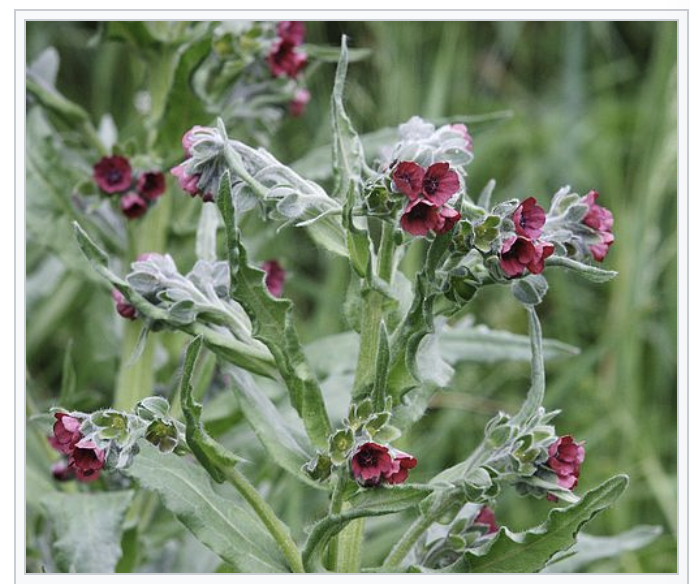
Out at the river this morning, I found a purple flowering plant I’d not seen before. I took out the phone, clicked Google Lens, placed it near the blooms and tapped. A mosaic of pictorial links popped up identifying it as dog’s tongue.

During her Friday Nature Journaling, Ann Marie demonstrated Merlin, the Cornell Ornithology Lab app I’ve had on my phone for over a year but never used.  Identifying real time bird calls with the tap of a finger, it confers powers of an experienced birder upon a complete neophyte.  Hear a bird call, even if faint or mixed with other ambient sounds, touch the button, the source with a name and a picture and a link to Wikipedia appears on the screen.

Yesterday morning, walking back from the river, my attention was arrested by a loud cheep originating in a blue spruce tree in the neighbor’s yard. I took the phone from my right pocket, opened Merlin, and tapped. When the next cheep came, there was American Robin. I showed it to the woman there watering her new sod, who’d never heard of the app. Out from the branches scampered the real robin, and cheeped again, both seen and heard. Next day the woman told me she’d downloaded Merlin and already shared it with several friends.

AI has been a topic of conversation among three generations during our visit. An essay in today’s NY Times by one of AI’s creators, acknowledging the ignorance about how it actually works and where it’s going, claims that AI will soon absorb most jobs in computer science. The author says that instead of learning coding and programming as has been recommended to young people for a generation, all students should return to an emphasis on liberal arts and math, since those fields develop capabilities that still are not available to this exploding new technology.

Counter to that, and also to my imagined literary conversations with Robert MacFarlane celebrating “The Old Ways,” I realized that the extension of senses created by Lens and Merlin heightening my physical and mental experience of nature demonstrates how far Artificial Intelligence has fused with its predecessor and taken up residence in my fingers and brain.

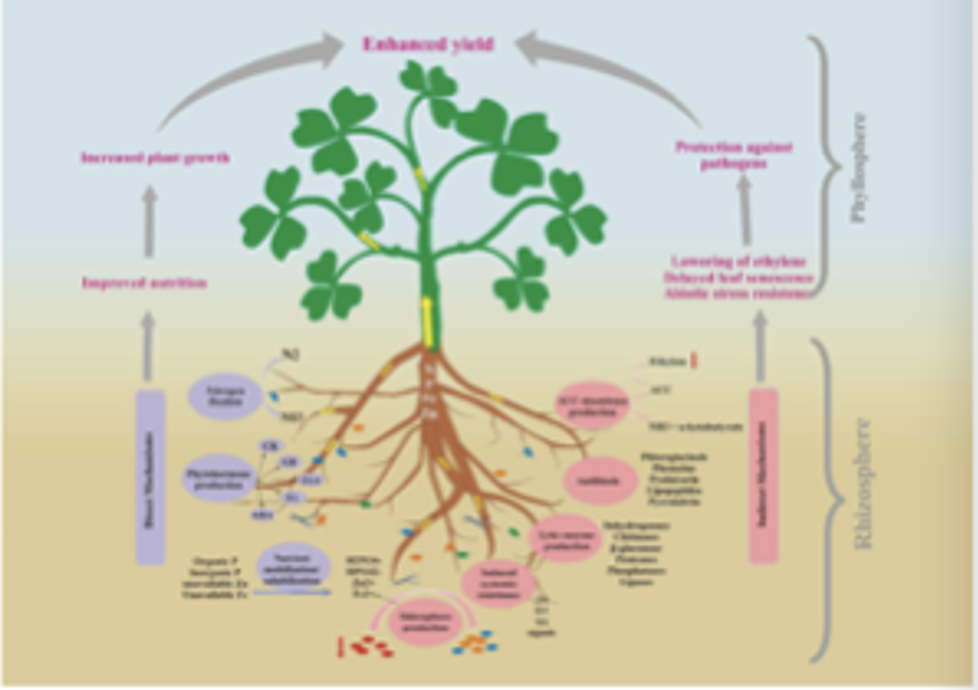
Interbeing, the Rhizosphere and Green Burial

Friday, September 16th, 2022


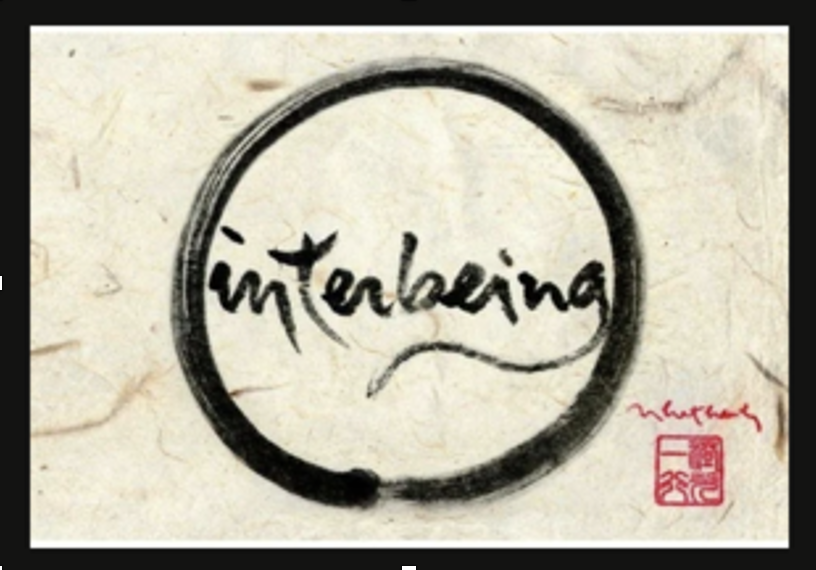
1. Interbeing

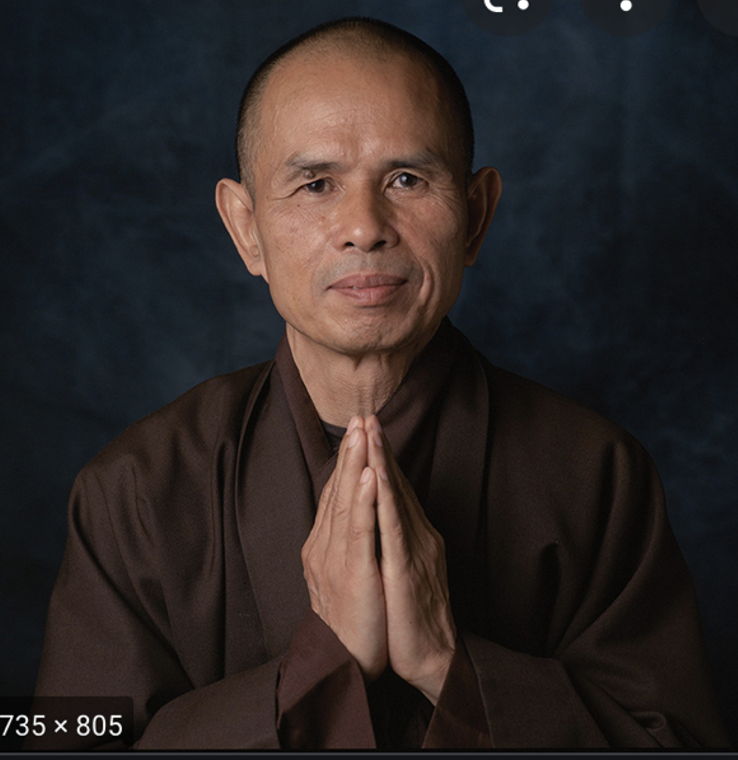
Thich Nhat Hanh coined the word interbeing as a modern label for the traditional doctrine of Dependent Origination or pratityasamutpada, a doctrine taught in all schools of Buddhism.

The term Dependent Origination has two associated but distinct references in different Buddhist traditions.

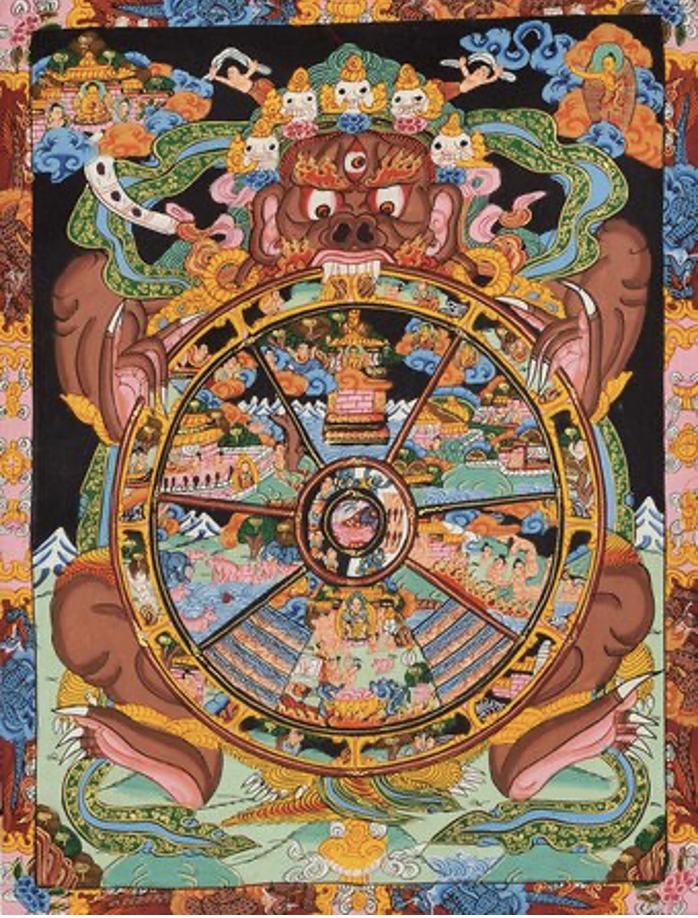
For the Theravada it refers to a chain of causation known as the twelve nidanas that accounts for the descent from nirvana and wholeness through various spiritual and mental states into the material world of illusion, procreation, life and death known as samsara.[1]

In the Mahayana tradition dependent origination has a more general reference signifying “the mutual containment and interpenetration of all phenomena,” and “a cosmos of infinite realms upon realms, mutually containing one another.”[2]

In developing his practical philosophy of “engaged buddhism,” Thich Nhat Hahn draws more on this tradition.

Here is how he arrived at the word Interbeing: (more…)

Dharma and Darwin

Saturday, November 5th, 2016

Introduction

My talk today follows in the tracks of fellow sangha members who’ve given us presentations on the convergence of scientific inquiry and the insights of traditional Buddhist precepts in the area of neurobiology and brain science. I want to explore the ways the theory of evolution that has provided a framework for all biological research during the last 150 years illuminates and is illuminated by my experience of meditation and my rudimentary understanding of Buddhist doctrine. (more…)