Dharma talks

Thoreau’s Buddhism

Monday, June 24th, 2013

A presentation to the White Heron Sangha June 23 2013

Henry David Thoreau was born July 12, 1817 and died at 45 years of age on May 6, 1862. His name is a household word, especially among those of us who grew up during the 1960’s, when his two most famous works, Walden and “Civil Disobedience” offered compelling guides to non-conformity, self-reliance, appreciation of nature, reduction of one’s environmental footprint, opposition to war and injustice and spiritual quest.

Although not widely appreciated during his life, since the late 19th century Thoreau’s works have become classics, admired by later writers, assigned in schools, and the subject of a burgeoning scholarly industry. He produced more than 20 volumes in a dense and quirky literary style, at times pompous and bombastic, at others intimate and funny. (more…)

Beatnik Buddhism in Jack Kerouac’s The Dharma Bums

Monday, October 7th, 2013

A talk to the White Heron Sangha, October 6, 2013

I was introduced to the writings of Jack Kerouac by a trumpet-player friend in high school who gave me a copy of On the Road just after it came out in 1957.  But though I’d already done some hitchhiking around New England and hung out in Greenwich Village on Friday nights, I was put off by the book’s frenetic style and its praise of aimless, restless travel.  Twelve years later, in 1969, I encountered The Dharma Bums, Kerouac’s second most popular book, while selecting works to place on the syllabus of a class at Columbia University I called “Pastoral and Utopia, Visionary Conceptions of the Good Life.” This book’s triumphant celebration of free love, wilderness adventures, bohemian companionship, and Buddhist meditation made a perfect fit.  Forty four years later, while looking for a topic for a Sangha talk to follow up on the one about Thoreau’s Buddhism I offered last Spring, I picked The Dharma Bums in order to consider how my perspective on the novel and its Buddhist themes might have changed in the meantime. (more…)

Leonard Cohen, Buddhist

Monday, March 31st, 2014

An address to the White Heron Sangha, San Luis Obispo CA March 30, 2014

[Note: Song titles link to current YouTube movies of performances]

Like Henry David Thoreau and Jack Kerouac, two prominent North American writers who found in traditional Buddhist texts and practices a validation for their own renegade spiritual explorations, Leonard Cohen is another rebel hero whose life and work can profitably be examined from a Buddhist perspective.

Unlike those two great outdoorsmen who died young, Cohen has never expressed much appreciation for nature, and he’s still at the height of his game at age 80. But he’s often been compared to the irreverent Cold Mountain poets of Ancient China, who Kerouac and his friend Gary Snyder referred to as “dharma bums.”  Like Thoreau and Kerouac Cohen combines longing for transcendance with earthy iconoclasm, and always writes about himself. Also, like Thoreau at Walden Pond and Kerouac on Desolation Peak, Cohen spent an important period of his life in monastic isolation–6500 feet up in the San Gabriel Mountains above Los Angeles, where studying sutras and meditation practice offered refuge from a secular world of distractions and a source of creative inspiration. (more…)

In the Swim: Musings on Meditation under Water

Monday, January 26th, 2015

1. Wendy’s “Water”

On May 24 last year, I went to the Steynberg gallery on Monterey St. to attend a concert by Shadowlands, a new local musical group consisting of Bob and Wendy Liepman and their collaborators Mark Davis and Karolyn Hausted. They were introducing songs they’d written in preparation for recording them on a CD to be released early in 2015. I’d made a contribution to their crowdfunding campaign on Kickstarter because I admired Wendy’s dedication to feeding the Homeless and because I enjoyed her earlier songs, many of which seemed to me more like religious hymns than folk tunes.

Their first piece was the album’s title track, “Shadowlands,” a dark evocation of the mental condition we usually call depression, but which in earlier times was known as melancholia”a state associated not only with illness but also with deep thought, fertile creativity and spiritual awakening. (more…)

A Trip to Cloud Mountain

Thursday, December 3rd, 2015

An address to the White Heron Sangha, November 29 2015

Four years ago, at a series of workshops conducted at Crow’s End in San Luis Obispo by White Heron Sangha members, June Kramer and Nancy Hilyard, I was introduced to the technique of concentration meditation, as adapted from the teachings of the Burmese monk, Pa Auk Sayadaw by Tina Rasmussen and Stephen Snyder. Concentration, or Samatha meditation is claimed to have been favored by Buddha himself as an approach to elevated states of consciousness known as the Jhanas, which are precursors to true insight and eventually enlightenment. This form of meditation was long considered an esoteric discipline reserved for monks and initiates, but in recent years it has become accepted and popularized for lay practioners by a number of Buddhist teachers. (more…)

Dharma and Darwin

Saturday, November 5th, 2016

Introduction

My talk today follows in the tracks of fellow sangha members who’ve given us presentations on the convergence of scientific inquiry and the insights of traditional Buddhist precepts in the area of neurobiology and brain science. I want to explore the ways the theory of evolution that has provided a framework for all biological research during the last 150 years illuminates and is illuminated by my experience of meditation and my rudimentary understanding of Buddhist doctrine. (more…)

The Better End? Euthanasia and Buddhist Values

Sunday, February 4th, 2018

A talk to the White Heron Sangha
February 3 2018

As a child, I grew up in a small family consisting of my mother, Lise, my father, Henry, and my grandmother, Elise, all refugees from Hitler’s Germany who arrived in New York in 1938. Elise and I adored one another all through my childhood and youth. Though she spoke little English, she was vibrant and irreverent and eloquent in expression and gesture.  She was also adored by the customers for whom she worked as a seamstress and to whose homes all over the City she travelled by subway until well into her eighties.

After my first year in graduate school in California, I returned to New York for the summer of 1964, spent nights in Greenwich Village with a friend and days in upper Manhattan studying for my Latin qualifying exams at Elise’s small apartment. She’d make me sumptuous hot lunches and watch admiringly as I practiced my conjugations.

A couple of months after I returned to California my parents wrote me that Elise had suffered a massive stroke that paralyzed her left side and left her unable to walk or speak. They had no choice but to place her in a nursing home and expected it would be over soon. But by the time I came back for a visit at Christmas, it wasn’t. (more…)

The Negative Space of Buddhism in Michael Pollan’s book, How to Change Your Mind: What the New Science of Psychedelics Teaches Us About Consciousness, Dying, Addiction, Depression, and Transcendence

Monday, August 27th, 2018

A talk to the White Heron Sangha, Sunday August 26, 2018

1.

One afternoon last May on my way home from working at City Farm San Luis Obispo, the car radio came on with my favorite program, Science Friday. I was surprised to hear the genial voice of Michael Pollan speaking with its host Ira Flaytow. Before I could could pick up the thread of the conversation, out popped the words psilocybin, LSD and mescaline. So that’s what he’s up to now, I thought.

Ever since I heard Pollan read The Omnivore’s Dilemma (2007) during a long drive to Canada ten years ago, he’s been one of my favorite writers and most informative teachers.  That book’s comprehensive reflections on the history, biology, economics, politics, and morality of America’s food system altered my tastes, motivated me to design a required general education course in argumentation at Cal Poly around its subject, and inspired me to spend a good part of my retired working life on our local urban farm. The broad impact of his work was demonstrated by a local incident that received national notoriety.  When Pollan was invited to give a public lecture here by Hunter Francis, the director of Poly’s center for sustainable agriculture, large agribusiness funders pressured the university administration to deny him an opportunity to speak unless he was part of a panel that included a professor of Beef Science from Kansas.

That book and two later short ones”In Defense of Food and Food Rules”mainstreamed attitudes about industrial agriculture, factory farming of animals, and healthy eating that had been elements of the counterculture of the sixties. As effective manifestos for change, they contributed to the revival of organic and local food movements. It struck me as fitting that he was now addressing another suppressed strain of that culture of my youth.

The conversation I tuned into was promoting a new book by Pollan called How to Change Your Mind: What the New Science of Psychedelics Teaches Us About Consciousness, Dying, Addiction, Depression, and Transcendence. Flaytow was dwelling on the opening theme of the subtitle”the New Science of Psychedelics.  What turned me on, however, was its coupling of Science with Consciousness and Transcendance incorporated into a “how-to” book promising doubled satisfaction, with a pun on “change your mind.” (more…)

Metta and Peta: Buddhist reflections on humans’ relations with other animals

Monday, September 16th, 2019

An address to the White Heron Sangha, September 15, 2019

A variety of encounters with non-human animals over the past year have opened new areas of experience for me and left me mulling some troubling questions. They’ve led to conversations with family members, friends and co-workers, to reflections on past experiences, to scientific research and to guidance from Buddhist authorities.

One area of experience is my relationship with our two year old family dog, Sophie. Another is a series of cardiovascular incidents which have motivated  me to refrain from eating animals for medical reasons. And another is my work at City Farm SLO, where the production of organic vegetables by small farmers and students is subject to the ravages of gophers and ground squirrels.

Sophie came into my life a year after the traumatic death of our previous family dog, a Yorkshire Terrier who had bonded closely with my wife Jan and our two live-in grandchildren but with whom my relationship was distant.  By the time that Jan acquired Sophie, we were empty nesters, and I was a goner.

1 sophie

(more…)

Buddhist Shakespeare

Monday, February 6th, 2023

An Address to the White Heron Sangha
February 5, 2023

Good evening fellow White Heron Sangha members and visitors. Thank you for once again inviting me to give a Sunday night Dharma Talk.In some previous ones I’ve explored ways that American literary writers I admire, specifically, Henry David Thoreau, Jack Kerouac and Leonard Cohen, were influenced by Buddhist texts and incorporated them into their own unorthodox experiences and writings.

Tonight, I want to examine ways that the works of William Shakespeare connect with my understanding of Buddhist principles. There’s no evidence that this sixteenth and seventeenth century British writer had any exposure to Buddhist teachings. Nevertheless, I find in his works many ideas in common with what’s called “the Dharma,” identifiable with what Joseph Campbell called The Perennial Philosophy.

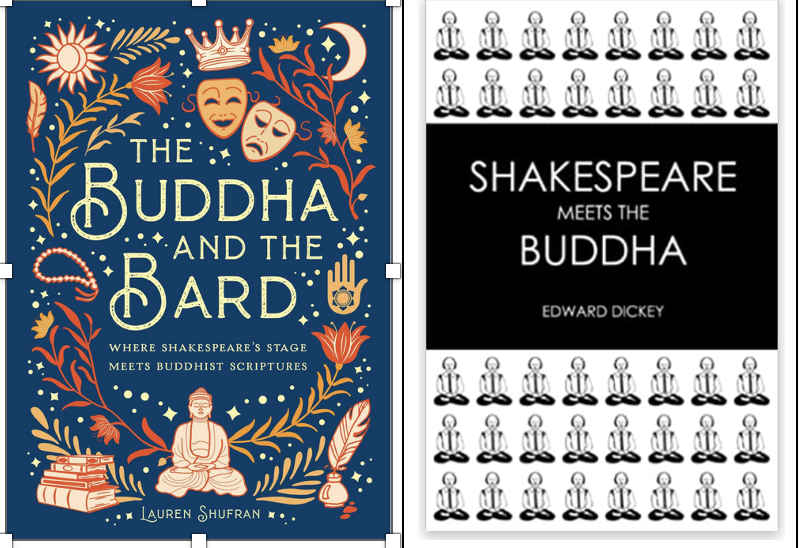
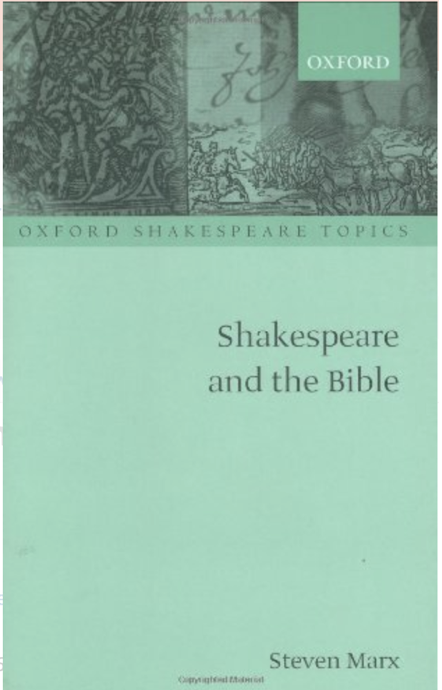
In the immense body of Shakespeare literary criticism since 1948, I’ve found only two items, both quite recent, that treat this subject: The Buddha and the Bard by Lauren Shufran (May 2022) and Shakespeare Meets the Buddha by Edward Dickey (October 2021).
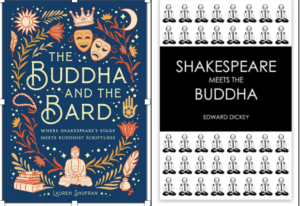
My own interest in the subject arises from an academic career that included teaching, directing and writing about Shakespeare—including a book which argued that Shakespeare read the Bible as literature and construed its varied depictions of God as personifications of the theatrical roles of author, director and actor.

In this talk I will align six Buddhist doctrines with recurrent Shakespearean themes

1 Emptiness and Form, Prajnaparamita –The World as Stage
2 The First Noble Truth, Dukkha–Tragic Suffering
3 Dependent Co-arising, Ptratityasamutpada–Motivation and Causality
4 Impermanence, Anicca–Time
5 Delusion, Avidya–Error
6 No-self, Anatta–The Person as Actor

Separating, labelling and numbering these ideas is somewhat misleading, since they often overlap or blend. However, this kind of schematic analysis is typical both in Buddhist texts and in literary criticism because it opens new ways of understanding. (more…)