Portugal Day 9
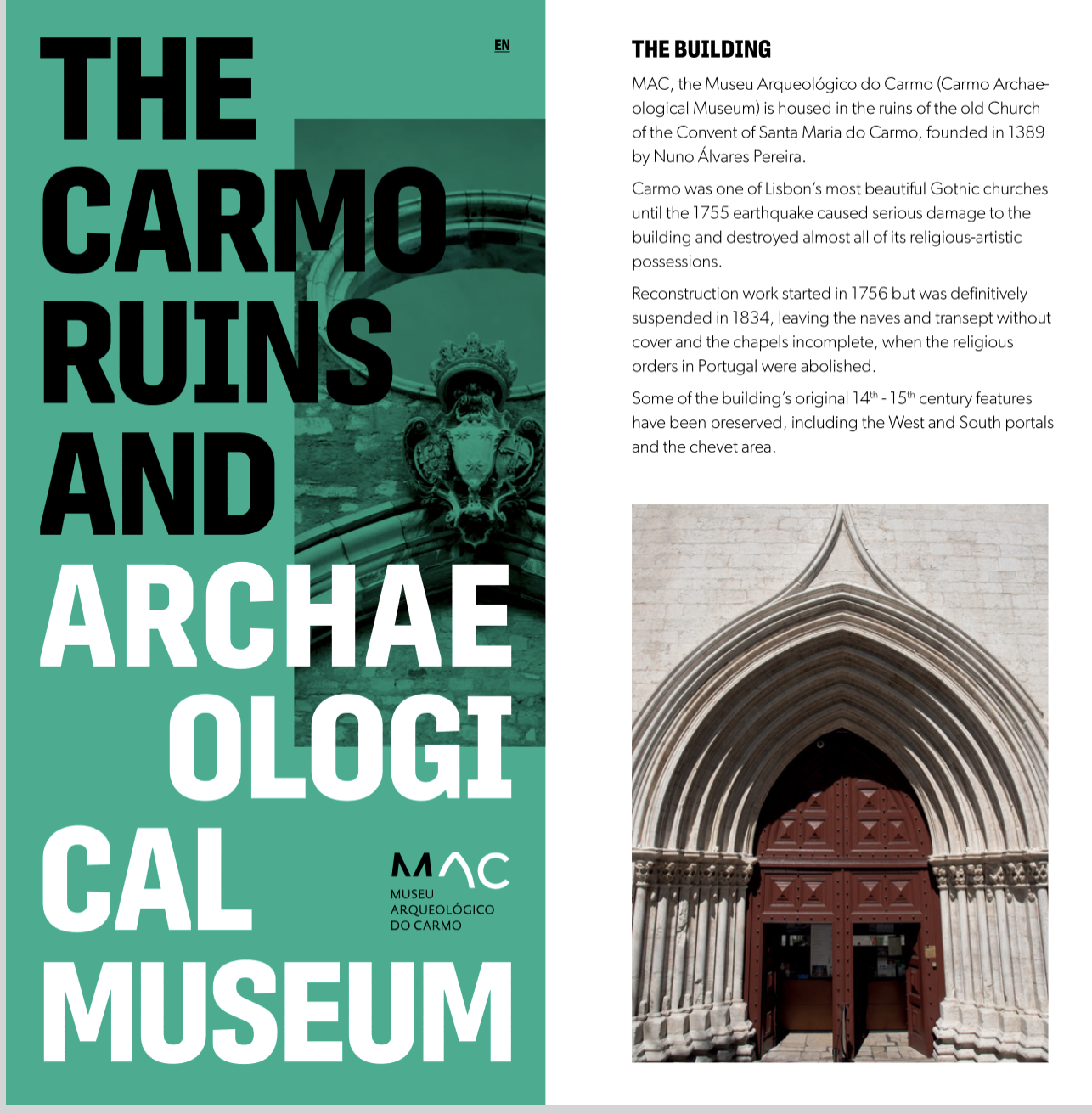
I’d been awakened by a phone call from California at midnight from a co-worker who didnt realize I was in Portugal. We were able to resolve some issues about the progress of a Grant Land Improvement Project we were working on, but I had trouble getting back to sleep. Still a little disoriented in the morning, I was glad to accept Jan’s suggestion that we visit the Archaeological museum in the Baixa district. The square in front was filled with excited folk this beautiful spring morning, and after paying the reduced senior price we entered a remarkable space—the roofless ruin of an old cathedral wrecked in the never-forgotten 1755 earthquake and now devoted to modern art and old artifacts gathered by the colonists and archived by the Portuguese archaeological society.
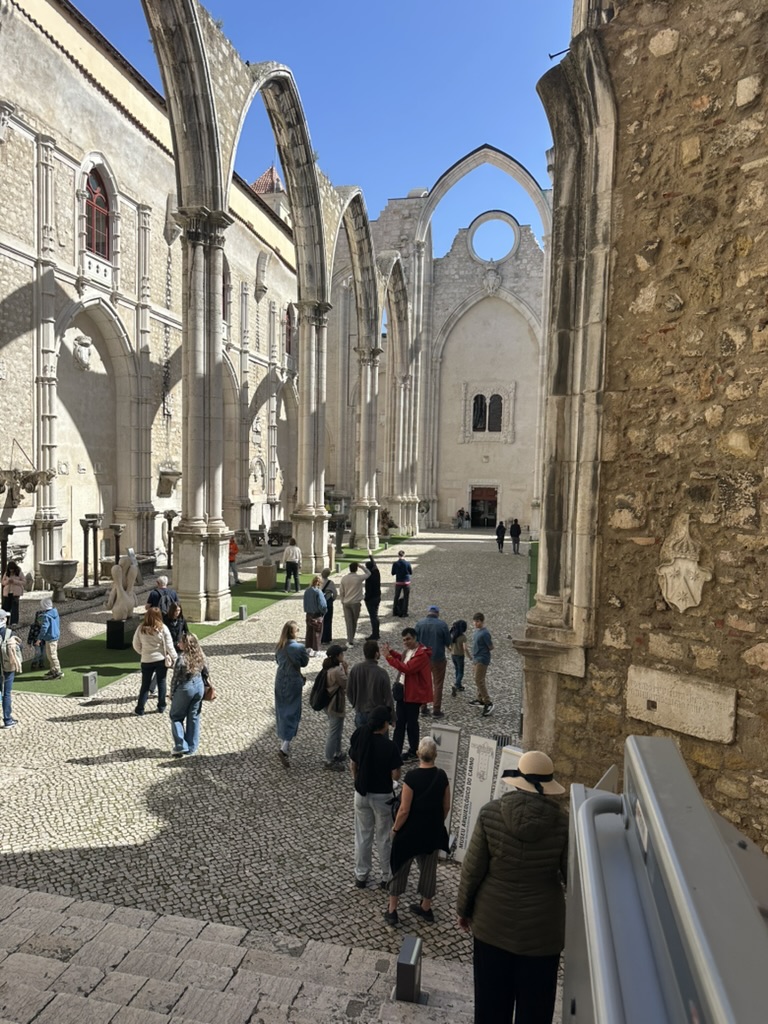
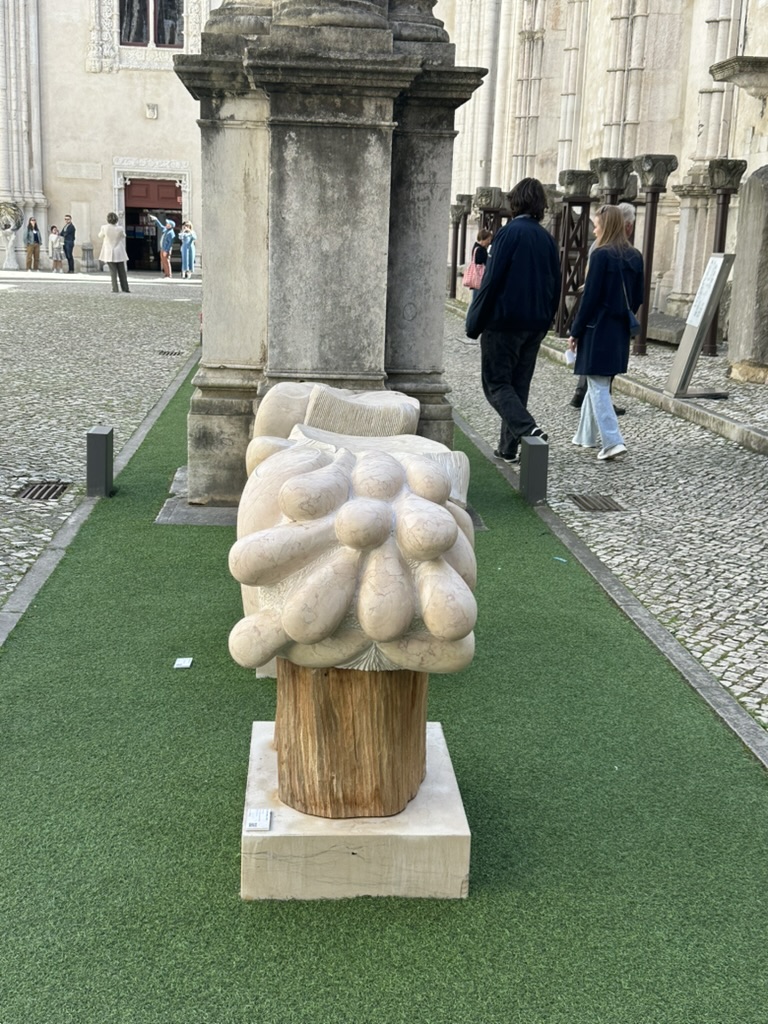
Afterwards we walked the long way back to the hotel, passing through crowded Rossio and Martim Muniz plazas
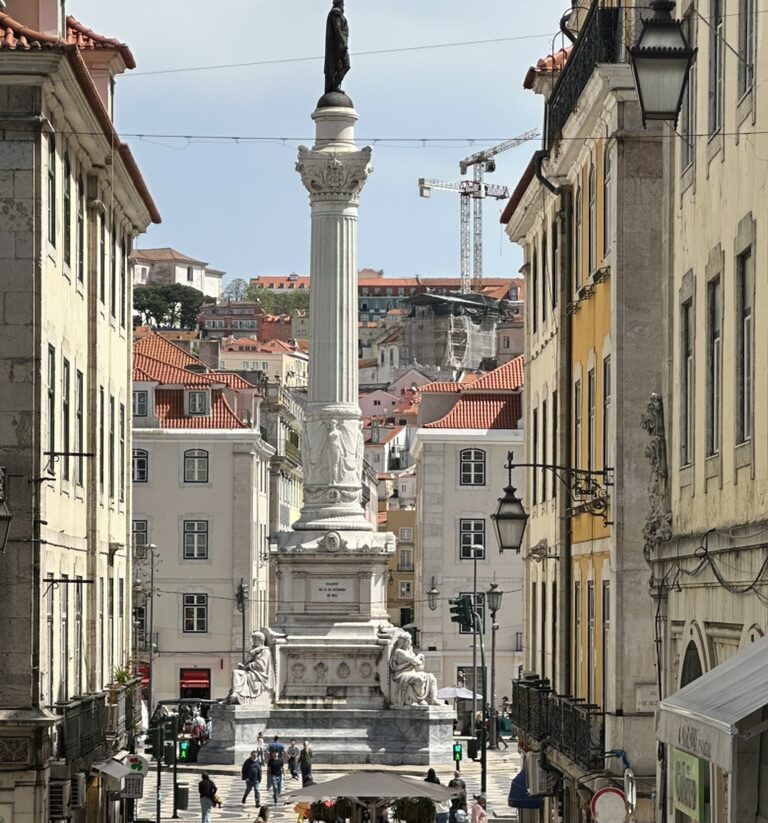
and arriving for lunch at the peaceful outdoor cafe outside 1908 Lisboa and afternoon naps.
Jan proposed a new excursion–to the Water Museum located within walking distance of the 28E tram route.
We each have interests in water works–hers for decades on the Council in making the City drought-proof by developing multiple sources–mine the pending pilot project at City Farm for aquifer recharge on farm land.
The Water Museum is housed in the former Lisbon pumping station where a system of aqueducts, some originally built by the Romans, converged on a facility housing coal fired steam pumps for distribution through the City’s hilly precincts.
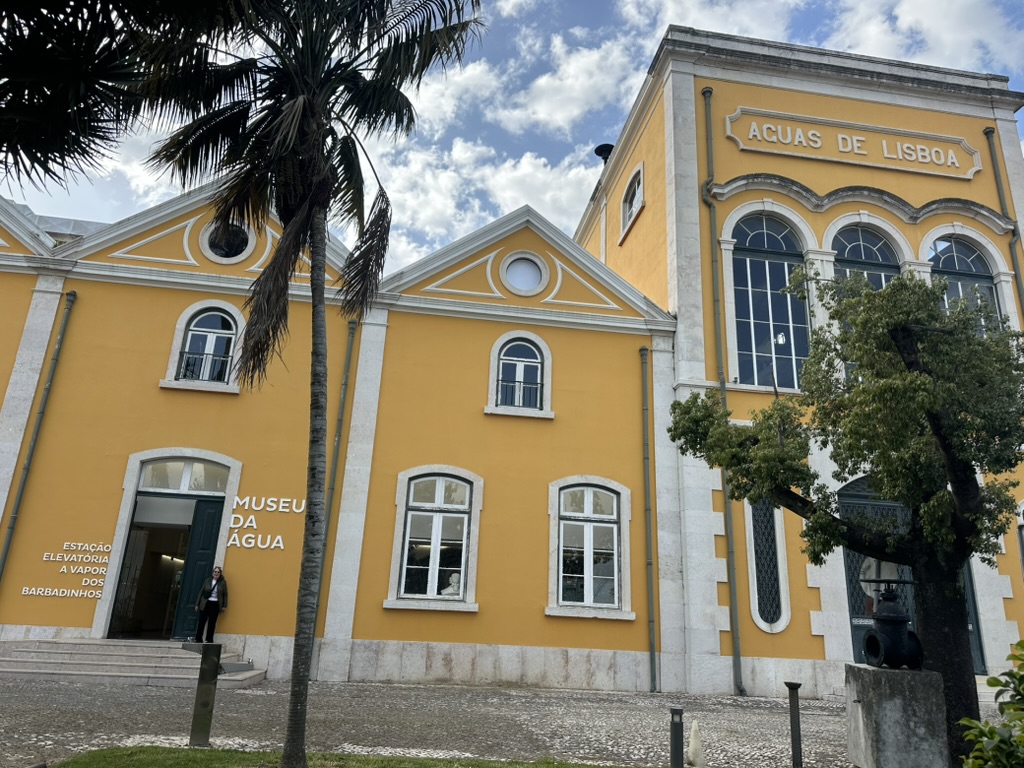
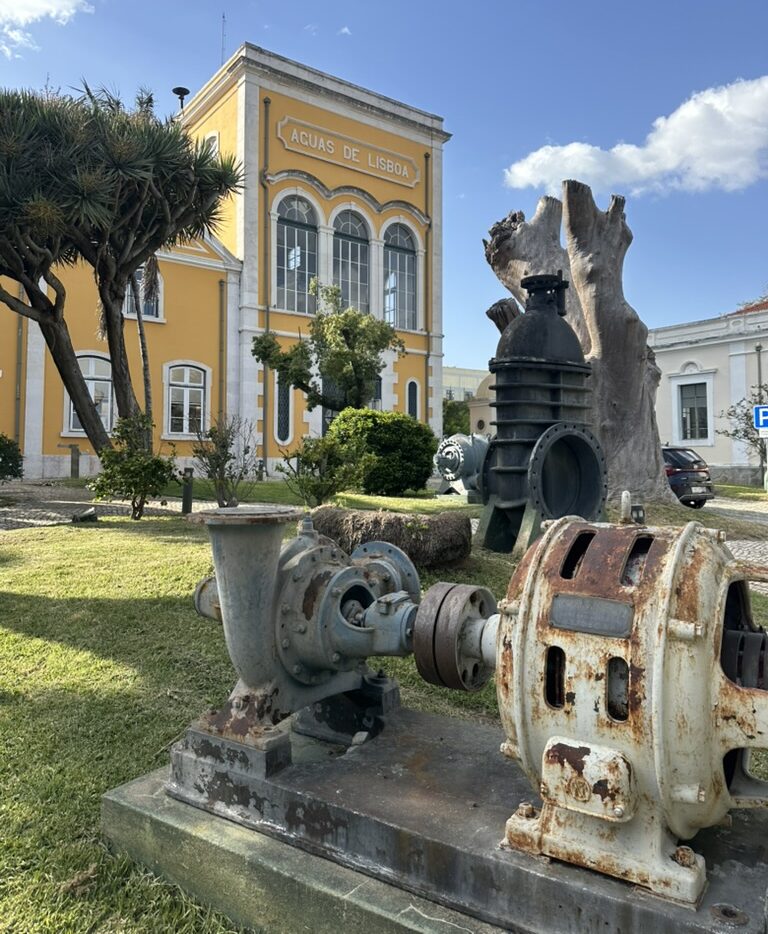
It was near closing time and no one but the attendant was there.
We entered its modern exhibit hall fashioned in blue and white wavy translucent shapes and mirrored ceilings to create the sensation of being at the bottom of a cool clean pool.
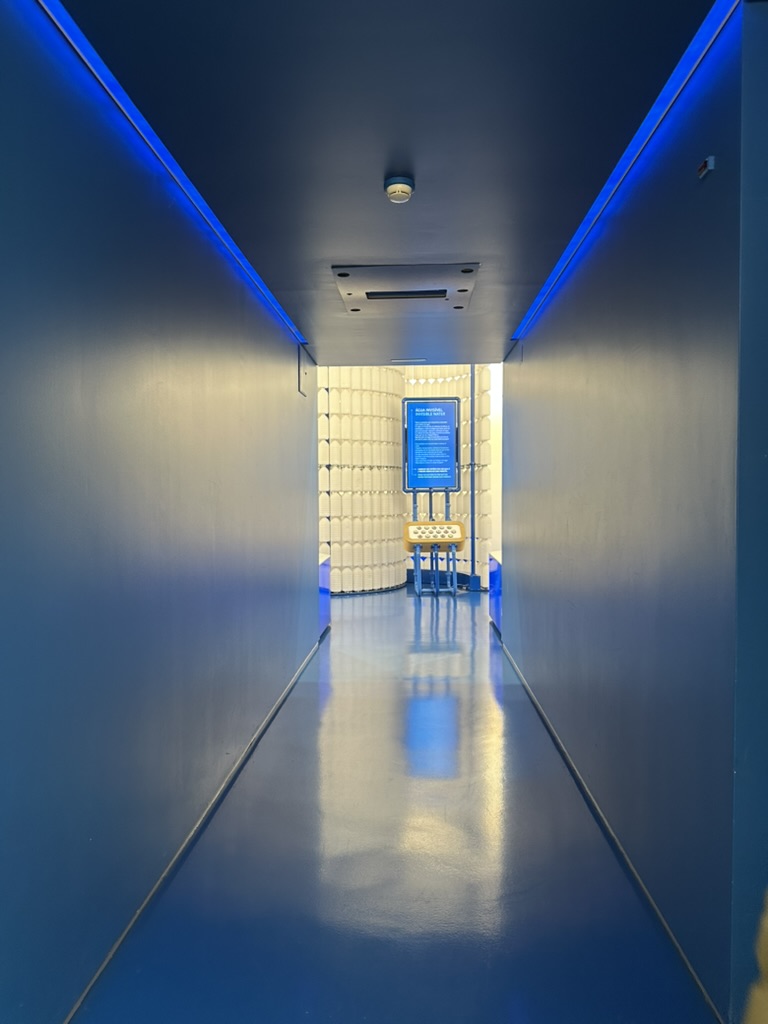
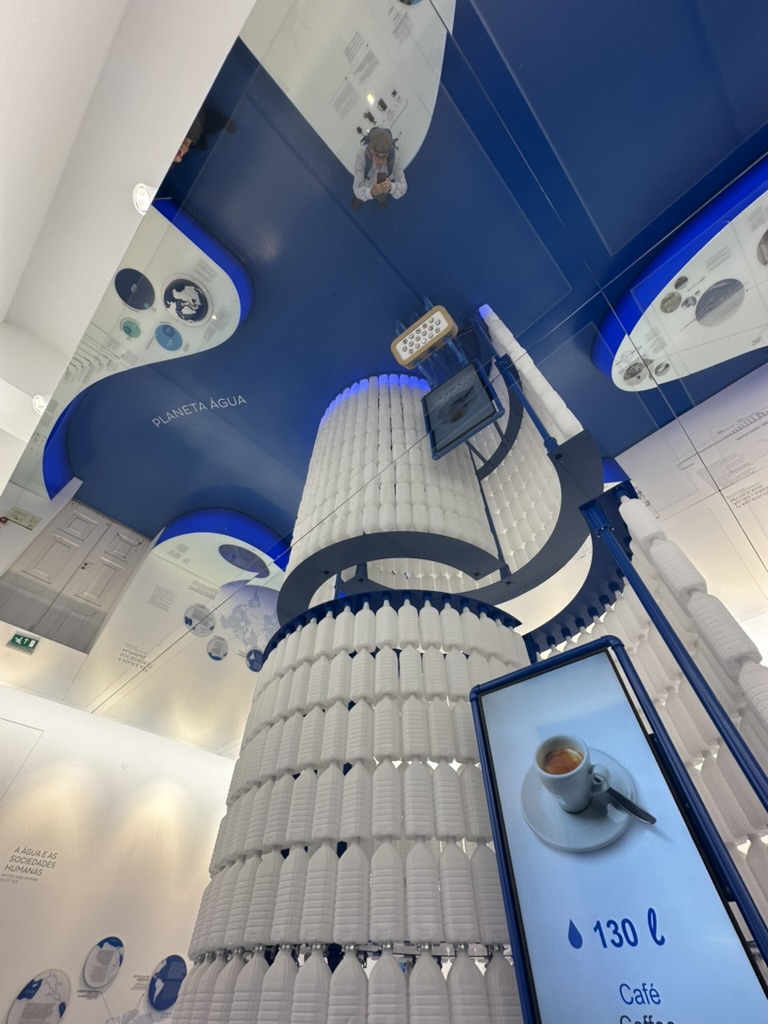
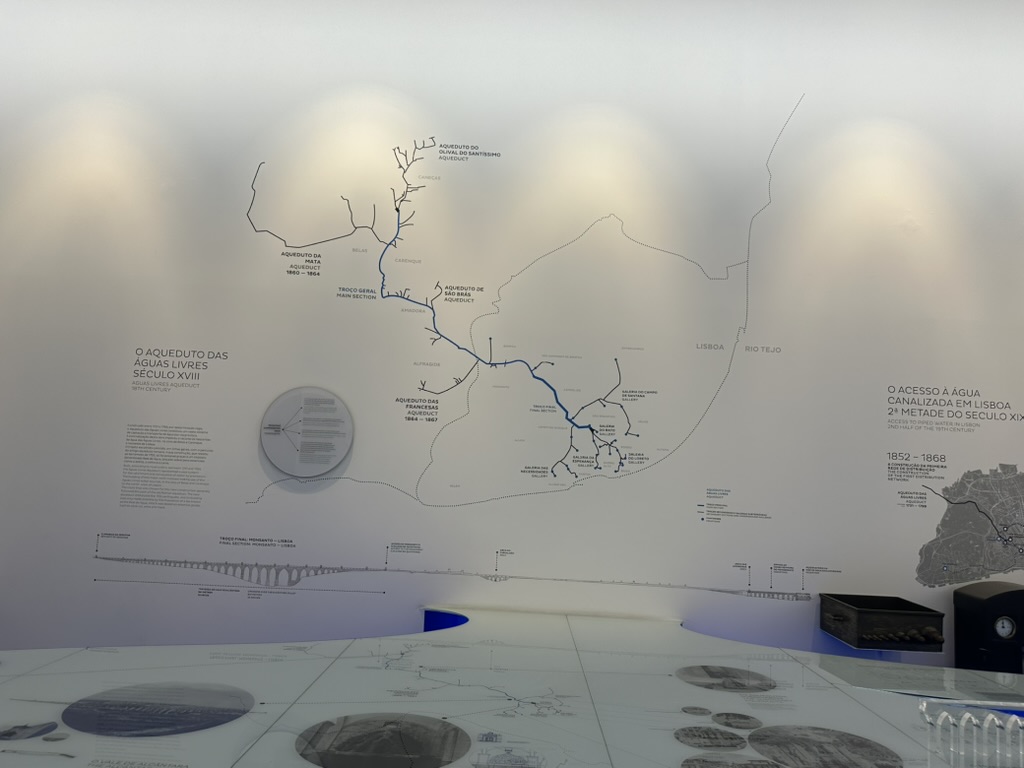
That led to the dramatically contrasting spaces of the original 19th century iron and brick pumping station illuminated by reflected light from the estuary below streaming through high windows.
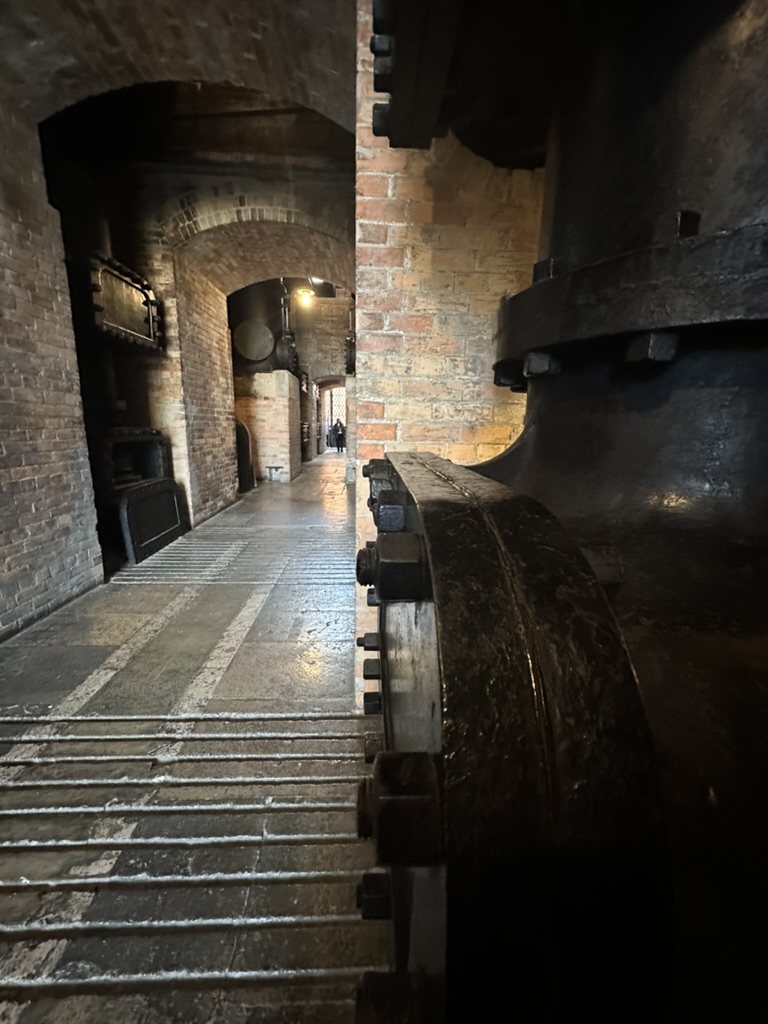
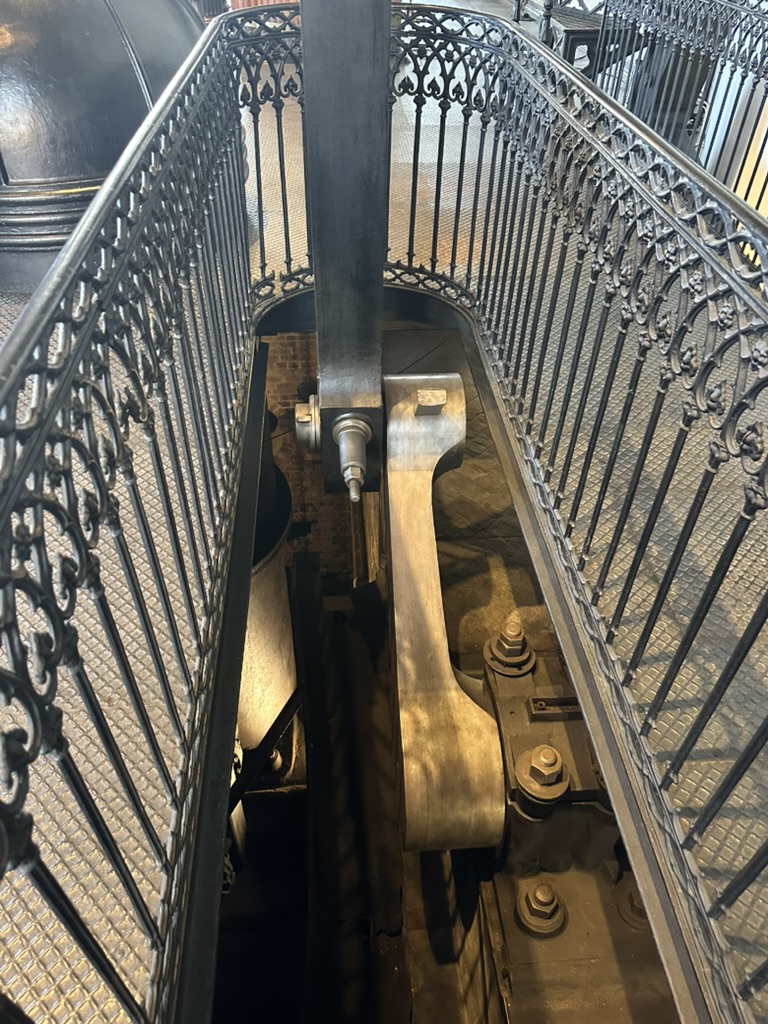
the ornamented machinery an admirable nineteenth century blend of technology and art.
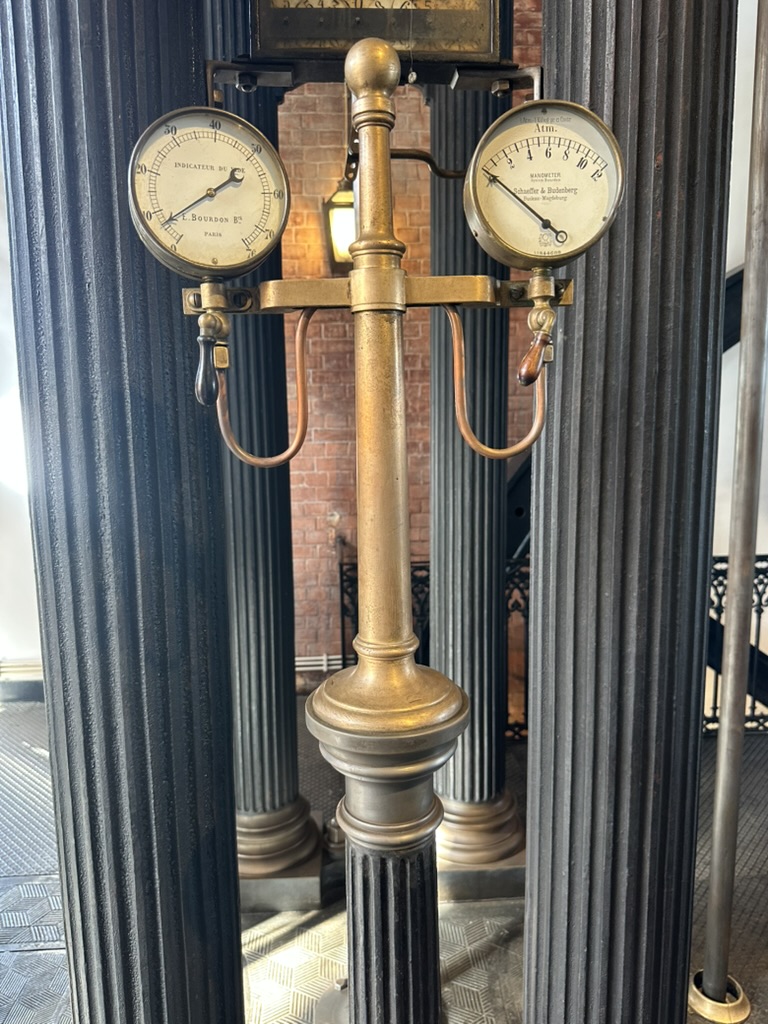
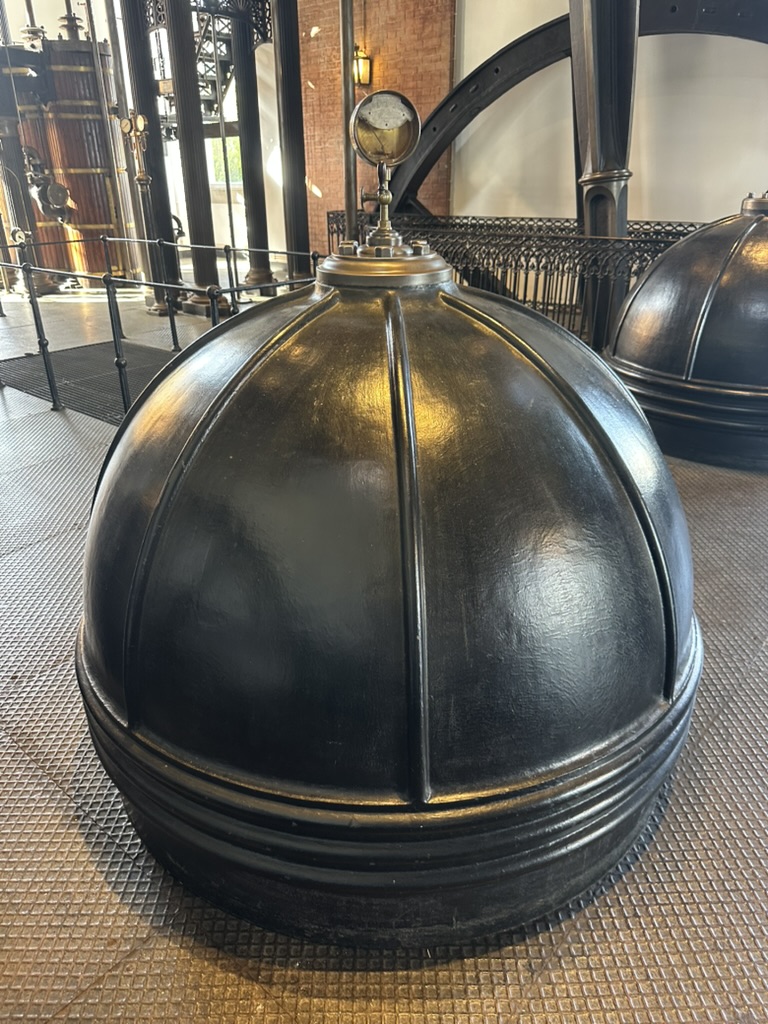
We searched Google maps for a restaurant in this modest residential neighborhood and located one called “Between Two Ports,” a long way uphill.
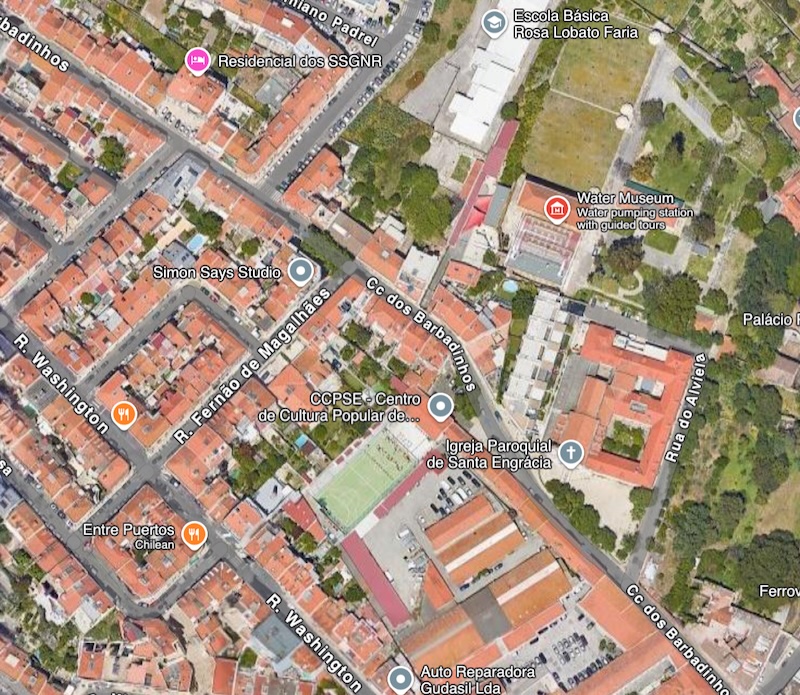
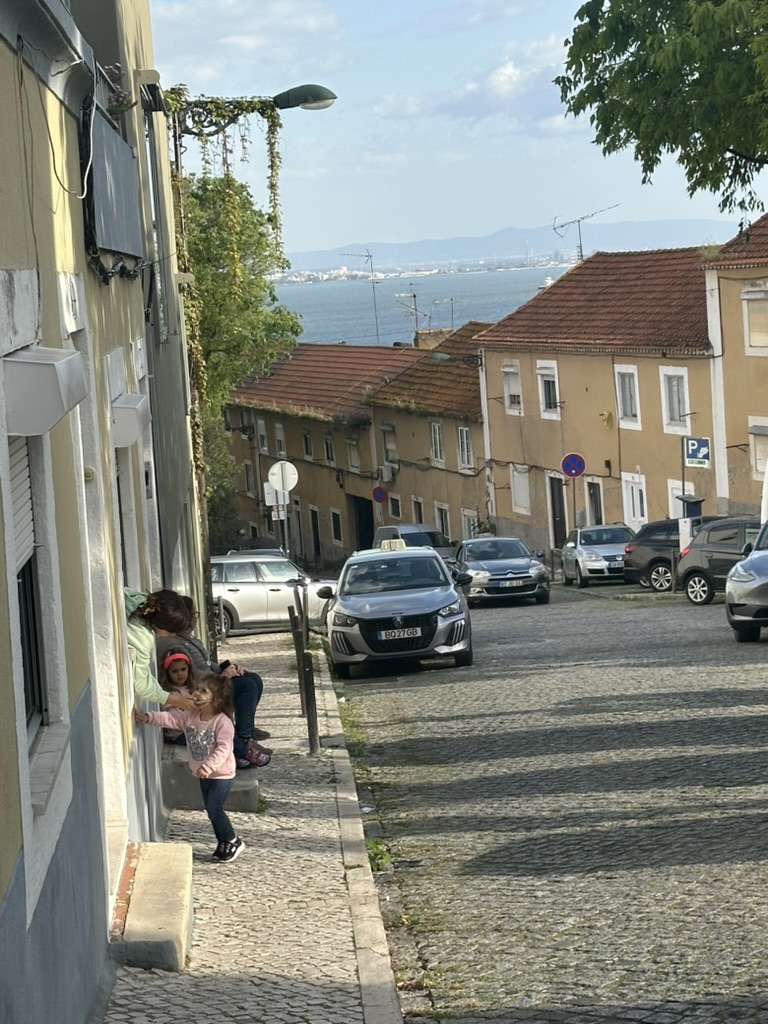
At a quiet street corner with the Tagus in the distance we saw the place
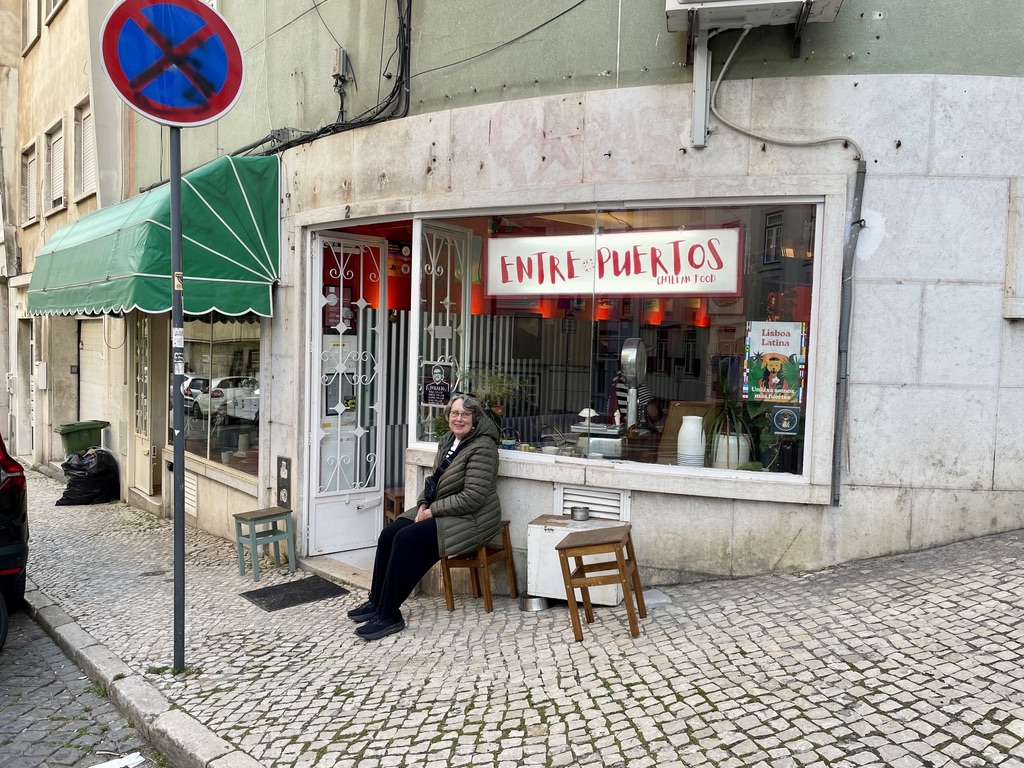
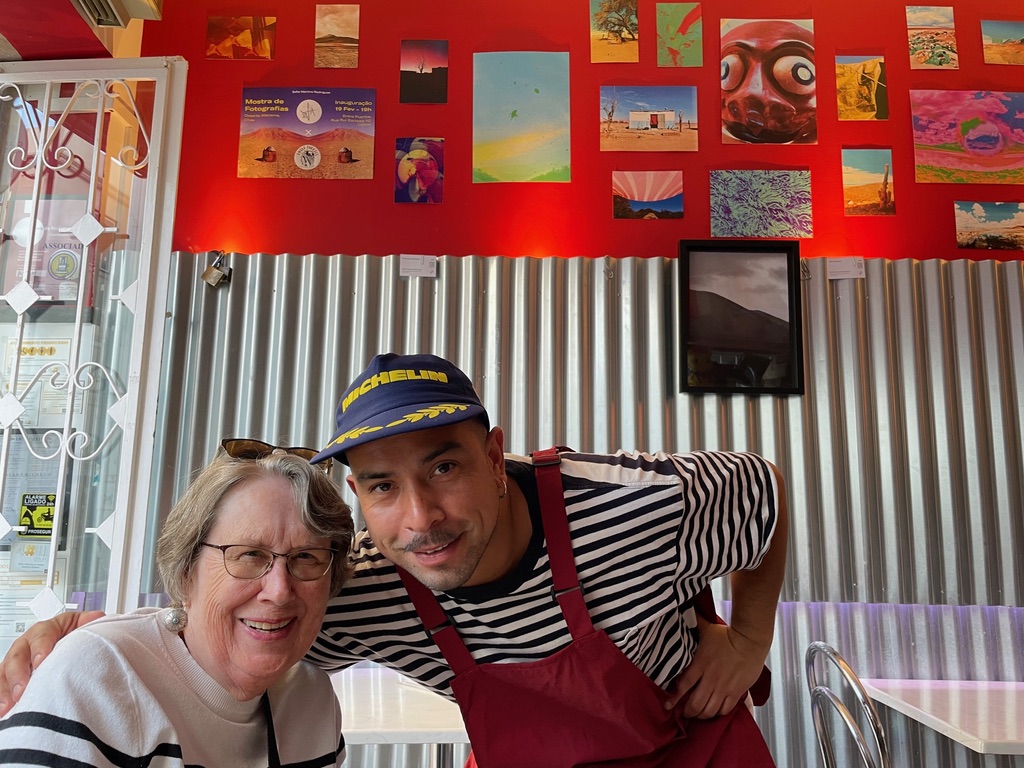
The compact space inside included a gallery of art photos of Chilean desert landscapes. A young couple from Copenhagen sat at the close by table and we chatted about our experiences there last summer.
Enrique, the proprietor/cook/server/designer, brought us Portuguese fish-fingers and his Chilean dish of corn and beef stew