Portugal 2026

Portugal Day 1

Monday, April 27th, 2026

Our first Uber ride ever was at 4:00 am to SLO airport, driven by the co-owner of a Korean restaurant in Atascadero taking on an extra job to help his daughter pay for medical school.  Jan immediately learned it was the restaurant where our family friend Emma worked before going to University in Hawaii.

Also for the first time, we traveled Economy Plus rather than straight Economy. At 83 and 80, for the 24 hour flight we chose comfort over price.

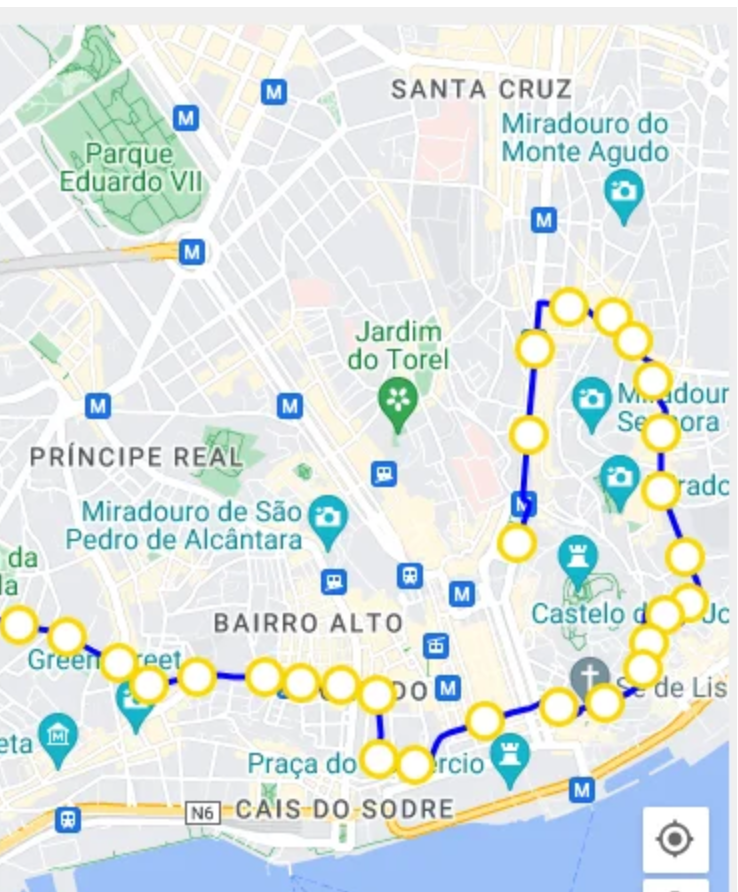
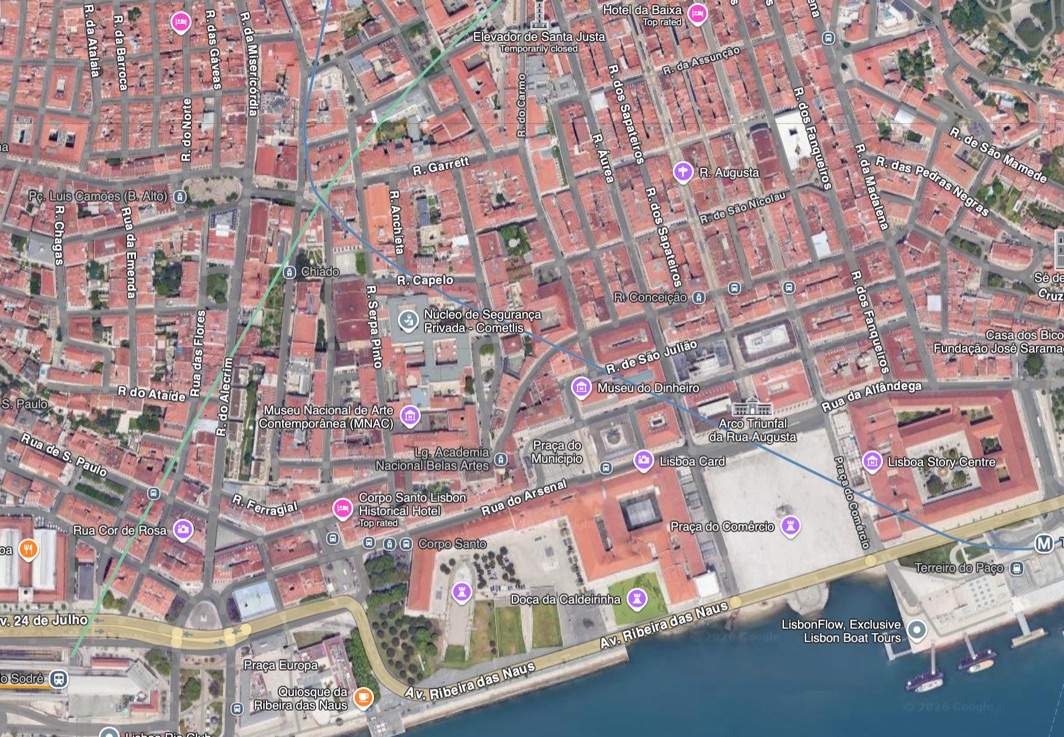
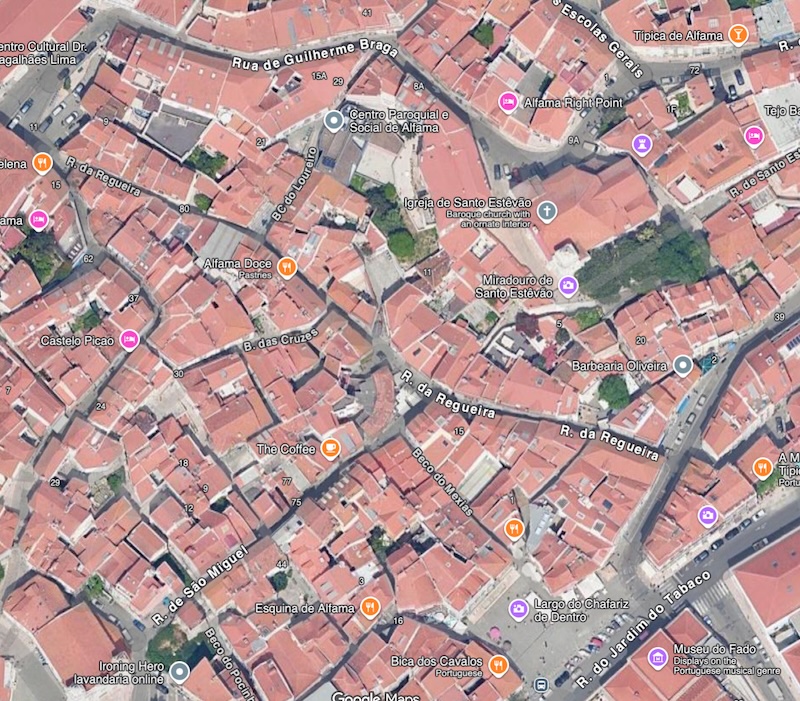
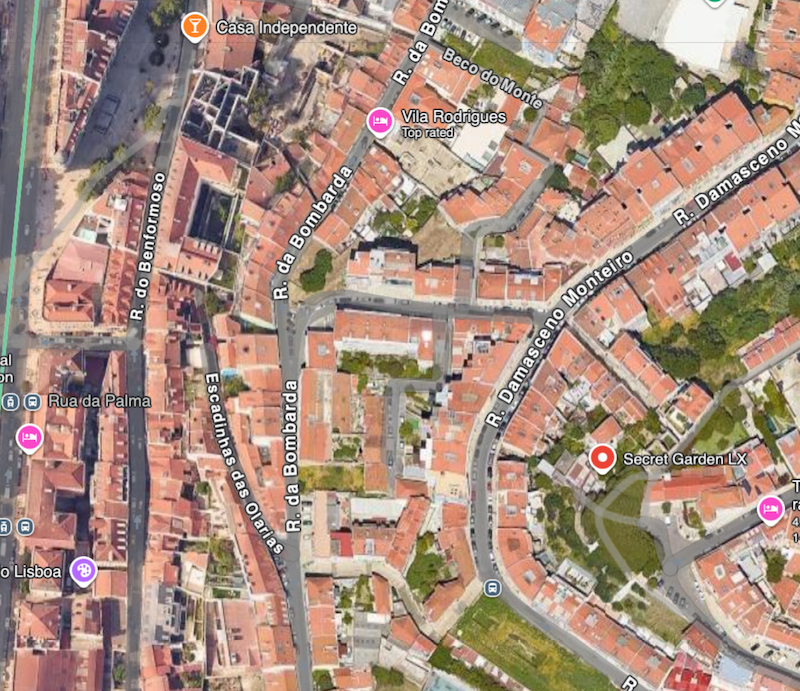
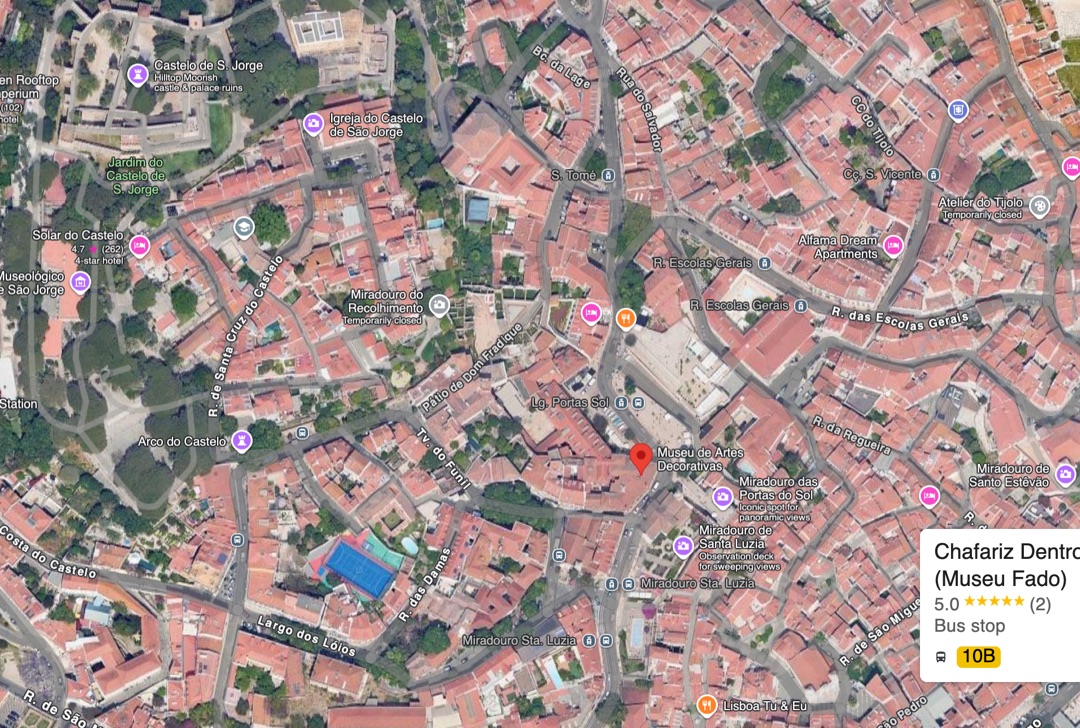
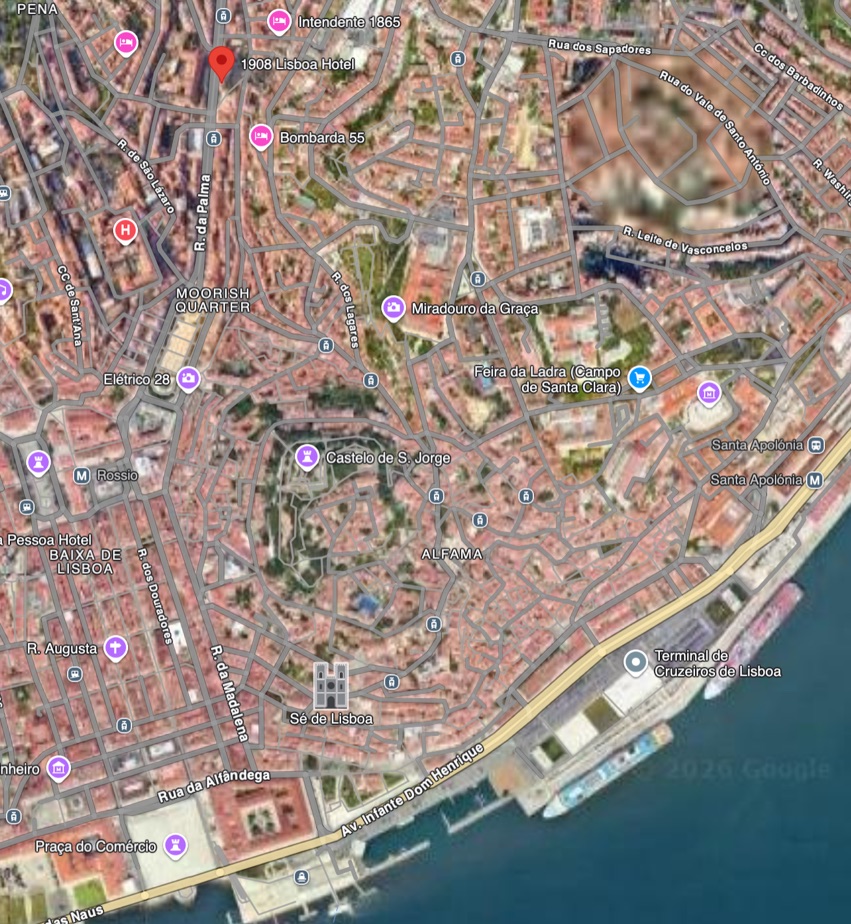
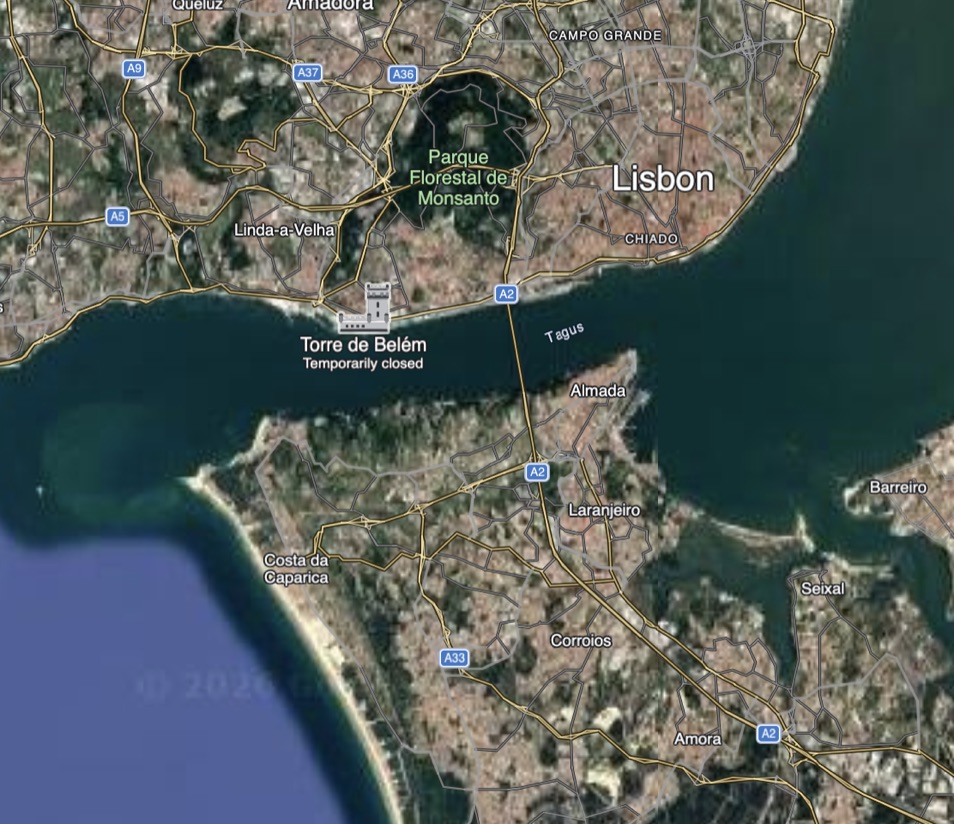
While reading about Lisbon in preparation for the trip I studied the google map to learn the lay of the land and the location of the hotel we’d be staying in for nine days. But I couldnt get oriented.
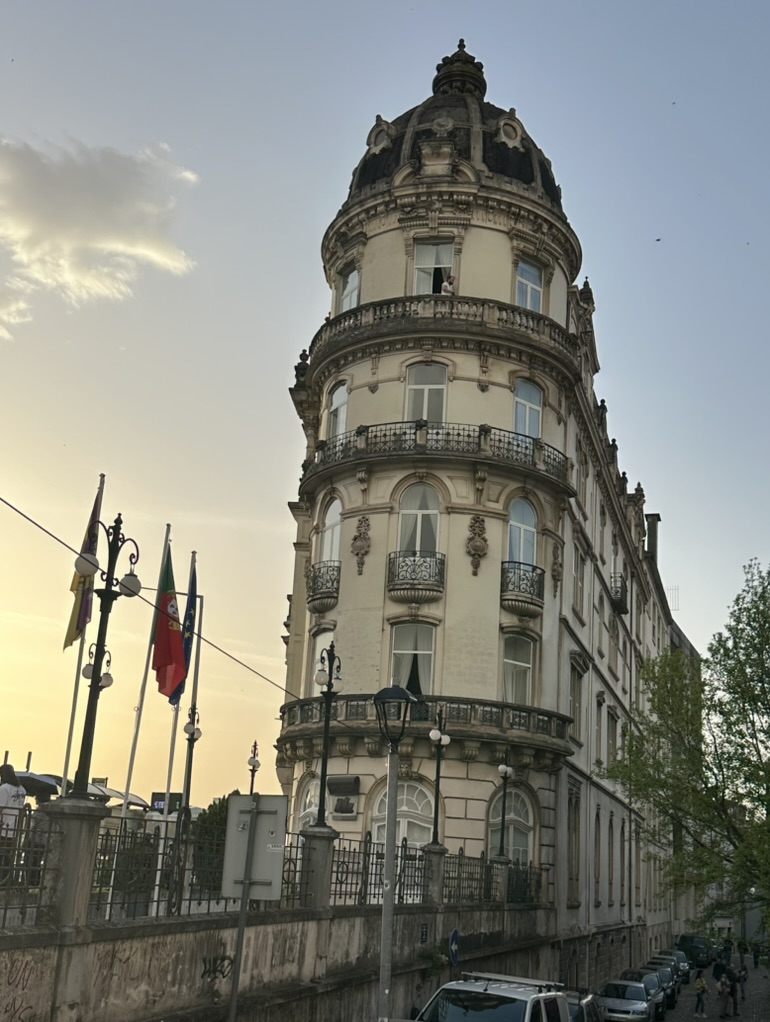
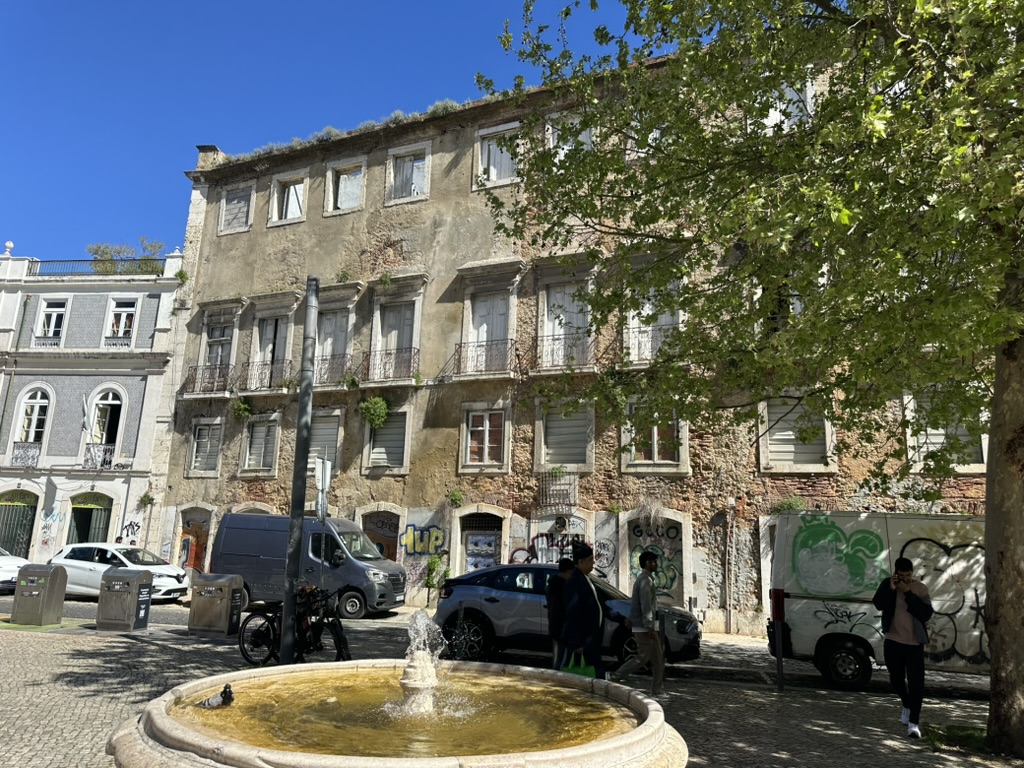
We were drawn to the Lisboa 1908 by articles on the web praising it as an architectural masterpiece of Beaux Art/Art Nouveau style built for luxury apartments, later, along with its neighborhood, falling into decay and then reconstructed  in 2015 with artistic and architectural flair, a center of the district’s new revitalization.

IMG_0186

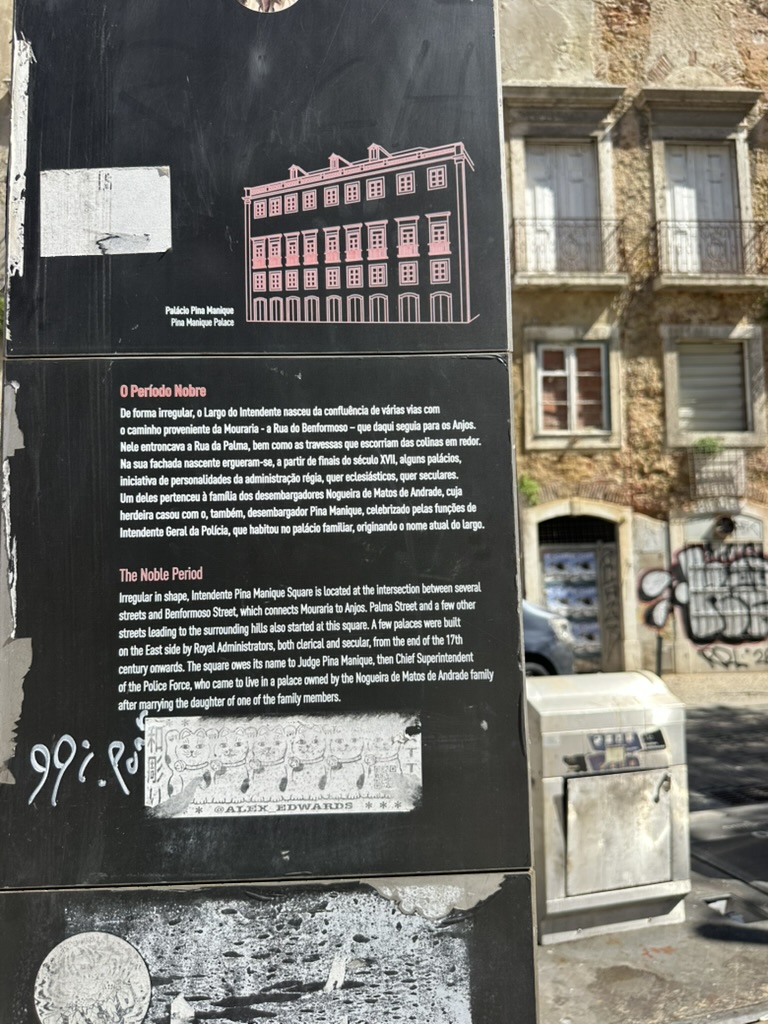
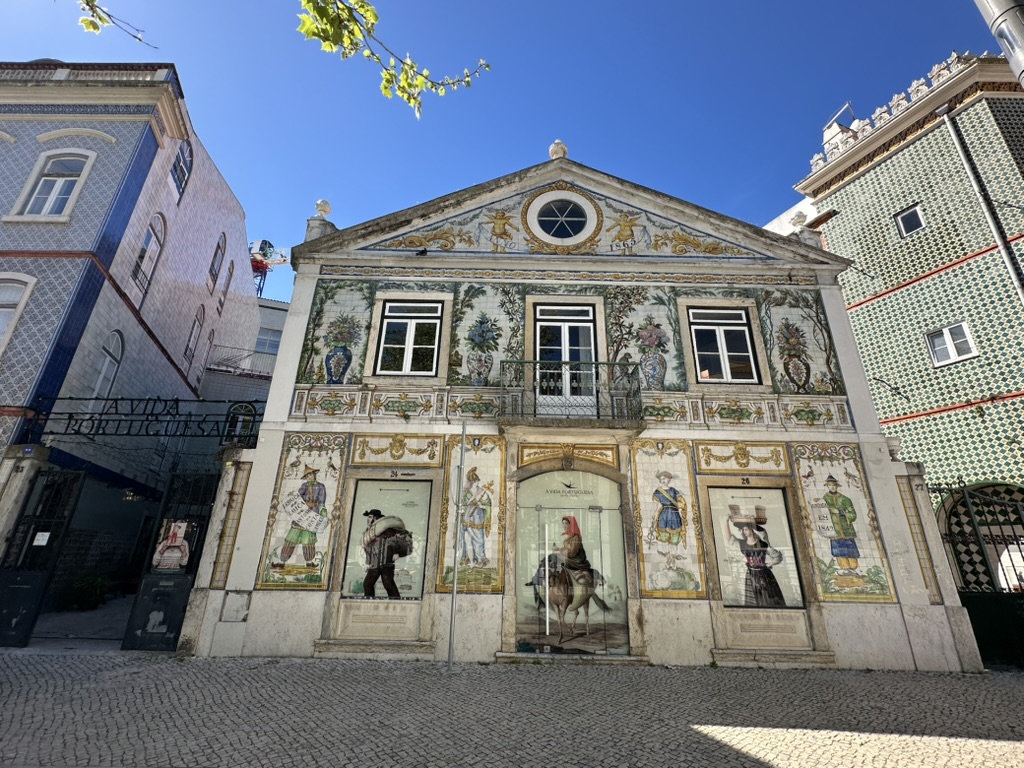
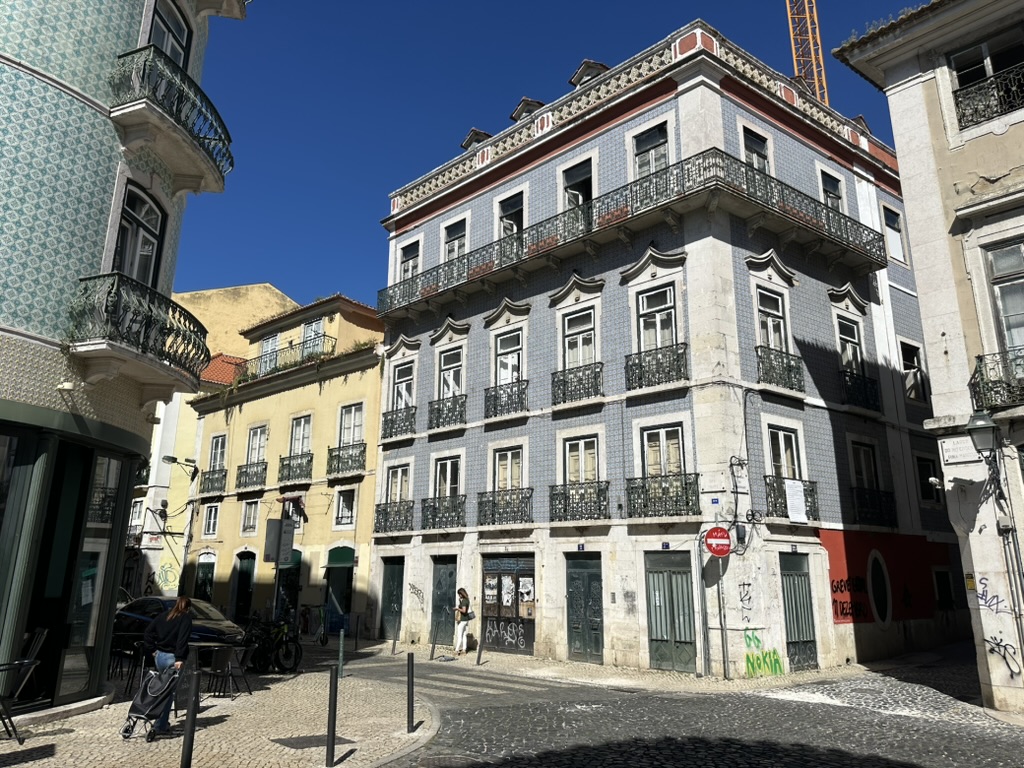
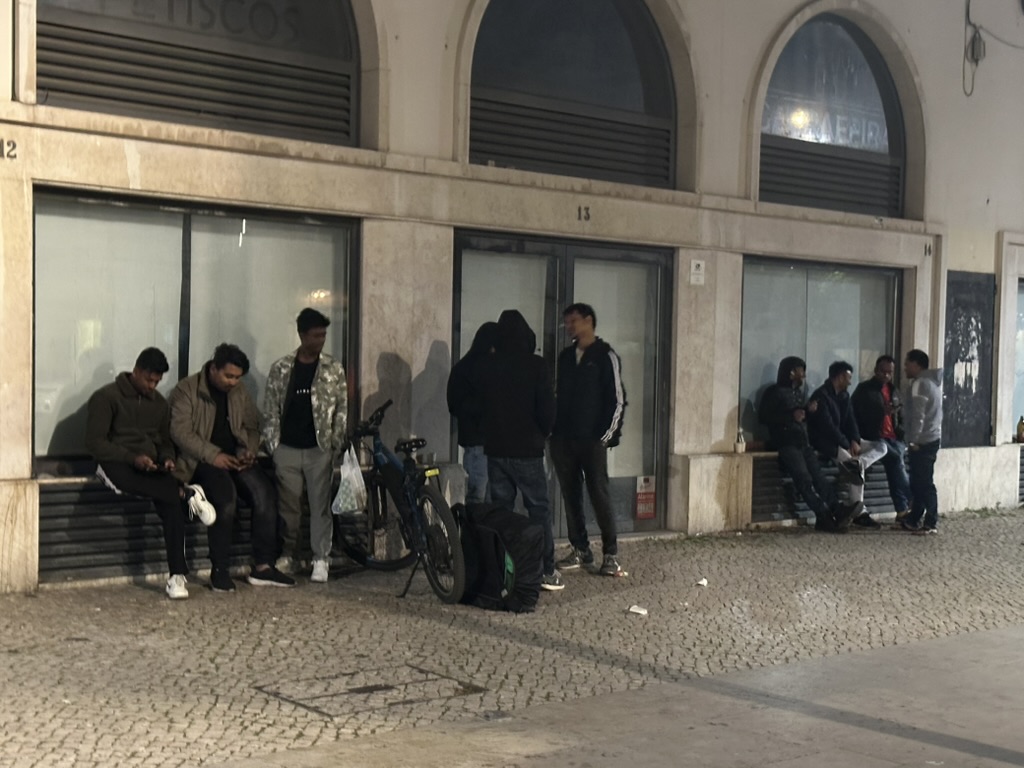
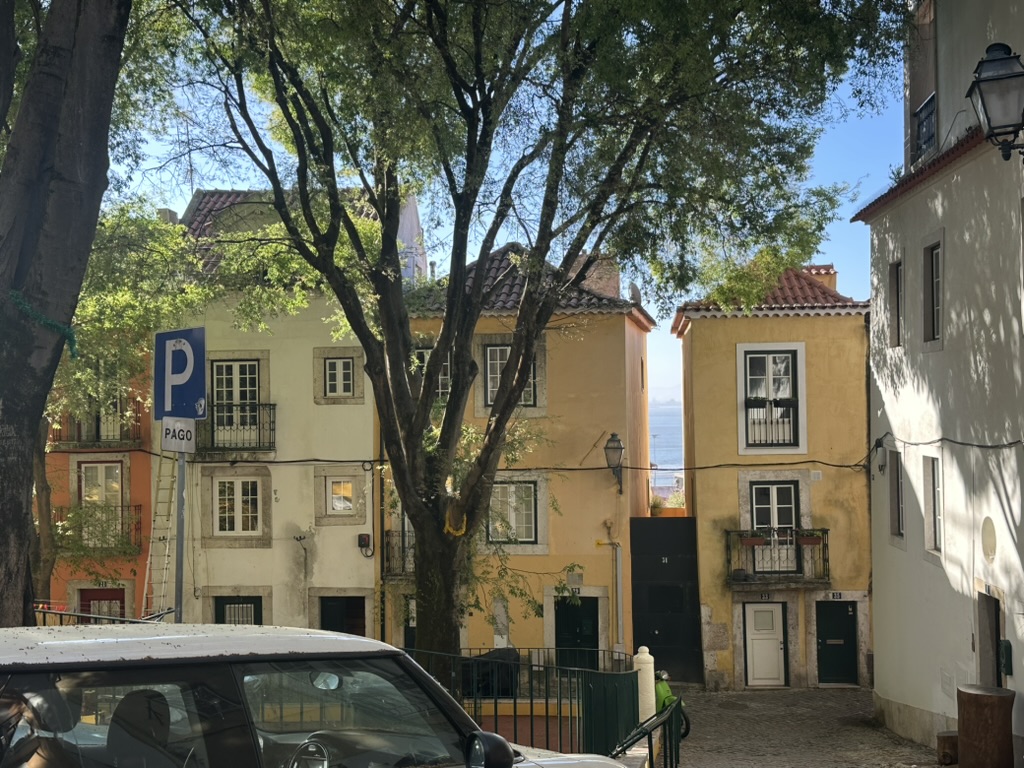
Upon arrival, rattling our rollies across the mosaic of rock pavers we were thrilled by the variety of sights and sounds in the sunlight on the square facing the hotel’s grandiose exterior: tree shaded cafes, bubbling fountains, multicolored, multishaped tiled buildings, a bedraggled old palace, an excavation, a group of school kids on tour, a bunch of  guys just hanging around.

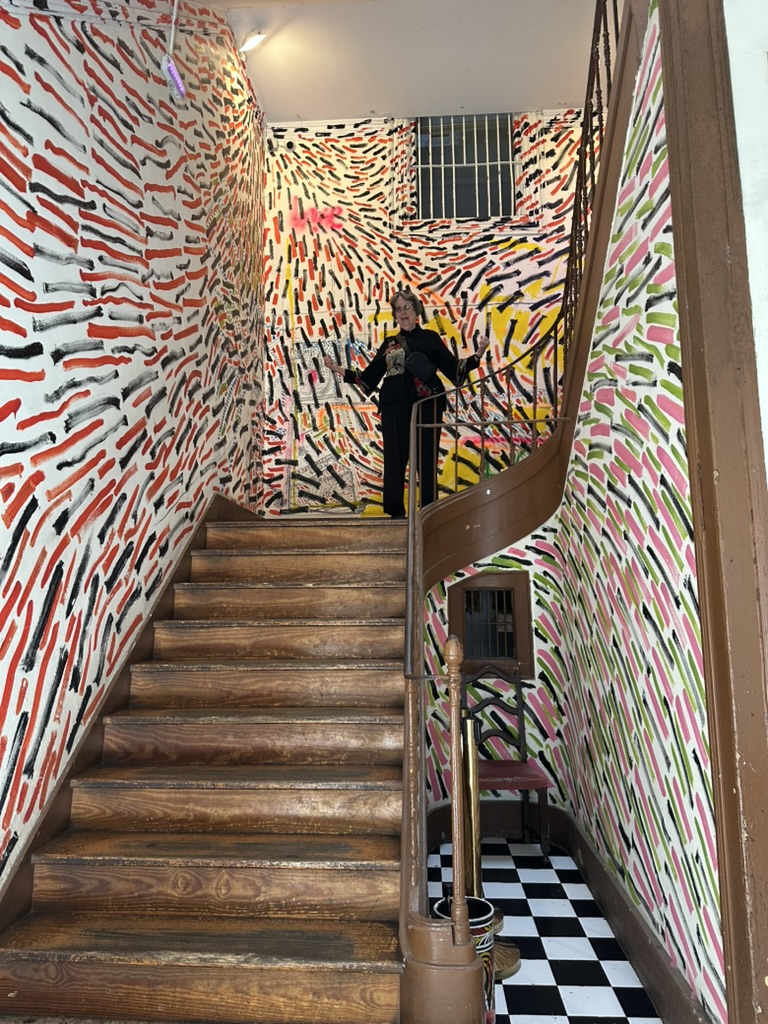
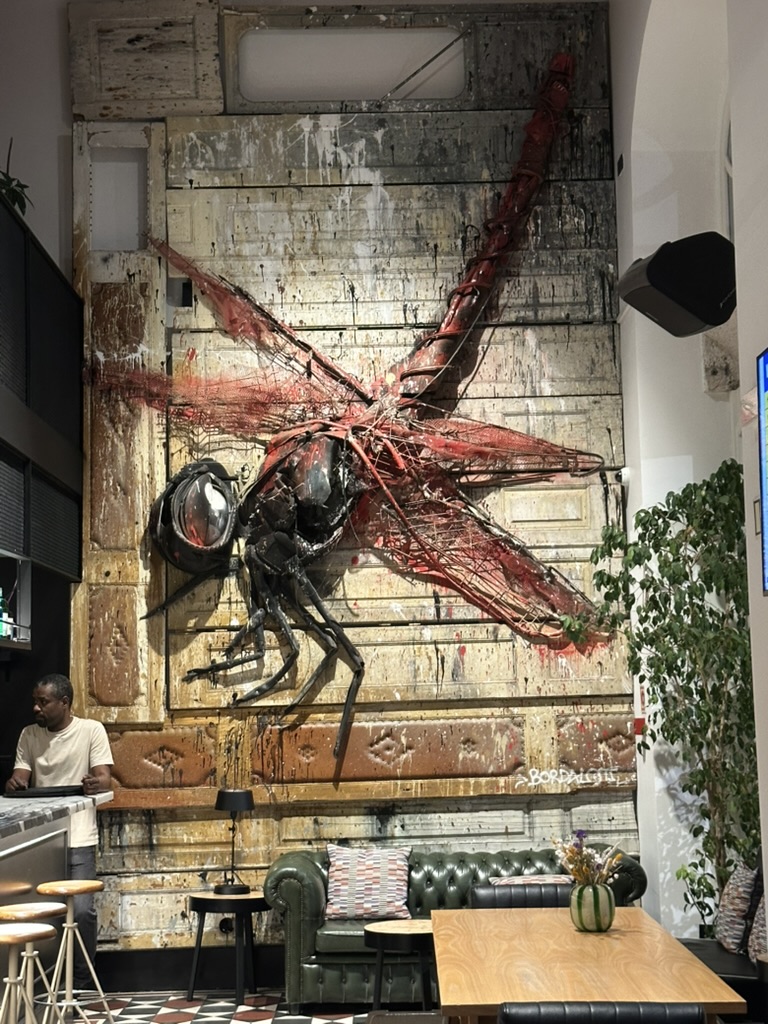
We were welcomed in good English by amiable staffers under the massive wall sculpture of a dragonfly assembled from trash and overlaid by spatters of paint that seemed to allude to the graffiti covering many of the city’s beautiful buildings.
The elevator ride to the room on the fourth floor extended the art gallery feel of the place, this time with a vertical mural revealed during the ride and keyed on the inside of the window.

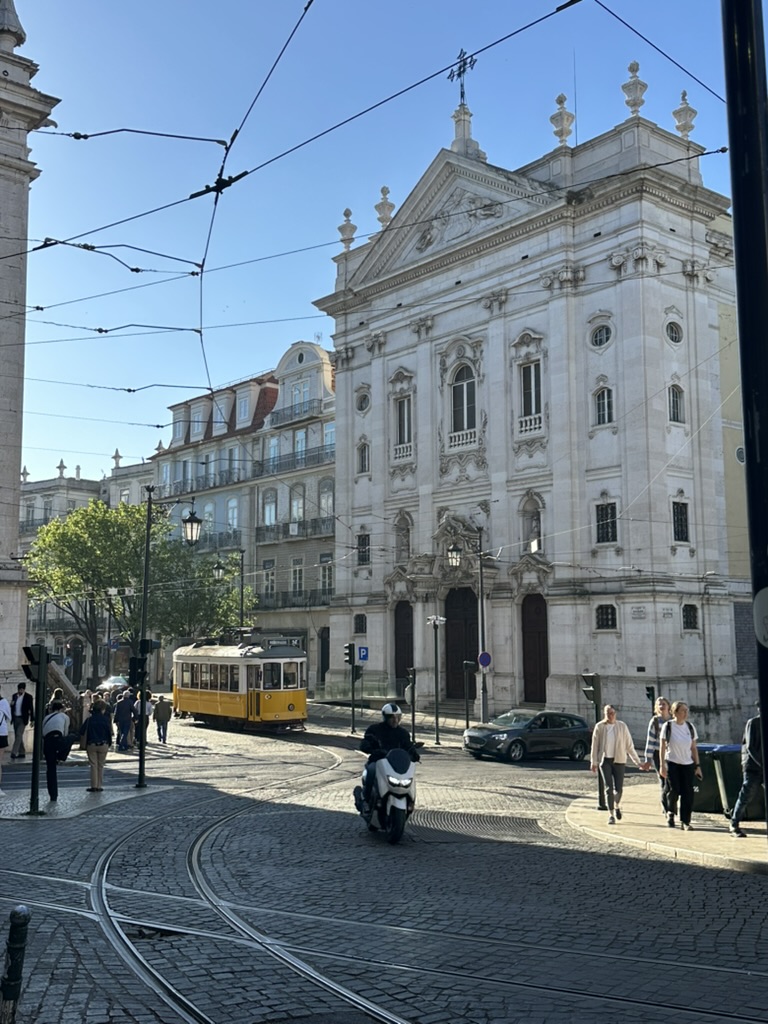
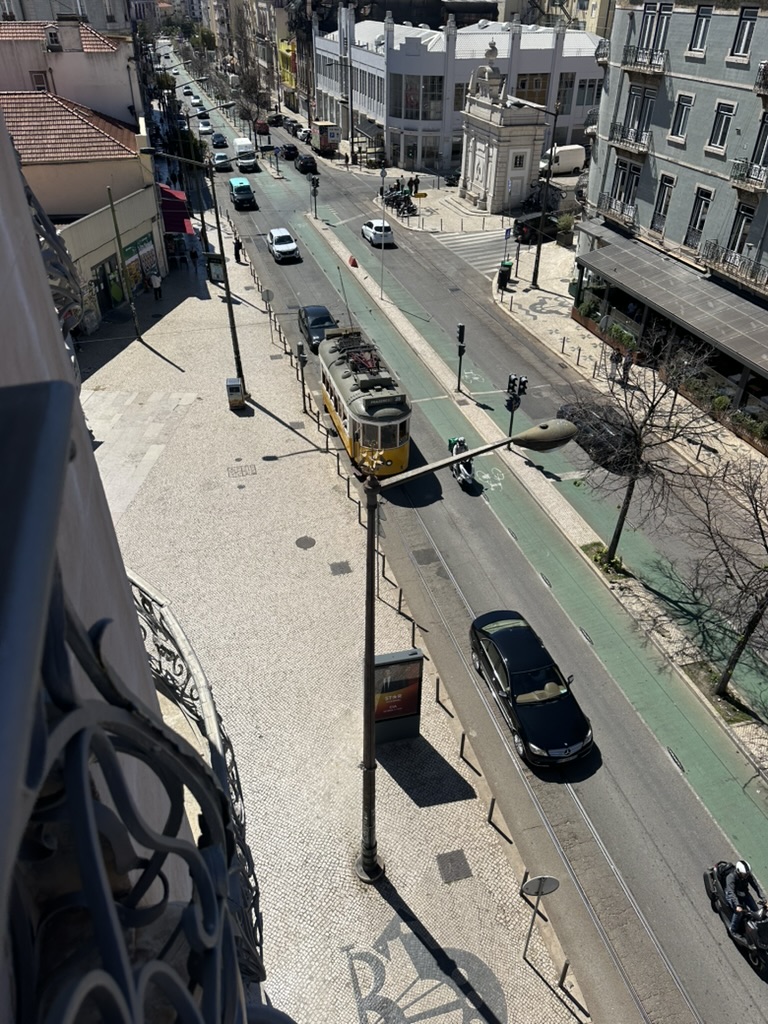
The balcony on of the small room’s window gave out onto the  Avenida Largo and our first glimpse of Tram 28.
After unpacking and a nap, we roamed the plaza
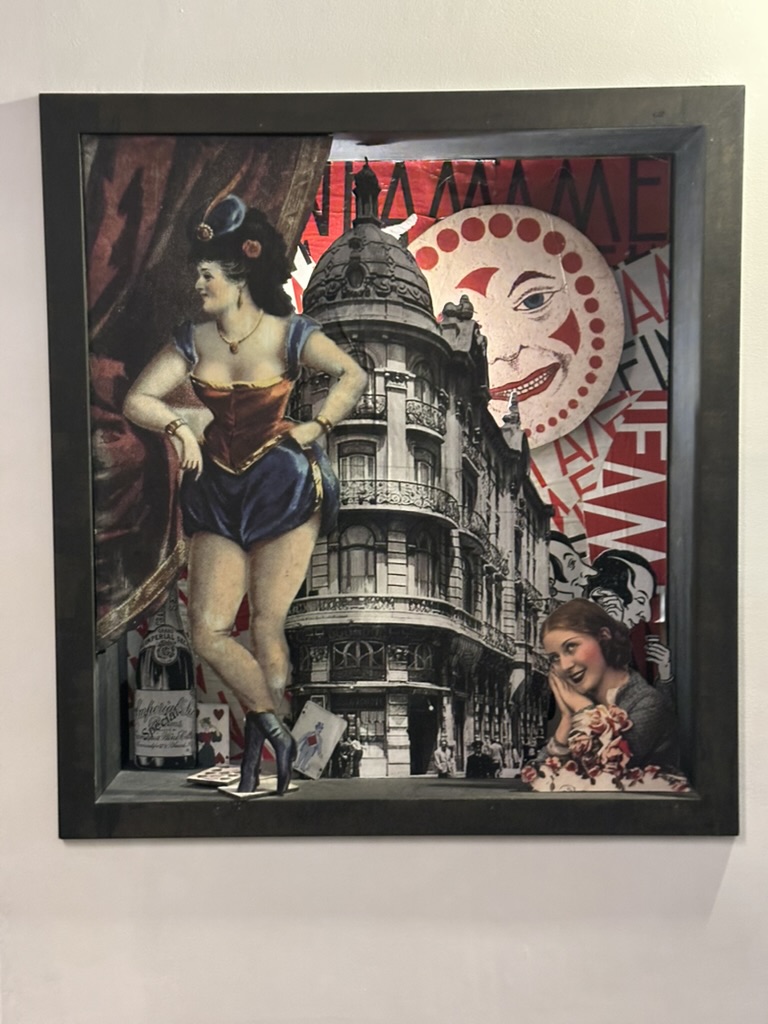
During dinner at “Infame,” the hotel’s restaurant, the art gallery ambience was reinforced by assemblages on the walls alluding to episodes in Portuguese legend and to the past history of the building as a bordello.
Portugal Day 2

Monday, April 27th, 2026

Our 59th wedding anniversary. After breakfast in Infame we walked through a mixed and somewhat threatening neighborhood to catch Tram 28 at its terminus, since all the guidebooks warned that this most popular attraction of the City would be hard to board at any later stops.

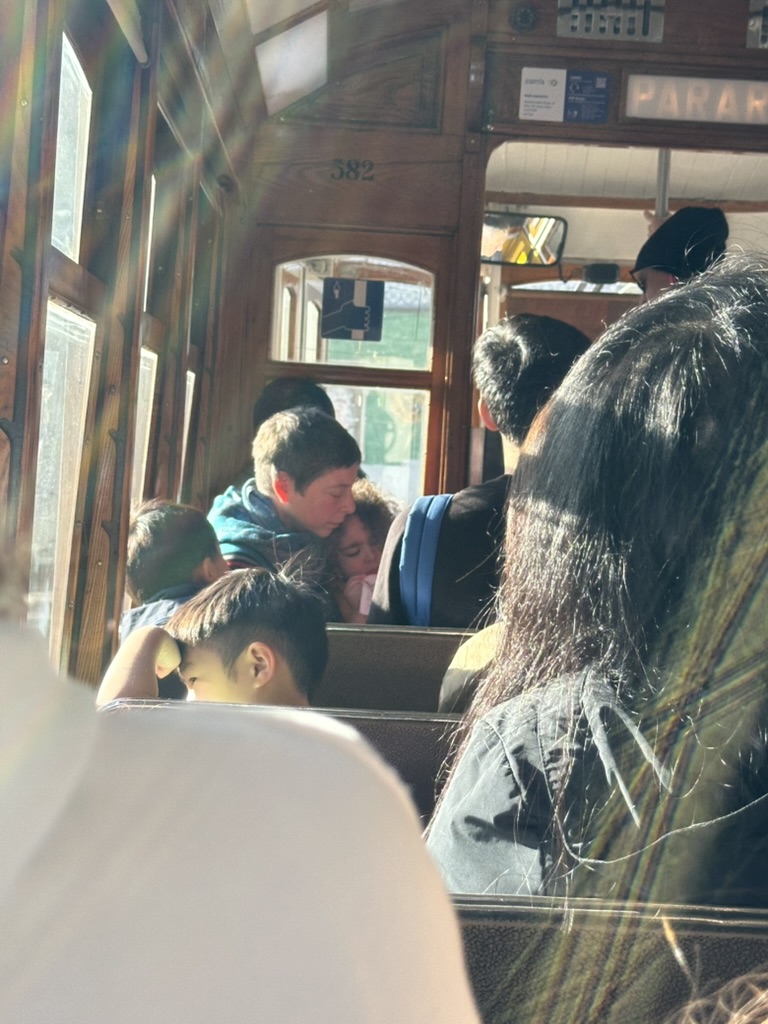
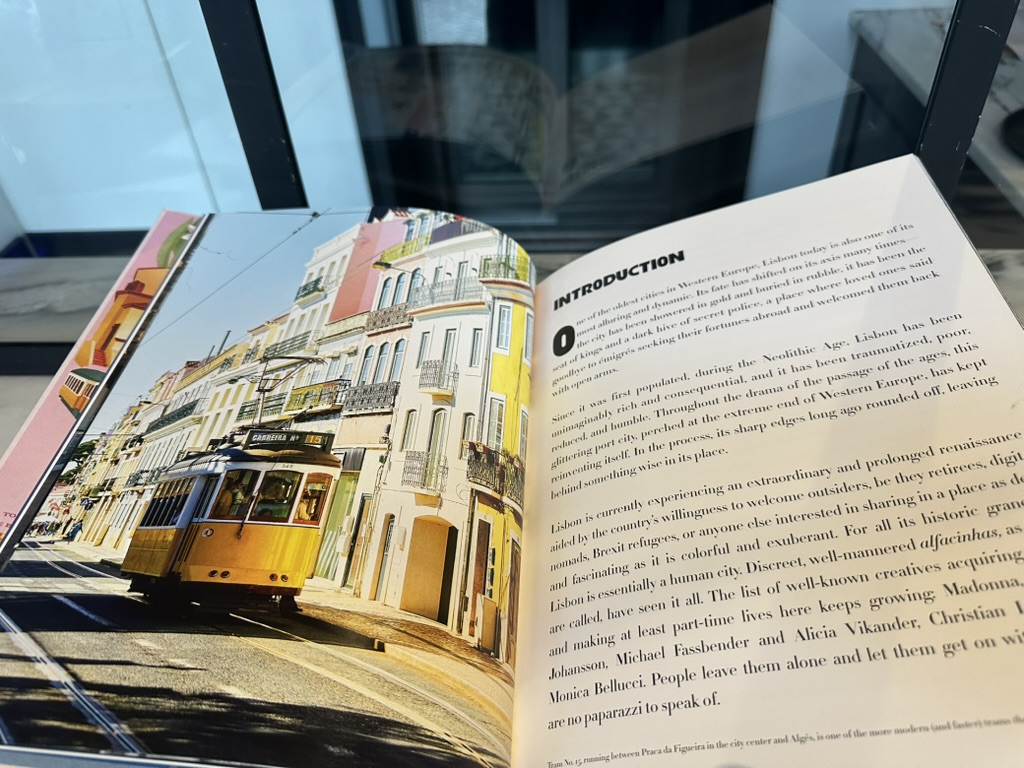
The trouble was worth it, though it turned out later that we could board at the stop right outside the hotel. Running every 10 minutes and winding the steep tight curves up and down the hills through the oldest sections of the city, its compact wood paneled cars served local commuters as well as tourist joyriders.

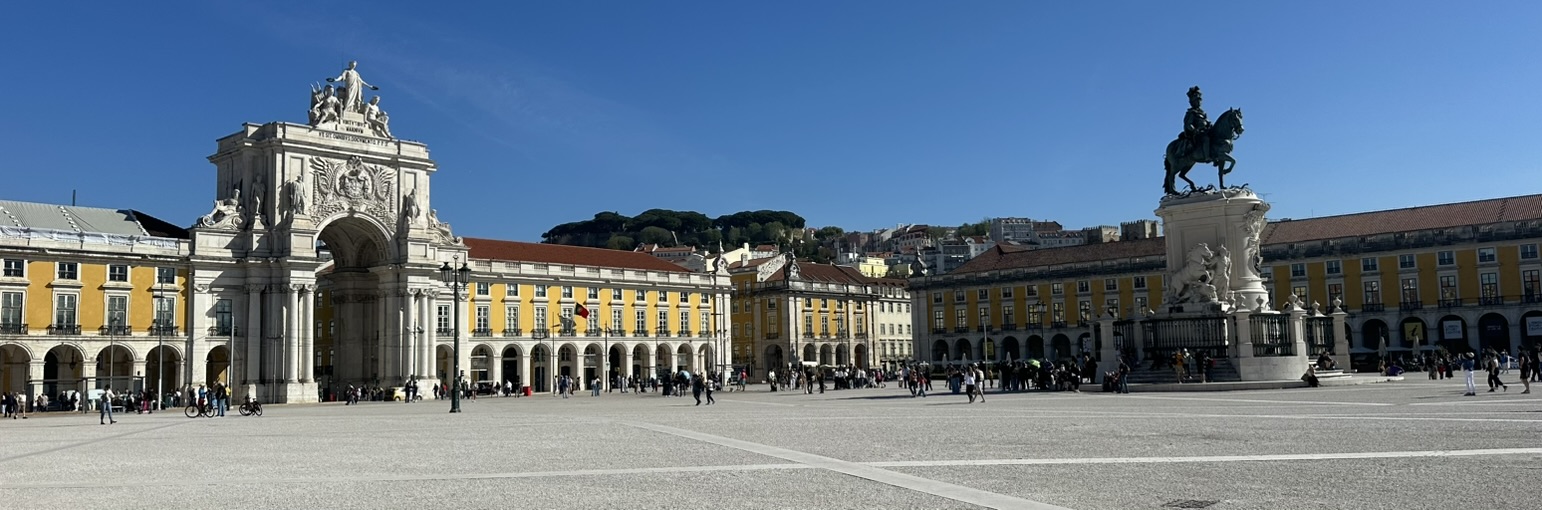
We got off at the last stop and made our way down to the historic waterfront whose grand central plaza was preserved since Lisbon’s central role in the European age of exploration and conquest.

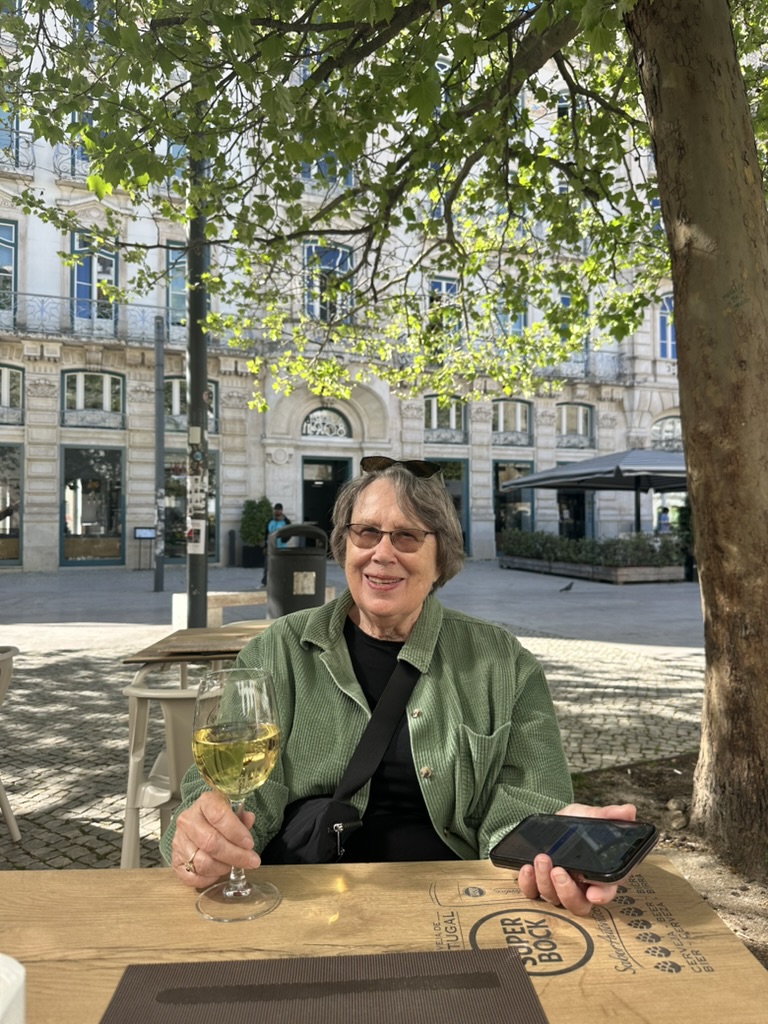
From there the tram took us back to Largo Intendende and lunch at Josephine, outside the hotel’s entrance.
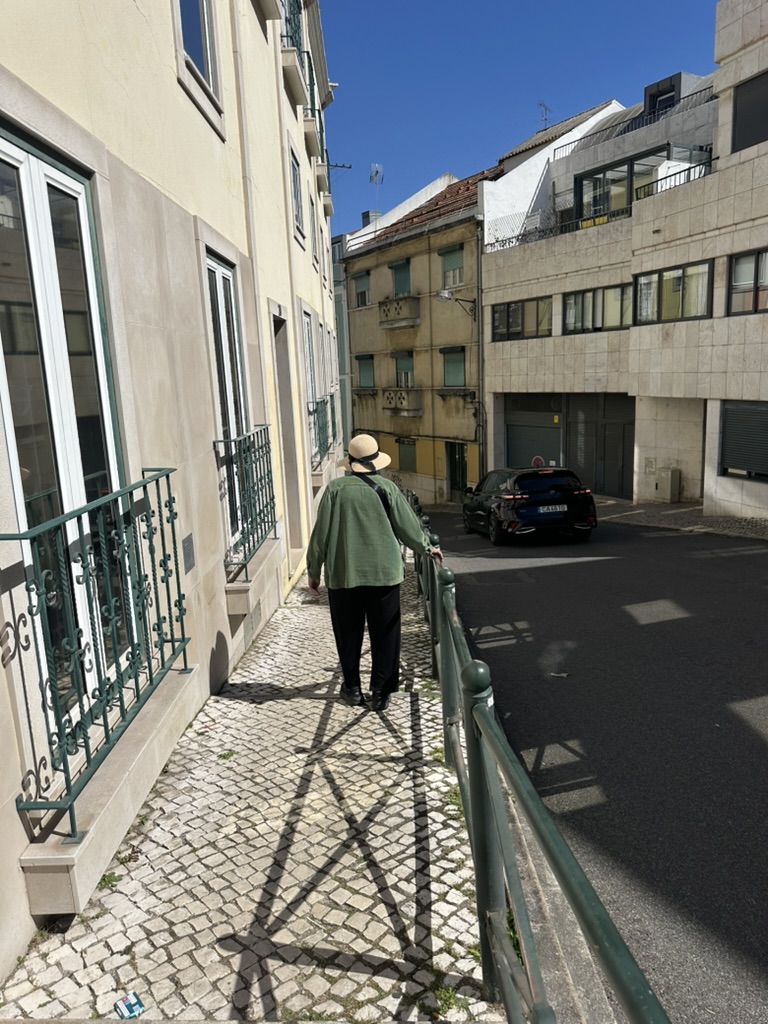
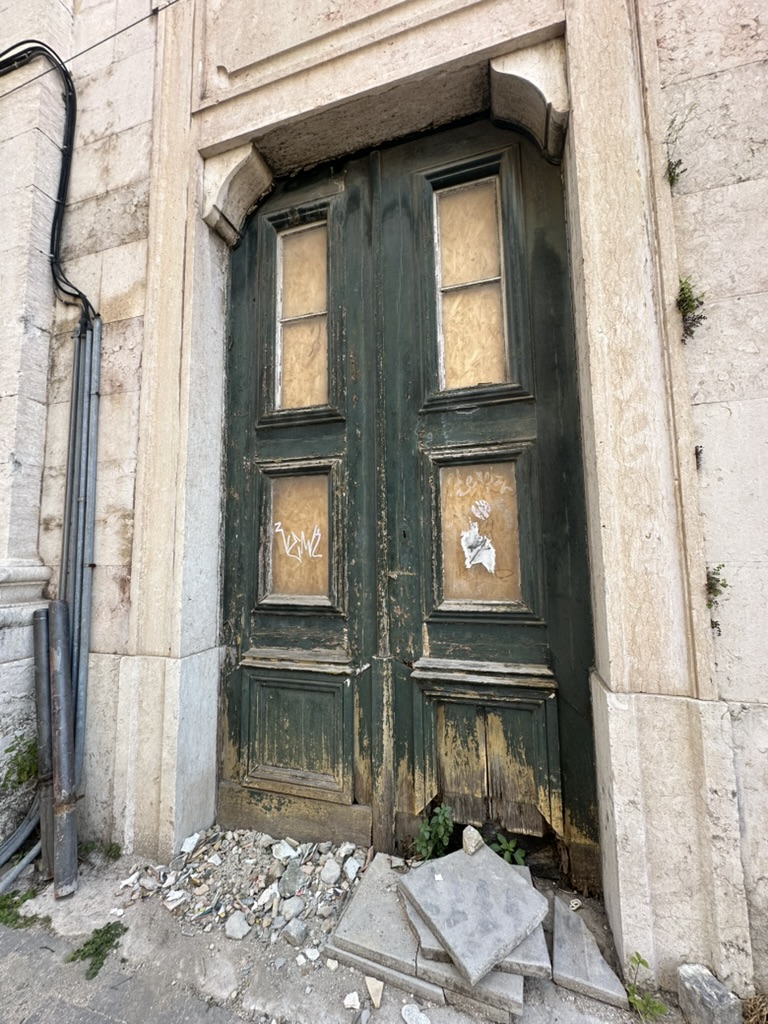
After an anniversary siesta, we crossed the street and walked slowly (and sometimes painfully) up the steep hill that rose along the opposite side.

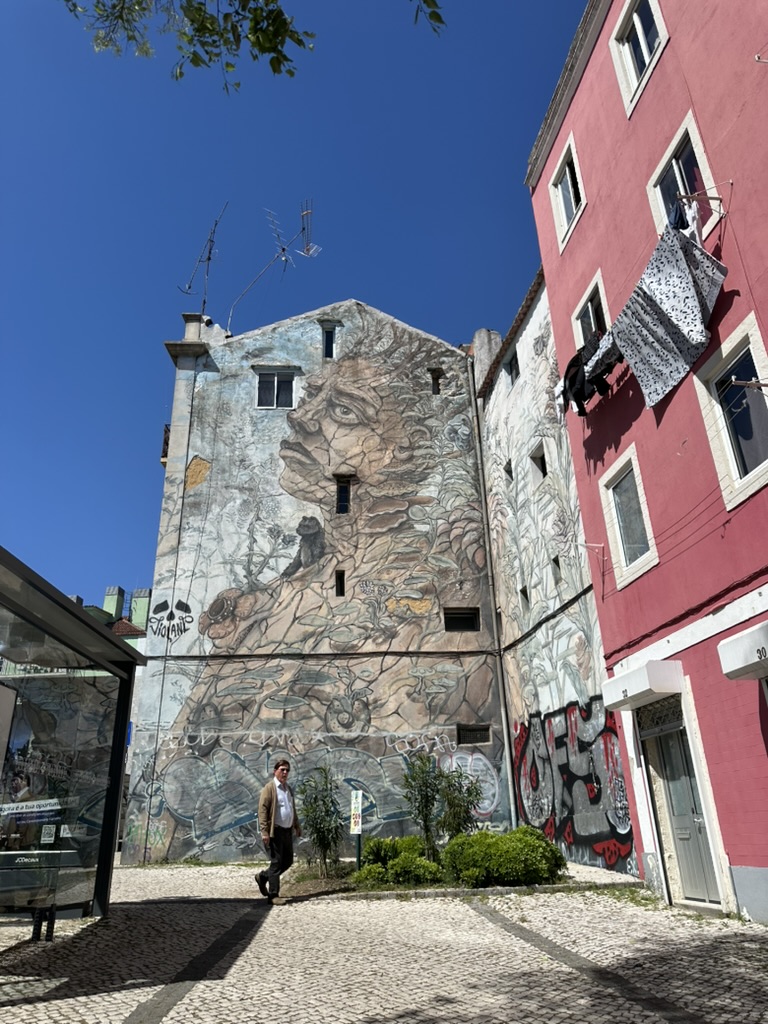
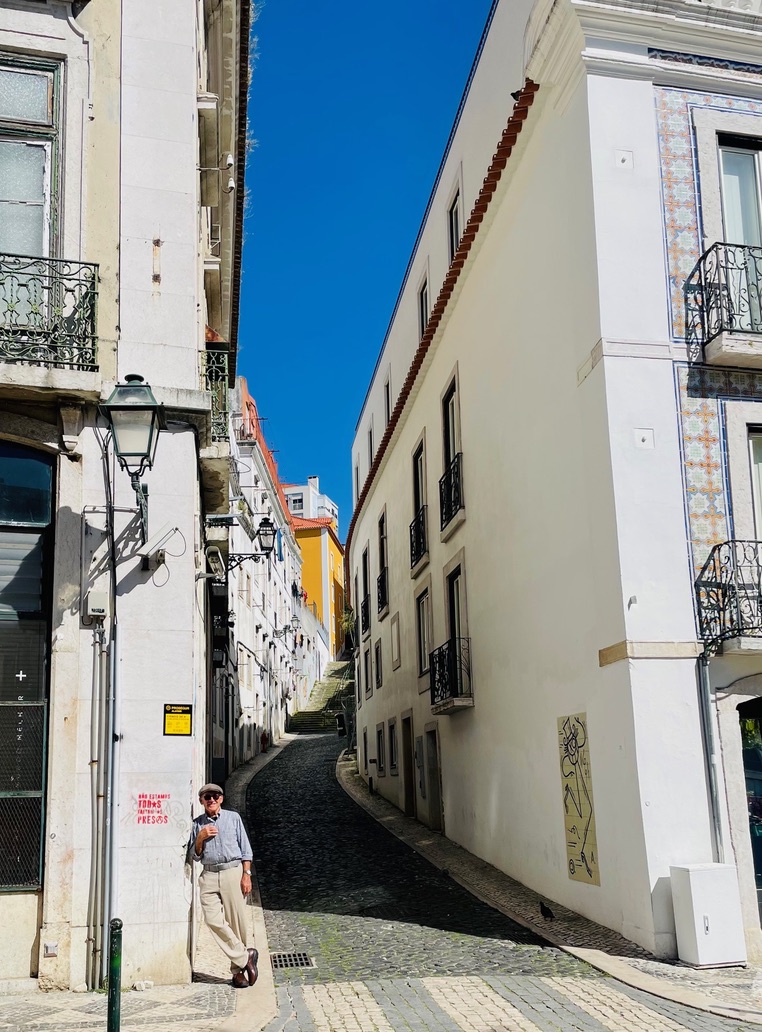
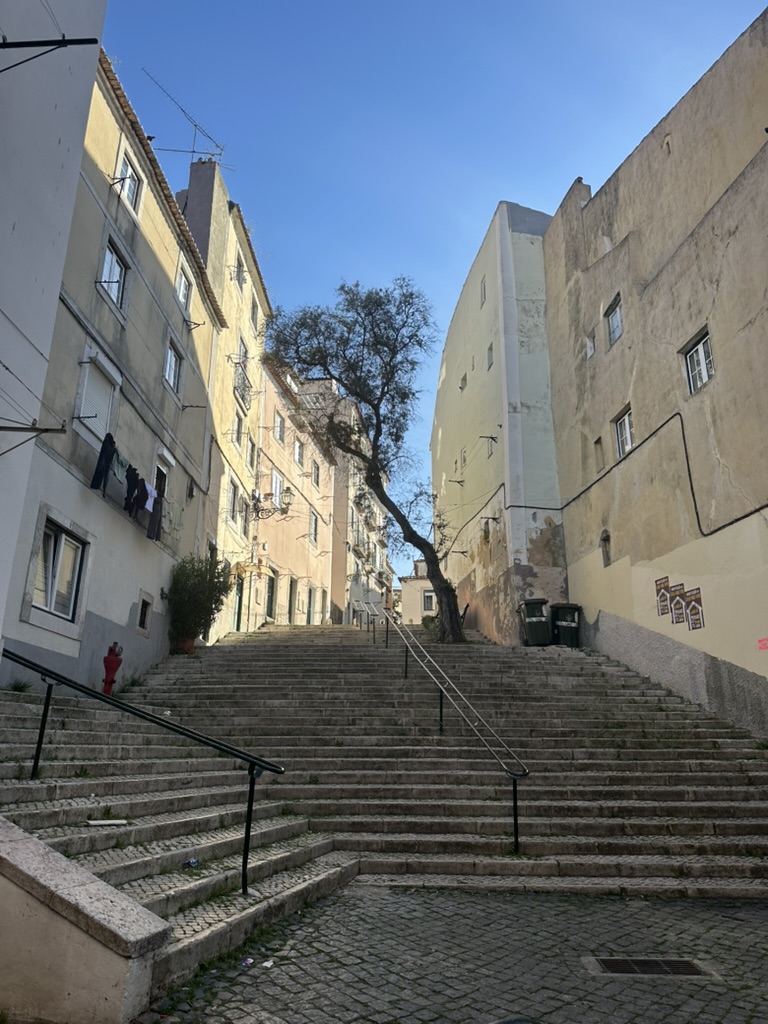
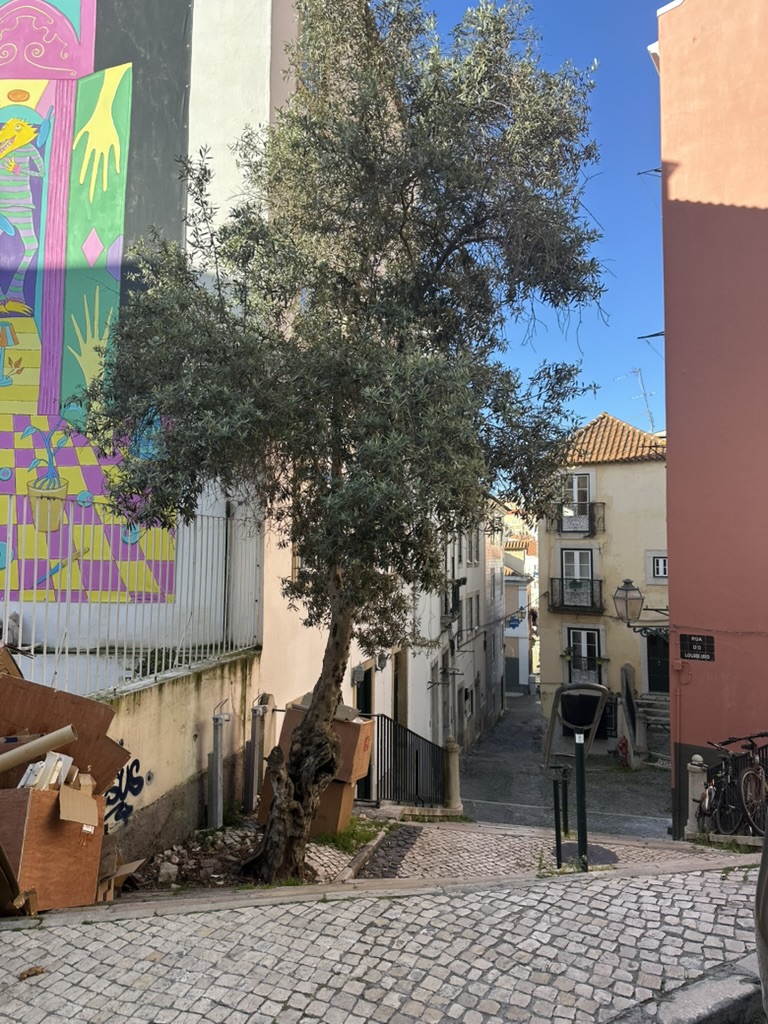
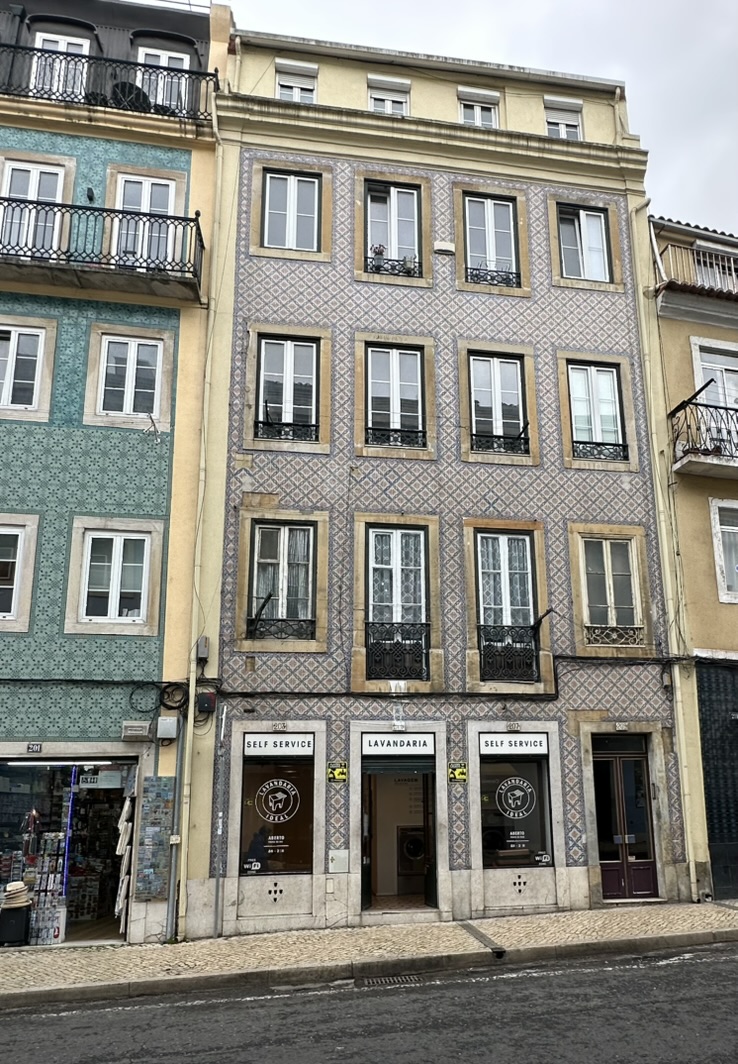
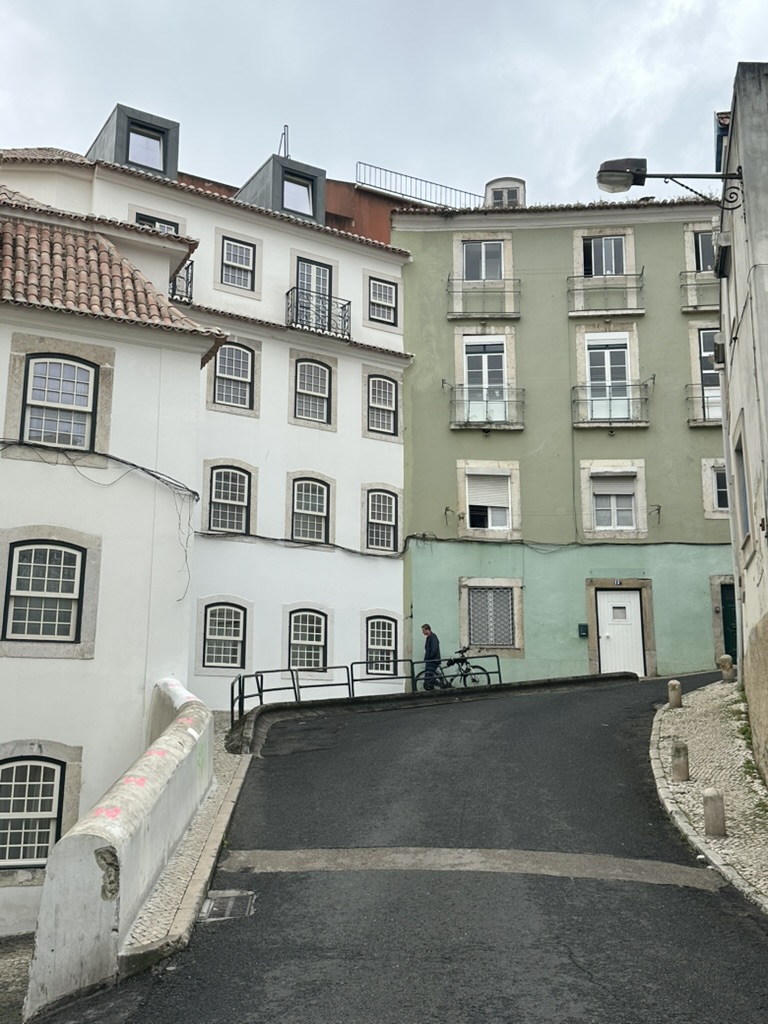
It afforded a cross section of varied neighborhoods of Mouraria in transition.  Elegant buildings, either in decay or restoration,  tiny cafes and shops, pocket parks, arresting murals, steep narrow streets, wide boulevards all within a quarter mile of the hotel.


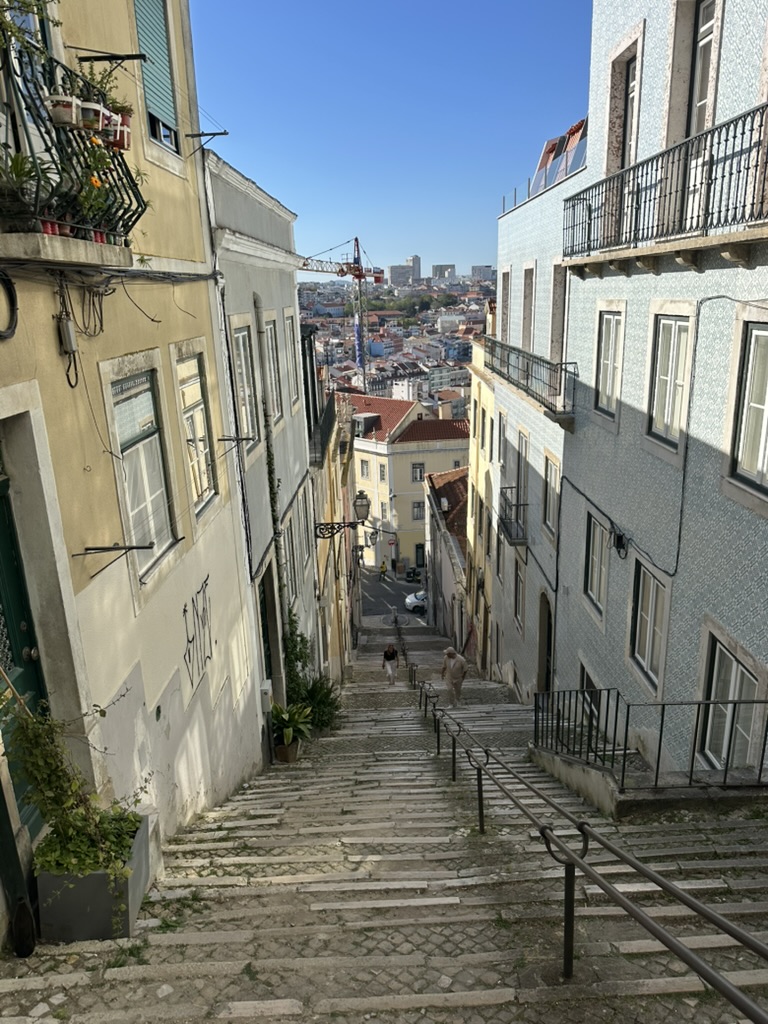
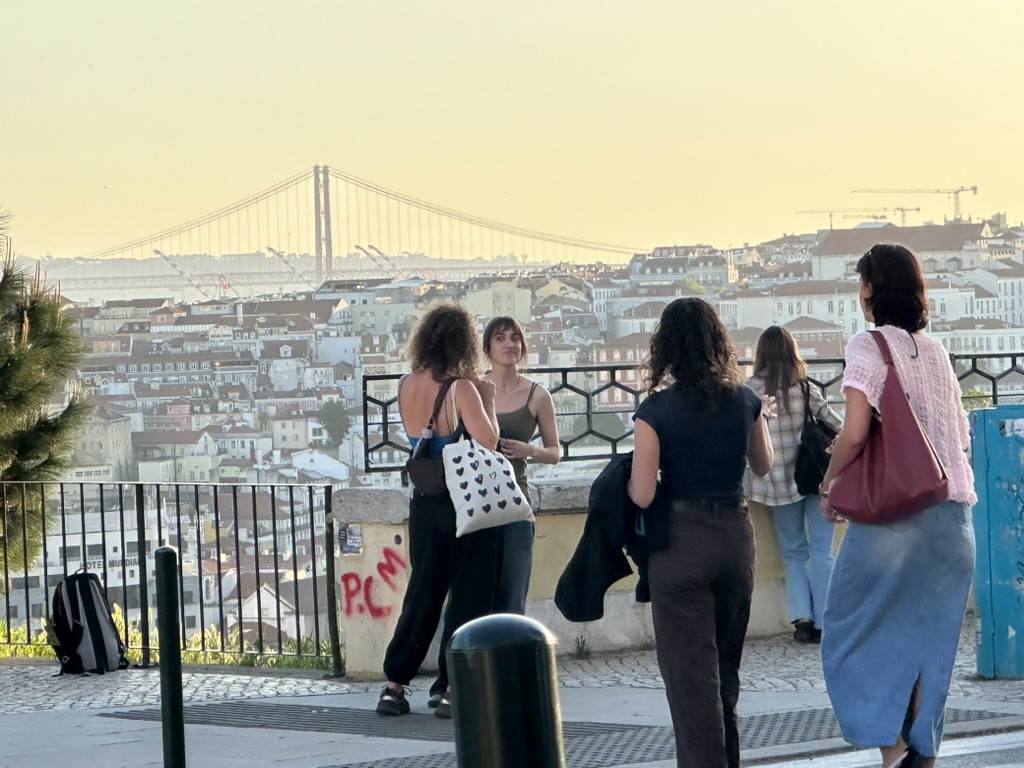
After a brief rest, I set off again up the mountain on our side of the valley, driven by curiosity and adrenalin up flights of stone stone stairs to a little park and viewpoint I learned later was the Miradouro Senhora do Monte.

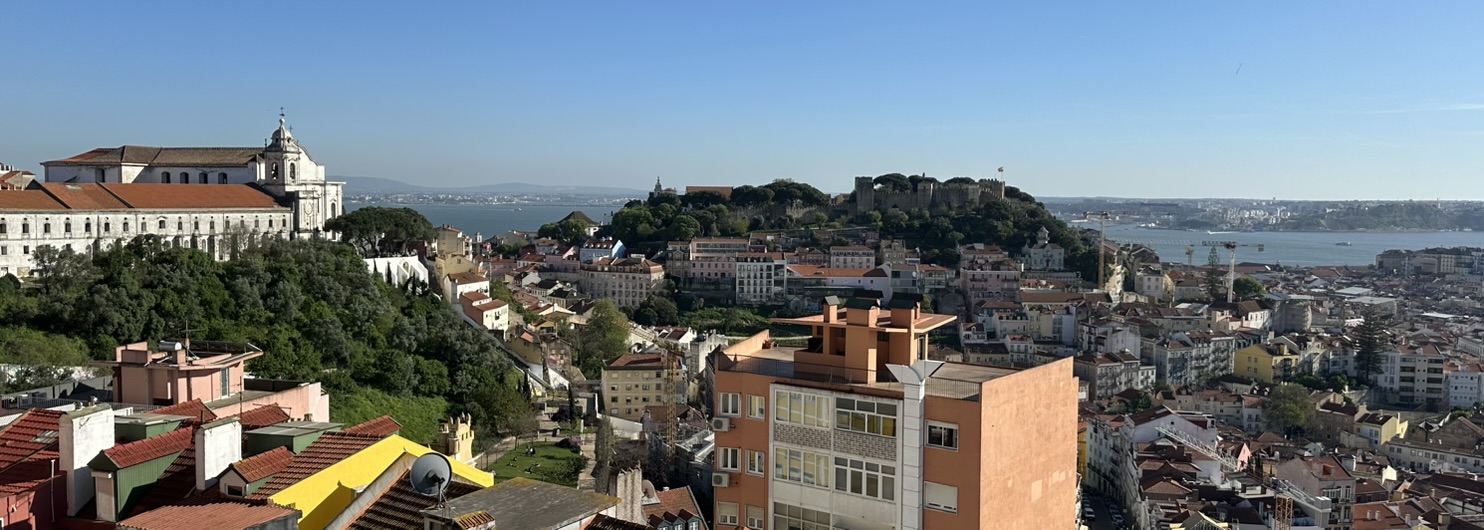
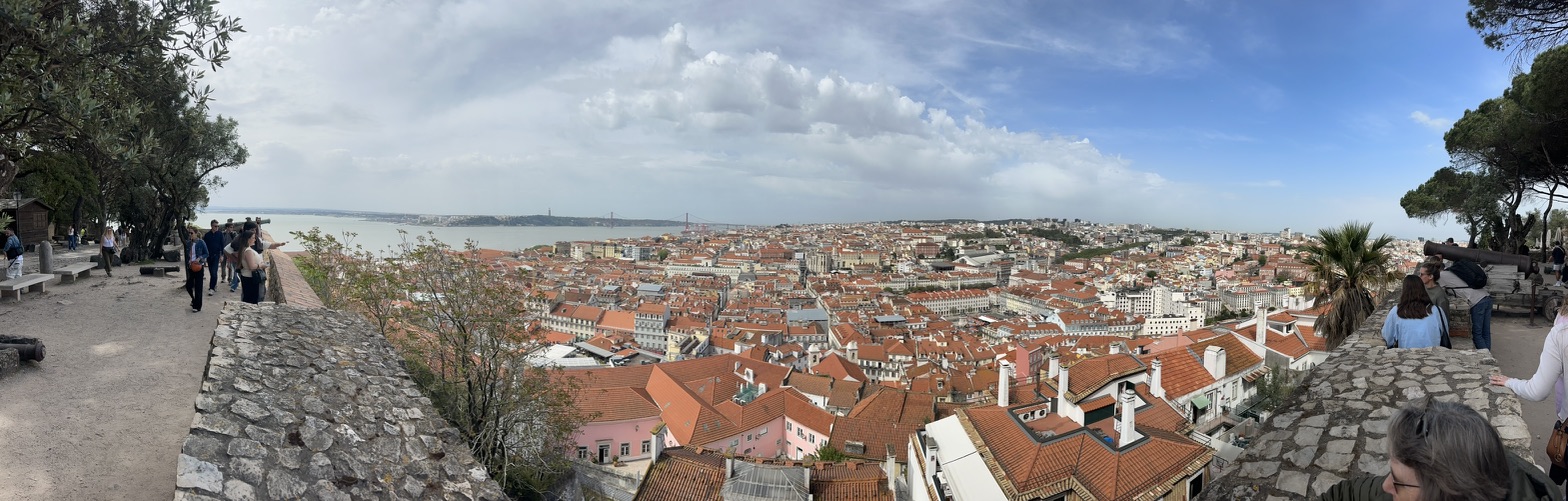
The viewpoint offered a grand panorama and was filled with happy tourists.

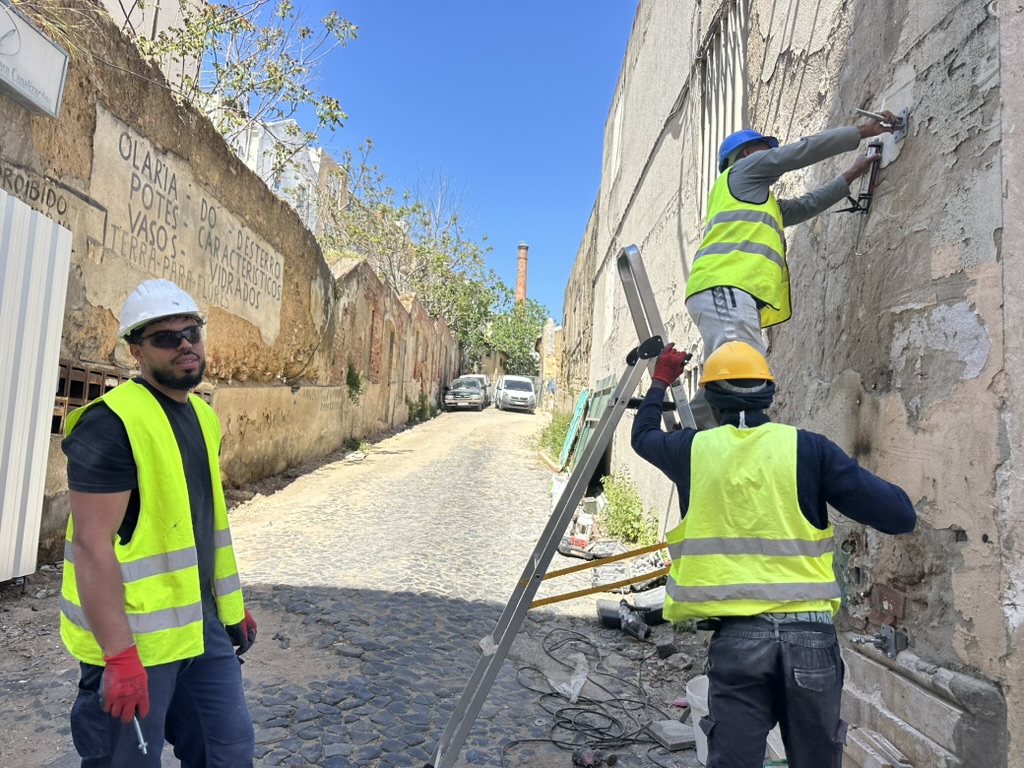
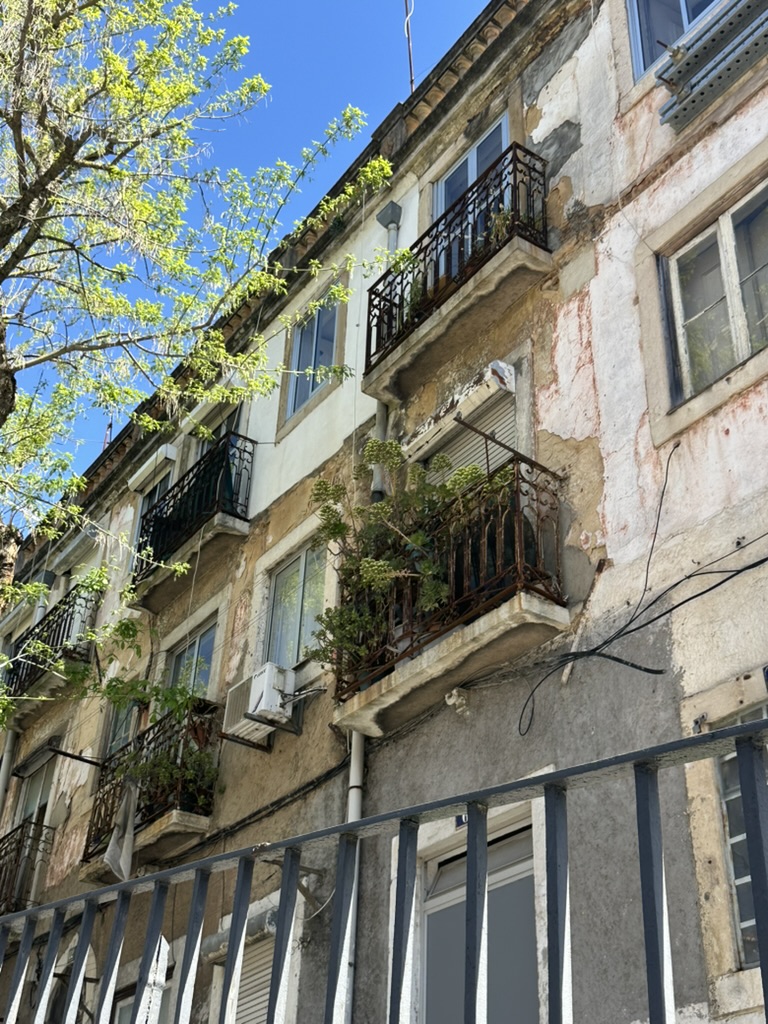
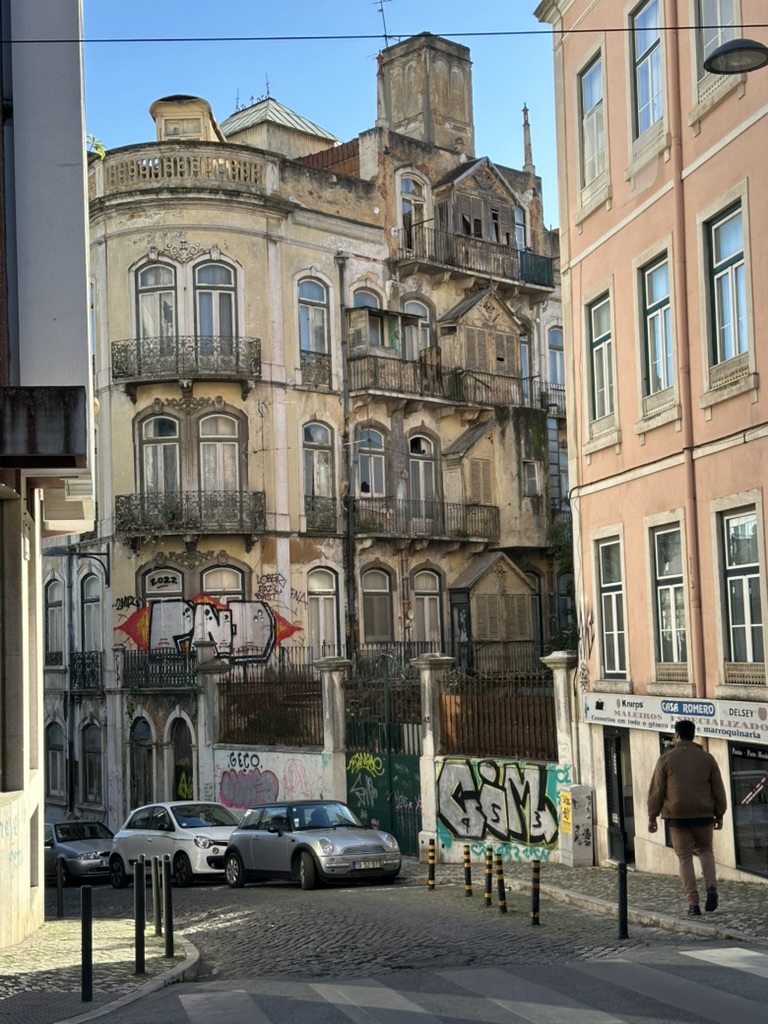
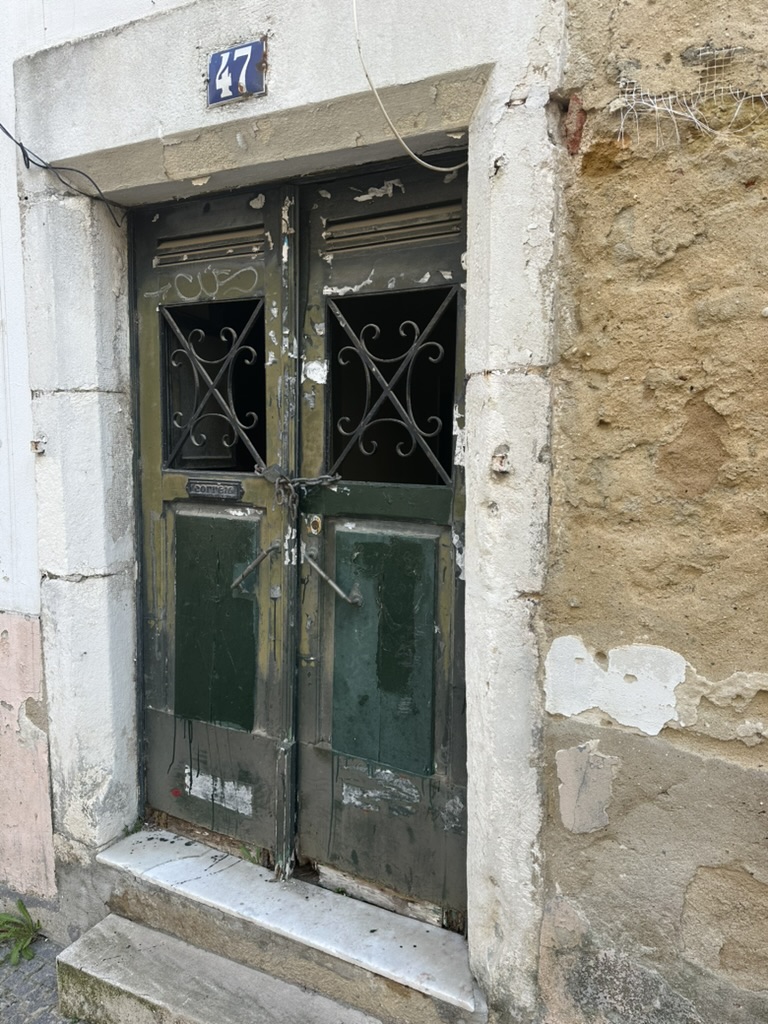
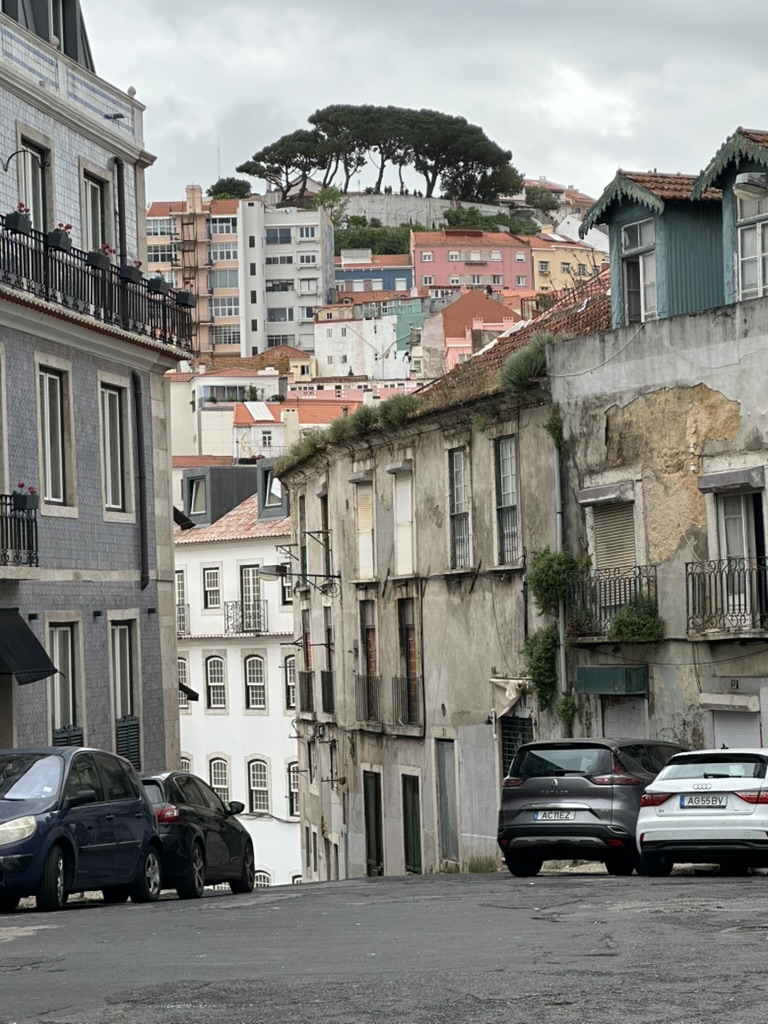
The way down, I passed a fantastically weathered old building, probably what the Hotel 1908 was like before restoration.

Portugal Day 3

Monday, April 27th, 2026

Next morning we were eager to reboard Tram 28 and circle around to explore Alfama.  The oldest district of the city, its name comes from the period of Arabic rule from 714 AD to 1147 AD.

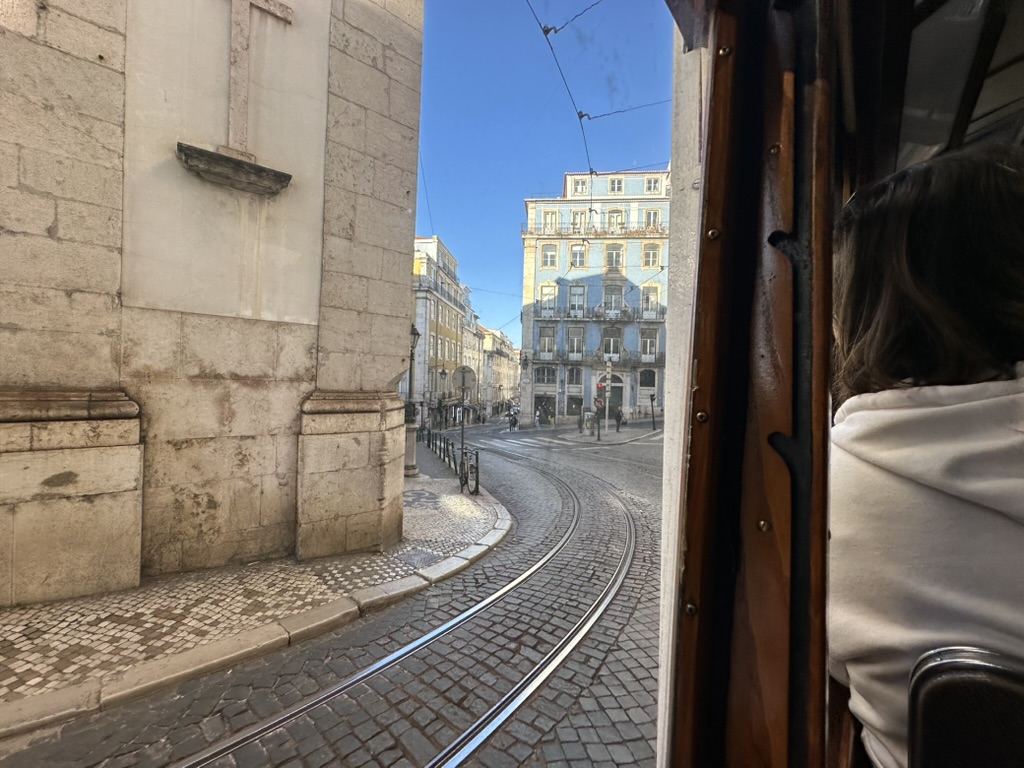
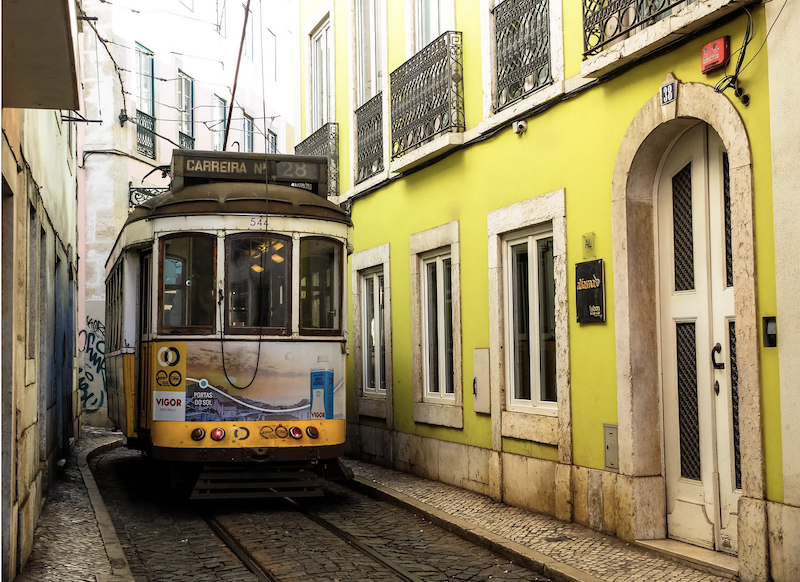
Alfama rises on the mountainside from the Tagus estuary in a  network of steep narrow streets which the tram winds through, sometimes inches from the walls on either side.

(photo credit)

At Escolas Gerais, we got off and wandered downhill.


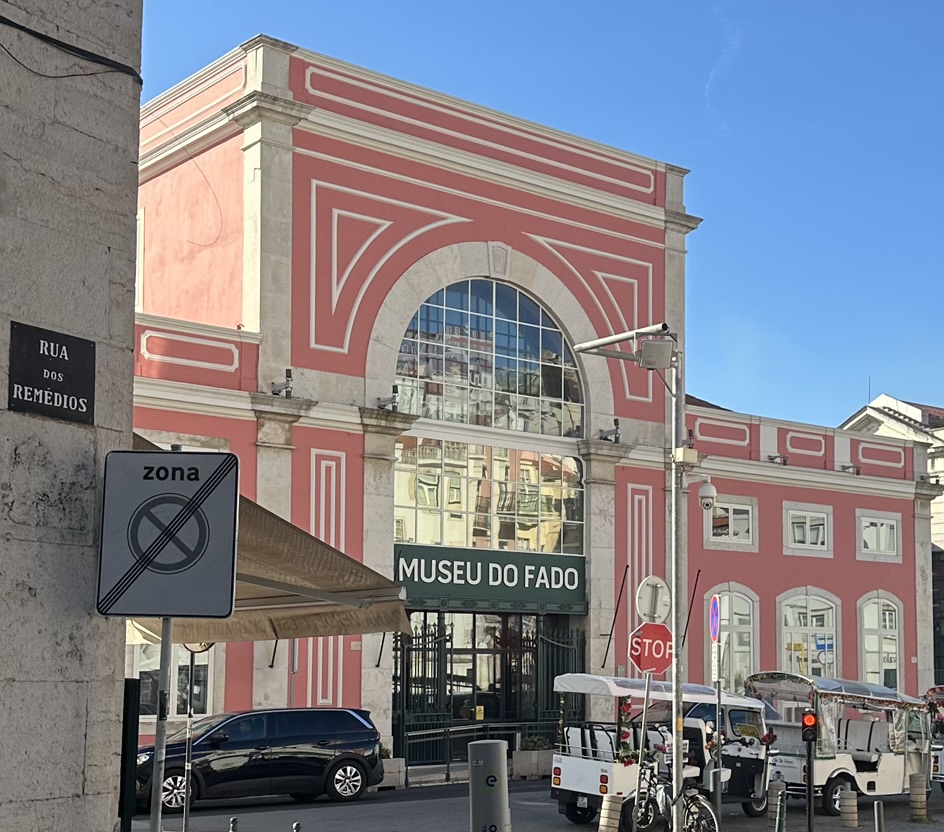
At the bottom we found ourselves at the Museo de Fado, where we learned about the traditions of the splendid music I’d discovered when we first planned the trip and had been  listening regularly to sweeten my morning PT exercises.

This was a crowded, souvenir-shop-dominated part of the downtown where the cruise ship in the harbor had just disgorged its ten thousand passengers.

Traffic was so thick that Tram 28 couldn’t get through to take us back to Mouraria, so we traipsed through crowds to the metro and rode back underground for lunch and nap.

In late afternoon, indulging in a Bolt ride to the mountaintop, I led Jan to the viewpoint just above the hotel I had discovered the previous day.

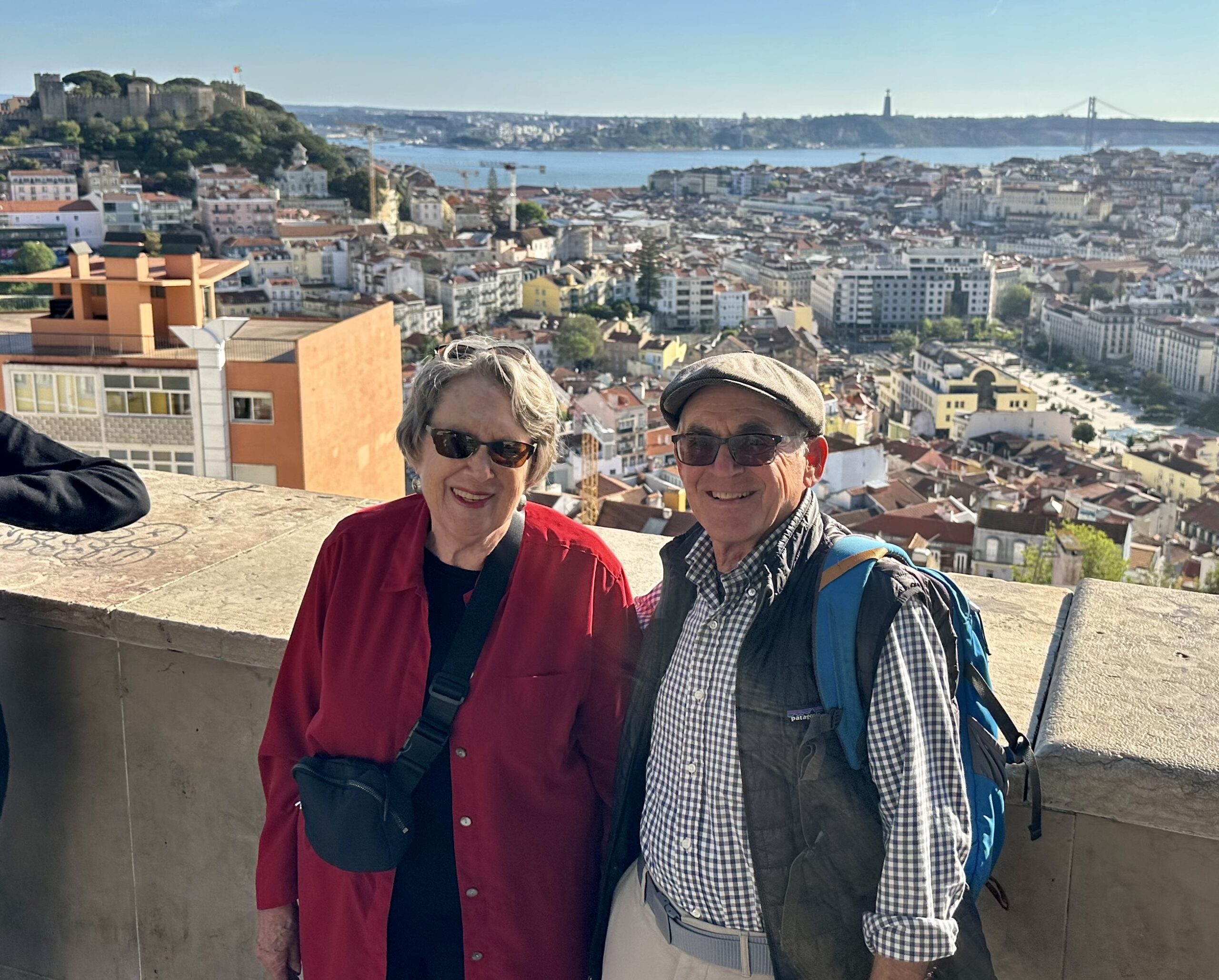
After gazing at the river and the cathedrals and castles draped over the City’s seven hills, we noticed a little gap in the retaining wall. Somebody walked through it down a steep stairway from which live music was filtering, and we followed.

At the base of the stairs there was an opening in the greenery leading to a platform supporting a crowded bar, bandstand and dance floor. Below that hung more terraces looking out over the city.

We elbowed through the joyous crowd to the lowest one and found chairs.  Off to the right I saw people emerging through the greenery. I pushed through and found another bar with a small art gallery where I bought drinks and returned to Jan.

We sat enjoying the atmosphere, the prospect of the city directly below and the surprise of discovery. Someone told us the name of the place was The Secret Garden.  No signage, no way to find it but down those stairs.

On the way out  we danced to the hot band.

We found dinner at a café down a street leading away from the viewpoint to another one close where we watched the sunset over the Atlantic.

Portugal Day 4

Monday, April 27th, 2026

Back on the tram 28 again with no itinerary, the weather still radiant, we got off  at the Plaza of the Church of Santa Lucia perched on the Miradoura das Portas do Sol–Viewpoint of the Door of the Sun.

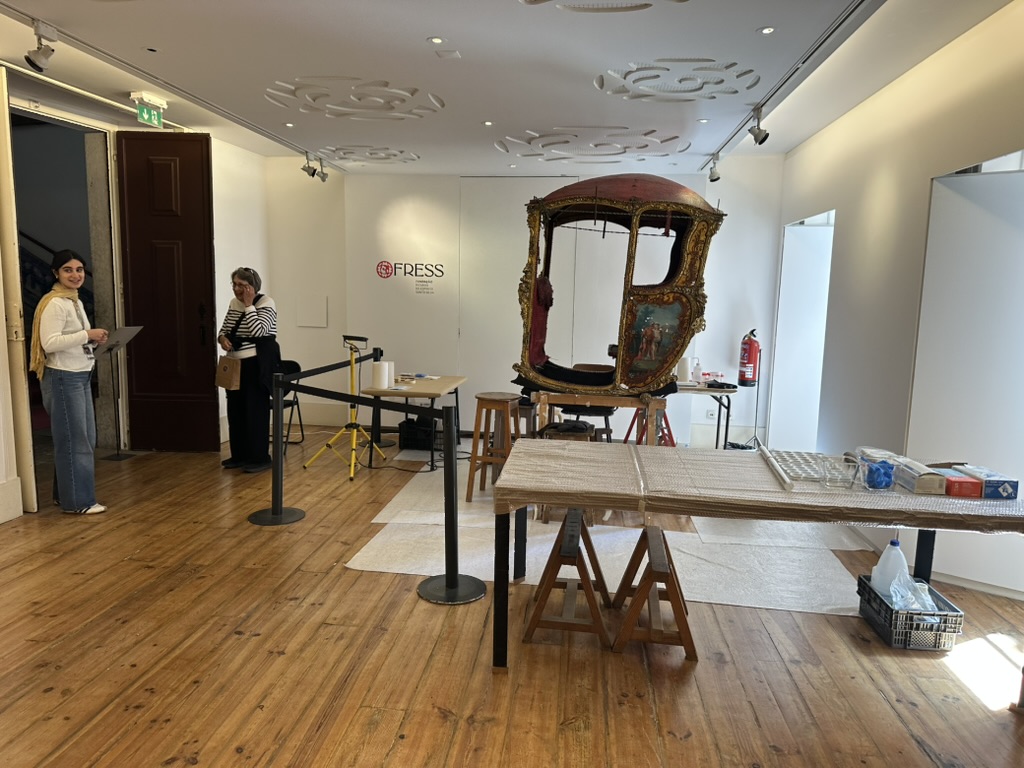
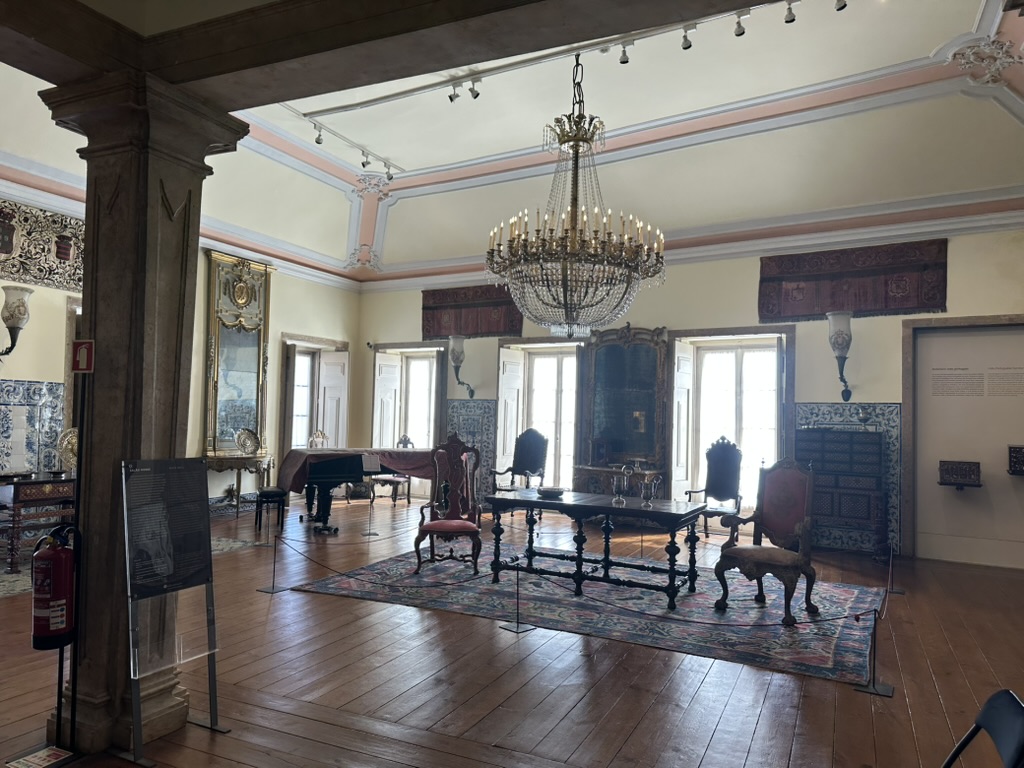
Across the tram track was a museum of decorative arts that interested Jan and appealed to me for its lack of traffic. We mounted the empty staircase of a stately old palace at the top of which sat the canopy of a 17th century carriage under repair by restorers of antique treasures.

They and their apprentice artisans at school in the museum were absent for the day, and other than a couple of elegant young women attendants, the whole place was deserted.

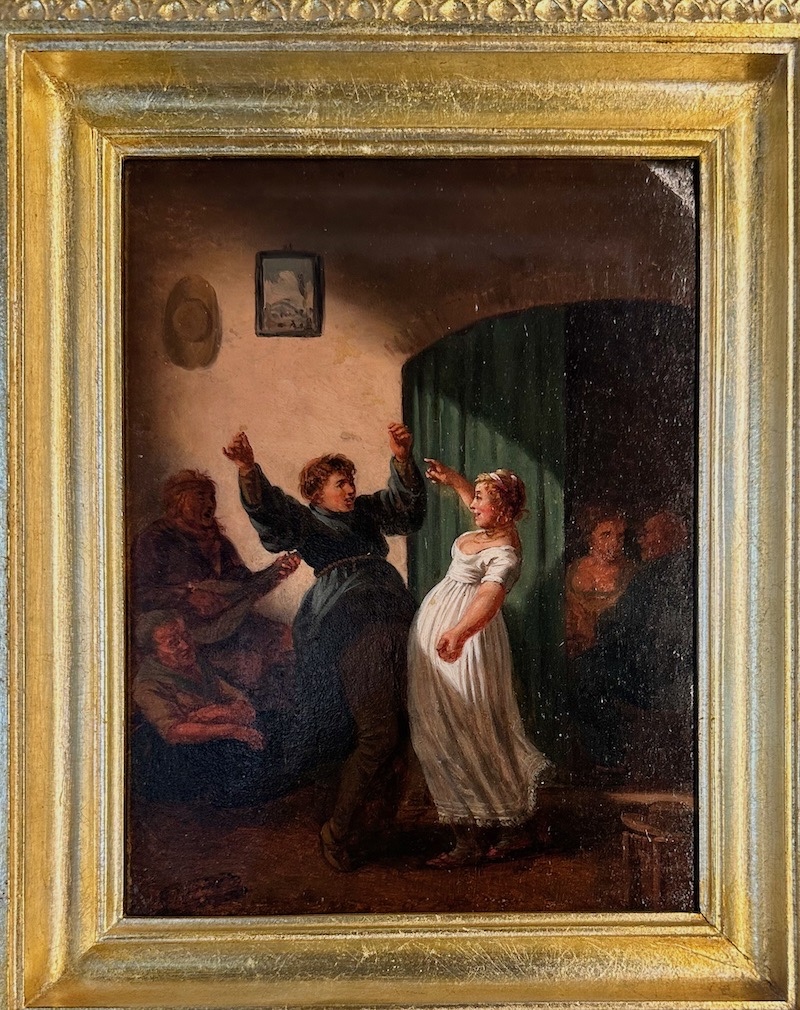
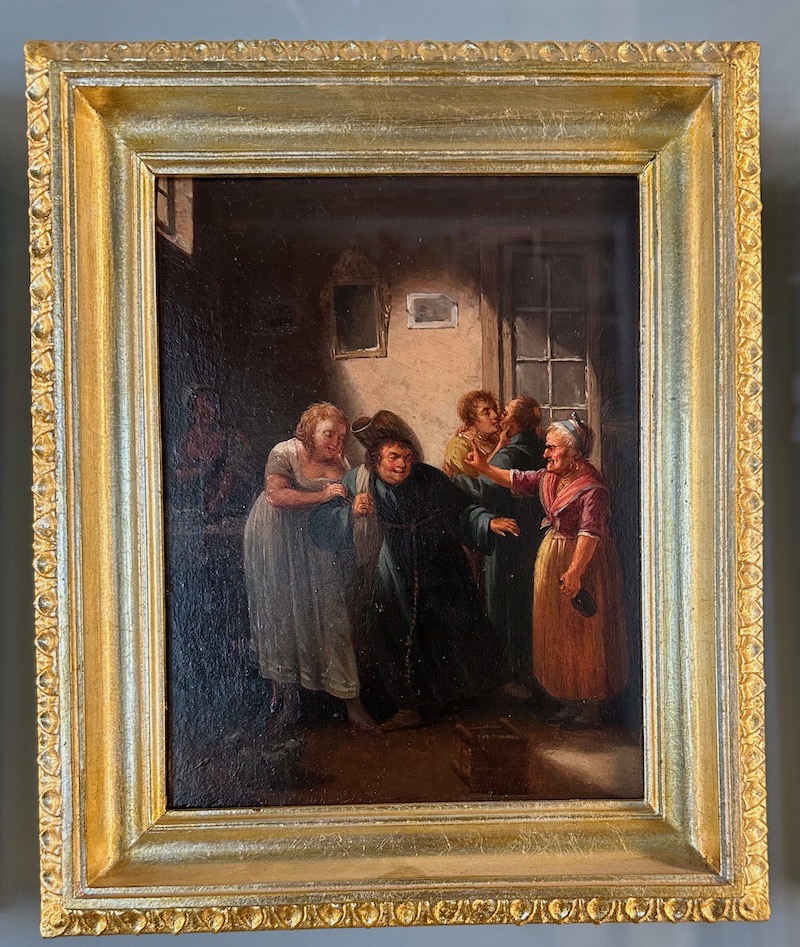
Among the solemn royal furnishings I was amused by two small paintings of “Friars in a Bordello.”

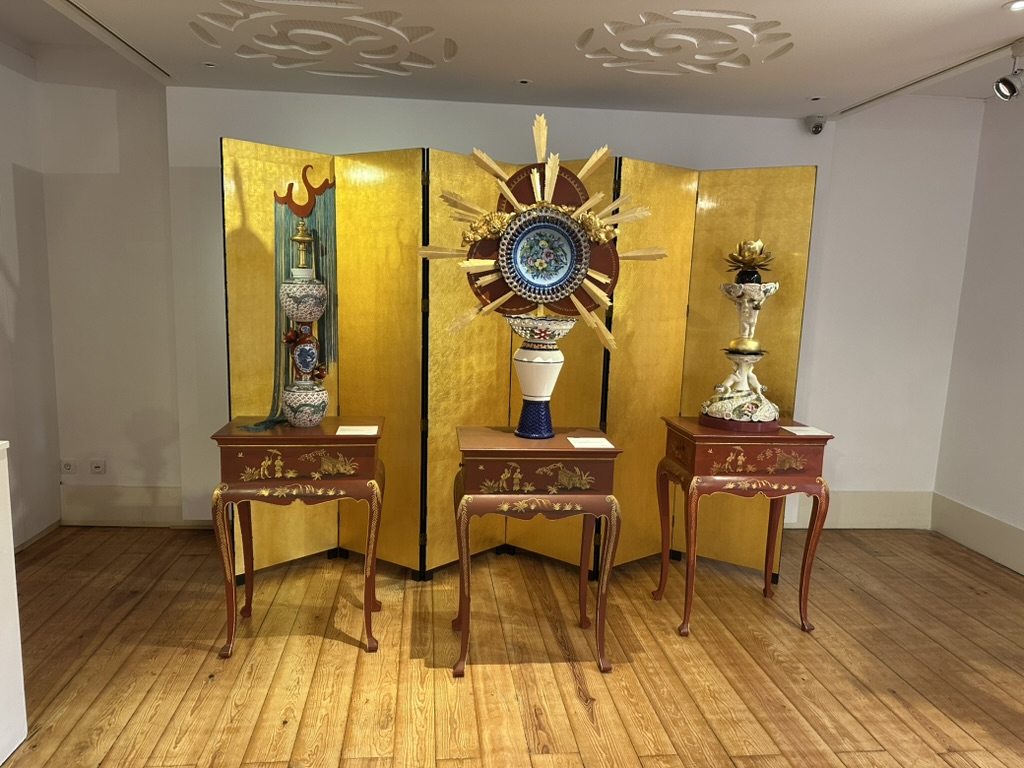
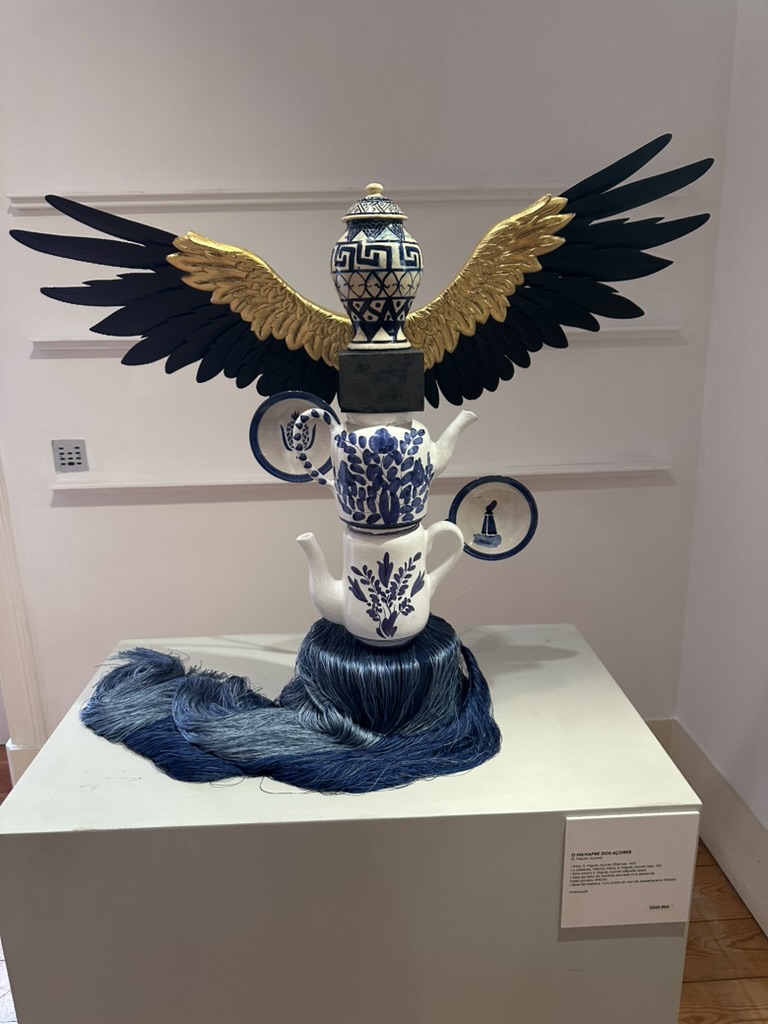
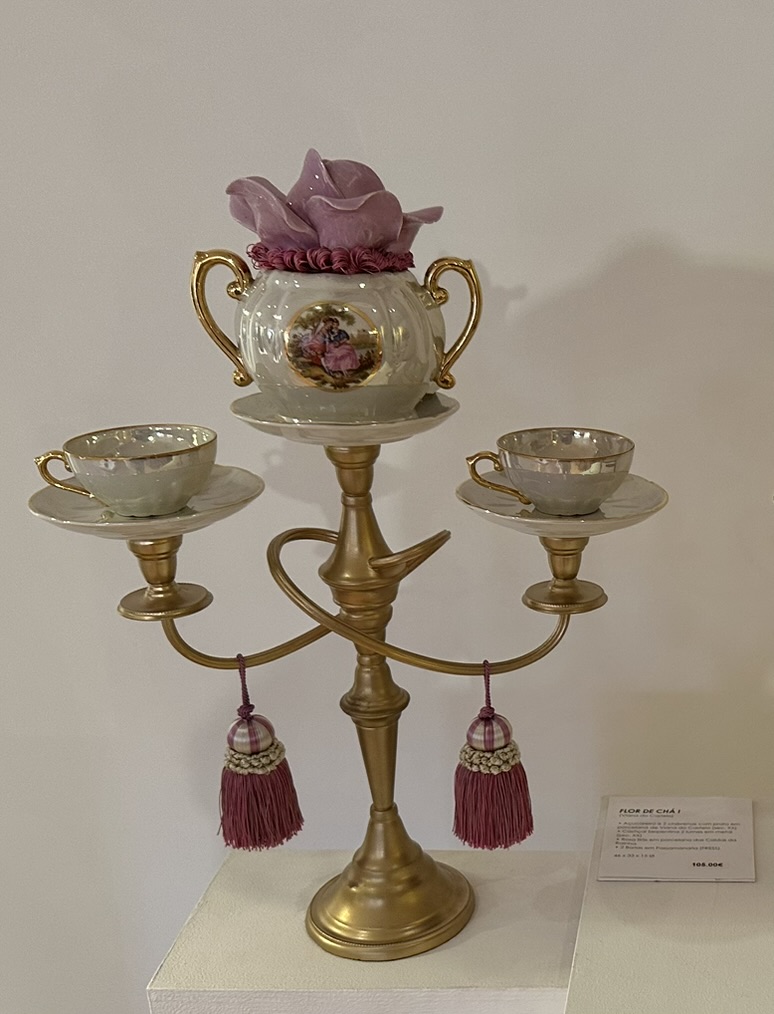
At the gift shop, everything except a tiny xmas ornament Jan purchased was too expensive.  But at a gallery to the side of the carriage canopy we found a display of student work—original creations applying techniques of the earlier artifacts with a contemporary twist–that were listed with prices.

I couldnt resist asking if the one listed for 150 Euros could be shipped.

The attendant said yes and took my order.

Back at Largo Intendende we crossed the square to the building labelled Casa Independente, a hip arts and dance club of former glory where the music started  at 11:00 p.m., much too late for us.

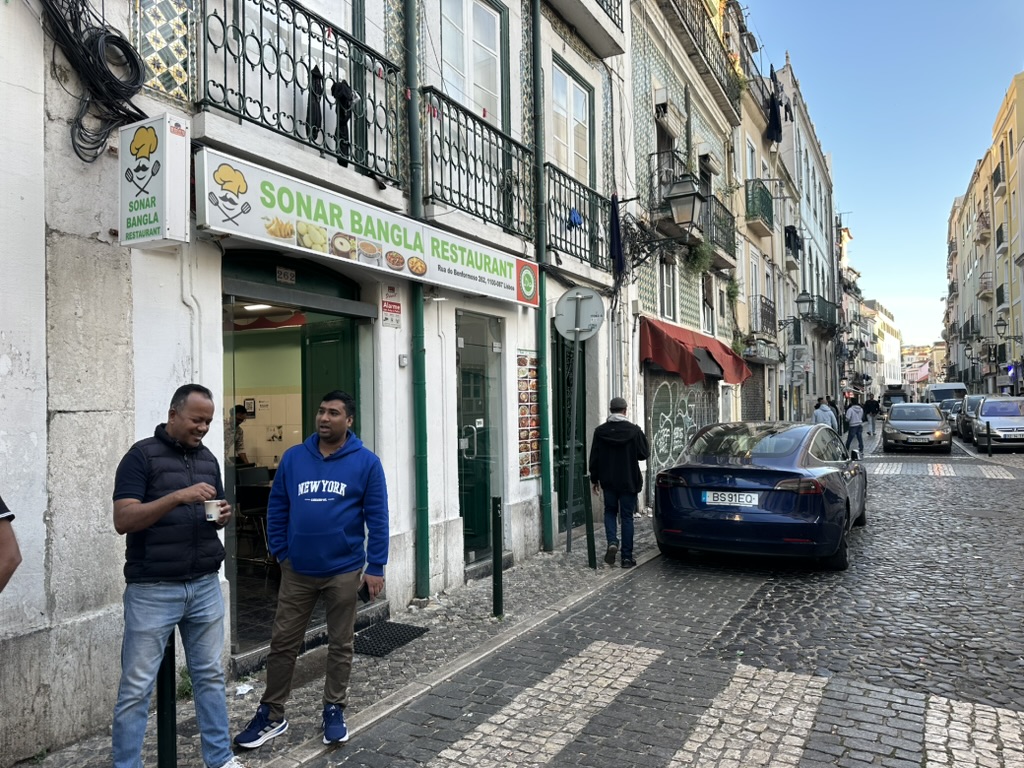
For dinner we ventured down the street at the back of the square densely occupied by East Indian immigrants. The Bangladeshi restaurant food was disappointing but very inexpensive.

Portugal Day 5

Monday, April 27th, 2026

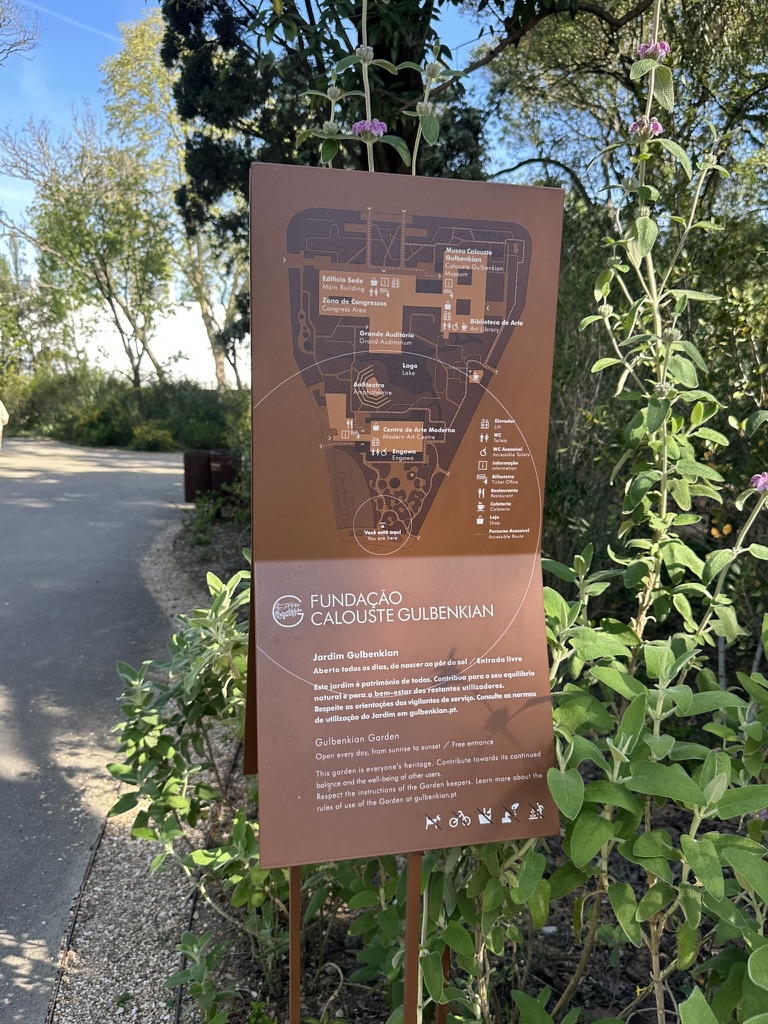
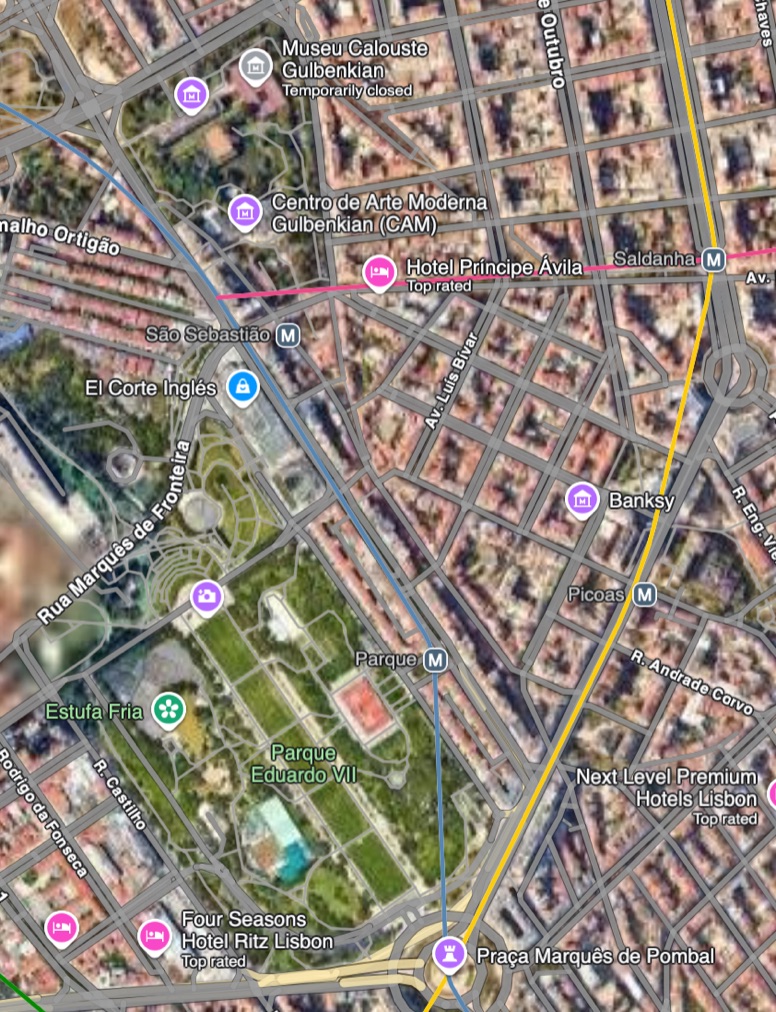
This morning Jan suggested we go to the Gulbenkian Museum and Park, known for its collection of art masterpieces traditional and modern, a facility funded by an Armenian immigrant oil billionaire in gratitude for Portugal’s offer of protection from the Turkish genocide during World War I.

The traditional museum was closed for renovations and the modern one was closed on Sunday, but it was worthwhile to see the spacious modern section of the City where it was located: 20th century buildings, grafitti-free streets, a locked up two story shopping mall with ads for stuff you see in airports.

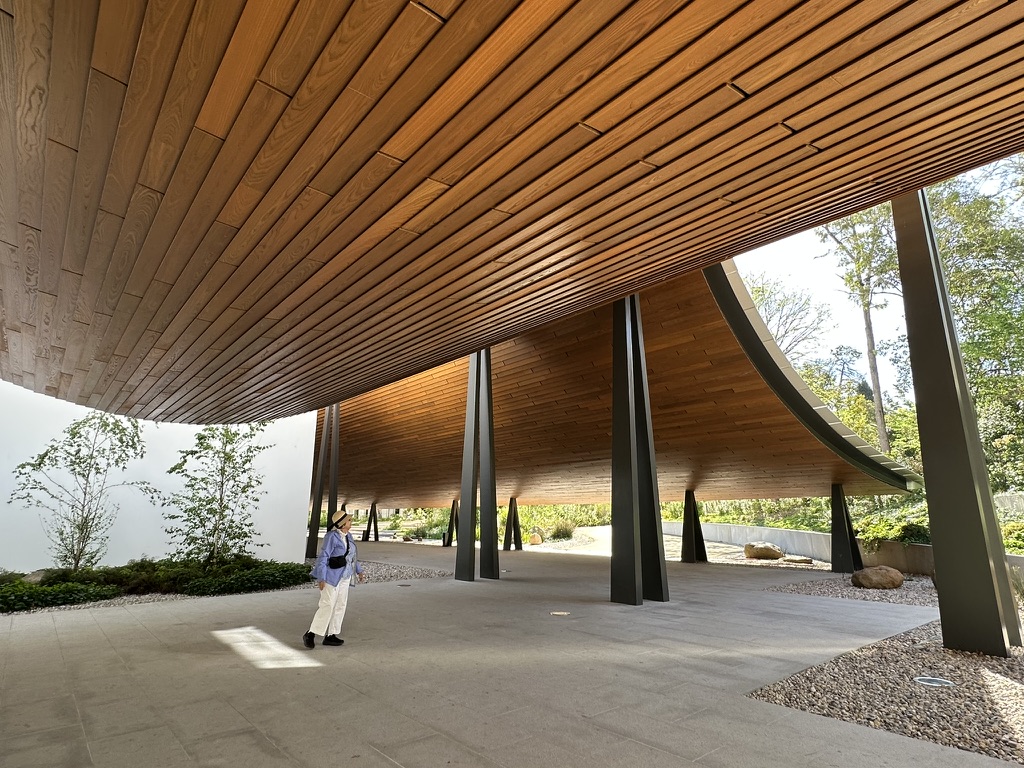
We entered the park surrounding the buildings under a curved stained wood portico of modern Japanese design.

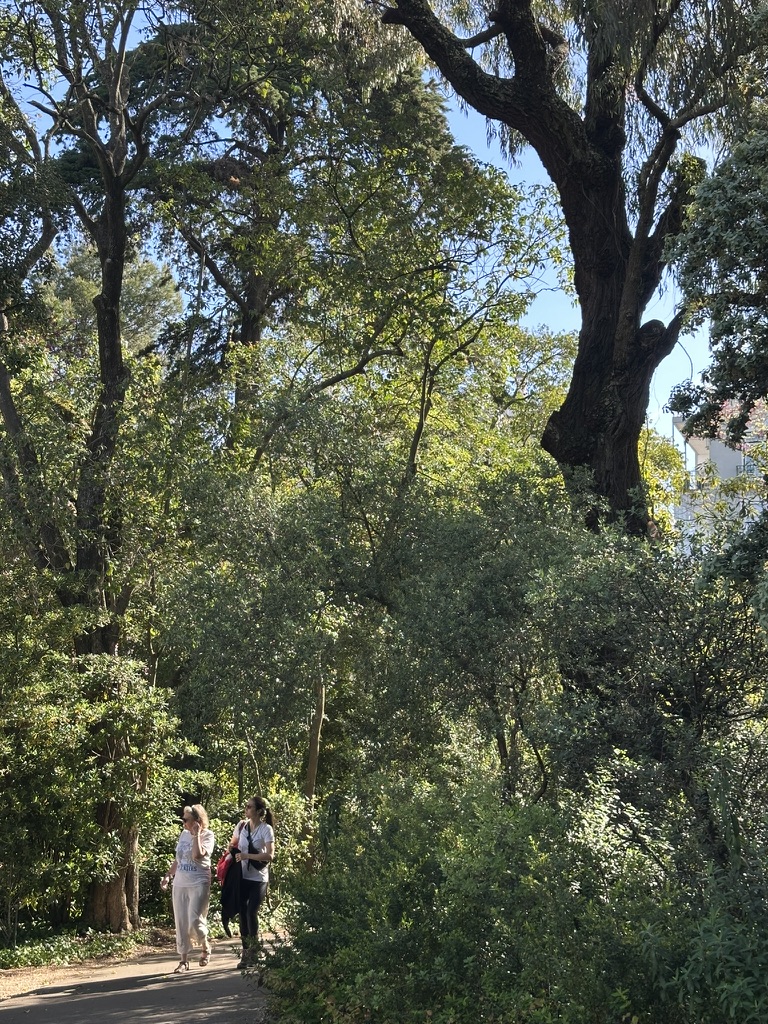
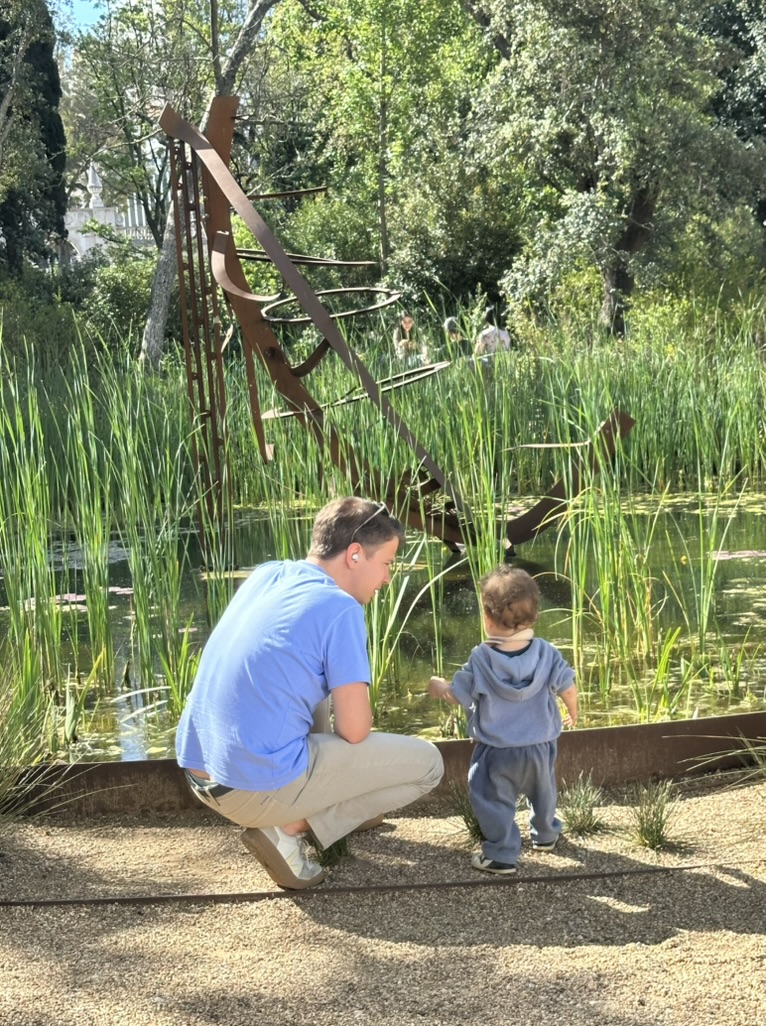
The garden is immaculately tended, large mature trees of many species just coming into light green translucent leaf, fountains, gracefully curved walkways, inviting benches, only a few people and children quietly strolling.

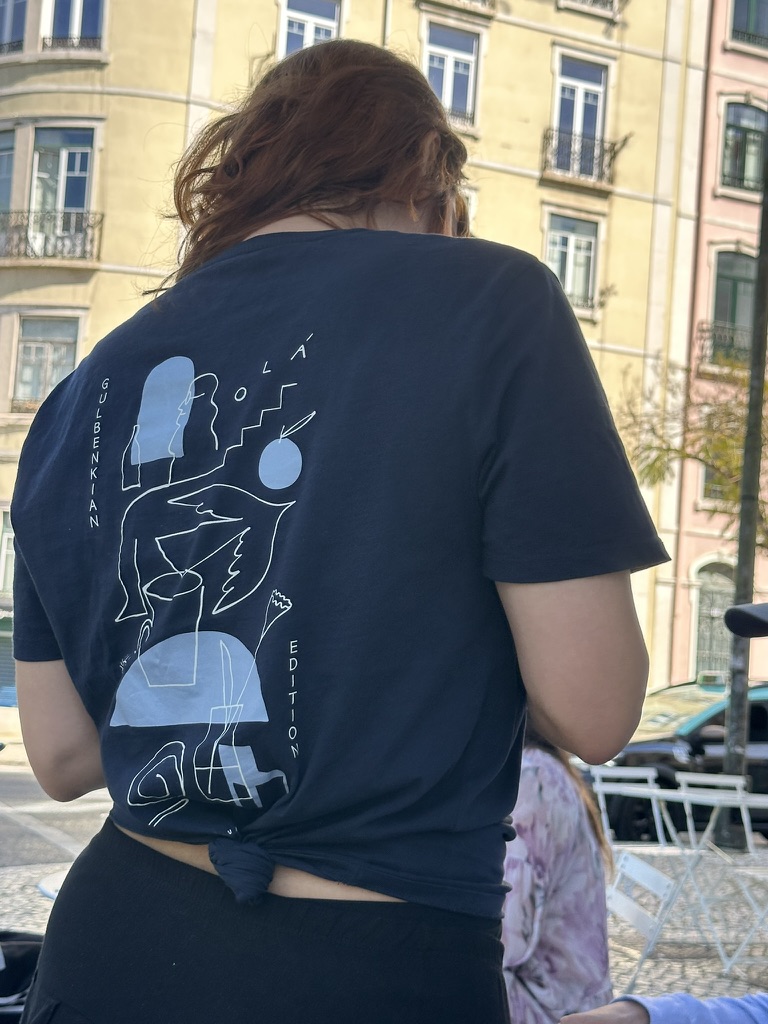
After an hour we exited the park and stopped at a elegant café where waitresses wore artistic t-shirts,

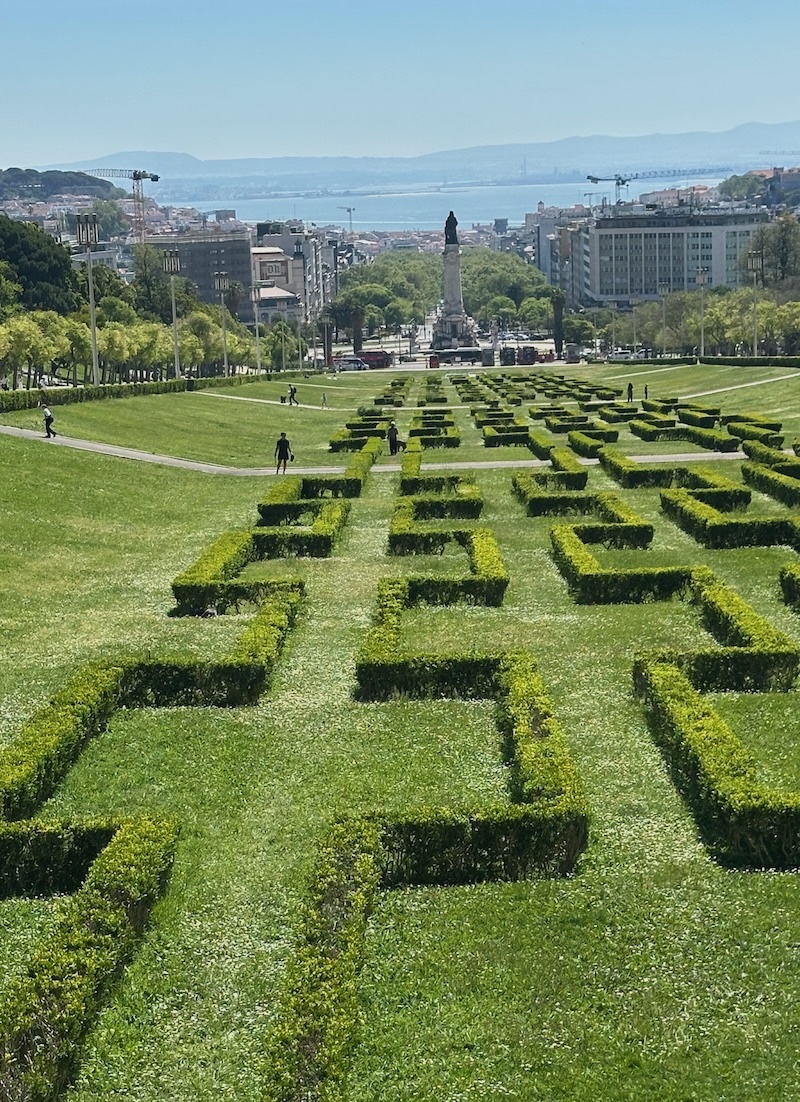
and then uphill to the Edward VII park,  another contrast to the funky beauties of the old town,  a formal garden extending down to the riverside miles away.

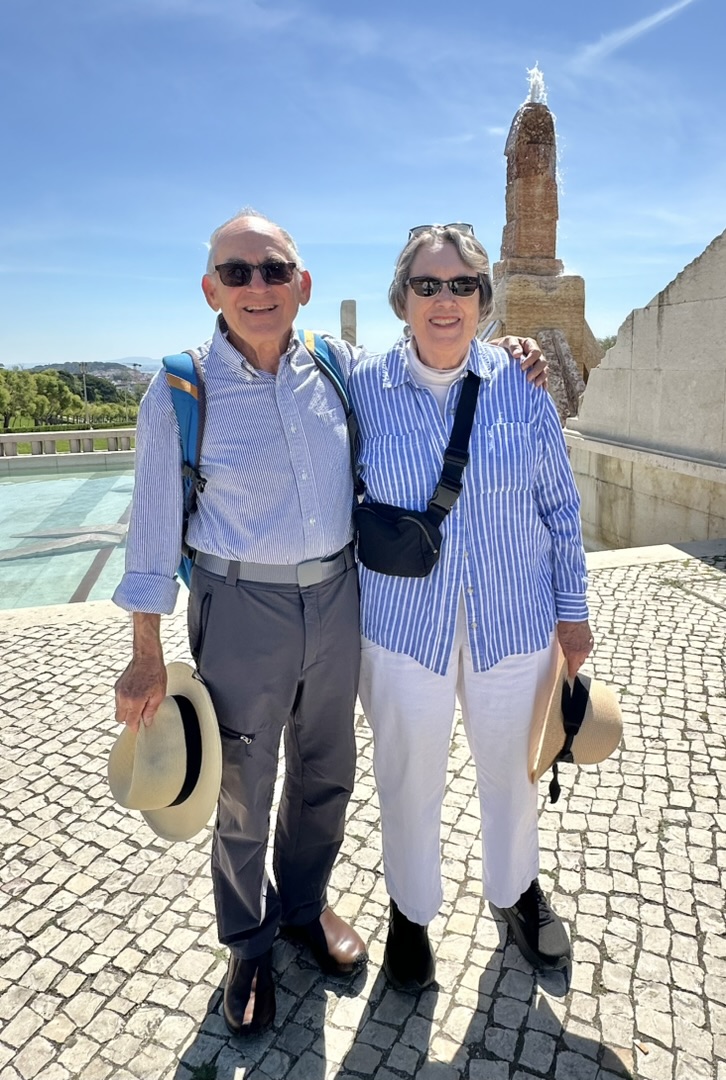
The fountain seemed a bit incongruous.

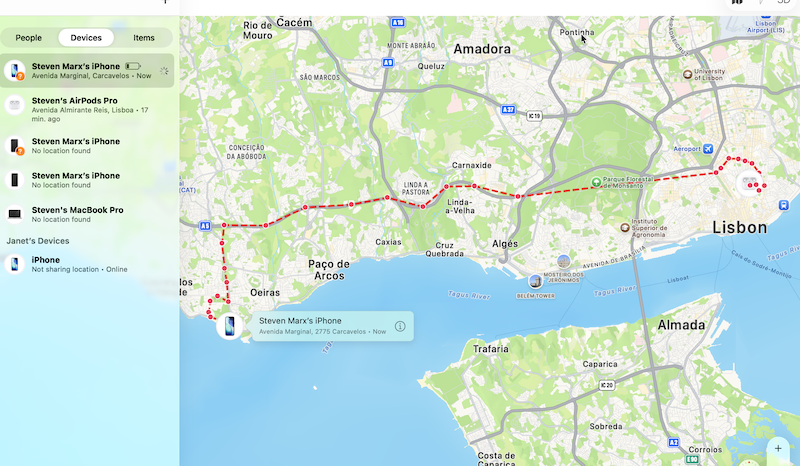
Within minutes of arriving back at the hotel by Bolt I realized my phone was gone, most likely having fallen from my pocket upon leaving the car. “Where’s my iphone” on the computer told me its location at an address near that point. I dashed back out, looked along the sidewalk and approached every shop and café keeper nearby to try to locate the number.  A tall dishevelled fellow came up and insisted he knew where it was and that I accompany him down the street. I pulled away from him and entered a little halal butcher shop next to the mysterious address, where a young clerk told me that it was behind an adjacent unmarked locked gate. I realized this was a false lead.

Back at the computer in our room the robot tracked the phone moving from where I left the Bolt out into the suburbs.  It was still in the car.  I repeatedly called my phone with Jan’s. Eventually the driver answered it and said he would bring it to me later.  But as I tracked the phone’s travels all over the map I got more anxious.

Jan convinced me to go to the Lisbon artifact shop facing the square, “A Vida Portuguesa,” to practice “Sardine Therapy” by choosing from the hundreds different packages of fish.

Three hours later, the Bolt driver called her phone at the number I’d left, said he was nearby and asked where should I meet him. Down in the street Jan and I saw him approach, dressed in a priest’s robe and hat. I restrained my impulse to hug him but gave him a 20 Euro reward.

Portugal Day 6

Monday, April 27th, 2026

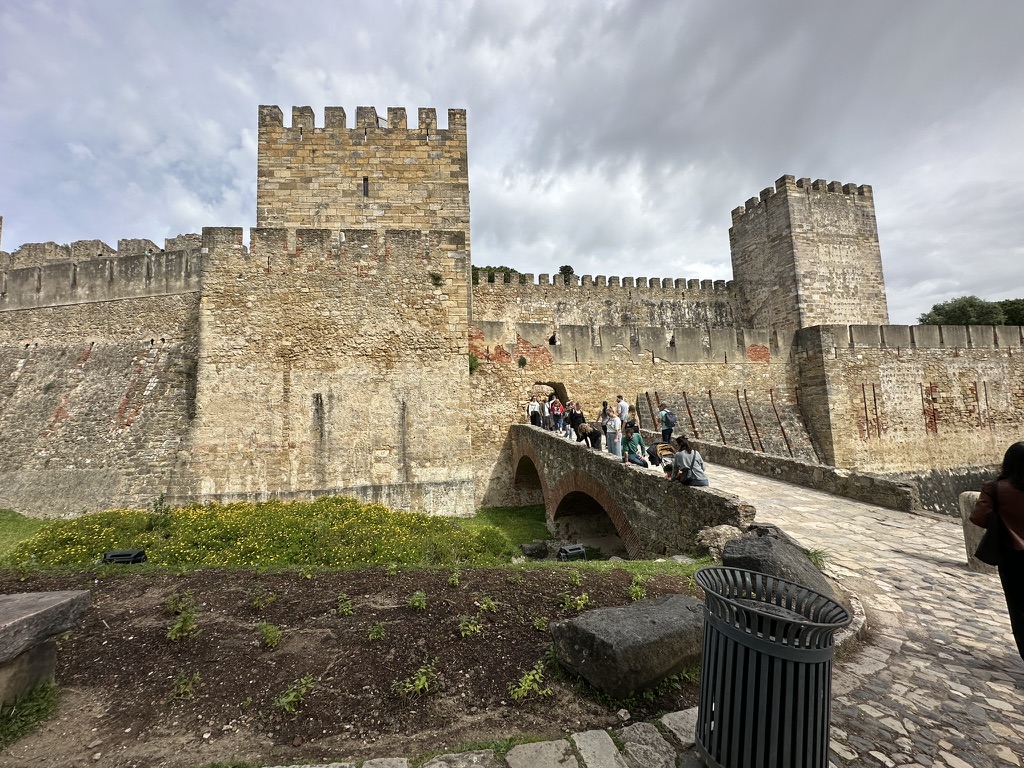
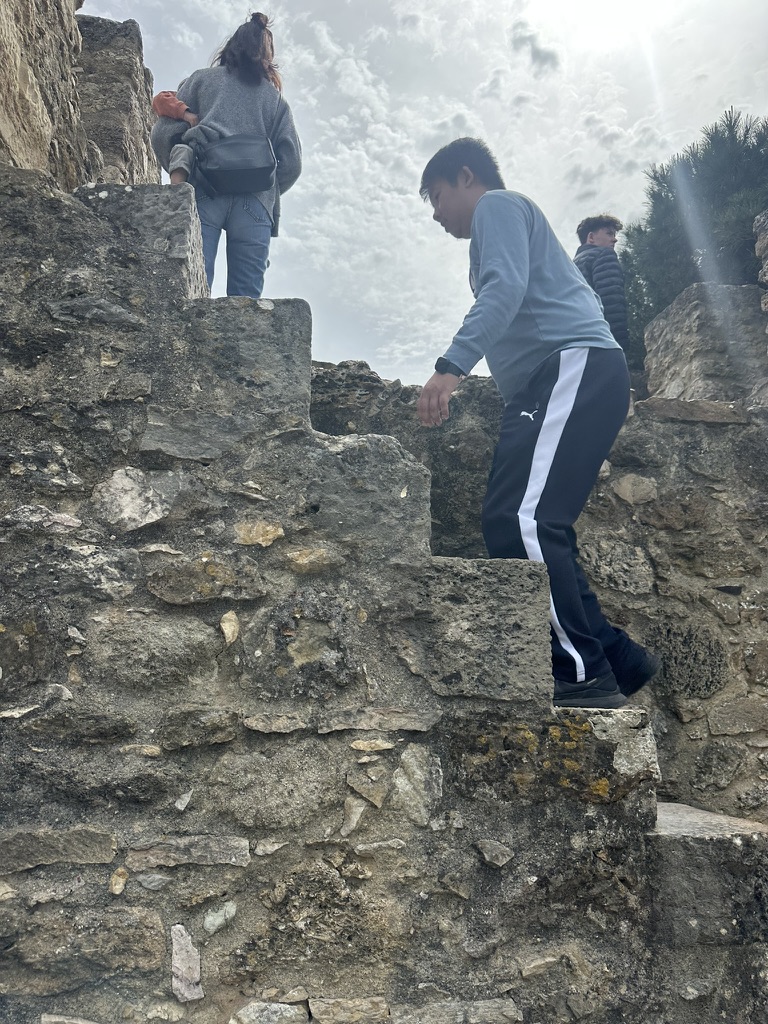
Another blue sky day. we took tram 28 to visit the St. George Castle, the most prominent landmark in the City. From the Miradoura das Portas do Sol overlook we slowly ascended  steep steps to  the  entry.

The spot has been occupied since the 8th century B.C. and from 4 B.C. was a strategic  Roman stronghold.

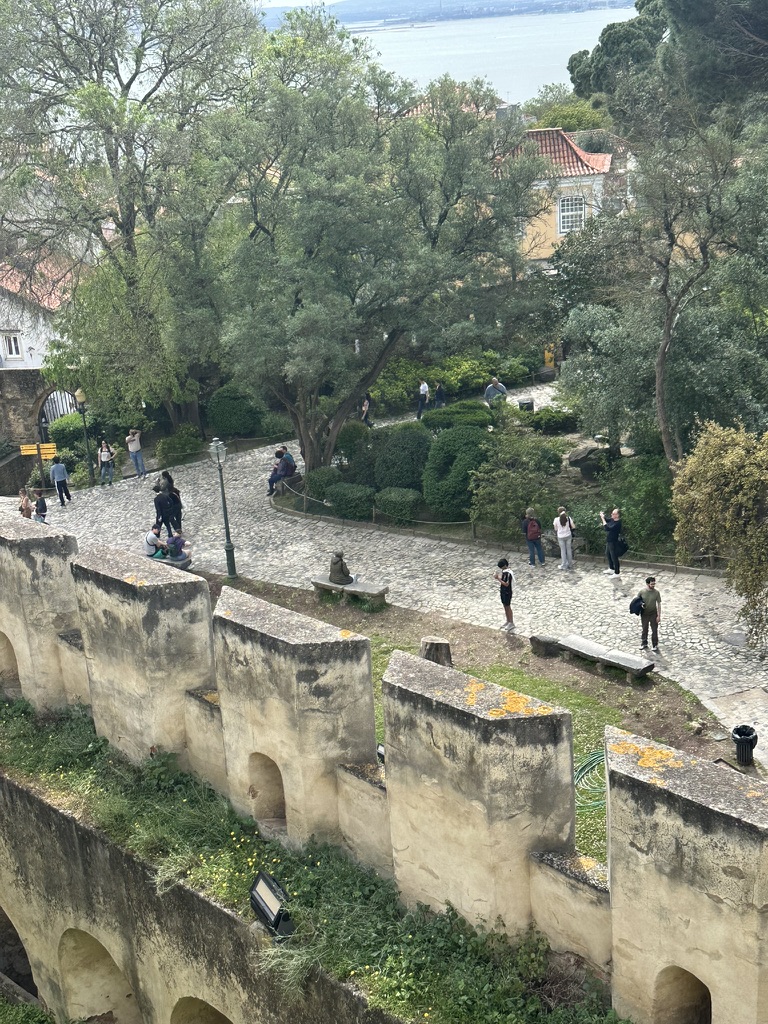
We walked along the lower ramparts looking down at features of the City which by now had become recognizable.

I ascended to the upper walls of the citadel feeling shakier than I expected.

from which I could see the lower fortress

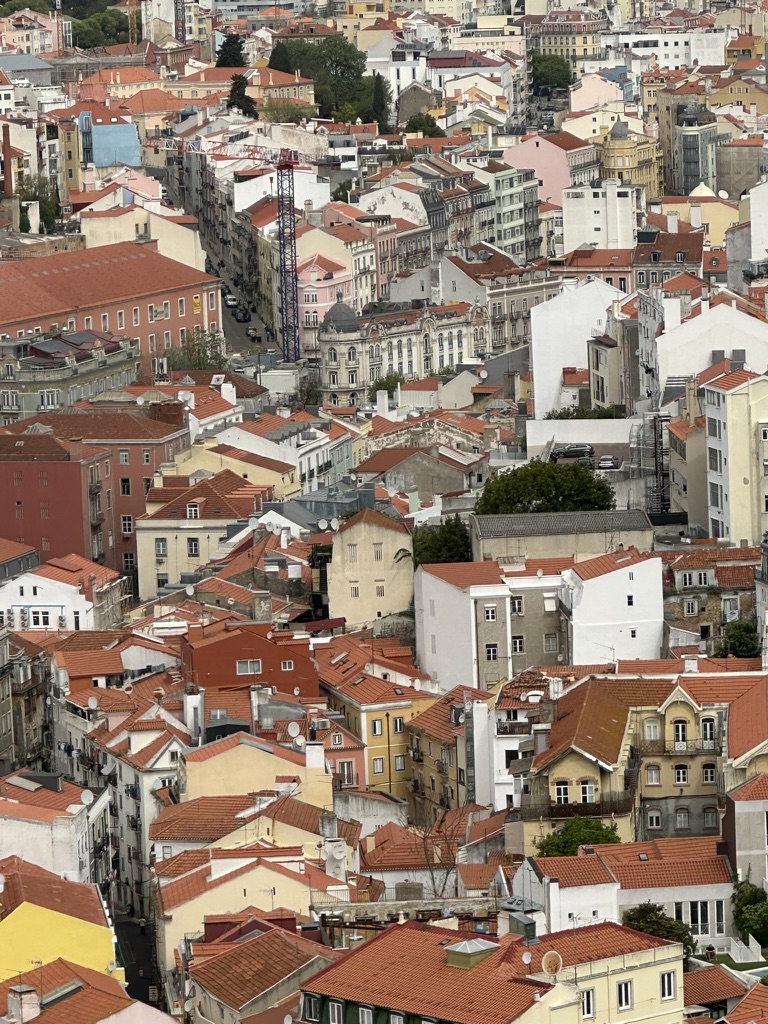
and our hotel in the narrow valley below.

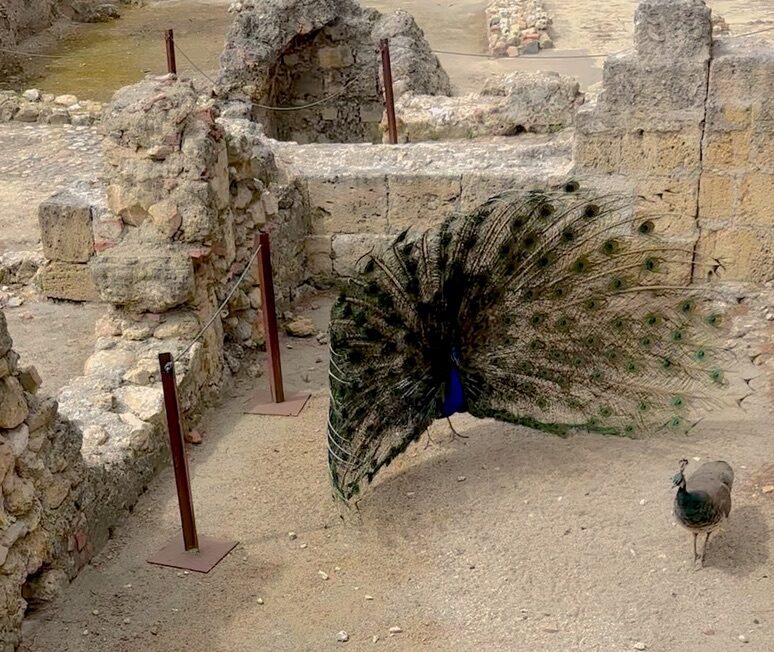
We visited the archaelogical museum and excavation on site, where a male peacock courted an indifferent female.

Jan had purchased a two hour sunset tour of the Tagus estuary on a traditional sailing boat scheduled for that evening, but the weather turned unfriendly. Watching the mast rock under sporadic showers most of the other passengers didnt want to proceed.  After a disagreement with the young guide, the boat owner offered credit for another trip when the weather improved.

Portugal Day 7

Monday, April 27th, 2026

Jan found a laundromat where we could wash our first week’s worth of clothes.

We reached it up the steep hill on the opposite side of the Largo Intendente valley

which offered a view of Secret Garden tucked under the Miradouro Senhora do Monte.

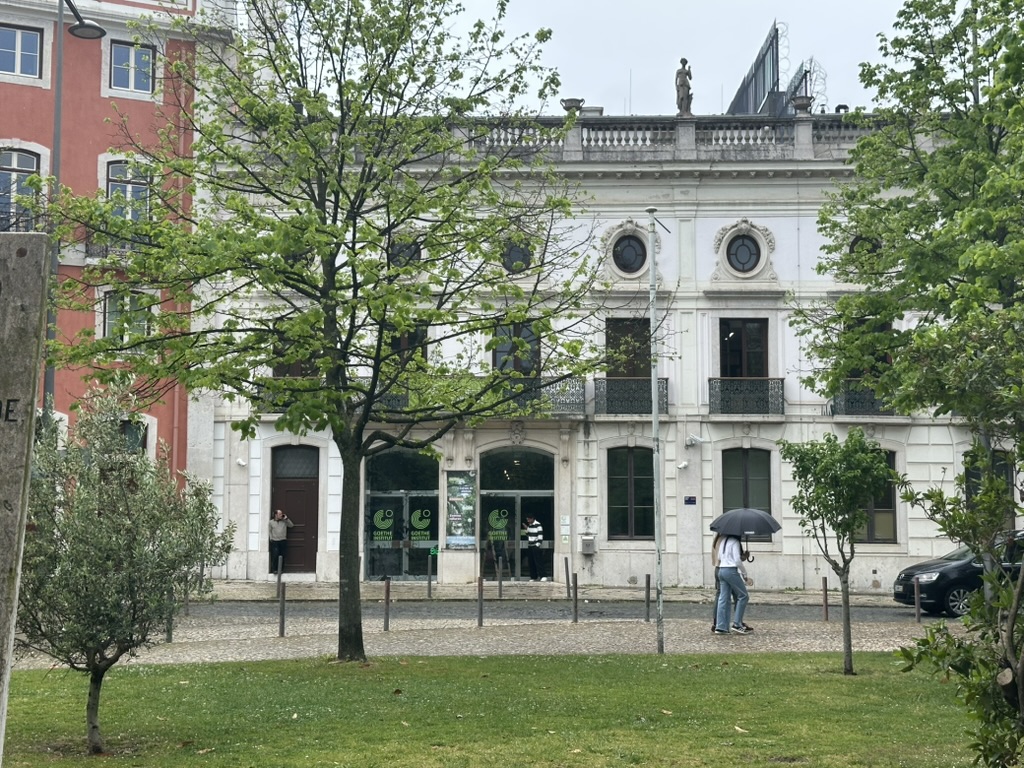
After lunch I hiked beyond the laundromat to another hilltop area where elegant buildings like  the Goethe Institute

were interspersed among shabby ones

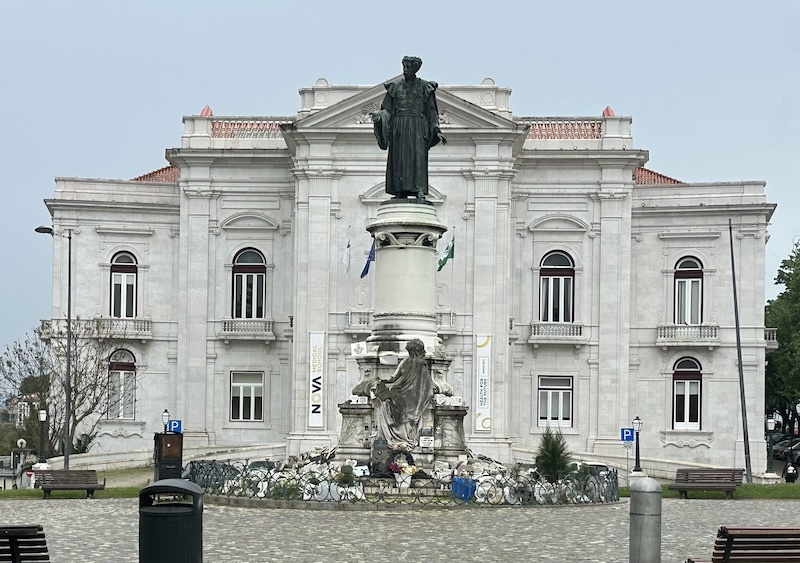
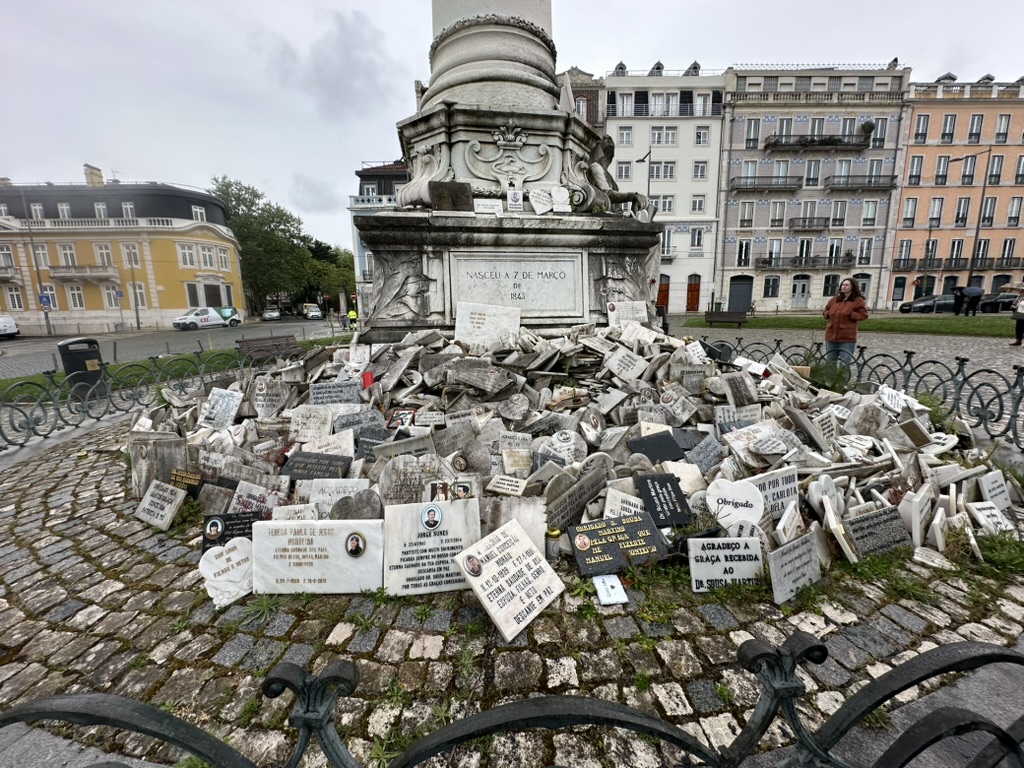
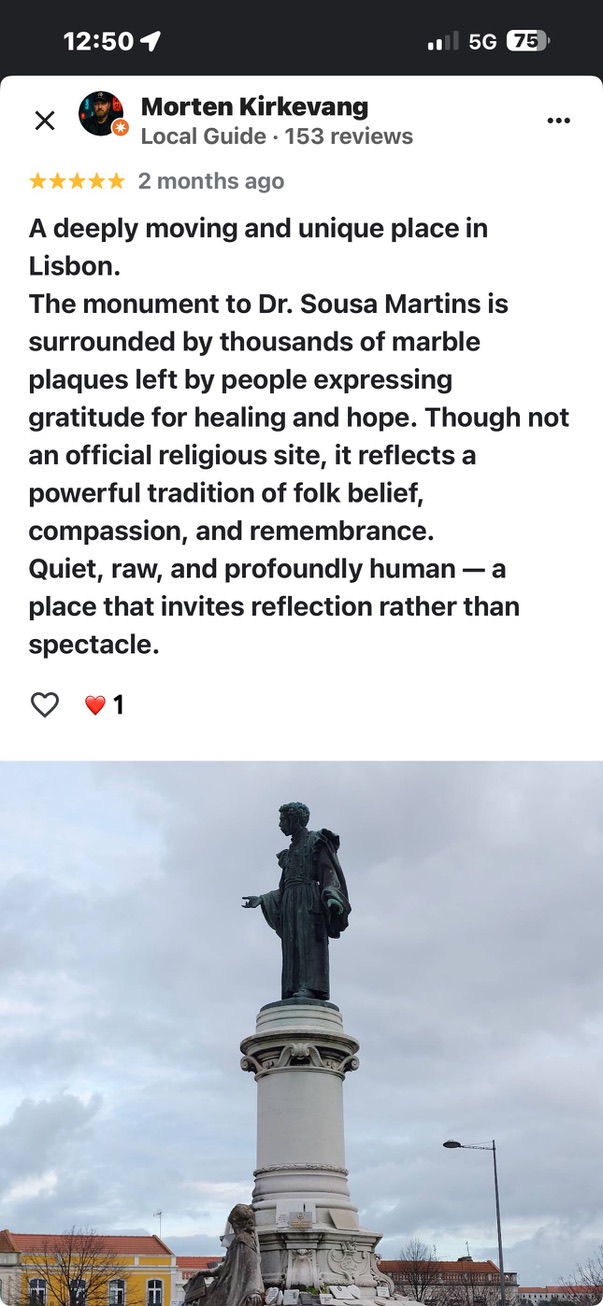
In front of an imposing classical facade I saw a a strange looking monument.

An explanation was posted on Google Maps

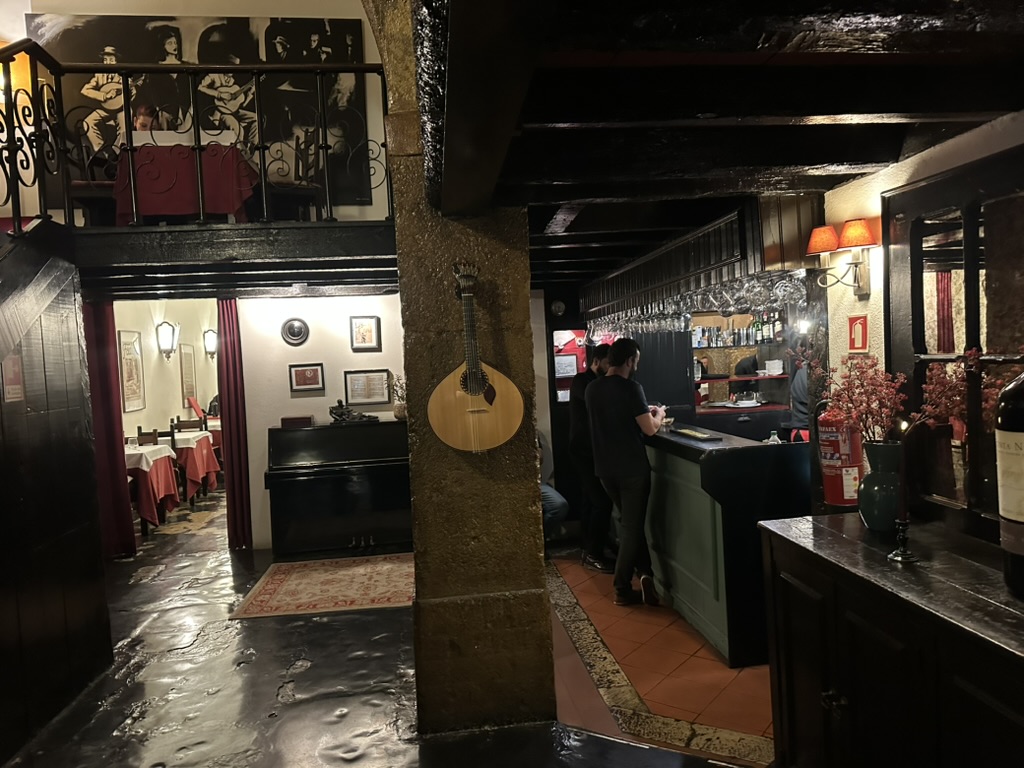
Back at he hotel Jan and I prepared to attend a concert at Clube de Fado. Located in a cellar, supposedly one of the first early 1900’s Fado venues, the music was preceded by a fine fish dinner.

The place was packed and loud, but when the lights went down it got silent. The traditional trio of musicians—vocalist, Portuguese guitarist, Spanish guitarist — took places in a tiny performance space.  The virtuousity, immediacy and power of the first set brought tears to my eyes.  Alas the set was only fifteen minutes long.

The three of them departed, and the lights went up. Twenty minutes later the instrumentalists returned with a young male vocalist.

That set  was followed by an instrumental set highlighting the Portuguese guitar.

Next was a female singer who expressed the traditional Fado blend of beauty and pain

Four more sets were scheduled for that night, but we didn’t have the stamina to wait out the intervals. We paid the reasonable bill—about 65 euros for dinner including a full bottle of wine.  I expressed my gratitude to the musicians during the interval at the bar outside the dining room.

It turned out that the Portuguese guitarist had lived in San Jose California, where he worked at an IT company and played at the City’s Fado clubs.

Portugal Day 8

Monday, April 27th, 2026

We traveled by metro and modern tram to Belem, a coastal section of the City which was the departure and arrival point for sixteenth and seventeenth century voyages of exploration and the site of the Jeronimos Monastery, the prime architectural attraction in Lisbon.  But the line to get in and the press of crowds arriving by tour bus turned us away.

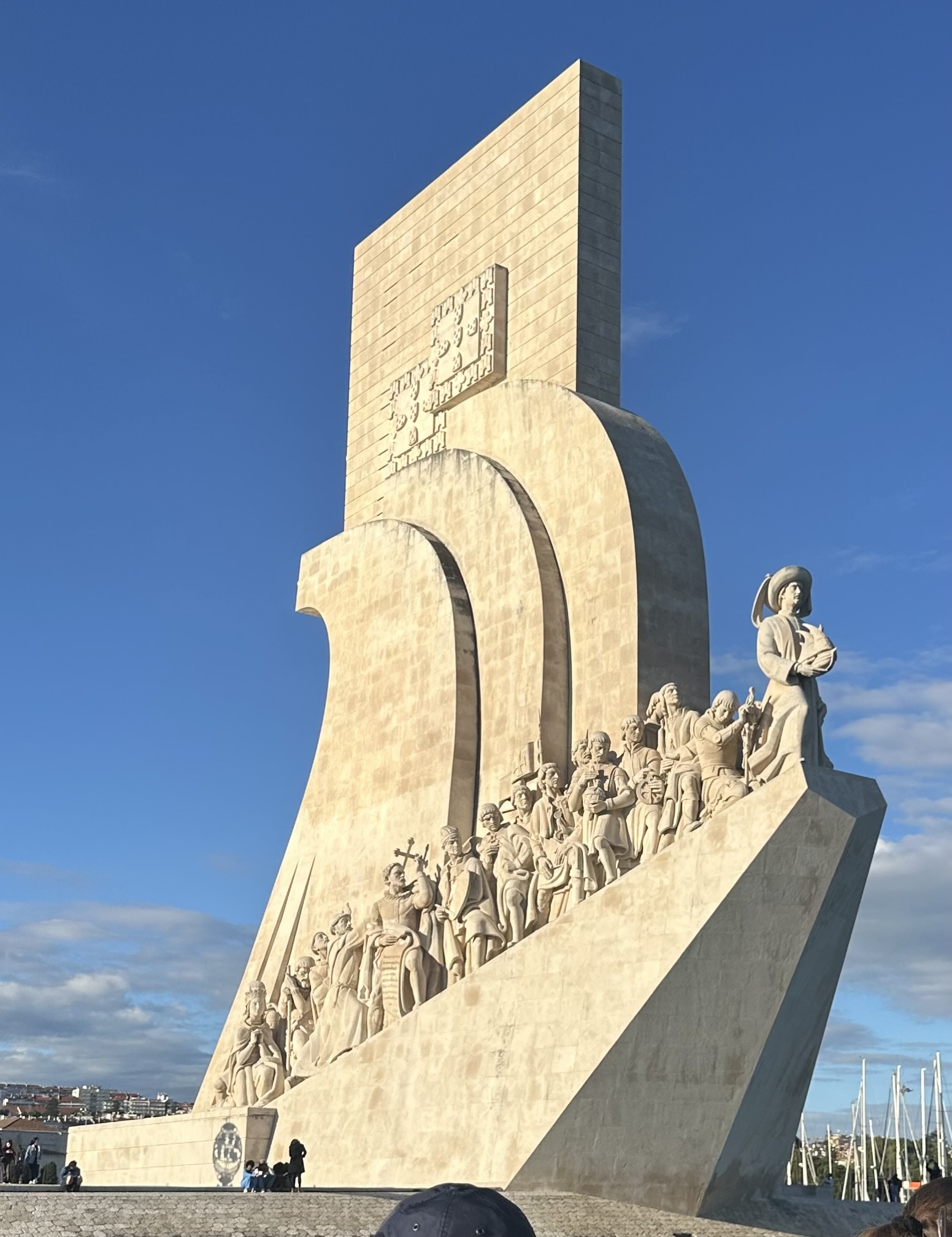
We walked along the shoreline past the 170 foot tall monument to the Age of Discovery commissioned by the dictator Salazar.

It glorifies the nation’s seafaring history during the 15th century and 16th centuries, which provided access to vast wealth, much in the slave trade, and the foundation of worldwide empire.
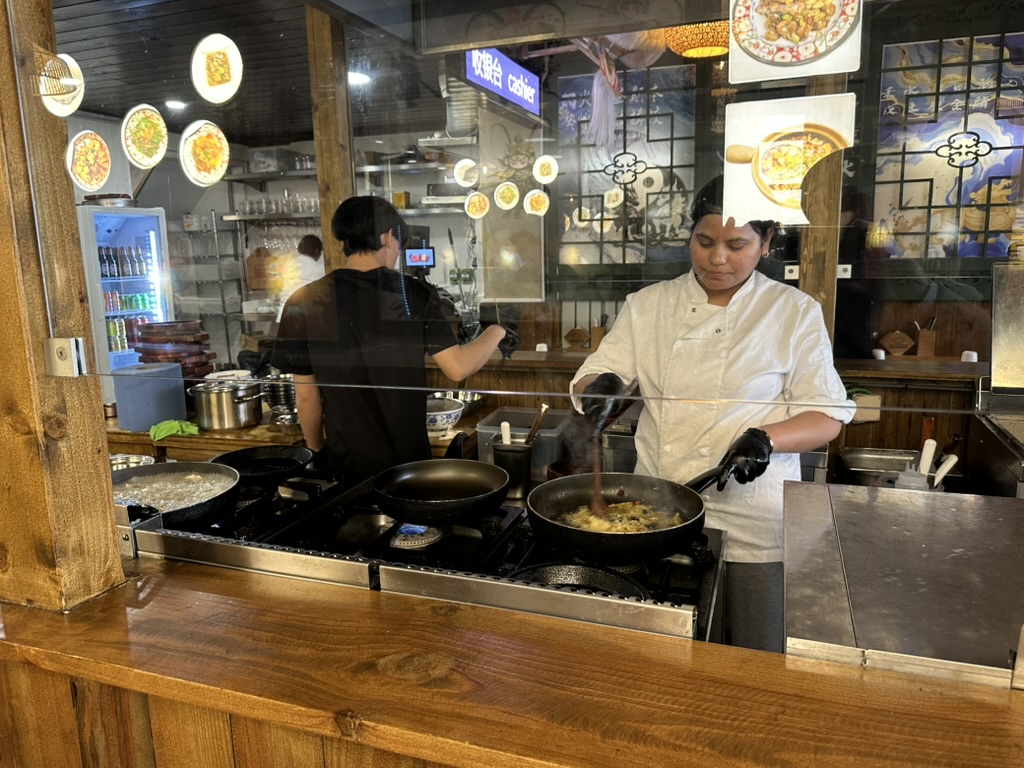
Returning to our home district of Mouraria, we ate lunch at Shi Mama Dumplings, a modest and very tasty Chinese restaurant across the street from 1908.

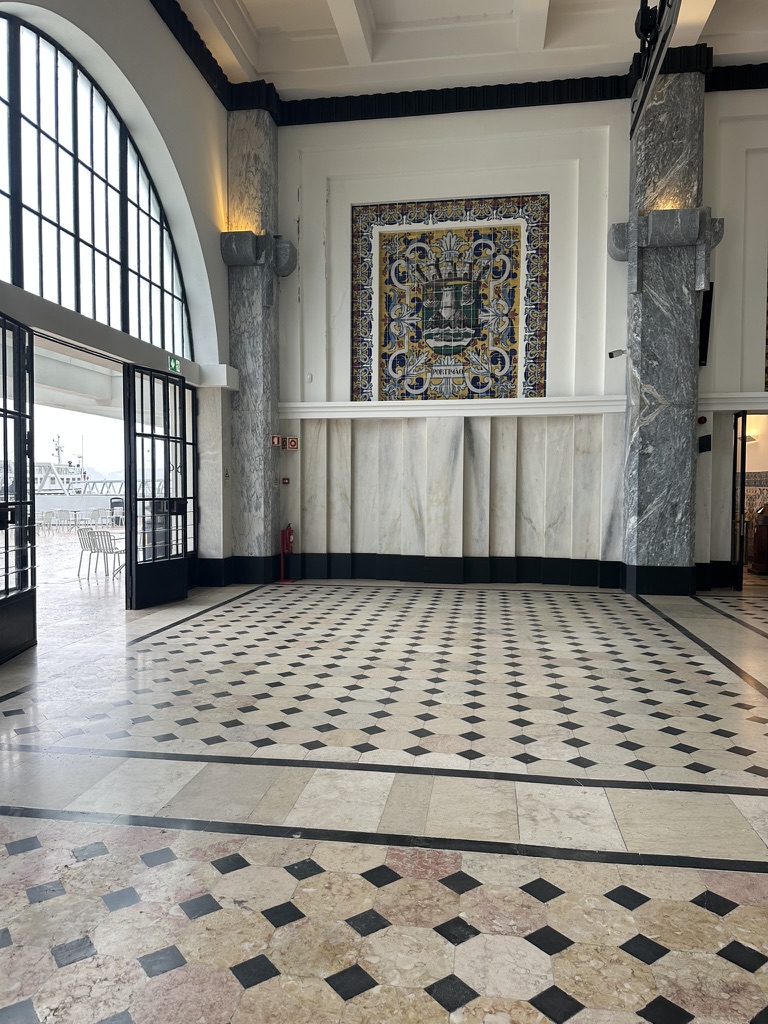
The late afternoon weather appeared promising for  the postponed boat ride on the Tagus. We passed through the the restored Art Deco ferry terminal which used to provide the only accessa to the south of the country

before Salazar constructed a bridge resembling San Francisco’s Golden Gate.

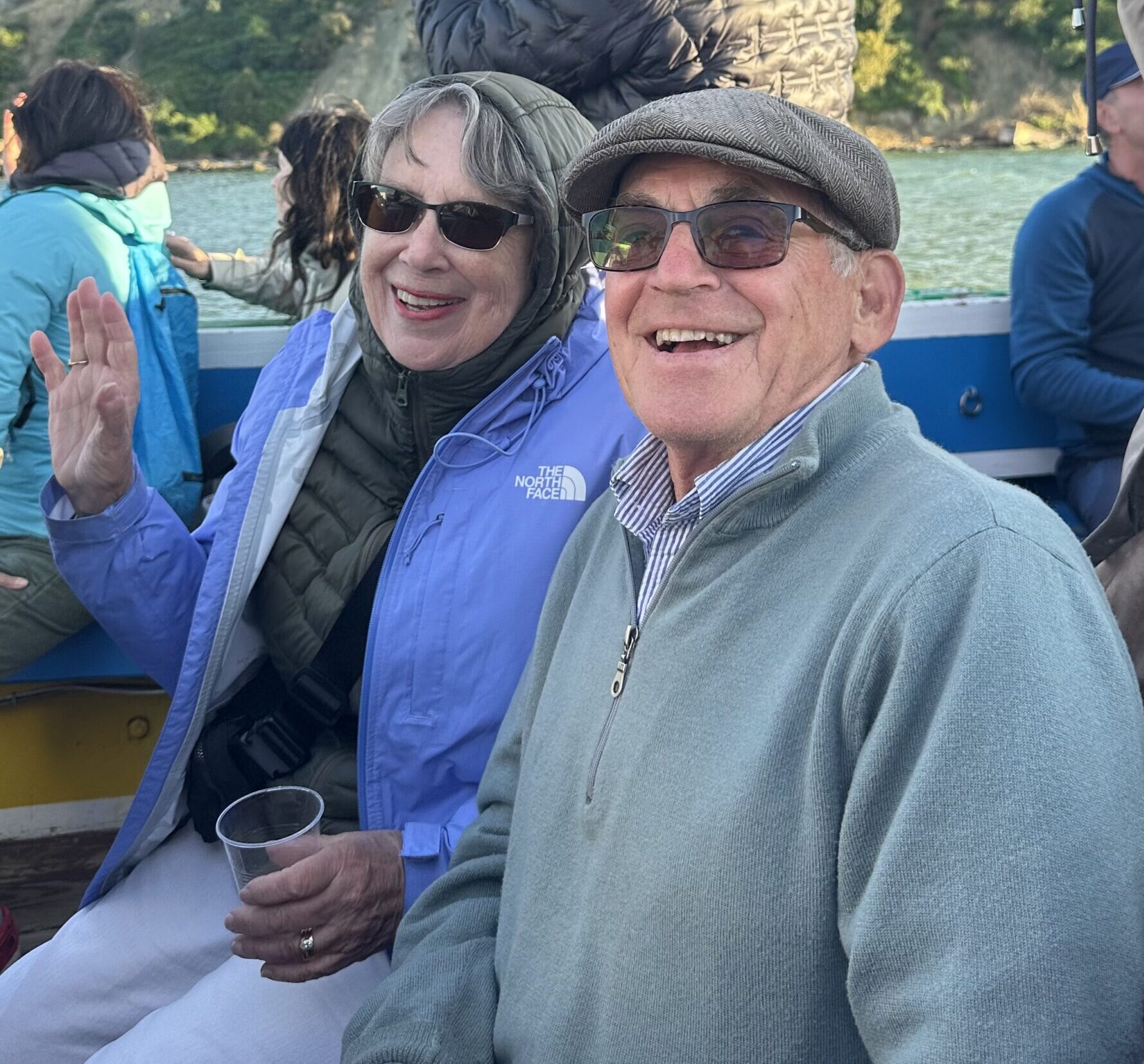
The old boat with a crew of three carried about 40 people. It never hoisted sail and ran  powered by its engine, but any disappointment was allayed by recorded Fado music and bottomless cups of white wine.

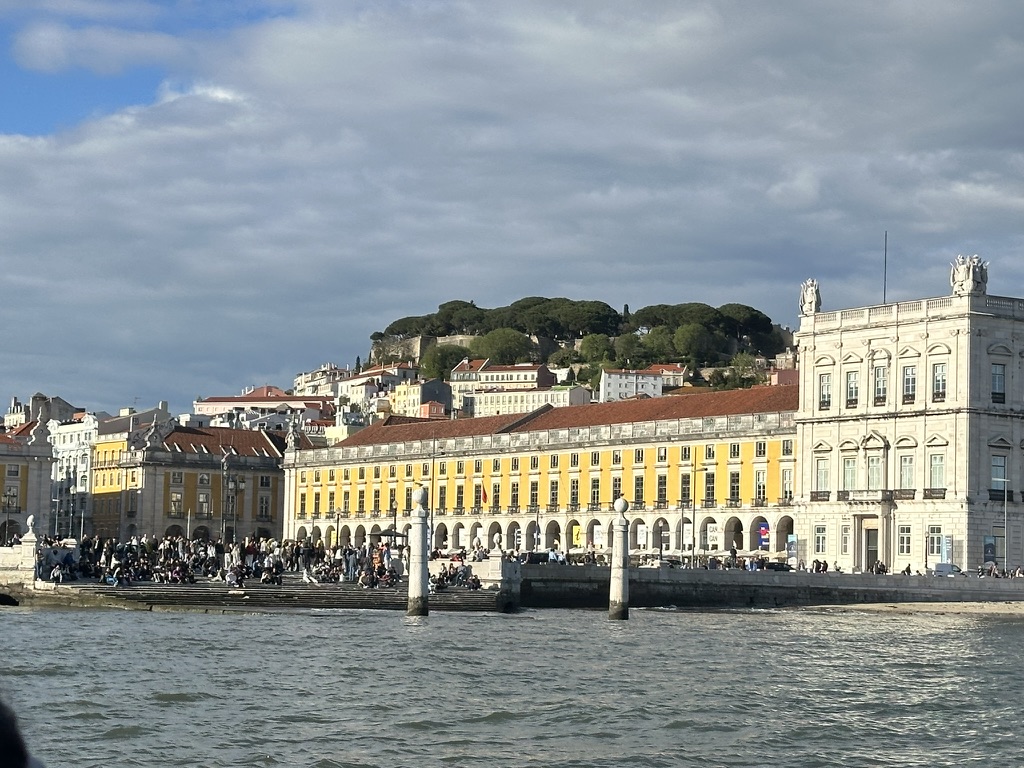
Overlooked by the St. George Fortress, the Plaza de Comercios we had walked through on our first exploration of the City shone as it must have for the returning explorers.

Fast asleep after that sea venture I was awakened at midnight by a phone call from from the man in California  whom I’m dependent upon as the lead consultant for the awarded Agro-Eco Land Improvement Grant I’d been shepherding for the last six months. He said how are you doing. I said OK but it’s midnight and I’m Portugal.  He said, Oh I forgot you were away. I need to talk to you about the budget. I dont know if we can do it. I said let’s talk tomorrow.  He said I’ll call you about 2:00 p.m. your time. Despite my unease I got back to sleep.

Portugal Day 9

Monday, April 27th, 2026

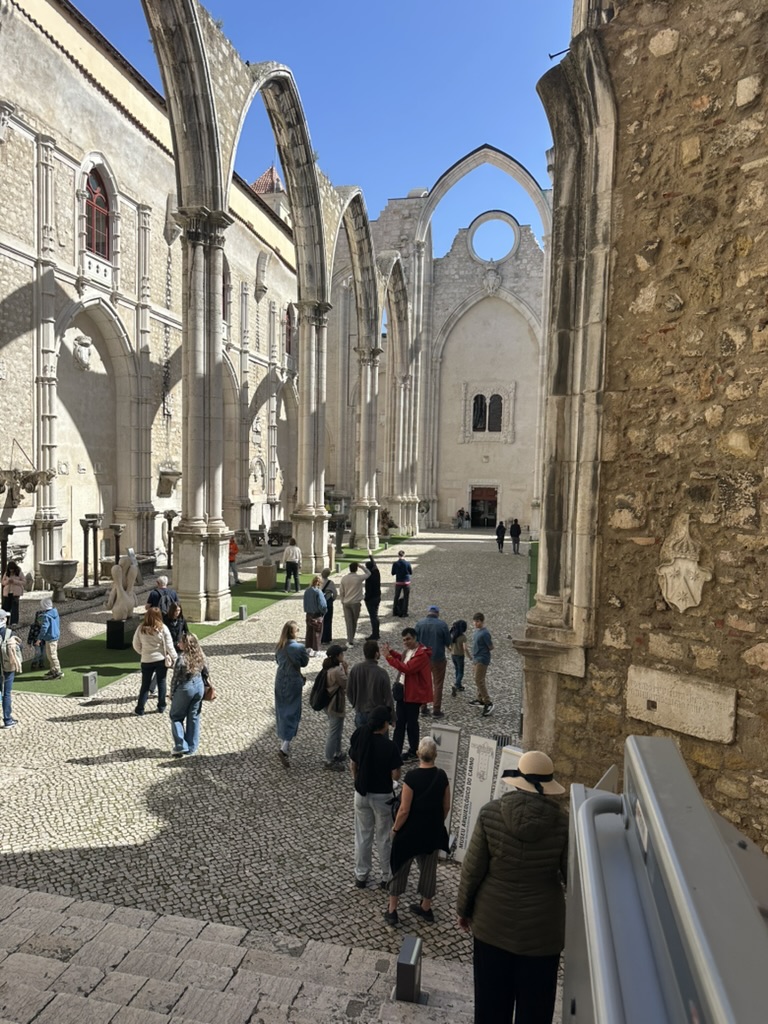
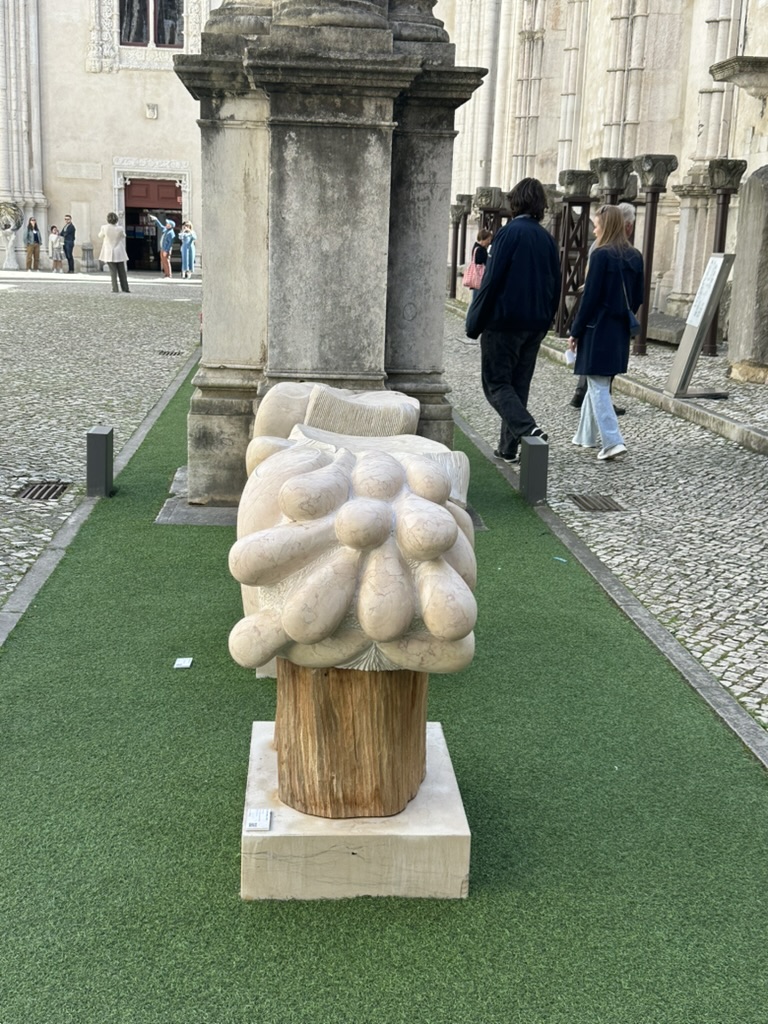
The midnight phone call left me disoriented in the morning, and as I awaited the 2:00 p.m. phone call, I was glad to accept Jan’s suggestion that we visit the Archaeological museum in the Baixa district. The square in front was filled with excited folk this beautiful spring morning, and after paying the reduced senior price we entered a remarkable space—the roofless ruin of an old cathedral now devoted to modern art and old artifacts gathered by the colonists and archived by the Portuguese archaeological society.

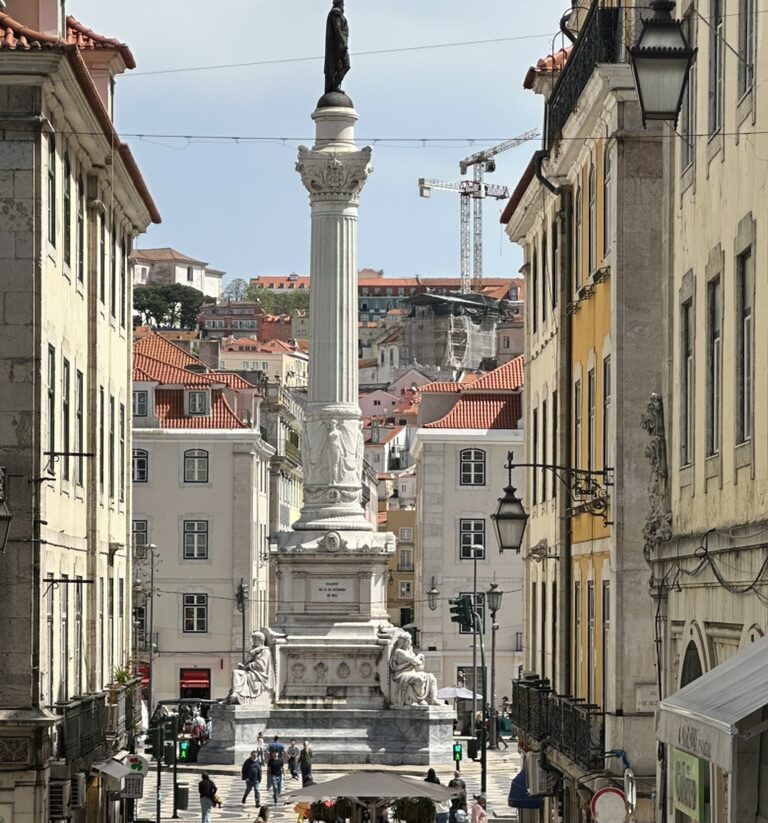
Afterwards we walked the long way back to the hotel, passing through crowded Rossio and Martim Muniz plazas

and arriving for lunch at the peaceful outdoor cafe outside 1908 Lisboa and afternoon naps.

When the expected call from California didnt come at 2:00 p.m. I left voicemail, email and texts, and started feeling really ill–the onset of a cold that still lingers three weeks later. The person I depended upon got back at 3:00 p.m. A brief conversation about solving a problem of clearing brush with volunteer labor allayed his concerns. I felt a wave of relief,  a surge of adrenalin, and the illusory confidence I wasnt getting sick.

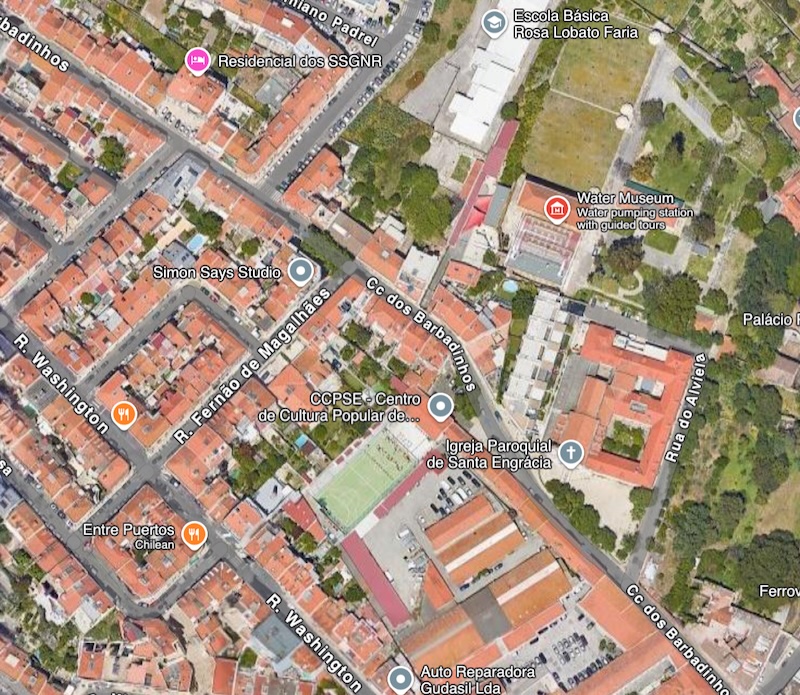
Jan proposed a new excursion–to the Water Museum located within walking distance of the 28E tram route.

We each have interests in water works, hers for decades on the Council in making the City drought-proof by developing multiple sources–mine the pending pilot project at City Farm for  aquifer recharge on farm land.

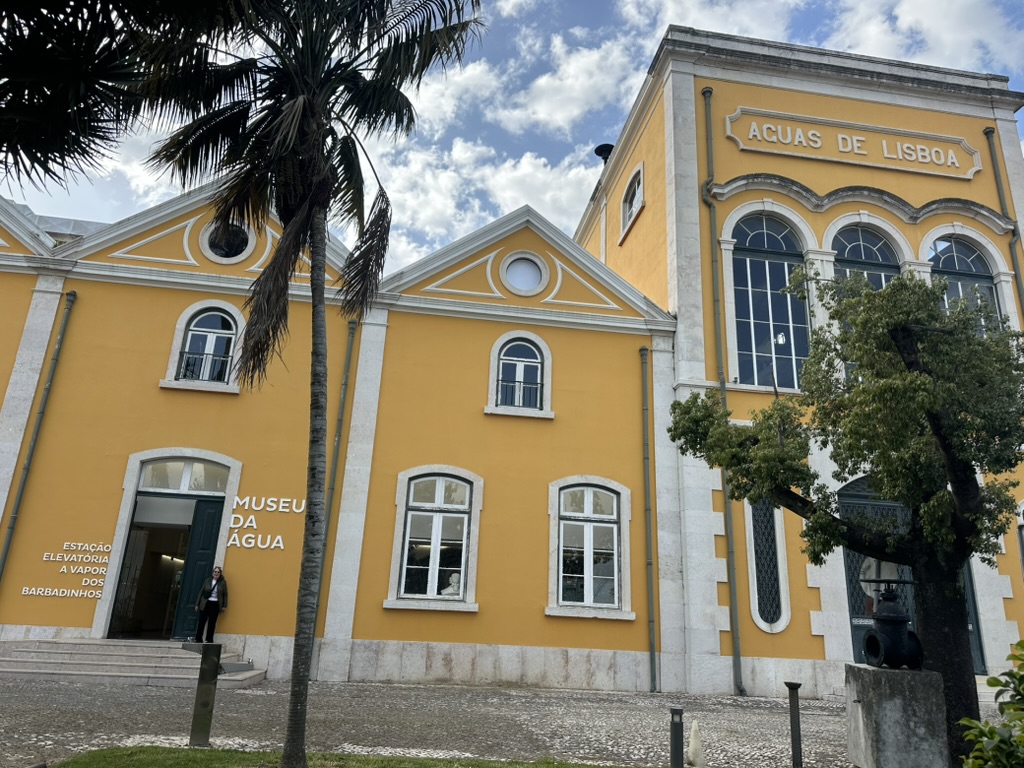
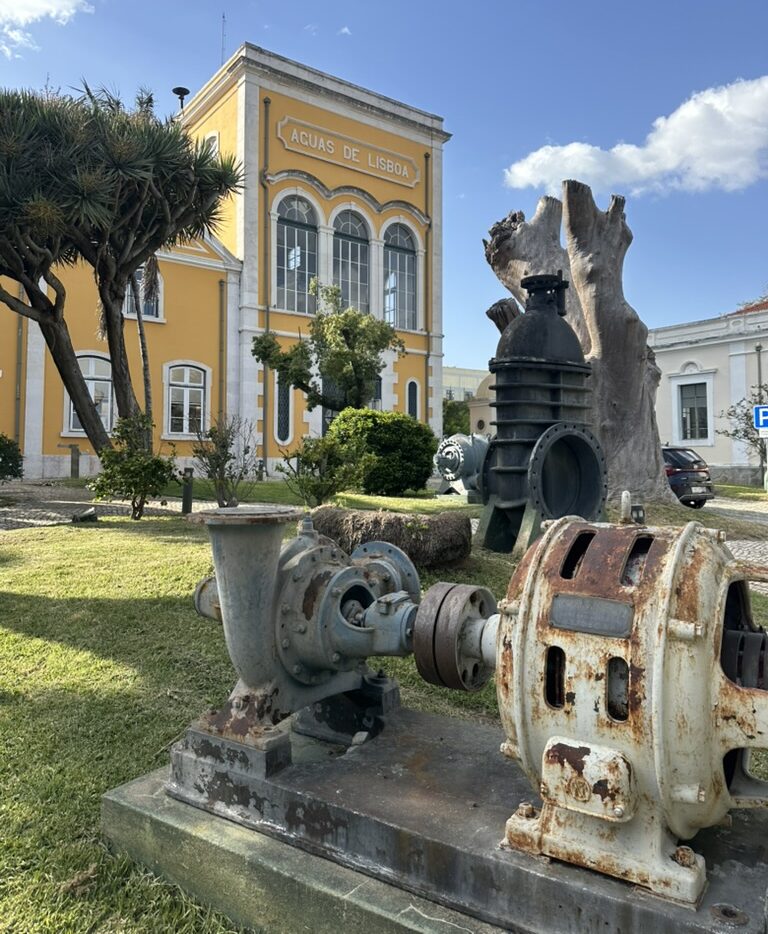
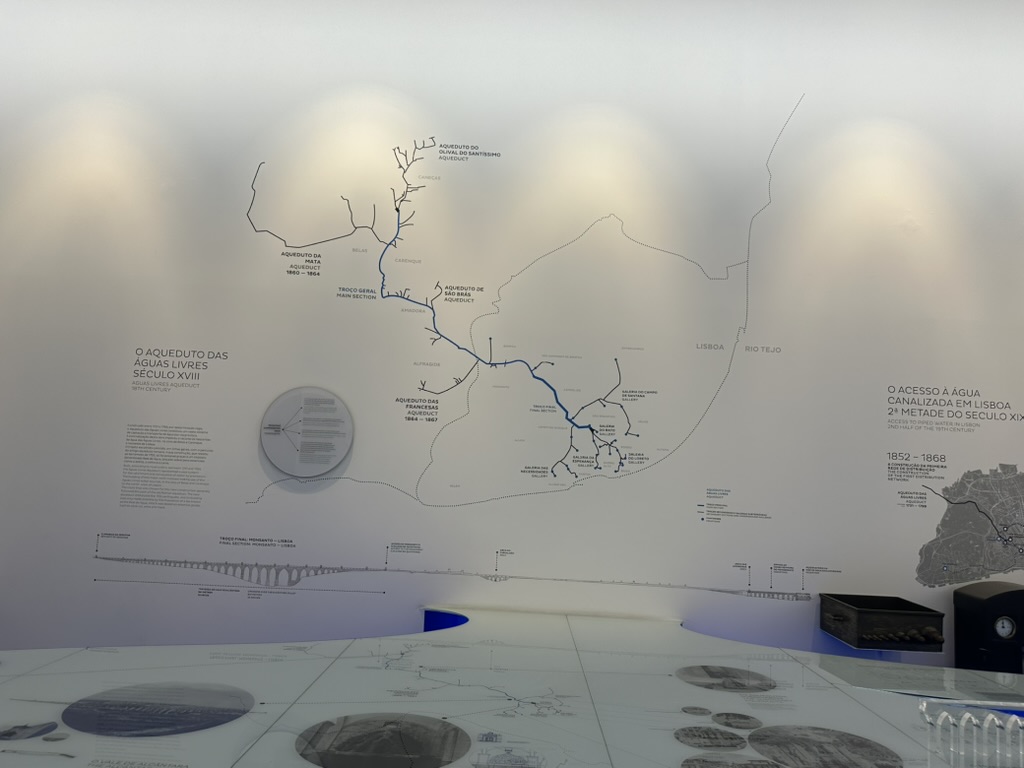
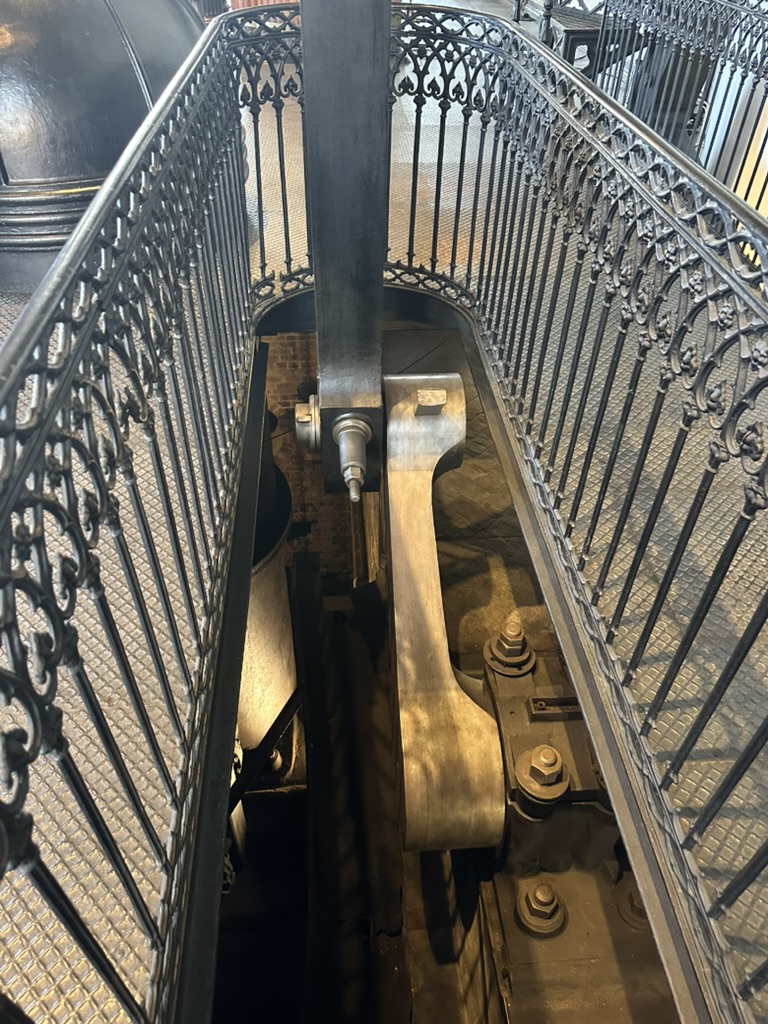
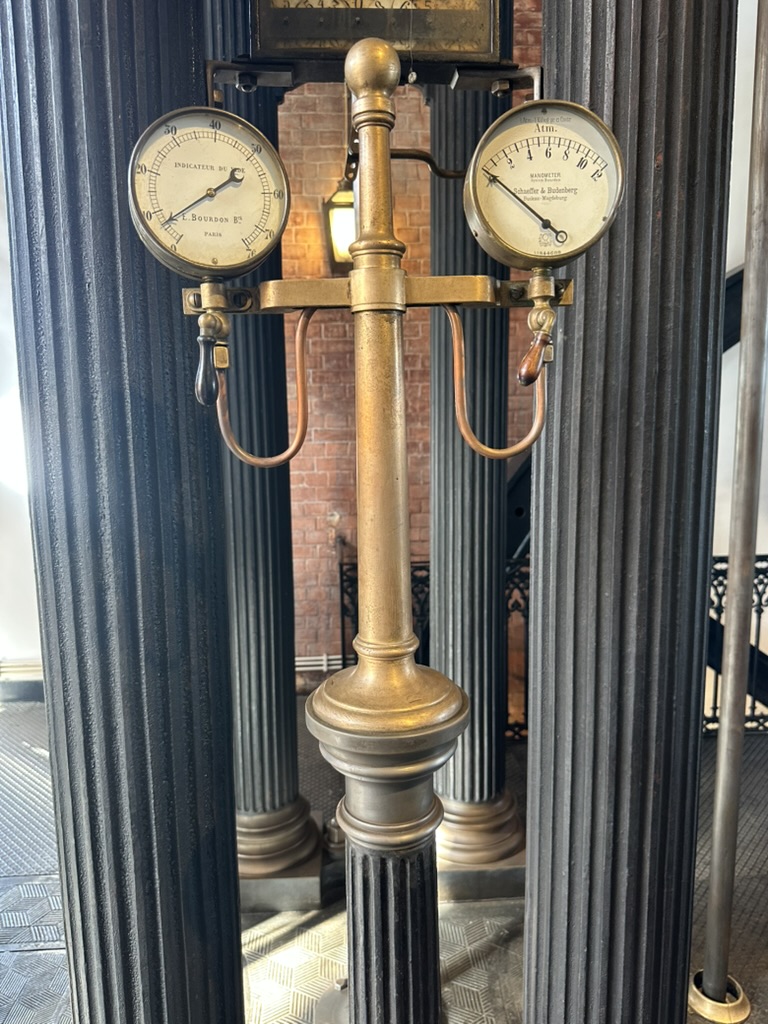
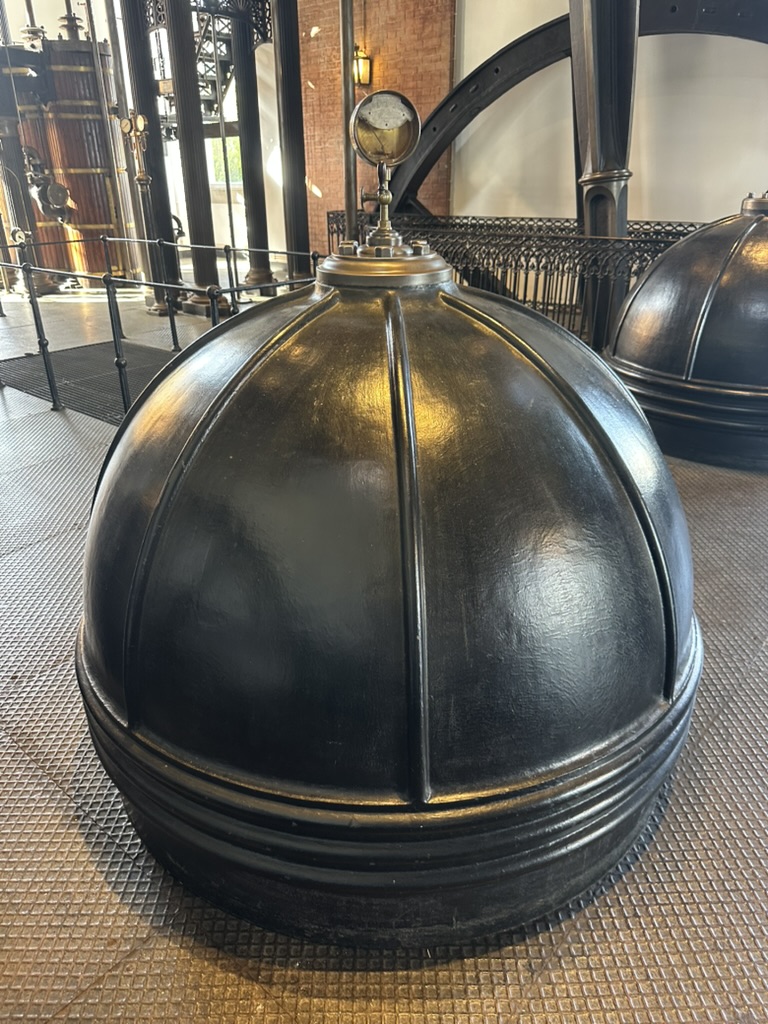
The Water Museum is housed in the former Lisbon pumping station where a system of aqueducts, some orginally built by the Romans, converged on a facility housing coal fired steam pumps for distribution through the City’s hilly precincts.

It was near closing time and no one but the  attendant was there.

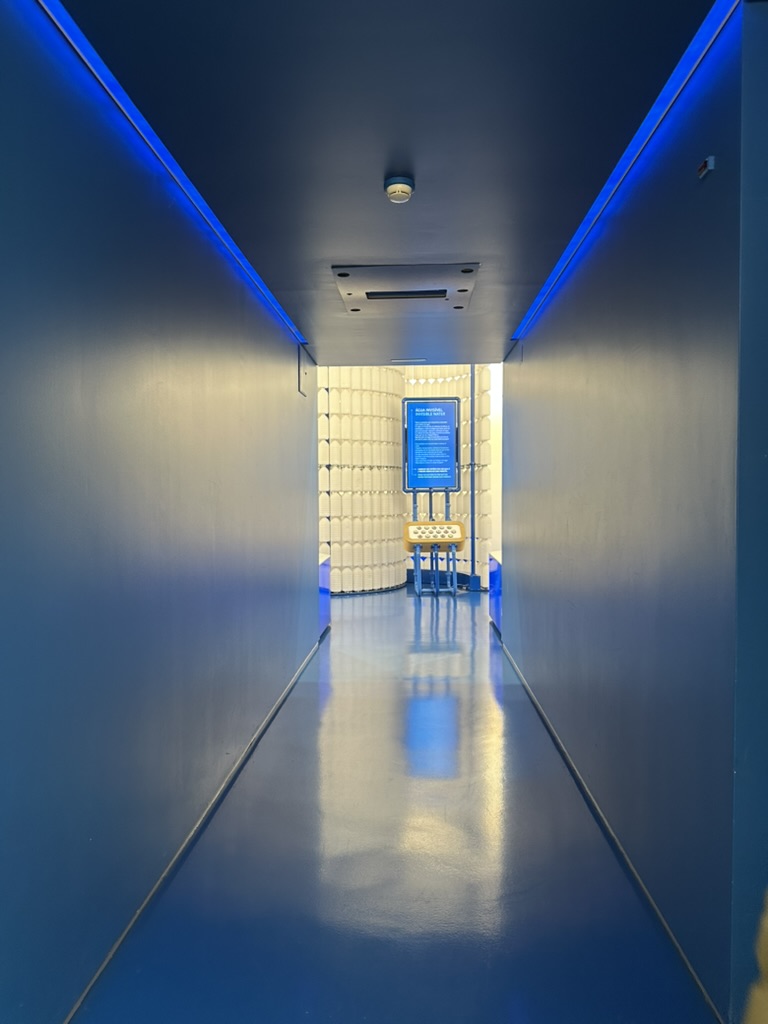
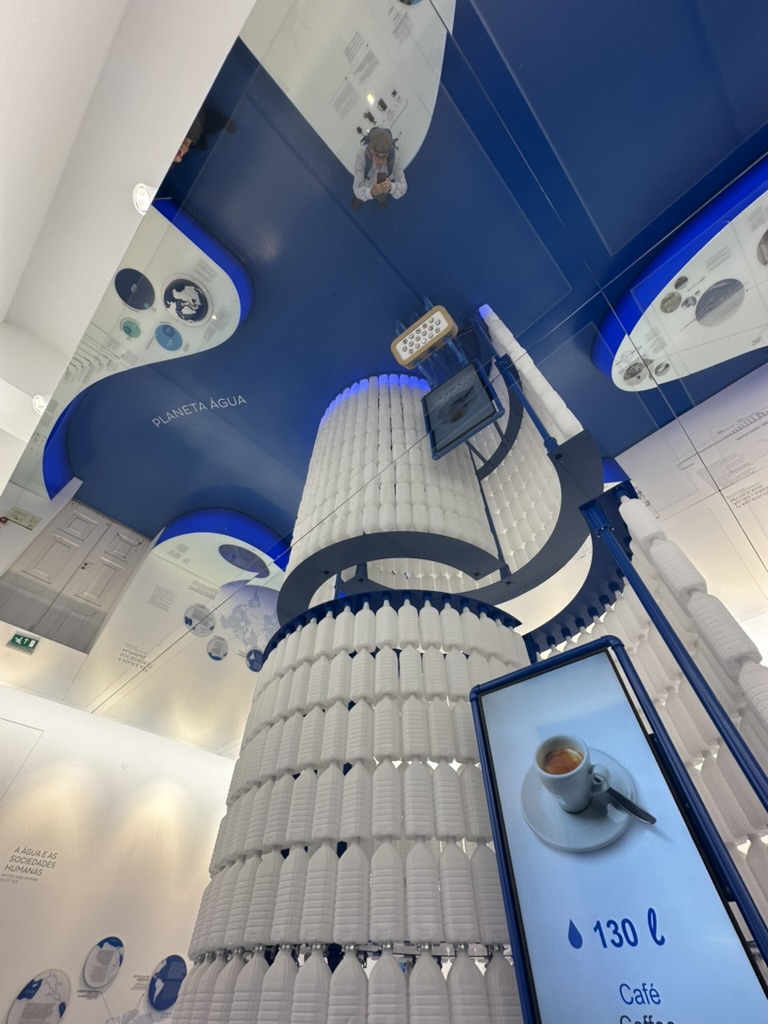
We entered its modern exhibit hall fashioned in blue and white wavy translucent shapes and mirrored ceilings to create the sensation of being at the bottom of a cool clean pool.

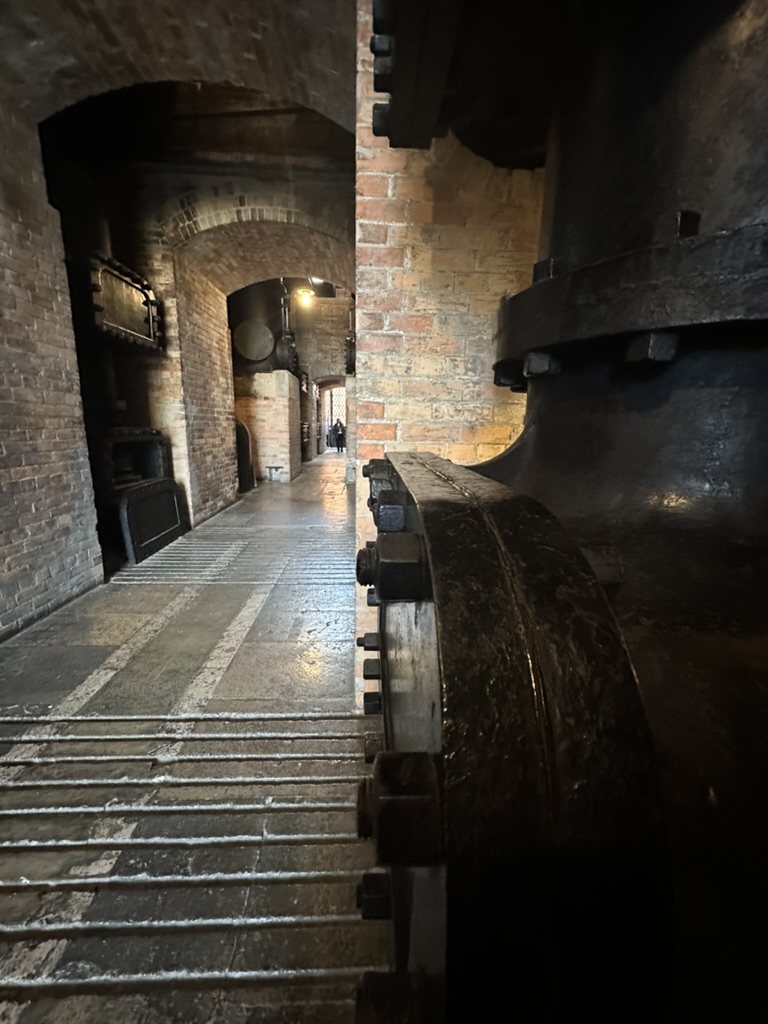
That led to the dramatically contrasting spaces of the original 19th century iron and brick pumping station illuminated by reflected light from the estuary below streaming through high windows.

the ornamented machinery an admirable nineteenth century blend of technology and art.

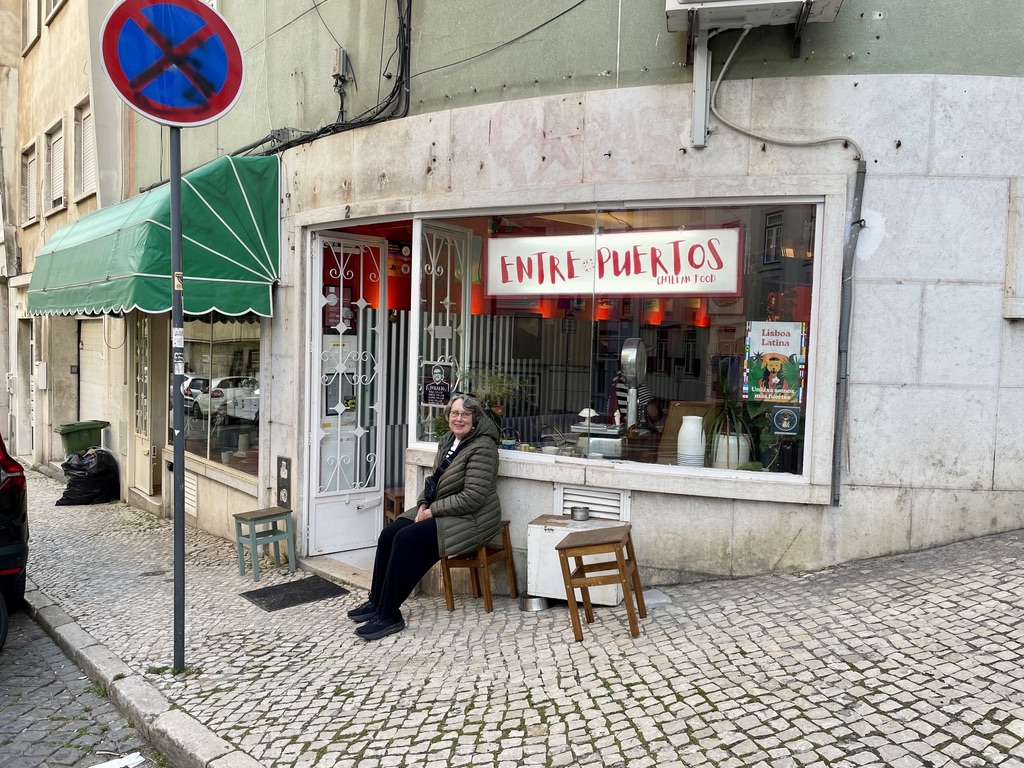
We searched Google maps for a restaurant in this modest residential neighborhood and located one called “Between Two Ports,” a long way uphill.

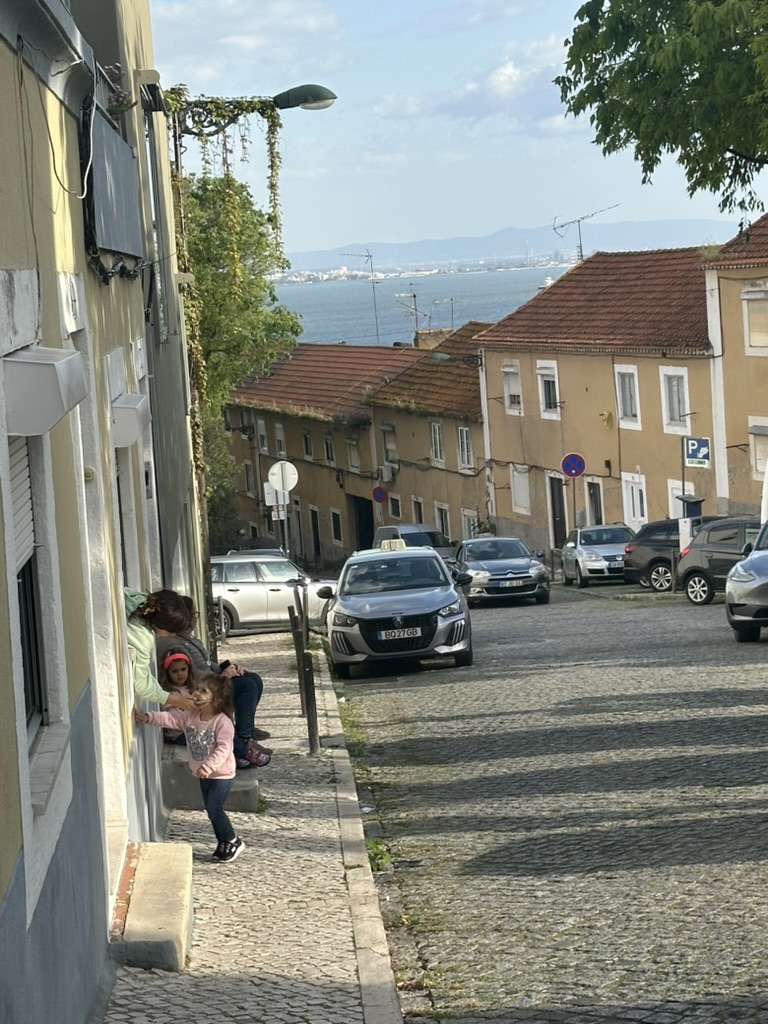
At a quiet street corner with the Tagus in the distance we saw the place

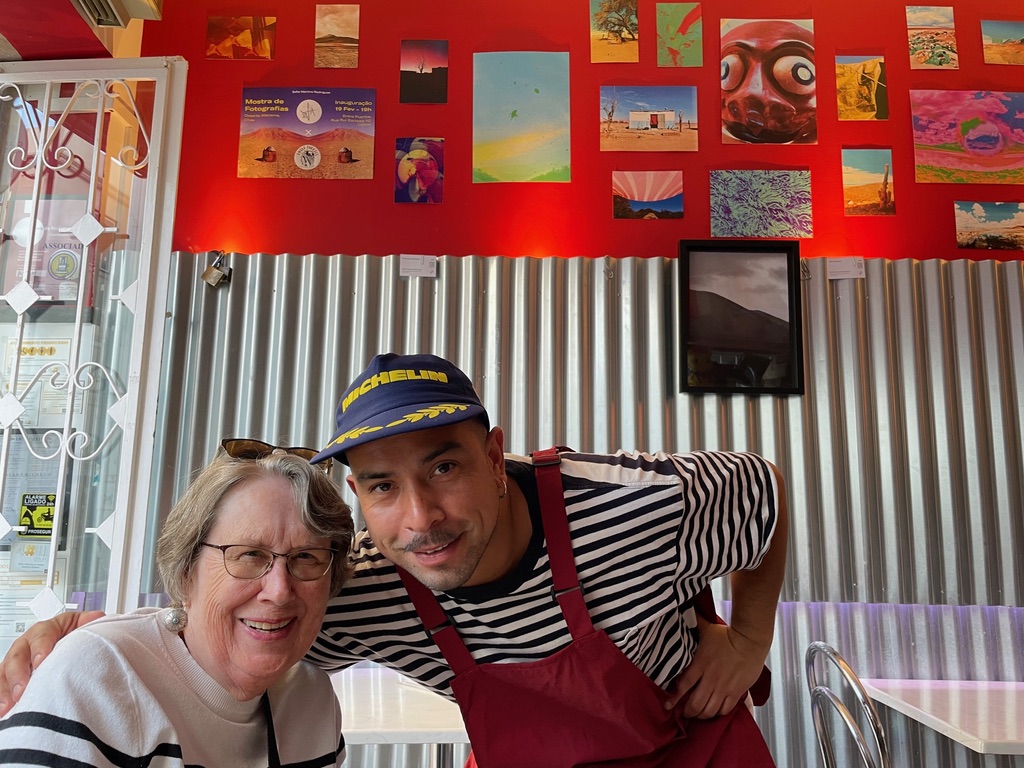
The compact space inside included a gallery of art photos of Chilean desert landscapes. A young couple from Copenhagen sat at the close by table and we chatted about our experiences there last summer.

Enrique, the proprietor/cook/server/designer, brought us Portuguese fish-fingers and his Chilean dish of corn and beef stew

Portugal Day 10

Monday, April 27th, 2026

To sample a bit more of Portugal we’d planned a three night stay in Coimbra, an ancient University town two hours north by train. We reserved a room at the Guest House of the Old Monastery Santa Clara expecting a place with historical and architectural significance. It had neither but a good location just across the Montego river from the old town at the base of the mountain situating the new Santa Clara Monastery, built in the 1600’s to avoid the river’s regular flooding.

Built on the site of the Roman settlement of Aeminium  Coimbra was the capital of Portugal from 1131 to 1255. The home of the first Portuguese University which moved there from Lisbon in 1308 it still remains a center of learning and research with the hallowed and youthful atmosphere of Oxford, Cambridge or Yale.

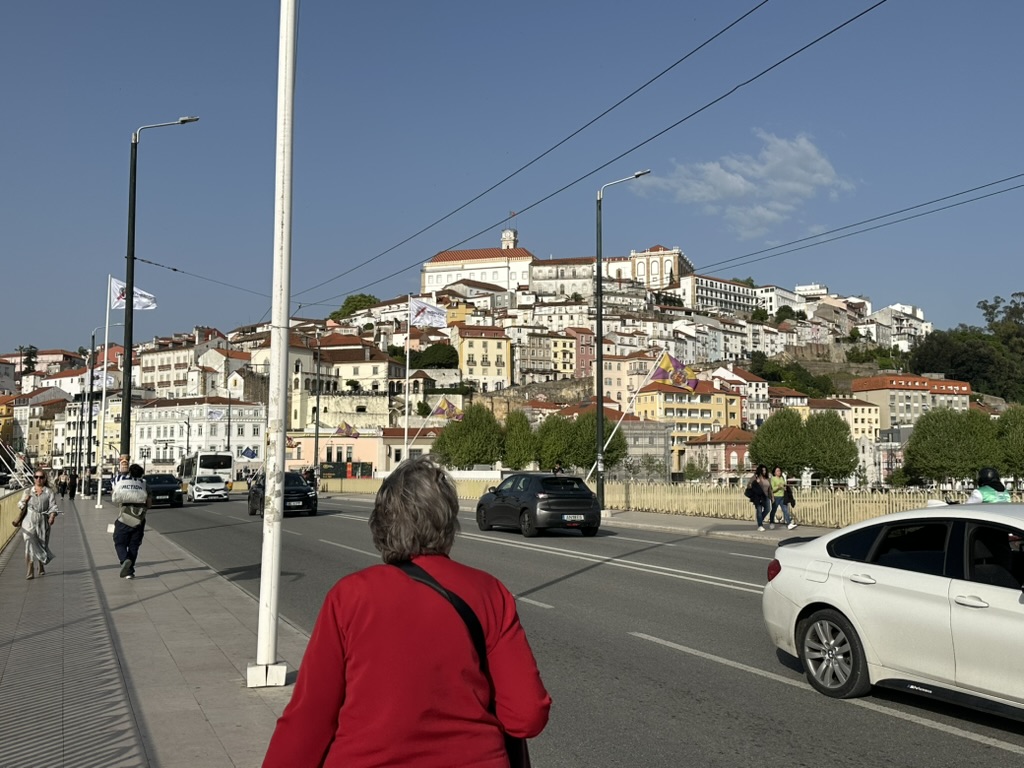
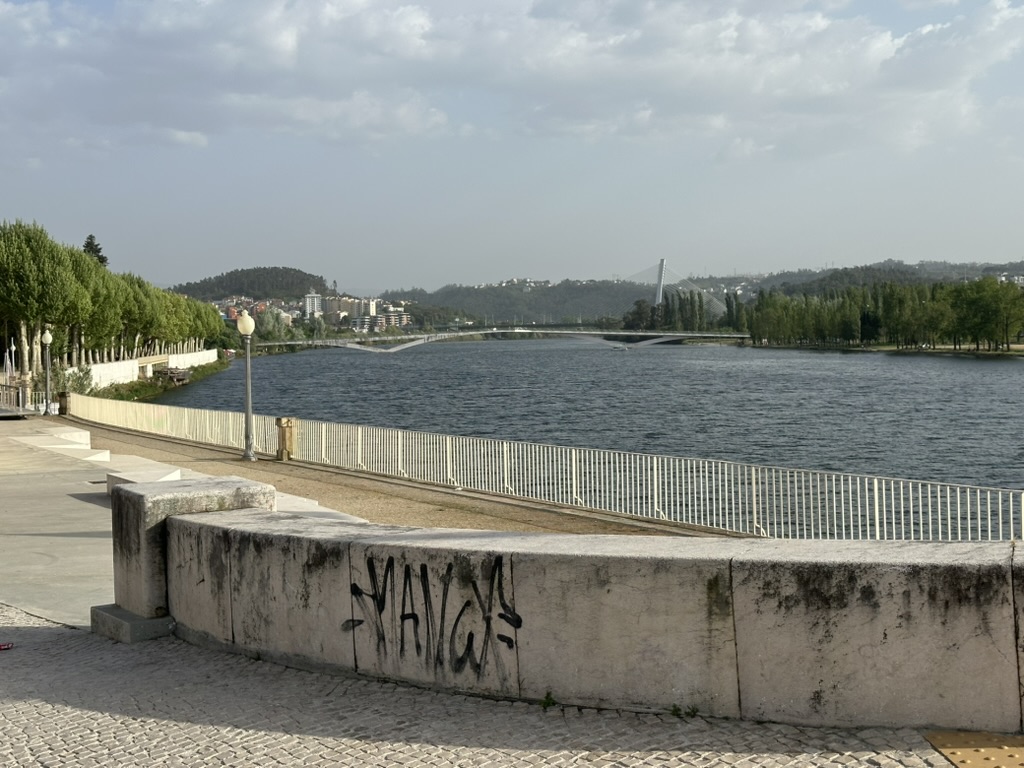
The temperature dropped and the wind blew as we walked across the bridge

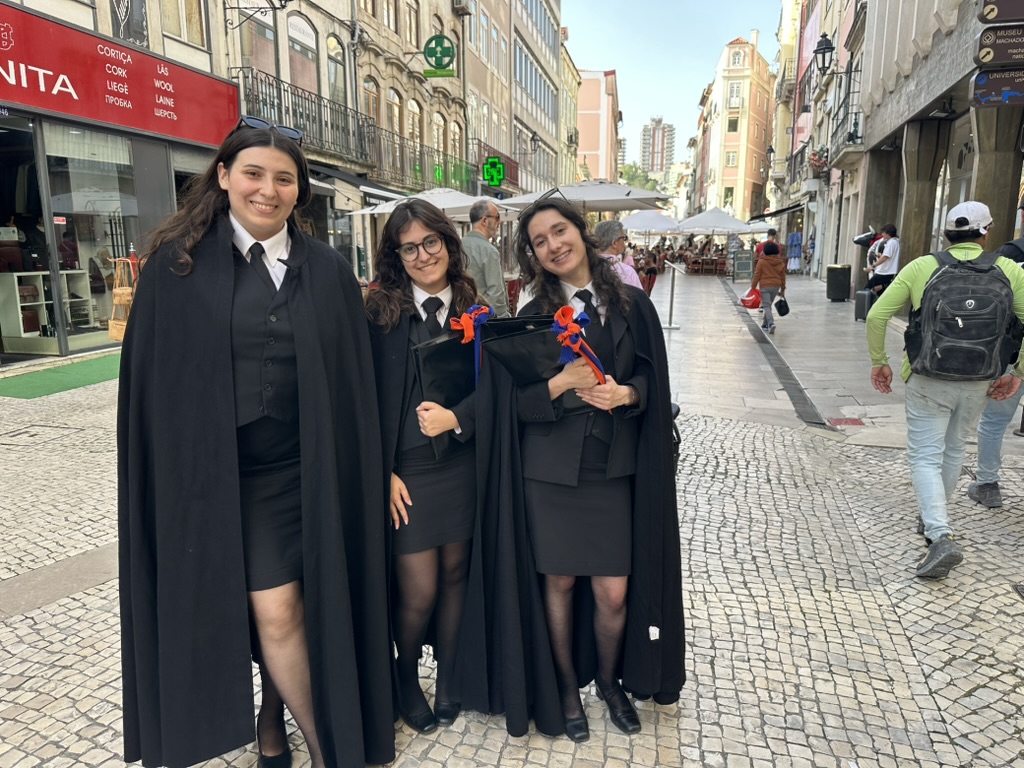
The central promenade was buzzing with buskers, tourists, and black-robed undergraduates asking for donations to their year end graduation parties, a traditional activity since the Middle Ages.

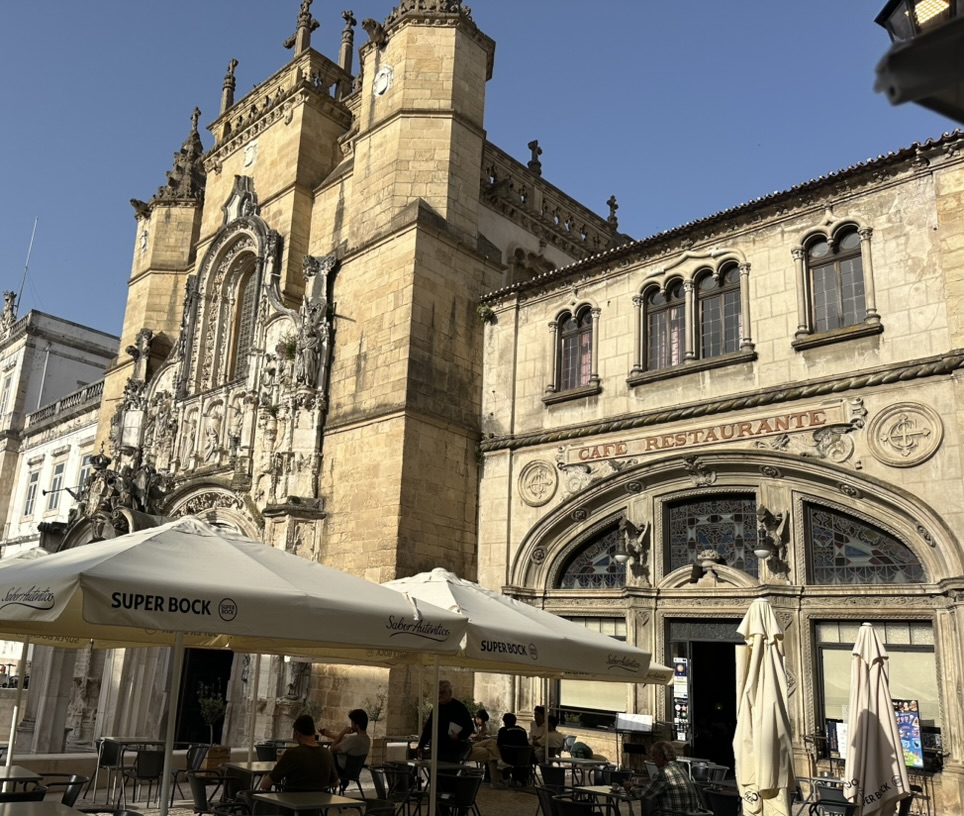
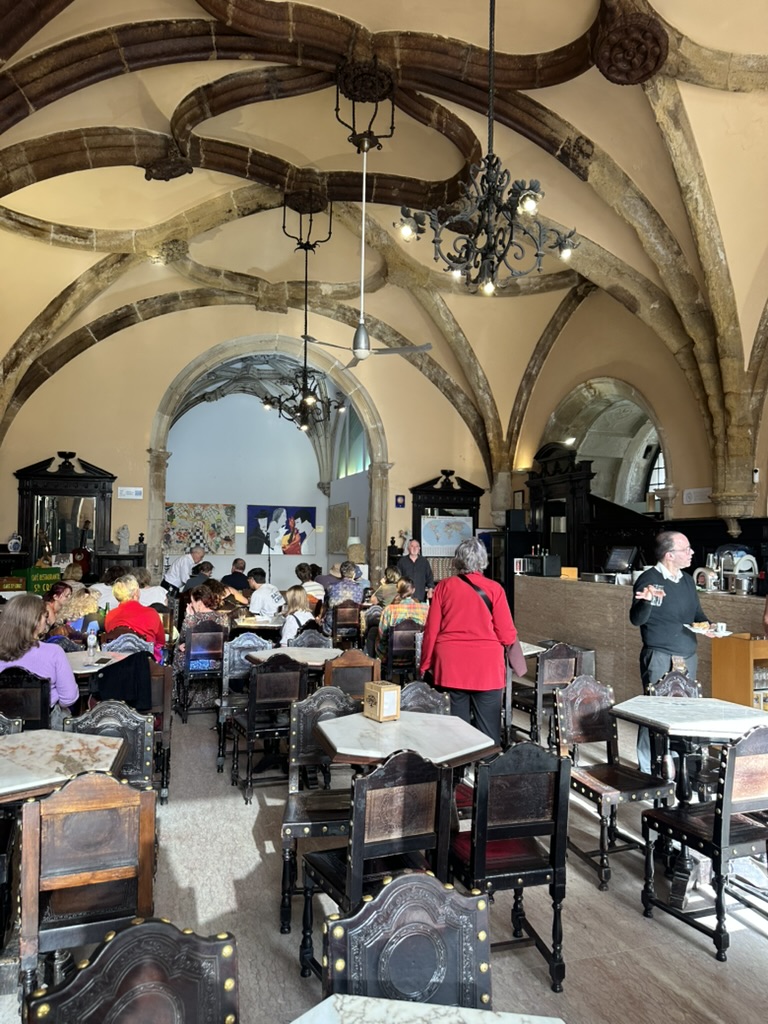
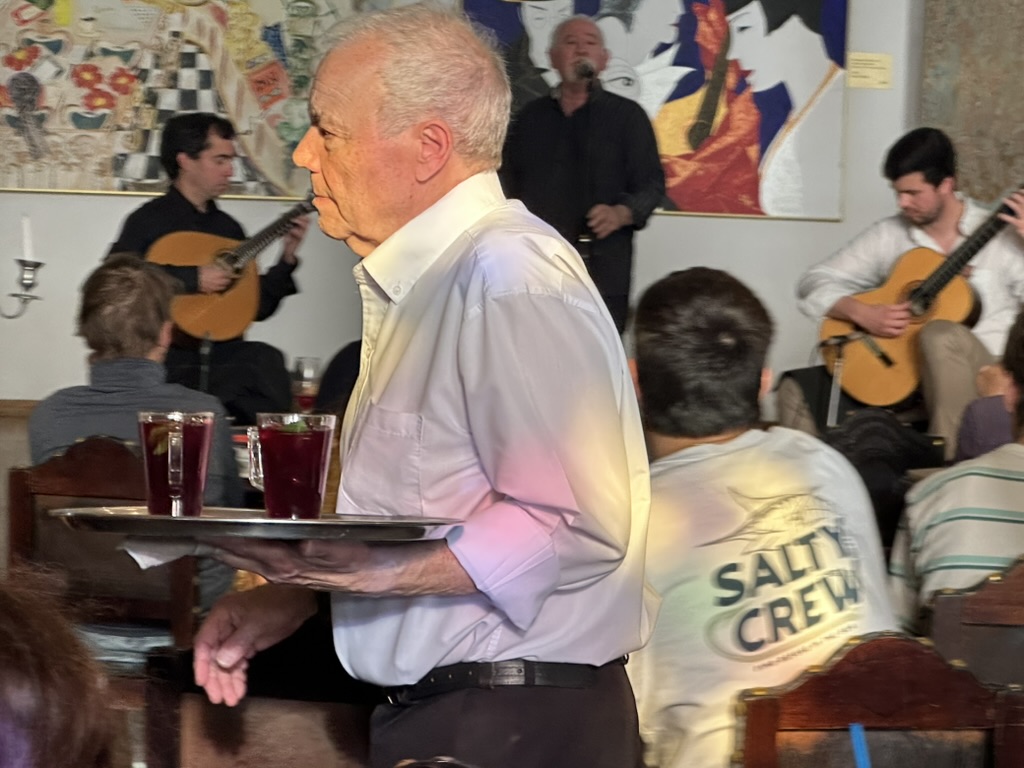
Our destination was the Café Santa Cruz, located in the Central Square as a side chapel of the Cathedral of Santa Cruz, there to attend a Fado performance, offered free of charge daily at 6:00 and 10:00 p.m.

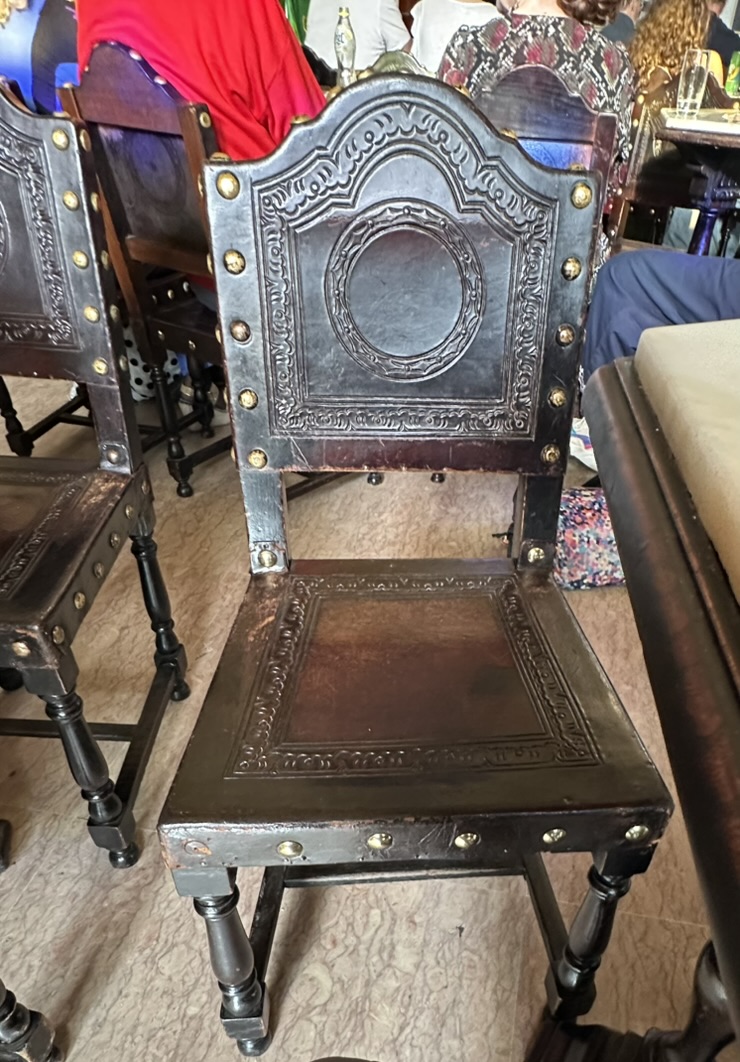
It’s an amazing place: gothic architecture, the antique furniture and traditional  coffee house atmosphere which has been a cultural center since the 1920’s.

Along with the rest of the audience we were thrilled by the performances by the older singer and two young instrumentalist while drinking local white wine.


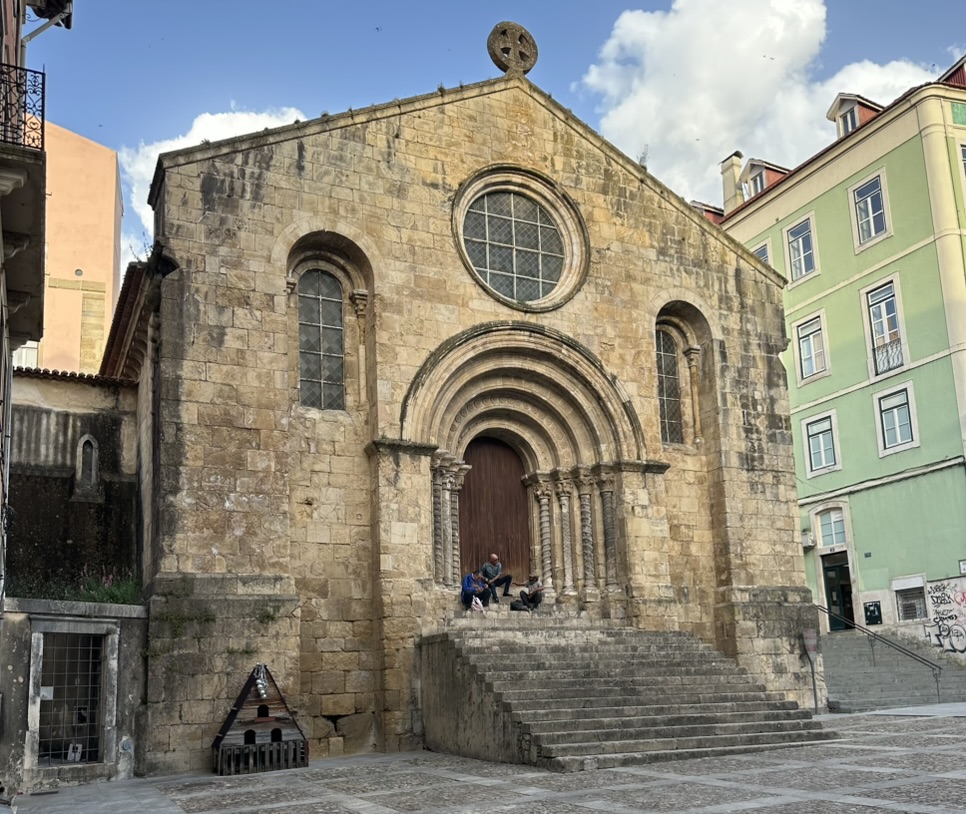
We took an alternate route back to the bridge, passing by an ancient Romanesque church,

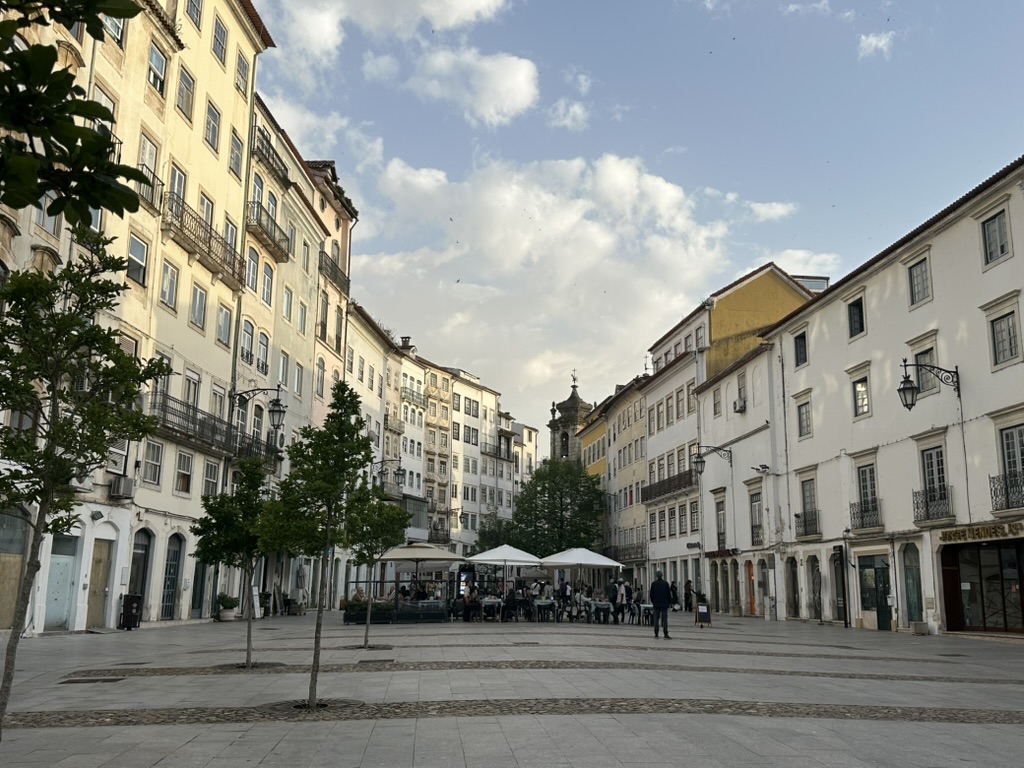
long enclosed plazas,

and a building in the same style as our 1908 Lisboa Hotel.

At the Restaurante Dona Taska across the street from the guest house, we ate traditional chanfana, goat meat stewed in wine, for the first and last time.