
Miscellaneous
Present Perfect
Sunday, January 5th, 1986[published in THE STANFORD MAGAZINE, Winter 1986]
Though it was Friday afternoon, I was in no hurry to get back to the yard.
This was the last day of my part-time employment with the Stanford tree-trimming crew, a job I’d taken during the summer of 1985 to help make ends meet on an English lecturer’s salary. I had enjoyed the job’s remoteness from my regular sedentary occupation, its involvement with the physical resources of the university, and the opportunity to work in exceptionally large, beautiful trees.
So my partner on the tree crew waited below, while I swung back and forth, suspended on the climbing rope, and stared up through the canopy of the tree we’d been working in all day.
When I finally came down, however, I got a reprieve: The foreman dispatched my partner and me to another “short job.” A large oak on the campus property of a Stanford professor was showing some rot at the base of its trunk; it needed to be cleaned and patched. “Marx,” the foreman said, “I think you’ll like this tree.”
The tree in question was hidden from the street by a thick hedge. We walked down a narrow driveway that tunneled though the hedge and came out on a sight that stopped me cold.

Near the edge of a sloping lawn rose a colossal creature with a massive trunk, serpentine limbs, and deliquescent twigs. Its gnarled and attenuated forms seemed to crouch, grope, and stretch, filling every inch of the hedge-enclosed yard. (more…)
Desolation Sound
Friday, December 20th, 1985Elegy for Eric (1962-1985)
Now closer creep the shadows of the trees
The pasture’s morning mist makes squash leaves freeze.
The house without a fire’s a chilling place
Forsaken of the summer’s hot embrace.
A dullness weights the limbs, fatigues the mind
Acts fail, words trail, thoughts snap, ears seal, eyes blind
Alone sleep offers rest from fear and pain
But nightmares waken torments once again.
Bottomless and void, bereft of light
The sea has robbed us of a spirit bright
A man-child at the verge of fatherhood
Innocently searching for the good.
He dove below his depth alone for love
And left alone his loved ones here above
His friends, parents, lady and child-to-be
His boats, barn, his plans to farm the sea.
Without him we grow old before our time
But in our hearts he stays in youthful prime.
So let us gather now in deepening night
And sharing sorrow, kindle warmth and light.
Youth Against Age: Generational Strife in Renaissance Poetry
Monday, April 15th, 1985Book published 1985
Dissertation completed 1981
Dissertation started 1966
“As Stupid as Life”: A Reading of Candide
Monday, March 11th, 1985A plenary lecture to “Literature and the Arts in Western Culture.”
Stanford University March 11 1985
I first came across Candide when I was seventeen, the age of its protagonist at the beginning of the story. I can remember that simple title staring out at me from the spine of a thin volume on the musty shelves of Baron 1 s, the used bookstore that I frequented with my sidekick Weiskopf on Friday afternoons–after our last High School class and before we took the subway downtown to hear music at Jazz on the Wagon, the one place in Greenwich Village you could get into without I.D.
I had heard the name Candide before; it was known in the grapevine as one of those books–intellectual, bohemian and intimate–that our parents wouldn 1 t approve of, books with titles like You Can’t Go Home Again, On the Road, Howl and The Catcher in the Rye. I slipped the book down from the shelf, noticed the “privately printed” inscription, the mannered art-nouveau illustrations of thin bare-breasted girls, the sixty cent price, and I took it to the register.
From the opening sentence, I was entranced. Here was another Holden Caulfield, still a sincere, naive and gentle child, cruelly punishe9 for simply following his natural desires, abruptly booted from a secure nest in what was just beginning to feel like Paradise, and set adrift in a human jungle of repression, hypocrisy, violence and greed. I could relate to that heavy tale–especially since it moved along so lightly, with a little sex and a lot of laughs on almost every page. I too felt adrift in a world of wandering hands and kicks in the backside, of atmospheric H-bomb tests and classroom shelter drills, of Anne Frank and Joe McCarthy.
I finished reading the book at two in the morning on the Staten Island ferry, where we would ride back and forth across New York harbor when the jazz club was too crowded. Thereafter, Candide became another one of those few voices which confirmed my adolescent sense that I lived in a pretty screwed up place-despite the assurances of Doris Day, Dwight Eisenhower and Dr. Norman Vi.11cent Peale that middle-class America was indeed the best of all possible worlds. (more…)
Stanford Testimonials
Wednesday, January 16th, 1985Looking for Work
Sunday, April 1st, 1984On American Airlines flight 510 to Kent Ohio
For two days I’ve been shopping and packing, provisioning for this expedition: 10 copies of a résumé, my article in progress, financial statement on Laurel tree care, family picture, three piece suit, hiking boots, dissertation, Index cards. My excitement has intensified since the Monday night phone message from the Davey Tree Company which said “we want you to come spend a week at corporate headquarters in Ohio as soon as possible.” Rescue and opportunity!
I sought out this company and this field of work both out of desperation and hope. The academic career I qualified for had dead ended again while working with trees is “a path with heart.” Since the termination of Jan’s job as Dean at Scripps College, the support of the family shifts to me. She needs the kind of space she has provided me, and someone must supply the family with peanut butter and running shoes. (more…)
The Message of the Trees
Tuesday, December 27th, 1983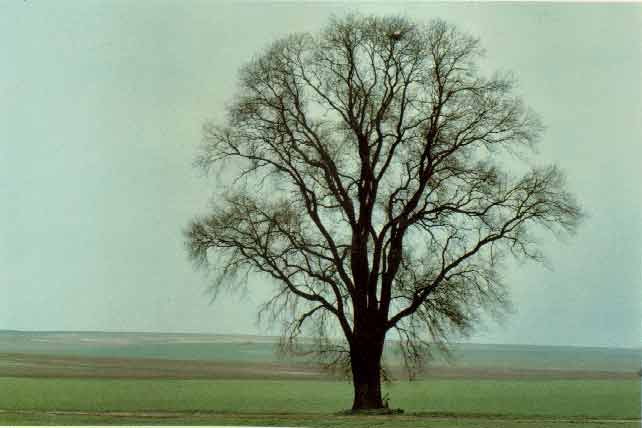
[Published in the Western Chapter News of the International Society of Arboriculture, March 1983]
Readers of The Western Chapter News may be interested in two remarkable tree books published in recent years but not reviewed in the trade journals. They are Trees by Andreas Feininger (New York: Penguin, 1978, $9.94) and The Tree by John Fowles and Frank Horvat (New York: Little Brown, 1980, $24.95). Large formatted and lavishly produced, both books combine stunning photographs with informative, provocative and beautifully written texts. Their authors enjoy worldwide artistic reputations: Feininger exhibits in major museums and has published numerous other photographic studies; Fowles is a best-selling British novelist, author of The French Lieutenant’s Woman; Horvat is an eminent French landscape photographer.
Though none of these artists is a tree professional, their work displays extensive knowledge; more important, it expresses the kind of lifelong respect and affection for trees that lies at the heart of the arborist’s vocation. Like truly skilled tree work itself, these books represent a labor of love, an outpouring of praise, and and application of human art inspired by the art of nature. By deepening awareness of the value and meaning of trees, the authors hope ultimately not only to enrich human experience but also to save trees and forests from the wanton destruction to which they are still subjected.
In his introduction to Trees, Feininger states that he has created
…a new kind of book not a text nor a manual
nor a tree identification book, nor still another book proving
trees are beautiful, but a tree appreciation book.
In fact both these books promote tree appreciation in similar ways. First is through simple presentation. By selecting, composing and framing each tree portrait, the photographer brings forward aesthetic qualities–qualities of strength and fragility, of symmetry and variation, of balance and tension–that normally pass unobserved. Recalling Feininger’s shot of the massive central trunk of a twisted oak in a German park, I stop my morning run to admire the gnarly Quercus agrifolia in my neighbor’s yard. Or stuck in freeway traffic, I flash on Horvat’s portrait of the Wych Elm silouetted by a January mist, and suddenly I’m greeted with the sight of an Ulmus americana arching its limbs over an Arco station.
Appreciation of trees is also fostered by these books’ focus on detail. They slow and thereby enrich our perceptions of pattern, texture and light: Horvat’s row of pollarded sycamore crowns, Feininger’s mulberry leaves outlined black against the white sky, or his sweetgum leaves outlined against the dark background foliage. In such treatments of detail, the artist’s gift emerges. For while a lengthy series of photographs of bark in a tree identification book becomes schematic and dull, Feininger’s seventeen-shot sequence on trunks manages to build steadily to a dramatic visual climax. Each full-page portrait varies light, camera angle, distance, background and composition, delighting us with the variety contained in repetition. (more…)
The Shepherd’s Philosophy: Pastoral and The Good Life
Thursday, April 28th, 1983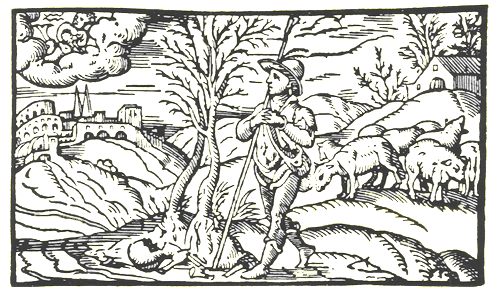
An Address to Philosophy 152: Theories of the Good Life
Claremont McKenna College
April 28 1983
I want to talk about this week’s topic–The Good Life as Living in the Country–by loosely braiding three strands of material into a single line of argument. These strands consist of your assigned readings by Carolyn Lewis and Scott and Helen Nearing, a discussion of the pastoral tradition in literature, and an account of some of my own experiences with living in the country for the better part of nine years.
The idea that the Good Life is to be found outside the limits of civilization in a rural, natural setting is as old and as widespread as civilization itself–a word whose root signifies the culture of cities. Urban people have often reacted to the conflicts and tensions of their existence with the wholescale rejection of their artificial environments and with affirmations of what they imagine to be the simple, happy lives of those who live in the country. This attitude has been dubbed “primitivism” by historians of philosophy, who have discovered its traces in some of the earliest Sumerian and Babylonian texts.
Primitivism has always been especially popular among writers–poets, dramatists, essayists, novelists. Their utterances of love of nature and hatred of the city have constituted a distinct literary genus called pastoral or bucolic–after the shepherd or cowherd whose occupations seem to embody the primitivist ideals of simplicity, unpossessiveness, rapport with nature, and the leisure for erotic, artistic and contemplative pursuits. Some pastoralists assert the theory of the Good Life in the country from the heart; others do so primarily to display their ability with words.
One can see evidence of the breadth and self-consciousness of this pastoral tradition in the way each chapter of the Nearings’ book begins with numerous epigraphs from sources ranging from ancient Chinese proverbs to Shakespeare and Thoreau. These epigraphs indicate that much of what follows has been said many times before and for that very reason bears repeating. The pastoral theory of the good life in nature and of the corruption of civilization dominates the Bible. We find it also in Homer and Hesiod–who project visions of the Golden Age before cities were founded; in the Phaedrus–where Plato paints an idyllic scene of erotic philosophizing outside the city walls; and in the Bucolics and Georgics of Vergil”which praise the quality of life far from the seat of Empire.
(more…)
Youth Against Age–Chapter 5
Saturday, March 21st, 1981
5
The Backstretched Connexion:
Youth and Age
in The Shepheardes Calender
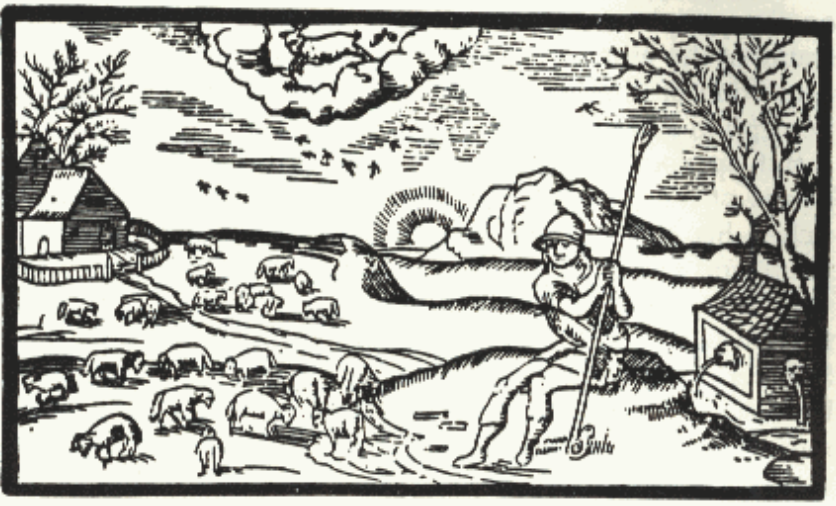
This chapter proposes an interpretation of The Shepheardes Calender which places the debate of youth and age at the work’s core. Spenser used both the thematic content and the formal structure of this minor bucolic convention as the central shaping principle of his major pastoral work. Such emphasis was particularly appropriate, first because pastoral’s rural settings on the periphery of civilization correspond to the peripheral states of the human life cycle, and second, because pastoral’s projection of dual worlds inspires debate-like comparisons of perception and judgment.
But Spenser did not simply reprocess these essential elements of the pastoral tradition. Rather he modified and enriched his conventional models by disclosing the debate of youth and age through the viewpoint of a narrative persona, a viewpoint which shifts in the course of the poem from identification with youth to identification with age. That is to say, Spenser used the pastoral debate of youth and age as a means by which to externalize the inner conflicts of past and future, of regression and maturation, endemic to adolescence. By patterning his series of eclogues with a phased succession of such debates, Spenser allowed the reader to participate in the reversal of perspective that constitutes the subjective transformation of boy into man. Moving from premises about the psychology of pastoral and about the philosophy of debate laid down previously, this chapter arrives at the conclusion that The Shepheardes Calender–a product of its author’s youth and addressed to youthful readers-has as its deepest unifying subject the life stage of youth itself. (more…)