Miscellaneous

Japan Trip 2010–Day 13

Sunday, April 18th, 2010

Slideshow

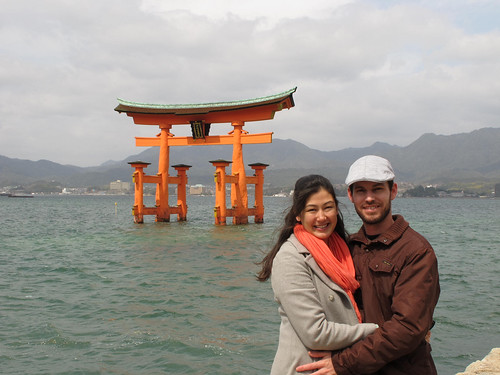
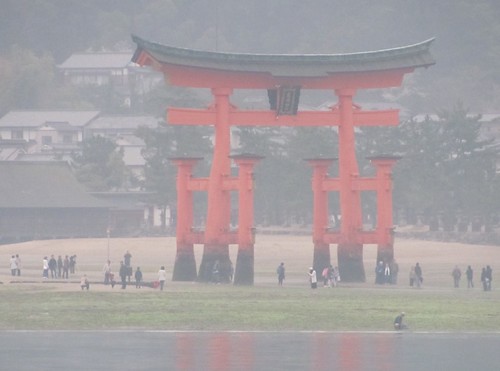
We gladly deferred to Emma and Marie for planning our overnight excursion together.  I didn’t expect that of all possible places they’d choose Hiroshima. We were to take the train to the Atomic Bomb Memorial in the morning and then in the late afternoon continue on to the Isle of Miyajima, whose Tori gate in the water was as familiar a tourist icon as Mt. Fuji.

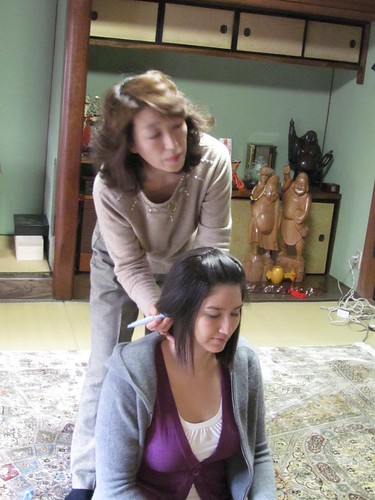
Before we left, You-ki worked on healing Marie’s headache with a little tool she’d been given by her “shaman” and gave me and Jan a pungent herb concoction from her acupuncturist to clear our sinuses.

IMG_2248.JPG

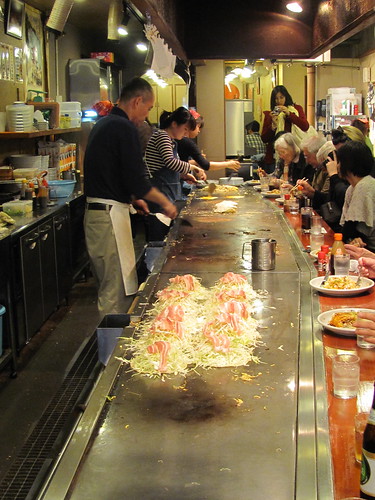
She insisted on escorting the six of us in two cabs to the ShinOsaka station and on treating us to breakfast.  Jan ordered the specialty of the house, which lived up to its name, Morning Dog.

4513574322_dfb4422d9f_b.jpg

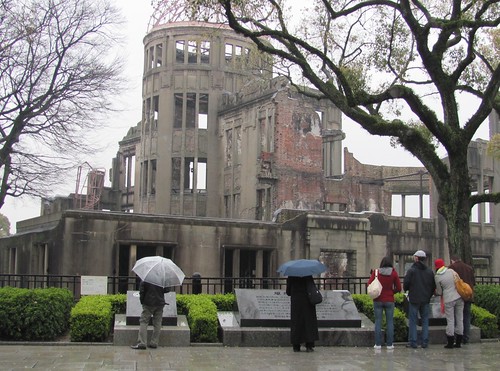
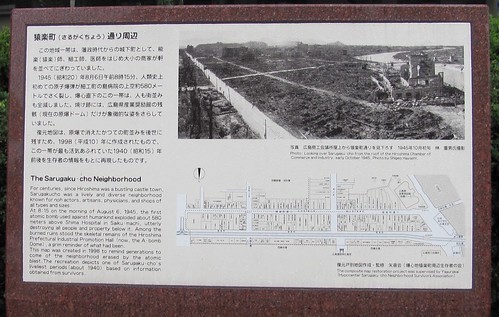
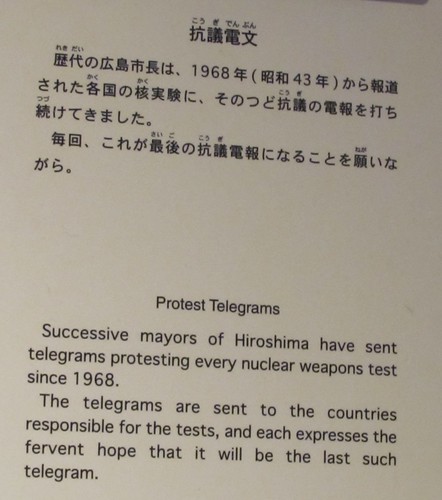
When we arrived in Hiroshima it was raining, fitting weather for this destination. Stepping off the trolley we came upon the restored ruin of a large building that had miraculously escaped incineration at ground zero, surrounded by posters and engraved stones that told some of the story.

IMG_2254.JPG

IMG_2253.JPG

I walked away from the others to experience fully the heaviness of this place: the destruction of a city, the agony of men, women and children who’d been bombed, the ruthlessness of those who’d inflicted it, the national aggression that brought it on, the sadness of all those who’d come to it afterward.

I felt the history of our parents’ generation converging here with the generation of our children.  Jan’s purebred American mother and father, who met in the war against Germany and Japan, bearing one child who married the son of German refugees, and another who married a woman from Japan. Both linked families had themselves been victims in their homelands, mine as Jews persecuted by Hitler, Emma and Marie’s grandparents as Korean nationals kidnapped by the Emperor, their grandmother eyewitnessing both Hiroshima and Nagasaki.

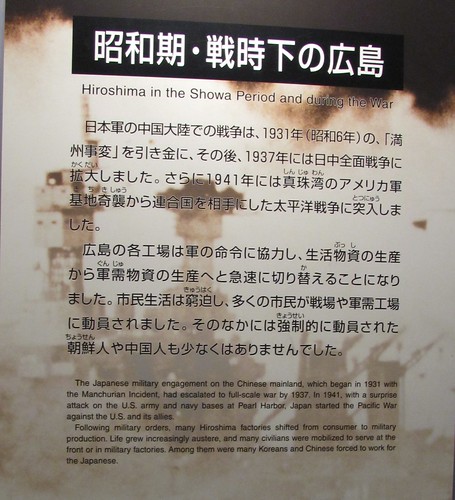
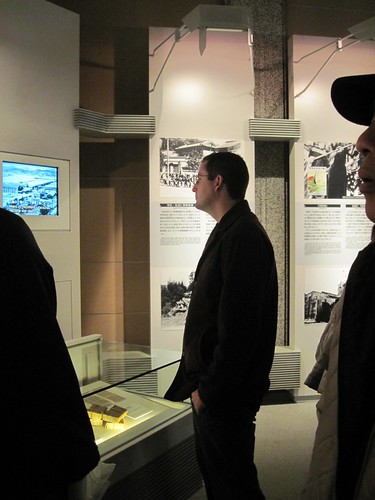
Straddling the river, a sprawling complex of gardens and heavy concrete monuments extended in all directions.  In the distance stood the Museum, two blocky gray buildings joined by an elevated upper story suspended for 100 yards between them.  We joined busloads of other visitors streaming into a darkened hall filled with dioramas of the incinerated city, film loops of atomic explosions and display cases with posters showing Hiroshima’s past history and a chronology of the war. A mournful symphonic dirge repeated relentlessly on the P.A.

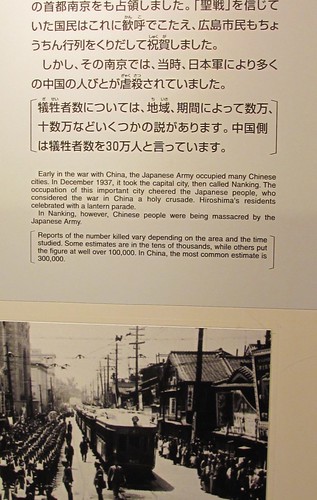
I found myself focusing more on the exhibit’s sanitizing of Japanese war crimes than on its graphic and strangely redundant representations of local suffering.

IMG_2260.JPG

My curiosity was piqued by the brackets surrounding parts of the story of the Nanking massacre, whose recurrent Japanese denials I remembered had caused international outrage, similar to that produced by Holocaust deniers.

IMG_2262.JPG

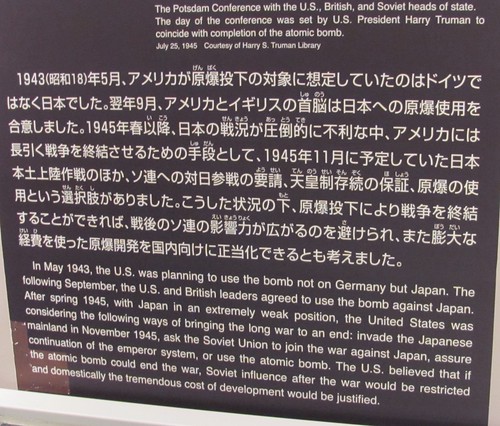
The tears warranted by this pilgrimage were finally released by accounts of the decision-making process of American leaders.

IMG_2267.JPG

I found the exhibits of Hiroshima’s citizens’ fifty five year commitment to work for international nuclear disarmament genuinely inspiring.

IMG_2264.JPG

One of them recalled the Cuban missile crisis of 1962, which I lived through in terror during my senior year in college. I wondered how facing this evidence of the folly of military-industrial-political influence in the world was affecting the young people whose futures it could determine.

4512531473_60c5404cd6_b.jpg

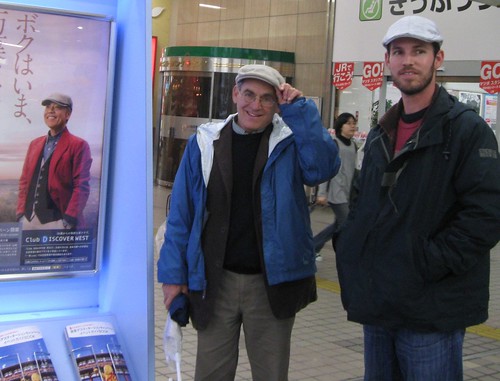
After three hours at the memorial and museum, the six of us agreed to move on and the rain stopped.  We trollied back to the train station, bought snacks and a bottle of whiskey, and horsed around till the departure for Miyajima.

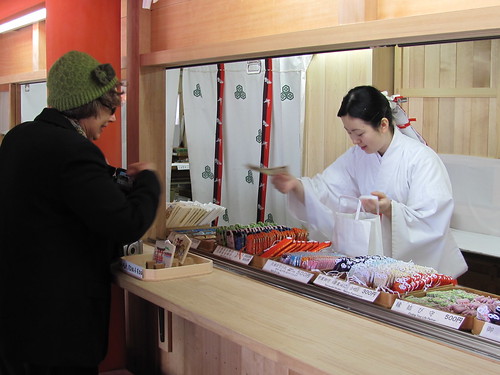
IMG_0886.JPG

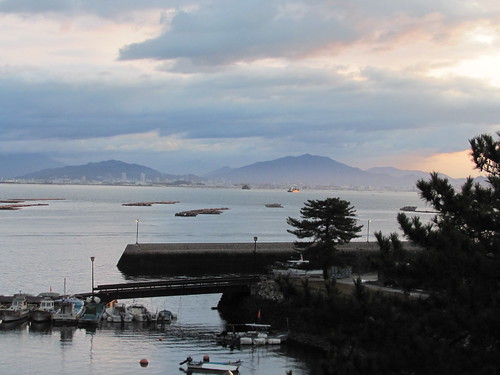
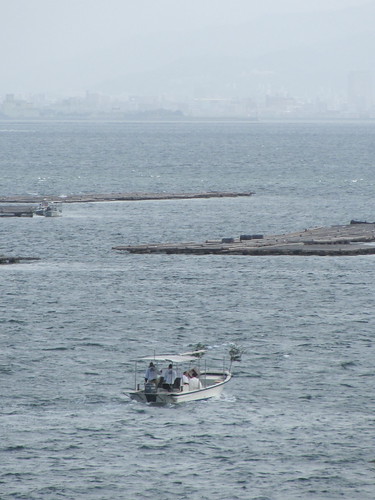
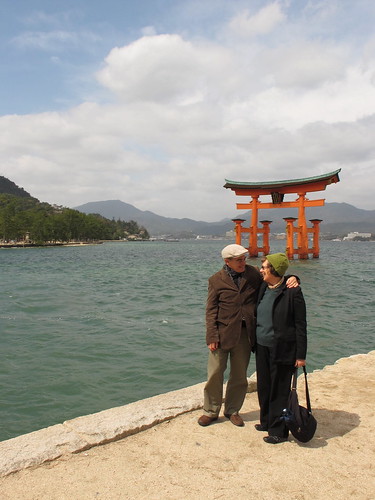
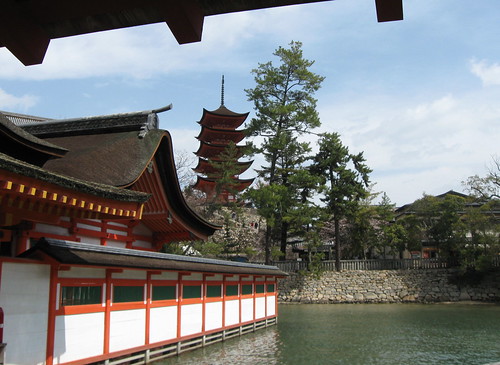
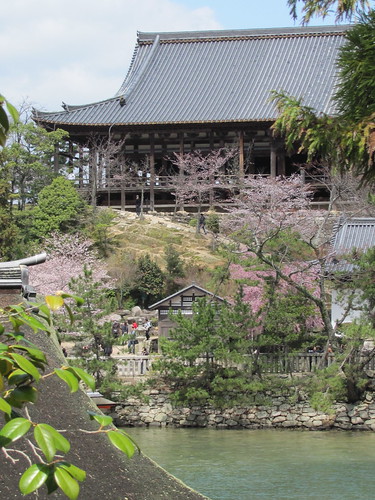
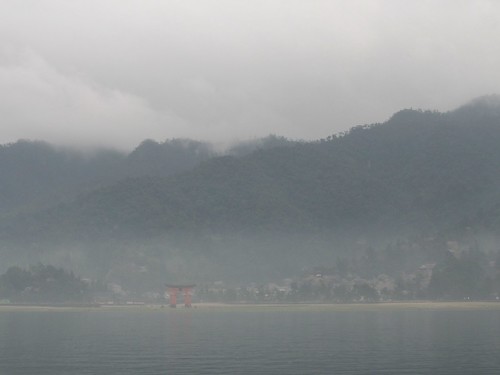
The ferry approached the island in the late afternoon mist and the young people took advantage of low tide to walk to the Tori gate to place coins on it for good luck.

IMG_2278.JPG

IMG_2279.JPG

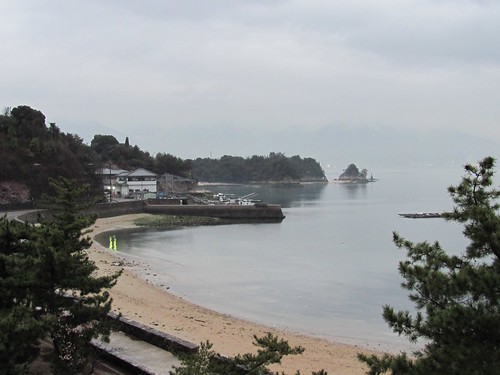
Jan and I checked into the hotel fronting a secluded bay on the other side of the landing.

IMG_2280.JPG

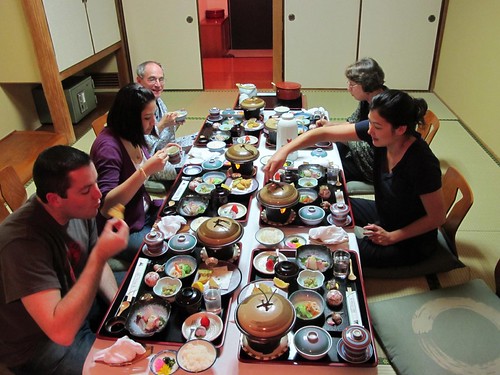
Three adjoining rooms were reserved for the three couples, and we passed the bottle of Scotch back and forth across balconies while waiting for dinner to be served in another room next door.

IMG_2286.JPG

There we reveled as the sun went down and then happily retired to our mats.

4514157696_1f71ab6d74_b.jpg

Japan Trip 2010-Day 7

Monday, March 29th, 2010

Slideshow

Maya sent us off in a taxi this morning on a home visit along with Nita and Janet, our fellow Californians, and an envelop containing her phone number and the hotel’s, the address of our destination, and 5 new 1000 yen bills to pay the fare.

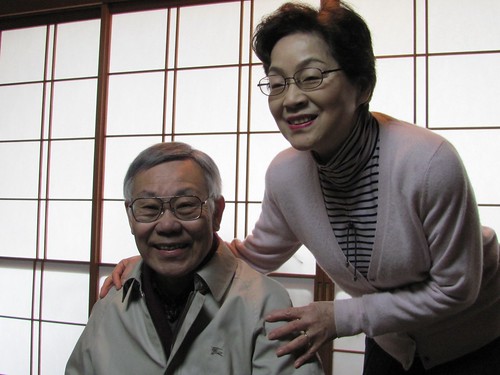
We were let out at a non-descript looking house in a dense residential neighborhood and invited in with broad smiles by a couple carrying umbrellas and signing to remove shoes. “My name is Kane, like Citizen Kane,” laughed the host. “This is my wife Akiko, who speaks no English.”

IMG_1670.JPG

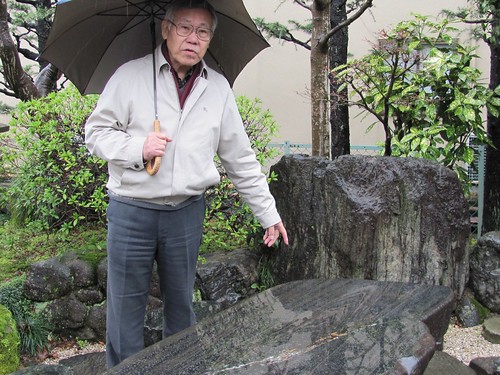
He led us down a narrow corridor to the formal tatami reception room and immediately out the back door to the garden, where we donned slippers for the first stage of the tour. It was like a miniature Kenrokuen, packed with striking rocks, artfully shaped trees, stone lanterns, winding pathways and several water features.

IMG_1668.JPG

The rocks, he informed us, were purchased from a garden supply store and delivered with a crane from the back alley.  The larger trees were pruned by professionals and he handled the shrubs and delicate bonsais. Behind a screen was his flower and vegetable garden and across the alley, Akiko grew 100 varieties of prize-winning roses.

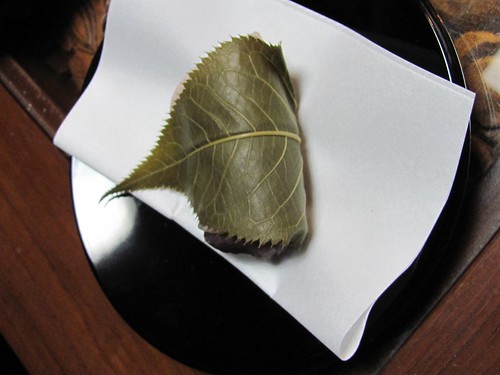
Back in the parlor we sat around the table in low chairs and Akiko brought green tea and a sweet wrapped in a pickled cherry leaf.

IMG_1677.JPG

We each were presented with gifts: a lovely ceramic cup and a CD about Japanese cooking, and in turn presented what we had brought, in our case the wrapped Trader Joe’s chocolate bar seeming not quite up to par.

Kano passed out his card and asked us where we were from. When he heard California, he laughed and told us that he recently returned from San Diego, where he went in his capacity as a Rotarian District Leader.  Jan replied that she too was a Rotarian and from her purse dug out a pin in the shape of a sushi roll she’d been given at a convention by a delegate from Japan  and handed it to him.  I was relieved.  He laughed louder than ever and gave Akiko a command in Japanese.  She returned with a plate full of Rotary pins that he passed out to everybody.

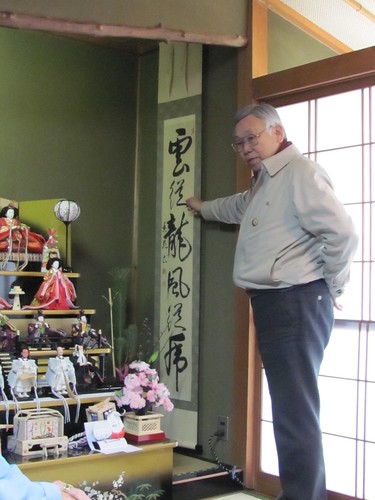
After tea, he stood up and showed us a beautiful scroll in the alcove painted by his calligraphy teacher.

IMG_1678.JPG

He explained the meaning of the kanji, which included a maxim on the importance of humility””not like George W. Bush for example,” he laughed. Jan and I laughed loudly with him and Nita and Janet smiled politely. He would return to making derogative remarks about our former president several times during the visit.

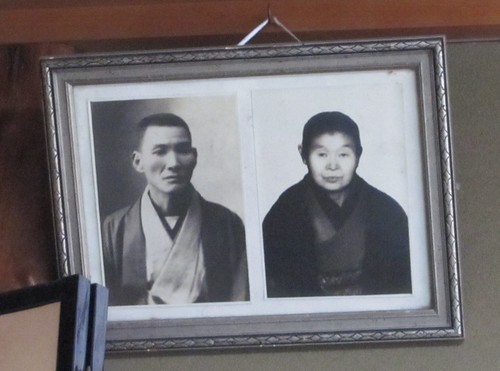
Next he moved to the elaborate Buddhist altar in another corner of the room, flanked by antique looking photos of his and Akiko’s parents.

IMG_1674.JPG

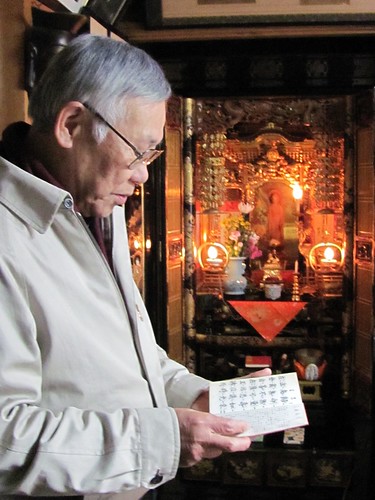
We’d earlier learned that the production of these altars, popular throughout Japan was a traditional Kanazawa industry. “Very expensive,” he said. It was purchased by his mother with money from a life insurance policy. He explained various implements on the altar, including a book of prayers sung every morning. At Jan’s request he chanted one.

IMG_1681.JPG

I could have listened for a long time.  Then he placed our gifts on the altar, “as an offering,” he stated.

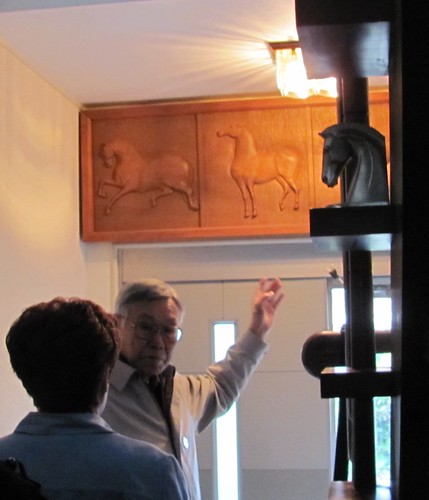
Led now into the western-style portion of the house, we entered a family room adjoining the kitchen, containing computer, TV, and an American short-haired cat. “I’m a horse maniac,” he laughed, pointing to paintings of horses decorating the walls. “I drew them.” Other horse portraits were done in needlepoint by Akiko. Across a tiny enclosed garden was the adjoining unit now inhabited by his son’s family, including grandchildren.  Back out in the chilly vestibule he gestured toward a large wooden frieze of carved horses.  “I did those too.”

IMG_1689.JPG

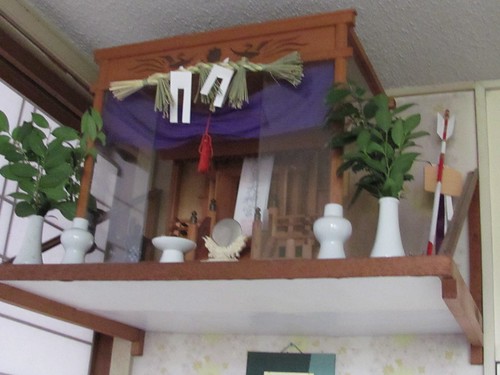
Then up the steep stairs to a former child’s room housing more horse paraphernalia, Akiko’s gold medals for roses, and above the door a little Shinto shrine. “This is for prayers of hope, the other one for thanksgiving.  Here we pray for peace, long life, health, and a little bit of money, not too much.  Remember humility.  Also for the Emperor and his family.  They are the oldest royal family in the world.”

IMG_1687.JPG

Next he conducted us to the bedroom, where futons are pulled out of the closet and placed on the floor at night.  “The cat sleeps between us,” he laughed.  “Keeps us from making babies.”

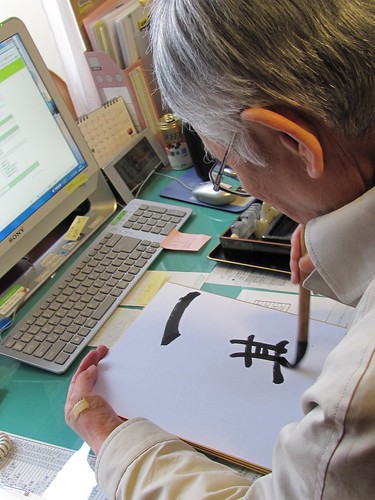
Ignoring Nita’s concern that we get back to our hotel in time, he said “Don’t worry, I’ve got it under control,” and led us to a high-ceilinged office, where formerly he conducted his real-estate business, now his son’s.  He and Akiko ushered us to sit on leather couches around another low table and she brought more tea”this time a combination of hibiscus, rose hips and strawberry””lots of vitamin C”–and delicate rice cookies. As we sipped, he took out his calligraphy set and effortlessly inked four characters on white cards bordered in gold leaf, one for each of us.

IMG_1693.JPG

“The kanji signify this,” he explained. “˜One life, One encounter.’  It’s a Buddhist saying that applies to what has just taken place in this house.”  The room was silenced by the resonance of that proverb in that moment.

After a pause, I mentioned that it expresses how I feel about every class that I teach.  Nita said she’s been on fifteen home visits with OAT, but this has been the best. Akiko brought in elegant little shopping bags to pack up our gifts.

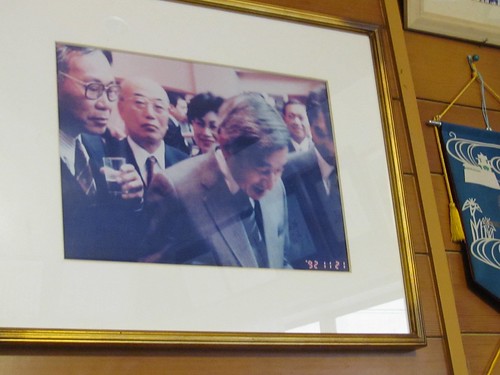
The cab was now waiting, and as he led us out the door of the office, Kano said, “this is most important,” and pointed to a fuzzy picture of a bunch of people in suits. His and Akiko’s faces were recognizable in the crowd.  In the foreground a distinguished gray-haired man was bowing.

IMG_1697.JPG

“Who is that,” he asked?  Jan said, “Is it the prince?”  “No,” he said, “that’s the Emperor.”  He’d been at a meeting of the equestrian society to which the emperor belongs, where taking pictures was forbidden, but his friend snapped this one and then ran away, “like a papparazzi.”

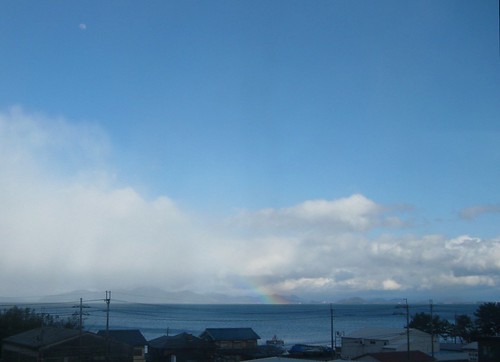
Back to the hotel we zipped to meet Maya and the rest of the group and off to the train to Kyoto. On the way the sun came out briefly and made a rainbow over lake Biwa.

IMG_0735.JPG

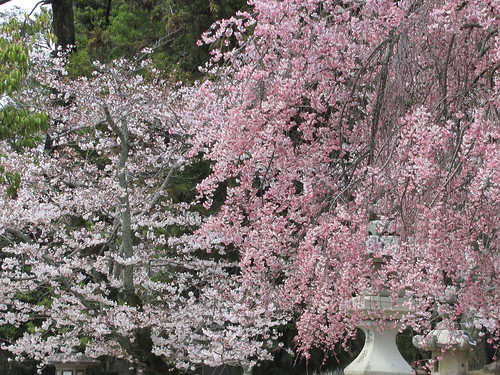
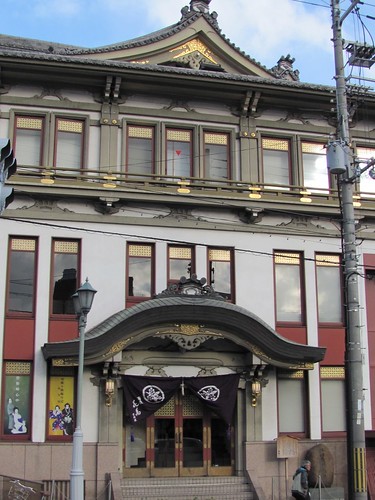
Jan and I read and reread the Kabuki play’s summary downloaded from the internet without full comprehension, since it was a sequel with many allusions to earlier scripts. The cab driver from the Kyoto station remarked on the theatre’s name we showed him with approval and said, “Empera here.”  Deploying her six-word vocabulary in Japanese,  Jan said “Sakura,” meaning Cherry blossoms. The driver nodded emphatically.  On the way along the river, we could see them in glorious bloom, about two weeks earlier than usual. Cherry blossoms in Kyoto is the number one attraction in Japan according to our authoritative Lonely Planet guidebook.  Anthony said our tour was $2000 cheaper than the one during the expected Sakura period.

We arrived at the beautiful old theatre about 30 minutes late, but the tickets were waiting at the box office.

IMG_1702.JPG

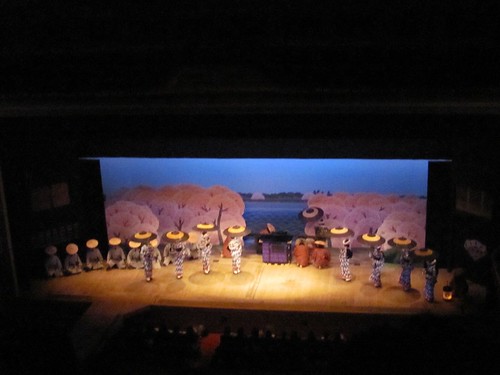
We rushed upstairs to our seats in the last row of the top balcony.  The set was brilliantly lit and colored”a stylized version of the cherry blossom scene outside, itself a stylized version of a natural landscape.

IMG_1704.JPG

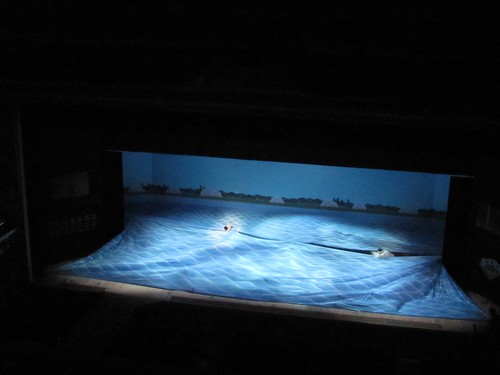
The sets changed magically”one of the attractions of Kabuki”as did the costumes of the lead actor who played seven roles, both male and female.  There was lots of action, some of which we understood, including the accidental murder of the queen and the escape of the well-meaning perpetrator through a stormy sea created by windblown silk banners.

IMG_1707.JPG

During our hasty entry I saw no prohibition on picture taking, so I snapped a few with the flash down, but an usher dashed upstairs to ask me please to stop.  Now I was paparazzi.

At the first intermission, we bought delicious sushi in a Styrofoam bento box, joining the other audience members in getting nourishment during the four and a half hour performance.  We were the only Caucasians in sight. The next act may have explained why. The set was a dimly lit scene in a humble  farmhouse.  The assassin was told of his error by the visiting courtier who deceived him earlier and who placed a sword in front of him.  For the next hour, the disgraced murderer lamented his dishonor and worked up to committing seppuku with the sword, in the presence of his blind albino child and his grieving sister. As they wept beside him, he did the deed, and it took the next 50 minutes of his incomprehensible groaning for him to finally die.

The remainder of the sushi tasted especially good at the next intermission, which was followed by a short final act, which included a swordfight ballet, brilliant acrobatics, the ascent of a ghost in a beautiful kimono to heaven, two more relatively brief seppukus, and the final vaporizing of the ghost as a result of the Emperor’s flashing it with a small image of Buddha.

Japan Trip–Day 2

Tuesday, March 23rd, 2010

Slideshow

IMG_1308.JPG

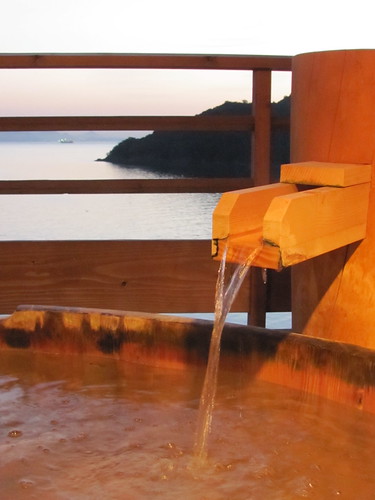
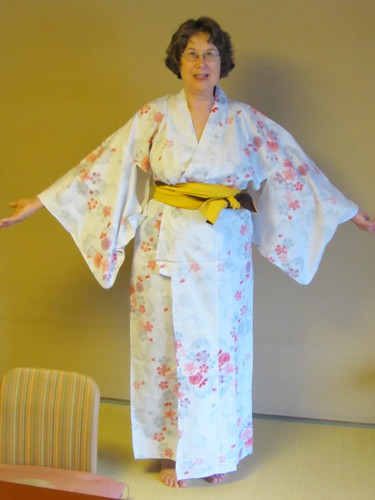
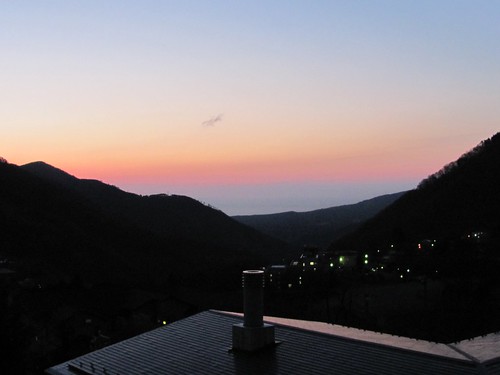
Light from the rising sun pours into the sixth floor window of our ryokan perched on a steep slope inside the crater of Hakone.  Beneath it a ring of peaks is broken by the river valley that opens into the sea.  I drink green tea from a cup on a wooden coaster, brewed on the low table next to the futons where we slept and I lay wakeful for a good part of the night, overstimulated with impressions and still not adjusted to the seventeen hours lost by travel across the Pacific. I’m dressed in the elegant cotton yukata I wore to dinner last night and to the hot sulfur baths where I soaked yesterday afternoon and this morning at 5.

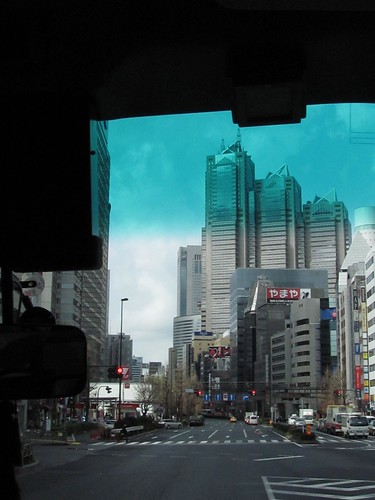
Our second day in was largely taken up with bus travel through heavy but smoothly flowing traffic in Tokyo streets and on expressways and tightly curved mountain roads during this Spring Equinox holiday weekend.

IMG_1241.JPG

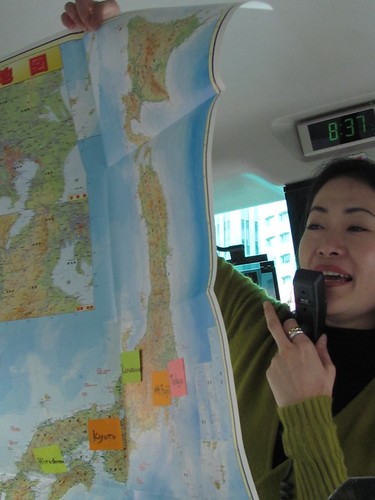
The transit time was enlivened by the variety of unfamiliar landscapes and the continuous offerings provided by our beautiful and hard working guide Maya.  She lectured on geography, history, linguistics, geology, cuisine and etiquette, using maps, color handouts, flip cards, little cheat sheets, and mnemonic songs.  I learned, and immediately forgot, basic greetings, numbers, some written Japanese characters, and a jingle in tribute to Mt Fuji.

IMG_1238.JPG

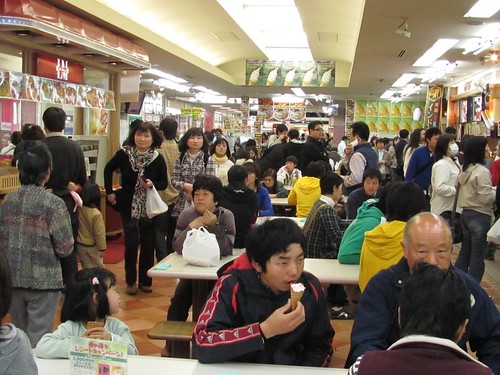
After driving for an hour south from Tokyo through a dense urban world”all buildings outside the center appearing recent, angular, drab but clean–we suddenly entered a landscape of forested mountains, river valleys, little villages and artfully bordered rice patties. The brown pre-spring vegetation was offset by patches of evergreen and a few groves of plum blossoms. The expressway rest stop buzzed with vacationers, food vendors and souvenir hawkers.

IMG_1251.JPG

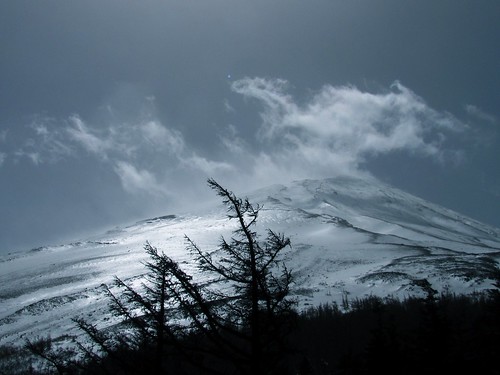
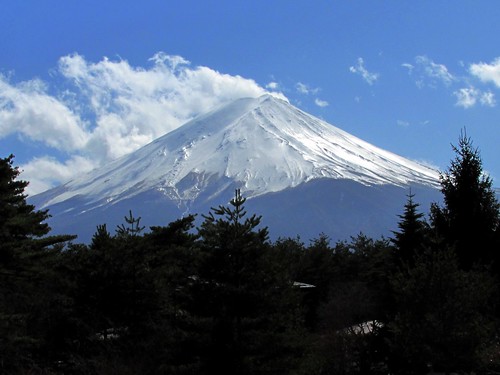
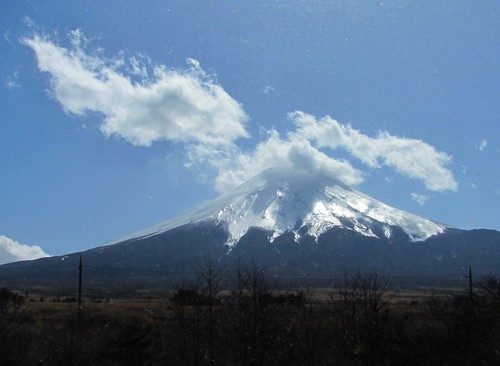
First destination was Mt. Fuji, which the bus ascended to station 5 at about 7000 feet.  This is the busy trailhead for thousands of summer hikers who climb the remaining 5000 feet to the summit, a pilgrimage that Japanese expect to make at least once in a lifetime. We got off the bus and entered the crowd battling the cold wind. Away from the parking lot the ground was covered with snow and ice, but eventually we came upon an observation platform sheltered from the gale where one could get a clear view of the summit, which occasionally appeared from behind a streaming shroud of snow and cloud. Despite the buses and multistory tourist facilities, the place felt like a real and dangerous mountain.

IMG_1278.JPG

After fifteen minutes we were ushered back on the bus for a ride to the Fuji information center near the northern base. The clearing skies allowed for a classic view of the graceful cone whose shape was familiar to me since early childhood from stamps and world puzzles as the icon of Japan.

IMG_1286.JPG

It would have been nice to slow down and pay homage for a while, but the wind remained strong, the museum beckoned and the schedule pressed us forward. As the bus headed south, through the windows we caught fleeting glimpses of this huge image of unalterable perfection always changing before our eyes. Maya recited the proverb: watch Fuji for ten minutes and you get a hundred views.

IMG_1302.JPG

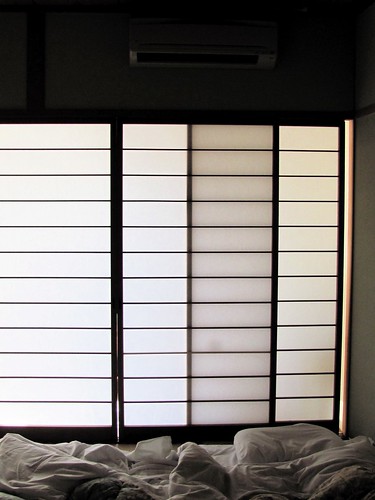
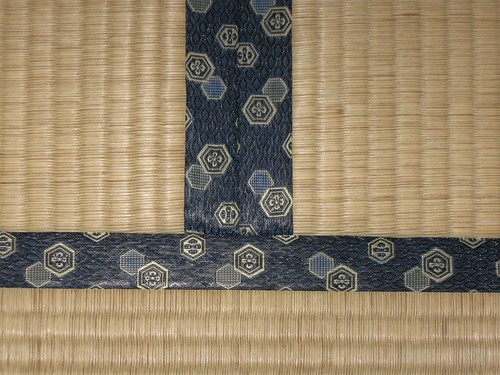
Another stint in the bus brought us to Hakone, to the world of onsen–hot springs–and ryokan–traditional rooms.  Still under the spell of  the mountain, we opened the door to a space whose first impression was comparably familiar and overwhelming: the austere beauty of unfinished planed lumber framing large panels of wall and small panels of translucent rice paper, the tightly woven tatami mats, hard yet springy to the touch, their moldings of embroidered blue silk, the low black table and cushioned floor seats, all waiting for the hotel porter, who arrived just behind us with a pot of hot tea he placed inside a round laquered  box containing ceramic cups, wooden coasters and a coiled towel in a basket. He smiled, bowed, and disappeared, silently sliding the doors and leaving us to partake undistracted in the room’s celebration of squares, rectangles and circles.

IMG_0560.JPG

IMG_1316.JPG

After a quiet cup of tea, we changed clothes to prepare for the baths. The protocol was inculcated by the guidebook’s instruction, Maya’s gentle admonitions, and posters on the wall in English as well as Japanese.  There are two baths, one on either side of the elevator on the first floor, the red curtained for women, the green for men.  The designation alternates daily, marked by the changing of the curtain.  Yukatas and slippers supplied in the rooms are worn in the hotel, removed and stowed in the sink area and locker room outside the inner curtain and sliding door leading to the tubs.  Passing through them naked, I found a steam-filled chamber, to one side the three foot deep pool into which the mineral water flows continually, to the other a row of booths, each with a shelf holding a dozen or so bottles of shampoo, conditioner, body soaps and lotions in front of a full size mirror.

Several of the booths were occupied by men sitting on low plastic stools, assiduously scrubbing themselves with washcloths and brushes and then rinsing off with the hand-held showers attached to plumbing fixtures on the floor between their legs.  I followed their example to get clean before entering the pool, and then stepped into the bath and leaned against the wall near the inlet, where a stream of the extremely hot water from the thermal source mixed with a smaller stream of cold to maintain a tolerable temperature. I enjoyed the familiar sensation of pain and stiffness draining from my joints, especially knuckles and knees, and the occasional change in water temperature resulting from some subterranean valve adjustment.

Fifteen minutes later, I was ready to get out but the men in the booths were still busily scrubbing. After two baths in the deep tub and using the advanced toilet appliance in the Tokyo hotel, I’d already felt unusually clean before entering this chamber.  What in the world could these guys be doing?  But then I remembered the requirement to leave shoes at the door, the little cloth in the tea set, the damp towel offered with meals and the face masks worn by people on the street, and I realized that citizens of this tightly packed country had reason to make a cult of hygiene.

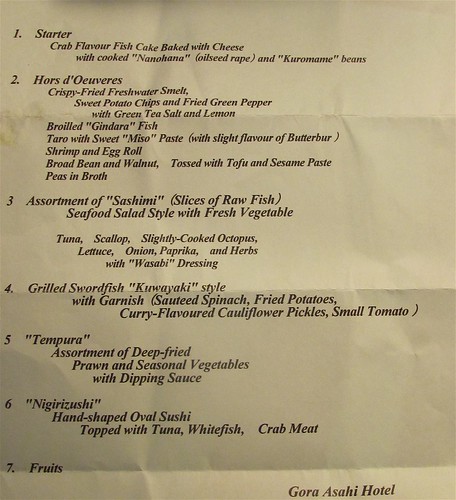
Light-headed after the day’s ascent and immersion, upon entering the banquet room I again felt overwhelmed–this time by the the traditional Japanese dinner panoply spread at my seat.  A dozen dishes each of a different shape, color and material held  elaborate combinations of artfully processed ingredients. I can picture a small wooden box with a plunger which required me to press a block of green-tea tofu into 20 sharp edged tiny blocks that tumbled into a bowl of misu soup containing scallions and buckwheat noodles, but the rest of the details are lost to memory since I didnt take pictures and neglected to keep the menu.  The second night’s dinner was equally complex without repeating any dishes or ingredients:

IMG_1535.JPG

After this feast we turned down Maya’s invitation to watch a video of “Lost in Translation” and retired to our lodging. During dinner it had been converted from parlor to bedroom, the table moved aside and two futons covering the tatami mats made up with flower-patterned down quilts showing through a large oval window in their fitted sheets.

Japan Trip–Day 1

Tuesday, March 23rd, 2010

Slideshow

It’s been five years since Jan and I traveled abroad, my retirement began, and I started writing this blog.  Japan was the next destination on our list because we were attracted by what we knew of its culture–haiku, sashimi, kabuki, Toyota–and because we hoped to spend some time there with our nieces, Emma and Marie, whose mother is Japanese-Korean.  The nieces had gotten married and engaged within the last year and wanted to introduce their partners to the family, so the time had arrived to coordinate plans.  Jan and I would go on a ten-day guided tour of “Japan’s Cultural Treasures” and meet them afterward for a few days together in Osaka, where it happened a friend of ours from San Luis Obispo had been living for three years.  Once we decided our schedule, I contacted Kazumi Yamagata, an eminent scholar of English Literature who’d translated my book on Shakespeare and the Bible into Japanese, and he invited us to visit him and his family at home outside of Tokyo the day before the tour  started.

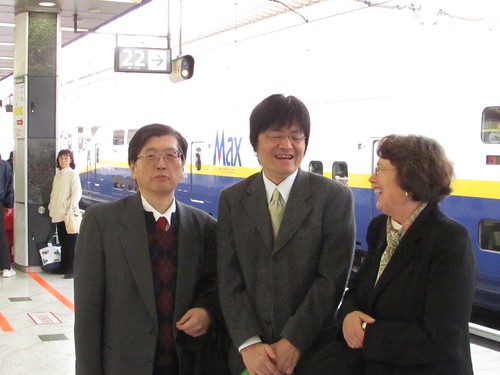
After 24 hours of travel and a good night’s sleep we were met at our hotel by a disciple of Dr. Yamagata who conducted us through the maze of downtown Tokyo to Central station where we met one of his disciples and boarded the bullet train for an hour’s trip north to the Professor’s home.

IMG_1198.JPG

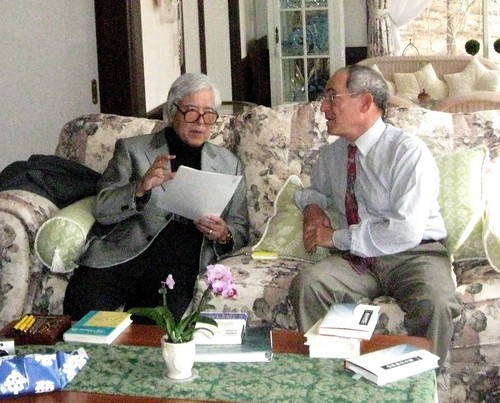
These men all teach English literature and were relatively easy for us to communicate with.  Kazumi’s wife, Satchiko, met us at the station in their daughter’s Jaguar and drove us to their  country home, where were we received warmly by the mentor, who’d turned 76 the day before.  We spent time gossiping about English literary critics, I signed their copies of his translation, and Kazumi brought out fourteen volumes of his collected works recently published–a minor portion of the 50 books that he’s written.

IMG_0545_2.JPG

He was pleased when Jan mentioned that she’d written her M.A. thesis on Dante, who he’s now translating into Japanese.

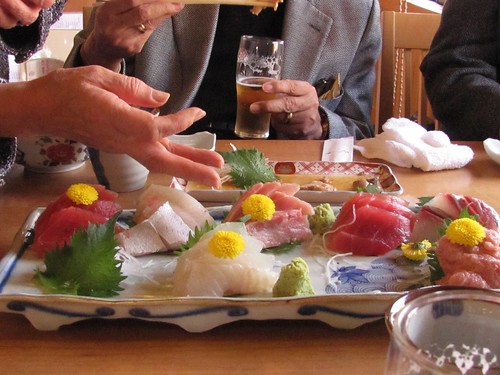
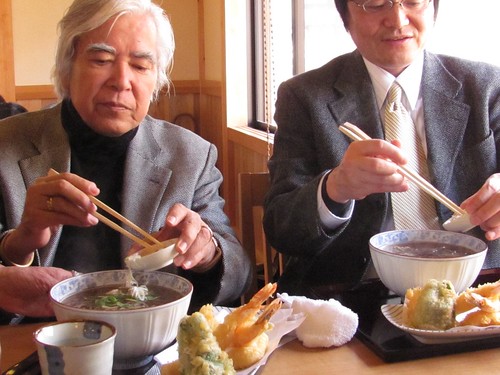
After a couple of hours, they took us to a traditional restaurant in their neighborhood where we ate large quantities of melt-in-your-mouth and melt-you-away sashimi and tempura.

IMG_1205.JPG

IMG_1207.JPG

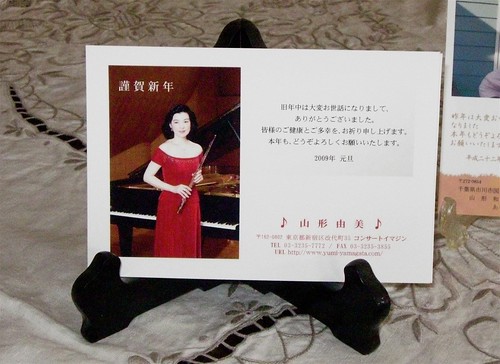
Then back to their house for tea and a tour of his study, and a visit with their daughter, Yumi, who’d just arrived from a concert she’d performed at in southern Japan.  Jan got to know her better than I did, but as her flute played quietly on the stereo in the background, they brought out gifts for us including a new CD of her work.

IMG_0548.JPG

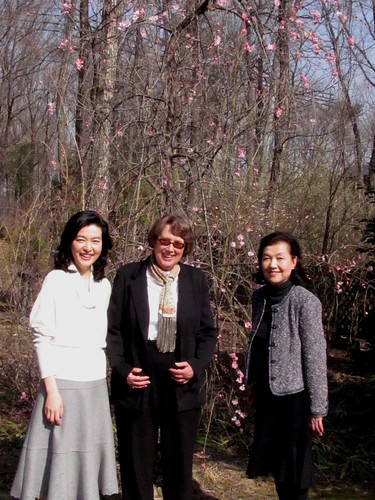
We toured their garden, where the same plants that we’d eaten in the tempura were springing up, plum blossoms in the background.

IMG_1215.JPG

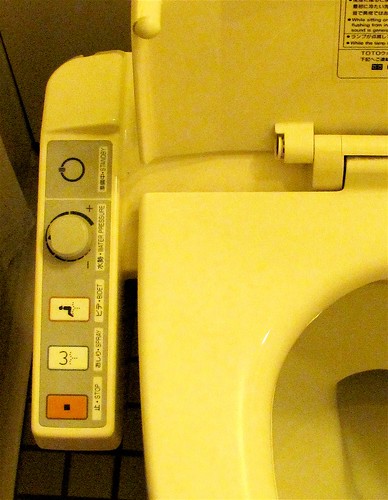
We returned to Tokyo in time to meet up with our tour group led by Maya, our striking and gracious guide. We marched together to a little dive for yakitori dinner and then home to this “modest” hotel, one of the best I’ve ever stayed in, that has a toilet with two different kinds of sprays for one’s undercarriage, along with a really deep bathtub.

IMG_1231.JPG

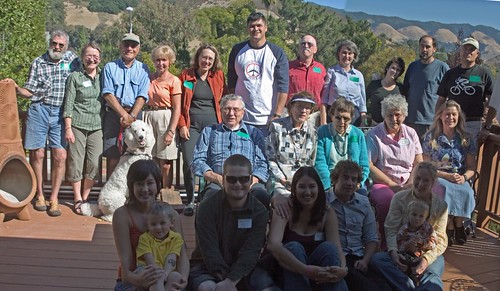
Ruth Howell (1916-2010) The Family Reunion

Monday, March 8th, 2010

February 27 2010

IMG_1030.JPG

February 28 2010

IMG_1095.JPG

Ruth’s 90th Birthday

famport3.jpg

More pictures

Ruth Howell (1916-2010) Obituary

Wednesday, March 3rd, 2010

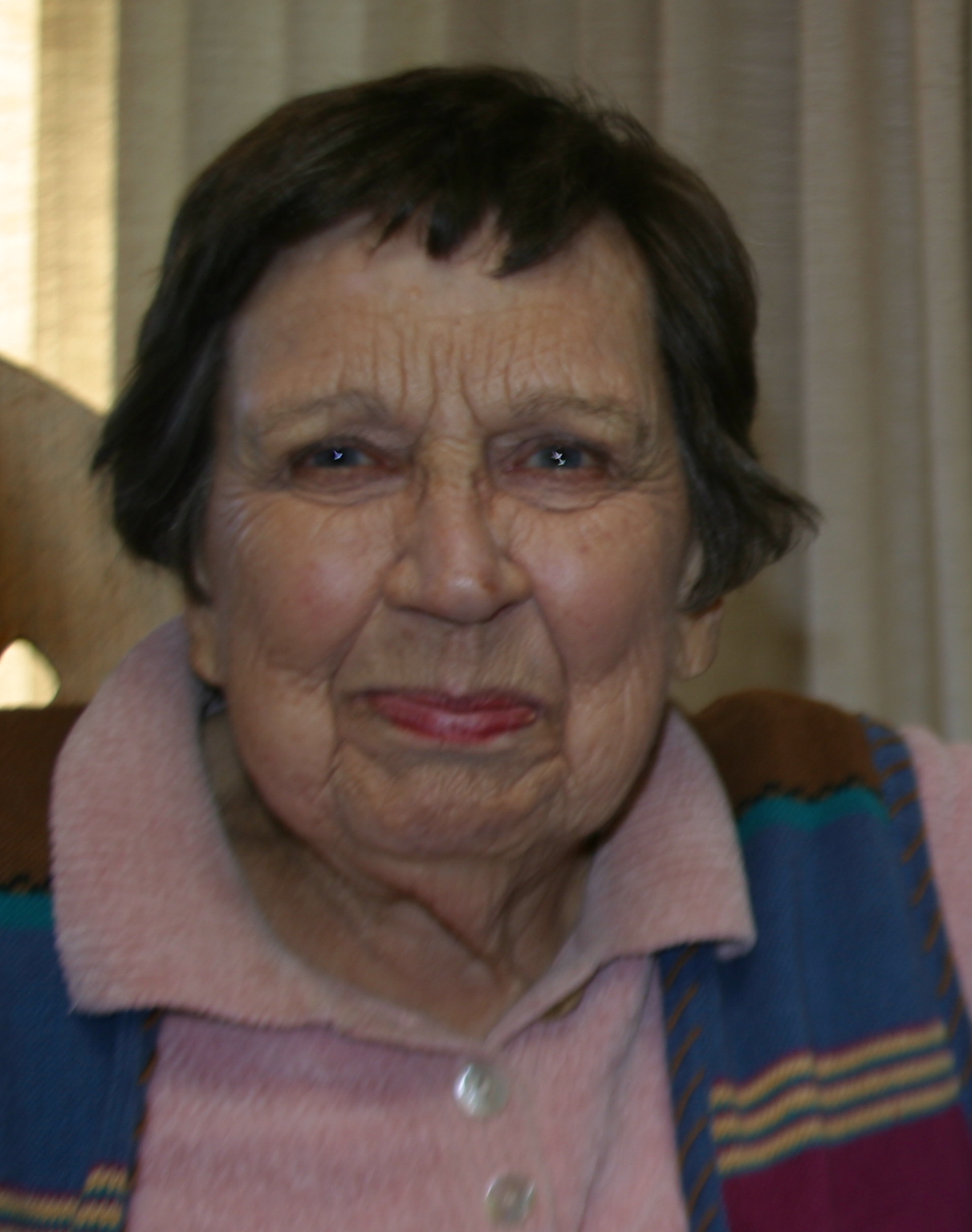
IMG_6602_2Ruth Howell was born in November 1916 in Houstonia, Mo., to Grace (Montgomery) and John Herring, and died peacefully of natural causes Saturday, Feb. 13, 2010, in San Luis Obispo. After attending secretarial school in Sedalia, Mo., she worked for the US Department of Agriculture in Nevada, Mo., and then the Department of War. She was stationed in Midland, Texas, as a secretary in a hospital for “shell shocked” soldiers. There, she and William Robert “Bill” Howell, Army Air Corps Lieutenant from Nevada, Mo., became engaged. They married in Long Beach, Calif., February 6, 1944, and their daughter, Janet was born in 1945. They moved to Lakewood, Calif., and their son, Mark was born in 1950. Ruth and Bill helped found Lakewood First Presbyterian Church, where she taught Sunday school. She volunteered for the Community Hospital of Long Beach for over 40 years and helped run the gift shop. In 2002, Ruth moved to San Luis Obispo and enjoyed living at the Palms, then Garden Creek Assisted Living. Ruth loved family, children, music, art, traveling, sewing and gardening. She was an active, involved and beloved mother and grandmother. Her engaging sense of humor earned her many friendships over her long lifetime, and her youthful spirit was reflected by the fact that her hair never turned gray. Ruth is survived by her daughter, Jan Howell (Steven) Marx of San Luis Obispo; son, William Mark (Sonia) Howell of Lakewood; grandchildren Joe (Amy) Marx of Ketchum Idaho, Claire Fisher of San Luis Obispo, Emma (Travis) Smith of Long Beach and Marie Howell of Santa Barbara; step-grandson, Mitchell Benjamin; great-grandchildren Ian Fisher, Ethan Marx, Abel Marx and Lucas Green; sister, Mary Helen French of San Diego; as well as numerous nieces and nephews. She was predeceased by her husband of 40 years, Bill; brother, John Herring; sister, Louise Butts; and cousin, Dorothy Cronk. A memorial will be held at 2 p.m. Saturday, Feb. 27, 2010, at Garden Creek Assisted Living, 73 Broad St. in San Luis Obispo. In lieu of flowers, please send donations to Hospice Partners of the Central Coast, 277 South St. Ste. R, San Luis Obispo, CA 93401, or Central Coast Memorial Society, P.O. Box 679, San Luis Obispo, CA 93406.

Ruth Howell (1916-2010) Jan’s Eulogy

Tuesday, March 2nd, 2010

Thank you all for coming.  My mother had three happy years in Garden Creek Assisted Living, and many of her friends still live here. We decided to hold the service here so they could attend.  I would like to thank Garden Creek for allowing us to be here today.

Emma Ruth Howell was born in Houstonia, Missouri 1916, four years before women got the right to vote.  She told me that her earliest memories were of horses, buggies and carts.  Her great grandfather Reverend John Montgomery was a pioneering Presbyterian minister and her great grandmother Katherine Lee Rennick was descended from Mayflower and Jamestown Lee families.  Her 93 years saw the Depression, WW II, and the advent of computers and cell phones. Just imagine the changes during her lifetime.

She told me that 16 was her lucky number because she was born in 1916 and she was 16 in her heart.  I remember her at her happiest as an energetic, fun loving, creative young mother in Long Beach California.  She helped found Lakewood Presbyterian Church, taught Sunday school and volunteered tirelessly for the local hospital, the PTA and the community. We had all kinds of pets and she turned our backyard into a garden. She always wanted to be “modern.” She enjoyed living in a brand new town, having a shiny Formica kitchen table, a new Chevy with tail fins, and her very own washing machine. She was proud our family was the first on our block to have a television.
She loved her children, grandchildren and great grandchildren.  She took excellent care of us children, her husband Bill, her grandchildren and of herself. She worked out with Jack LaLanne when he was on TV and later at his gym in person. After Bill, our Dad and her husband of 43 years died, Ruth carried on and enjoyed her independence.  She traveled to Japan, Israel, Egypt and Africa.
Even in her old age, she had an active and curious mind and wanted to know all about the news and the latest technology.  She loved the Bible and was fascinated with its history and archeology. She taught us habits of punctuality, honesty, responsibility, thrift, hard work and the importance of walking on “the sunny side of the street.” She valued relationships above all else. She made friends even during the last days of her life, as shown by the presence of her Hospice nurse and her last caregivers here at this service.

It was a rare privilege for me to have spent the last seven years living close to my mother.  We got to know each other as adults and had lots of “sister fun” together. Ever since she died, so many people have been telling me how much she meant to them, how she reached out and lifted their spirits.  I miss her and I know I will miss her every day of my life, but I am thankful that she no longer has to contend with the aches and pains of her last year. I do not believe that her love has died, because we all still feel it in our hearts.  As Emily Dickinson wrote:  “Unable are the loved to die. For love is immortality.”

Shelter from the Storm

Wednesday, January 20th, 2010

Luscious sounds of rumbling thunder and rain tapping on skylights.  Still dark at 6:30.

After preparing a solo dinner last night with rappacini from the farmers market and a glass of wine, I lay down on the bed for a nap, which lasted until this morning. Tensing with the pains in my back and joints all day left me exhausted.  Settling under the old feather comforter felt wonderful, as if I had been up all night or spent hours at hard labor in the cold, even though it hadnt been a strenuous day, especially by comparison to Jan’s, who was at a Council meeting that would probably go till midnight.  I’d accompanied Lucas and Claire to the dentist in Arroyo Grande, driven home for lunch, driven back to A.G. at Dennis’ request to take Ian out of school and get his cast removed, gone with him to the beach to look at  storm waves and topple little sand cliffs, and then stopped at the nursing home to see Ruth.  It was a shock to find her no longer dressed in her wheelchair, but sprawled in bed in a flimsy hospital gown without glasses or hearing aids or false teeth, her mouth shriveled and gaping, her hair lusterless, her skin gray, her brow  furrowed.  I announced my presence and took her hand.  She squeezed it once, then pushed it away,  shuffled on the mattress, and resumed fingering the edge of her gown. One word escaped her: “help.”  Then she quieted, apparently off to morphine-induced sleep, though her brow never relaxed.
The night before, Jan prepared an elegant dinner for Patricia whom we hadn’t seen in two years, since before her cancer diagnosis, radiation, chemo, and surgery.  She was as vital, busy and considerate as ever, full of lighthearted stories of her ordeal and triumph, of recollections of experiences we’ve shared, of questions about us and the family, and of her own burgeoning plans for this year”directing six productions at PCPA while teaching full time.

On the topic of feeling pain during her new exercise-physical therapy routine I was especially engaged”trying to distinguish between the benefits of pushing limits of  endurance and recognizing signals to pull back, use drugs, seek medical help.  The knee surgeon had told me two weeks ago to take four Aleve per day to see if that reduced swelling, but after reading of the long-term side effects of such regular use, I was experimenting with doing without it and working in the yard.  The results were not encouraging.

All this wintry local experience takes place within the darker framework painted by the news flooding in on radio, internet, and newspaper.  The failure of Obama’s promise, confirmed by the fizzling of the Copenhagen talks on climate change,  the widening of war in Afganistan,  the increase of debt and reduction of government services, and by yesterday’s Republican victory in Massachusetts.  And behind this political gloom lurks the metaphysical horror of the earthquake in Haiti.

I’m in the habit of preceding my morning meditation with prayers to a god whose existence I don’t believe in. I make three silent utterances beginning, “Thank you,” “Please,” and “I’m sorry.”  The Please is most often for cure of disease or alleviation of suffering by friends and family members: “let the chemo work for T¦, let the tumor  be benign for P, let R rest in peace.”  These requests affirm my concerns, discharge obligations and create the illusion of sending  positive influence their way through my obeisance to a higher power.  But when I think of the suffering in Haiti, the Please bounces back at me.  Even suspending disbelief and regressing to the innocence of the first graders in Ian’s  school who a dozen times a day hear of God’s benevolent intentions, I cant imagine a personality who would unrelentingly torment so many people while allowing me to listen to their story on the radio as I cook myself supper.

Bit Rot and Digital Remastering

Saturday, October 31st, 2009

This website is the beginning of my endgame.

My aim is to do this kind of sifting of grain from chaff with the motley collection of journals and letters that fill my file cabinet. I’m content with the belief that this life is all I get. Rather than a mess to clean up, I’d like to leave behind an ordered recollection of what I’ve learned and enjoyed.

I wrote that three years ago on the  “about” page  of this weblog.

I knew then I was starting a big project.  The more I work on it, the larger it gets. Not really then an endgame.

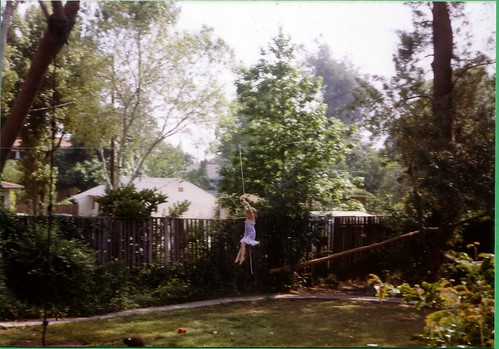
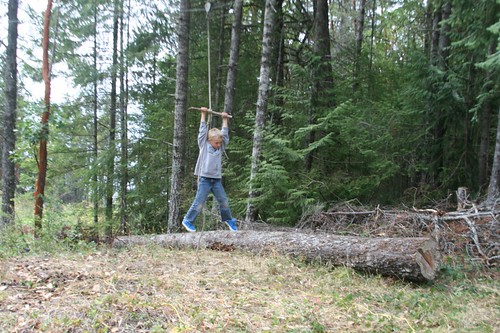
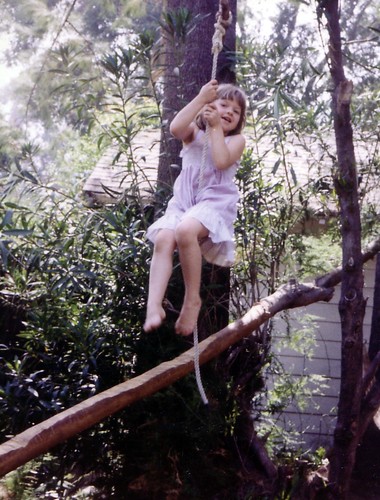
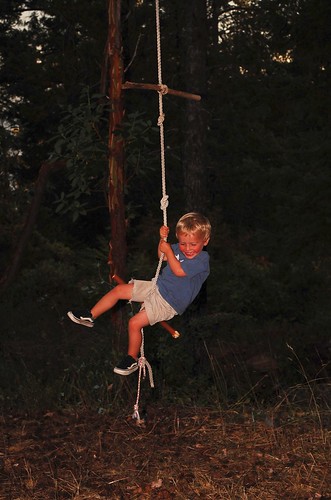
Next week mother-in-law Ruth will be 93. This morning I visited her in Sydney Creek, the Dementia Facility.  As usual when I arrive, she is asleep in her chair, but she perks up immediately, light streaming from her almost blind eyes, her voice clear and joyful.  She tells me her dreams and hallucinations and memories.  She picks up our last conversation where it left off.  I report on Claire and the two great-grandkids, she listens and laughs and says, “I remember those playground toys you built for her in your backyard in Claremont.”

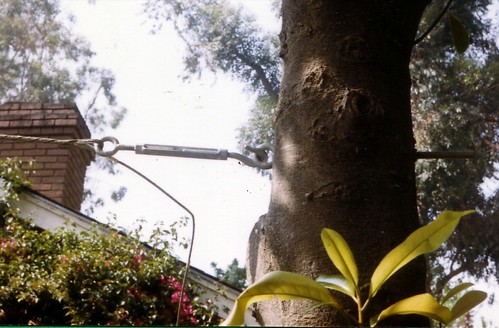
That was 1983.  I tell her that just this summer the cable and hardware for that tree trolley, which I’d stowed  in an old carpenter’s chest salvaged from the farm, returned to Canada, where Joe rigged it up at Knoll House for the use of his kids, their friends, parents and grandparents.

Back home I dig old pictures out of a huge lateral file drawer  and scan a few to match with this summer’s.

1983trolley2.jpg

IMG_7988.JPG

1983trolley1.jpg

DSC_4205.jpg

1983trolley4.jpg

IMG_7974.JPG

The galvanized steel of the cables and eyebolts and the polyethelyne of the rope are more durable than other artifacts I’ve been excavating.  Week before last I spent many hours in the Cal Poly Art Resource Library using its expensive equipment to scan 250 35mm slides that had been boxed in cassette trays in my garage. They record moments from our wedding, from early days on the farm, from our family trips to Europe in 1978, to Hawaii in 1984, from our time in Claremont and Palo Alto. The slides were covered with dust and grease and their colors were faded and distorted. The scanner software and adjustments in Photoshop brought them back to life, some almost as good as new, many better.  I gasped as our images of thirty years ago revived on the monitor.

Slide_Scans_063.jpg

Slide_Scans_037.jpg

scan126.jpg

I  spent much of the previous week in the CLA computer lab converting old VHS videotapes of English 510 Players productions of Twelfth Night (1990) and The Winter’s Tale (1994) to binary files.  Like the slides, they needed to be restored to a more accessible and permanent medium.  I’d discovered that the dozens of short segments I’d digitized nine years ago and placed on the University Media Server to provide material for my Triangulating Shakespeare website had decomposed over time into a kind of pixel jelly. Now I could replace them in larger, clearer format and at full length.  But the new digital files will probably be no less fragile than the previous ones I’d assumed would last forever.  The problem is called “bit-rot.” See the entry called “Data decay: even computers forget” on the Australian blog,  Time, etc.; Humans in the big scheme of things.

This echoes the title of the work that Shakespeare rewrote as The Winters Tale, Thomas Greene’s The Triumph of Time. As I played and rewound and spliced the recitation of the character named “TIME”  in Act 4, Scene 1 (performed fifteen years ago by the daughter of my wife’s best friend in elementary school) I slipped into the allegorical role myself:

I, that please some, try all, both joy and terror
Of good and bad, that makes and unfolds error,
Now take upon me, in the name of Time,
To use my wings. Impute it not a crime
To me or my swift passage, that I slide
O’er sixteen years and leave the growth untried
Of that wide gap, since it is in my power
To o’erthrow law and in one self-born hour
To plant and o’erwhelm custom. Let me pass
The same I am, ere ancient’st order was
Or what is now received: I witness to
The times that brought them in; so shall I do
To the freshest things now reigning and make stale
The glistering of this present, as my tale
Now seems to it.

When I watched the final scene, where a memorial statue comes to life after its subject was thought to have been dead for sixteen years scripted  as a theatrical resurrection in a chapel, I felt that moment  of performance on the altar of San Luis Obispo’s  1762 Mission Church quickening again, wrinkled now but still warm.

POSTSCRIPTS:

January 20 2010: Wow! Just watched the old Measure for Measure video. Really amazing that you managed to get such solid performance out of non-acting students. I found the play charming and — most importantly — the language really came alive. You should do some directing for community theater. — Elizabeth

November 30 2009: It was wonderful to hear from you. I just got started on Facebook. Wishing you happy holidays, Don

November 28 2009: How wonderful to hear from you! Unfortunately I can’t seem to open this link – which might be a good thing as I think I was a pretty shockingly bad actress–Ann

November 24 2009: Thanks Steven–it’s amazing!  Tom

November 24 2009: Hi Steven! Wow. Thanks for this treasure trove! I remember lending my VHS copy of”Twelfth Night” to a friend soon after I received it. Never got it back. Almost twenty years later, my kids are saying “Daddy, you look weird. And why are talking so funny?” Congrats on leaving lasting wonderful impressions on your old students!–Greg

November 23 2009: What fun! Good to hear from you. Patty

November 23 2009: Participating in the English 510 Players Production of “Measure for Measure” was one of the highlights from my Cal Poly years. I’m sure I’ll cringe as I watch my performance but what an awesome experience it was. Thank you, Dr. Marx! –Candice

November 21 2009: This is great! Thanks for doing this Steven.  We’ll give you a call for lunch next time we’re down–we had a really good time with you guys last time. Take care. –Craig

Protected: A Visit to Social Services

Monday, October 26th, 2009

This content is password-protected. To view it, please enter the password below.