Topics
Botanical Surprises
Monday, September 13th, 2010A doleful awakening on a foggy Sunday morning, joints aching from the strain of lifting boxes of steel wires and forcing them into hard ground to hold Elect Jan Marx Mayor signs. Looking forward to meditation for escape from the nattering in my head, then impatient for it to be over. Not swimming enough because I wont use the Poly Rec Center in protest against that revolting expansion.
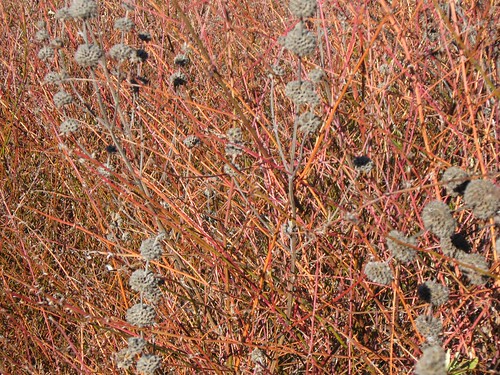
I wont let my alienation from the University–latest outrage disbanding the CSA– alienate me from Poly Land. I’ve been wondering about the red blanket of vegetation on Poly Mountain since June. Is it dried monkeyflower or buckwheat?
As soon as I slip into my West Coast Trail boots, my mood lightens and my legs urge me to get started, like the dog when he sees Jan lace her runners. I stride through the silent foggy streets, climb over the fence, and feel the spring of my footfalls through the grass. The sensation of freedom in the question, which way to go? Feet find a trail of cracked soil showing through trampled grass pointing straight uphill. Breathing muscles mobilized. The absence of the forty-pound pack makes the steepening ascent effortless, and the mixture of tarweed and horsemanure pleasures my nostrils. The trail continues beyond the fence. Two strands of barbed wire slack enough to allow me through. The sun is a faint disk penetrating the fog, recalling its appearance at Klanawa River.
Perhaps I’ll go to the tree house and sit there and write. I’ve done it before. The trail winds through the chapparal right to it. A new resident? Entering the secluded clearing under the great oak, I see a spade and a rake leaning against the twenty foot ladder that reaches the lowest branch. Ten feet above the tree house a large improvised hammock hangs atop another ladder. As I stare I hear a sleepy “hello?” Not wanting to trespass, I say “Hi, my name’s Steven. I come here every few months. Do you know E.C. the guy who built this house?” “Yes, met him once,” answers a voice whose origin seems to be a pile of blankets in the hammock. I ask if it’s OK to come up, and then mount the lower ladder. At the treehouse platform I see a mop of hair at the edge of the blankets above and try to build more trust. Yes they know M, they’re his students. I wrote in the guest ledger here on previous visits. I climb the next ladder into the bedroom. Two people snuggle under the blankets, K. and T. They work with the same environmental organization I do. I built a hammock like that forty years ago for kids on our farm in B.C.
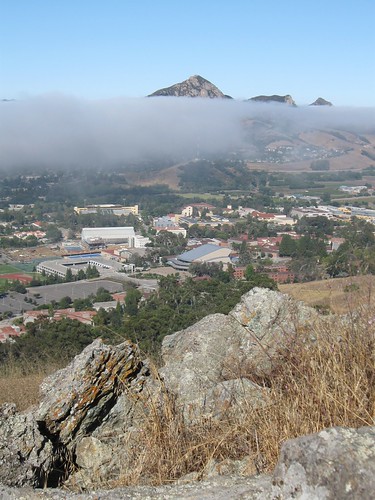
After fifteen minutes chat I descend the ladders and continue up the mountain, serpentine boulders providing foot and handholds. The fog now just a ribbon draping Bishop Peak. The dark red scrub I’d been wondering about from the house and while approaching SLO on the freeway is neither monkeyflower nor buckwheat, but deerweed stalks, all the leaves and flowers gone. A huge exclusive patch, easy to walk through. Three years after the fire, it’s choked out all the poison oak.

Snuffing the CSA
Friday, September 10th, 2010The Cal Poly Crop Science Department’s decision to kill the Community Supported Agriculture (CSA) Program may have been cruel and ill advised, but it did provide an effective display of raw power (“Harvest of disappointment,” Aug. 25). Its execution with blitzkrieg haste at a time of year when the university is deserted was well timed to maximize the shock and bewilderment of the many students, faculty, employees, and customers who held a stake in this real community institution.
One wonders if any of the decision- makers has ever shared my experience as a 10-year CSA member”being personally connected to the elemental process of planting, cultivating, harvesting, and cooking food grown by people they knew, in soil they loved. One wonders if these agriculturalists were aware of the decades of dedication invested in this program by visionary volunteers as a tiny offset to the servitude of most of the College of Agriculture to corporate industrial-chemical interests. One wonders if these crop scientists had considered the impact of being left in the lurch mid-season on several local small farmers who had partnered with the CSA.
One also wonders if their bumbling explanations, insulting to any person of intelligence, convinced their own authors or were just a smokescreen for a show of force. The only statement that made any sense in the letter sent to the press and to CSA members was that the program has been running a deficit. Apart from the fact that innovative, educational, and community service projects should not be judged simply by the bottom line of short-term profitability, a reasonable approach to the CSA’s financing problems would be for Cal Poly to activate some of its educational resources and opportunities”for instance in agricultural marketing and distribution”to help it thrive.
Hiking the West Coast Trail (5)
Saturday, August 28th, 2010Sunday August 15
Slow morning to enjoy the sunshine and instant coffee.
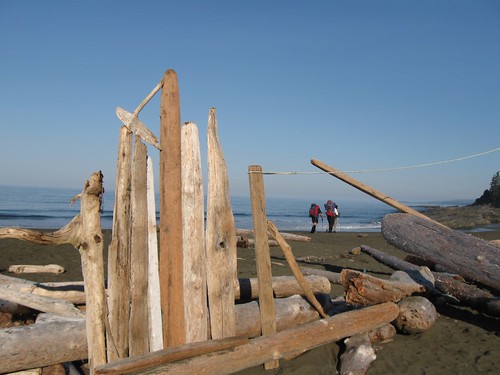
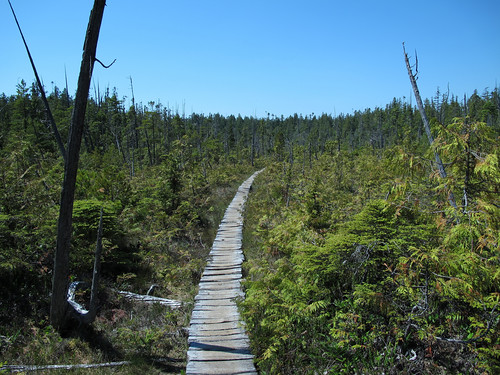
Next time it will be fine ground beans. Hike is partway on beach, partway on forest trail facilitated by boardwalks, ladders, suspension bridge, steel bridge and cable trolleys. Views of water and rock and little coves below alternate with deep forest, ancient bogs and a beaver pond bypass.
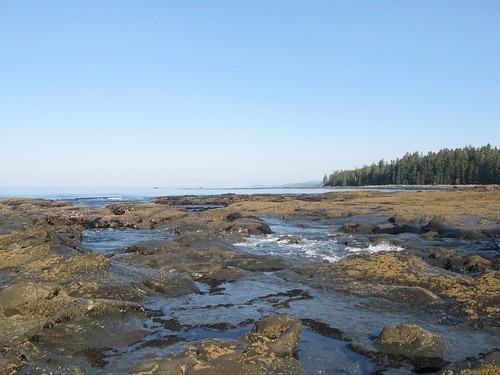
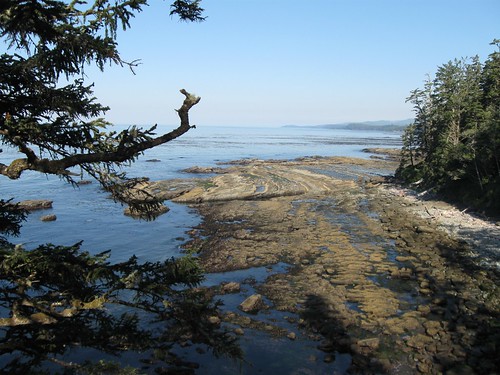
Arrive at Nitinat Narrows ferry in time for another Indian Reserve restaurant lunch. We benefit from the assertion of First Nation rights.
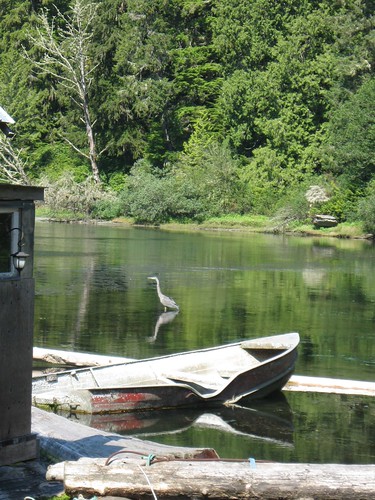
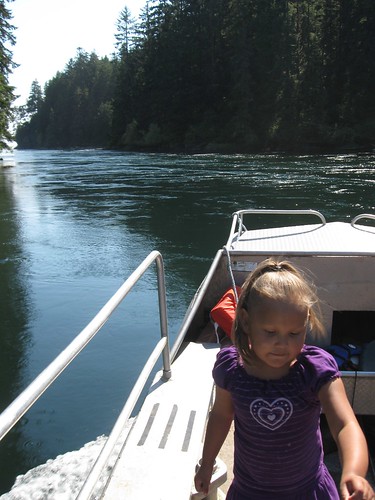
A four year old girl, strong Indian features but with blond-brown hair cavorts around the dock. Her Daddy runs the little ferry and the family enterprise. He pulls a rope up to the dock and lifts out the crab ordered by Peter, tears it apart for cooking by his son and throws some scraps into the water where a large school of salmon fry clean them up.
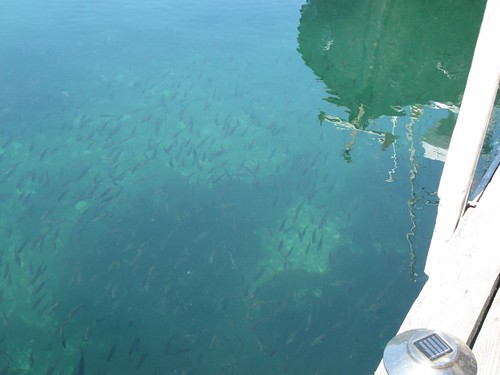
I get salmon caught off Bonilla Point, which we walked by yesterday, Paul gets halibut.

At the next table two strapping women who passed us at intimidating speed are having lunch. We chat. They are carrying three bottles of booze and will finish the trail in four not our 8 days. One with a French accent is from Montreal, has just finished school and earlier in the summer cycled down the coast to San Francisco. Steve and she compare notes about the roads. He did it with his son 20 years ago.
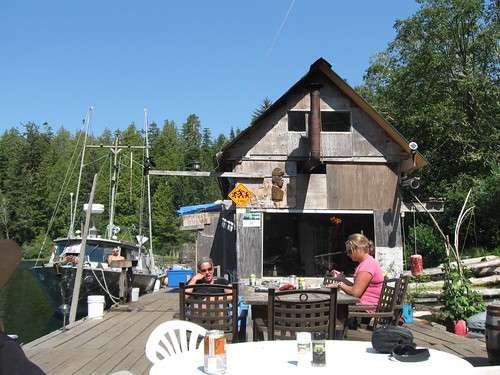
The dock where we sit is anchored at the edge of Nitinat narrows, which drains and fills a huge saltwater lake (lake not inlet because it also has freshwater that flows into the ocean). The deep green water heads upstream at an astonishing rate, the surface curled by whirlpools. After lunch Daddy ferries us across to the trailhead.
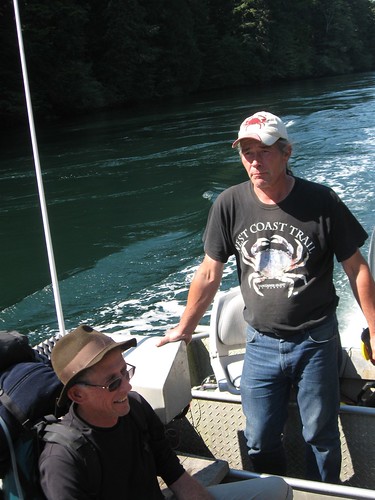
Late in the afternoon we find a beach access. Paul and I search for water while Peter and Steve wait, refusing to go on further. A spring is found hidden in the brush at an unmarked spot south of Tsushiat point where we set up for the night.
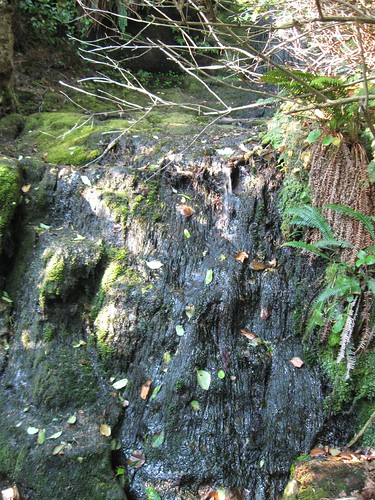
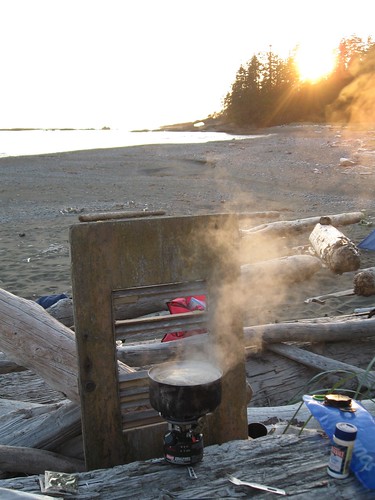
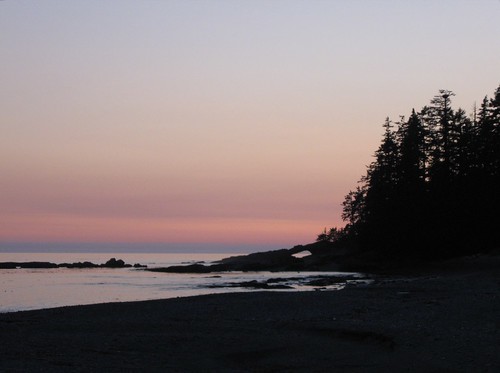
Wind has shifted onshore and we see the fog approaching. Noone else in sight in all directions. I listen to the gravelly rumble of pebbles pushed and pulled by the waves rolling against one another .
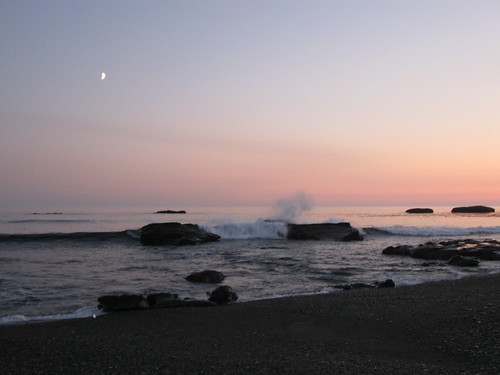
A Way with Words, Writing and Meditation Workshop on Cortes Island, British Columbia
Monday, August 2nd, 2010[Written for ASLE Newsletter at Ruth’s request]
At the 2009 ASLE Conference in Victoria B.C. the plenary speaker at the final banquet, Ruth Ozeki, suggested that members of the Association make room for the practise of contemplative meditation in their activities of meeting, writing and teaching. Ozeki is the author of two influential novels, My Year of Meats (1998) and All Over Creation (2003), which dramatized issues of industrial agriculture, animal welfare, genetically engineered crops, and malnutrition which have taken center stage in recent discussions about sustainability and the food system.
Lately, in essays and poems and in her role as editor of Everydayzen.org, the website of her mentor Norman Fischer, Ozeki has been promoting the practice of Zen meditation. From June 5-9 Ozeki and her colleague Kate McCandless, a poet and ordained Zen priest, conducted a workshop on writing and meditation at the Hollyhock Learning Center that provided compelling support for the value of adding contemplative practice to the mix of analytic, creative, scientific, political and recreational activities associated with Literature and the Environment.
The setting was appropriate. Hollyhock is located in a spectacular wilderness on the coast of remote Cortes Island in the Straight of Georgia, within view of peaks and glaciers on Vancouver Island and the mainland Coast Range. The island’s sparse population includes indigenous peoples, loggers and fishermen, hippies, artists, and environmental activists, including Ozeki and her husband. The site was originally developed during the 1970’s as Cold Mountain Institute by Richard Weaver and served as a gathering place for Gary Snyder, Robert Bly, Alan Ginsberg, r.d. laing, among others. The facility was sold to a consortium of artists and activists in the 1980’s and since then has developed as a model of local organic food production and home-built sustainable architecture offering hundreds of educational and outdoor recreational programs to the public.
The five-day workshop featured guided meditations directing attention to posture and breathing, to the impressions on the five senses, to memories of childhood, to the four elements shared by the body and the natural world, to the consciousness of emotions and to empathy with others. Emphasizing the complementary aspects of sitting and writing, each of the meditation exercises was coupled with prompts and time for composing, presenting and listening to others’ work. The many opportunities for exploration”kayaking, a boat trip to a world heritage bird sanctuary, hiking the inland trails”were forsaken in favor of the contemplative practices, which were however heightened by the surrounding presence of forest, sea and sky and to which connection was intensified by silence and concentration.
The workshop reinforced the importance of frequently ignored components of the ecoliterary tradition: the pastoral of solitude and the pastoral of contemplation celebrated in Chinese and Japanese nature writing as well as by European and American authors like Shakespeare, Wordsworth, Emerson, and Thoreau. It led participants to the place in Andrew Marvell’s Garden where
the mind, from pleasure less,
Withdraws into its happiness :
¦
Annihilating all that’s made
To a green thought in a green shade.
Hollyhock Journal 1
Wednesday, June 2nd, 2010After returning from Japan in early April and completing my account of the trip, I thought it might be time again to write to Ruth, who’d never returned my November’s email telling her about the recent Michael Pollan incident at Cal Poly. Before doing so I checked out her blog and discovered that she was offering a five-day “Writing and Meditation” workshop together with a Zen priest/poet at Hollyhock on Cortes Island in June. This striking combination appealed to two of my interests. Her postings about an address she gave to the Association for the Study of Literature and the Environment and about grappling with internet overload dealt with subjects I cared about. And her dual residency on Cortes Island and in Manhattan mirrored my upbringing in New York and forty year association with Lund, B.C.
Even though it was expensive and too close to our recent international excursion and our upcoming family trips to Idaho and Canada, it was hard to resist such a perfectly taylored educational opportunity. Adding to the appeal was the workshop’s setting at Hollyhock, a legendary place I’d never visited that could be reached with a six hour kayak trip across the Georgia Straight from our place in Lund. Three years ago I’d considered making the trip in November, but concluded it was imprudent.
Ruth wrote a welcome email to the registrants, inviting us to bring our favorite writing instruments and any projects we were working on. My previous writing workshop experiences–NEH seminars at Berkeley in 1989 and Yale in 1993–took their enduring value from the clearly formulated topics and publication goals I’d come with, but this time I have no such motive in mind. “What,” I ask, as the plane finally gets airborne at LAX, “do I want to bring back from this quest?” Hints of answers coalesce and dissolve like cream on the surface of coffee. A poem or two, some experiments with forms I’ve never tried, a sense of future direction, a commitment, an adventure story?
Sustainability Book Club 2009-2010
Thursday, May 27th, 2010Friday May 7 was the thirteenth and final meeting of the Sustainability Book Club. I looked forward to that conclusion with mixed feelings. Since I had deferred my last year of part-time teaching until 2010-2011, it constituted my only regular contact with the University and a small remnant of the teaching obligations that had weighed heavily as complete retirement approached. I welcomed the relief and dreaded the loss. It was also an occasion to evaluate the project”through the judgments of participants who’d filled out a questionnaire circulated by the Center for Teaching and Learning which hosted and supported it, and through my own reflection. The gift of a collection of environmental writings signed by most of the seminar members a few months ago made me less anxious about their verdict than about my own. The drama of the moment lay in a choice I’d have to make about whether or not this outcome warranted the effort of trying to renew the program for next year.
The last meeting’s moderator was Rob Rutherford, Professor of Animal Science, Director of the Sheep Unit, veteran Sustainability activist, voracious reader whom I liked to call our Good Shepherd. He’d selected a book called Resilience Thinking, as our text for the day. It introduced a concept new to me, which for some people was replacing the idea of Sustainability at the cutting edge of environmental discourse. It emphasized 1)observing processes from multiple scales to understand how very small and very large changes interacted and 2)studying universal cyclic stages of growth, solidification, decay and reconstitution. I’d found the book poorly organized–often redundant, yet in several places too dense in its use of models plotted with three dimensional calculus. However, its elaboration of the idea of tipping points–when systems lose the capacity to absorb disturbance and flip into conditions with new baselines of equilibrium–seemed applicable to the Deepwater Horizon Oil Spill two weeks old at the time, after which the return to the kind of stability implied by “sustainability” seems increasingly unlikely.
Rob had suggested that instead of meeting in our regular location on the fifth floor of the library, we get together at Cheda Ranch, the home of the sheep unit, where he would show us around a landscape that embodied some of the resilience concepts and where he could serve us some of its highly sustainable fruits: fresh lamb, bred, raised and barbequed by his students.
I biked out a little early on that glorious May morning, approaching the ranch through a gate across the road from the Poultry Unit, one of those notorious CAFO’s, which kept five hens in each two foot square cage, which I had visited with my Cal Poly Land students a few years ago. The sight of the old Cheda barn nestled in the vegetation around Stenner Creek and guarded over by the monolith of Bishop Peak, recalled the many times I had made the pilgrimage to this historic hardly known corner of the University’s large land holdings.
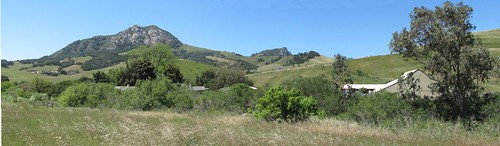
I crossed the creek and sat on a haybale in the old barn making some notes for the seminar, and glanced at the student historical project framed on the wall,
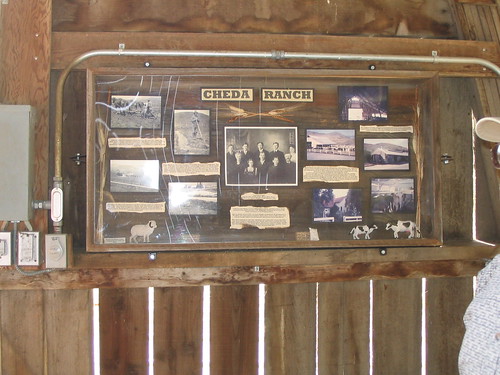
used on the website that one group produced to spread the word about this place after Rob had given them a tour
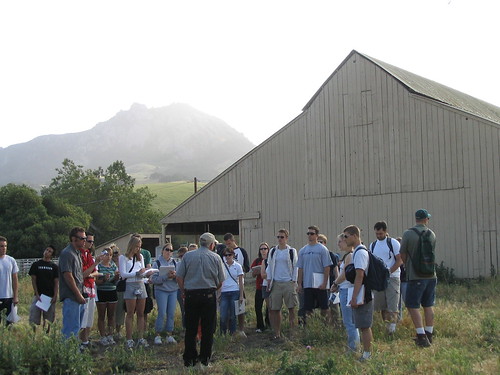
and introduced them to the idea of holistic management.
A red shouldered hawk fat from hunting gophers that lived in the barn’s basement settled on a fencepost,
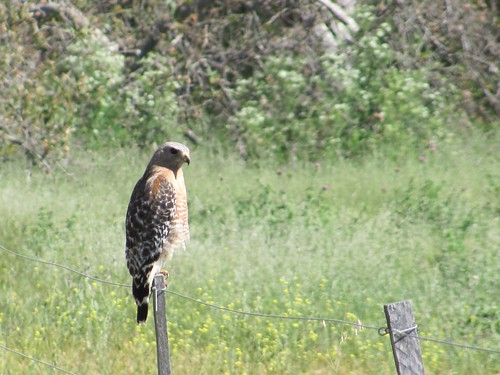
reminding me of the hawk in Mary Oliver’s poem that my environmental literature class read by the little reservoir up the hill while watching the raptors she described
This morning
the hawk
rose up
out of the meadow’s browse
and swung over the lake”
it settled
on the small black dome
of a dead pine,
alert as an admiral,
its profile
distinguished with sideburns
the color of smoke,
and I said: remember
this is not something
of the red fire, this is
heaven’s fistful
of death and destruction,
and the hawk hooked
one exquisite foot
onto a last twig
to look deeper
into the yellow reeds
along the edges of the water
and I said: remember
the tree, the cave
the white lily of resurrection
and that’s when it simply lifted
its golden feet and floated
into the wind, belly-first,
and then it cruised along the lake”
all the time its eyes fastened
harder than love on some
unimportant rustling in the
yellow reeds”and then it
seemed to crouch high in the air, and then it
turned into a white blade, which fell.
Not noticing me, Rob drove a little cart past the barn entrance loaded with folding chairs and tables and headed toward the sheep paddock where he’d arranged for us to meet. Down the road from the reservoir four members of the book club came racing on their bicycles and scaring off the hawk.
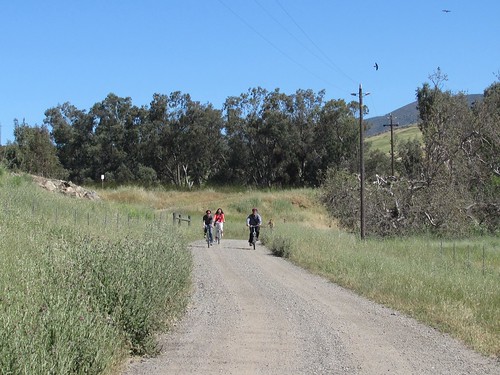
Four more people moseyed over from the parking lot. Rob returned to lead us by foot across the creek and riparian corridor which had recently been returned to health as a result of proper sheep grazing management after decades of degradation caused by earlier overuse and later neglect. Last winter two good sized steelhead trout were observed there, illustrating the principle of resilience.
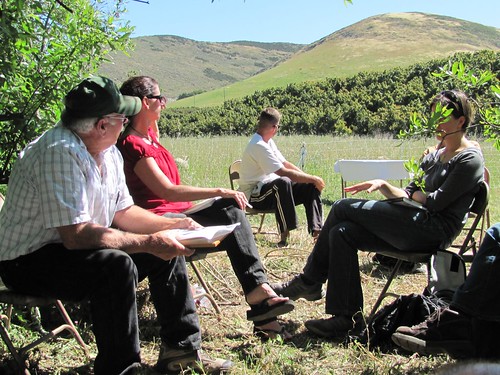
At our meeting place upstream, Rob had placed paper bags full of raw wool (yessir, yessir) on chairs for each of us arranged to enjoy sunshine or shade. This was the perfect fibre, he noted, stronger than steel, durable, waterproof, and produced by animals transforming vegetation created from water, soil and sunshine with no other inputs. I said nothing about the classic account of the effect of sheep on landscape and rural economy found in Thomas More’s Utopia and cited at length by Vananda Shiva.
We exchanged widely divergent impressions of Resilience Thinking, a couple of people planning to assign it in their classes, others having no use for it. The sheep flock came as close as the electric fence permitted, occasionally bleating their opinions.
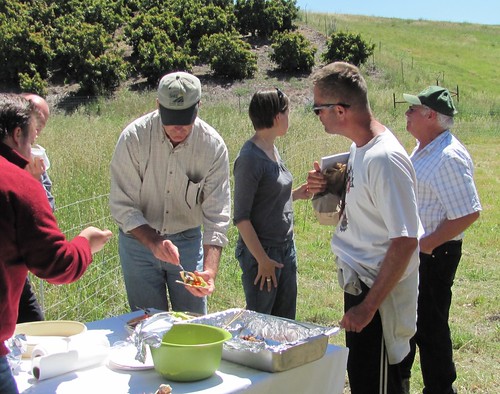
An hour later, three students arrived in the cart and set barbequed lamb, chopped heirloom tomatoes and other fixings for pita pockets on the white linen covered table. Even those of us who’d recently converted to vegetarianism couldn’t resist partaking of the marvelous offering grown in our own back yard.
On the walk out to the paddock, Christine had handed me her tabulated results of the questionnaire. It’s taken me several weeks to consider them. As opposed to student evaluation forms, which I rarely found useful, there was no way to discount the opinions of faculty colleagues. Ten questionnaires were returned out of probably about twenty distributed by email. Twelve people were “presenters,” that is actually enrolled in the program, recipients of free books and a stipend and obligated to moderate one session. Seven respondents identified themselves as presenters and five identified themselves as “participants,” regular attendees who were not enrolled. The non-response rate suggests that the results were skewed positive. Eight respondents were ladder faculty, two were lecturers. Five respondents had been here five years or less and five ten years or more.
Evaluation questions were answered with a number between 1 and 5 along a scale from Disagree to Agree
1. The readings and discussions were useful to me. 7 fives 3 fours
2. The time and effort required to participate was well spent. 7 fives 2 fours 1 three
3. I liked the overall format of the discussion. 7 fives three fours
4. I would participate in a continuation of the Sustainability Book Club next year with the understanding that copies of the books would be supplied but that stipends would not. 5 fives, 2 fours, 2 threes, 1 two
5. I would recommend participation next year to colleagues. 7 fives and three fours
Two discursive questions followed. “What did you find valuable about the program?” elicited these responses:
- I had two motivations to join the book club “ I wanted the encouragement to read new books and I wanted the opportunity to meet and better know colleagues across the colleges who are interested in sustainability (broadly defined). I met both of those objectives.
- The opportunity to read about sustainability from a different perspective. It was also wonderful to learn that others in our community were interested in advancing their knowledge about sustainability. Finally, I really enjoyed the conversations.
- Networking… breaking down the Cal Poly silos…
- The presentation of books that I would not read outside this opportunity. The presentation by other participants and the opinions about issues raised in the books.
- The discussions by colleagues from different colleges, and the monthly schedule for reading one book by all.
- I am roundly enthusiastic about my experience in the SBC and might list any number of things here. In broad form, it was most illuminating to have a truly interdisciplinary conversation about a series of excellent, often challenging books and ideas. I learned as much from my colleagues as from the texts and am grateful for the various perspectives to which I was introduced. My whole notion of “sustainability””what it is, who the stakeholders are, to whom it applies, etc.”has been significantly revised and expanded over the course of the last year and a half. This workshop has been extremely important to the development and reinforcement of my research and pedagogical interests and approaches.
- Discussion with colleagues from other disciplines that I didn’t previously know.
- A few books like Biomimicry and Deep Economy
- Books I wouldn’t normally read, perspectives from other members I wouldn’t have thought of myself, getting to know (just a little) instructors from other areas of the university
- Hearing other perspectives because of the interdisciplinary membership. Presenters did an excellent job.
Each of these echoed my own positive responses. I was nervous before the meetings and excited by them from the first minute to the last. Having an extended voluntary conversation on a shared topic allowed me to appreciate the wit and wisdom of colleagues. Reading the books closely, whether or not I liked them, offered bracing mental exercise and brought me current on important topics. A high standard was maintained by each moderator’s prepared introduction of the book, which was preserved for useful reference on the wiki, along with detailed notes on the discussion, outlines of the books’ content and some written reflections by seminar members, including Alypios regular trenchant reviews.
The second question, “Which aspect(s) of the workshop could use improvement?” yielded these comments:
- Attendance was very spotty.
- Quality of the books. The content was at times more rhetoric than useful, and the essence also got repetitive which became boring.
- More discussion/work on how to tie to curriculum.
- Connection to curriculum development
- Would like to know if there was any consensus on the learning gained and how the learning is going to be actually utilized. What has the core decision making group achieved.
They also confirmed my assessment. Spotty attendance was partly due to people being away at conferences and having conflicts with teaching schedules and partly to voting negatively with their feet. However, only one session, last May’s, drew fewer than ten and most drew fourteen or more.
Another concern for me was a sense that a number of attendees hadn’t done much of the homework. This was partly due to the uneven quality of the readings, some of which were poorly edited, overburdened with rhetoric, and overlapping in content. Even two classic Sustainability books that felt like world-changing prophecy when they first came out, Biomimicry and Cradle to Cradle, seemed overly optimistic or questionably argued when reread in the cold light of recent history.
Conditions two years ago, at the time this project was planned were perhaps more hopeful. Sponsored by the Academic Senate Sustainability Committee, itself an outgrowth of Cal Poly’s becoming signatory to the Talloires Declaration and joining the burgeoning Association for the Advancement of Sustainability in Higher Education(AASHE), one of the Book Club’s stated intentions was to be an incubator of a large university-wide Introduction to Sustainability course. A year ago three Club members met to start planning such a class. Implicit also was an aspiration to follow the strategy for institutional transformation of the kind proposed in Peter Senge’s “The Necessary Revolution.”
But these aspirations never materialized, a significant factor being my own flagging commitment to them. And what accounts for that? In the big world, the new Congress and Administration’s being swamped with economic catastrophe and stymied by Republican obstructionism, the failures of Copenhagen, the slowing of progress toward a sane energy policy, the expansion of our wars in Asia, and the general continuation of business as usual in the face of growing crises. Cal Poly history took a parallel course: budget cuts, threats, and furloughs undermined hopes for experiment and reform, the sudden disappearance of the UNIV program eliminated any institutional framework for mounting interdisciplinary courses, and the Academic Senate Sustainability Committee itself was threatened with dissolution.
Over time, the Book Club itself settled into a comfortable groove. Presenters gave polished introductions, discussion was fluent, strangers became familiar, and the activity seemed sufficiently satisfying without moving toward goals. The Necessary Revolution was put on hold.
With one exception. The most prominent theme running through all the books that we read related to food. Whether in McKibbens call for localism in agricultural production and distribution, Pearce’s account of the water lost and polluted by industrial agriculture around the world, Foer’s expose of CAFO’s and story of his conversion to vegetarianism, Louv’s report on the value of school vegetable gardens, Shiva’s call for resistance to global chemical-food monopolies and rescue of small farmers, all seemed to reinforce the vision of sustainable agriculture and sensible eating habits presented in Michael Pollan’s In Defense of Food. This was amplified in the talks Pollan gave at Cal Poly last October, hosted by our Book Club member, Hunter Francis, and the Sustainable Ag Resource Consortium, recently reinvented as the CAFÉ Center for Sustainability. Cal Poly’s role in the food system controversy put him and fellow member Rob Rutherford in worldwide headlines for a couple of weeks, highlighted the contrast between sustainability and its opponents, and appears now to be in a state of real transformation.
Our readings on food changed at least two of our members’ behavior in significant ways, turning us from omnivores into qualified vegetarians (fresh lamb raised by friends being an exception, as noted above). In addition they contributed to my tripling the size of my vegetable garden and focusing my own activist energy into developing a working farm, processing facility and distribution system to school lunch and food bank programs on city-owned land. Food seems an arena where on a personal level it’s possible to make strong changes toward sustainability without the major sacrifice of giving up one’s car or one’s travel plans, and where on a political level, promoting localism can have some appreciable consequence.
The questions on the survey I had most difficulty answering dealt with the future of this project. Seven out of ten respondents said they would continue in it if offered next year and ten out of ten said they would recommend it to faculty colleagues. The Center for Teaching and Learning has offered continuing financial and logistic support. But given my misgivings, do I want to stay involved?
After weeks of vacillating now I can say yes. Yesterday I started hunting for possible titles and came up with nine books published in the last two years that sound intriguing. I’d like to try alternate formats for some meetings, such as reading and commenting on blogs like Andrew Revkin’s dot.earth or Real Climate.com, or picking a theme like oil addiction instead of a book to discuss. So whether or not the Club will meet again next year will now, as they say, depend upon enrollment.
Japan Trip 2010–Day 16
Monday, April 26th, 2010Just as Jan and I woke up, You-ki returned home from driving the youngsters to the Shin Osaka station and started preparing us a breakfast of omelette and fresh greens. We shared a little sadness at their departure but also an afterglow in the quiet. The kitchen stereo played Tibetan monk chant. You-ki spoke of the value of a slow pace in early morning and of her regular meditation schedule, particularly important during her Noh training regimen. Conversation alternated comfortably with silence. There was a lot of eye contact. It was Easter. Tomorrow we would leave. She said she would miss us. Though we were sitting around a kitchen table drinking coffee, it felt like the way of tea.
Jan and I were to meet Stephen P. at Tennoji station for a day’s excursion to Nara, Japan’s earliest capital and the site of one of its most celebrated temple and garden preserves. When he called to say he’d be half an hour late, we roamed endless walkways above a busy surface traffic intersection and several underground levels of train and subway tracks.
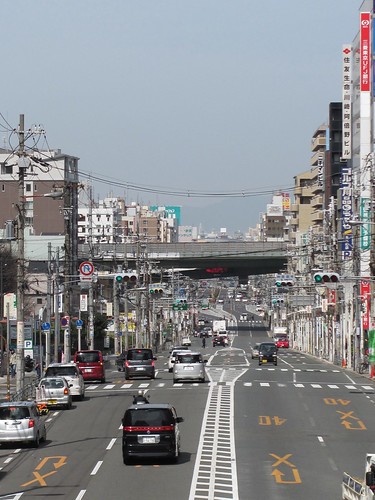
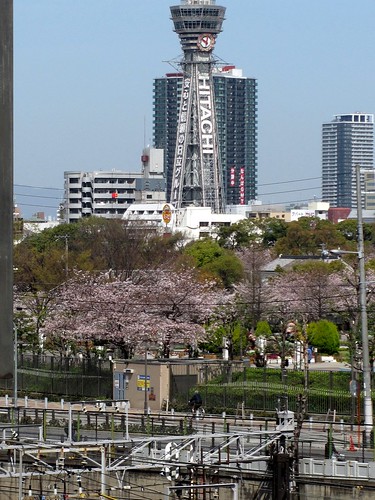
Even in the midst of this staggering urban infrastructure, the cherry blossoms claimed their space.
The train was packed this beautiful Sunday at the height of sakura. We were swept by the crowd up the long walk from the Nara station through an ugly downtown to the ancient city precincts. The steps to the Kokuru temple lifted us into another world of ringing bells, clouds of incense, and freely wandering deer.

But soon we felt swamped by the uncharacteristic noise”motorcycles and trucks roaring in traffic on thoroughfares inexplicably routed through the middle of the park, power tools clanking in buildings covered with scaffolding, people shouting while picnicking and playing Frisbee. Stephen mentioned that a friend had recommended going to Isuien gardens to escape the clamor. It was worth the long walk and hefty admission.
Coming through the gateway and around the teahouse a prospect opened like an unfolding screen.
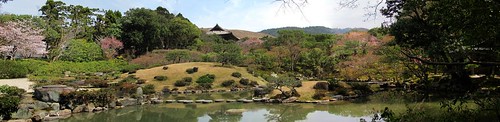
I wanted to just stop and stare at this perfect static panorama of pond and shore, hillock and isle, creek and bridge, tree and shrub, mountain and sky, light and shade–guarded at its center by a discreetly positioned residence of gods. And yet I wanted even more to enter its openings, wander its pathways, mount its rises, descend into its hollows, hear its birds, smell its flowers, feel the flow of its moving waters.

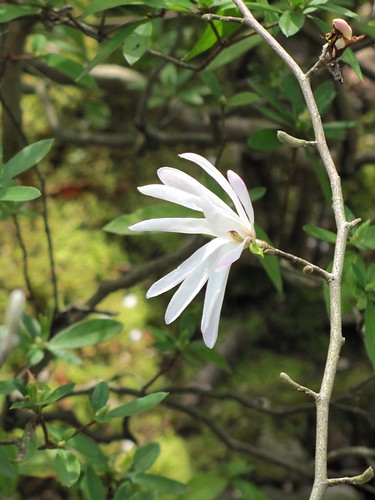

We spent an exalted hour in what turned out to be a surprisingly small area, walled off in back from a busy boulevard that separated the garden from the temple in the view. Driven by hunger we returned to the packed streets and located the restaurant recommended by Ryoko as a place to eat kudzu, a sweet made from the vine which, in the southern U.S., is feared as an invasive pest. Over lunch Stephen told us of his impending plan to enroll in an online Master’s Program leading to a degree that would allow him to teach English in a University in Japan providing a good job for an indefinite stay.
Fortified we headed uphill to the most famous attraction of Nara, Todaiji Temple, the world’s largest wooden building, which houses Daibutsu, the world’s largest statue of Buddha, both originally built in the eighth century, but since then reconstructed several times after earthquake and fire. As we approached Jan reminded me of the story of our old friend and my former student at Columbia, Taigen Dan, whose life was changed by an experience in the presence of the statue that led to his remaining in Japan for years, training as a Zen monk, publishing several translations of Zen classic texts into English, and founding his own thriving Zendo in Chicago.
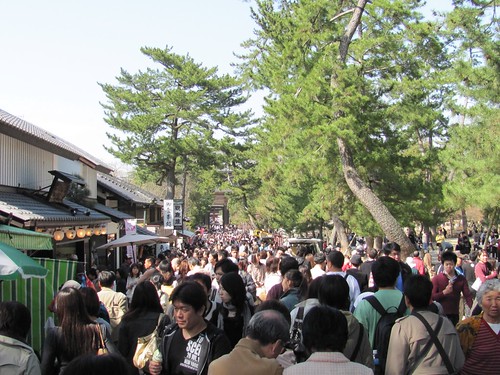
The crowd was thicker than ever approaching the Temple’s outer gate but neither loud nor unruly.
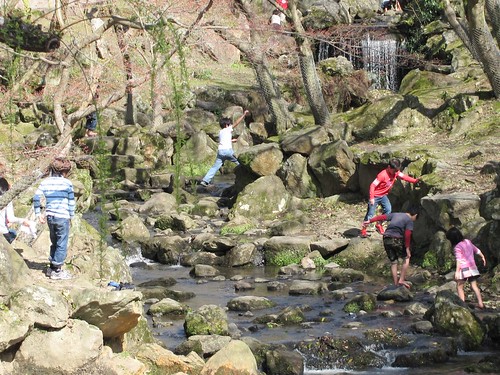
At a cascade nearby children frolicked in a scene reminding me of the creek in San Luis Obispo’s Mission Plaza.
The outer gate introduced the scale of construction of the temple itself.
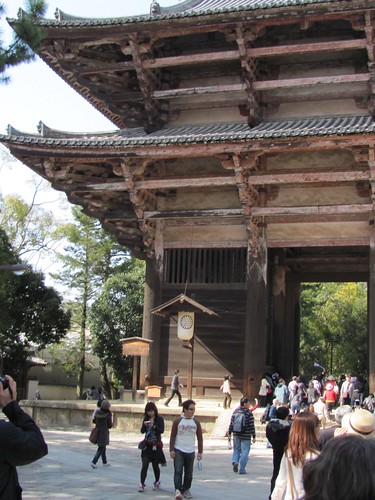
Even at a great distance, the wide-angle lens of my camera could not contain the whole building, whose image required multiple stitches.
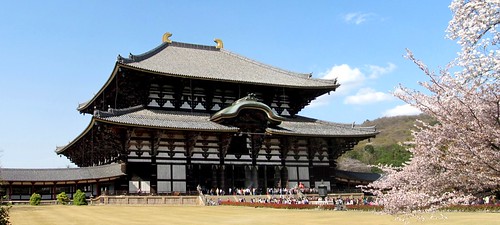
Though size seems to be the temple’s most prominent feature, its immense scale, like that of European cathedrals, is intended to produce the sensation of humility before the magnificence of the sublime in those who enter. Notwithstanding my own scholarly claims about the intimidating psychology of priestly power, I enjoyed giving myself over to the very human grandeur of this edifice.
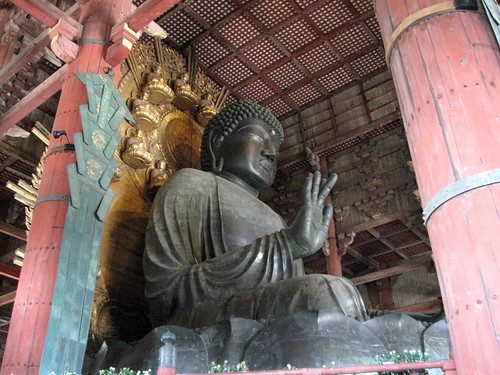
As we headed down the long route toward the train station passing close to Isuien gardens, I looked back at Todaiji and suddenly realized that the discreet centerpiece of the garden’s serene prospect was its roof viewed from a half mile away.
Stephen joined us for dinner with You-ki, who for the last time treated us all for a fine meal at a simple Chinese restaurant not far from her house owned by another friend.
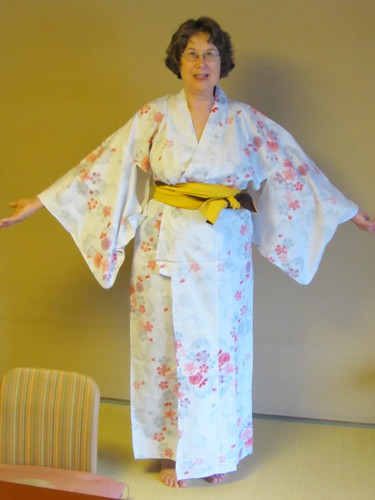
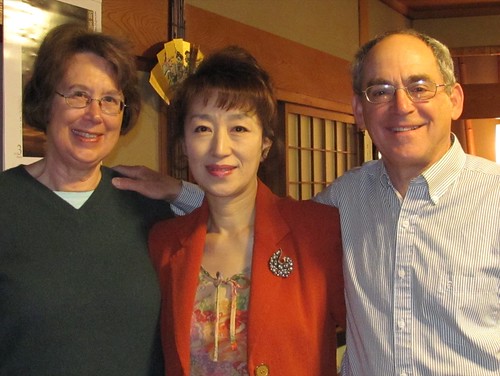
After saying goodbye to Stephen at the train station, we returned to You-ki’s home and she brought out gifts she’d purchased that day for us to take back: green tea, cups and a little pot, which I drink from now as I write. I staged a final picture with the camera on timer.
Jan gave her one of the boards that Kano had calligraphed for us:
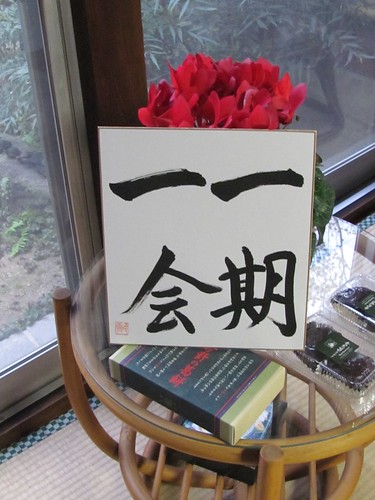
One Life One Encounter.
Japan Trip–Day 15
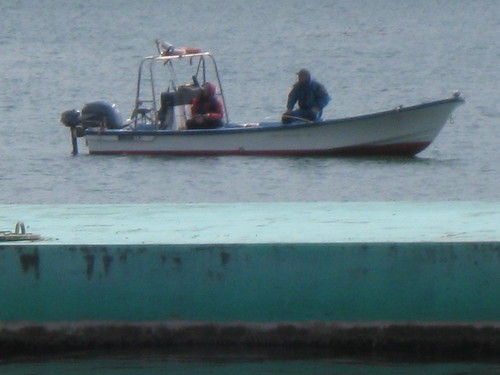
Thursday, April 22nd, 2010Morning in Tomonoura greeted us with sunshine and a breakfast of fish, tempura and miso soup. A cup of coffee in the lobby cost five dollars extra. We wandered along the shore to the central harbor, watching some small fishboats return with the morning catch
and mingled with a group of Japanese tourists led by a guide through ancient shops offering artfully designed mysterious products. I asked a woman if the brazier over which she was boiling a pot held “ocha” (tea) and she laughed and pointed to a rack of medicinal saki bottles. After tasting a sample we bought one for Stephen to take to Kayoko.

A tiny alley led to a steep stairway mounting a promontory above the harbor upon which stood a temple overlooking the offshore islands of the Inland sea. Our guidebook said that the view from this spot was famously described by the sixteenth century Korean ambassador as the best in Japan.
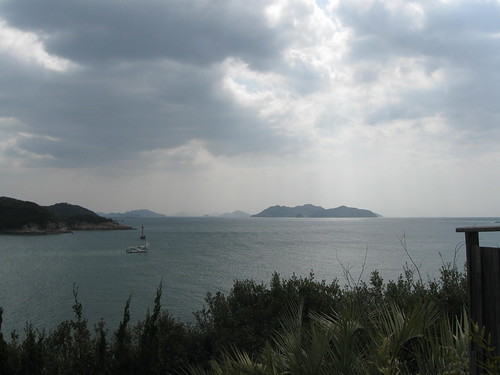
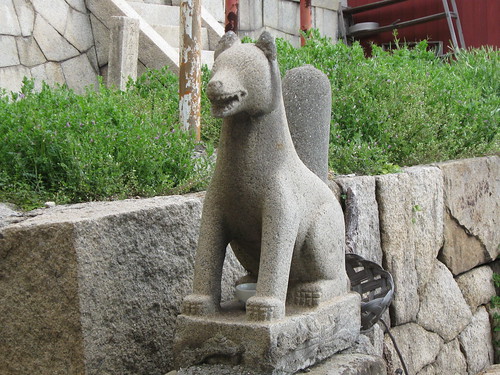
The place was empty of people, a little run-down, but furnished with treasures everywhere the eye could rest.
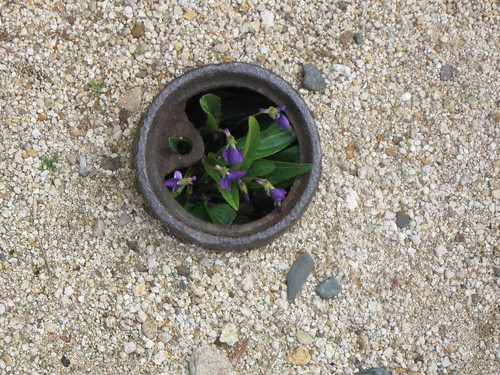
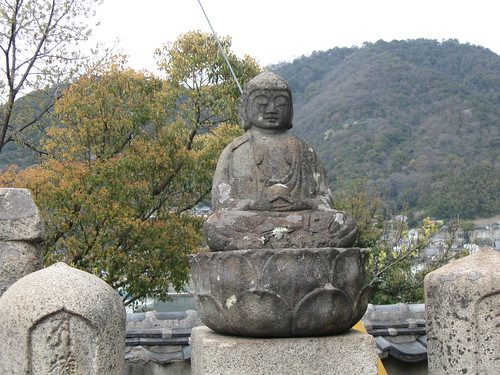
In front of a little building beside the temple, a plaque in Japanese and English reported that this was the location of the juniper tree mentioned in a poem written by Otomo no Tabito in 731 and collected in the oldest existing anthology of Japanese poetry:
This juniper tree
Still stands at Tomo no ura
My wife is gone
Who once saw it too.
Heading inland through narrow alleys we found evidence of an older style of community: a hand pump for water on a corner
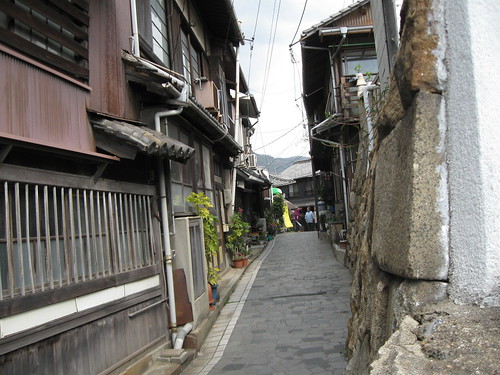
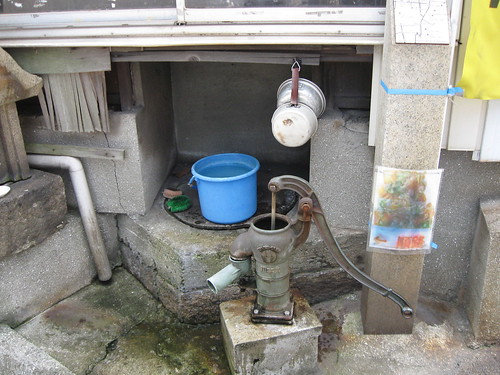
and a tiny hardware store, which Jan suggested might carry some of the small pruning tools I’d been looking for
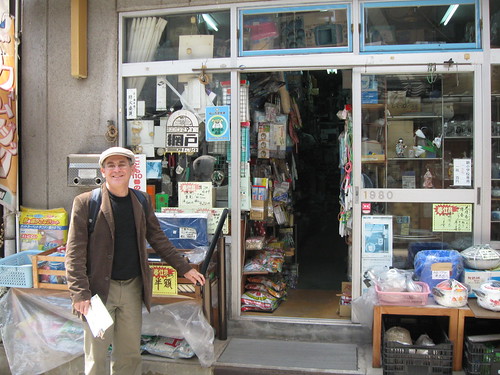
Inside, the wizened old lady cramped behind a counter had no trouble understanding my sign language for saws and took me to a cabinet in the back holding a large selection at corner-store prices. For my son, I got an exact replica of the little springsteel foldup saw I’d bought in Vancouver’s Chinatown in 1973 that he’s always coveted. As I paid, her husband came out and gave us two tiny animals he’d carved out of bamboo, which we brought home for the grandsons.
Back toward the hills we entered the graveyard gardens of a temple and sat on the porch looking at its blossoming trees and listening to the chants coming from inside its locked doors.

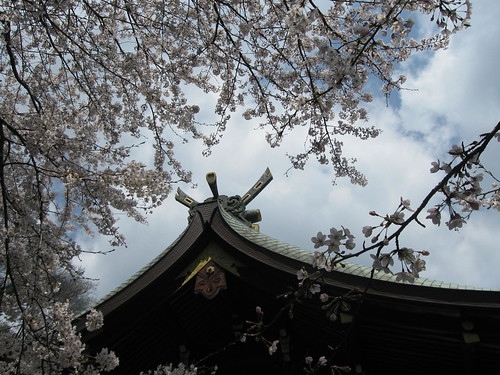
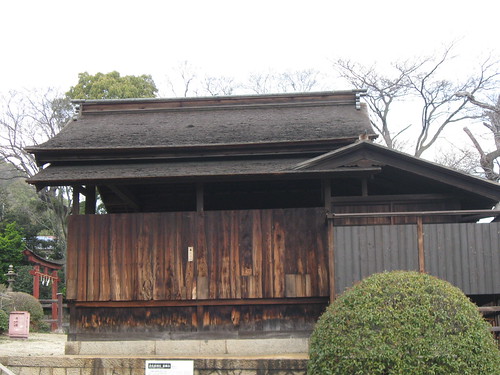
We hiked a little further to a large Shinto shrine complex up the hill, drank coffee from a vending machine and noticed the boarded up but intact Noh theatre preserved on its grounds, wishing again that we could have a chance to watch You-ki perform.
By way of another temple complex and museum perched on a hillock in the middle of the village, we made our way back to the hotel and boarded the bus for Fukuyama and the return train to Osaka.
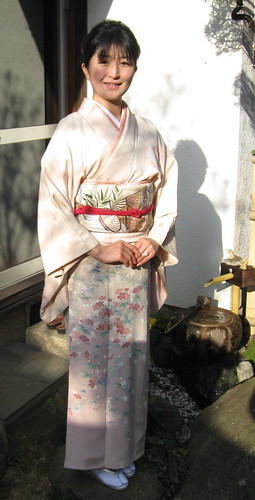
Back at Tennoji Station we were greeted by Ryoko, composed and serene in full kimono outfit, an island of wabi in the hubbub of commuters, shoppers and traffic.
She ushered us into a cab back to her mother’s house, where we would have some quiet time with her before meeting up with You-ki, Taylor and Marie who had gone together for the day to Kyoto, and with Emma and Travis, who had spent it shopping in Osaka.
We drank tea and told about our adventures in transportation and then learned something about Ryoko’s life. Much less extroverted than her mother, she shared many of her graces. She said she loved to dress in kimono whenever she could find an excuse. She’d been spending a good deal of time with her father traveling back and forth to Jeju Island, the ancestral home of both sides of the family, where he was tending the ancestors’ graves and preparing his own. If I understood correctly she said he was planning to retire from a career of working brutally long hours and to spend most of his time there.
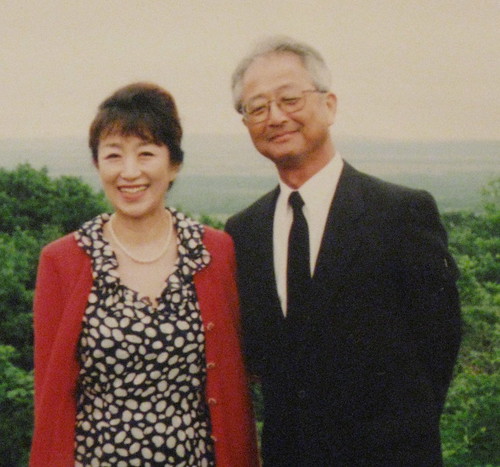
Her husband too worked hard and long to support their family, which they hoped would soon be expanded.
Ryoko had learned Korean, both at home and while she lived in Korea studying at University and working at the Japanese consulate in Busan. Now she taught Korean several hours a week. She had also studied English, which was evident in her speaking and writing. Having seen the copy of my book translated into Japanese, she told me that she loved Shakespeare, especially A Midsummernight’s Dream, in which she had once taken a part. I told her about the Max Rheinhardt 1930’s film version of the play whose operatic splendor I thought would appeal to her.
Our conversation was ended by a call from You-ki who told Ryoko where to meet for dinner. She drove her mother’s car to the middle of downtown through rush hour traffic that moved smoothly on the tollways, and got off near the most impressive building I had seen in Osaka.
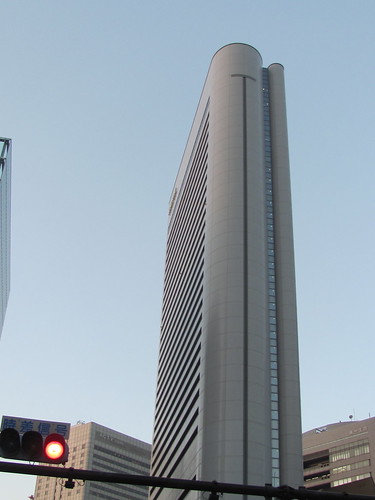
“What’s that,” I asked, and she said, “the Hilton,” and pulled into the garage. This was our rendezvous. The ostentatious luxury of the atrium was the kind of thing that would both offend my egalitarian sensibilities and make me feel unworthy, but as our entourage assembled under the 30-story hanging sculpture following You-ki’s confident lead, I felt as if I belonged.
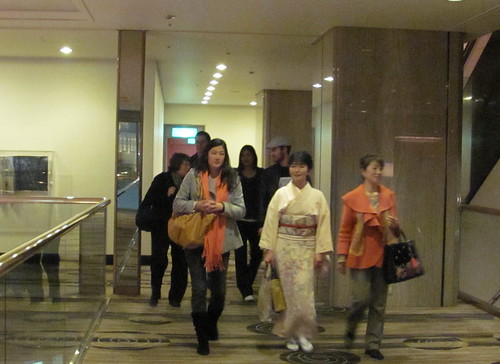
After only a day or two separation we all seemed to share the excitement of reunion. The wine and beer flowed and the sushi kept coming until even the young men said enough. After dinner You-ki insisted on arranging for a cab to take her and Jan and me along with Ryoko and the others in her car for a lengthy ride to Osaka Castle, which I proudly recognized, because of recently watching Shogun, as the scene of the defeat of Lord Hideyoshi and the founding of the Tokugawa dynasty.

We got out briefly to admire the illuminated moat and then dropped Ryoko off at the station. There was no compunction about her taking the subway home across town dressed as she was.
Back at her house, You-ki brought out more wine, though never wetting her lips with alcohol, and suggested that we contine the party with a three part musical “collaboration.” This was even more out of my league than sushi in the Hilton. I gulped down my drink and for fifteen minutes felt like an undeserving soul awakening in paradise.
Afterwards You-ki sang us some of the unearthly songs she performed in her various Noh roles.
She brought out her own masks, which appeared as striking and precious as those we’d seen in the museum.

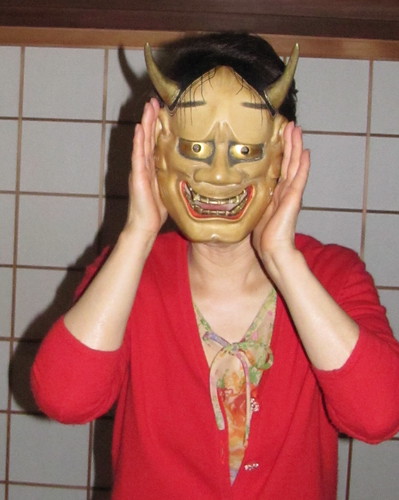
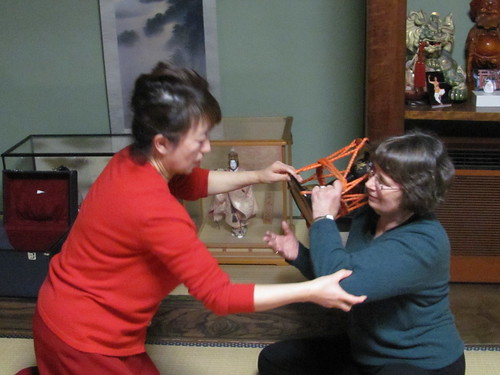
She gave Jan instruction on holding the Noh drum.
By 12:30 I was ready to turn in, but Travis and Emma spent another hour packing their bags for their next day’s voyage to visit her grandmother in Hokkaido.
Japan 2010–Day 14
Tuesday, April 20th, 2010I woke up in time to watch sunrise paint the distant mainland pastel pink and the beach just below fluorescent orange.
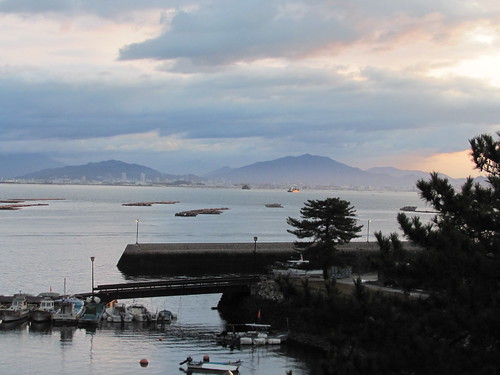

While meditating, I felt a serenity that recalled moments by the stove in the morning before our young children started stirring for the day. When I opened my eyes, I noticed that the wind had come up and a small boat was coming ashore.
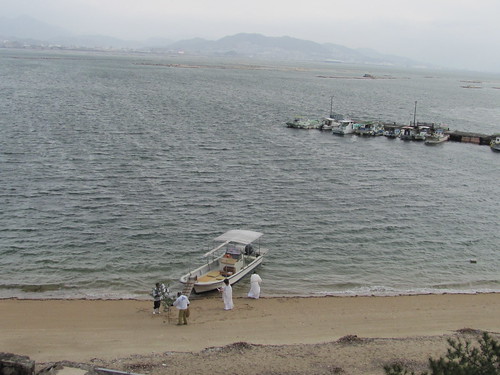
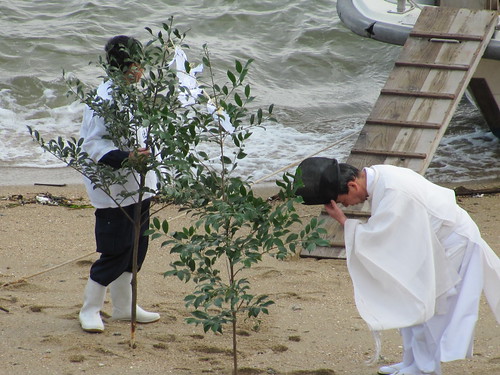
Four men walked down a little gangplank, two dressed in the white flowing robes and black headdresses of Shinto priests. They stuck cut saplings into the sand, but only through the telescopic viewfinder on my little camera could I see what else they were up to: making an offering of small dishes, bowing and praying.
Then, leaving one man behind at the boat, the others walked off down the beach and disappeared behind a row of trees.
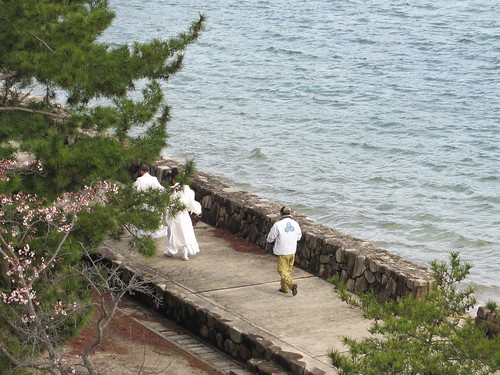
I felt as if the ritual had been carried out just for my benefit, an invitation to the great Itsukushima shrine we were about to visit. After fifteen minutes back they marched, climbed into the boat and headed out into the waves.
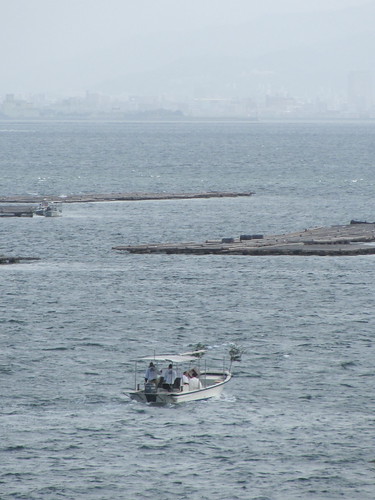
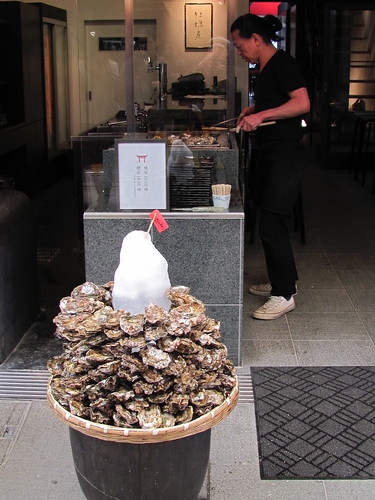
The ryokan hotel ushered the six of us out punctually at 10:00 A.M. We checked bags at the ferry terminal and mingled with the crowds browsing the dense cluster of shops and restaurants that by now was an expected adjunct of every large temple.
We made no effort to resist taking portraits framed by familiar features of the floating shrine.
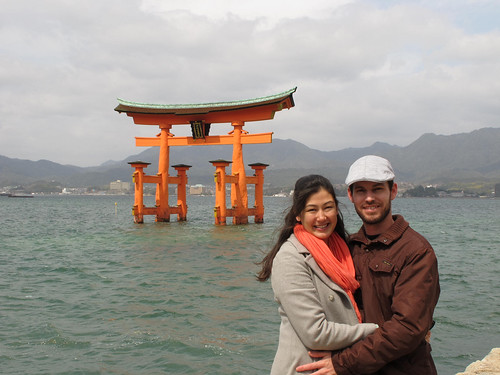

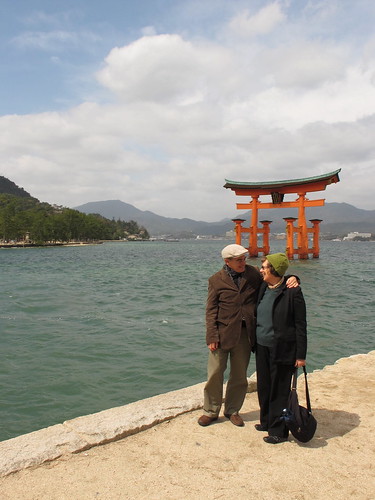
Promenading along its winding wooden arcades suspended above the high tide reminded me of the dreamlike sensation of wandering in Venice. Here too there were arched bridges, tree-lined canals, and plazas that opened on an unending succession of towers and altars.
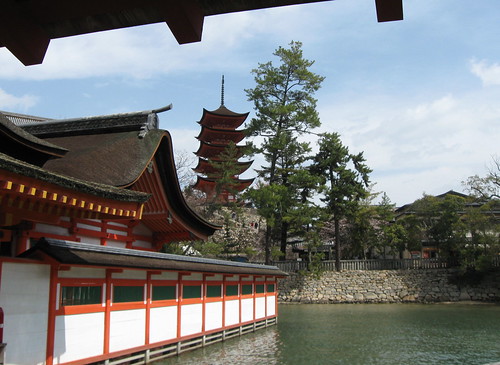
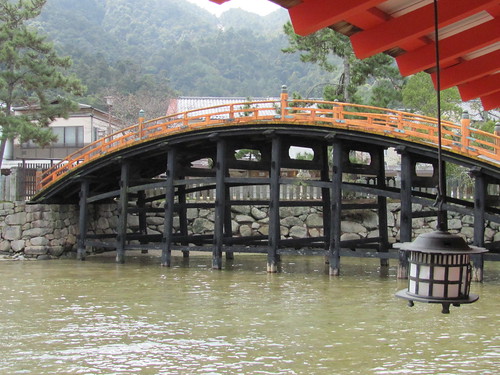
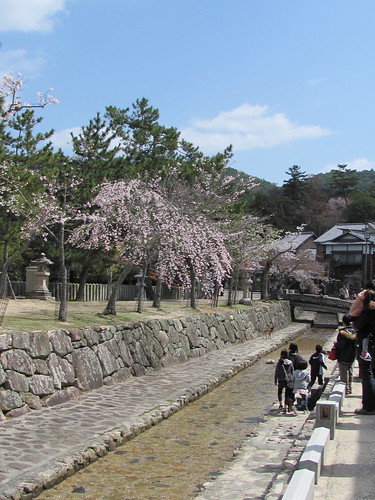
The shrine’s identifying artifact was a rice paddle, supposedly invented here. As I took a photo of Jan buying several of these wooden gifts packed in beautiful boxes for only two dollars each from a pretty young monk, one of her colleagues exclaimed “no pictures please,” and I felt ashamed but triumphant.
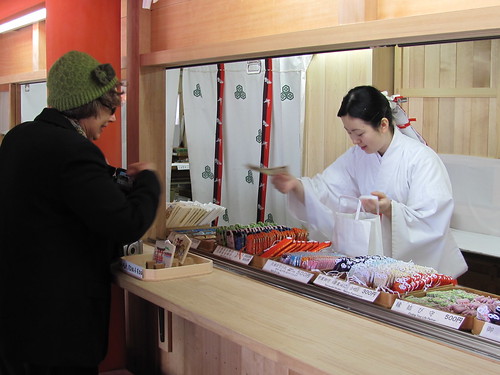
The three couples went separate ways and kept reassembling with wondrous exclamations: Look at that¦and that¦and that¦
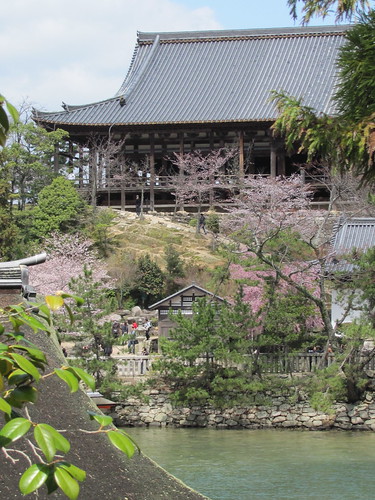
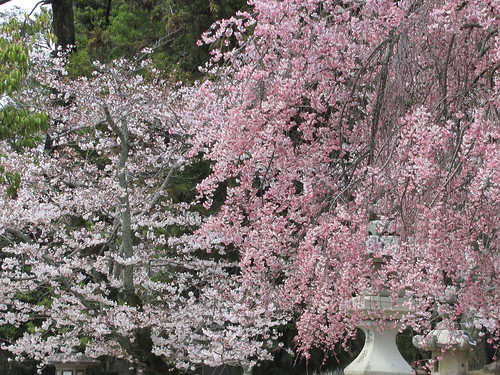
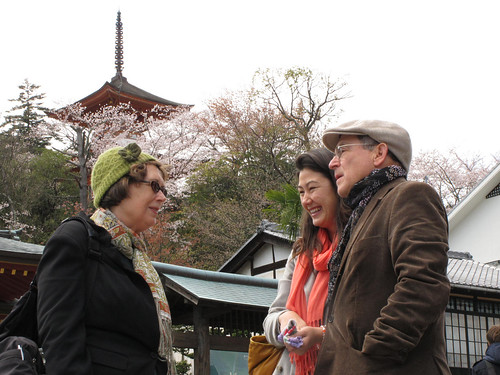
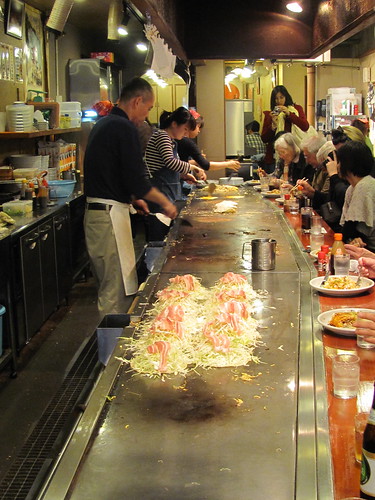
However we had a schedule to follow. We stopped for a lunch of the local specialty”a kind of cabbage omelet.
Marie gave Jan a lesson in reading kanji instead of paying attention to the hour, so back in Hiroshima we missed the Shinkasen that would take the two of us to Fukuyama in time to catch the hotel shuttle heading for our anniversary hideaway in Tomonoura. Emma phoned and told them we’d catch the next train forty minutes later, they said OK, but when Jan and I got there, no shuttle was to be found. Instead, Stephen’s friend Kayoko, who’d made the reservation, phoned us extremely upset to say the hotel phoned her to say they wouldnt wait. We assured her we could find the way ourselves. This was the only time during the trip we’d been left to our own devices, and I enjoyed trying with sign language to get five people on the bus to interpret between us and the driver, who couldn’t understand that we simply wanted to get off at the last stop.
Our destination, which we’d selected from the guidebook a couple of months earlier, was Tomo no ura, a small village on the coast. We learned from an internet site that this last well-preserved ancient port had been slated for large-scale demolition by a government plan to run a highway and bridge project through its center and was recently rescued by efforts of local activists.
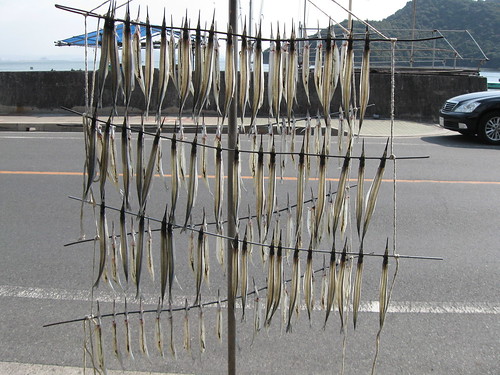
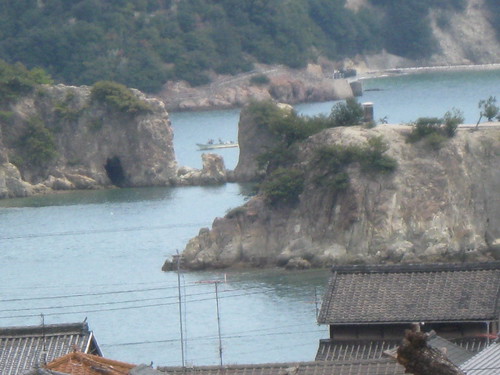
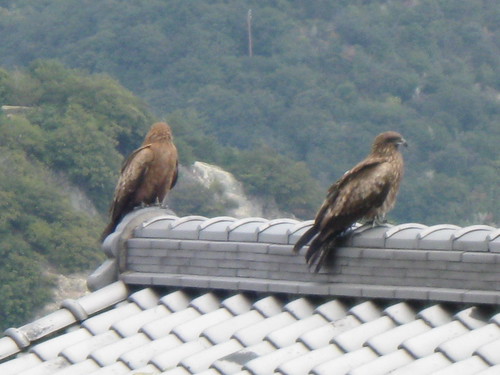
Fish fresh from the incoming boats were displayed on the sidewalks skewered through the eyes, eagles fluttered above the docks, small wooded islands just offshore paraded in front of one another as we walked along the embankment, and little temples and gardens perched on rock outcrops thrusting above the street.
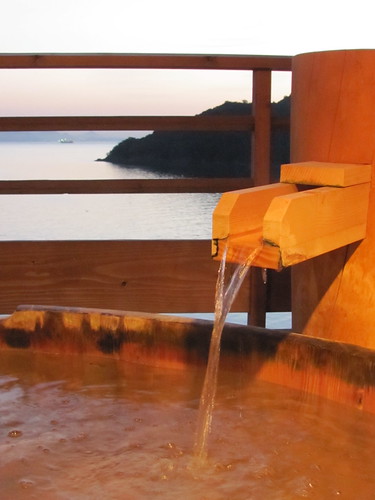
The hotel, along with several others built in the 1960’s, was out of scale, and its jagged rectangular profile disrupted the rest of the village’s waterfront views, but our room’s was unimpeded. Dinner was specialties of the region”at least eight varieties of fish: raw, smoked, dried, barbequed, spiced, pickled and sweetened. We found the rubbery-slimey texture of baby squid beyond our tolerance, but we ate everything else including julienned and sauteed jellyfish, which tasted a bit like grilled onions. Bathing in the hotspring tubs on the top floor deck brought our festive day to luxurious conclusion.