Travel

Backpacking with Ian

Tuesday, February 19th, 2013

President’s Day Weekend was the date chosen for the big demonstration in Washington D.C. planned by the Sierra Club and 350.org. to urge Obama to block the construction of the XL Pipeline. It was the first massive public action on Climate Change, and I wanted to join it, but no group transportation arrangements were available from California and I didn’t have enough miles on my frequent flyer account to make it feasible to go.

Nevertheless, after the satisfactions of the Peru trip and the recent hike to Sykes Hotsprings, the urge to travel again outweighed both inertia and the motivation to work on other projects. “Seize the Day” was accumulating authority as a watchword for my seventies and full retirement.

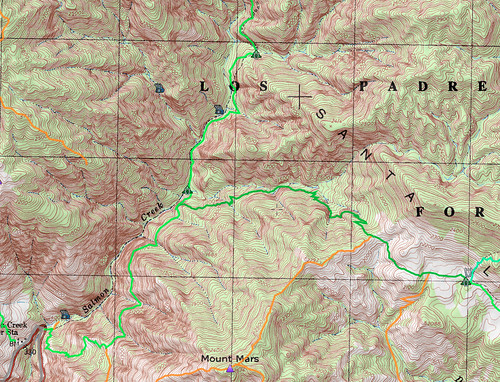
Reading Robert Macfarlane’s The Old Ways: A Journey on Foot strengthened my desire to return to the trail.  Ian’s five-day Winter recess from Grade 4 was coming up and he was excited by the slideshow about backpacking presented at his last Cub Scout meeting, so I decided to return to Big Sur with him on an overnight camping trip.  I’d been up the Salmon Creek Trail a few years ago with a former student and remembered a remote campsite by the creek only two miles in but requiring a thousand foot ascent.

salmoncreekmap.jpg

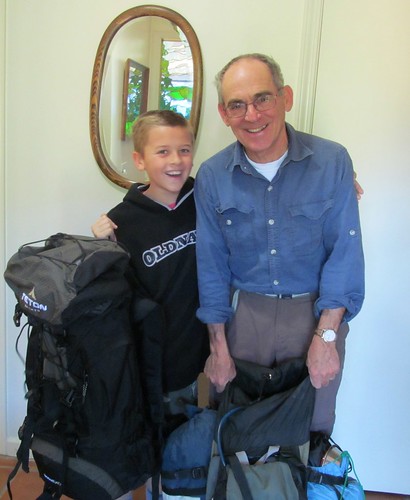
We sat at the computer together and ordered a packsack for him, a butane stove, and a water purification bottle from Amazon, which were delivered within two days. The weather forecast was mild and the Ranger said no fee or fire permit was required till May.

We departed at 10 AM and stopped at Spencer’s Market in Morro Bay for baguettes and Hershey Bars to complete the food selection plucked from the cupboards at home.

IMG_4380.JPG

As we drove north on Highway 1 along the open Pacific, the radio reported that a 300 foot wide asteroid was about to pass within 17,000 miles of the earth”only two diameters away”and that a large meteorite just landed with the blast of 25 Hiroshima atom bombs somewhere in Russia.  This was the first I heard about either of these apocalyptic cosmic invasions, and the news only confirmed my motto.  I couldn’t think of a better place to meet the end.

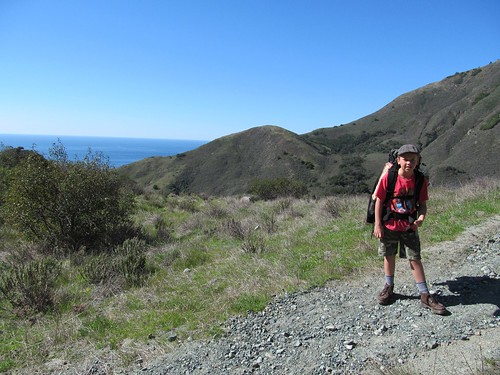
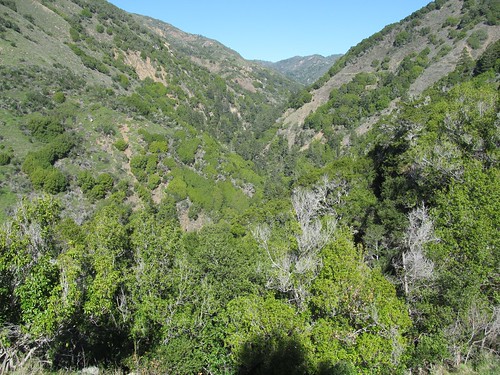
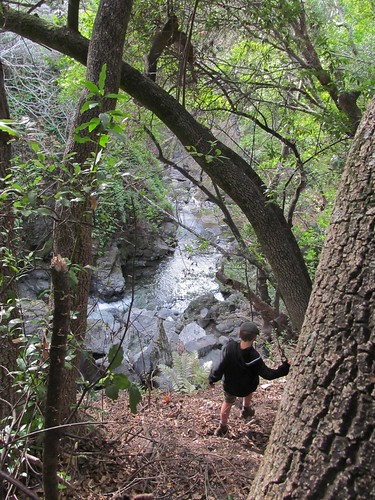
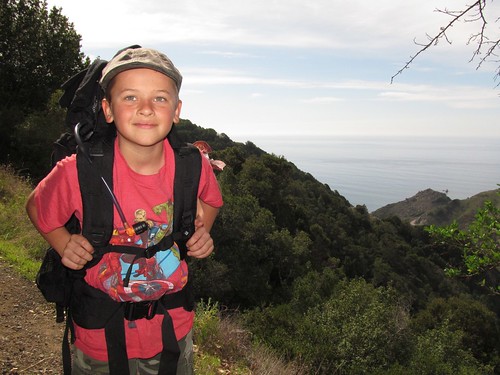
We shared a Hearst Ranch hamburger at Sebastian’s in San Simeon and parked near the trailhead at noon.  Ian’s pack weighed about 20 pounds, mine about 35.  The first section of the well-traveled path was a trudge, relieved by dramatic views of the ocean below and the steep canyon above.

IMG_4387.JPG

IMG_4394.JPG

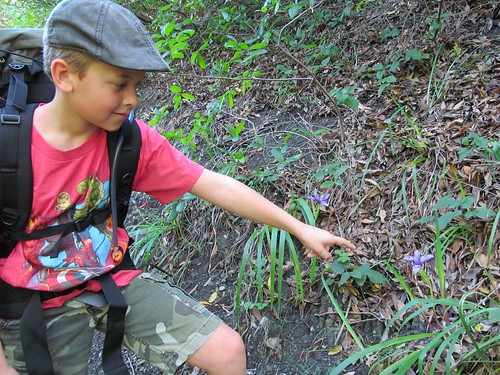
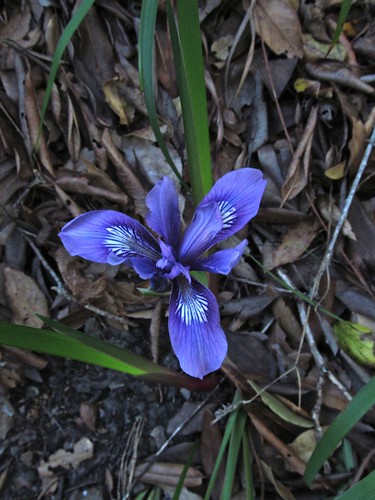
The ecology of this valley was  similar to that of the Big Sur River I’d I’d traveled through two weeks earlier, but also different.  A hundred miles to the south, here there were no Redwoods, but occasional large Douglas Firs and a full canopy of California Bay Laurel, whose new winter leaves glowed fluorescent light green.  Lush Fremont Iris bloomed in the shade,

IMG_4381.JPG

IMG_4382.JPG

and the sunny patches of exposed Serpentine soil where no trees grew sported rich displays of Poppies, Paintbrush and Shooting Stars. Ian distracted both of us from muscle pain and fatigue by recounting the plot of Shadowmage, the novel he’d recently  finished reading on his Kindle for a book report.

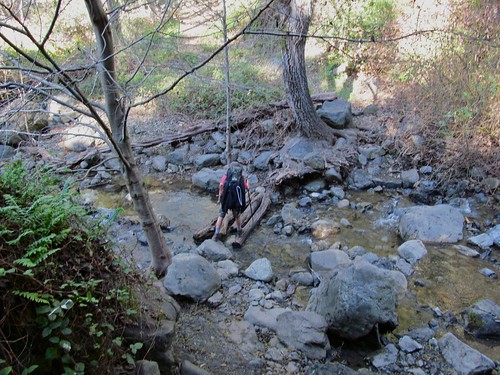
It took us an hour and a half to reach the high point almost directly above the road and our tiny Prius, Reddy. There the trail headed inland on a level contour cut into the mountainside, zigzagging toward and away from tributary creeks grooving the main canyon. After the shakedown climb, the last mile and a half of the hike went fast and smooth.  At the first trail junction we descended toward the main creek, whose rush and roar we’d heard the whole way, down to the dark and somewhat dismal campsite I remembered.  But further exploration led to a crossing of  Spruce Creek just above its convergence with Salmon Creek and a promontory bathed in Winter afternoon sun.

IMG_4402.JPG

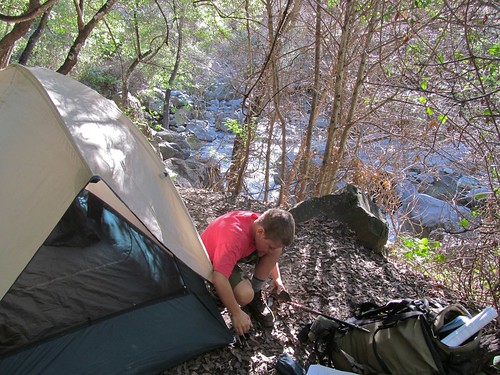
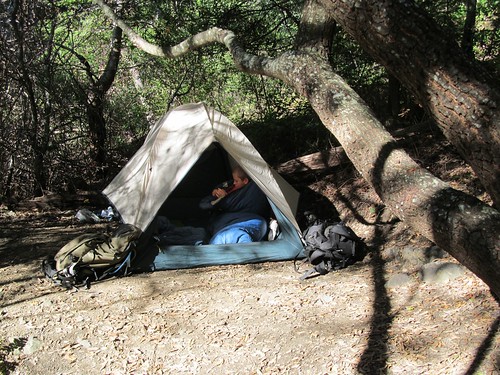
We pitched the old tent, gathered firewood and relaxed a little while.

IMG_4408.JPG

IMG_4412.JPG

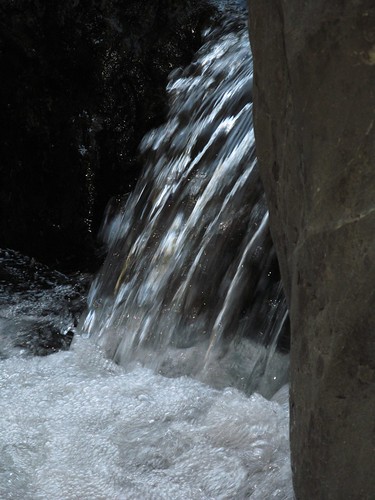
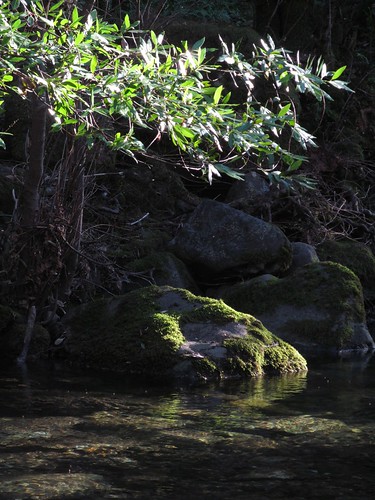
Then it was time to enjoy the pleasure garden: the play of light and water over rocks,

IMG_4417.jpg

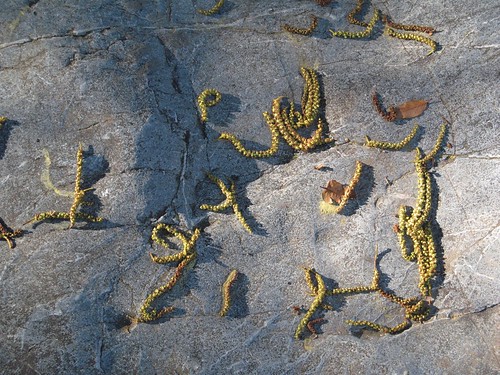
the bloom of  pollen-spilling alder catkins,

IMG_4435.JPG

the extremes of color and shadow on leaf, moss, stone, and liquid,

IMG_4441.jpg

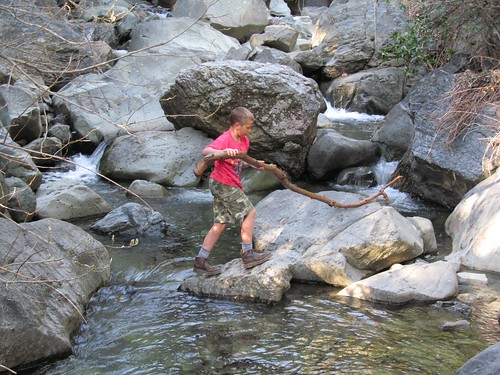
the thrill of hopping, climbing and jumping,

IMG_4423.JPG

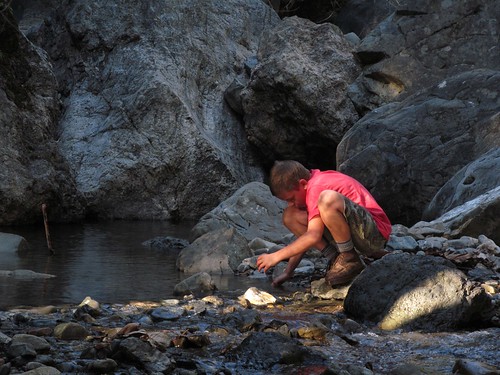
the satisfaction of building dams and taking pictures.

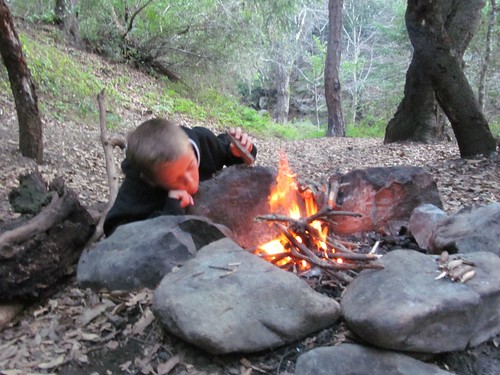
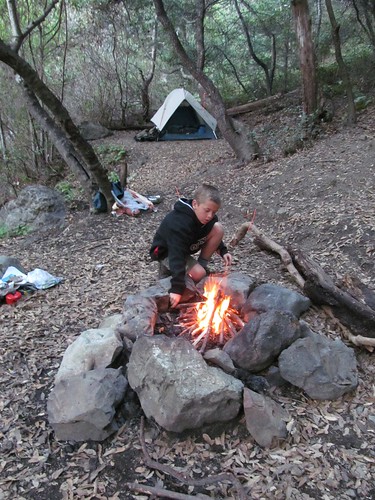
IMG_4454.JPG After the sun passed below the canyon’s wall and our little island of light was engulfed in shadow, Ian built a layered pyramid around a sheet of crumpled newspaper–tinder first, then pencil sized twigs, then thicker sticks”and lit the fire with a single match.  He nursed it with bellows breath and fed it with fuel wood until the sparks crackled and the bed of coals was hot enough to ignite the thick wet logs we’d dragged from a distance out of the forest.

IMG_4458.JPG

IMG_4460.jpg

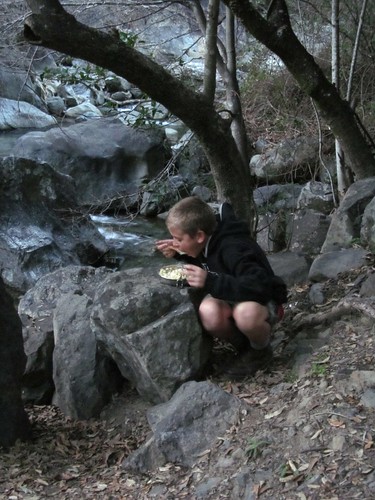
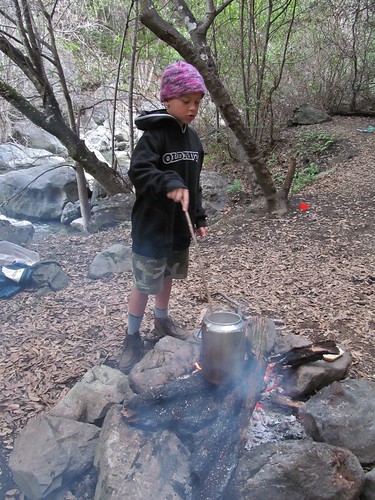
He cooked a box of mac and cheese in the coffeepot on the camp stove, drained it and gobbled it down as I munched bread, cheese and salami.

IMG_4461.jpg

IMG_4463.jpg

Afterwards we toasted marshmallows and made s’mores, stashed all the food in a bag, and hung it with a cord from a thin branch above the stream to keep it away from the bear.

Snug in sleeping bags by 7:00, we saw the moon rise above the canyon walls through the branches overhanging the tent. By 7:30 we’d stopped talking.  Though I woke up every hour or so, feeling my leaky thermarest mattress gradually deflating and listening to the rich music of the creek, I slept eleven hours and awakened refreshed.  Ian slept another hour while I cooked cowboy coffee and restarted the fire.  He got up and made another pot of mac and cheese for his breakfast.

IMG_4468.jpg

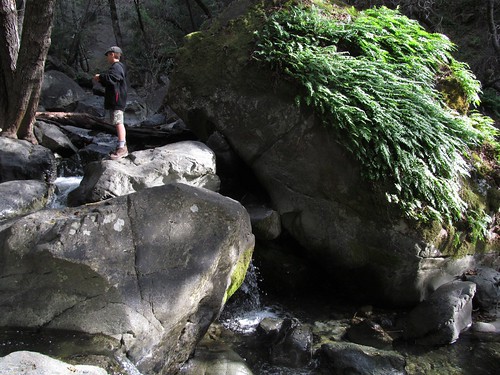
We set off through the creek in search of a large waterfall about a mile upstream, him leading the way over big rocks, across logs, and up steep banks, as the going got rougher and more spectacular.

IMG_4479.JPG

IMG_4482.JPG

We turned back before finding the waterfall, hoping to avoid exposure to poison oak stems that hadn’t yet leafed out and therefore remained hard to recognize

IMG_4483.jpg

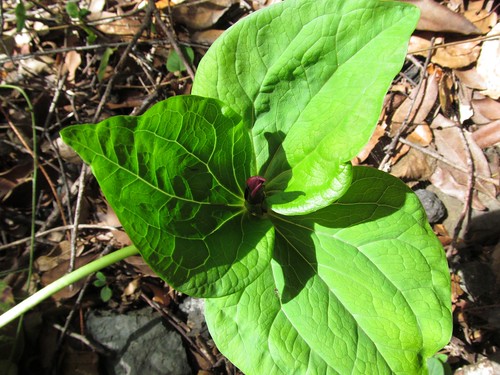
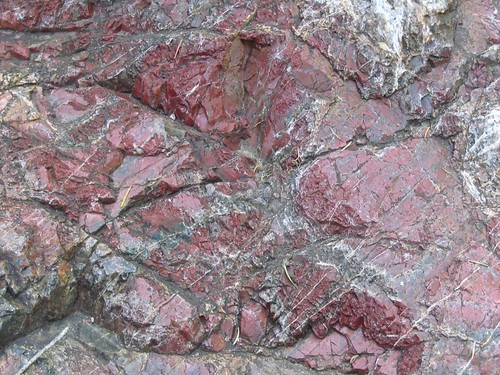
We sighted budding triliums and boulders of jasper

IMG_4485.JPG

IMG_4489.JPG

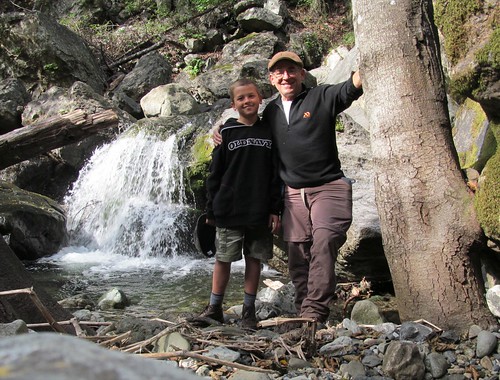
and posed together for a self-timed photo before drenching our feet and boots in an awkward stream crossing.

IMG_4487.JPG

Back in camp we packed our gear, doused the fire, and at noon, as planned, hit the trail back.  The return hike was less arduous than the way in.

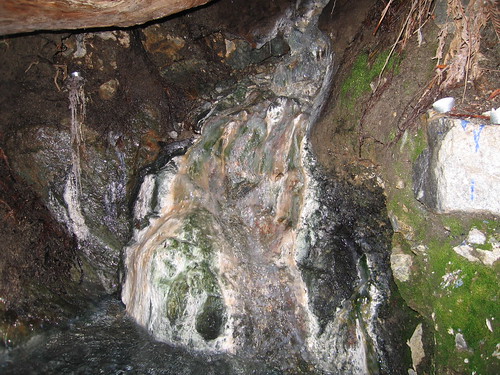
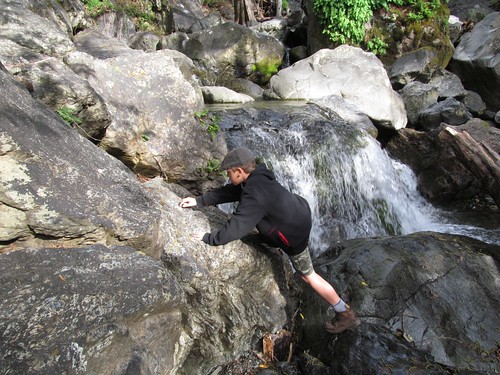
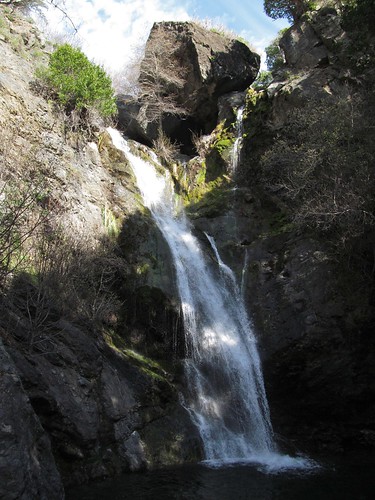
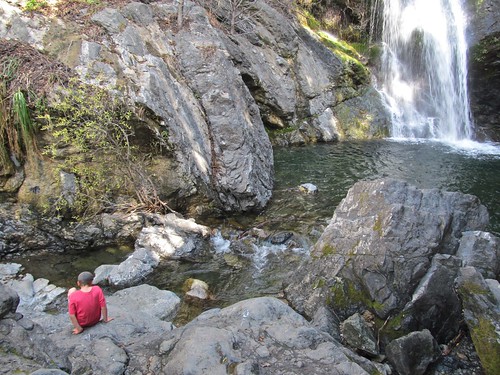
IMG_4496.JPG Just before reaching the car, we followed a spur leading to an impressive waterfall  that compensated for the failure to reach the one upstream. It was topped by a loose boulder that looked like a teetering meteorite.

IMG_4504.jpg

It was no great challenge for us seasoned backpackers to clamber over the rockfall that hid the pool  and cavern at its base.

IMG_4503.JPG

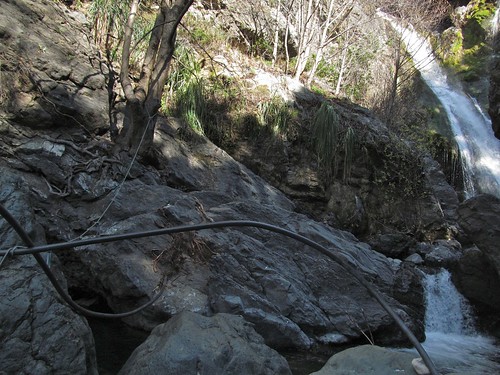
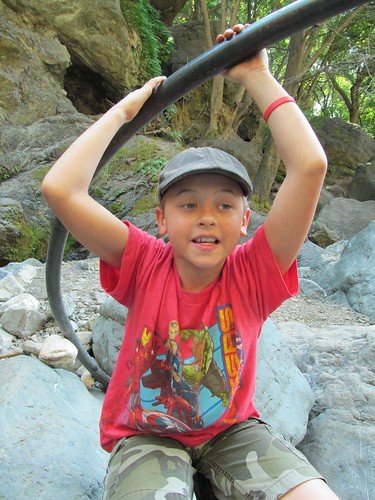
The way back down required crossing the creek along a twisted steel pipe while hanging on to a stretchy  mountaineering rope”a nice adrenaline rush to conclude our short, satisfying adventure.

IMG_4513.JPG

IMG_4512.jpg

Slideshow of full-sized pictures


Sykeshike

Monday, February 4th, 2013

During a late fall afternoon hike up Dairy Creek, Craig said that he’d like me to join him sometime on an excursion in his airplane.  Twelve years ago he’d flown me and Sky over Cal Poly to take aerial photos for the Cal Poly Land Field Guide, but I’d never been up since.  I relished the possibility of using my limited freedom for a Winter weekend adventure, and when he said he’d never been to the Grand Canyon, a mere three hours by air from San Luis Obispo, I promised to figure out an intinerary and try to reserve a campsite for late January.  I was eager to return there after my still vivid experience three years ago.

The midwinter weather would be unpredictable, but not too hot, and there were vacancies at the Bright Angel Campsite, which at most times required reservations a year in advance.  It would be three weeks after our return from Peru, two weeks after Peter’s visit from Canada, a little extravagant in terms of doing what I felt like, but a healthy assertion of retirement independence, and an opportunity for a real workout that my daily half-mile swimming routine made me crave.  I’d been suffering enough lower back pain since returning from Peru to drive me to the chiropracter, who told me it likely resulted from too much sitting–in buses, airliners, and at my computer. I carried a pack full of water up Poly Mountain to see if I’d be capable of the hike, only to find that it made my back feel better.

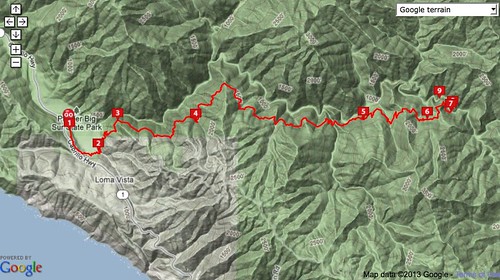
The one obstacle would be weather conditions during our planned four day weekend that could make flying a small plane over the Tehachapis and landing and taking off at the 7000 foot altitude of the South Rim risky.  For two weeks we watched the forecast get less promising, even as excitement built at our meetings to plan provisions and equipment. We considered alternate locations–Zion Park, Anza Borrego Desert, Point Reyes–but in the days before departure we settled on leaving the plane on the ground and driving the two hours to Big Sur for some nearby camping.  A quick Google search turned up Sykes Hot Springs–ten miles into the Ventana Wilderness, accessible only by trail, something of a challenge, but according to many reports a most rewarding route and destination.
trail1.jpg

The sky was emerald blue and the Big Sur Highway was empty on the spectacular drive up coast.  We stopped for an overpriced lunch at Nepenthe and got to the Trailhead at Pfeiffer State Park around 1 pm.  The original plan was to hike in the full ten miles the first day and camp for two days at the destination, perhaps adding another ten miles of day hike to a peak further along, but it soon became evident that we’d be doing well if we reached the halfway point  before dark.  The first couple of miles made a  steep ascent.  My huffing and puffing induced Craig to time my pulse in concern about a heart attack, and I left about 12 pounds of unnecessary food and equipment hanging in a bag from a tree limb for retrieval on the way back.  Soon afterwards the way leveled out some and fatigue was replaced by exhilaration.

The trail wound eastward following the course of the Big Sur River  700 feet below, the sound of its tumbling water a steady serenade complemented by occasional glimpses of rapids through the near vertical wall of the canyon.
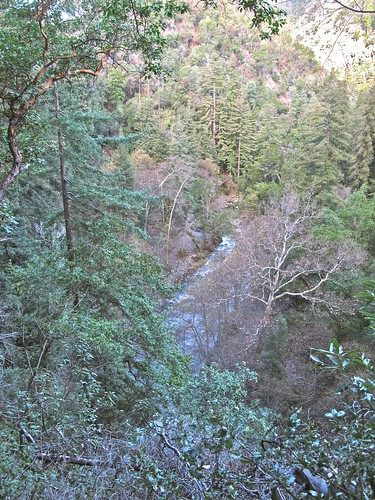
IMG_4278.jpg

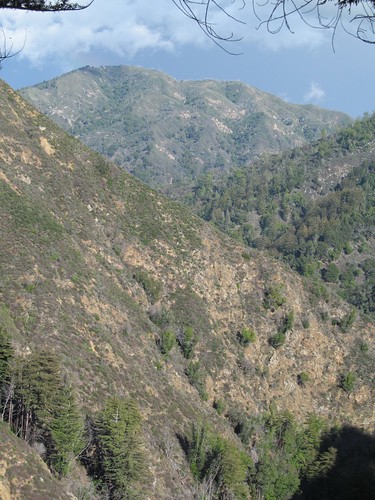
The low winter sun  illuminated its opposite wall and the mountains behind it, but we remained  in deep shade produced by the north facing ridge we traversed and the canopy of redwoods, which towered high above us though rooted hundreds of feet below.
IMG_4191.jpg

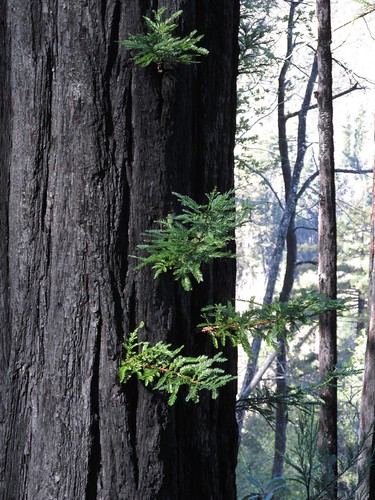
Rather than red, the immense, deeply ridged trunks were coal black,  scorched by the fire that had incinerated the chaparral ground cover and killed the smaller trees of the forest just a few years ago.
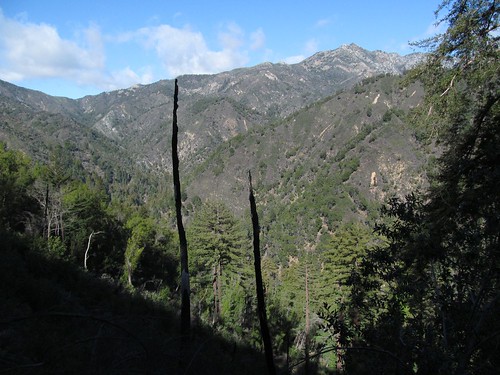
IMG_4329.jpg

IMG_4308.JPG

In places where the fire was hottest, most of the big trees perished, but wounded survivors regenerated in distinctive shapes.
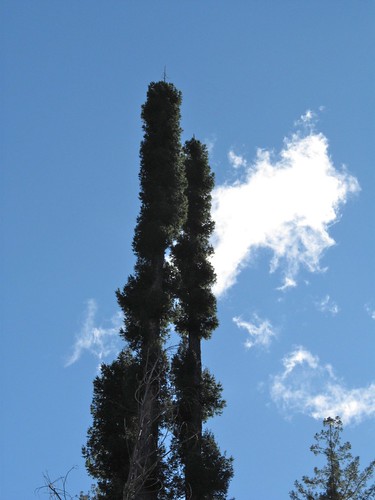
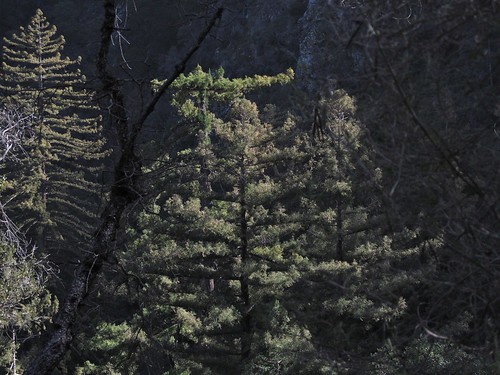
IMG_4239.jpg

IMG_4248.JPG

I wondered whether this was the same fire that had ravaged the area around Tassajara, the Zen monastery that Jan and I had visited in June two years earlier.  With the vigor of the new tree growth, the freshness of trailside grasses and shrubs, and all the creeks and springs flowing, it was hard to imagine the arid combustible atmosphere of this landscape during the summer months.  The ruggedness remained in the raw terrain upthrust by subduction of the Pacific Plate and grooved by watercourses bearing off rainfall from the sea. The Forest Service’s  well-maintained trail showed evidence of this continual geological activity, often rerouted around recent rockfalls. Without the well worn path, the steepness and irregularity would have rendered passage through this country impossible.

Invigorated by bodily exertion and the excitement of escape, Craig and I kept up a steady stream of conversation informed by common experiences and contrasting perspectives. Seventy year old professional colleagues with little more to prove, blessed with happy marriages, children and grandchildren, at least partially earned financial security and good health, we share an eagerness for adventures during the few upcoming years they’ll still be possible. We talked with admiration of Obama’s Second Inaugural Speech’s and its elevated rhetorical ancestry, of Jerry Brown’s down to earth State of the State speech concluding with the Little Engine that Could, of Spielberg’s Lincoln, Charles Mann’s 1491, my Peru trip, City politics, his engagement in Episcopal Church activities especially caring for the homeless, and my withdrawal from activism. He spoke of his search for models of wisdom and grace among the aged, I spoke of my growing admiration of youth, which was highlighted by every encounter with young hikers along the trail, especially the scantily clothed girls who passed us toting heavy packs.

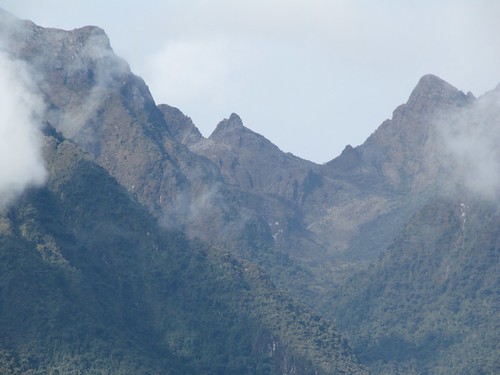
The trail traversed to a ridgeline and made a tight turn southward, following the upstream direction of the river  and affording a last view of the majestic summit that topped a major tributary.
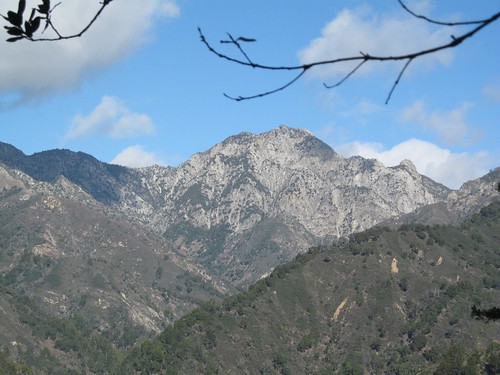
IMG_4328.JPG

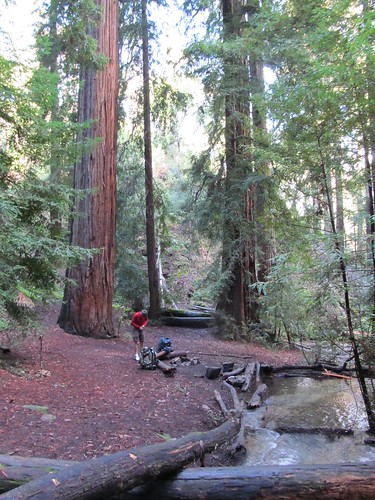
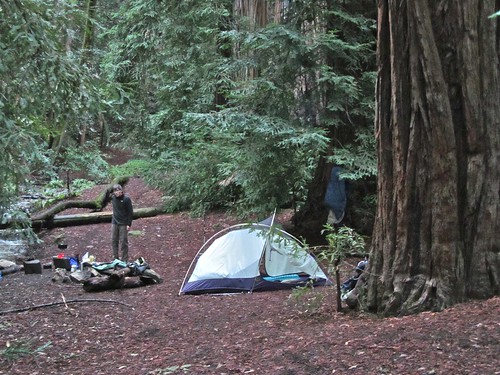
As the shade deepened, the trail descended quickly to a stream flowing through a grove of huge redwoods that escaped the inferno.  Only a distant one of several tent sites distributed between the cheerfully burbling water and the great trunks  was already occupied.
IMG_4212.jpg

IMG_4215.JPG

Here in Central California, no fees or reservations, no fire rings or tables, no rangers or regulations, just the wilderness opening itself to our embrace.  We rejoiced to lay down our packs and explore the surroundings: a carpet of springy duff, ancient fire hollows big enough to fit a bear or a couple of people at the base of several of the trees, delicate leaves and flowers of sorrel catching patches of sunlight at the bottom of the walls, everything cleaned and freshened by the previous day’s heavy rains.

IMG_4297.jpg

The intense use of this campsite became evident when I was unable to find a shred of dry tinder to ignite a fire and the little magnesium fire starter I’d bought at Big 5 didnt work. While Craig set up the tent and pumped water through his purifier, I cooked up a quick dinner of Couscous, Indian Lentils and Eggplant Curry from Trader Joe on his little butane stove and set some dried fruit soaking for compote in the morning.
IMG_4206.JPG

As the rising moon painted white blotches on the tree trunks, we sipped Irish whiskey and nibbled dark chocolate before turning in, each of us equipped with a pee bottle inside our sleeping bags to supplement limited-capacity bladders.

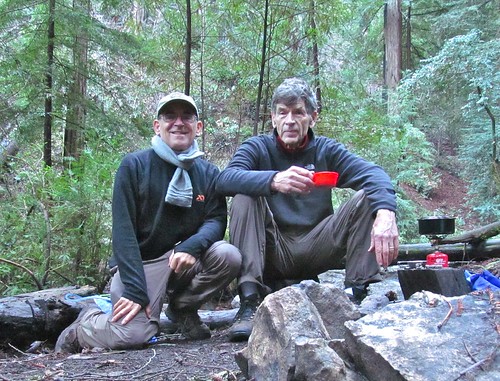
After a lengthy sleep interrupted only by the headlamps and murmurs of late arrivals looking for tent sites, I awakened to birdsong, less achy than in bed at home. We drank several pots of cowboy coffee, ate scrambled eggs and salami, packed up our gear and got back on the trail.
IMG_4209 - Version 2.jpg

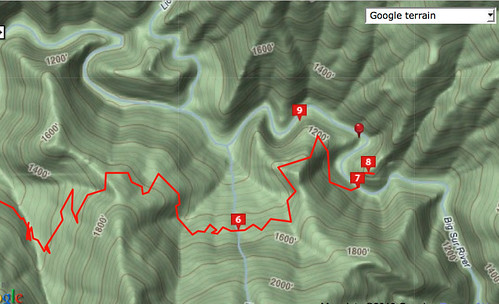
Winding around the shoulders of narrow ridges, it generally maintained altitude as it veered away from the river below and then abruptly dropped to another fast flowing tributary too extensive to cross by stepping stones.
trail2.jpg

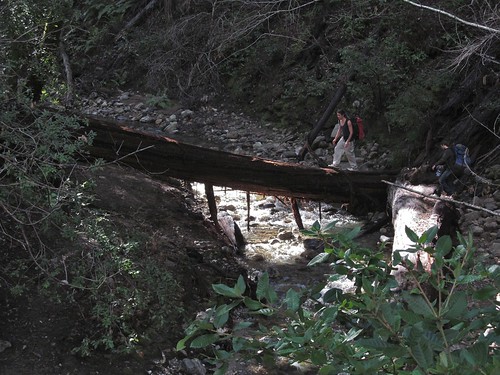
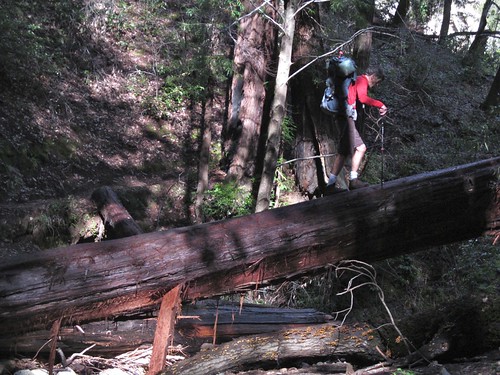
A large redwood log that had accidentally fallen across the stream at an interesting angle facilitated the crossing, but we let more some more nimble hikers precede us before tackling the challenge.
IMG_4224.JPG

IMG_4236.JPG

As the morning wore on, we were passed by numerous young folk heading for the Springs, some of whom had hiked in the dark, others who went at the speed we had originally anticipated maintaining ourselves.  One couple carrying only day packs, were accompanied by an energetic black lab loaded with heavy-looking saddle bags.

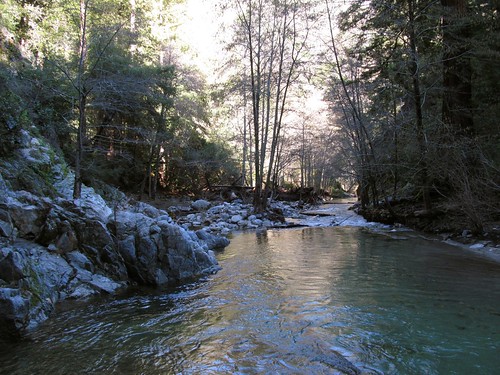
After rounding one more ridgeline, the trail returned to following the course of the Big Sur River below, and by 1:30 in the afternoon, we descended to its rocky banks.
IMG_4249.JPG

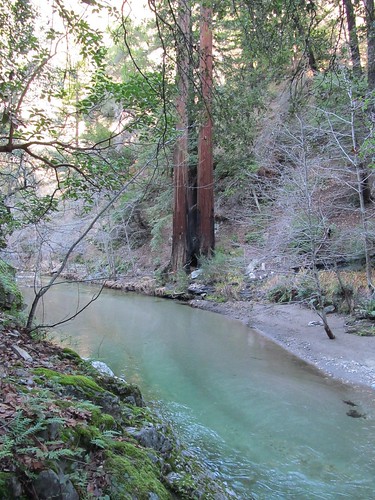
The smooth fast water was crystal clear and the trees’ reflection rendered the bottom in shades of turquoise and taupe.
IMG_4260.jpg

But where were the promised warm pools that would heal those now aching hip, knee and ankle joints and put me in contact with earth’s chthonic forces?  Craig shouted questions to some long haired boys on the opposite bank and got no clear answer.  Other young couples approaching this trail’s end from the opposite direction told us they could be found downstream beyond a steep rocky bank, hard to miss because they were full of unclothed bodies. This seemed to dampen Craig’s interest–he said he was looking for solitude and peace not naked partiers–but it piqued mine. We clambered over the cliff face and found a large campsite on a flat spot ten feet above a hairpin turn in the river, like the previous night’s  graced with ancient redwoods but blighted around its edges by hiker-abandoned trash–old socks and underwear, a ragged tent, empty wine bottles.

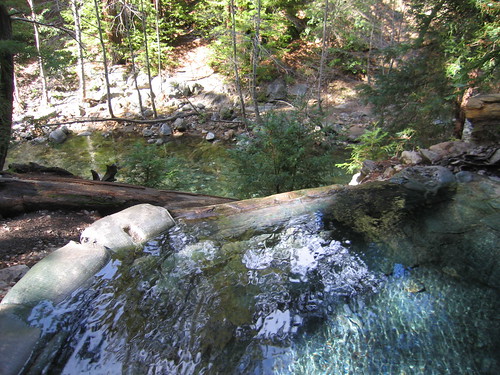
Craig said he’d stay there and set up camp.  I left my pack and walked around the point along the river whose opposite bank was dotted with tents and campfires.  Both apprehensive and enticed, I followed an informal trail  over an outcrop carved by another twist in the river and found myself suddenly in sunshine, on a terrace beside a glittering pool created by a wall of bagged stones which dammed the flow of  warm water coursing down a multicolored rockface canopied by the rootball of a fallen tree.

img_6095.jpg

photo credit: brianwiese.com

img_6072.jpg

photo credit: brianwiese.com

Submerged in the pool sat the curly headed young man who had passed us with the dog, smiling and holding a joint.  He offered me a toke, and I was transported back 46 years to another Big Sur camping trip with a girl I had recently met at the time.  We’d hidden my motor scooter along the highway and clambered down to an idyllic spot by the Little Sur River, which soon filled up with young people from all over the country eager to share food, drink, stories and music. As I inhaled the slight odor of sulfur and piled my boots and clothes next to the pool, he said, “Do you mind if I ask how old you are?” and when I told him, he answered, not “I dont believe it,” but a little disappointingly, “I hope I can be in your shape at that age.”

The hundred degree water felt extraordinarily pleasant seeping into my limbs.  The floor of the pool, part clean sand, part knobbly rock, sharpened the massaging sensation on my sore sacrum. On the river bank, 50 feet below, I heard yelps of delight and glimpsed flashes of sun-drenched flesh.
img_6070.jpg

photo credit: brianwiese.com

I lay back silently savoring the moment.  After those glorious nine days in Peru with Jan, after that marvelous four day visit with Peter, after the great time on the trail with Craig, how could fate continue to regale me with more pleasures?

Suddenly there was a bustle of activity on the approach to the pool and four laughing twenty-somethings clambered over the log, one of them insisting that they needed to start the ten mile trek back to civilization very soon.  Another asked if it was alright if they joined us in the pool, there seemed to be room.  There was no objection as the two women, one a pale redhead, the other a dark brunette, disrobed and lowered themselves into the water. They were followed by their boyfriends, a wiry bearded longhair and a thoughtful babyfaced fellow. We all introduced ourselves by first names and they passed around a couple of cans of beer cooled in the stream–a refreshing way to hydrate in the hot spring.  After an interval of oohs and aahs, conversation picked up–tales of visiting other hot springs, bears in campsites, alien invasion fantasies, local geological and botanical lore.  The curly haired man was a master’s candidate in geology, the brunette a recent Santa Cruz graduate in Environmental Science and Art History who was interested to hear that I had taught English and Environmental Studies, the longhair a builder of cob houses and other unconventional structures, the redhead and her mate still in school.

We circulated locations in the pool so that everyone could experience the variety of pleasures in different positions: regarding faces and upper bodies reclined against the multicolored cascade or leaning against the mossy flow of the spring, feeling the  shower of warm drops from the canopy softly wetting one’s hair while gazing at the radiant tree branches across the canyon. The red haired girl with elaborate tatoos covering one shoulder lifted her snow white hands out of the water and moved her slender fingers in slow graceful gestures.  I felt at ease enough to blurt out what crossed my mind: “you look like a Hindu goddess in a grotto doing a  mudra dance.”  She laughed and replied, “I was just trying to stop my hands from wrinkling like prunes.”

Around 4:00 p.m., as the shadows crawled up the opposite bank, the two couples finally agreed that they must get on the trail for the hike back to their cars. They were looking forward to doing most of it by the light of the full moon.  It was time for me to let Craig know where I was and get a fire going with wet wood.  As we all pulled on our clothes, a new crop of people came over the log and entered the water, most with swimsuits, but one lone young woman in the buff.

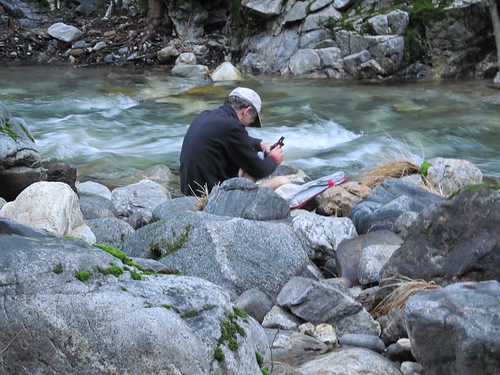
When I returned to the campsite, Craig was pumping water at the river.
IMG_4264.JPG

He had gathered wood and pitched the tent.  It took almost an hour, a huge amount of breath and several handfuls of toilet paper to make a steady blaze. We cooked quinoa, sundried tomatoes and mushrooms with hotsauce, emptied the half-pint flask, and went to sleep. I woke up at my usual 5:30 a.m., rekindled the still warm ashes in the dark and made more coffee.  We were packed and on the trail back just as it got light enough to put away our headlamps.

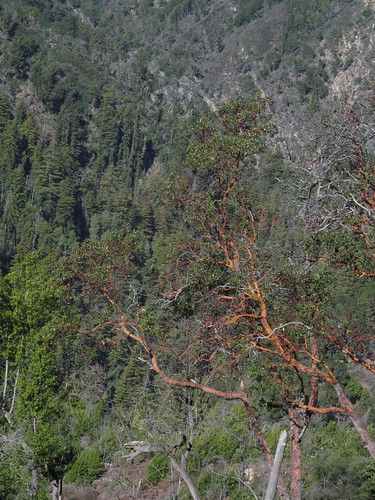
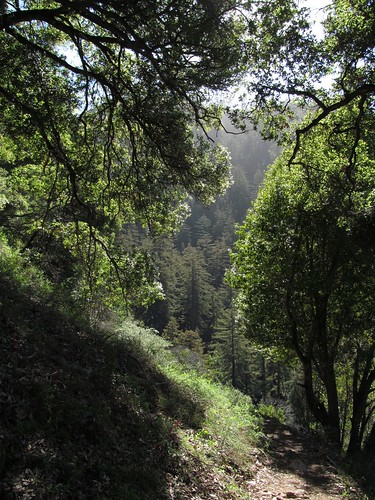
The way back, twice as long as each day’s outward hike, though lacking in suspense, allowed for more appreciation of features of the landscape–the alignment of the river and tributaries, the arrangement of the big trees in side canyons, the movement of the sun.
IMG_4316.jpg

IMG_4326.jpg

The conversations got lengthier and more thoughtful, detailing on both sides stories of early mistakes, lucky rescues, unresolved regrets.  And though the lightened packs and accumulated conditioning made us feel stronger than on the way out, the afternoon sight of the sea just beyond the start of the trail was a welcome invitation to our return home.

IMG_4318.JPG

Peru Day 9

Wednesday, January 16th, 2013

This is the last day of our trip and the beginning of a 36-hour time warp that will transition us back home. Those of the group who’ve been afflicted with colds, altitude sickness and knee injuries are on the road to recovery. Half the members are preparing for an extension tour with Alvaro to Lake Titicaca.

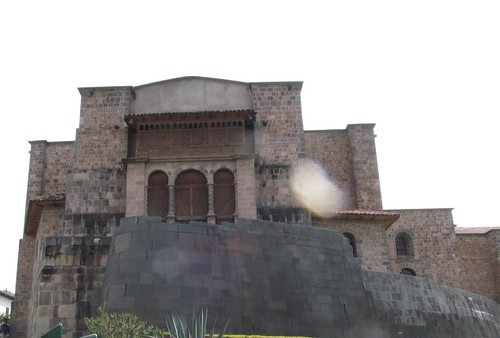
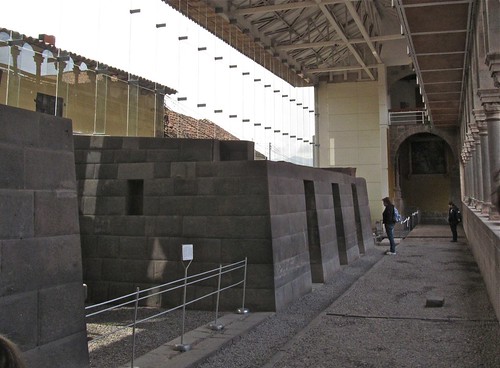
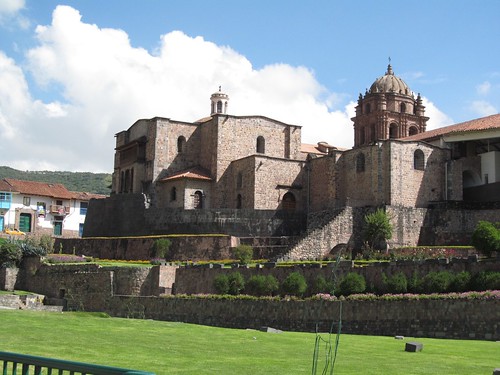
Before leaving Qosco he leads us back to the Korikancha”Convent of San Lorenzo. The oval sanctuary, originally its most prominent feature, recalls Machu Picchu.

IMG_4049.JPG

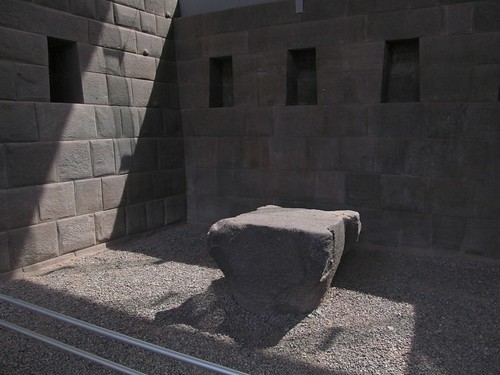
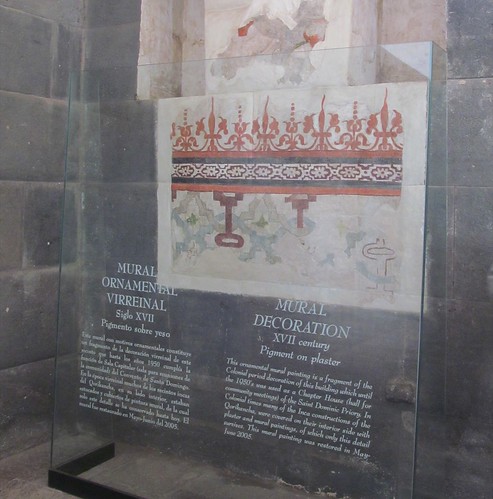
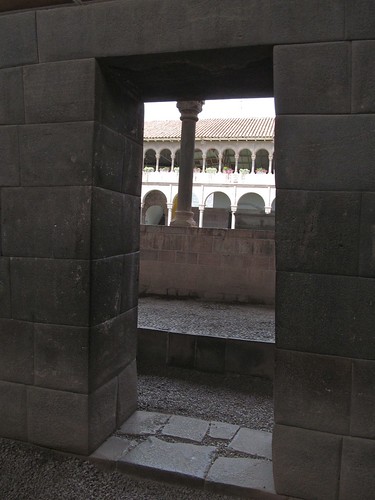
Inside the complex, sections of austere Inka masonry originally covered with silver and gold and later painted over by the conquerors are interspersed with ornate baroque architecture.

IMG_4054.JPG

IMG_4060.JPG

IMG_4081.jpg

IMG_4062.jpg

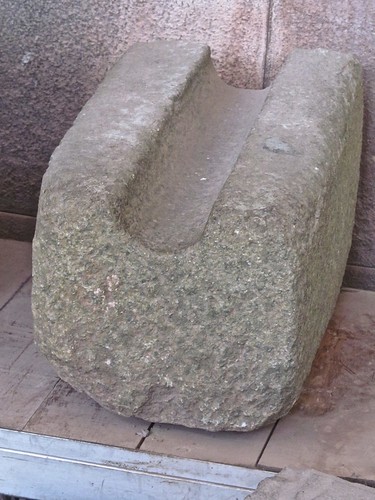
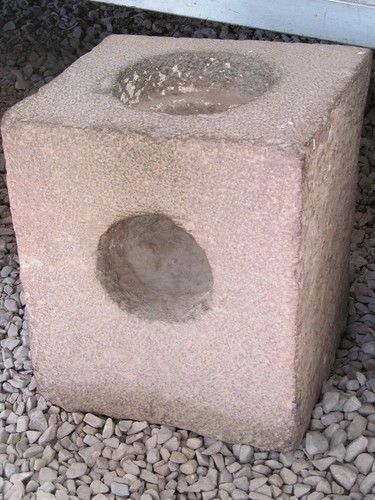
Unearthed stones show the sophistication of indoor rock plumbing. Did this waste water system allow for disposal of paper?

IMG_4067.jpg

IMG_4068.jpg

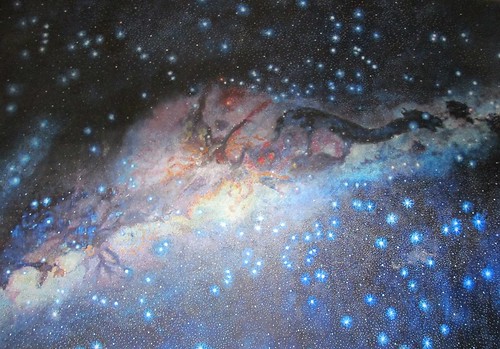
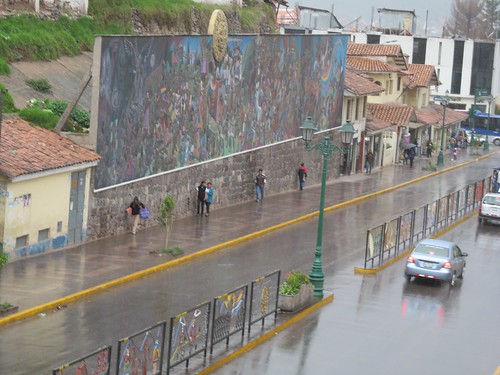
A modern mural reproduces pre-European visions of star configurations in the Milky Way.

IMG_4084.JPG

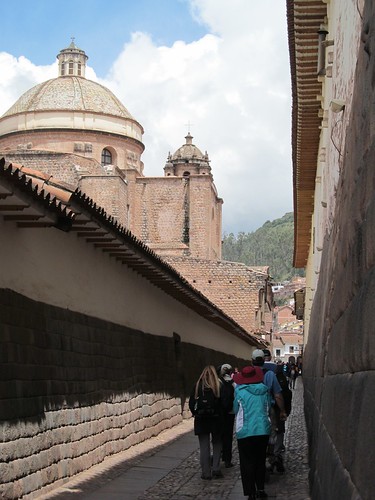
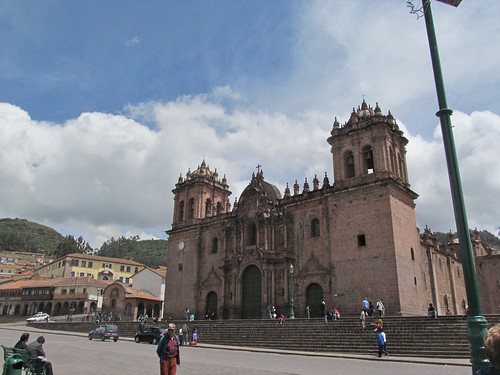
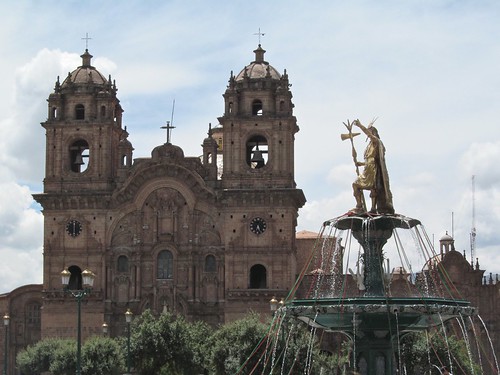
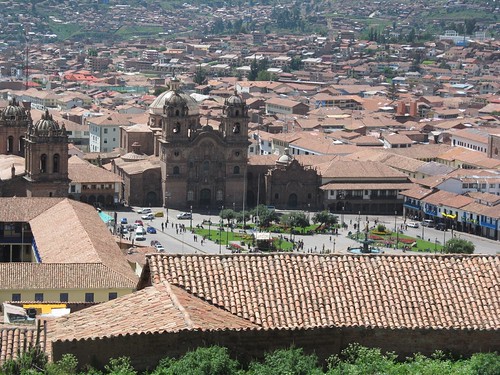
A short walk brings us to Plaza des Armas, originally the main Inka square where hundreds of thousands assembled for calendrical festivals.

IMG_4088.jpg

IMG_4095.JPG

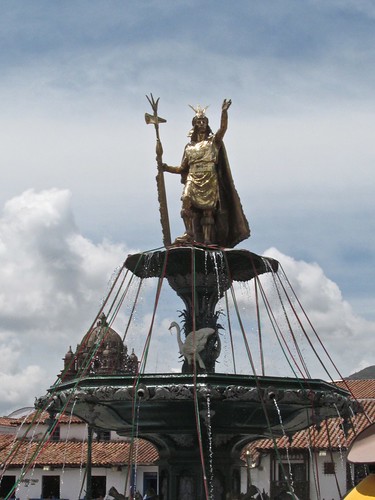
The Spanish appropriated it as a focal point for church buildings, but in recent years, it’s been partially reclaimed with a golden statue of the Inka king at the top of the central fountain,

IMG_4096.JPG

IMG_4102.jpg

Its gardens are animated by a vibrant mix of old and young, locals and foreigners.

IMG_4099.JPG

IMG_4105.JPG

As we depart for the airport, the skies open with a downpour, just as they did upon our arrival in Qosqo.

IMG_4119.JPG

Back in Lima we transfer back to the Miraflores hotel we’d stayed in earlier and are provided rooms to rest in before a scheduled midnight departure.

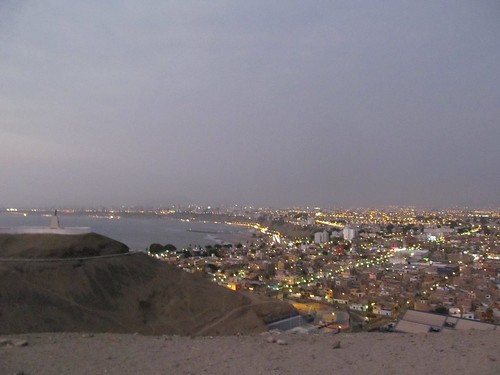
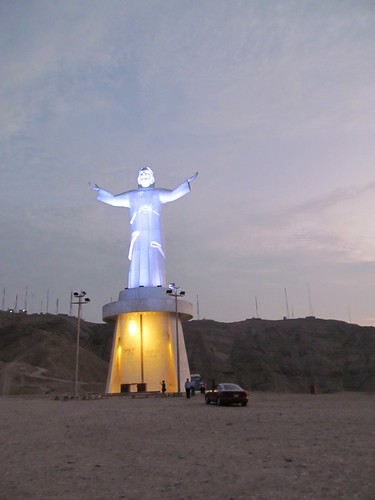
Our Lima guide, Dante, returns to lead us on a bus ride through traffic congested by the next day’s Dakar international auto race to a viewpoint above the city dominated by another hilltop statue of Christ.

IMG_4143.JPG

IMG_4142.jpg

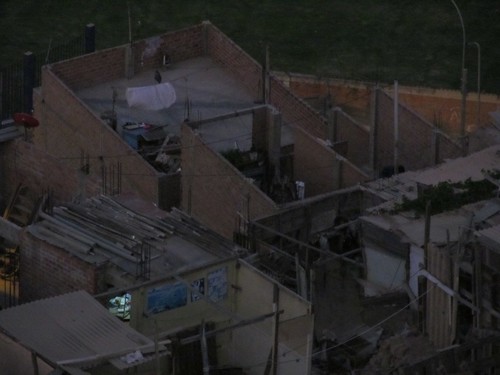
From there I get a last obscured picture of life in the new towns directly from above.

IMG_4146.JPG

After farewell dinner at a seaside restaurant we return to the airport.  The flight to Miami is delayed three hours, but we still catch the connecting flight to L.A., where we arrive in late afternoon, find our Prius, Reddy, in the vast parking lot, stop for dinner in Santa Monica, and drive the last four hour stint to San Luis Obispo.

Jan lays out our treasured souvenirs and gifts for children, grandchildren and nieces that will always recall this life-enriching trip, before we sink into a long and happy sleep.

IMG_4155.JPG

Slideshow of these and more full-size photos

Link to Day 1

Peru Day 8

Wednesday, January 16th, 2013

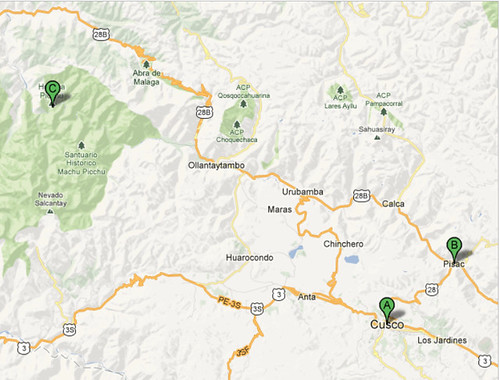
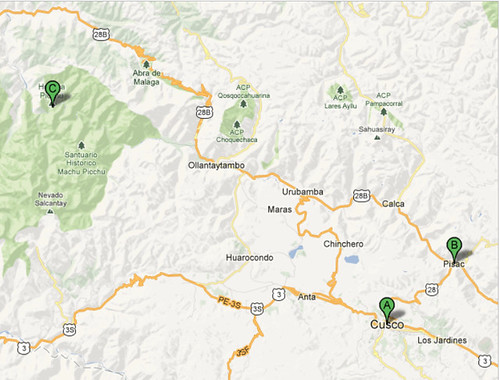
Today’s itinerary takes us back into the mountains surrounding Qosqo, but this time by a road paralleling the railroad line that runs to Machu Picchu heading westward up through a new town topped by a forest of cell towers.

Cusco-MachuPicchumap.jpg

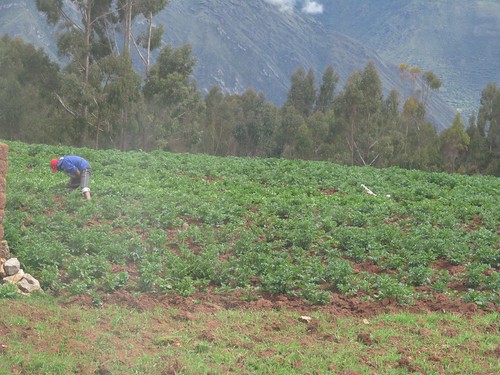
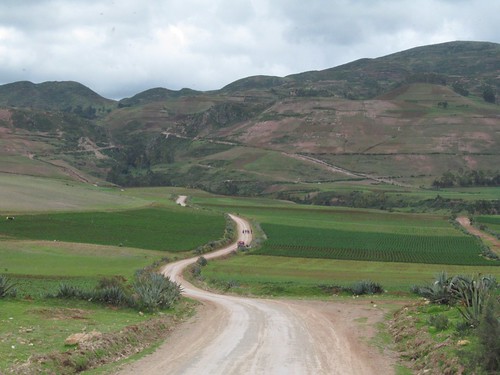
Once over the pass and heading north toward Urumbamba we’re back in the countryside, on a high plateau covered with larger fields of potatoes and corn also tended with hand tools.

IMG_3778.JPG

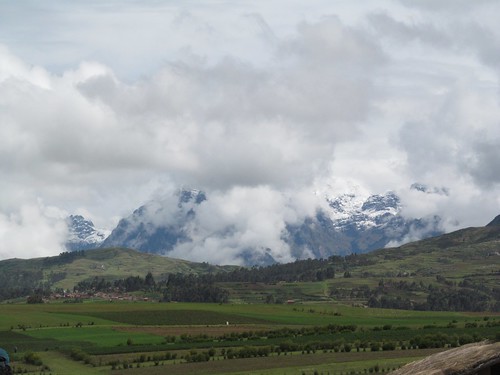
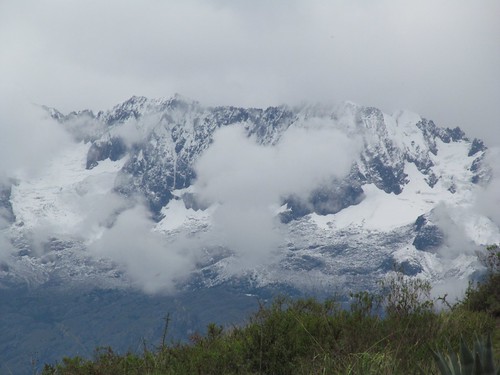
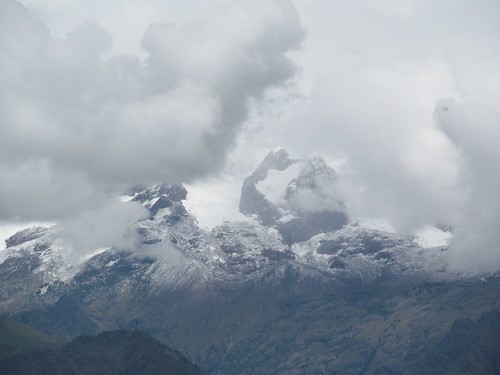
Breaks in the cloud cover reveal the summits of Cordillera Blanca towering above the pastoral landscape.

IMG_3771.JPG

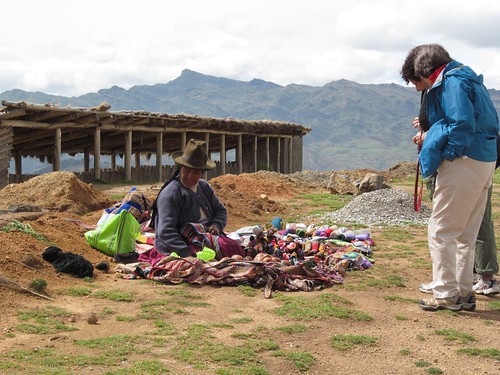
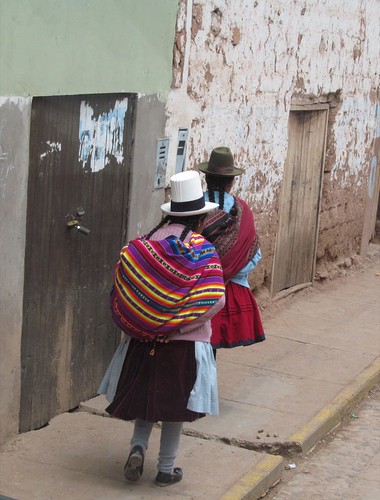
We stop for a photo-op at a turnout and a woman in traditional garb arrives and opens her blanket full of textiles and gourds to offer for quick sale.

IMG_3774.JPG

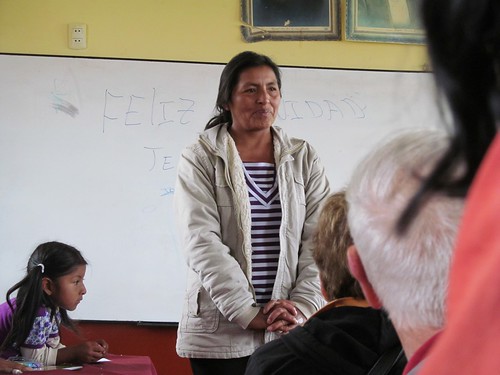
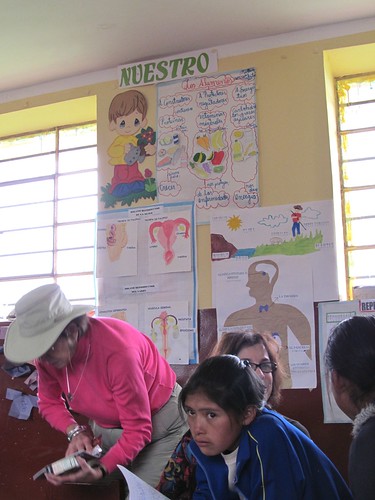
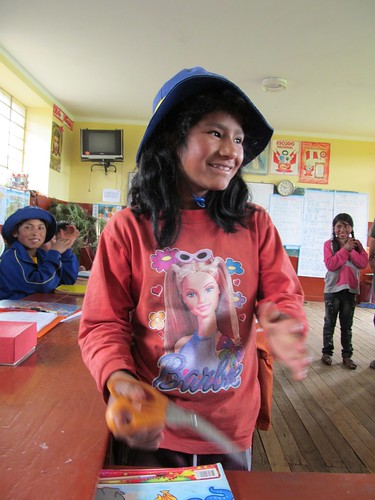
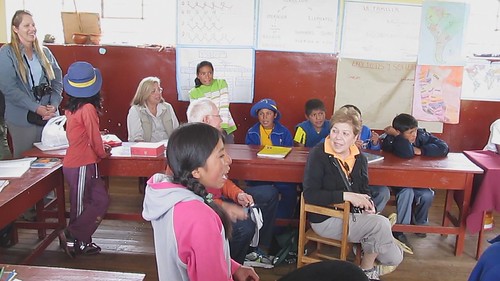
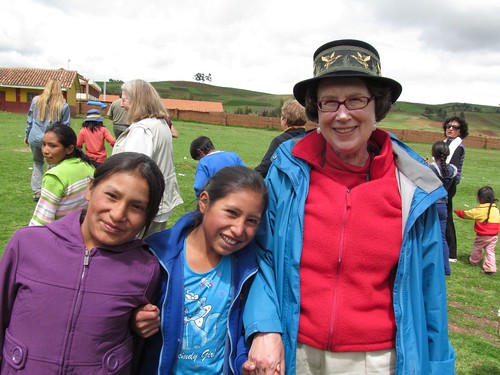
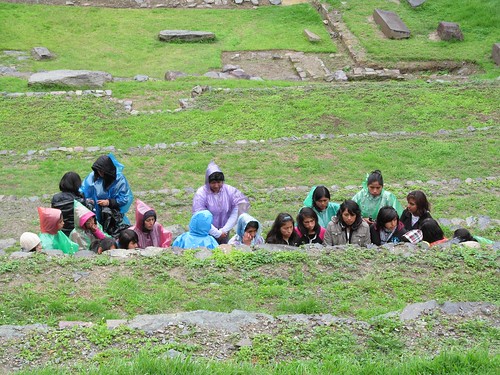
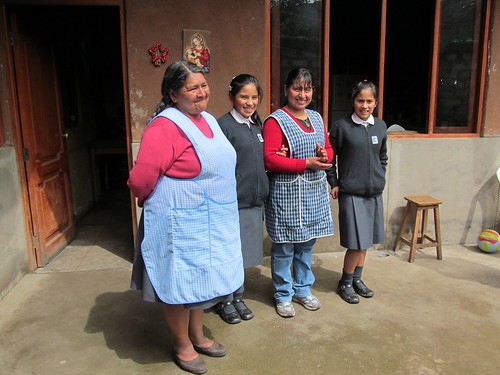
Our destination is the village where OAT, our tour company, has established another relationship with a local community, here in support of a one-room elementary school. The children are on winter vacation but have assembled from distant villages to greet us. They surround the bus and lead us by the hand into the classroom, where we’re welcomed by their teacher, a beautiful and dignified resident of Qosqo who comes with her young daughter three days a week.

IMG_3790.JPG

IMG_3823.JPG

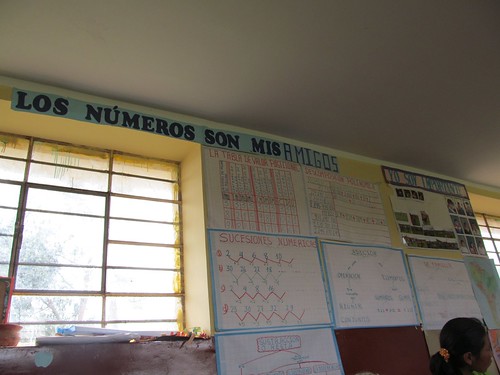
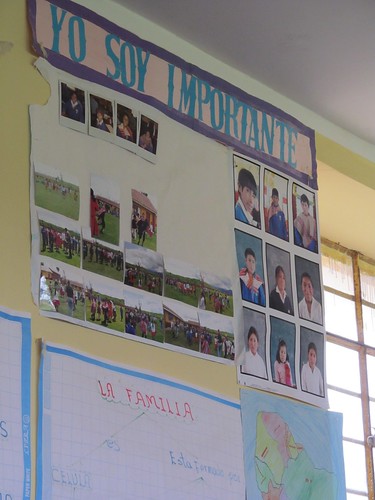
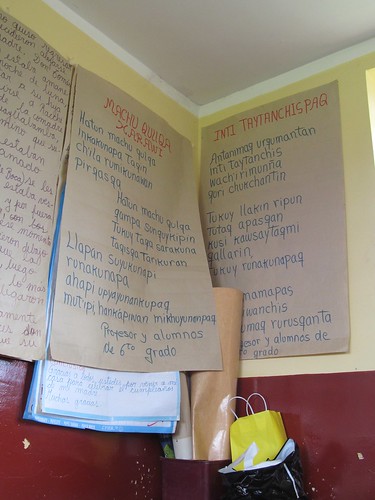
The homemade posters on the wall exhibit a curriculum emphasizing the modern as well as the traditional. Nutrition, reproduction, and environmental health

IMG_3806.jpg

Math and self respect

IMG_3807.JPG

IMG_3808.jpg

Reading and writing Spanish and the indigenous language of Quechua that Spanish conquerors and missionaries tried unsuccessfully for centuries to eradicate.
IMG_3810.jpg

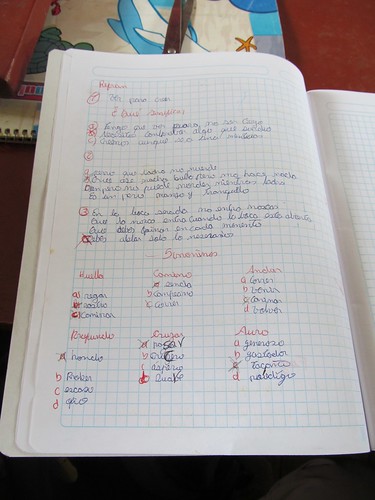
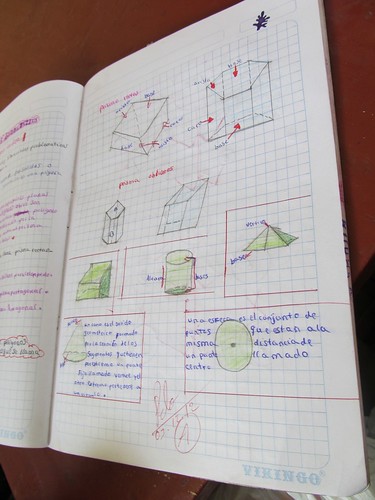
The children show us their notebooks, as impressive in the work produced and the care with which they’ve been graded as my grandsons’ in their California Catholic schools.

IMG_3794.jpg

IMG_3792.jpg

IMG_3811.JPG

IMG_3798.jpg

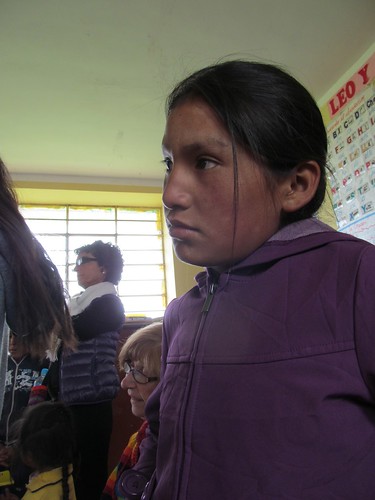
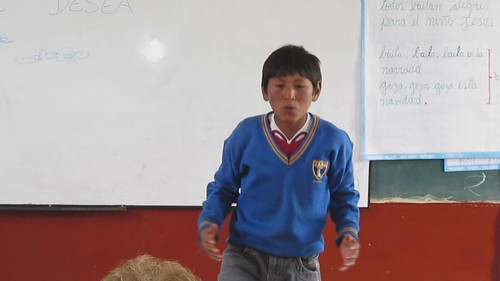
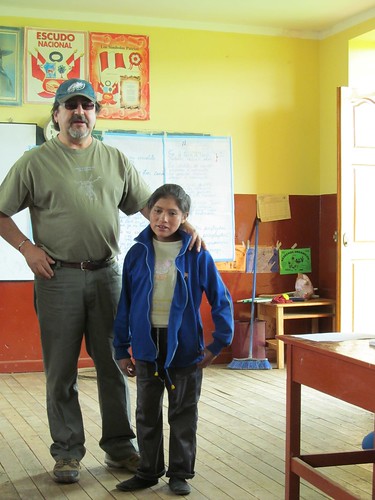
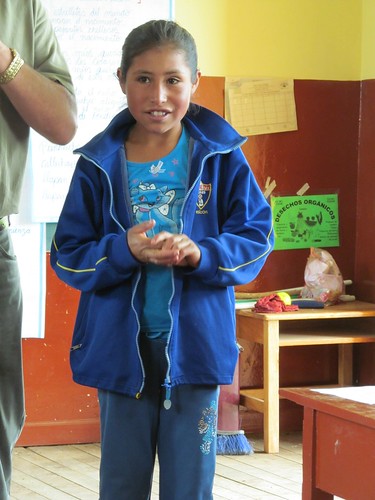
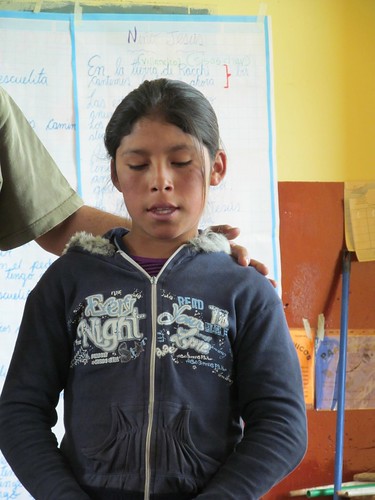
Alvaro translates as the children come to the front of the class and tell us about themselves. Their their career aspirations include doctor, lawyer, tourguide, pilot, nurse. None of them mentions farmer.
IMG_3802.jpg

IMG_3801.jpg

IMG_3803.jpg

Then we hear their recitations of poems in Quechua celebrating Peru’s traditions, people and natural environment

MVI_3815

[Click photo for movie]

Finally a chorus of farewell for sixth graders who will be graduating this year and moving on to middle school.

MVI_3818


[Click photo for movie]

After presenting our gifts of school supplies and toys we reluctantly say goodbye.

IMG_3824.JPG

Just behind our bus a villager parades down the street with his charges.

IMG_3830.JPG

On the way further into the hinterland, there’s more to see than can possibly be absorbed through the moving bus windows.

IMG_3852.JPG

IMG_3854.JPG

IMG_3859.JPG

IMG_3870.JPG

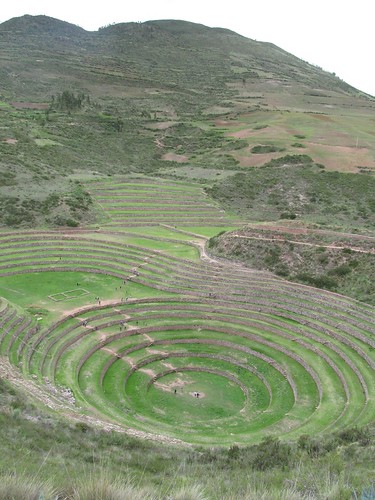
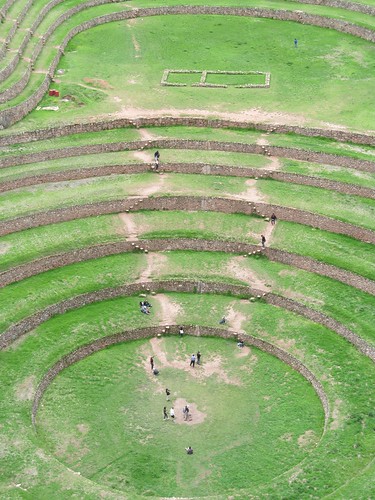
We arrive at Moray, an Inca site of landscape sculpture, ritual worship, astronomical observation, and agronomic experimentation. The concentric terraces that suddenly yawn below us like a negative impression of Ollantaytambo create a wide range of micro-climates, growing warmer as one descends.  Although the absence of decipherable Inca records leaves uncertainty, it is likely that it was designed for testing and breeding some of the thousands of varieties of potatoes and corn and other crops precisely suited for diverse Andean environments.

IMG_3885.jpg

IMG_3888.JPG

IMG_3892.jpg

Toward the north, the Cordillera’s glaciers loom, though shrinking and collapsing due to global warming.

IMG_3900.JPG

IMG_3928.JPG

IMG_3967.JPG

Toward the east, following the course of the Urumbamba river down toward the Amazon, one can see the tall peaks surrounding Machu Picchu.

IMG_3913.JPG

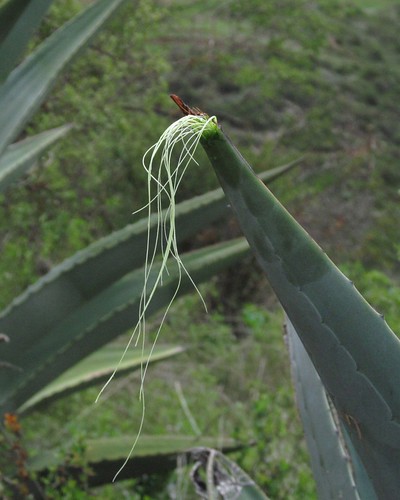
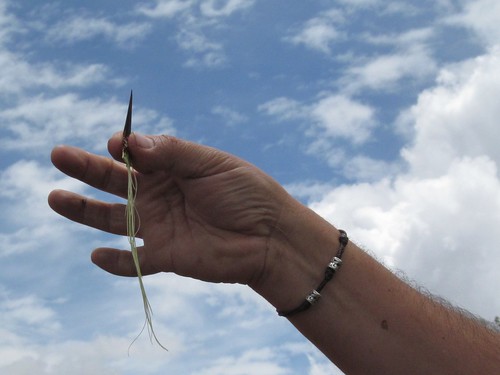
Alvaro approaches a huge aloe, puts his mouth around the devilishly sharp point of one of its leaves, bites, chews and pulls with an intensity that makes his whole body shake.

IMG_3915.JPG

Finally he pulls back, leaving a bundle of fibers protruding from the stalk and removes the point which is attached to more of them.  “Inca needle and thread,” he says, “These are fibres they used to lash timbers and build suspension bridges.  They’re stronger than steel.”

IMG_3918.JPG

IMG_3920.JPG

Next we head to the town of Chinchero, home of numerous Andean weaving cooperatives catering to tourists and dedicated to preserving traditional materials and methods and to providing a source of income to poor rural families.

IMG_4037.JPG

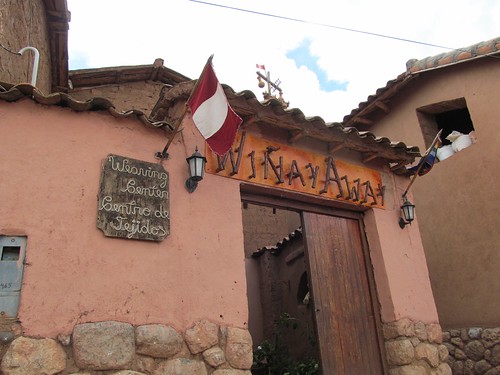
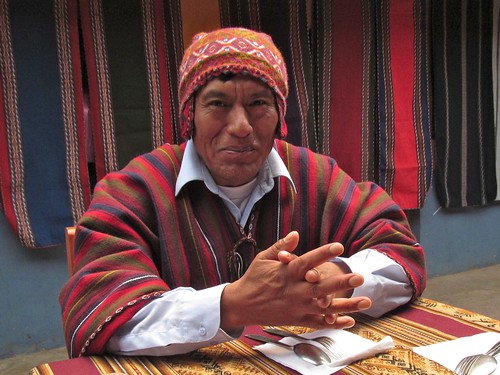
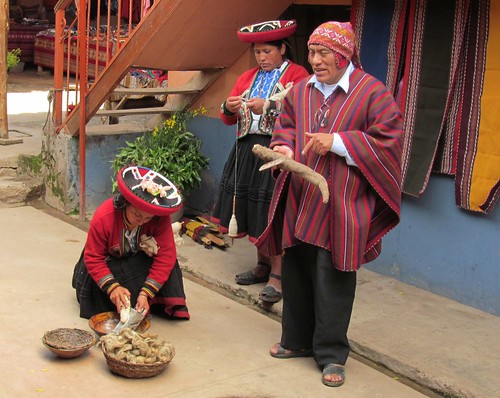
We’re greeted by Julio, an intense but reserved patriarch garbed in a gorgeous hat and poncho who speaks excellent English.  He is the owner of Wina Away.

IMG_3975.JPG

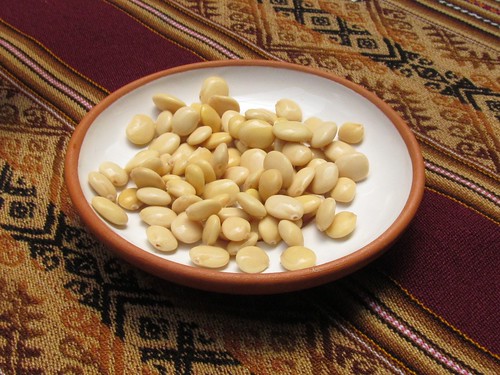
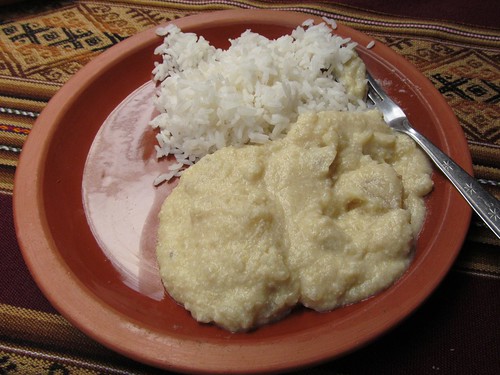
He invites us to share a lunch of potato fritters, quinoa soup, rice and a mash of beans from Peruvian lupine prepared by his wife and served and shared by the resident weavers, women of several ages.

IMG_3978.JPG

IMG_3979.JPG

IMG_3984.jpg

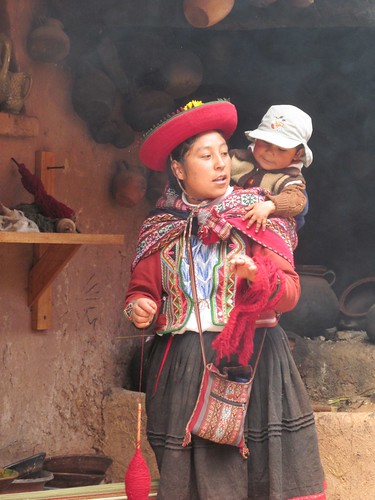
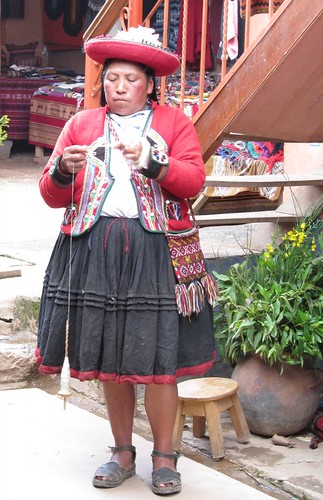
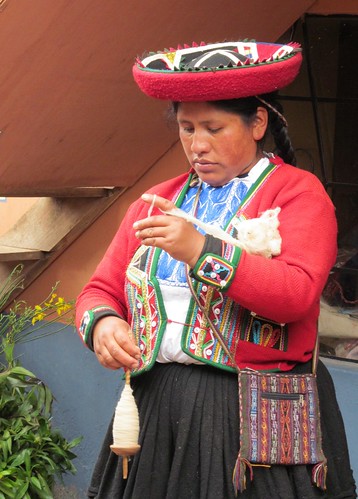
They come to his center from distant villages and stay with their children for weeks at a time, perfecting their skills and laboriously producing the gorgeous fabrics they wear and offer for sale here and in certified outlets in Qosqo.  The meticulous production goes slowly but they receive a large enough percentage of the retail price to make it worthwhile.

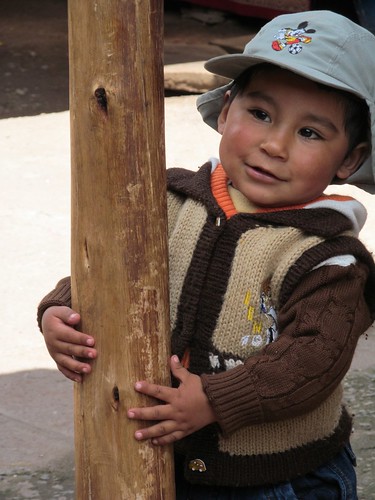
Once lunch is cleared with the assistance of our group, we move chairs and tables for a demonstration of the craft techniques.  A beguiling little boy watches.

IMG_3990.jpg

His young mother suddenly picks him up and wraps him in a blanket she ties on her back.

IMG_3994.jpg

Within a few minutes he falls asleep and she puts him down in a bedroom and returns to work.

First stage of the process is to wash the raw alpaca wool with a lather made from the grated root of a plant they spend hours foraging for in remote mountain locations.

IMG_3998.JPG

The cleaned wool is spun on a drop spindle like those we have seen women using alongside the road and in the market.

IMG_4004.jpg

IMG_4003.jpg

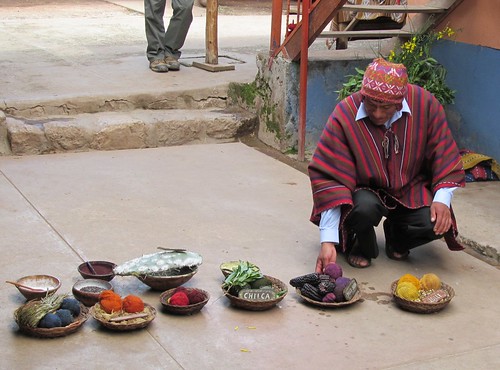
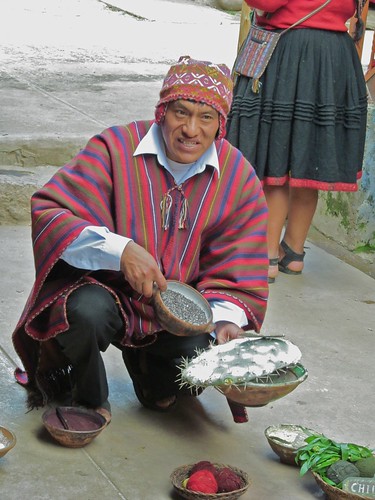
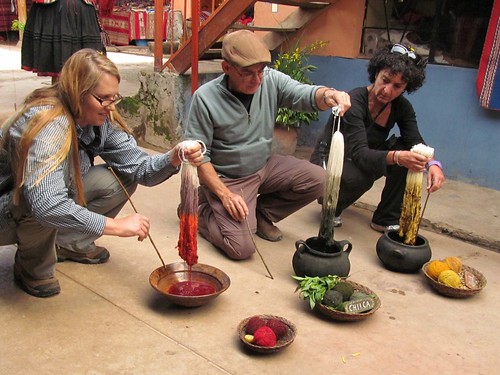
They die the wool using various natural materials that produce vibrant and durable colors.

IMG_4007.JPG

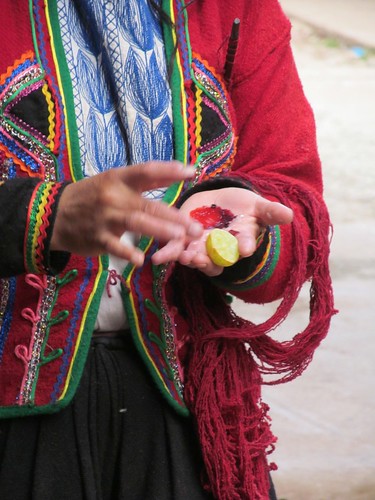
Colchinea squooshed out of the prickly pear beetle is mixed with lemon juice to produce a bright crimson.

IMG_4011.jpg

IMG_4013.jpg

We get our own chance to dip and color the wool.

IMG_4021.JPG

The warp is strung by two weavers rolling balls of died yarn back and forth between wooden poles.

IMG_4023.JPG

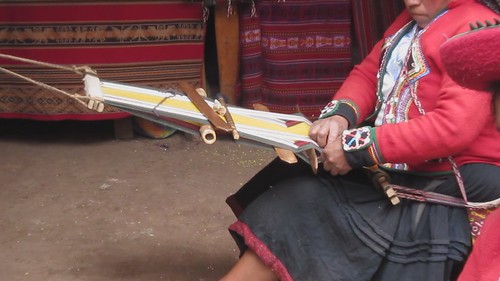
One end of the completed warp is strapped to the weaver who moves the shuttle with a bewildering flurry of gestures out which the intricate pattern slowly emerges.

MVI_4025


[Click photo for movie]

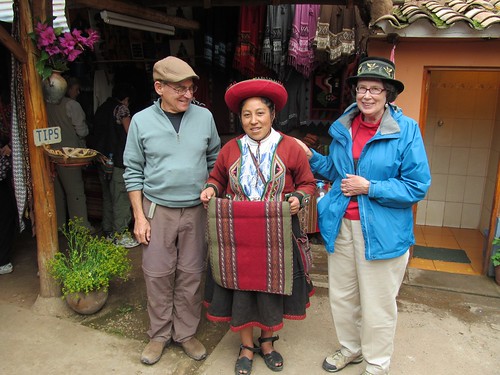
The final products are marketed by their creators.  Jan and I admire a table runner that takes a person several weeks to produce. It’s design includes the Inca princess’ eyes around the edge, a figure-eight shaped symbol of the seasons, and a line of snow covered mountains.

IMG_4028.JPG

We buy it for eighty dollars. There is no bargaining.

Slideshow of these and more full-size photos

Link to Day 9


Peru Day 7

Wednesday, January 16th, 2013

Next morning Alvaro leads us in brilliant sunshine on a walking tour of the downtown. First, directly across the street from our hotel, the Koricancha or Temple of the Sun, the religious center of the Inca temple, on top of and around which the Spanish built the Convent of San Lorenzo.

IMG_3682.JPG

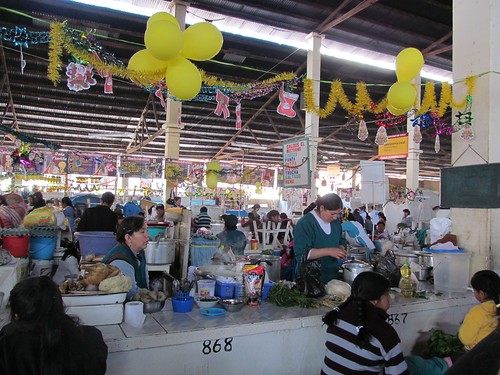
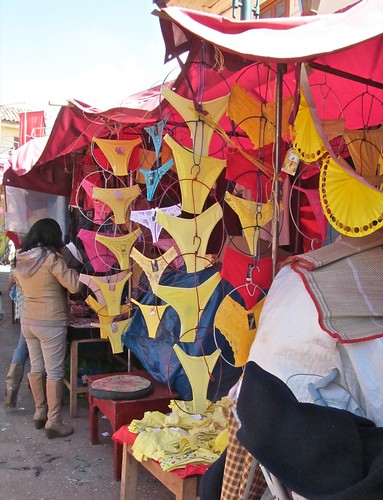
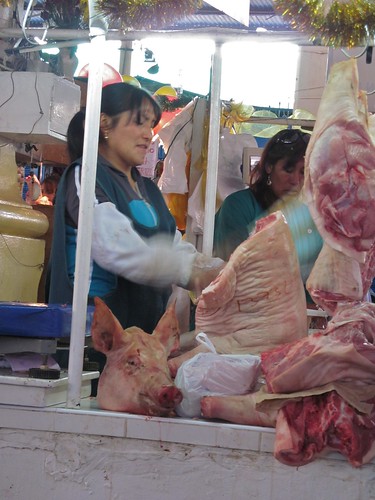
Then, the city’s central market, which all this week in celebration of New Year’s is festooned with yellow balloons, streamers, confetti and underwear.

IMG_3684.JPG

IMG_3710.jpg

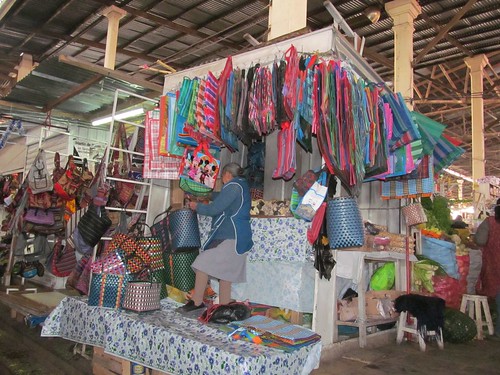
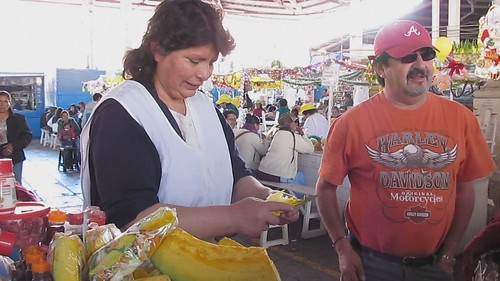
Inside is a riot of colors, sounds and smells and of merchandise, costumes and activity.

IMG_3694.jpg

IMG_3696.JPG

IMG_3700.JPG

IMG_3707.jpg

MVI_3699

[Click image for movie]

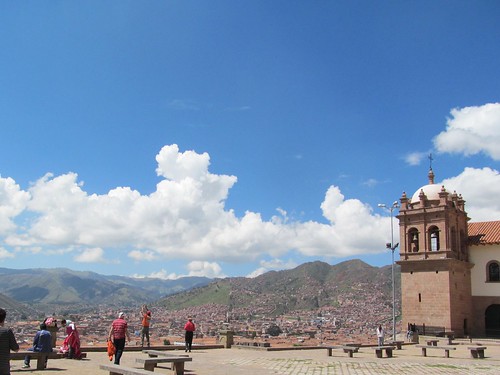
We pass through packed streets to the bus and drive by another new community on the hillside to a 17th century church overlooking the city

IMG_3713.JPG

IMG_3718.JPG

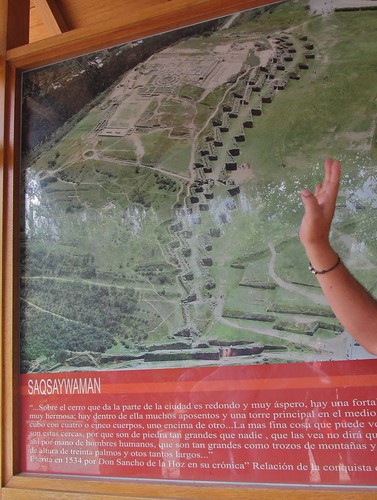
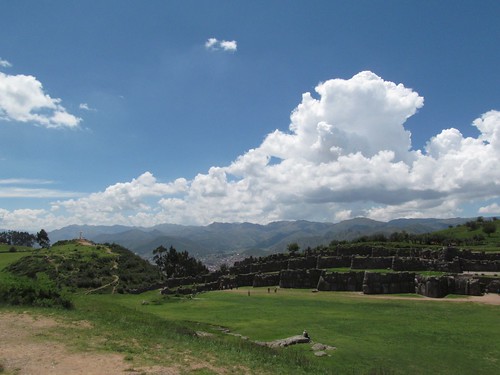
and then a little higher to Sacsaywaman, an immense Inka temple fortress laid out in the shape of a bolt of lightning. It was the scene of a famous battle between Pizarro and the rebel Emperor Manco Inka, and still competes for prominence with the large statue of Christ on an adjoining hilltop.

IMG_3720.jpg

IMG_3739.JPG

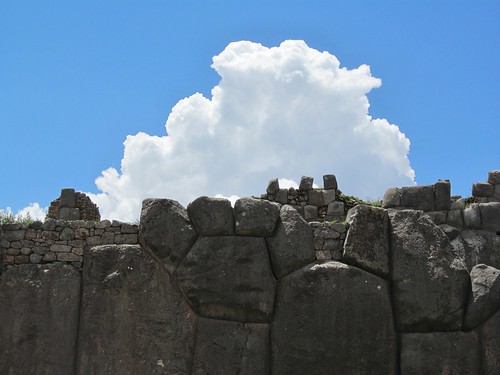
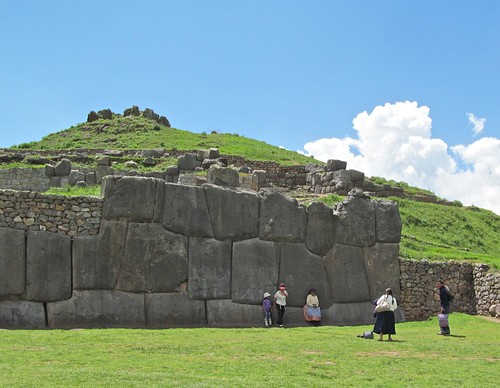
Much of the temple was dismantled by the Spanish to build the cathedrals that were intended to replace it, but the megalithic foundation stones, perfectly fitted and exquisitely shaped–here like a puma’s paw–have withstood Qosqo’s earthquakes and provide a site for locals to enjoy holiday picnics.

IMG_3737.JPG

IMG_3725.JPG

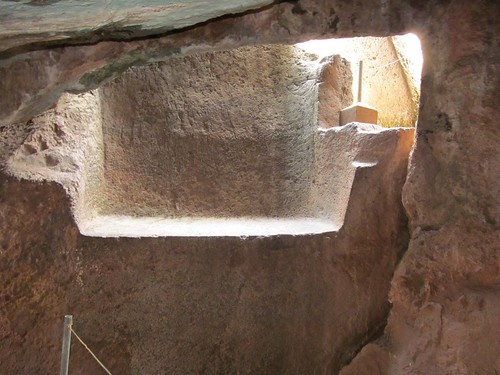
Another stop brings us to Q’engo, an underground labyrinth carved out of a natural rock formation where Inkan royalty were mummified.

IMG_3745.jpg

IMG_3749.JPG

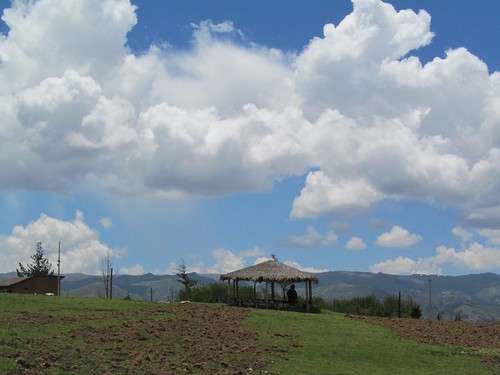
Two minutes down the road we get off the bus at the edge of a field overlooking the city. A shadowy figure appears in the distance sitting under a thatched pavilion.

IMG_3750.JPG

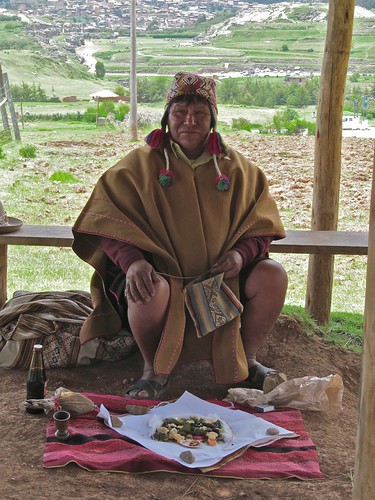
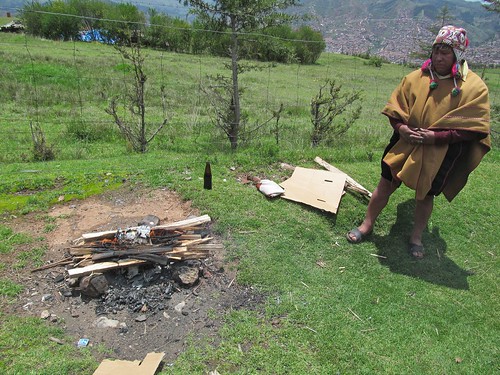
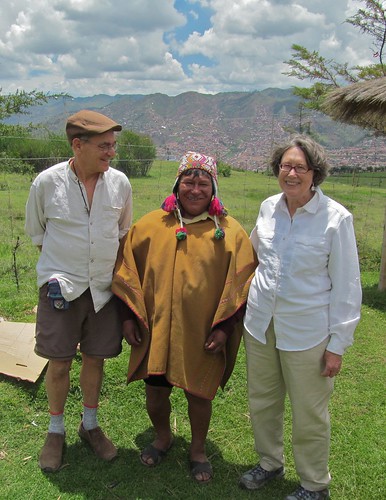
As we take seats, Alvaro introduces him as a curandero or shaman, a healer who has traveled here a long way from the highlands to conduct a ceremony for us. We agree to refrain from picture taking while the ritual proceeds. The curandero unfolds a blanket and covers it with a large white sheet of paper. He pours libations of beer on the ground and unfolds small packets containing corn, rice, sugar, candies, flowers, potatoes, alpaca jerky and other substances and arranges them in a mandala-like pattern surrounded by cotton for clouds and multicolored strings for Inka roads. He rocks and chants to himself like a davener in synagogue. All of this is meant as an expression of gratitude to the earth goddess, Pachamama.

IMG_3751.jpg

He folds the loaded paper into a compact bundle, tucks coca leaves into the top and blows on them,  laying hands on each person in the group. To dispose of any illness or ill-feeling, Alvaro says we should exhale it onto the packet. When everyone has done so, the curandero places the bundle on a wood fire Alvaro has kindled outside. As it burns, he poses for more photos and accepts gratuities.

IMG_3756.JPG

IMG_3757.JPG

Though logically contradictory, it doesn’t seem inappropriate that we offer up both our goods and our evils to the goddess. And given the prevalence of coughs and swollen eyes at this stage in the trip, the promise of a purge of poisons adds immediacy to the exotic ritual.

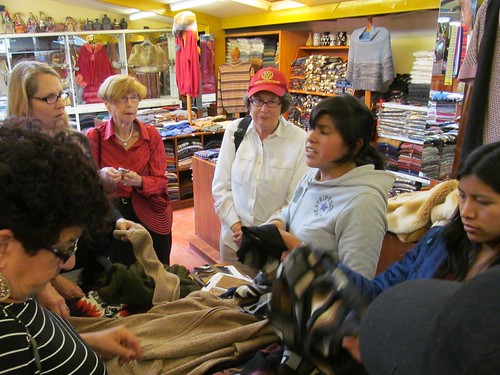
We cross the road to an unobtrusive storefront and inside find a large showroom full of alpaca woolens of varying grades. Alvaro encourages us to buy here rather than on the street or in the markets for the best prices and quality. Jan and I comply, purchasing gifts for friends and relatives back home and for ourselves.

IMG_3759.JPG

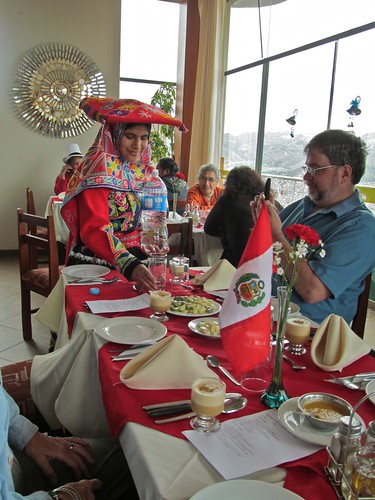
The day’s planned activities conclude at a hillside restaurant with panoramic views of the city where  luncheon is served by a woman in spectacular traditional garb.

IMG_3761.jpg

On the way back to the bus after the meal, we’re serenaded by passing holiday celebrants.

MVI_3768

[Click image for movie]

While Jan stays at the hotel, adding rest, antihistamine and more ibuprofen to the curandero’s cure, I explore the walled streets of the central downtown for an hour or so, but then join her, satiated with stimulation and grateful for the chance to read more in Mann’s 1491 about the historical background of what we’ve seen .

Slideshow of these and more full-sized photos

Linnk to Day 8


Peru Day 6

Wednesday, January 16th, 2013

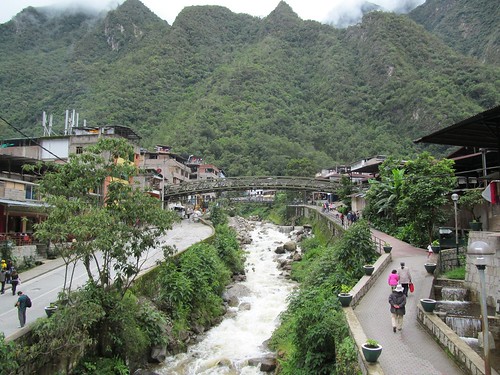
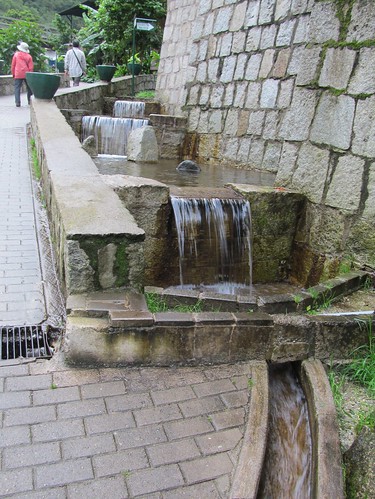
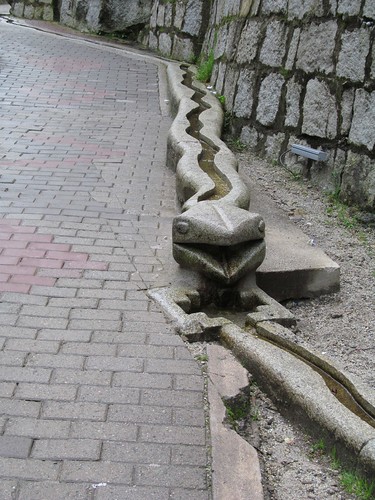
Next morning we walk back to the bus stop along the tributary rushing through the middle of Aguas Calientes. The street is flanked by fountains inspired by the spring-fed watercourses in the city above, one simulating cascades, another the undulating body of a snake.

IMG_3590.jpg

IMG_3594.jpg

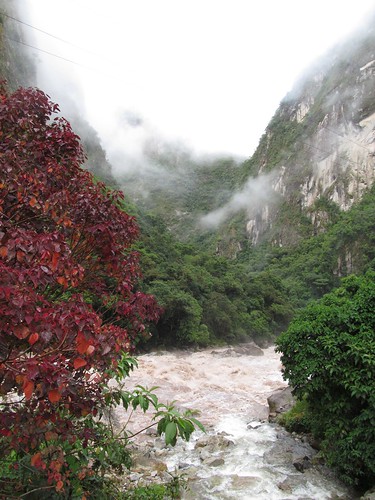
The sound of the rapids echoing between the high walls of the canyon roars through the town and adds excitement to our departure for the heights.

IMG_3597.jpg

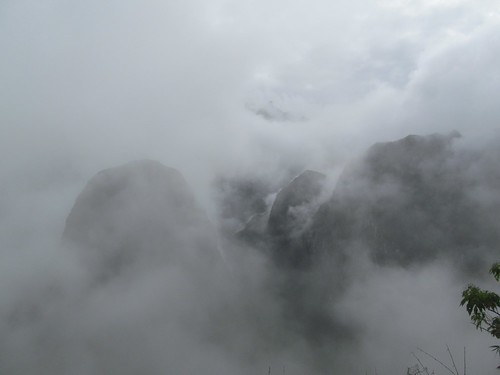
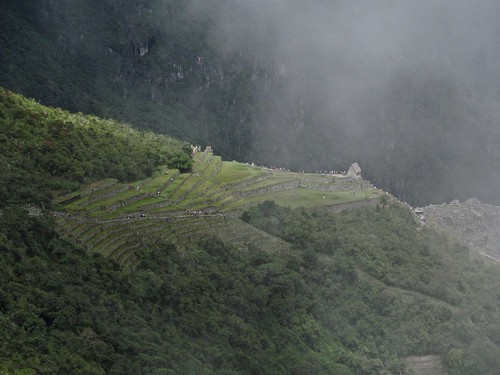
When we arrive, the site and surroundings are predictably obsured by fog.

IMG_3601.JPG

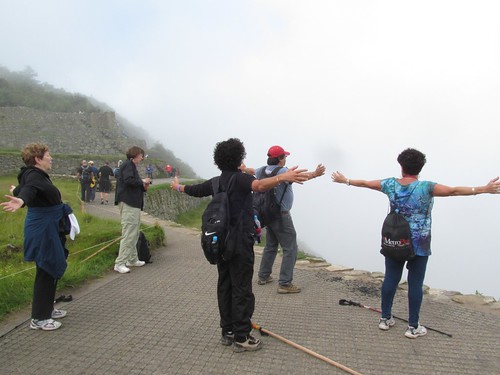
Alvaro leads the group in a prayer at the edge

IMG_3605.JPG

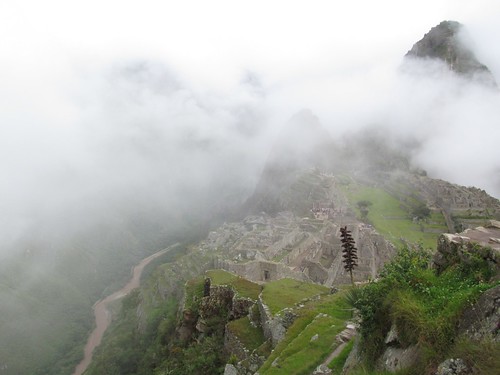
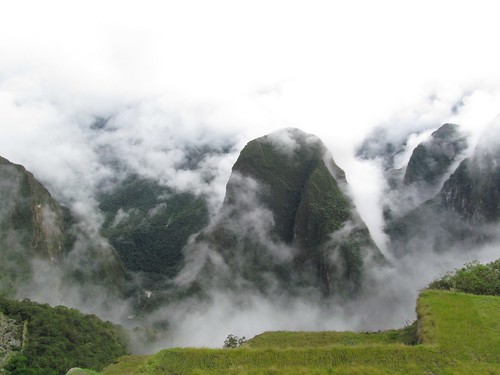
The clouds begin to lift. Yesterday’s amazing sights take on a living presence, mysterious and intimate.
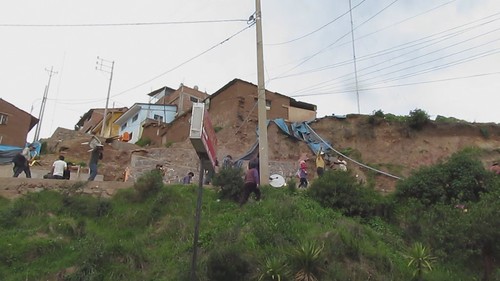
IMG_3607.JPG

IMG_3633.JPG

IMG_3617.JPG It seems like the renting of a veil, the parting of a curtain, the revelation of divine nature, Pachamama’s gift.

IMG_3609.JPG

This is a moment together Jan and I are supremely privileged to share and preserve.
IMG_3612 - Version 2.jpg

Our group leaves the confines of the city and is led slowly by our guides toward a viewpoint looking down on it from above.
IMG_3650.JPG

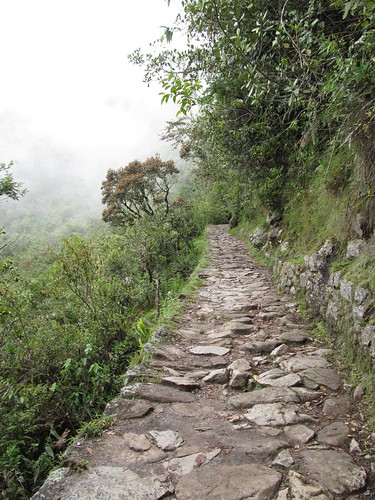
Anyone who wishes to go on ahead has permission to hike to the Sun Gate, the high pass through which Machu Picchu first appears to those traveling by foot along the Inka Trail, the 500 year old original approach.

IMG_3642.jpg

I welcome the chance for more exercise and a little solitude.  Half an hour later I encounter another member of our party. He accepts my assistance in climbing the rock wall below a small opening in the jungle that provides the only possible opportunity within miles to go to the bathroom. On the way out, he slips and falls on the stone path. He’s in great pain but refuses offers to call for help or accompany him back to the bus.  He will reach the Sun Gate!  With the assistance of four Ibuprofen and my spring-loaded trekking pole heroically he reaches his goal.

IMG_3658.JPG

Meanwhile, despite her injured knee and with the help of her two trekking poles and more Ibuprofen, Jan mounts hundreds of stone steps to the lower viewpoint. Little Al calls her the lady on four legs.
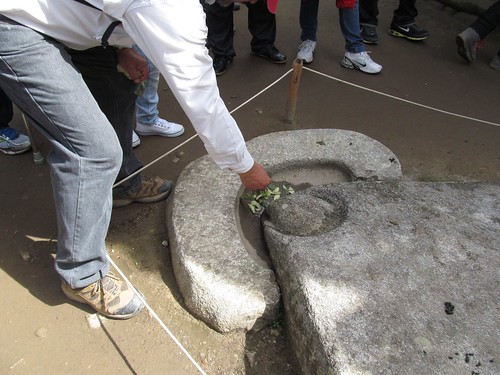
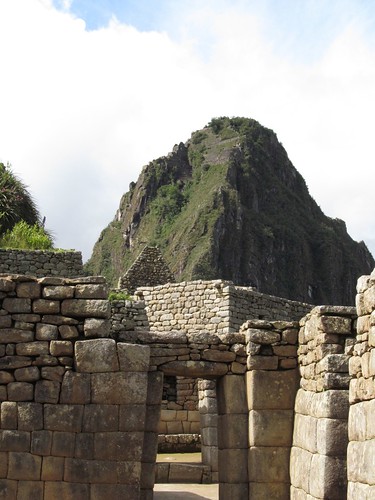
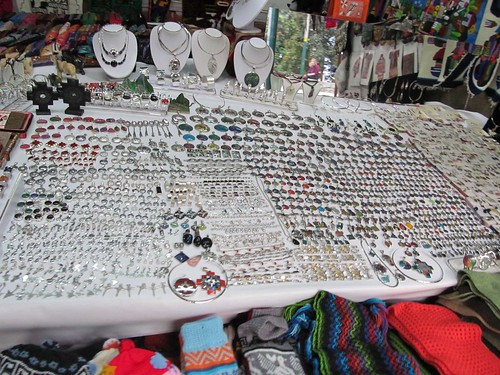
On the way back to the train she bargains in the market for silver earrings decorated with an Andean cross and symbols of the months and for a table cloth woven in the rainbow colors of the Qosqo flag.

IMG_3583.JPG

IMG_3585.JPG

The bus trip back to Qosqo offers our first view of the snow-covered mountains of the Cordillera Blanca.

IMG_3677.JPG

Jan too is coming down with the cold that’s hit most members of the group. Having landed in a comfortable hotel room, we both decline to join the late night New Year’s Eve festivities in the central plaza and fall asleep well before the end of 2012.

Slideshow of these and more  full-size photos

Linnk to Day 7


Peru Day 5

Wednesday, January 16th, 2013

At breakfast, Jan begins a conversation with a young couple in the Villa Urumbamba dining room and asks where they are from.  “Lima,” says the man in accent-free English, “we’re here to celebrate New Year’s Eve.”

IMG_3330.JPG

She says we’re from San Luis Obispo California. He says he’s been there to visit his aunt who was a physician with Doctors Without Borders recently killed in a plane crash. Jan says she’d met her once and we both attended the funeral of her volunteer pilot, whom we knew as an environmental activist.
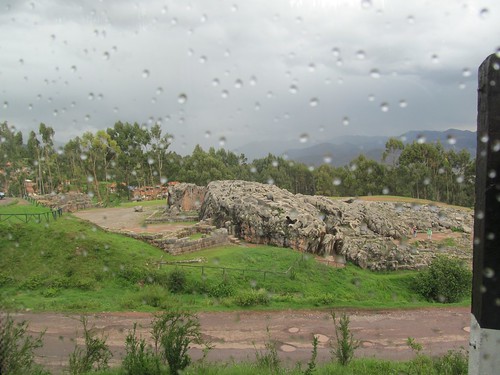
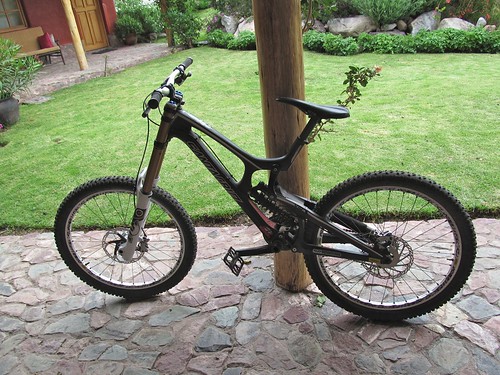
Like our son Joe, Pacifico is a mountain bike and offroad motorcycle enthusiast, and head of the Lima Mountain Bike Association, which is now big enough to afford him employment.  His partner, Maria, is a fashion designer.  He shows me his bike and points out the trail on a distant hillside that he’s built by himself.
IMG_3333.JPG

IMG_3334.JPG

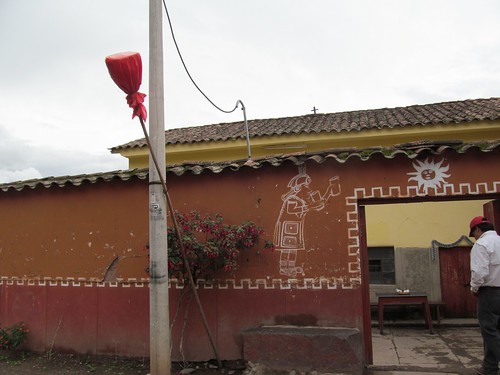
Ruefully we leave this beautiful enclave and head back to Ollantaytambo to catch the train for Machu Picchu. On the way we stop at a house marked by a red plastic bag on a stick, the sign for a chicha bar, one of the several found in all rural villages.

IMG_3342.JPG

The doorway is painted with a design copied from an ancient inscription.  Long before the Inkas, this form of corn liquor has been a staple of the Andean pharmacopeia and diet, just like the coca leaves on the figure’s headress.

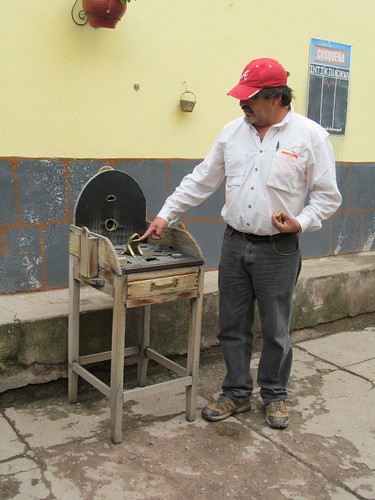
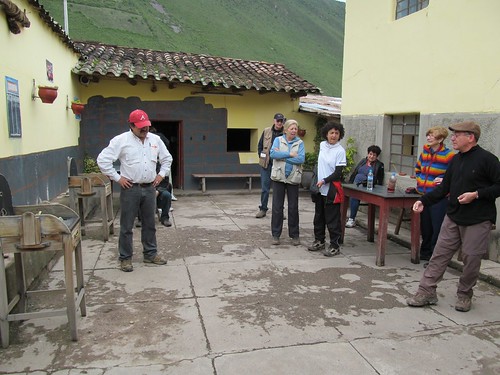
In the courtyard, Alvaro shows us the bar game of Sapo, which involves tossing heavy bronze disks into the mouth of the frog and various other orifices.  I enjoy playing, even though my aim has always been terrible.

IMG_3344.jpg

IMG_3353.JPG

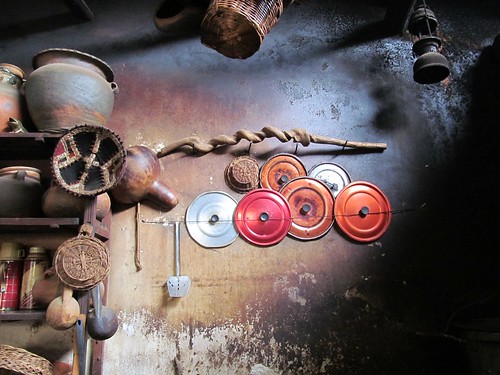
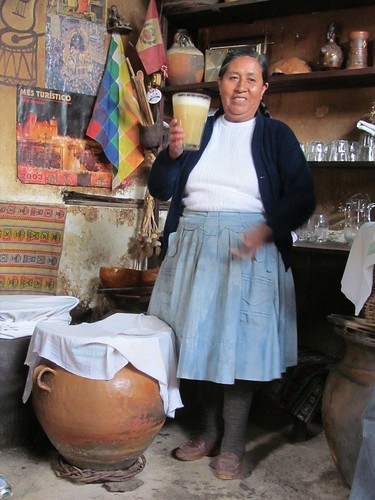
Inside another kitchen that seems like a museum display, we are introduced to the brewer-hostess.

IMG_3358.JPG

IMG_3366.JPG

IMG_3359.jpg

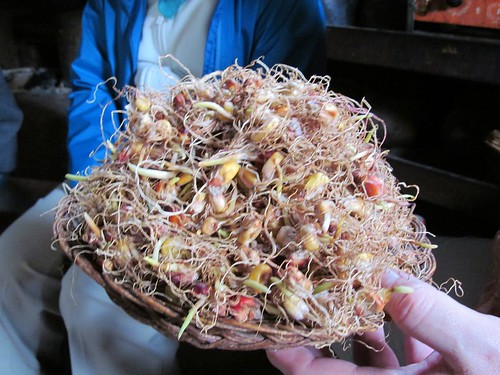
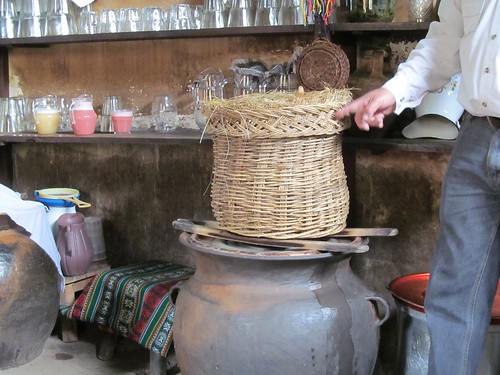
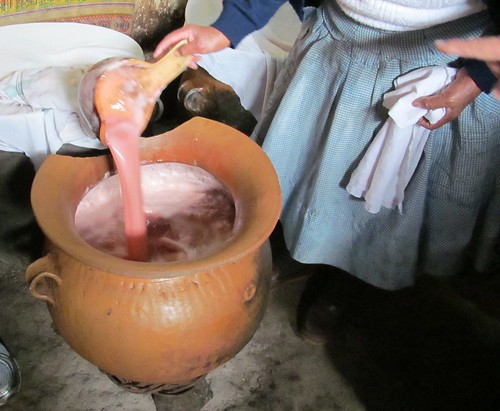
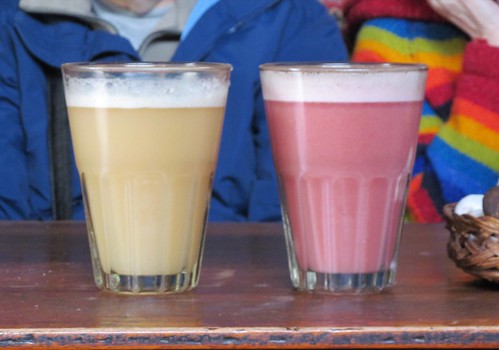
She demonstrates the process of making chicha: sprouting corn kernels, fermenting them, filtering and stirring the brew in large clay pots and ending up with the either the cheap plain or the more expensive variety flavored with strawberries.

IMG_3363.JPG

IMG_3367.JPG

IMG_3372.JPG

IMG_3371.JPG

Peruvians are known to drink it by the half gallon, but we each only take a sip, reluctant to imbibe anything that might weaken tolerance for the altitude.

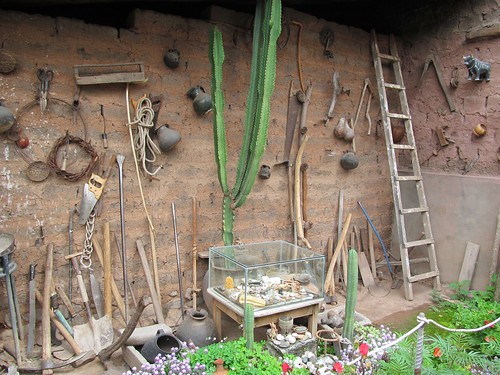
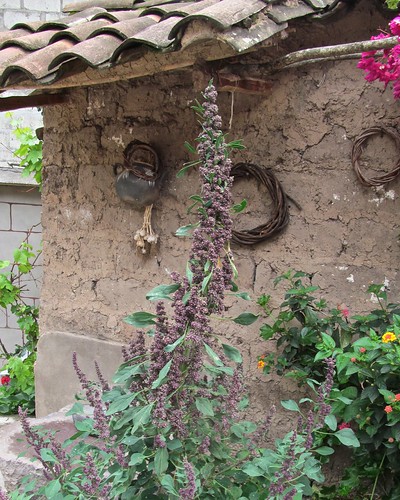
Near the bathroom at the back of the bar, we discover another little guinea pig barn, a lovingly arranged tool-storage wall, and a quinoa plant, which I’ve never seen, even though I eat a lot of this Peruvian staple.

IMG_3379.JPG

IMG_3381.jpg

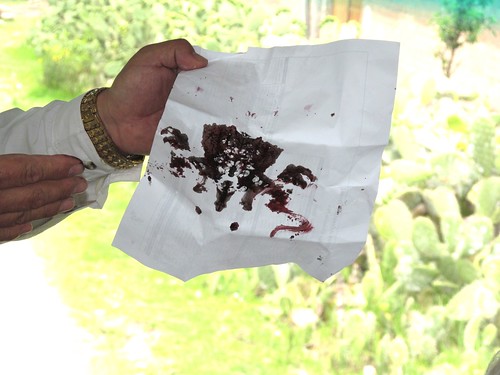
Alvaro stops the bus again to grab some beetles infesting a prickly pear cactus by the side of the road.  He crunches them on a sheet of paper to reveal the source of cochineal, the red pigment used as a fabric dye, cosmetic, and wall paint.

IMG_3384.JPG

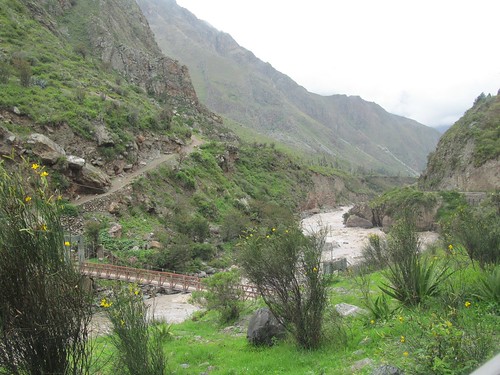
At Ollantaytambo, we board the train that travels beyond the end of the road down the narrowed Urumbamba valley, now a canyon. We pass a footbridge at the start of the Inca Trail, the beginning of a four-day trek to Machu Picchu on the old stone road which now requires advance registration, a guide and porters.

IMG_3404.JPG

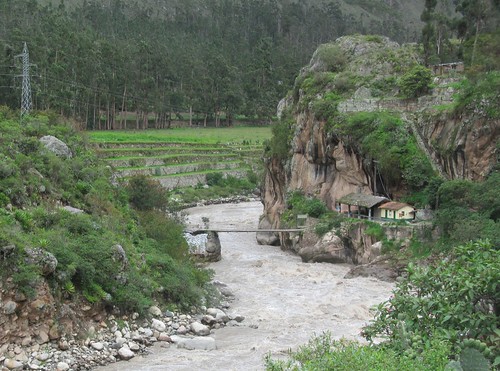
Another footbridge rests on original Inka piers. As we descend in altitude the surrounding vegetation turns to thick tropical jungle.

IMG_3407.JPG

The railroad terminus is Aguas Caliente, a bustling tourist town on either side of the tributary that dashes down from fog-enshrouded peaks to converge with the Urumbamba.

IMG_3434.JPG

There we meet “little Alvaro,” another licensed guide who assists our Alvaro, and we board one of a steady stream of buses carrying visitors up the “Hiram Bingham highway,” named after the Yale explorer who claimed to discover the ruins of the lost city in 1911. In fact, they were shown to him by local farmers who lived on the site, but Bingham must share credit with Pachacuti the original builder for creating an economic bonanza for later generations.

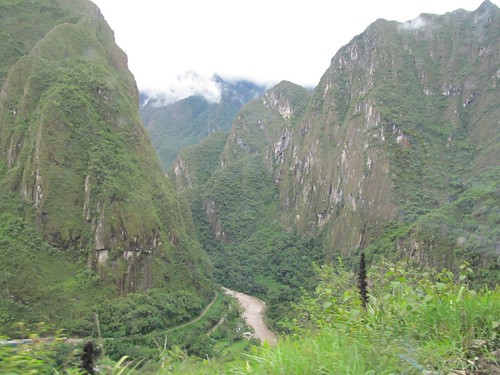
As the river shrinks to a narrow ribbon below, surrounding mountains break through the clouds.

IMG_3443.JPG

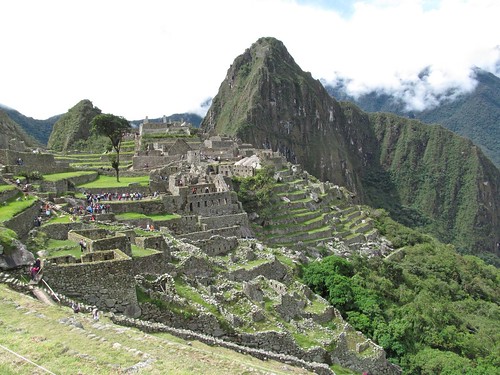
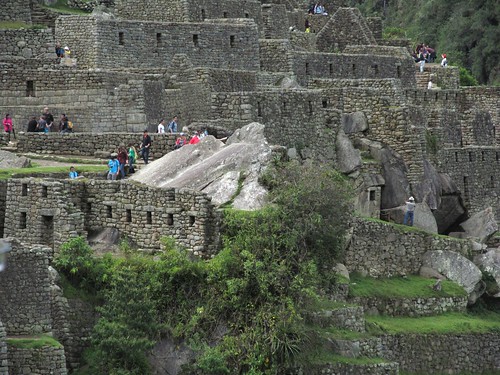
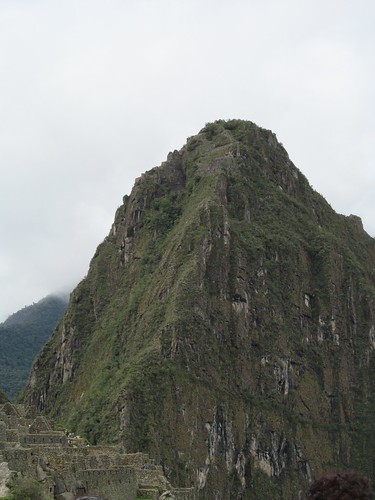
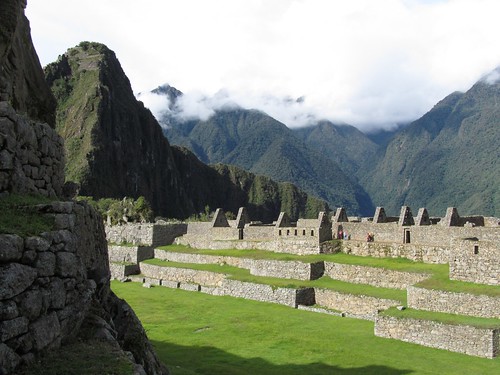
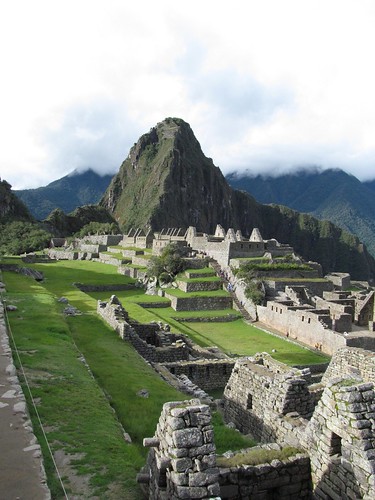
Then we’re off the bus, through the mass scene at the entrance kiosk where passports must be shown and the $60 entrance fee paid, and out on a terrace for the first view of the place.  Though I’ve seen it on countless brochures and billboards, nevertheless here in person, it shuts the mouth, quiets the brain, and fills the eyes with wonder. Walls, terraces, houses, temples, the jungle, the clouds above, the adjacent summit of Huayna Picchu, the peaks rising from the river below, the myriad miniscule people–all that variety in a unified three dimensional panorama.

IMG_3470.JPG

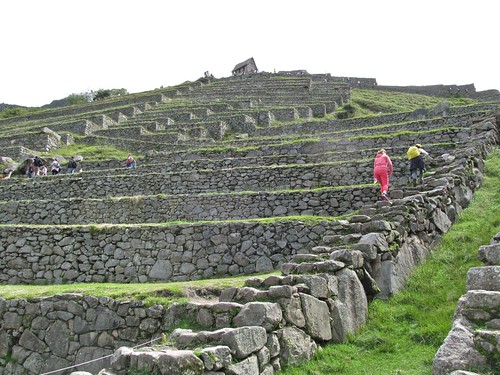
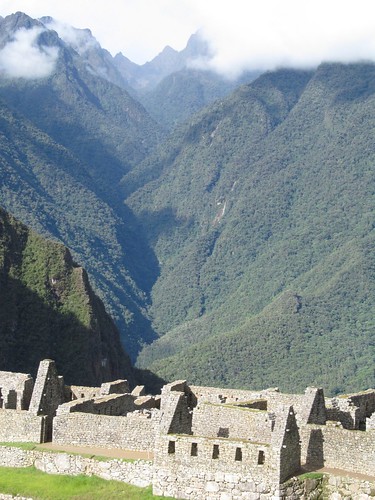
After the initial impression of the whole, I take in more of the specifics: steep agricultural terraces and drainage corridors,

IMG_3474.JPG

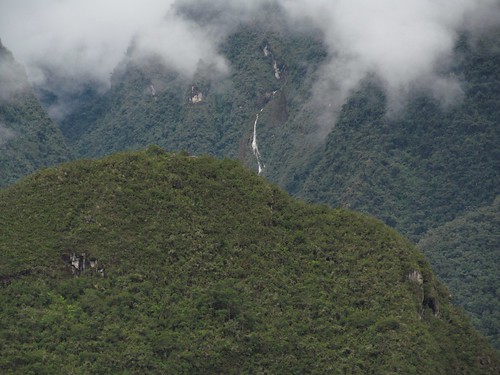
waterfalls tumbling out of the cloud forest,

IMG_3461.JPG

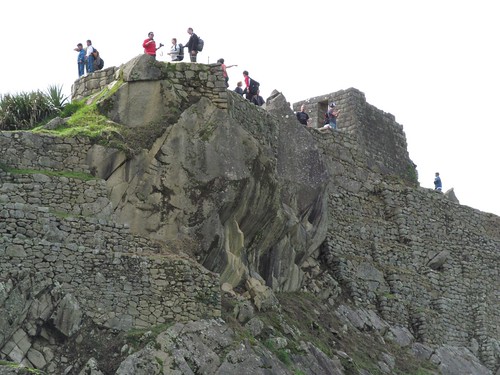
structures hewn out of and bedrock and grafted onto it,

IMG_3463.JPG

IMG_3481.JPG

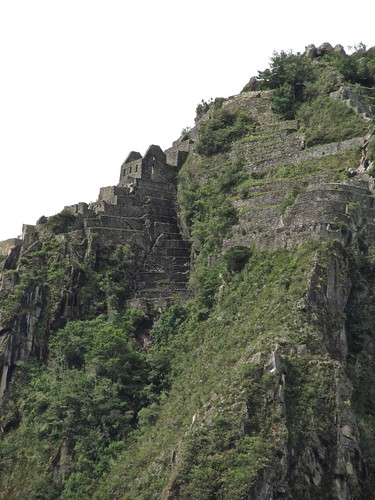
Huayna Picchu peak chiseled with staircases and topped with temples,

IMG_3459.jpg

IMG_3469.jpg

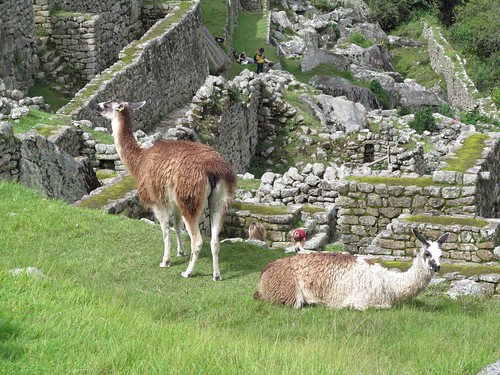
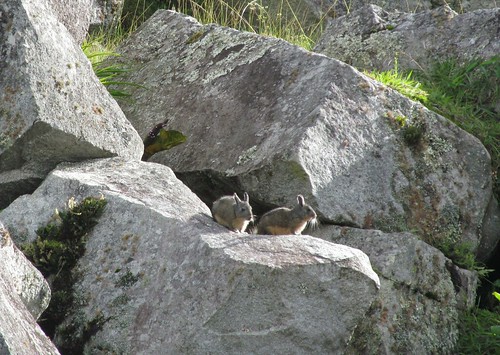
animals domestic and wild.

IMG_3477.JPG

IMG_3567.JPG

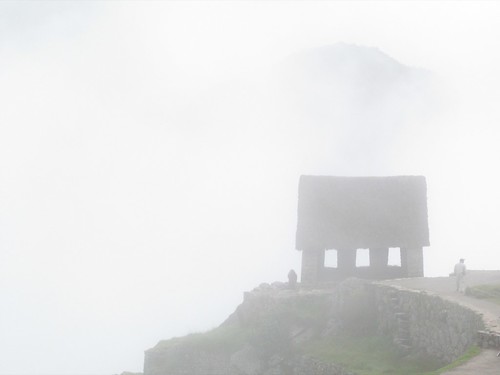
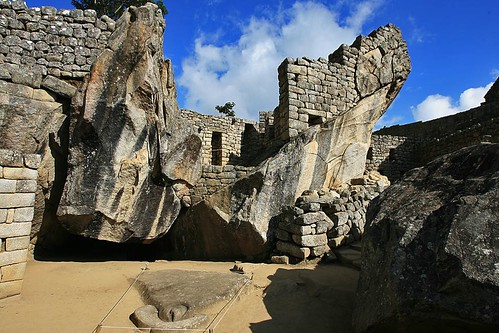
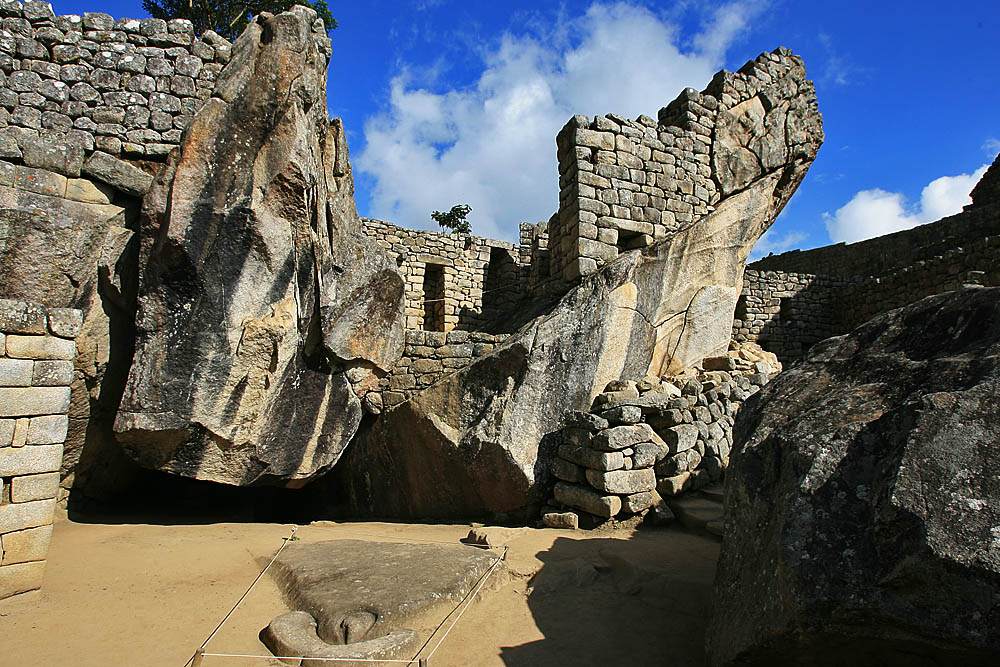
Despite the rainy season, the weather is dry and the clouds are clearing.  Alvaro’s prayers have worked!  He leads the group to the Temple of the Condor, a dazzling statue of one of the three sacred beasts of the Inka, representing the realm of the sky, and also a site for sacrificial offerings.

MACHU PICCHU 4-0515.JPG

photo credit

IMG_3492.JPG

He says his prayer, offers some coca leaves, and distributes mouthfuls to the rest of us. The sun comes out, revealing the primary deity the Inka worshipped.

IMG_3504.jpg

IMG_3507.jpg

IMG_3519.jpg

He impresses upon us their aesthetic appreciation, their scientific observation, and their spiritual responsiveness to the natural environment.  Here a stellar observatory in protected reflecting ponds

IMG_3508.jpg

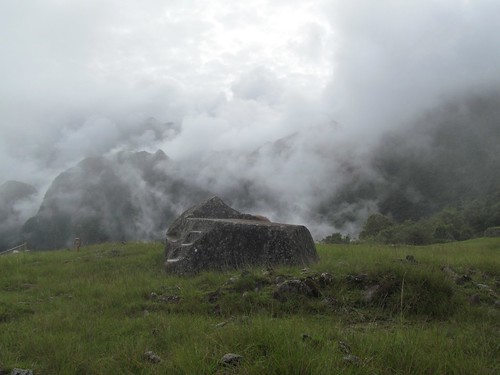
Here a carved imitation of the peak behind it

IMG_3535.JPG

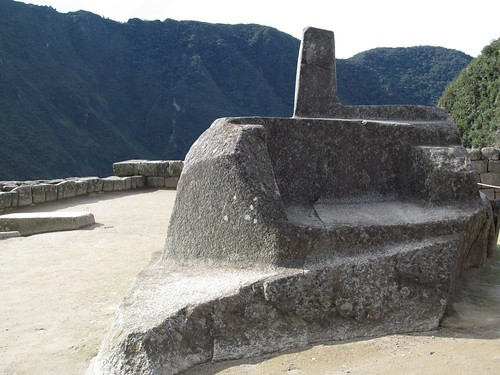
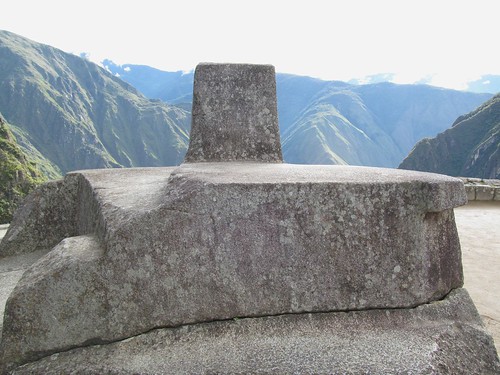
Here, at the zenith of the site, a sundial.

IMG_3560.JPG

IMG_3563.JPG

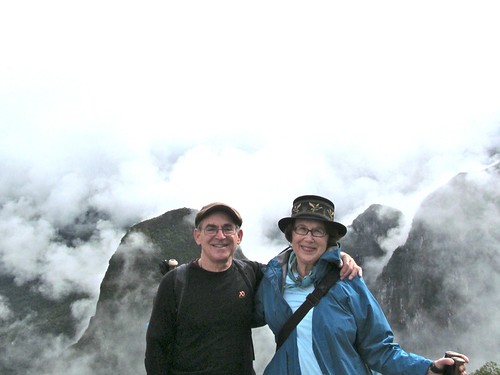
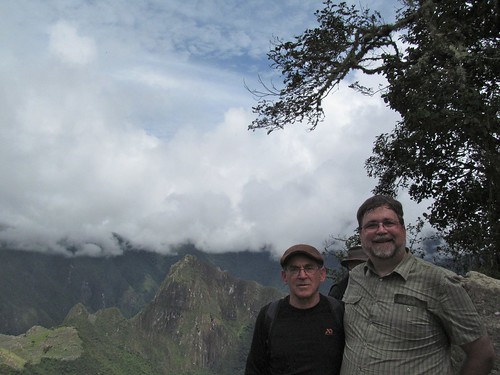
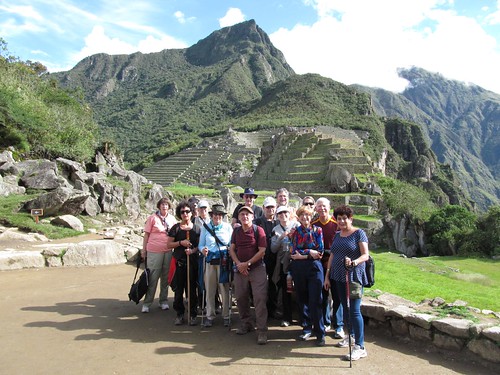
In front of Mount Machu Picchu, we stop for a group portrait–travellers from Vermont, Massachusetts, New York, Pennsylvania, Illinois, Arizona, and California.

IMG_3536.JPG

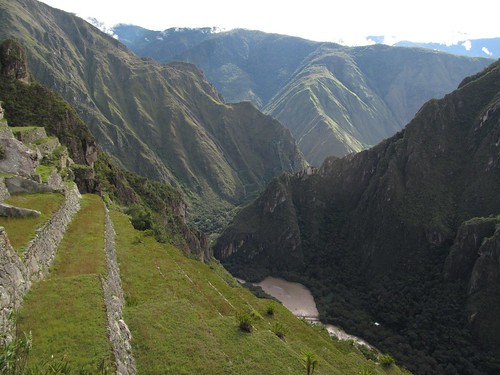
At the base of the southwest side of the ridge, the river twists downstream.

IMG_3547.JPG

To the northwest, peaks of the Cordillera momentarily  appear thousands of feet above us.

IMG_3564.jpg

IMG_3565.JPG

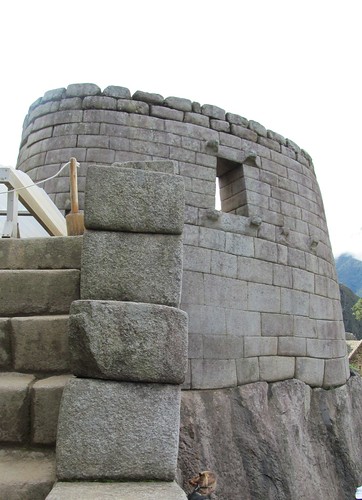
The most polished masonry of Machu Picchu is reserved for the Temple of the Sun, a structure twinned by Korikancha, a temple in the middle of the city of Qosqo and aligned with it along a mysterious network of meridians.

IMG_3577.jpg

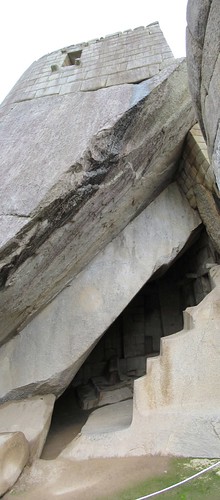
The temple perches on a rough rock face above a cave used for the preparation of mummies which represents the underworld realm of the dead, presided over by the snake god.

templepan.jpg

As we head back to the entrance late in the day, the contrast deepens between shadow and light.  Color, shape and texture take on intoxicating intensity.

IMG_3556.JPG

IMG_3573.jpg

Down in the valley, we walk to dinner at a gaudy restaurant where we’re serenaded by a lively group of traditional musicians. The we check in for the night at a friendly little hotel.

IMG_3586.JPG

Slideshow of these and more full size photos

Link to Day 6


Peru Day 4

Wednesday, January 16th, 2013

Our room is tastefully decorated with original arts and crafts but my sleep is disturbed by the onslaught of a cold. From earlier travels I recognize the combination: thrilling stimulation accompanied by intense discomfort and fatigue. Quarts of coffee and coca tea in the morning provide some relief.

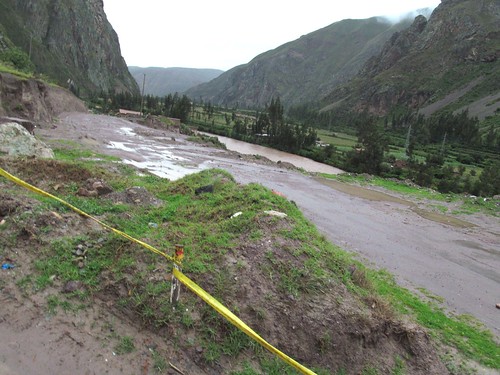
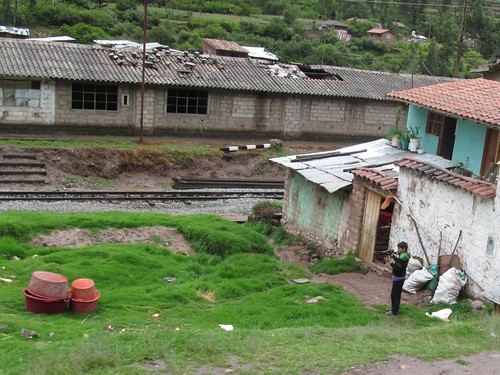
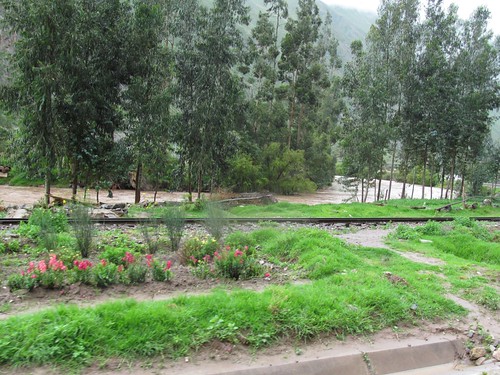
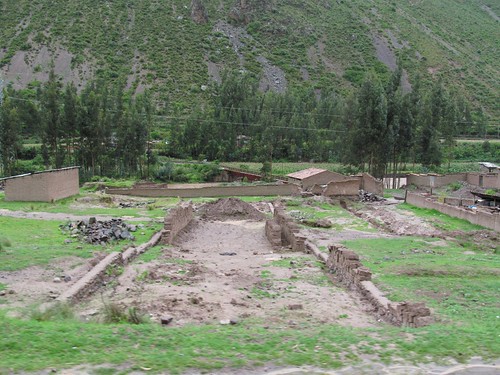
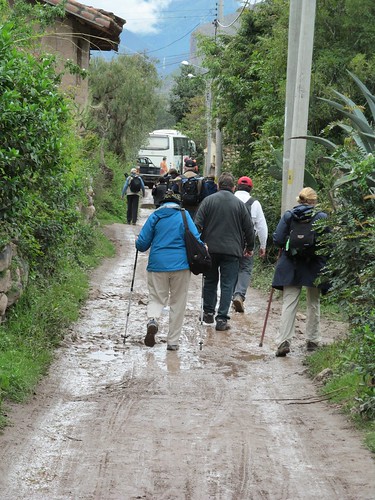
It’s raining as the bus follows the river further downstream, parallel to the railroad to Machu Picchu, past a recent road washout, an earthern building site, and kids playing during school holidays.

IMG_3087.JPG

IMG_3092.JPG

IMG_3097.JPG

IMG_3090.JPG

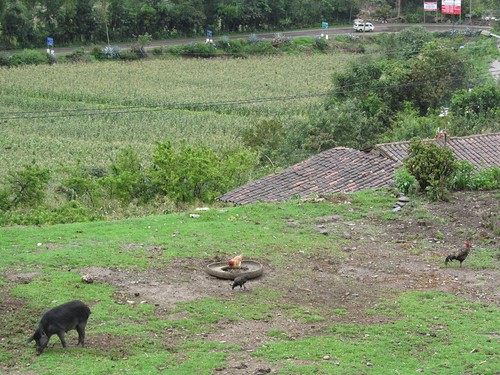
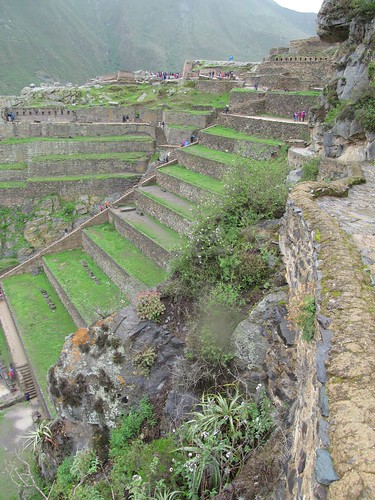
The ancient agricultural methods of cultivating potatoes and and corn on terraces and the fertile valley floor remain in use.

IMG_3108.JPG

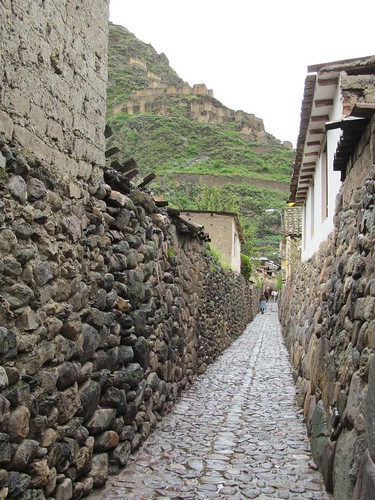
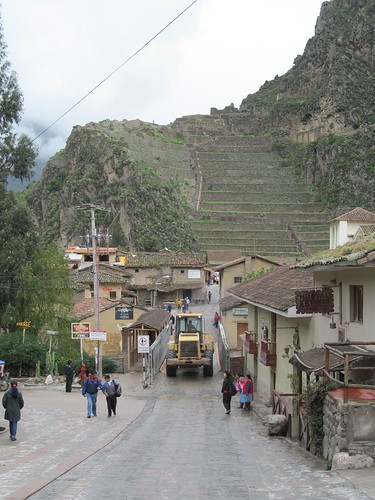
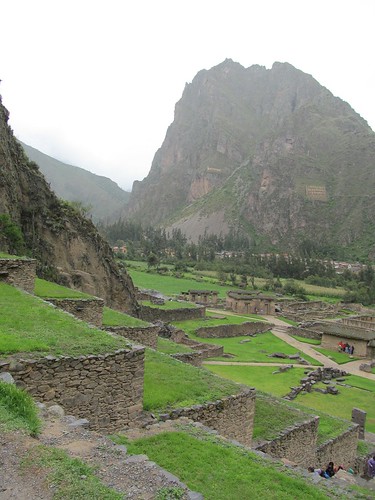
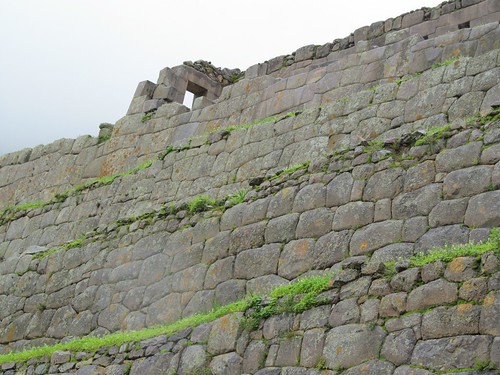
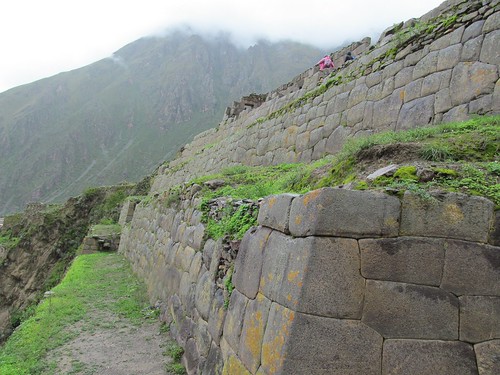
We arrive at Ollantaytambo, a city conquered and rebuilt by the first Inka Emperor Pachakuti in the mid 15th century and maintained as a private preserve by his family until serving as a hideout for Manco Inka during his rebellion a hundred years later. Beyond it the Valley gets narrower and drops more steeply toward the Amazon basin.

IMG_3122.jpg

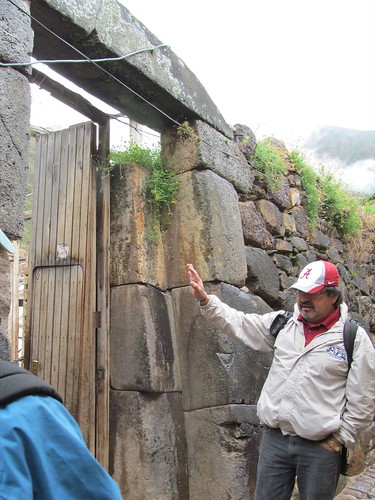
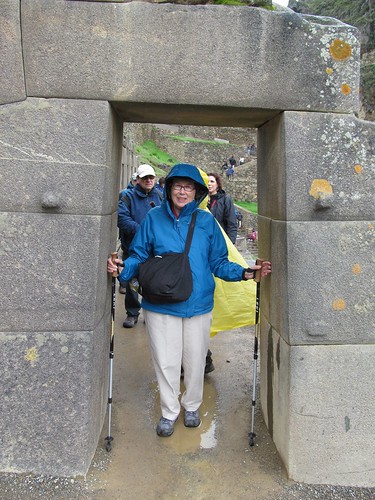
Alvaro leads us through a stone portal into the courtyard of a private residence.

IMG_3113.jpg

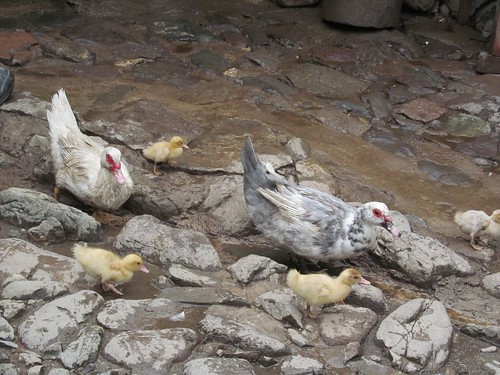
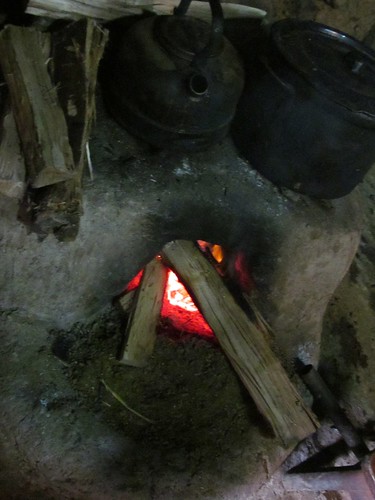
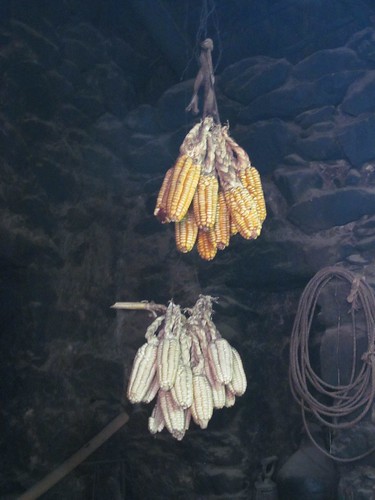
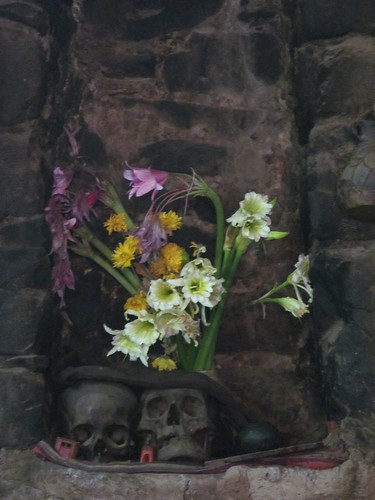
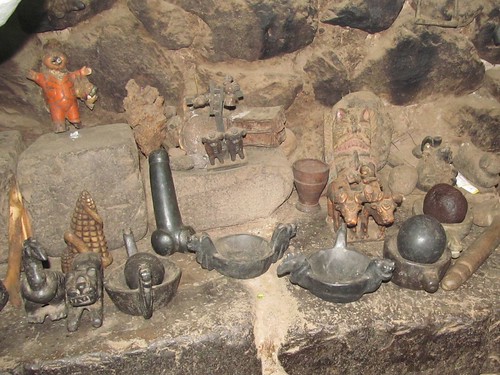
Ducks and ducklings peck at the doorway of the stone dwelling we crowd into.  A wood fire burns in the clay stove providing welcome heat. Bunches of corn hang from the ceiling. An altar decked with blackened ancestral skulls and fresh flowers rises above a stone shelf packed with unearthed artifacts–figurines, masks, mortars and pestles and polished phalli.

IMG_3127.JPG

IMG_3131.jpg

IMG_3136.jpg

IMG_3138.jpg

IMG_3143.JPG

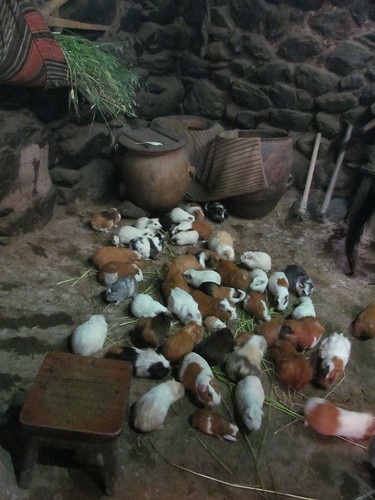
In one corner a cute flock of guinea pigs chirp and feed on grass, fattening themselves for an upcoming dinner by their owners.

IMG_3137.jpg

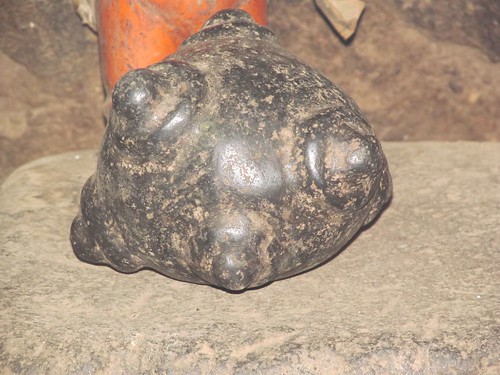
Alvaro explains that one lumpy sphere represents the earth dotted with Apus.

IMG_3145.JPG

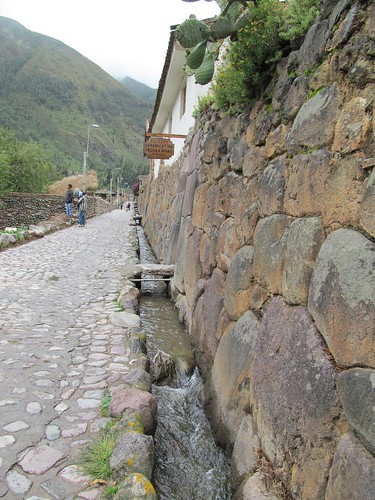
We leave the house and proceed through town along perfectly aligned walls and streets grooved with gutters conducting water down from the high mountains toward the gate of a temple complex.

IMG_3152.jpg

IMG_3164.jpg

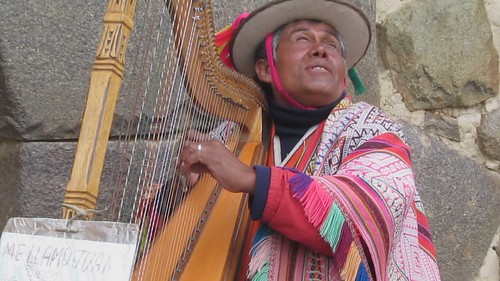
A blind harpist in bright garb serenades the entrants. [click image to play movie]

MVI_3170

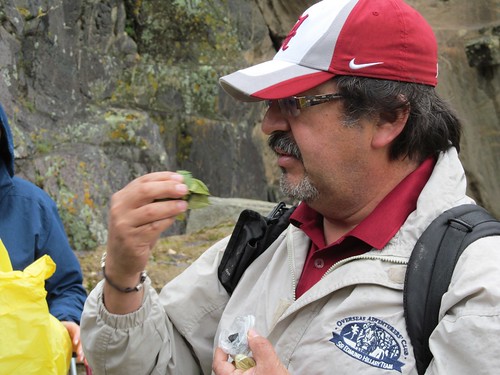
Our guide leads us to a low-walled enclosure at the base of the mountain spur that guards the valley and demonstrates the method of using coca, the reverenced herb enjoyed by Andean natives for millennia.  First three dried leaves are grasped in the hand, blown upon and thanked.

IMG_3174.JPG

Then a bunch of leaves is vigorously chewed mixed with a bit of catalyst”the charred residue of cooked quinoa.  The resulting wad is held in one cheek and periodically switched to the other. Most people in the group are willing to try it, but the crumbly texture and astringent taste are not to everyone’s liking.

IMG_3175.JPG

It affords no drug high but I do feel the predicted effects”a reduction in the breathlessness caused by the 8000 foot altitude, increased stamina during ascent of the steep terraces, and slight euphoria.

In addition to tourists, the site is crowded with groups of students, more evidence of the pride Peruvians share in their ancient heritage along with the country’s modern economic expansion.

IMG_3187.JPG

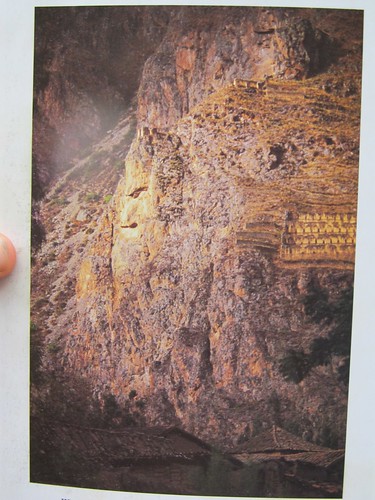
Facing us across the valley, another vertical rock face shows mysterious formations that Alvaro explains are Inka granaries and warehouses, easily defensible and set in a microclimate that’s drier and cooler than the valley below.

IMG_3182.jpg

A stern visage sculpted from the rock represents Wiracochan, the emissary of the creator god, Wiracocha. On the winter solstice the rising sun illuminates it directly and sharpens the profile.

IMG_3196.jpg

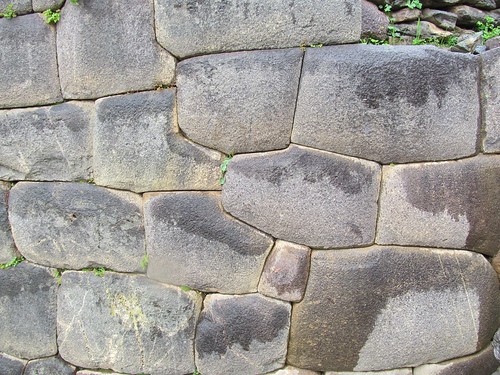
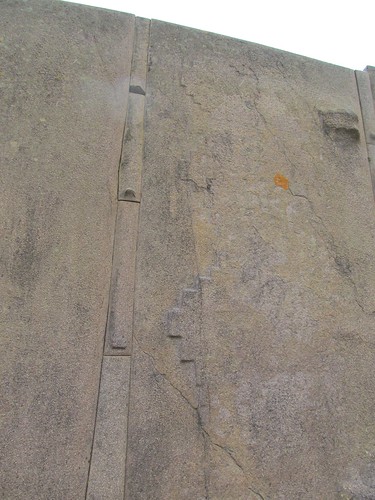
The higher we climb, the finer the stonework”the joints tighter, the rock faces smoother, the angles more uniform.

IMG_3193.JPG

IMG_3198.JPG

IMG_3199.JPG

IMG_3210.jpg

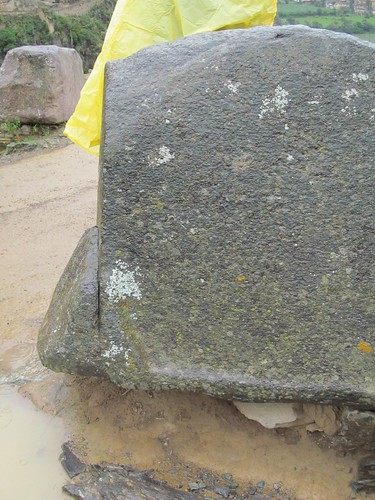
At the top of the ridge, overlooking the valley upstream and down, a set of monoliths of uncertain religious function display faint bas reliefs, one recognizable as the Andean cross.

IMG_3226.jpg

An unfinished cut of the facet of one stone shows the use of some kind of saw.

IMG_3215.jpg

The wind and rain at the top temple get stronger and Alvaro prays intensely for the better weather he promised for our visit to Machu Picchu. He once aspired to be a shaman but learned that the calling is an endowment available only to those who inherit it.

IMG_3212.JPG

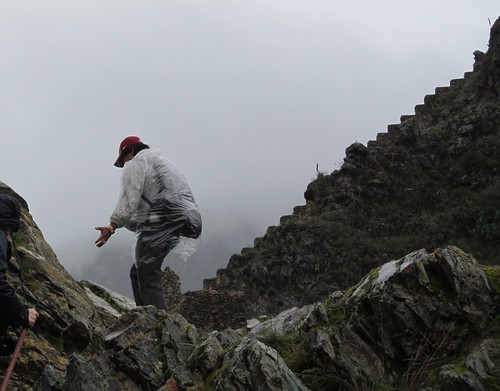
The way down is along narrow paths cut from the vertical rock rather than stepped down in terraces.

IMG_3240.jpg

The bus returns to Urumbamba, where we’re welcomed into another private home, this one quite modern and, like most Peruvian domiciles, in a continuing condition of construction and expansion.  OAT has arranged for us to visit a family, share in their food preparation and meal, and bring them little gifts from the U.S.  The Dad is away at work, but here are Grandma, the person in charge, her daughter, and the daughter’s three daughters–two grade-six twins, and a younger child suffering from severe developmental disabilities yet fully integrated into domestic life.

IMG_3305.JPG

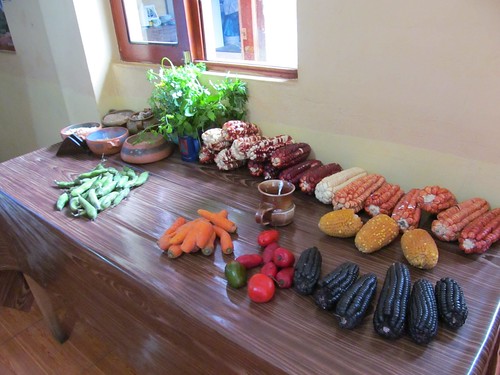
In the large dining room used for family gatherings, a side table displays varieties of local foods that, I’ve discovered, many Peruvians exhibit for their aesthetic beauty as well as practical value.

IMG_3283.JPG

IMG_3296.JPG

IMG_3302.JPG

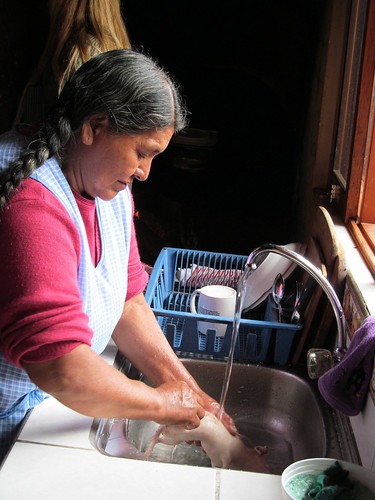
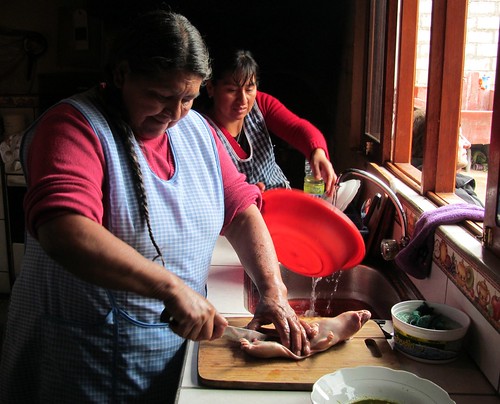
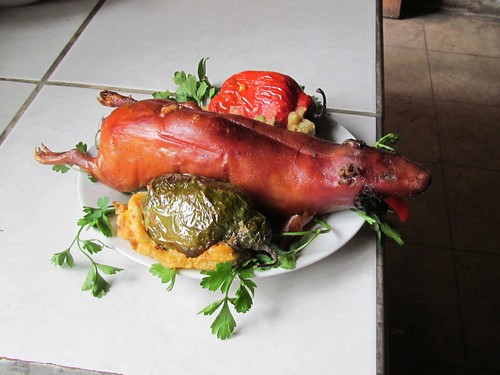
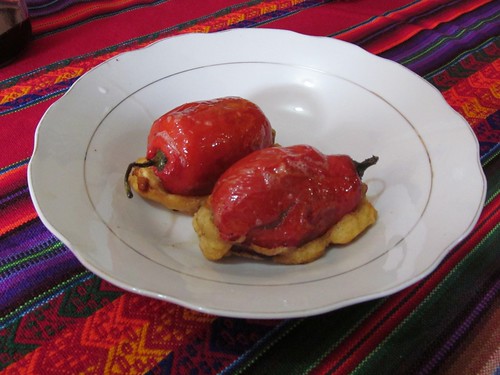
Some group members help to cook, dredging and sautéing the chile rellenos. One slaughters the guinea pig with an instantaneous twist of the neck. Grandma cleans the carcass before cooking it on a wood stove. It’s presented in the traditional manner.  Jan says it tastes like a cross between chicken and rabbit, but I decline to partake.

IMG_3265.jpg

IMG_3275.JPG

IMG_3289.JPG

The meal is of exceptional variety and quality, enriched with fresh local ingredients and friendly cross-cultural communication.

IMG_3290.JPG

IMG_3293.JPG

IMG_3285.jpg

IMG_3286.JPG

Slideshow of these and more full-size photos

Link to Day 5


Peru Day 3

Tuesday, January 15th, 2013

A 5:30 wake-up call marshalls us back to Lima airport under Alvaro’s direction for the flight to Qosqo, the center of the Inca empire and of present day Peruvian tourism.  On the way he regales us with stories from the Inka history that he identifies as his own heritage, occasionally speaking in the Quechua language that they imposed on its diverse communities during the less than hundred year duration of their rule in the 15th and 16th centuries.

After a three-hour delay and two gate changes, we fly for ninety minutes and land at the Qosquo airport situated in the center of the city. Signs proudly exclaim that it is soon to be replaced by a much larger international airport on the outskirts. I fear that the expansion of industrial tourism this brings will eradicate whatever is left of the native cultures and archaic way of life we’ve come here to appreciate. That at least is what happened at Cancun in the Yucatan, which we travelled through three years ago to attend the wedding of our niece in Playa del Carmen.

To help us adapt to the altitude change, we will descend to the 6000 foot level in the Sacred Valley of the Urumbamba River for several days before returning to this 11,000 foot city.

Cusco-MachuPicchumap.jpg

As we exit the terminal, there’s a clap of thunder and sudden mountain downpour.  Alvaro reminds us that summer in Peru is the rainy season and that abrupt weather changes are to be expected. However he will be praying to the Apus”the Inca spirits of the mountains”to provide us with sunshine at Machu Picchu.

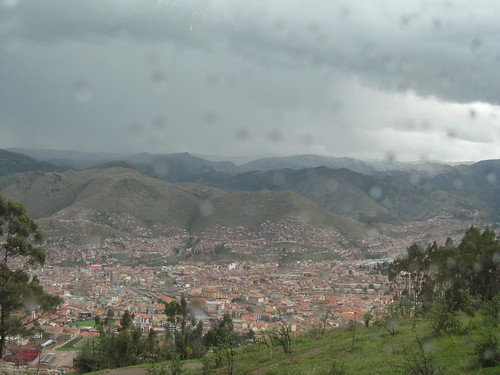
In the still pouring rain”the snowline in this near equatorial latitude is 14000 feet–the bus winds above the City nestled in the valley below.

IMG_2911.JPG

Alvaro points out rock formations and walls that mark the Inca holy places (Wasi) and agricultural terraces that cover the countryside.

IMG_2909.JPG

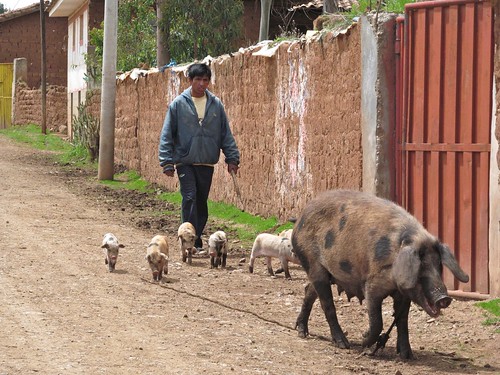
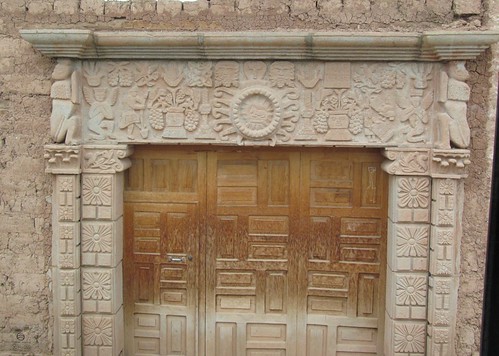
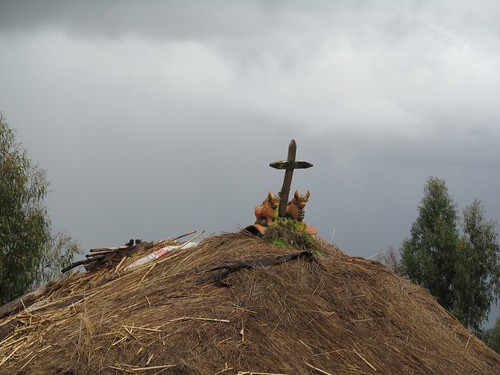
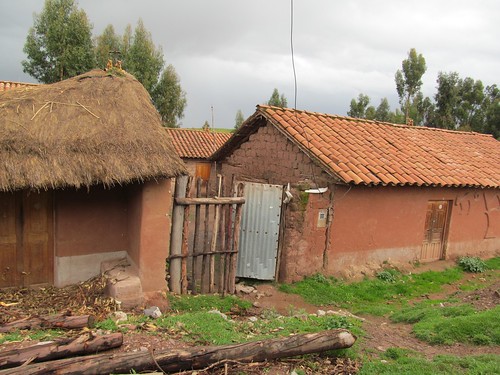
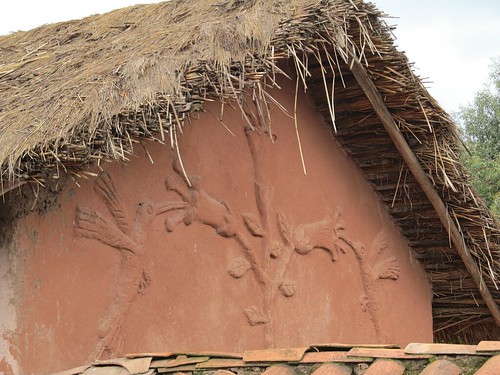
We stop at a settlement on the pass above Qosqo to view new peasant structures that incorporate traditional ceramic bas-reliefs, thatch roofs and shrines that meld pagan and Christian images.  We encounter campesinos herding sheep and pigs and selling native crafts to tourists.

IMG_2928.JPG

IMG_2931.JPG

IMG_2933.JPG

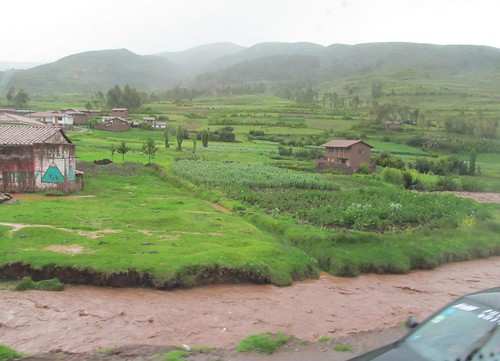
It’s hard to believe that this is not all part of an Andean theme park, but as we start downhill following the course of a mud-swollen stream, it’s clear that we’re in a real archaic landscape where homebuilt houses and subsistence farming still prevail.

IMG_2965.JPG

IMG_2966.JPG

The streambed deepens into a canyon with steep rock walls rising on the opposite side.

IMG_2983.JPG

The road turns and we stop for a new view. The canyon we’re in converges 1500 feet below with a wide valley flanked by mountain ranges on both sides whose tops disappear into the clouds. Through it runs the Urumbamba river flowing westward toward our destination, Machu Picchu, and downward toward the Amazon.  Directions are confusing; I expect the Amazon to be across the Andes to the east, but the map shows the range in this region angling from a north south to an east west axis before resuming its general orientation further north. At this overlook, I imagine the route taken by the rebel emperor Manco Inka and his retinue as they fled Qosqo pursued by the Spanish over the mountains and into the jungle.

IMG_2992.JPG

This is the Sacred Valley, known for its fertility and beauty and the magnificence of its archaeological resources. Alvaro prays to the Apus while the rest of us take pictures.

IMG_2994.JPG

IMG_2996.JPG

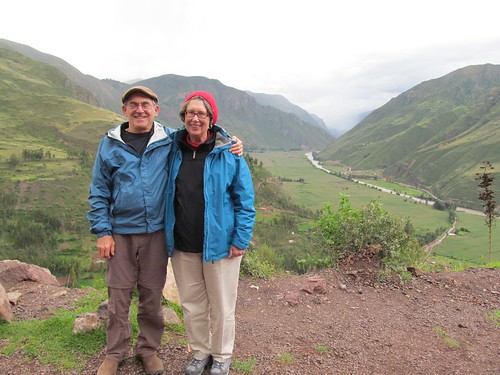
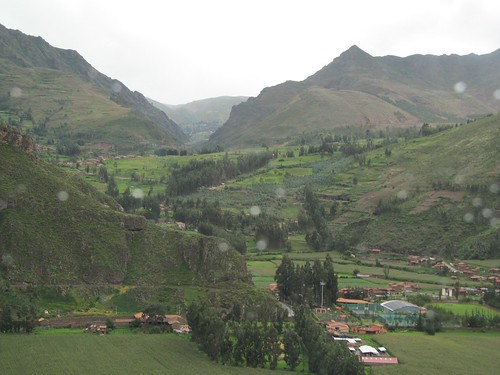
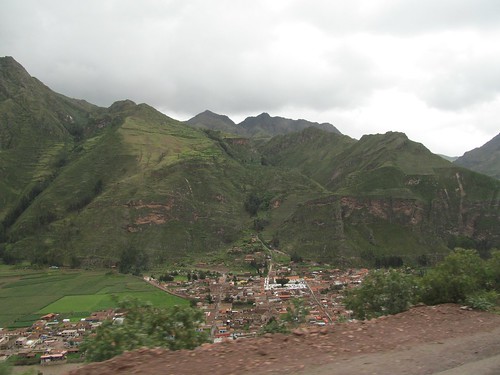
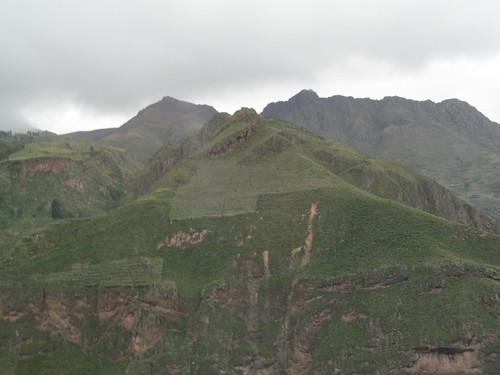
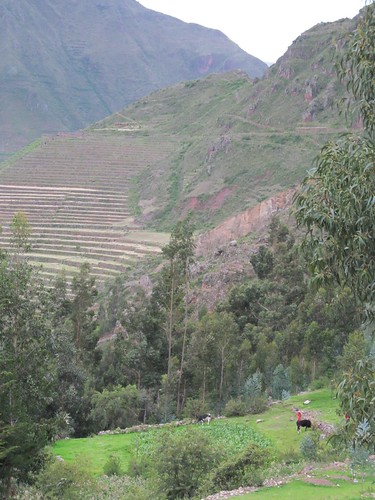
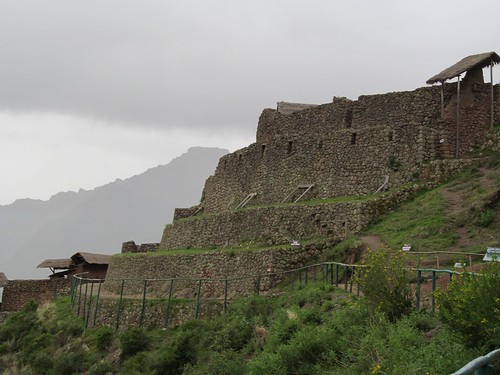
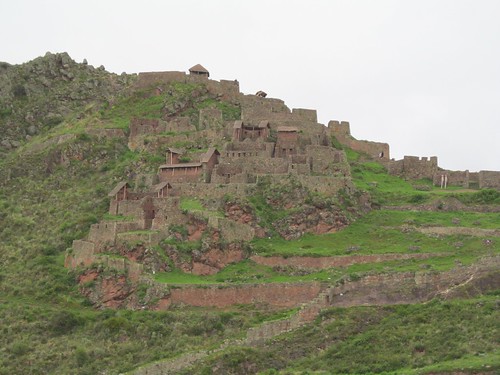
At the convergence of another river on the opposite side of the Urumbamba the town of Pisac comes into view below precisely spaced and angled walls that terrace the nearly vertical rock faces. How could they have been constructed in the first place and how could they have lasted in earthquake country another 500 years?

IMG_3013.JPG

IMG_3006.JPG

IMG_3011.JPG

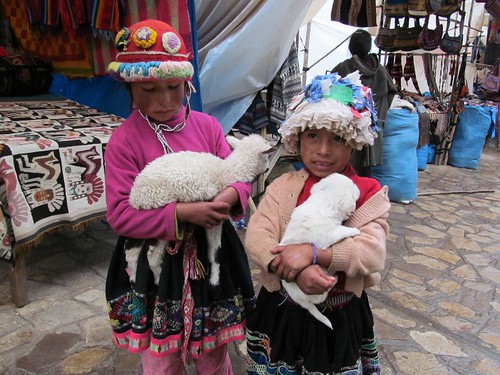
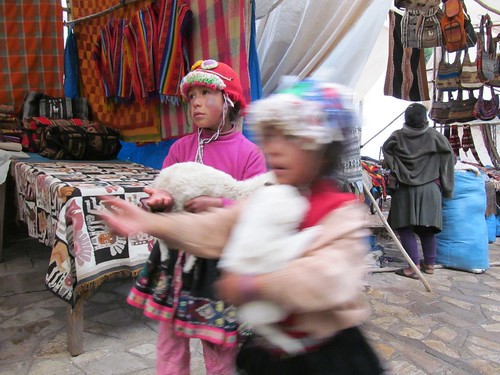
We cross the river and stop to wander through the narrow streets of the ancient market town. I’m drawn in by two little girls in Andean costume cradling a bleating lamb and a puppy.

IMG_3055.JPG

In return for the picture I put a sole (about 40 cents) into one of their outstretched hands.

IMG_3057.JPG

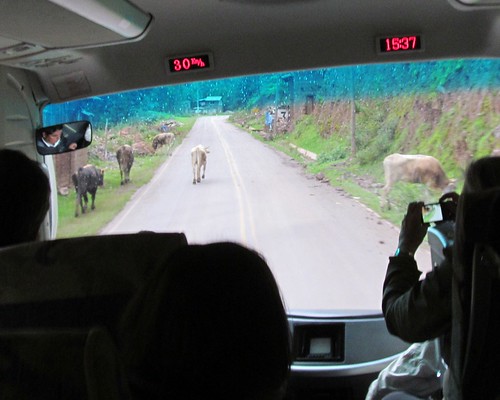
The bus ascends through a gully behind the town, providing a closer view of the terraces, many still cultivated with corn and potatoes by local farmers whose chickens and cows share the road with us.

IMG_3039.jpg

IMG_3033.JPG

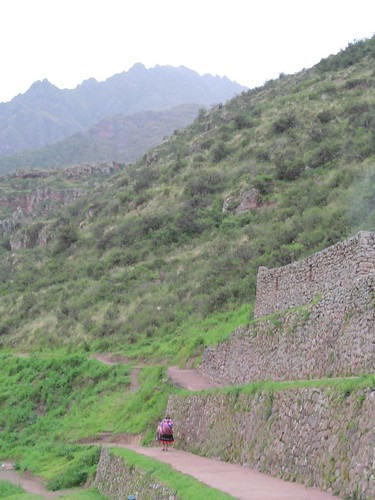
As we get higher, the terraces take the shape of an amphitheatre and are no longer farmed but part of an archaeological preserve.  We walk on a stone path toward a temple fortress overlooking the valleys below and a stone village above.

IMG_3042.JPG

IMG_3047.JPG

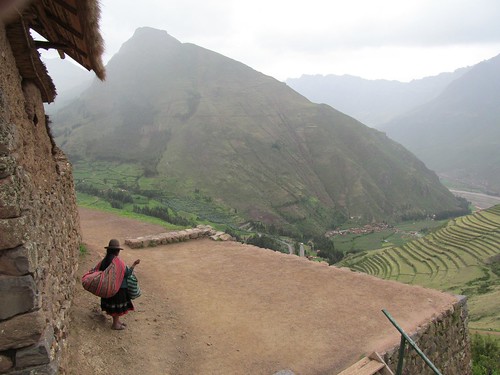
A woman in traditional garb insistently offers handicraft merchandise laid out on colorful blanket.  No one is buying so she folds up her wares and walks toward the village.

IMG_3048.JPG

IMG_3052.jpg

The bus heads back down to the river and drives through tiny villages strung along the road.  We pass a supply yard storing great piles of 24 inch pipe that will bring natural gas from the Peruvian Amazon through the Sacred Valley to Qosqo and Lima.  “This will be tremendous for us”cheap energy to fuel economic development.” Says Alvaro.  I think about the melting glaciers above us and the protests in the U.S. against natural gas fracking and the construction of the XL pipeline from Canada to Louisiana.

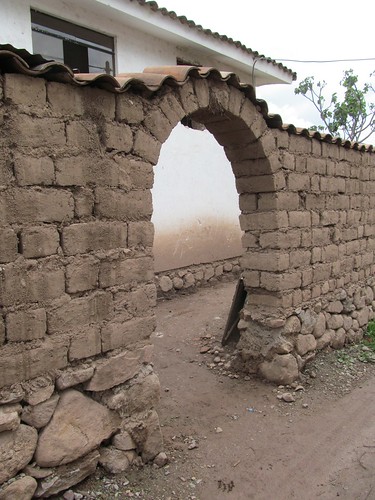
In the town of Urubamba, the bus turns off the main road down a bumpy little lane and comes to a halt at a mud puddle. To reach our lodgings we walk over a stone wall, through a wet potato field, and past a new adobe gateway, accompanied by the sound of the rushing river below.

IMG_3341.jpg

IMG_3340.jpg

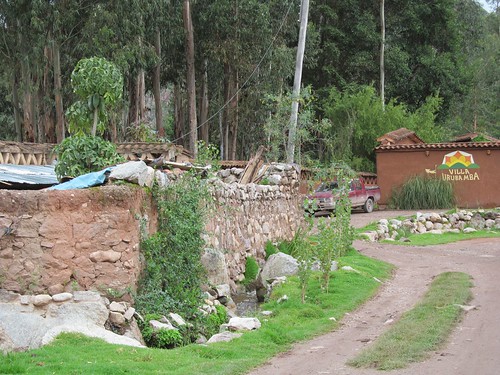
Just past a tree full of ripe papayas, the Urubamba Villa sign comes into view.

IMG_3339.JPG

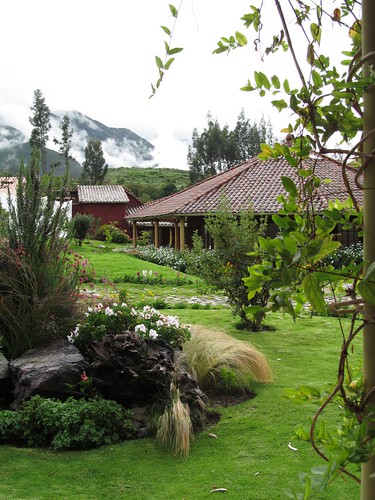
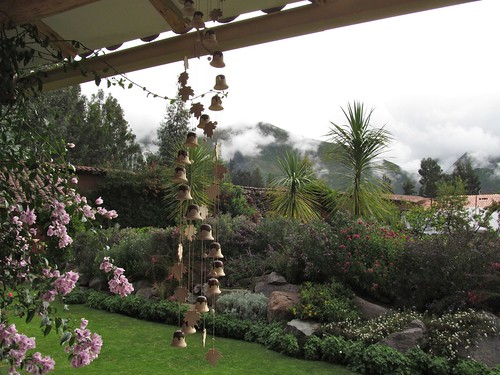
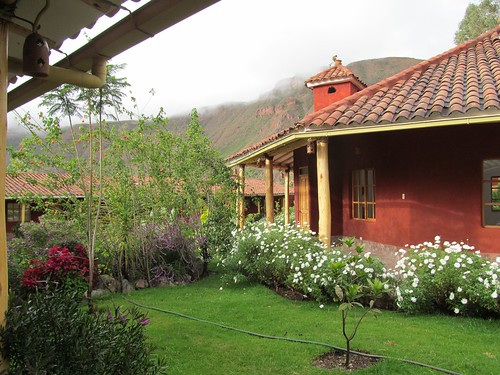
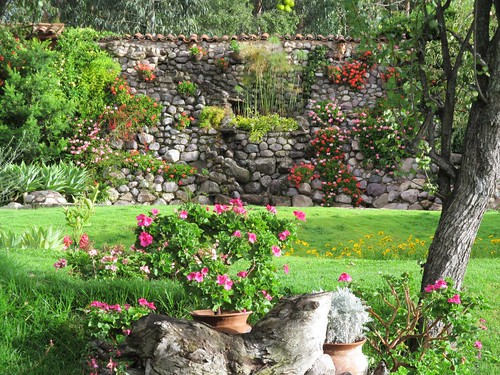
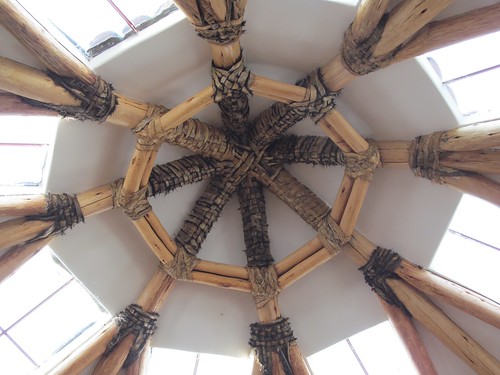
A massive portal opens on a beautiful prospect: immaculate lawns, flowery rock gardens buzzing with hummingbirds and butterflies, fountains and ponds surrounded by a portico supported by peeled timbers secured to beams with braided rawhide lashings.

IMG_3075.jpg

IMG_3073.JPG

IMG_3325.JPG

IMG_3313.JPG

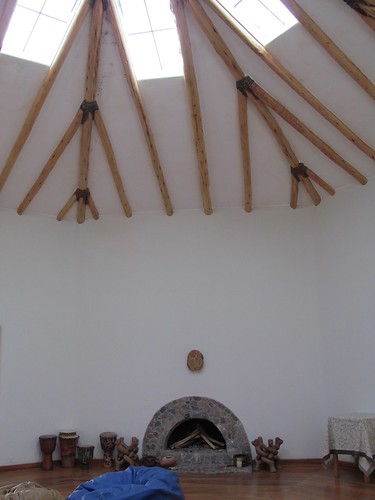
At the center of the garden stands a circular sanctuary topped by a high dome.

IMG_3320.jpg

IMG_3321.JPG

For two nights, this is to be the base camp for our approach to Machu Picchu.

Slideshow of these and more full-size photos

Link to Day 4


Peru Day 2

Tuesday, January 15th, 2013

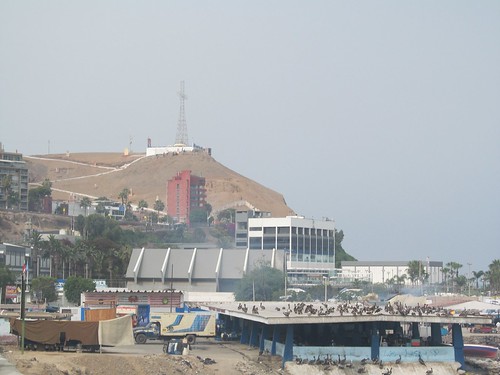
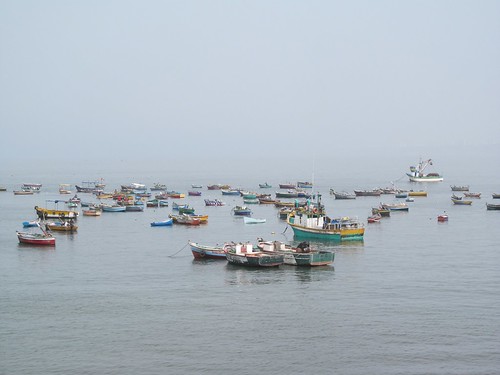
On the way south after breakfast, Dante has the bus stop for a look at Lima’s long beach front and pelicans on a fish processing plant’s roof.

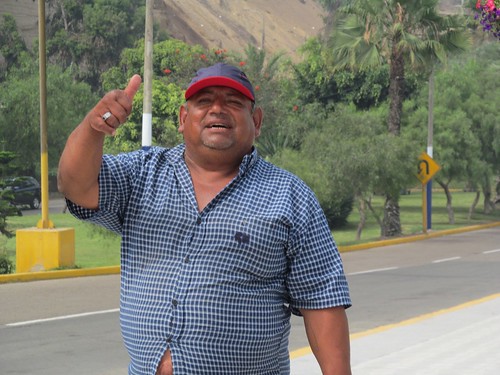
IMG_2755.JPG Fishing is a major industry because of the upwelling of the cold Humboldt current just off the coast. A hearty stranger approaches and hails us.
IMG_2756.JPG

He says the large green boat in the foreground of the picturesque fleet is his.

IMG_2754.JPG

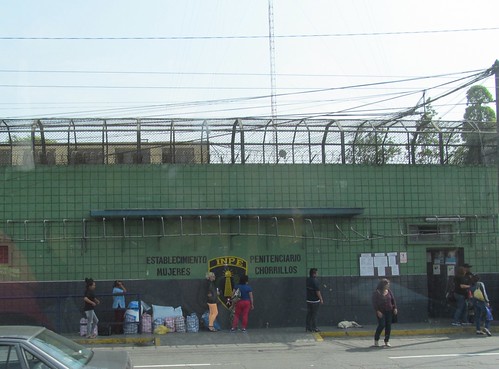
We pass a woman’s prison that incarcerates not prostitutes”the trade is legal in Peru”but mules”young women recruited by dealers to carry illegal drugs out of the country in their body cavities.

IMG_2765.JPG

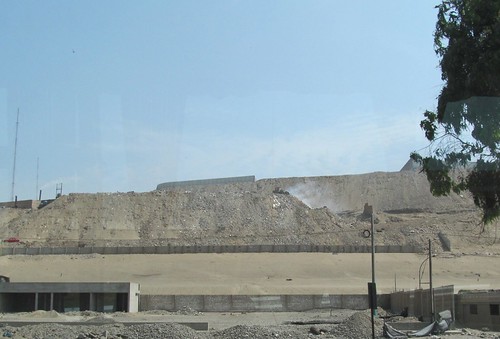
A mountainous sand dune reminds us that we’re in a coastal desert, one of the driest places on the planet. The top and steep slopes are crisscrossed by bulldozers harvesting sand used in a factory at the base of the dunes to manufacture bricks.

IMG_2780.JPG

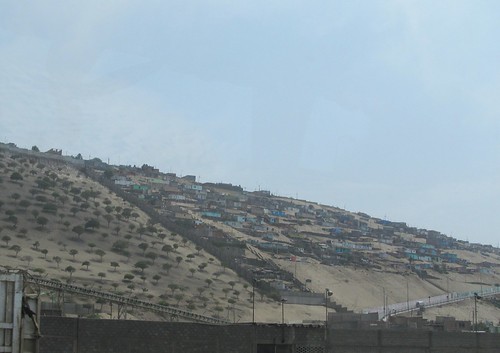
The mined dunes are succeeded by a grove of young orange trees planted on the slope, and then by a dense colony of shacks.

IMG_2788.JPG

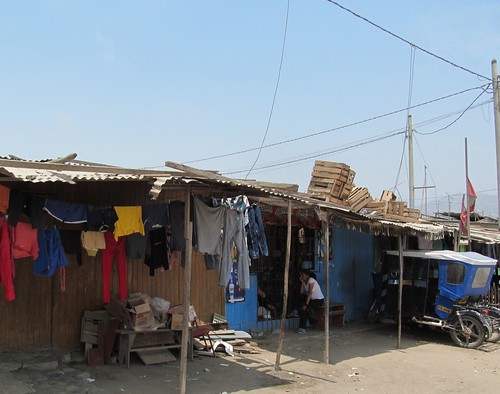
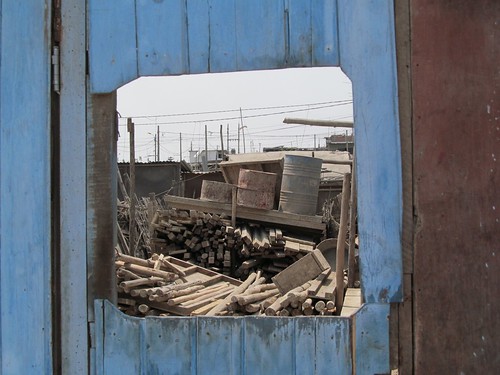
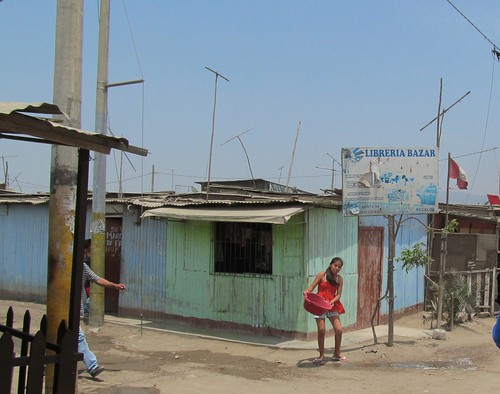
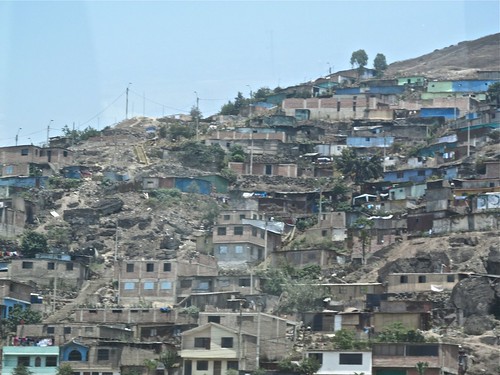
This is one edge of Villa El Salvador, a sprawling zone of improvised and unplanned buildings that constitutes the rapidly expanding suburb that now houses about 400,000 people. Most have left their ancestral homes in the Andean highlands and other regions of Peru and migrated to the city–fleeing the terror inflicted on peasants by Shining Path guerillas, forced off their land by famine and drought, or in search of a better life for their children.  Known as “invaders,” they squat on unused private and public property, build with scavenged materials and survive without basic services like water, sewage or electricity. They eke out a living selling services and labor at low wages or creating small-scale businesses peddling food or souvenirs on the street.

In 1980, after a series of violent conflicts with police who tried to evict the squatters, the government created a new policy: if a group of squatters lived on the land for ten years and came up with a lawyer to represent them, they would be granted ownership of their lots.  And if they continued to organize and pool resources, they could petition for the construction of roads and the delivery of other basic services for which they would pay monthly bills.  The older these squatter communities, the more established and prosperous they have become, and now they are classified as class 1, 2, 3, and 4, the last including conventional stores, hospitals, factories and other locally owned businesses. But at no stage, Dante insists repeatedly, do the residents of these communities receive welfare from the government. They are responsible for supporting themselves through hard work, austerity, persistence, ingenuity and most important, cooperation.  He confides that he himself grew up in a community like this.

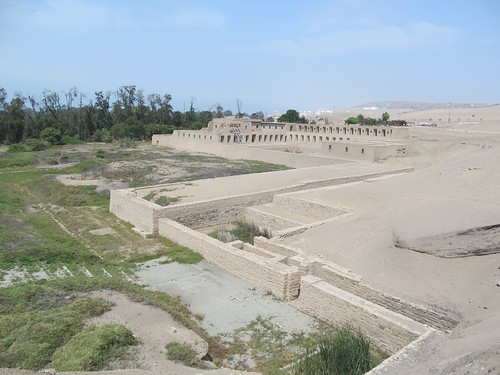
We get out  at a complex of Inka structures. A partially reconstructed dormitory for priests and sacred virgins fronts on a wetland oasis created by aqueducts conducting water from a river flowing down through the coastal desert from the Andes.

IMG_2796.JPG

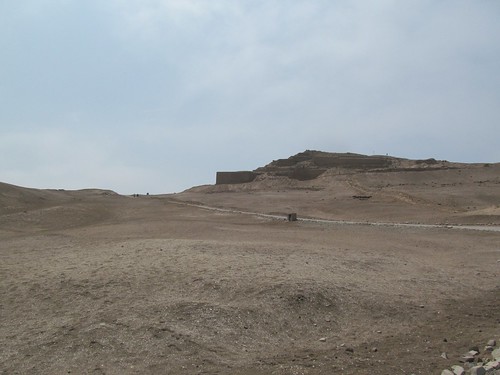
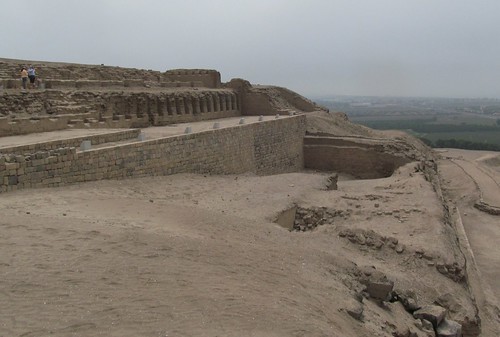
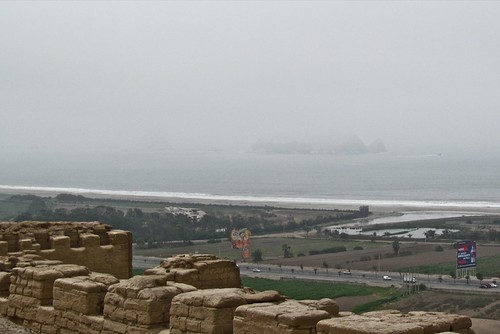
A hilltop Temple of the Sun overlooks offshore islands that were assumed to be the residence of gods who required sacrifice of the virgins to continue providing crops and fish.

IMG_2802.JPG

IMG_2817.JPG

IMG_2819.JPG

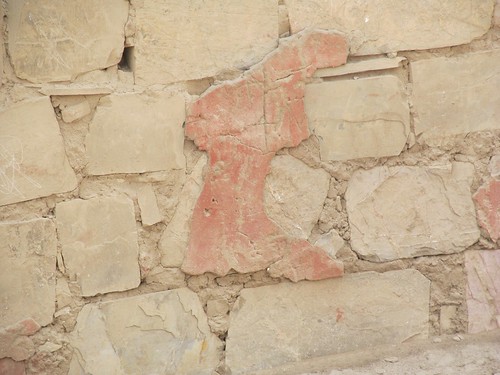
The structures are built out of adobe bricks of the same color and texture as the soil from which they’re hewn. Occasionally we see evidence that originally the structures were surfaced with sharp angled stucco painted with the red cochineal dye.

IMG_2813.JPG

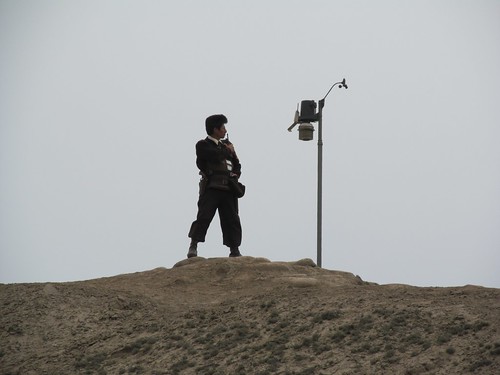
At the summit of the temple a heavily armed soldier stands at attention, part of a contingent protecting the site 24-7 from continuing harm by looters.

IMG_2816.JPG

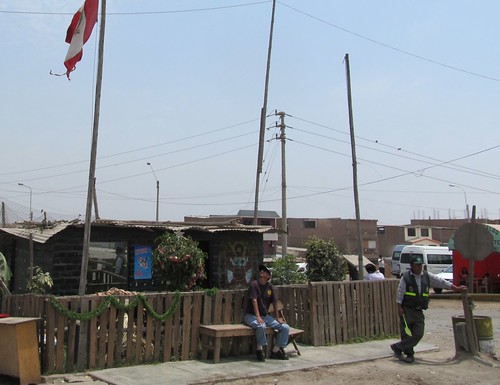
Back in the bus Dante says we are about to visit a stage 1 squatter community nearby which has a special relation with our OAT tour company.  On every visit, the guides bring bags of rice and beans and provide other necessities in kind. We pass through a checkpoint staffed by local residents who patrol the unpaved streets to make them safe for children, who would otherwise be threatened by abusers and sex traffickers.

IMG_2821.JPG

IMG_2837.JPG

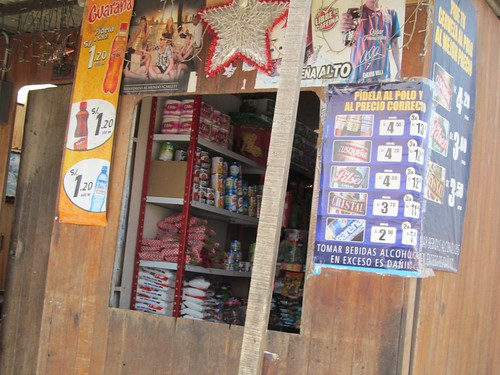
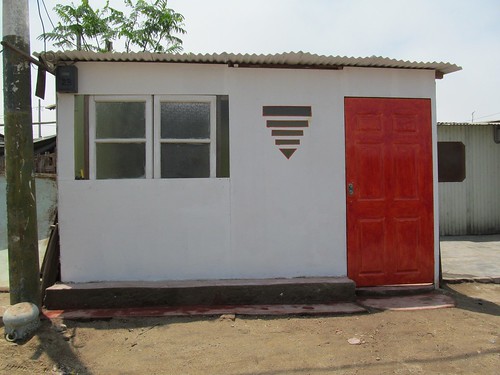
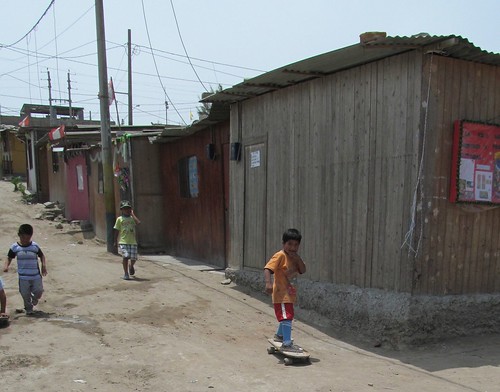
Dante greets the guardians who let us through the gateway. Tiny shops are scattered among the houses crammed side by side, some no more than a patchwork of cardboard and tin roofing, others ambitious and creative in style.

IMG_2825.JPG

IMG_2840.JPG2840

IMG_2842.JPG

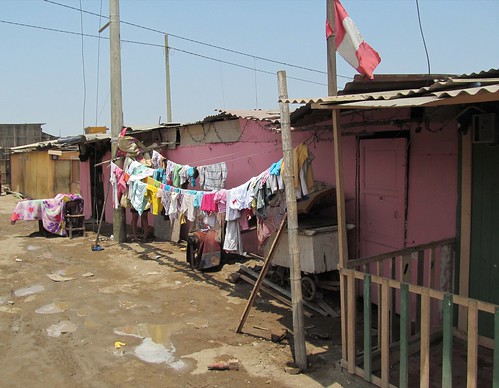
Almost everything here is salvaged, recycled and improvised, but the atmosphere seems secure and cheerful.

IMG_2832.JPG

IMG_2838.JPG

IMG_2827.JPG

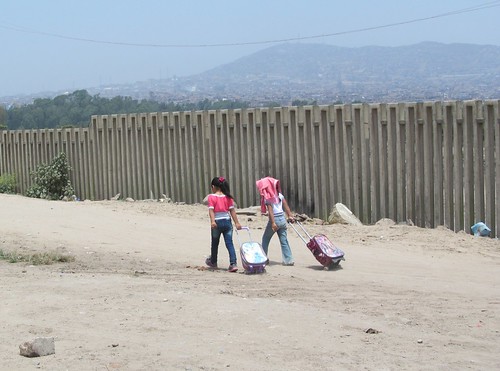
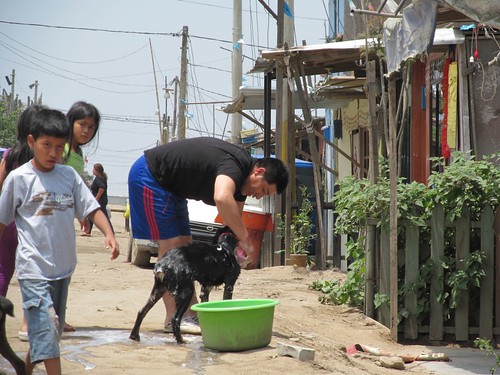
Children play in the narrow lanes, a mother holding a baby hangs up laundry, a man washes his dog.

IMG_2863.jpg

IMG_2844.JPG

IMG_2861.JPG

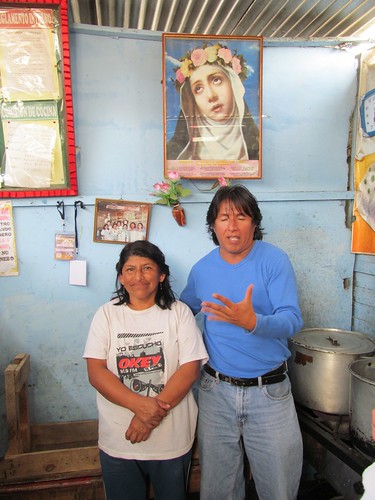
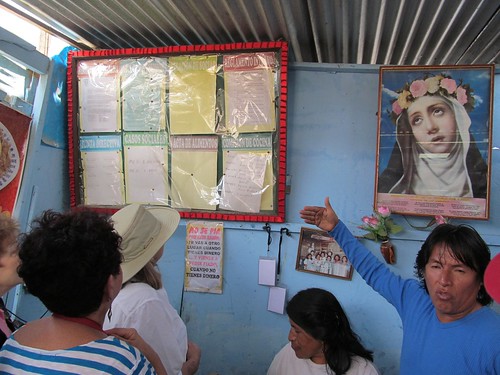
Dante leads us to a corner building deep inside the grid of streets.  The mothers here have organized a soup kitchen to feed those who don’t have enough to eat.  Nourishing food is offered, not free but at very low cost along with information about nutrition and health. There is one of these kitchens for each 70 families.  Some support is supplied by NGOs but not by the government.  The woman who runs this kitchen shows us the large clean pots, the propane stove and tank, the sign on the wall that warns against cheating or hoarding.  She is proud of the place, but not happy today, because for unknown reasons no food has arrived.

IMG_2858.jpg

IMG_2859.JPG

This community has been nominated for a Nobel Peace Prize for its successful experiments with alleviating poverty and promoting community development. Its approach struck me as diametrically opposite to that in our home town, where a complex permitting and review process by the existing community is required before any new construction can take place. It also takes an opposite approach to our growing problem of homelessness which assumes that the government and existing community provide housing, food and safety for those in need who play by the rules.

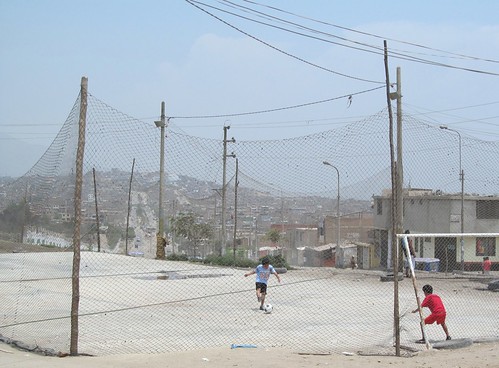
As we board the bus I see two boys starting up a game of soccer in a well-fenced dirt field.

IMG_2866.JPG

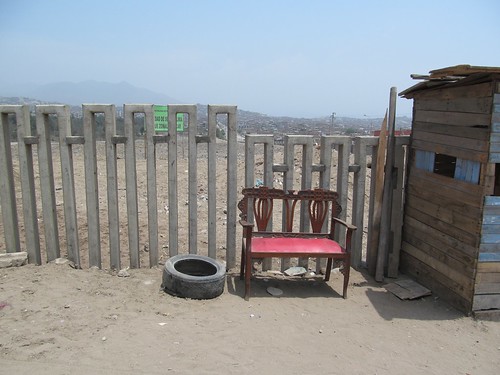
Now we drive through a stage 2 community perched on a steep hillside. The ground here seems as unstable and incoherent as the teetering structures.  There’s little danger of erosion since it never rains in Lima, but I envision the whole warren sliding down the hill in case of am earthquake. Rather than roads or sidewalks, one sees only footpaths and cart tracks.

IMG_2876.JPG

But the people who construct and continually add to these structures with locally manufactured bricks and cement seem to have inherited the Inca tendency to never stop building on near-vertical slopes. To many people, improvised structures like these are merely an eyesore, but I find them more aesthetically appealing and mechanically intriguing than the modernist architecture of the luxury hotels of Miraflores.

Our tour of Villa El Salvador concludes with a bus ride through a stage 4 section of this “new town.”  In narrow paved streets we see into small furniture and shoe manufacturing operations, the merchandise being loaded onto small pickup trucks or motorcycle driven carts.

IMG_2881.JPG

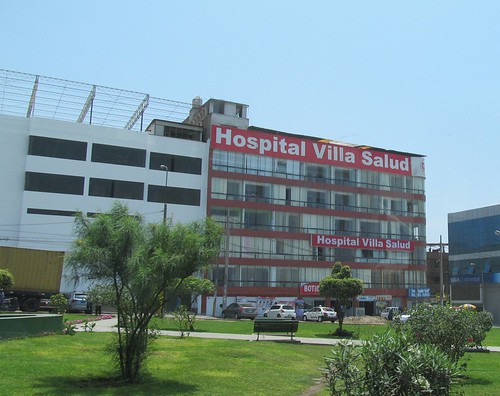
And then a main boulevard with grassy medians, a large hospital, and an unrelenting barrage of billboards.

IMG_2879.JPG

We return to our posh hotel for a rest and then are driven to dinner in a restaurant in the even more exclusive seaside enclave of Barranco.

Slideshow of these and more full-size photos


Link to Day 3