Birthday Present

July 25th, 2015

It ain’t necessarily so
The things that you’re liable
To read in the Bible,
It ain’t necessarily so.

The psalmist says three score and ten
Is the year that it’s when to say when
But some disagree
And say age seventy
Is just time to start over again

It ain’t necessarily so
Our days may be numbered
But we’re not encumbered
With twenty four hours to go

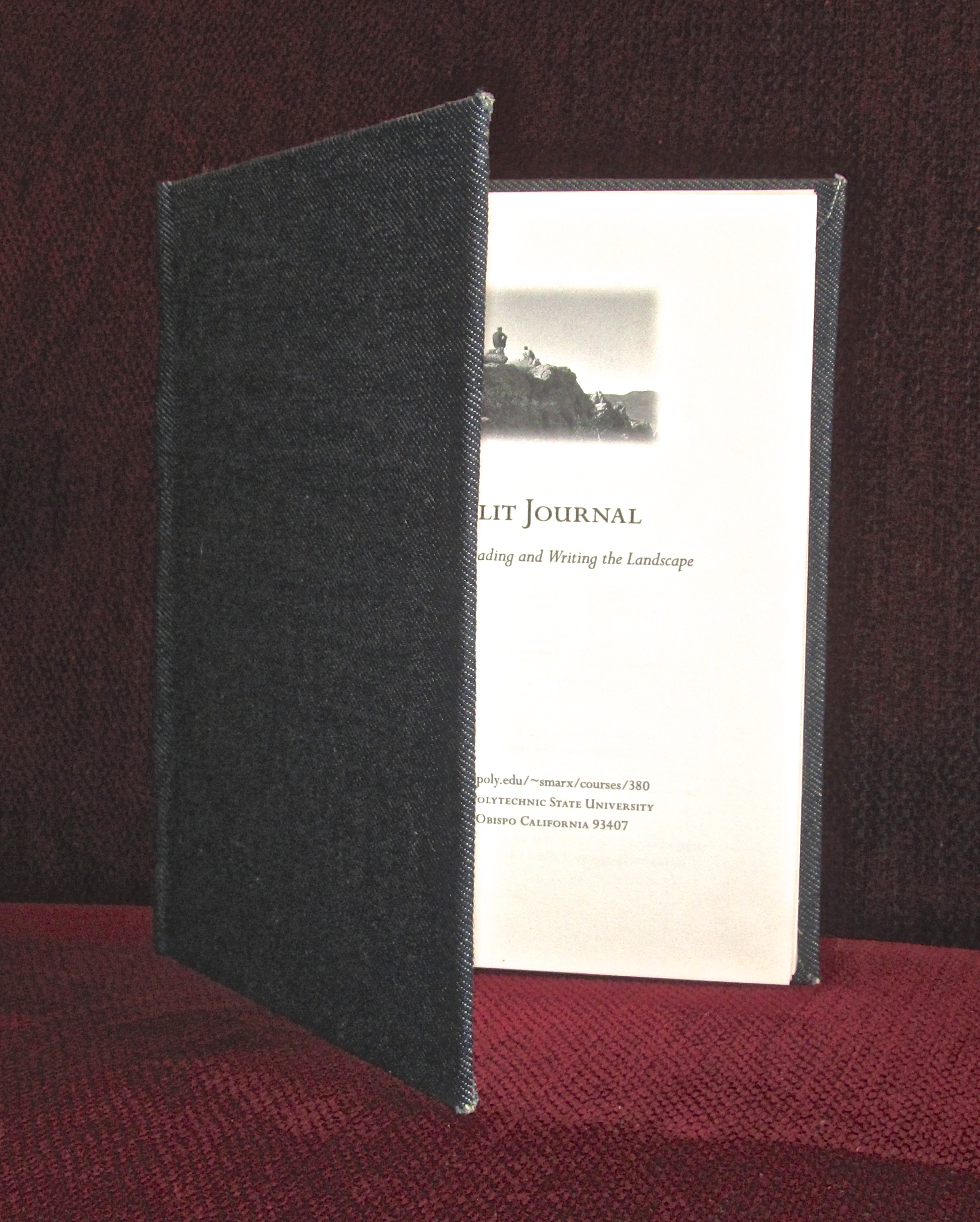
So here’s a small something for you
To keep track of them in all you do
La Grande classique they call it
Cause it’s classy and above all it
Grows old and yet always stays new

In the Swim: Musings on Meditation under Water

January 26th, 2015

1. Wendy’s “Water”

On May 24 last year, I went to the Steynberg gallery on Monterey St. to attend a concert by Shadowlands, a new local musical group consisting of Bob and Wendy Liepman and their collaborators Mark Davis and Karolyn Hausted. They were introducing songs they’d written in preparation for recording them on a CD to be released early in 2015. I’d made a contribution to their crowdfunding campaign on Kickstarter because I admired Wendy’s dedication to feeding the Homeless and because I enjoyed her earlier songs, many of which seemed to me more like religious hymns than folk tunes.

Their first piece was the album’s title track, “Shadowlands,” a dark evocation of the mental condition we usually call depression, but which in earlier times was known as melancholia”a state associated not only with illness but also with deep thought, fertile creativity and spiritual awakening. Read the rest of this entry »

Brian Gavin, in memoriam

November 8th, 2014

brian gavin


There are not many people in the world I feel close to, and Brian was one of them, even though my relationship with him was formalized and very brief.  Shortly before receiving the news about his death I was thinking about contacting him to talk about a noticeable falling off in my meditation practice during the last two weeks, partially due to a cold that kept me up at night and disrupted my early morning routine.

I thought of Brian as my personal teacher, since he conducted most of the sessions at the three-day retreat I attended last February and agreed to have regular phone consultations with me afterward. Those conversations were always serious but also punctuated by laughter and irony on both sides. During them I felt I had much to learn and nothing to hide. At one point he mentioned that he was looking forward to a long retreat in September with anticipation and some apprehension. That was typical of the frank way we communicated, despite the distance I felt from the variety of samatha experiences that qualified him as a teacher and that he described with such scientific precision.  A few months later we both agreed to forgo the conversations until something I needed to talk about came up. Now it’s too late.

But then again, maybe not, since he remains present to me often during my practice, repeating the assurance that if and when I find the time to attend a longer retreat, a door to the reality he knew would undoubtedly open for me.


Lund Farm Day Camp: An Article in the Lund Barnacle

October 15th, 2014

http://www.lundcommunity.ca/ESW/Files/Fall_2014-_online.pdf

Lund Farm Day Camp operated for three two-week sessions during the summers of 1973 and 1974. 25 to 35 kids in grades 1 through 8 from all over the district attended each session. The camp was headquartered at the old homestead on the Lund Highway owned today by Ed and Maggie Bereziak and at the time by Steven and Janet Marx, and previously by the Bleiler, Larson and Carlson families. Its original hand-adzed vertical cedar walls housed the cookshack for a logging camp in the 1890’s.

The camp’s activities included caring for a herd of goats, 35 chickens, a pair of ducks, two sheep, six rabbits, and a pig named Snorky Porker. Children also tended, harvested and preserved vegetables from a large garden and fruit from the ancient orchard, baked pies in the outdoor woodstove, built cedar-stave fences, sheared, washed, carded, spun and crocheted sheep’s wool, and dammed up the stream for a swimming hole. Recreational activities included a morning singsong, capture-the-flag in the pasture, writing and performing plays, swinging on a huge zunga and in a gillnet hammock, along with hiking and swimming.

Each day concluded with a gathering at which the children contributed reports recorded in a daily log. A sample: “We played on the big Zunga. Worked on the dam. Found a frog and three water snakes. Peter came and cut hay. Fred came to take pictures. One chicken got away and we caught it again. Chased Laurie and Steven with hoops. Mulched lettuce and corn. Cleaned up cubbies. Fed ducks. Baby goats nursed off Mama. Michael and Val clipped chicken wing. Flag making. Played drama games. Made birthday cake in Joanne’s loft. Waded in pool. Joanne drove Kent to hospital. Went to beach. Drank out of stream. Ken and Pauline learned to swim. Steven took a group to climb mountain.”

The camp’s emphasis was on teaching some of the skills required to live in the bush in an earlier era. According to an article in the Powell River News of July 16, 1973, “The first batch of children at the camp have almost completed a scale-model of nearby Craig farm. They were taken on a tour of the farm by its owner, learned its history and are now reconstructing the site¦”

Families paid $10 per child per session. During the first year students were brought to camp by carpool. The second year’s budget included a bus and driver for daily pickup and delivery. Each week included a one-night sleep-over, either on the farm or on Savary Island, transportation provided by local tugs and fishboats.

The original idea for the Camp was dreamed up by Janet and Steven in early January 1973, when their unemployment insurance ran out. It started to materialize as a result of brainstorming and collaboration with Kenneth Law, who settled on the farm in mid-February. It was funded by Opportunities For Youth, a federal program encouraging local community development.

In addition to the organizers, the Camp offered ten weeks of gainful employment to Gerry Karagianis, Laurie Derton, Joanne Power, Elaine Sorenson, Anne Wheeler, Pam Huber, Randy Mann, Mike Nelson, Rob Dramer, David Creek, Gae Holtby and Janet McGuinty. It was supported by the Powell River School District, the Sliammon Band and many community volunteers.

 

Book review: The Bible in Shakespeare by Hannibal Hamlin

October 8th, 2014

[published in Renaisssance Quarterly, Fall 2014]

This book begins with the assertion that “no one has yet published a full-length critical study of Shakespeare’s practice of biblical allusion and the implications of biblical allusion for our understanding of the plays.” Its author is eminently qualified to remedy what he calls this “deficiency,” having published several books on aspects of biblical culture in Early Modern England and co-curated an exhibition celebrating the 400th anniversary of the King James Bible at the Folger Shakespeare Library.

Impressive in its learning and packed with original discoveries of biblical and extra-biblical Shakespearean references, the book is written in concise, lucid and lively prose. Its “argument” is incontrovertible: the Bible is a pervasive source and object of reference in Shakespeare’s plays. The recognition and contextual reframing of hundreds of biblical allusions was part of the experience of earlier audiences, whose familiarity with the Bible was guaranteed by their cultural environment. The book’s task is to restore such experience to the modern reader lacking this familiarity.

Part I, titled ” Shakespeare’s Allusive Practice and its Cultural and Historical Background” opens with a vast array of evidence for the saturation of Shakespeare’s culture with Biblical narratives, characters and language. Chapter 2 traces discourse about the Bible and Shakespeare from early editorial glosses through 19th century elevation as paired pillars of British Civilization to recent debates about Shakespeare’s religious beliefs. Read the rest of this entry »

Michael Friedman: November 18, 1942 – September 5, 2014

October 7th, 2014

IMG_6741 - Version 2.jpg

Michael made me feel secure in Lund when I felt most exposed.  There was something about his domineering figure, his booming voice, his grandiose self-confidence and his awe-inspiring talents as artist, writer and chef that made me feel protected, as if by the big brother I never had. Even when he told tales of disappointment in love or family or career or business–with a puzzled shrug of the shoulders and lift of the eyebrows–his presence seemed sheltering. Never mind that he rarely showed interest in what I was up to, either at home or abroad.

Perhaps I placed trust in Michael because we arrived in Lund at nearly the same time as refugee idealists groping for space to rebuild the world in accordance with our own fantasies, each of us in flight from the world of friends and family back home, but still longing for their admiration. Perhaps it was that the large tracts of land we owned (or rather owed) shared a corner in common, and that we were both concerned with property lines and subdivision potentials along with goat milk and chicken egg yields. Or that our two first children, Jonah and Josh, lived within a half hour’s walking distance and were best friends. Perhaps it was that we were both products of a strong liberal arts education that we expected to put to work in the bush, or that we self-identified as non-observant atheist Jews. Read the rest of this entry »

Steve Ervington: Sept. 29, 1944 – Aug. 21, 2014

September 12th, 2014

GCtrip - 100 - Version 2

One of my strongest memories of Steve was his performance as Lomov opposite Frankie Rogers playing Natalia Stepanovna in Anton Chekov’s one act play, “The Marriage Proposal,” staged by the Lund Theatre Troupe in 1976. His portrayal of the gawky hypochondriac landowner suffering “palpitations”–first of nervousness and then of rage– remains the funniest comedy I’ve ever seen. Thirty-five years later, I can still taste the tears of laughter it set flowing at every rehearsal and performance.  That character’s awkwardness and hysteria perfectly offset Steve’s easy grace and cheerful equilibrium.

According to Peter B., Steve often said, it wasn’t about what you make or do, it was about what you are.  Steve never said that to me, but what he did say on several occasions was that he knew I was an achiever and he wasn’t.  In fact he was a major achiever”as an artist, a designer, an actor, a builder, a social worker”though his achievements never gained the professional public recognition they might have. It was his respect combined with his affection that made me feel so good.

Celebrations of Life are about loss and compensation.  The hole left by the person’s departure takes on a distinct shape that remains with us, one more firm and positive than that of many who are still living”people we’ve lost touch with because of distance and circumstance, people close by who we were hurt by or tired of.  Our connection with them awaits such memorials to be rekindled.

With Steve it was different. My grief is not about a past memory but a for a lost presence and a foreclosed future. It was his being here that helped draw me to Lund every year. It was his participation that helped motivate me to join in group adventures like climbing on the South Powell Divide, kayaking in the Broughtons, hiking the West Coast Trail and the Grand Canyon, and canoeing on the Yukon and Green Rivers. It was the expectation of his quirky and amiable company that I anticipated making it fun to grow old.

My last encounter with Steve was in his and Juliet’s house on August 7.  I held his hand and said, “Tomorrow I’m heading back to California.”

“Take me with you,” he whispered, then faintly chuckled.

For a moment, I was at a loss.  Then came the words: “I will.”

And then it dawned on me what they meant:  “I will¦everywhere that I go.”

Dusty Davis: 1976 – August 9 2014

August 22nd, 2014

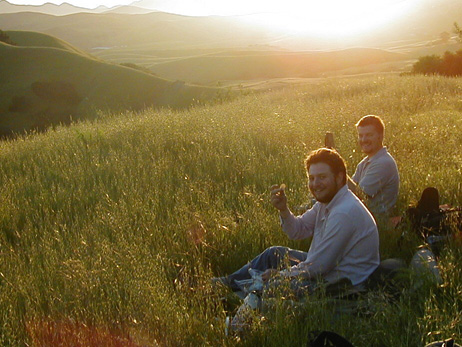
 I met Dusty in Spring 2001.  He was a student in my English class at Cal Poly, “Ecoliterature: Reading and Writing the Landscape.” Though he looked no older than the others, it was clear from his quiet yet confident demeanor that he was a “mature student.” Our distant but warm friendship began when he took up my weekly invitation to extend our Thursday afternoon class hikes with a sleepout somewhere on Cal Poly Land. We wandered above the railroad tracks and discovered a fawn left sleeping in the tall grass by its mother, a bubbling spring, and a patch of rare Mariposa Lilies.

P5040015

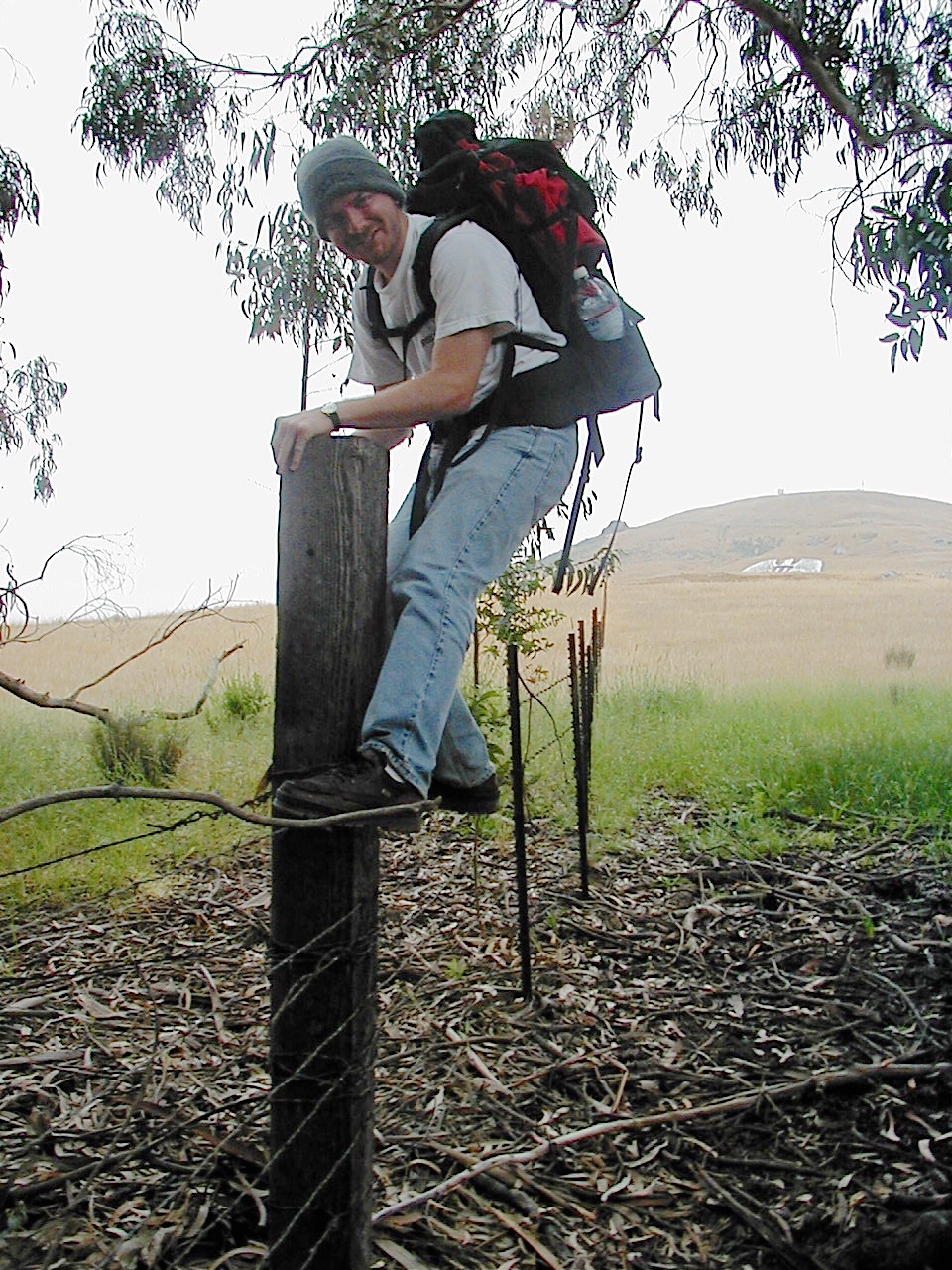
Another Thursday we camped above Stenner Canyon and the next morning found our way down Dairy Creek and crossed fences to get back to Poly in time for 9 AM classes. He was wonderful company, easy to talk to, easy to be quiet with, open to adventure.

P6020029 - Version 2

At the end of the quarter I asked each student to submit one piece of work they’d completed for inclusion in a class anthology.  I was planning to copy and paste them into a crude Word document and pass out duplicated copies, but Dusty volunteered to do a real graphic layout and then insisted on hand-sewing and binding 40 copies in order to learn and practice those skills. I remember him staying up till the small hours to complete the job, along with Elena whom he’d recruited to help, and the gasps of wonder when these unique artifacts were distributed to his classmates at the final exam.

IMG_1439

Read the rest of this entry »

Belize Expedition–Conclusion

May 3rd, 2014

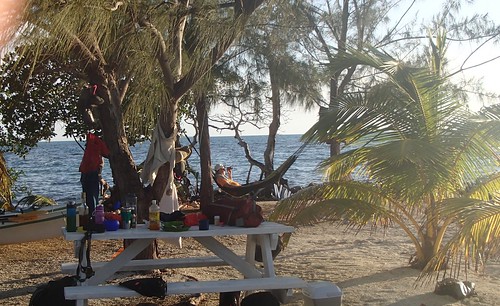
Next morning is for departures.  As we cook coffee and oatmeal at our campsite, Ismael the volleyball coach,  guide, drummer and singer is solemnly raking the sand of the whole island compound.  He’s transformed the ceremonial space of last night’s fire and chanting to a clean white carpet. I ask him about the chants and he tells me that Garifuna compose songs for everything, fishing, cooking, loss of love, sadness”all come from the soul.

We will be taken by motor boat back to Dangriga to retrieve our stashed belongings and stand together for the last time.

P4200088.JPG

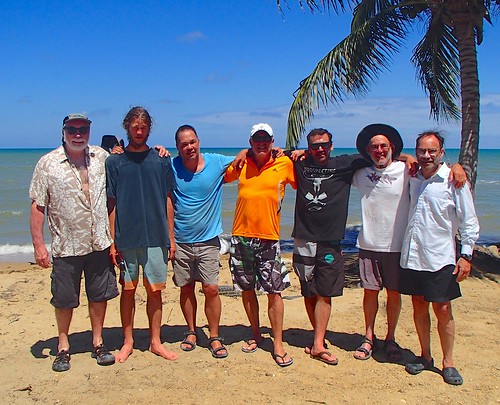
From there Joe and I will go to the interior to spend two nights at Mommaloots, an ecoresort in the jungle where we encounter more fascinating people and memorable sights.  Peter, John, Lionel, Andy and Eban will remain in Belize for several more days, enjoying new adventures.

On the flight back to Houston I have a short conversation with a young man hardly 30 sitting next to me who’s just downed two little bottles of vodka purchased from the attendant. He’s returning from a five-day trip during which he bought a lot near the beach in a resort subdivision outside of Belize City for $230,000 USD. It’s an investment for his retirement, secure, he says, because of the way the place is growing. “Maybe,” I say, “though with the way sea level is rising, you never know.” As we fly over the Yucatan coast near Cancun, I ask where he’s from. “Saskatchewan,” he replies, “but right now I’m headed back to work in northern Alberta.”  “Tar sands?” I inquire. “Yep” is the answer.

Belize Expedition–Day 8

May 3rd, 2014

April 19

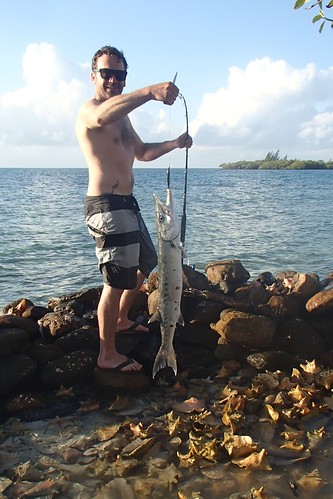
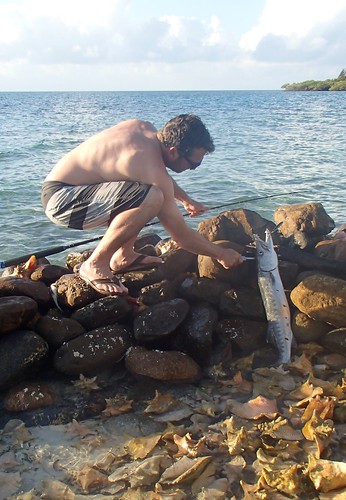
As I light the Whisperlite stove to brew a second round of morning coffee, Joe calls from where he stands offshore, “Hey Dad, would you bring my fishing gear kit from the tent?” I know from the quiet intensity in his voice that this is serious business.”

P4180534.JPG

I shut down the stove and hustle to do his bidding. His pole is bowed and then a big shining barracuda appears on the end of the line.  He lifts it onto the rocks, carefully grabs its sharp-toothed mouth with his special fish pliers and removes the hook.

P4180540.JPG

The creature thrashes wildly and Joe asks for a club. I cant find one, so he stabs it repeatedly in the head with his fish knife.

P4180542.JPG

By now the whole gang is watching and cheering.

P4180536.JPG

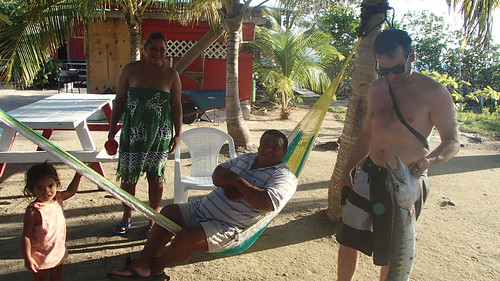
When the desperate gasping in the gills ceases, he carries it across the island to Fidel’s dock for cleaning.

P4180548.JPG

The whole family is out to share the excitement. Read the rest of this entry »